
The modern workplace is no longer confined to a corporate skyscraper. For millions, the “office” is now a spare bedroom, a corner of the living room, or a converted attic. However, simply having a laptop and a surface to rest it on isn’t enough to sustain long-term focus and professional growth. The environment in which we work profoundly impacts our cognitive load, stress levels, and creative output.
Designing a home office that balances high-end aesthetics with peak functionality is an art form. It requires a deep understanding of ergonomics, color psychology, and spatial organization. When your workspace feels intentional and beautiful, you are more likely to enter a “flow state” and less likely to feel the burnout of a domestic environment.
Here are nine transformative ideas to elevate your home office into a sanctuary of productivity and style.
1. Ergonomic Foundation
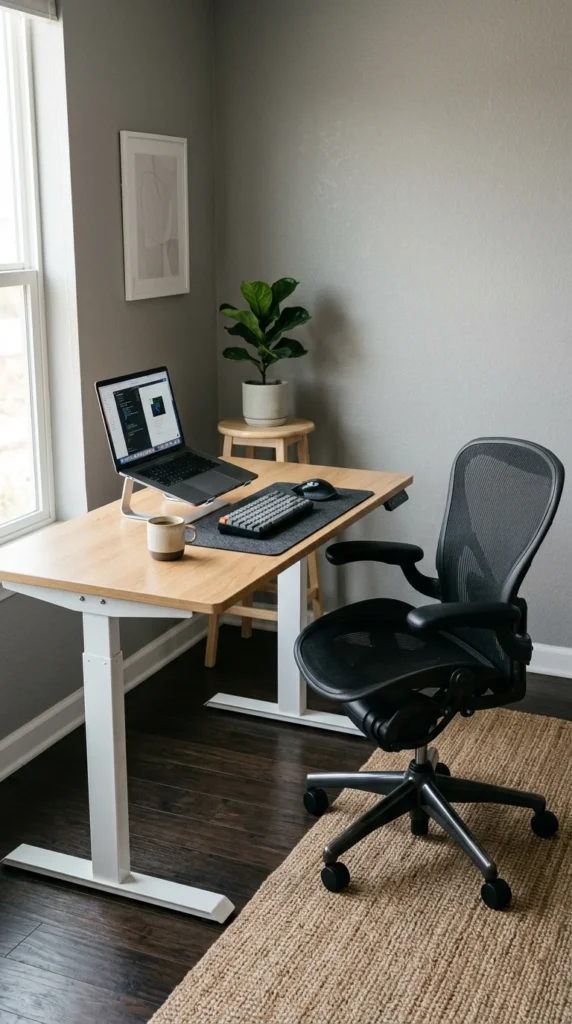
The most stylish office in the world is useless if it causes chronic back pain. High-performance productivity begins with ergonomics. Investing in a high-quality chair is the single most important decision you will make for your health and work longevity. Look for chairs that offer multi-point adjustments, specifically for lumbar support, seat depth, and armrest height.
Beyond the chair, consider the standing desk revolution. Alternating between sitting and standing throughout the day improves circulation and keeps energy levels high. Modern standing desks now come in luxury finishes like reclaimed wood, marble, or matte glass, ensuring they look like sophisticated furniture rather than medical equipment.
- Pro Tip: Your monitor should be at eye level to prevent neck strain. Use a sleek monitor arm to free up desk real estate while maintaining the perfect viewing angle.
2. Natural Light
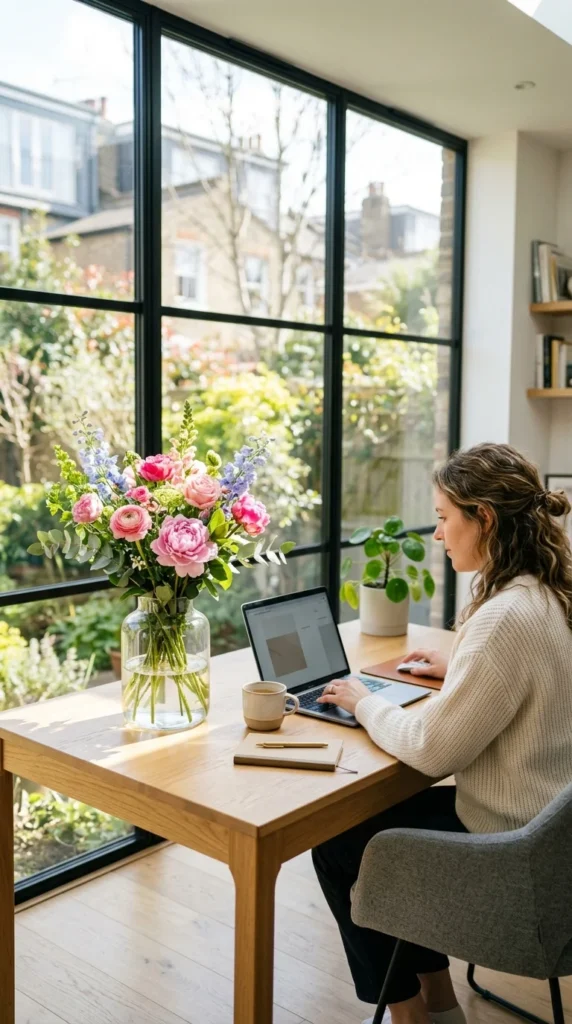
Lighting is the primary driver of the human circadian rhythm. Working in a dimly lit or windowless room can lead to fatigue, eye strain, and a drop in serotonin. To boost productivity, position your desk as close to a source of natural light as possible.
The ideal placement is perpendicular to a window. This provides the benefits of daylight without the glare on your screen that comes from having a window directly behind you, or the silhouette effect that occurs when you face a window during video calls. If your space lacks windows, simulate the effect with “daylight” LED bulbs that mimic the blue-white spectrum of the sun, which is proven to increase alertness.
3. Minimalist Aesthetic
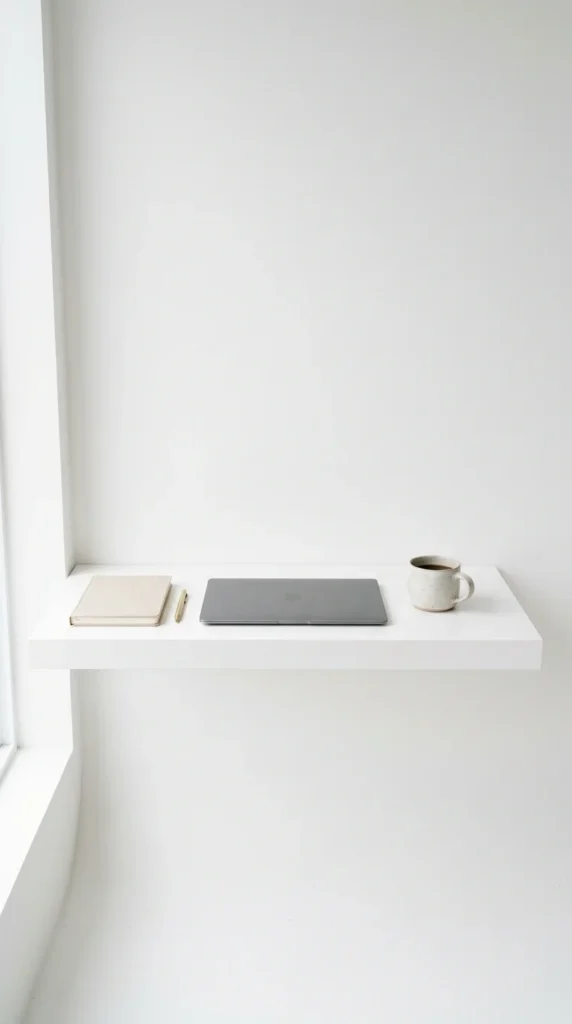
The “cluttered desk, cluttered mind” philosophy holds a great deal of scientific weight. Visual noise competes for your brain’s attention, making it harder to focus on the task at hand. A minimalist home office focuses on “essentialism”—keeping only the items you use daily within reach.
Choose a desk with built-in drawers to hide away stationery, charging cables, and miscellaneous paperwork. By maintaining a clean surface, you signal to your brain that it is time for deep work. Minimalism doesn’t have to mean “cold”; you can maintain warmth through textures like a wool felt desk mat or a wooden pencil holder, keeping the palette neutral and the surfaces clear.
4. Biophilic Design
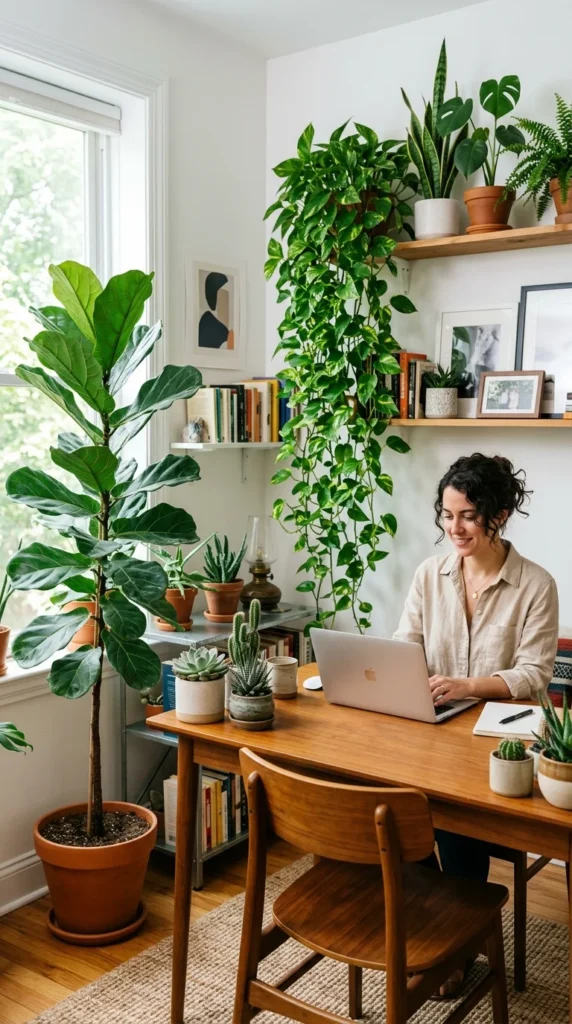
Biophilia is the innate human instinct to connect with nature. Integrating plants into your home office isn’t just about the “urban jungle” aesthetic; it has measurable psychological benefits. Studies have shown that the presence of greenery can reduce stress, lower blood pressure, and increase productivity by up to 15%.
Select plants that thrive in indoor environments, such as Snake Plants, ZZ Plants, or Peace Lilies. These varieties are excellent at purifying the air, removing toxins like formaldehyde and benzene. If you have limited floor space, use verticality—hang plants from the ceiling or place trailing vines on high shelves to surround yourself with life without sacrificing your workspace.
5. Smart Storage
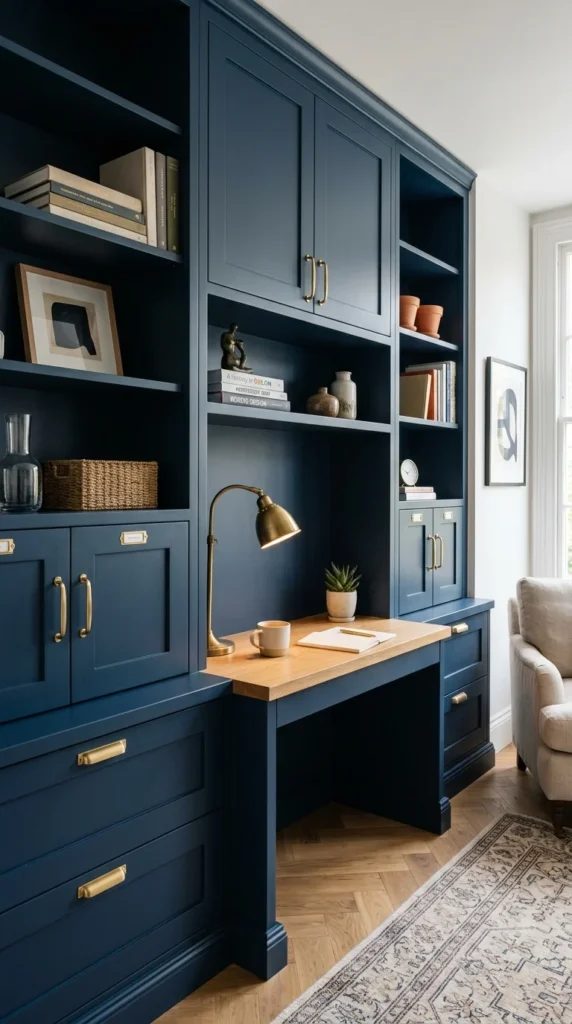
Disorganization is the enemy of efficiency. To maintain a stylish office, you need a sophisticated storage strategy that prevents the “paper pile-up.” Vertical storage is the best solution for small home offices. Floating shelves, tall bookcases, or pegboards allow you to store essential items without encroaching on your floor space.
Use decorative bins and leather-bound organizers to hide unsightly office supplies. If your work involves a lot of physical filing, opt for a lateral filing cabinet that can double as a credenza or a printer stand. By giving every object a “home,” you reduce the time spent searching for items and increase the time spent producing results.
6. Personal Inspiration
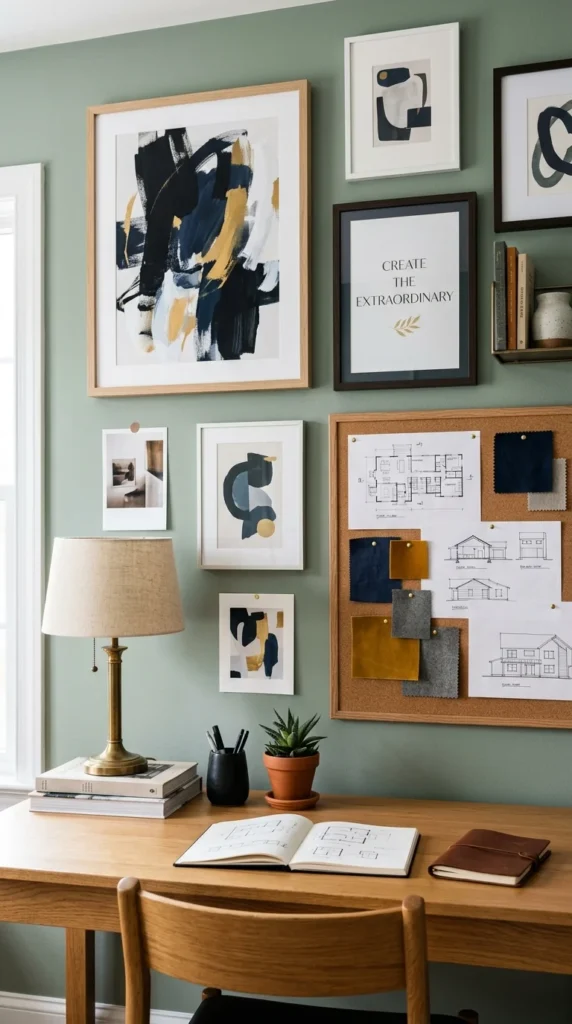
While minimalism is great for focus, a workspace should not feel sterile. Personalization provides the emotional fuel needed for creative problem-solving. A “curated” gallery wall or a mood board allows you to surround yourself with things that inspire you—whether that’s fine art, photographs of loved ones, or architectural diagrams.
The key is to keep the personalization intentional. Instead of a messy bulletin board, use a framed linen pinboard or a sleek magnetic glass board. Choose a color theme for your art to ensure the room feels cohesive rather than chaotic. This creates a space that feels uniquely yours, making the “commute” to your desk something you look forward to.
7. Color Psychology
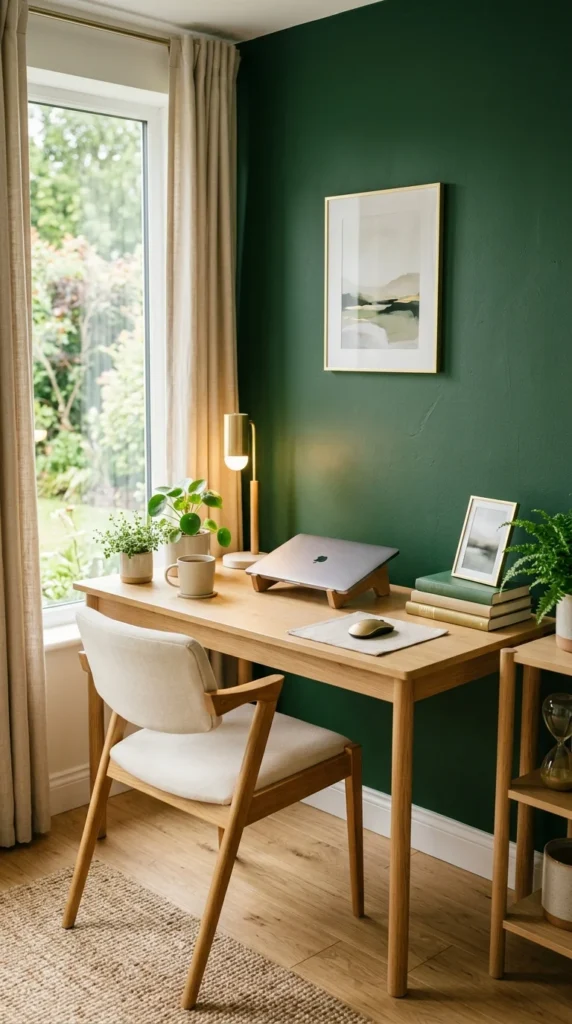
The color of your walls can dictate your mood and energy levels throughout the workday. When choosing a palette for your home office, look beyond your favorite color and consider the psychological impact:
- Blue: The color of the sky and ocean; it is widely considered the best color for productivity and focus.
- Green: Easy on the eyes and promotes a sense of balance and calm—ideal for those who work long hours.
- Yellow: Stimulates creativity and ego; great for designers or writers, though it should be used as an accent to avoid overstimulation.
- Off-White/Cream: Provides a clean, “tabula rasa” feel that allows the mind to think clearly without distraction.
Avoid harsh, clinical grays or overly bright reds, which can induce feelings of gloom or anxiety, respectively.
8. Cable Management
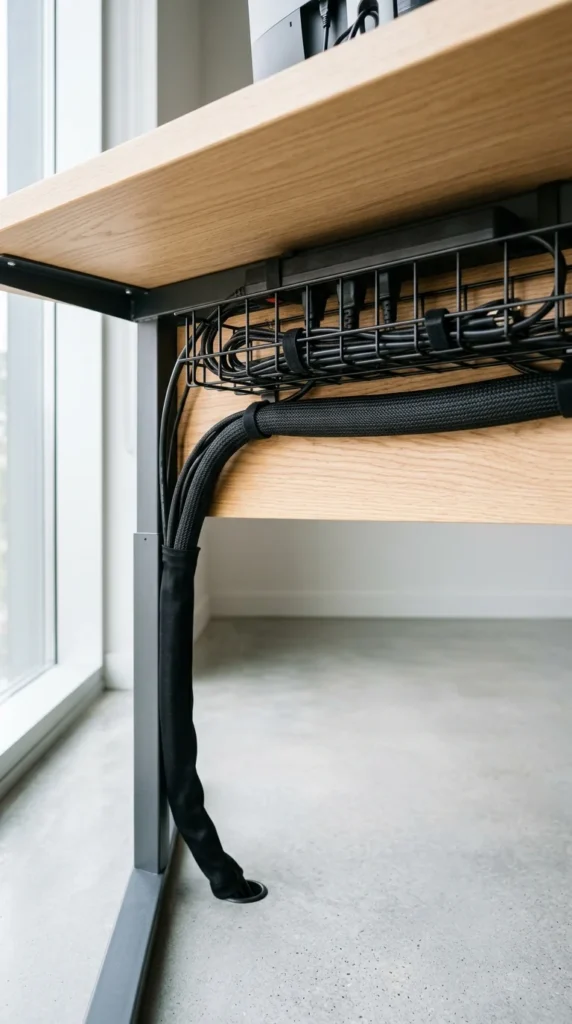
Nothing ruins the aesthetic of a high-end home office faster than a “rat’s nest” of tangled wires. In our tech-heavy world, cables are a necessary evil, but they don’t have to be visible. Modern office design prioritizes “invisible tech.”
Invest in a cable management tray that attaches to the underside of your desk to hold power strips and excess cord lengths. Use braided cable sleeves to group wires together and adhesive clips to run them down the legs of your furniture. If possible, opt for wireless peripherals—keyboards, mice, and chargers—to minimize the number of physical connections required on your desktop.
9. Defined Zoning
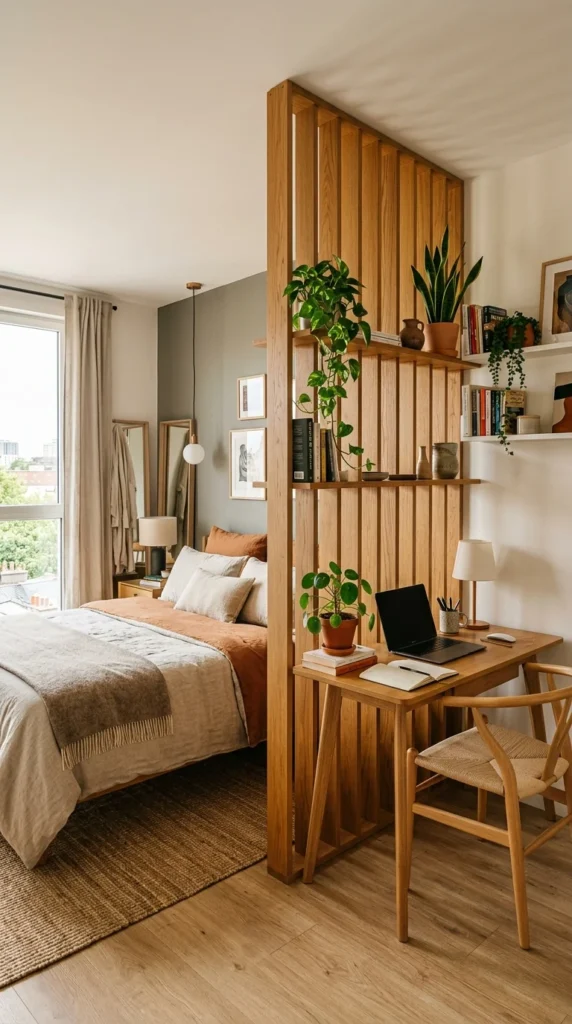
One of the biggest challenges of working from home is the blurring of lines between professional and personal life. To boost productivity, you must “zone” your home. If you don’t have a dedicated room, use furniture to create a boundary.
A tall bookshelf, a decorative folding screen, or even a different rug can act as a psychological barrier that tells your brain, “I am now at work.” When you step inside that zone, your focus narrows. When you step out, you “leave” the office. This physical separation is crucial for mental health, ensuring that you can fully disconnect and recharge at the end of the day, which ultimately makes you more productive when you return to your desk.