
Managing a small closet often feels like a high-stakes game of Tetris. When every square inch counts, traditional storage methods often fall short, leading to cluttered floors and wrinkled clothes. However, a compact footprint doesn’t have to mean a chaotic mess. By implementing strategic organizational techniques and clever hardware solutions, you can transform even the tiniest wardrobe into a highly functional and aesthetically pleasing sanctuary. The key lies in thinking vertically, maximizing hidden surfaces, and maintaining a strict “one-in, one-out” philosophy.
1. Vertical Space
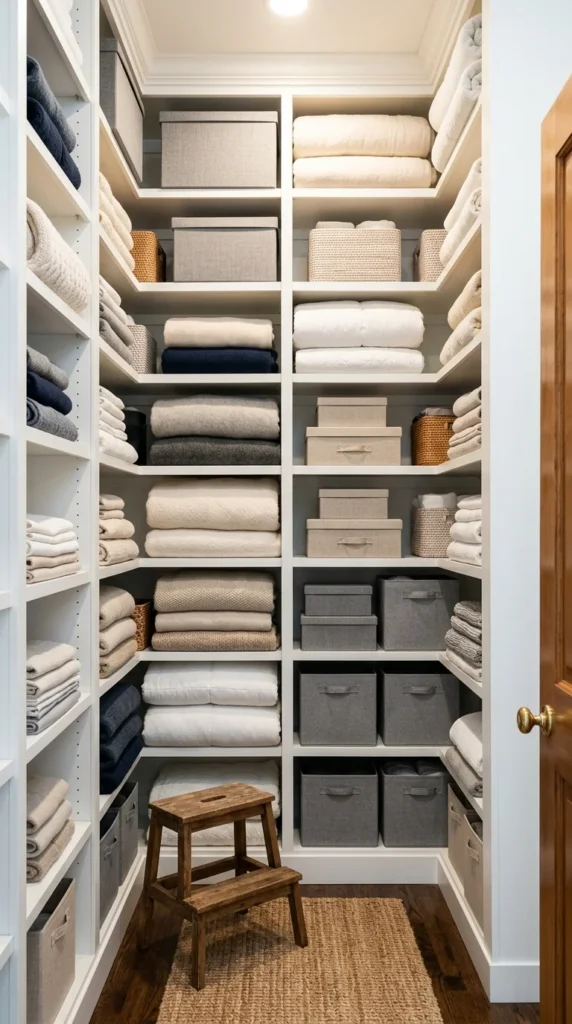
The most underutilized area in any small closet is the space between the top shelf and the ceiling. Most builders install a single rod and one shelf, leaving several feet of empty air. By adding extra shelving units or stacking uniform bins all the way to the top, you gain significant real estate for items you don’t use daily, such as off-season gear, extra linens, or travel accessories. Using a consistent color palette for these top-tier containers helps the space feel less crowded and more like a deliberate design choice.
2. Double Rods
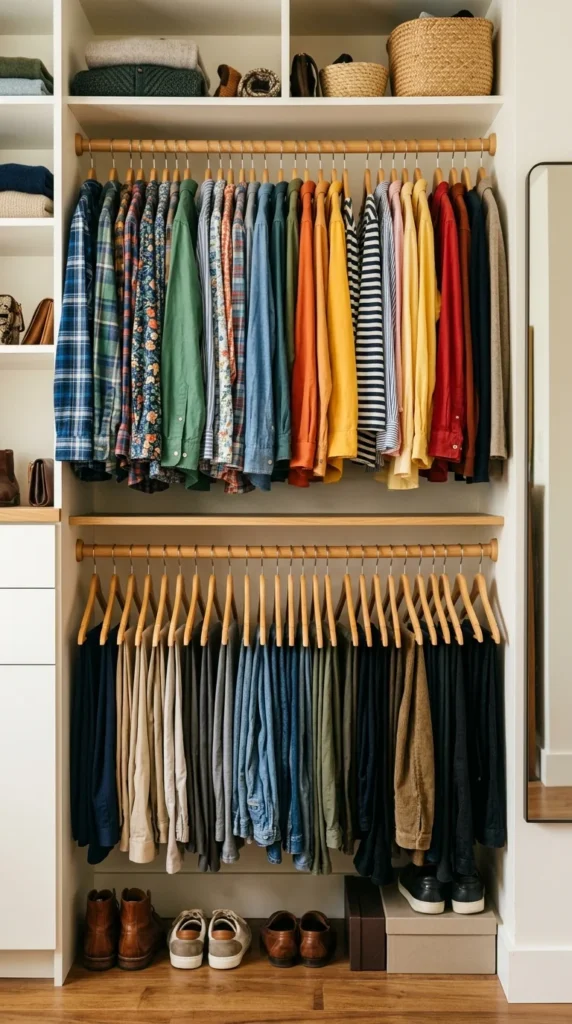
If your closet features a single, high hanging rod, you are likely wasting the bottom half of the space. Installing a second, lower rod effectively doubles your hanging capacity instantly. Use the top rod for shorter items like blouses, button-downs, and jackets, and the bottom rod for folded trousers or skirts. This configuration is one of the most cost-effective ways to increase storage density without expanding the closet’s physical footprint.
3. Clear Bins
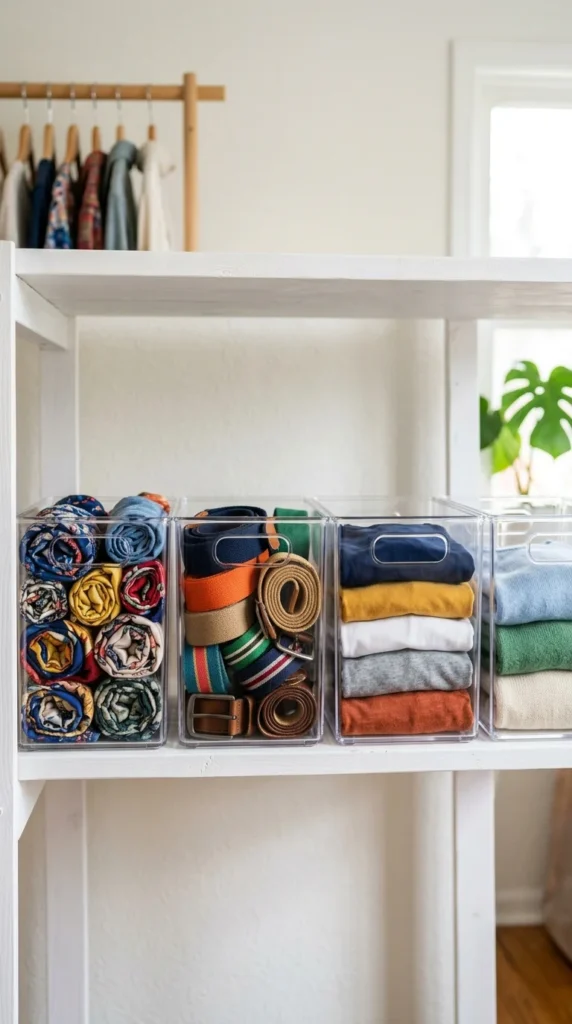
Visibility is the enemy of clutter. When you can’t see what you own, you tend to buy duplicates or tear through piles to find a specific item. Clear acrylic bins allow you to inventory your belongings at a glance. They are particularly effective for “loose” items like accessories, gym wear, or handbags. Because they are transparent, they don’t add visual weight to a small space, making the interior feel open and airy.
4. Door Organizers
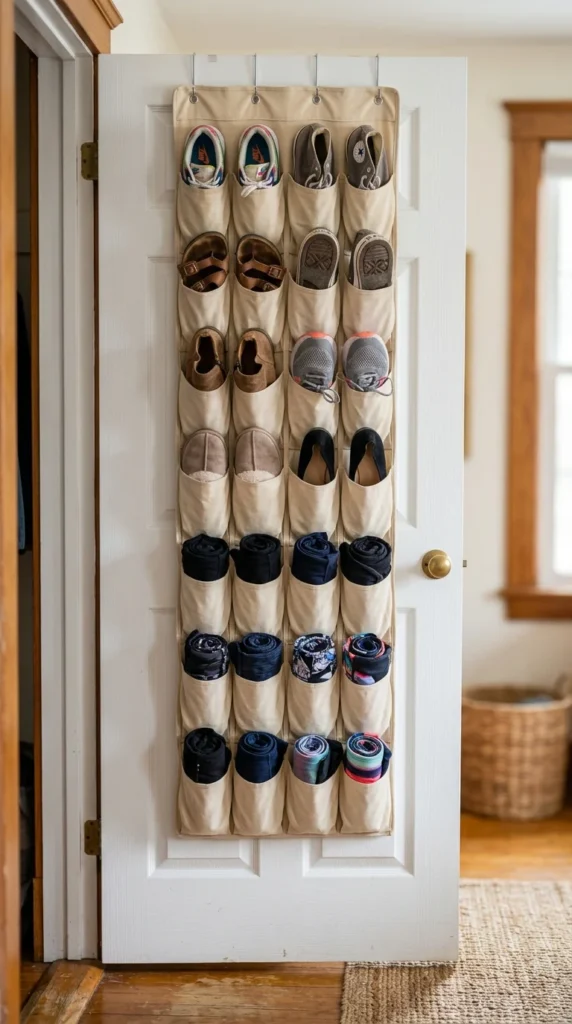
The back of your closet door is a goldmine of storage potential. Over-the-door organizers aren’t just for shoes; they can hold anything from rolled-up leggings and t-shirts to cleaning supplies and hair tools. If you prefer a more sophisticated look, consider a metal grid system or a series of sleek hooks. This keeps your most-used items within arm’s reach while freeing up precious shelf and floor space.
5. Slim Hangers

Standard plastic or wooden hangers are deceptively bulky. Switching to ultra-slim velvet hangers can reclaim up to 30% of your hanging space. The non-slip surface prevents delicate fabrics from sliding off, while the thin profile allows you to pack more garments onto the rod without them becoming crushed. To maximize the effect, choose a single color for all your hangers to create a streamlined, boutique-like appearance.
6. LED Strips
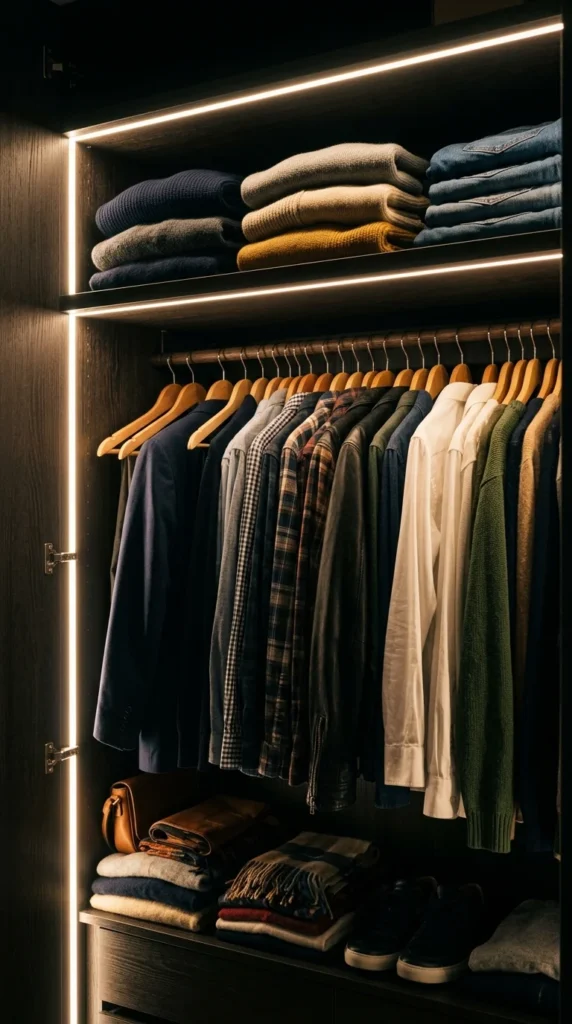
Small closets are often dark, which contributes to a feeling of crampedness. Battery-operated or plug-in LED motion-sensor lights can transform the functionality of the space. When the interior is well-lit, you can easily distinguish between dark navy and black garments, and no item gets “lost” in the shadows of the back corners. Modern LED strips are thin enough to be hidden under shelves, providing a high-end, custom-closet feel.
7. Shelf Dividers
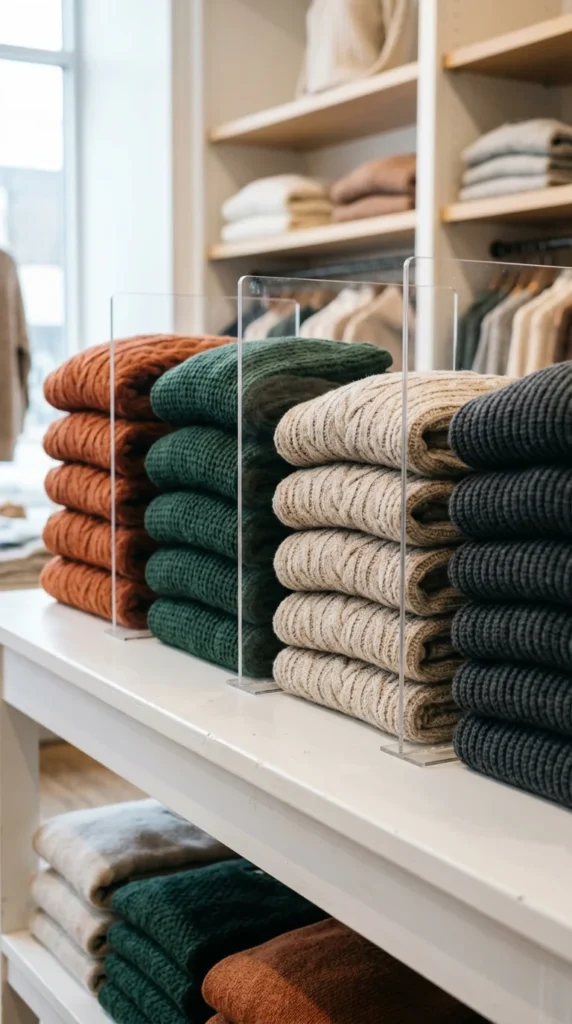
Without support, tall stacks of sweaters or jeans inevitably tip over, creating a mess. Shelf dividers—made of wire or clear acrylic—clip onto existing shelves to create “stalls” for your clothes. This allows you to stack items higher and more neatly, ensuring that when you pull one item from the middle of the pile, the rest stay perfectly in place.
8. Drawer Inserts

If your small closet includes a built-in chest of drawers, use inserts to prevent them from becoming “junk drawers.” Honeycomb or grid-style organizers are perfect for smaller items like socks, underwear, and ties. By giving every small item a specific home, you eliminate the need to rummage, which keeps the rest of the closet organized for longer periods.
9. S-Hooks
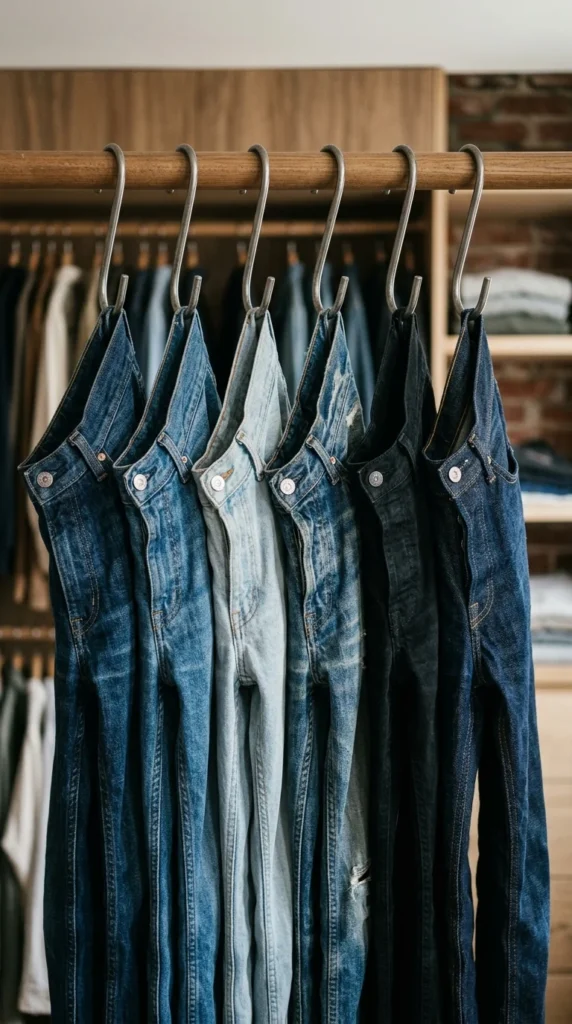
S-hooks are a versatile and inexpensive tool for small closet organization. Instead of folding bulky jeans, which takes up shelf space, you can hang them by the belt loops using S-hooks. They are also excellent for organizing handbags by their straps, scarves, or even jewelry. This method keeps items visible and prevents the creases that come with folding.
10. Valet Rods
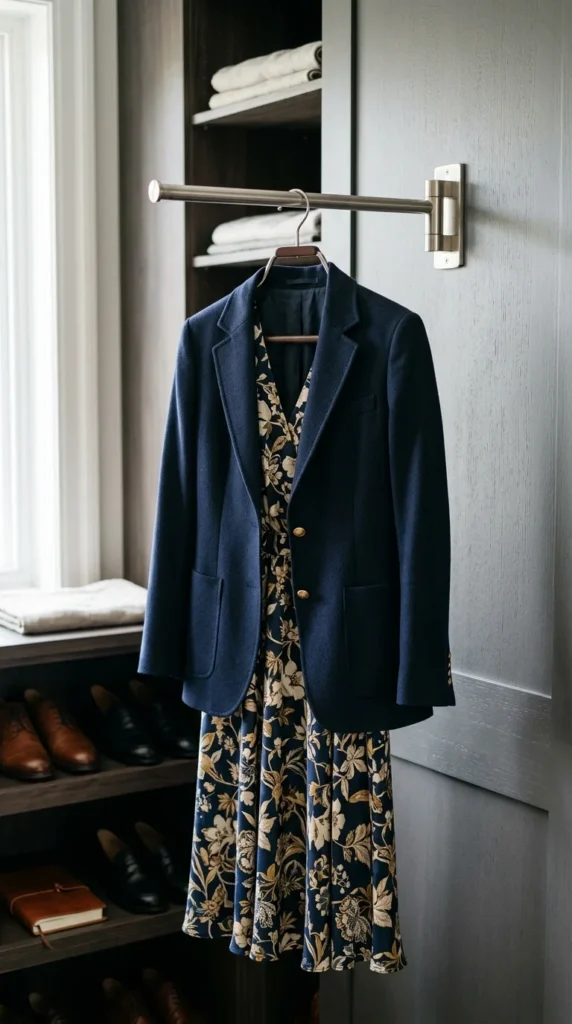
A valet rod is a small, retractable metal bar that can be pulled out when needed and tucked away when not. It is the perfect tool for “pre-staging” your outfit for the next day or holding dry cleaning before it’s put away. In a small closet, it provides a temporary spot to hang items without cluttering the main rod, acting as a functional assistant for your morning routine.
11. Corner Shelves
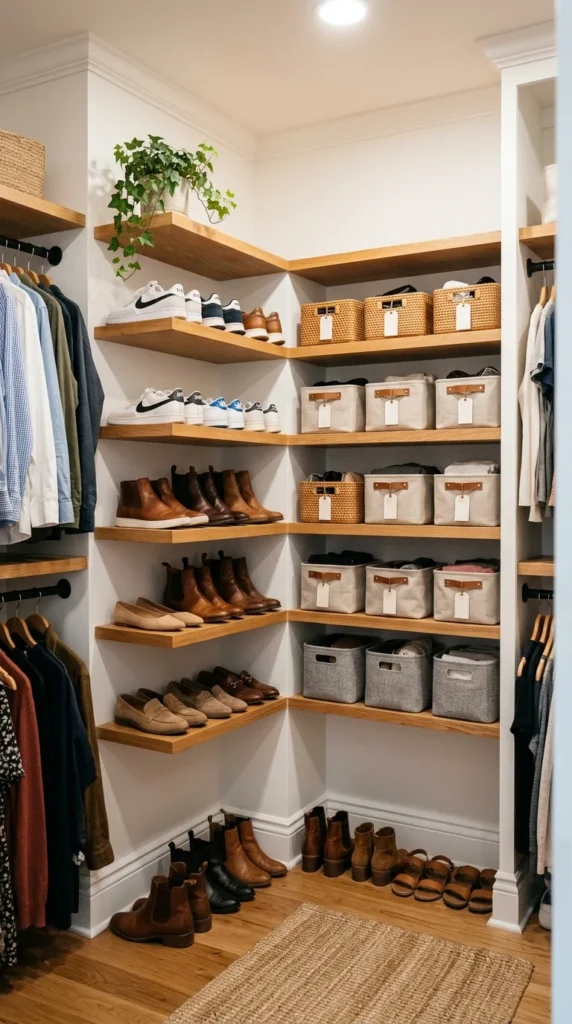
Corners are notoriously difficult to utilize in small closets, often becoming “dead zones.” Custom-cut corner shelves or rotating “Lazy Susan” style racks can turn these awkward angles into prime storage for shoes, hats, or handbags. Utilizing the corner ensures that no inch of the perimeter goes to waste.
12. Labeling
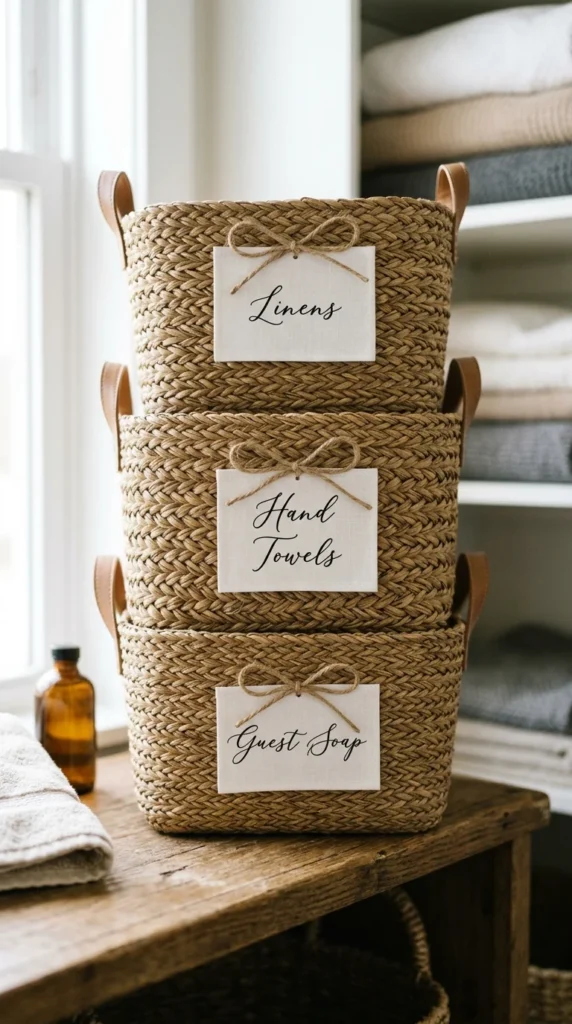
Labeling is the final step in a professional-grade organization project. When every bin and basket has a clear label—such as “Winter Accessories,” “Swimwear,” or “Travel”—every member of the household knows exactly where things go. This reduces the mental load of staying organized and ensures that the system you’ve built remains intact over time.
13. Mirror Placement
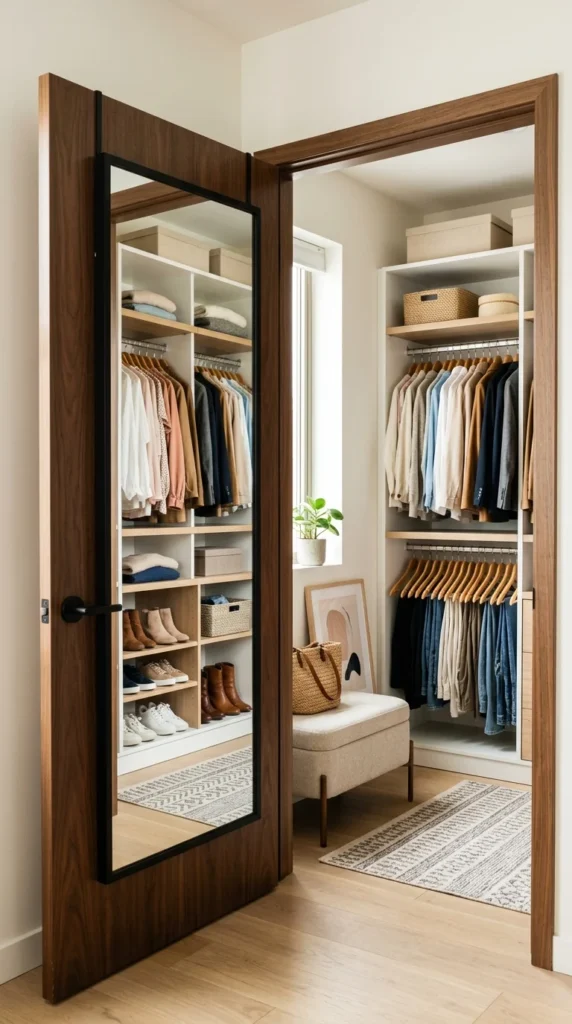
While a mirror is functional for dressing, it also serves a psychological purpose in a small closet. A large mirror reflects light and creates the illusion of depth, making a cramped reach-in closet feel significantly larger. Mounting a mirror on the back of the door or on a side wall is a classic design trick that adds both utility and a sense of luxury.
14. Seasonal Rotation
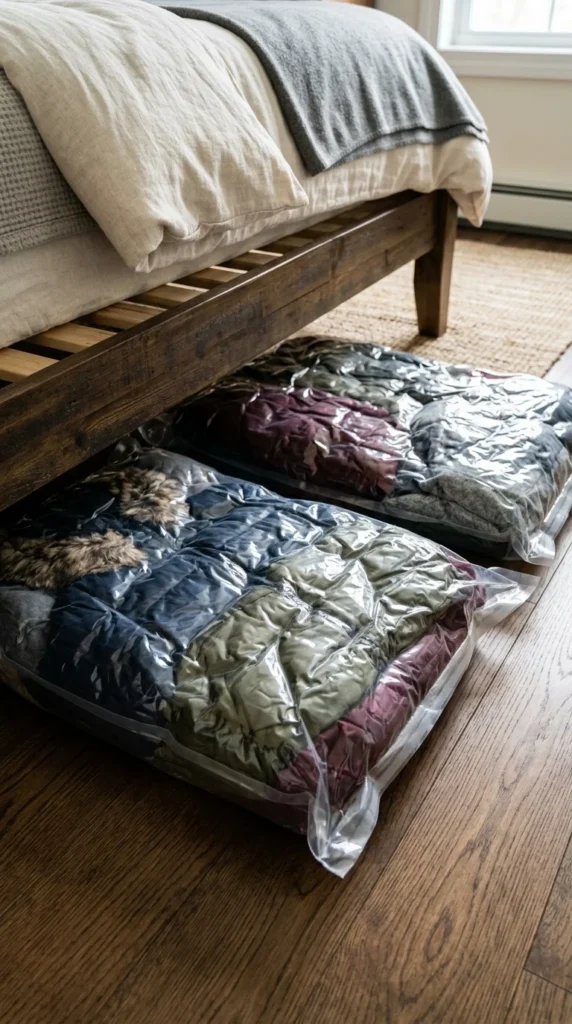
If you have a small closet, you likely cannot fit your entire four-season wardrobe in it at once. Implementing a seasonal rotation is essential. Use vacuum-sealed bags or under-bed storage containers to stow away heavy parkas in the summer and beachwear in the winter. By only keeping the current season’s clothes in your closet, you create “breathing room” for your garments, which prevents wrinkles and makes daily outfit selection easier.
15. Uniform Hangers
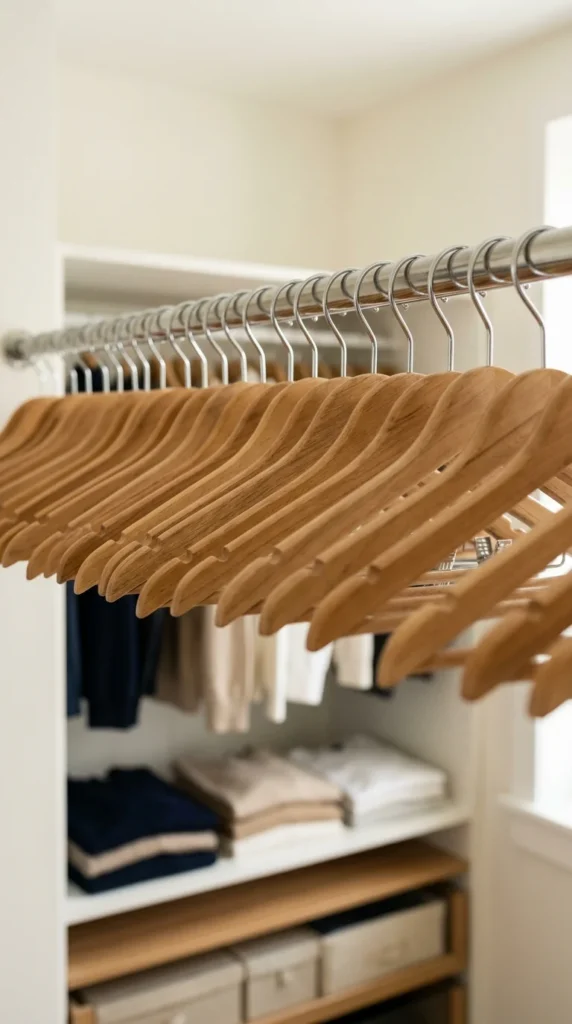
Visual clutter can make a small space feel even smaller. When you use a mix of wire, plastic, and wooden hangers in various colors, the closet looks chaotic regardless of how clean it is. Using one style of hanger throughout creates a sense of visual “quiet.” It allows your eyes to focus on the clothes themselves rather than the hardware, contributing to a calm and organized environment.
16. Shoe Racks
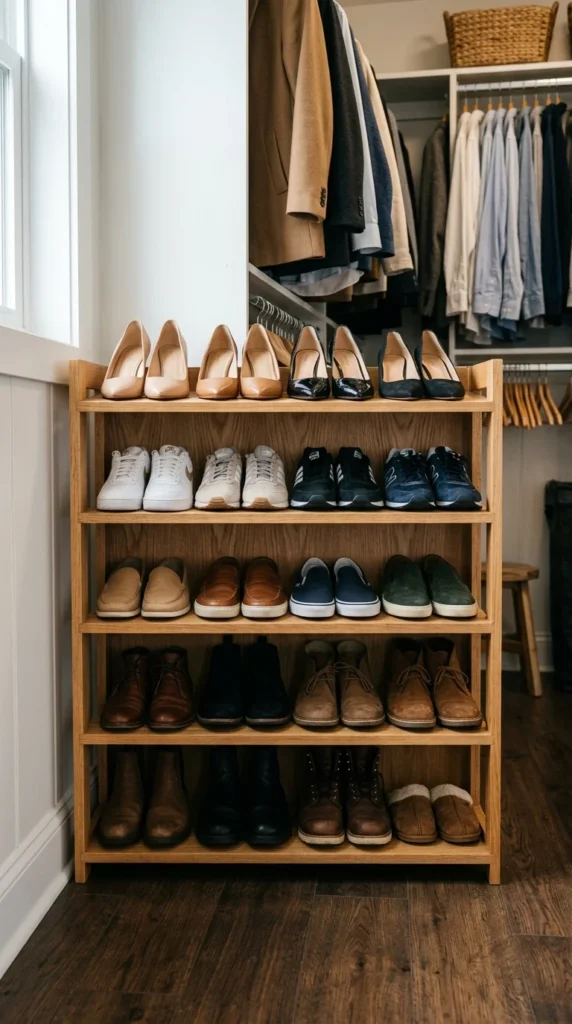
Shoes are often the biggest culprit of closet floor clutter. A dedicated shoe rack—whether it’s a floor unit, a hanging organizer, or individual stackable boxes—is vital. To save even more space, try the “heel-to-toe” method where one shoe faces forward and the other faces backward; this allows you to fit more pairs side-by-side on a narrow shelf.
17. Pegboards
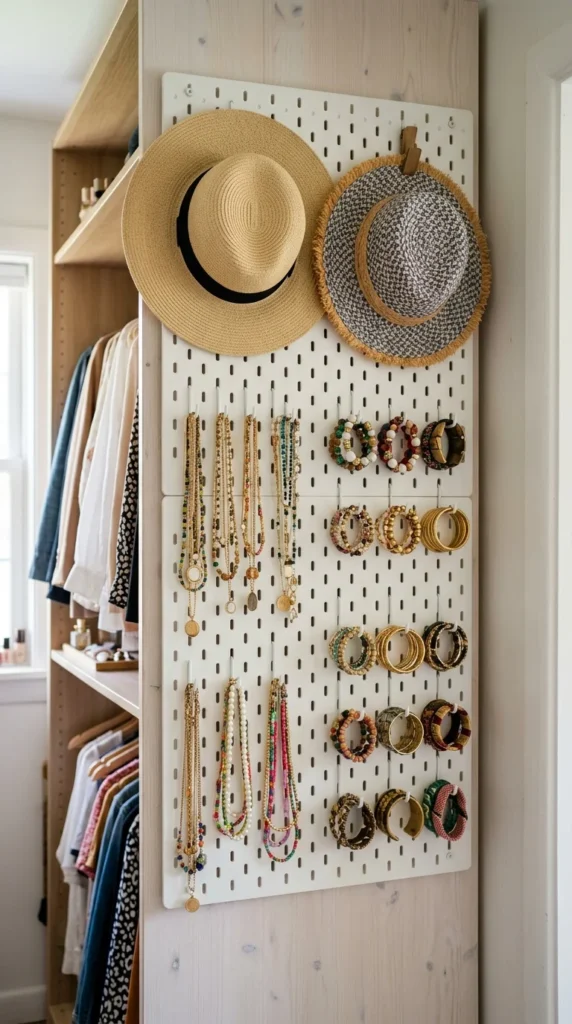
Pegboards aren’t just for garages. A small section of pegboard mounted on a closet wall provides a customizable way to store jewelry, hats, and belts. Because you can move the hooks around as your collection changes, it’s a flexible solution that grows with you. It also turns your accessories into a visual display, making them easier to find and style.
18. Tiered Hangers
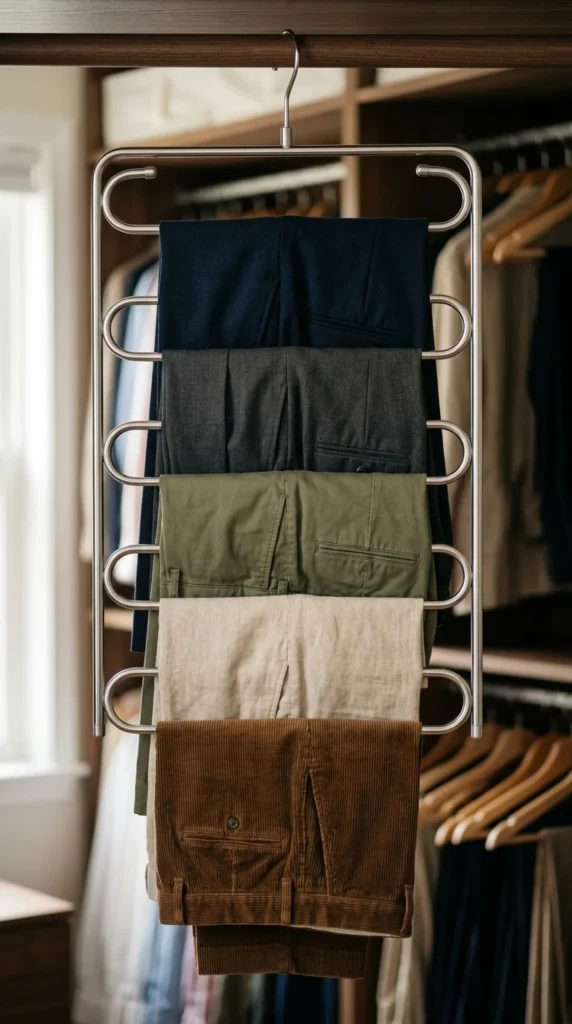
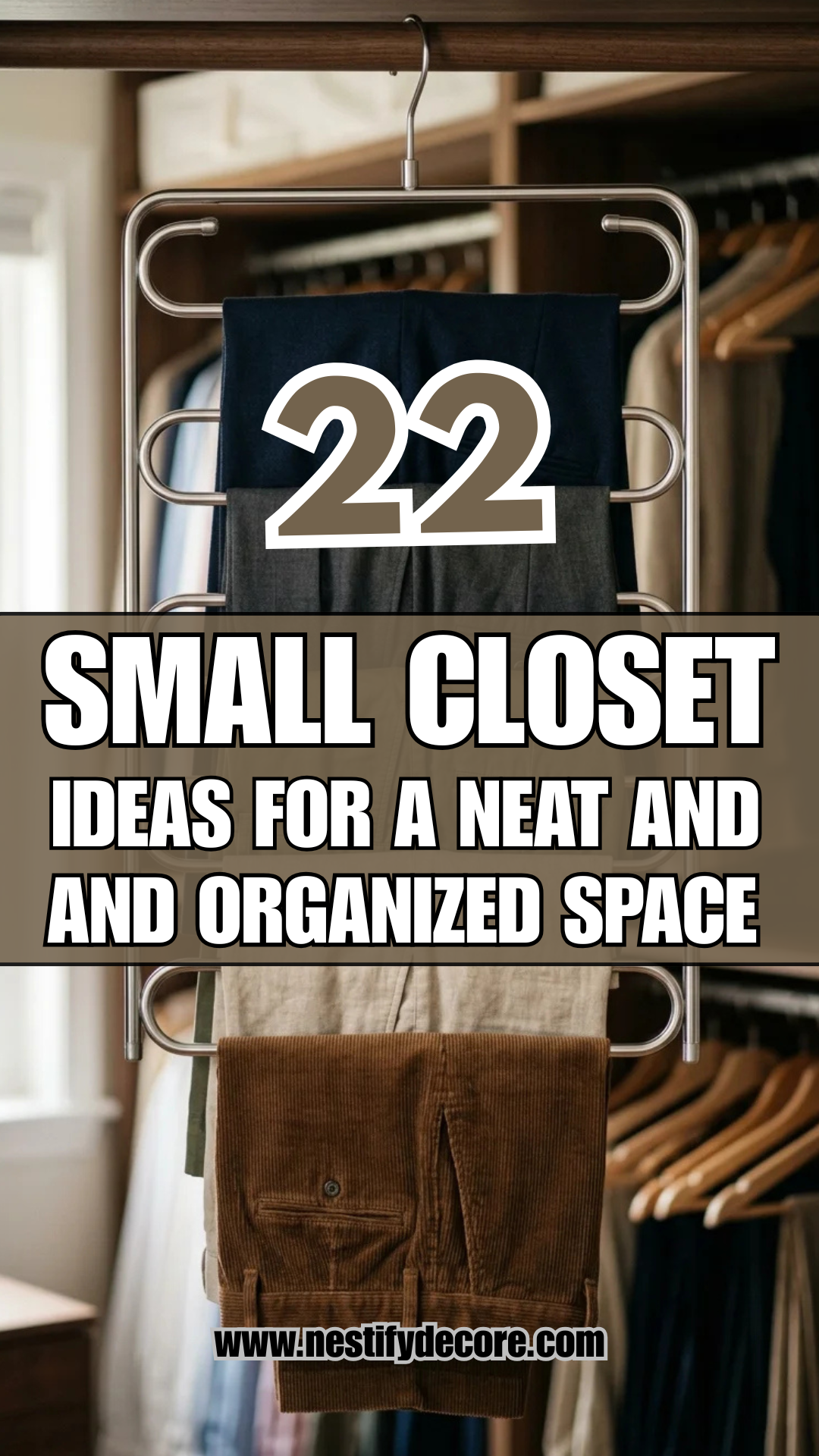
For items like skirts, slacks, or scarves, tiered hangers are a game-changer. These hangers feature multiple horizontal bars on a single hook, allowing you to hang four or five items in the vertical space usually occupied by one. This is particularly useful in closets with very little horizontal rod space but plenty of vertical clearance.
19. Baskets
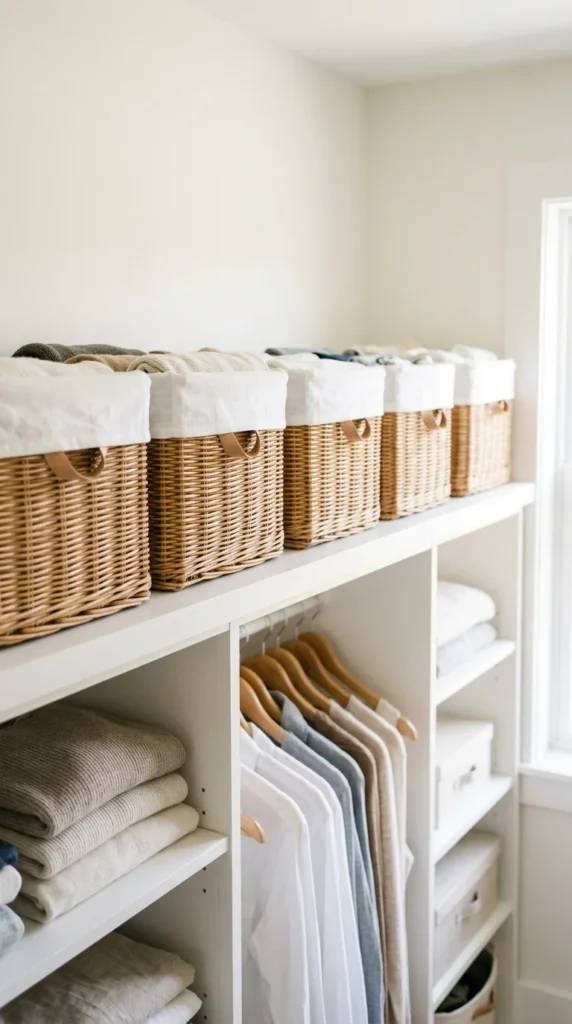
Baskets add texture and warmth to a closet while hiding items that are inherently messy, like bathing suits, socks, or gym equipment. Choosing matching baskets creates a cohesive look that masks the “busy-ness” of the items stored inside. Woven materials like seagrass or wicker are durable and provide a high-end, organic feel to the space.
20. Pull-out Trays

If your closet has deep shelves, items at the back often get forgotten. Installing pull-out trays or “slide-out” drawers allows you to access the full depth of the shelf easily. These are particularly useful for jewelry, sunglasses, or small electronics, ensuring that nothing is ever buried out of reach.
21. Curtain Doors
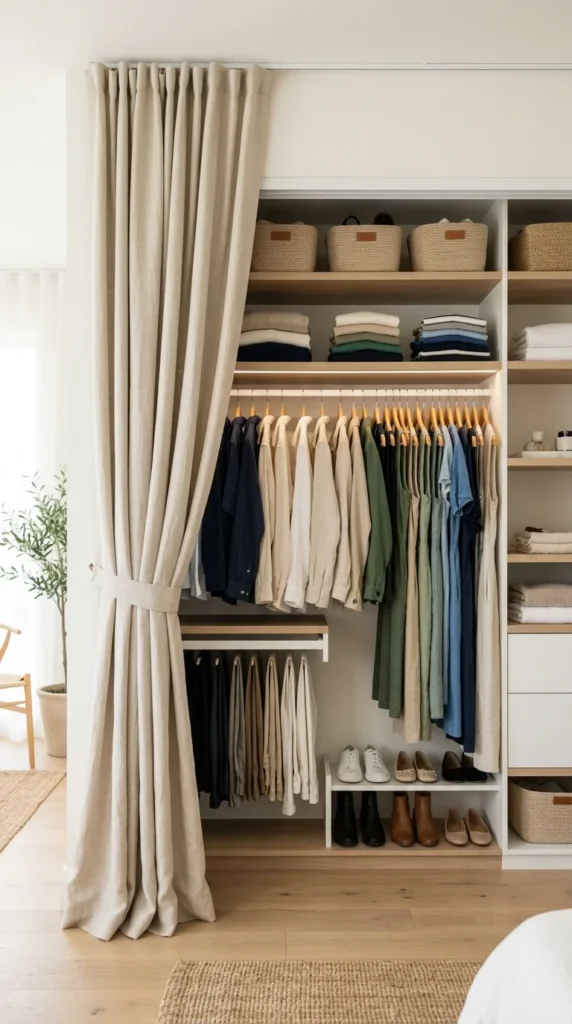
In very tight rooms, traditional swinging or even bifold closet doors can take up valuable floor space or block walkways. Replacing these doors with a heavy, floor-to-ceiling fabric curtain can save space and add a soft, decorative element to the room. Curtains also allow for easier access to the entire width of the closet at once, which is often a struggle with sliding doors.
22. Color Coding
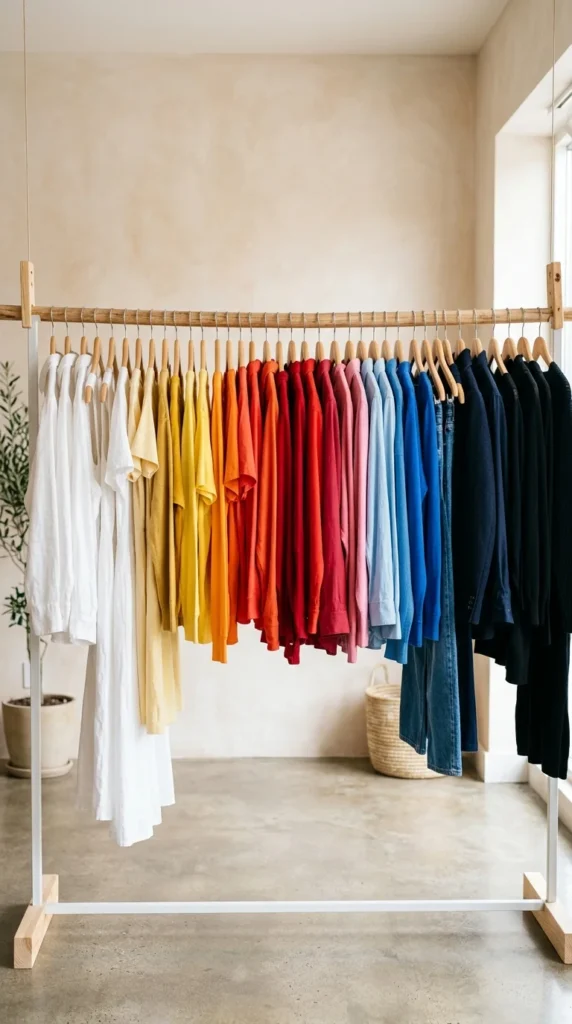
Color coding is more than just an aesthetic choice; it’s a functional system. By organizing your clothes in a rainbow gradient, you can find exactly what you’re looking for in seconds. It also helps you identify gaps in your wardrobe or areas where you have too many duplicates. In a small closet, the organized transition of colors creates a sense of order that makes the space feel curated rather than crammed.