
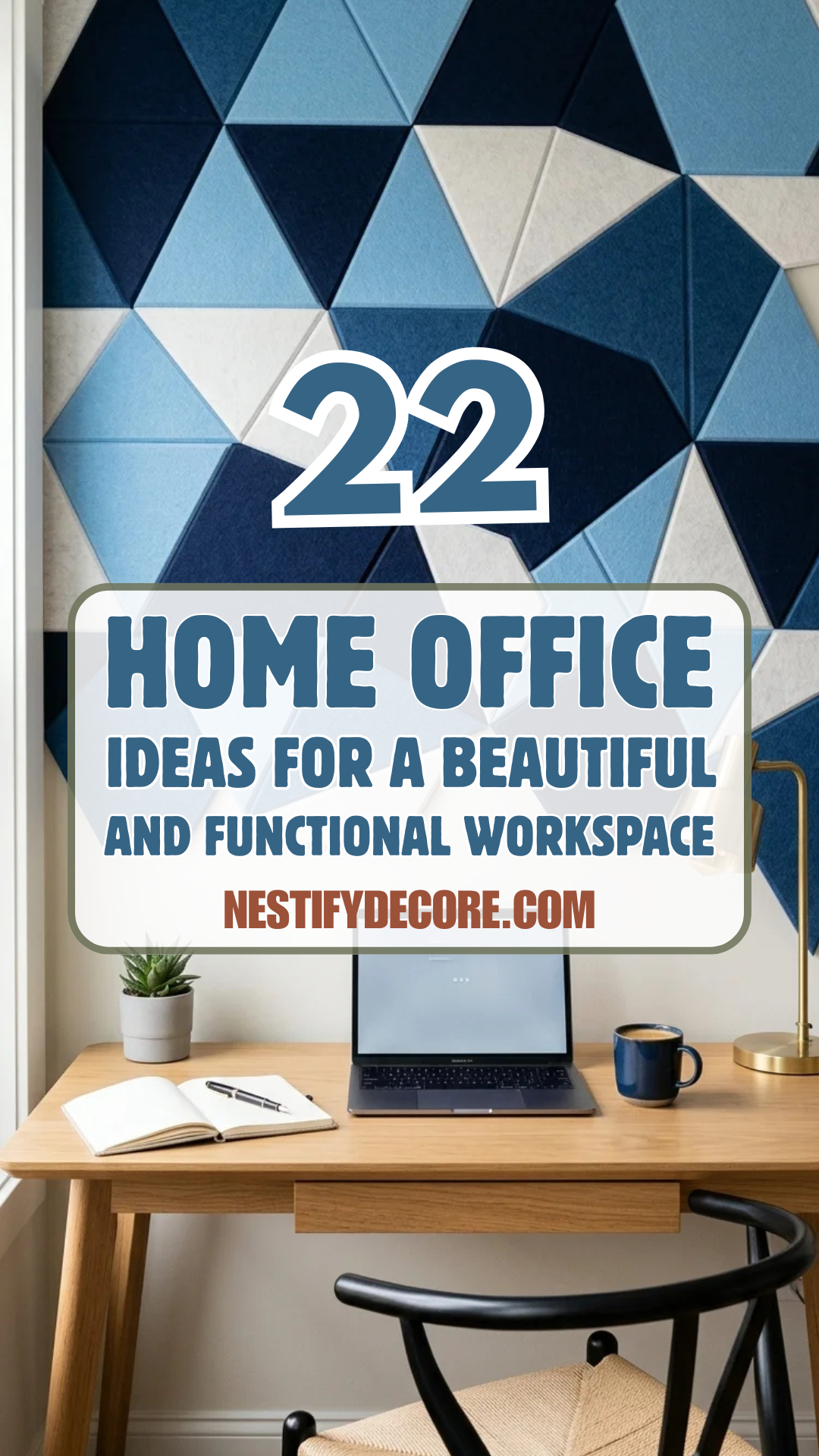
In the modern era of professional life, the home office has transitioned from a luxury to a necessity. Whether you are a full-time remote employee, a creative freelancer, or someone who needs a dedicated space for household management, the environment in which you work significantly impacts your productivity and mental well-being. A well-designed workspace is a delicate balance between ergonomics, aesthetic appeal, and personal expression. This guide explores 22 transformative ideas to help you curate a workspace that is as beautiful as it is functional.
1. Natural Light
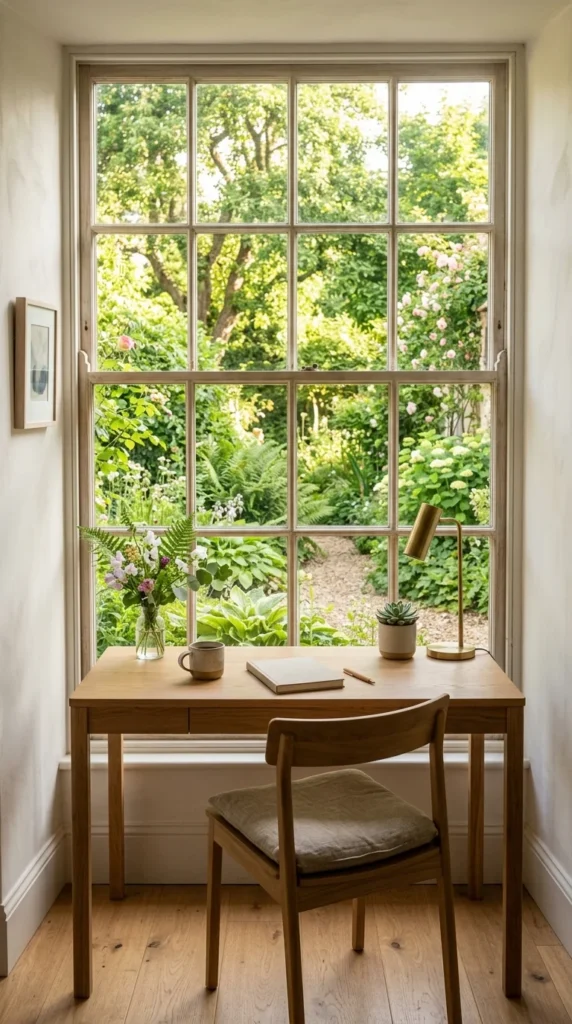
The most effective way to boost mood and energy levels is to prioritize natural light. Positioning your desk near a window provides a necessary connection to the outdoors, reducing the feeling of confinement. Sunlight helps regulate your circadian rhythm, keeping you alert during the day and helping you sleep better at night. To manage glare on your computer screen, consider using sheer curtains or solar shades that diffuse light without completely blocking the view.
2. Ergonomic Seating
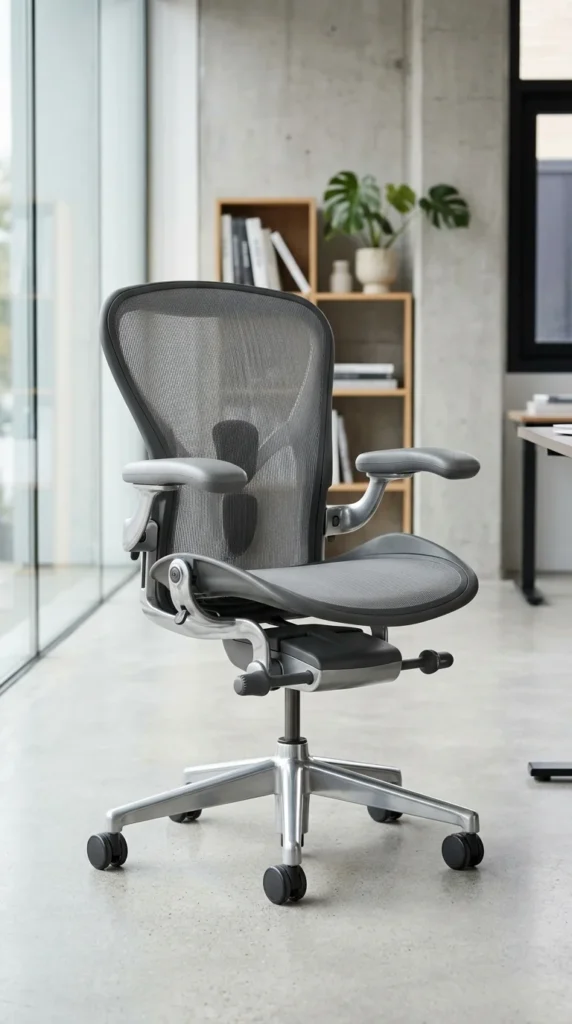
Your chair is arguably the most important investment in your home office. Standard dining chairs lack the necessary support for eight-hour workdays, leading to back pain and poor posture. Look for a chair with adjustable height, lumbar support, and tilt functions. An ergonomic chair ensures that your spine remains in a neutral position, which reduces physical fatigue and allows you to focus more deeply on your tasks.
3. Floating Desks
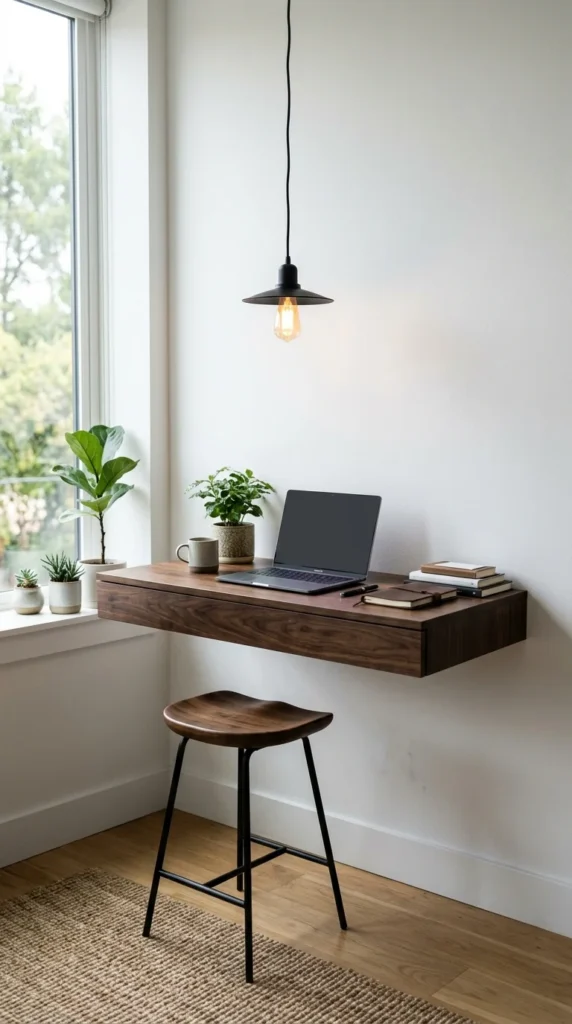
For those working with limited square footage, a floating desk is a game-changer. These wall-mounted surfaces eliminate the need for bulky legs, making a small room feel more open and airy. They are perfect for “cloffices” (closet offices) or transitional spaces like hallways. By keeping the floor clear, you create a visual sense of more space while maintaining a dedicated zone for your laptop and essentials.
4. Biophilic Design
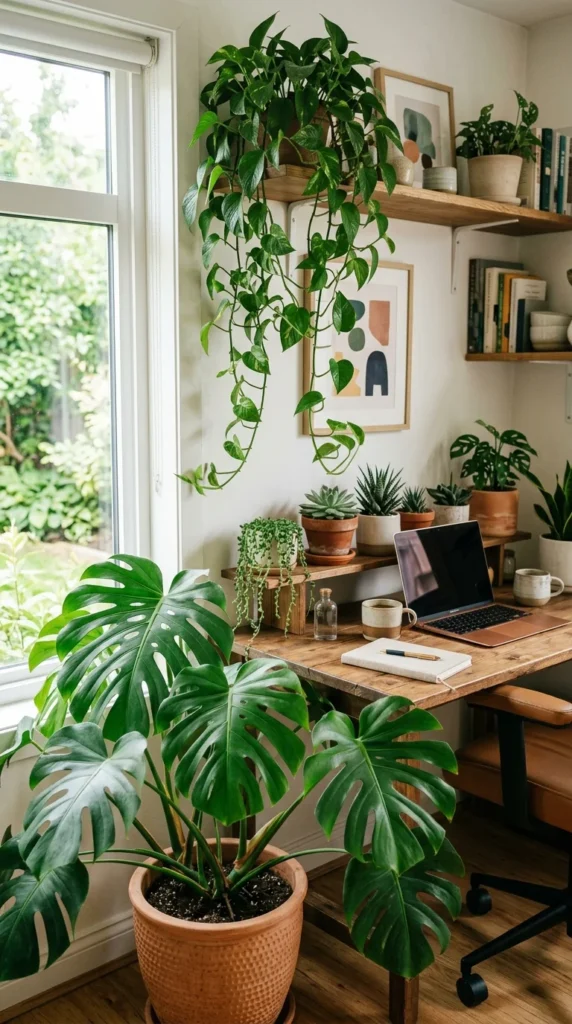
Integrating nature into your workspace—a concept known as biophilic design—has been proven to reduce stress and increase creativity. Plants not only purify the air but also provide a visual “rest” for your eyes when you look away from your screen. If you lack a green thumb, low-maintenance options like snake plants or ZZ plants thrive in varied lighting conditions and require minimal watering.
5. Minimalist Setup
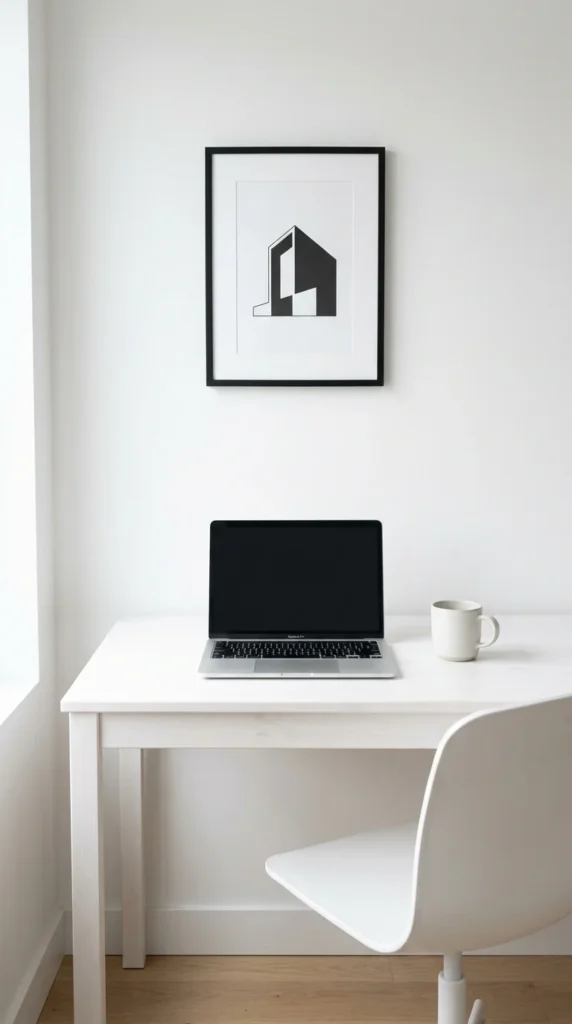
A cluttered desk often leads to a cluttered mind. The minimalist approach focuses on the philosophy of “less is more.” By keeping only the absolute essentials on your desk—your computer, a notebook, and perhaps a single decorative item—you minimize distractions. This setup promotes a high level of focus and makes the process of starting work each morning feel calm and manageable.
6. Standing Desks
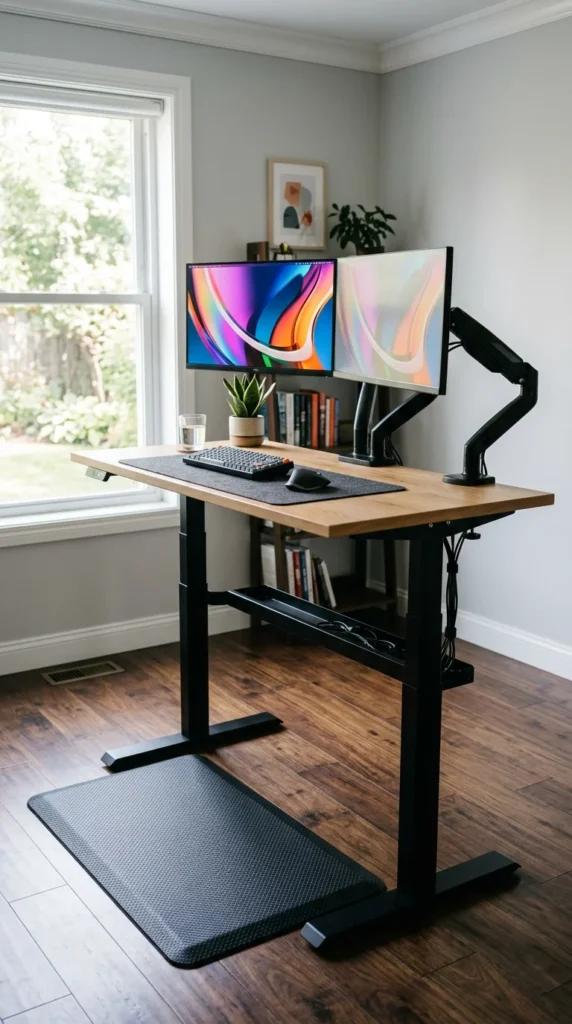
Sedentary behavior is a common challenge for remote workers. An adjustable standing desk allows you to transition between sitting and standing throughout the day. This movement improves circulation, burns more calories, and can alleviate the lower back pain associated with prolonged sitting. Look for electric models with memory presets so you can return to your perfect height with a single button press.
7. The “Cloffice”
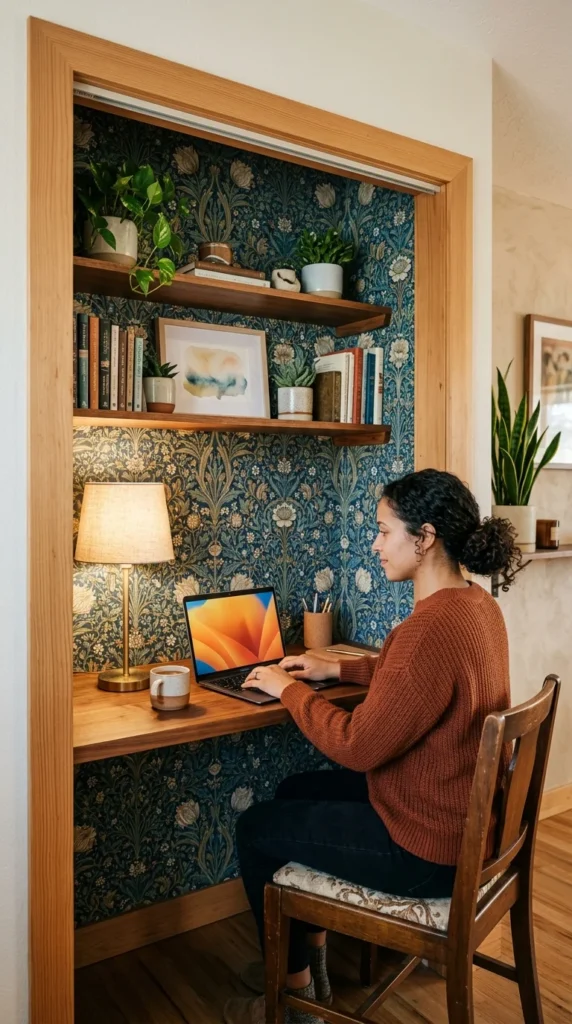
If you don’t have a spare room, look to your closets. A “cloffice” is a creative use of space where a closet is converted into a workstation. By removing the doors and installing a desktop and shelving, you create a recessed nook that feels separate from the rest of the room. This is an excellent way to maintain a work-life balance in a small apartment; when the day is done, the work is tucked away.
8. Mood Lighting
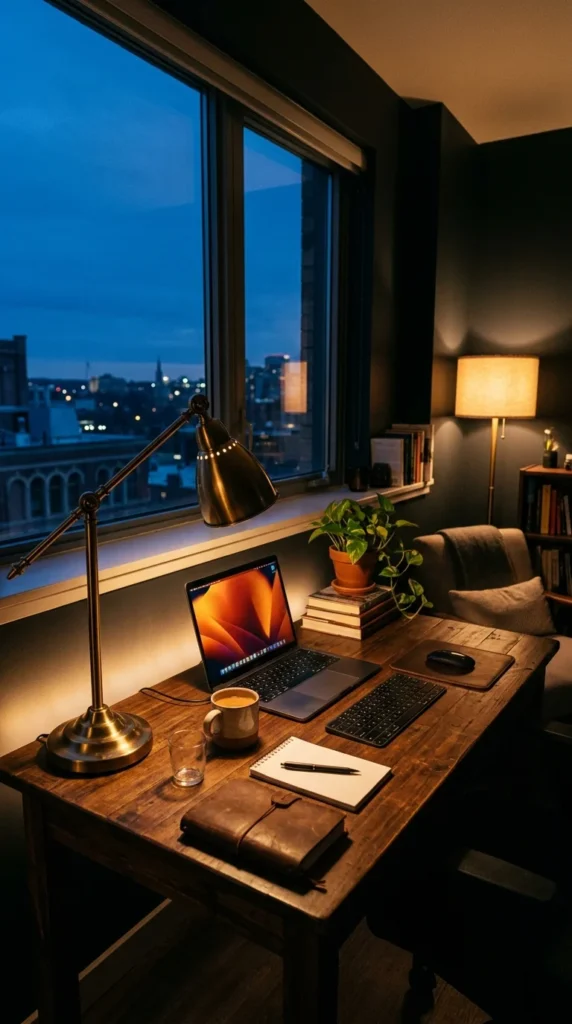
While natural light is best for daytime, a layered lighting plan is essential for evenings or cloudy days. Avoid harsh overhead lights that cause eye strain. Instead, use a combination of task lighting (a focused desk lamp) and ambient lighting (floor lamps or sconces). Smart bulbs that allow you to adjust the color temperature—from cool blue for focus to warm orange for relaxation—can help you transition through different work modes.
9. Wall-Mounted Storage
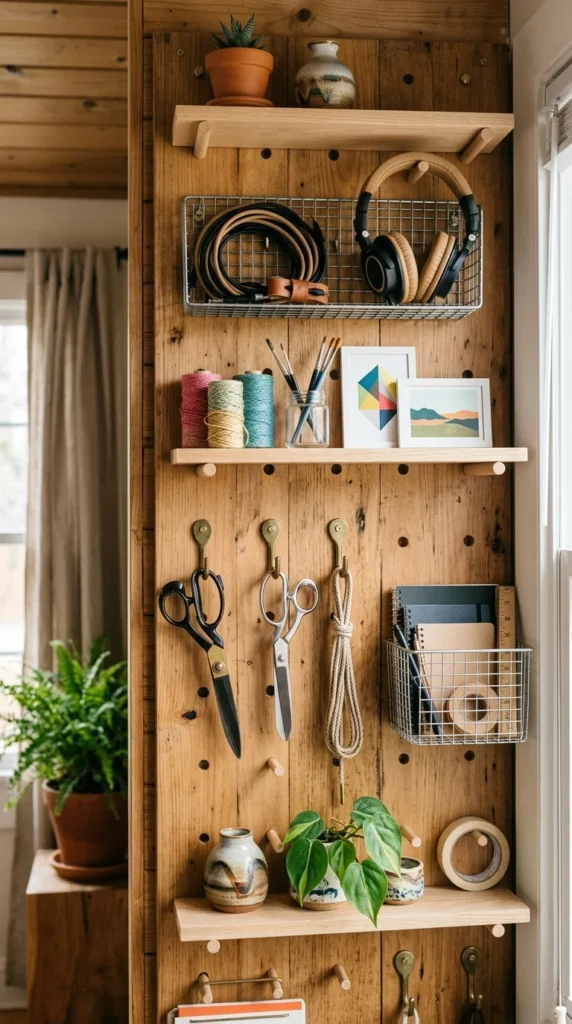
Vertical storage is the secret to a functional office. Instead of letting papers and supplies pile up on your desk, use wall-mounted systems. Pegboards, floating shelves, and slat-walls allow you to keep your tools within arm’s reach while keeping the desk surface clear. This also provides an opportunity to display items that inspire you, blending utility with decor.
10. Gallery Walls
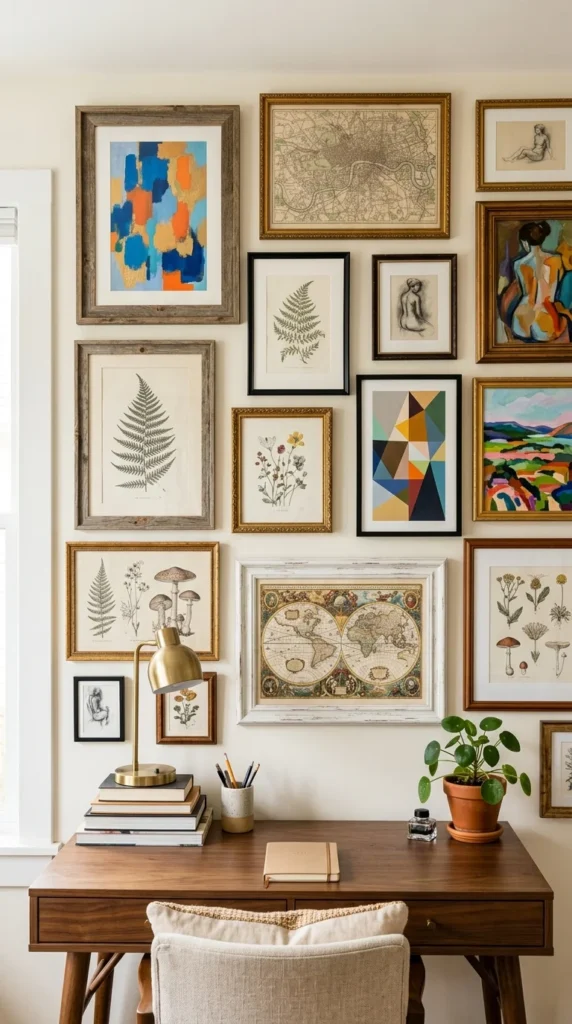
Your home office should reflect your personality. A gallery wall is a perfect way to infuse character into the space. Choose a mix of artwork, personal photographs, and motivational quotes that resonate with your professional goals. A curated wall serves as a beautiful backdrop for video calls and provides a source of inspiration during breaks.
11. Textured Rugs

Rugs do more than just add warmth to a room; they define the workspace within a larger area. A rug can act as an anchor for your furniture, visually separating the office from a bedroom or living room. Additionally, rugs provide acoustic benefits by dampening sound, which is particularly helpful if you spend a lot of time on calls or live in a house with hard flooring.
12. Cord Management

Nothing ruins the aesthetic of a beautiful office like a tangled mess of black wires. Invest in cord management solutions such as cable trays, magnetic clips, and cord hiders. By routing cables along the legs of your desk or hiding them in a dedicated box, you create a professional, streamlined look that feels much more organized.
13. Neutral Palettes
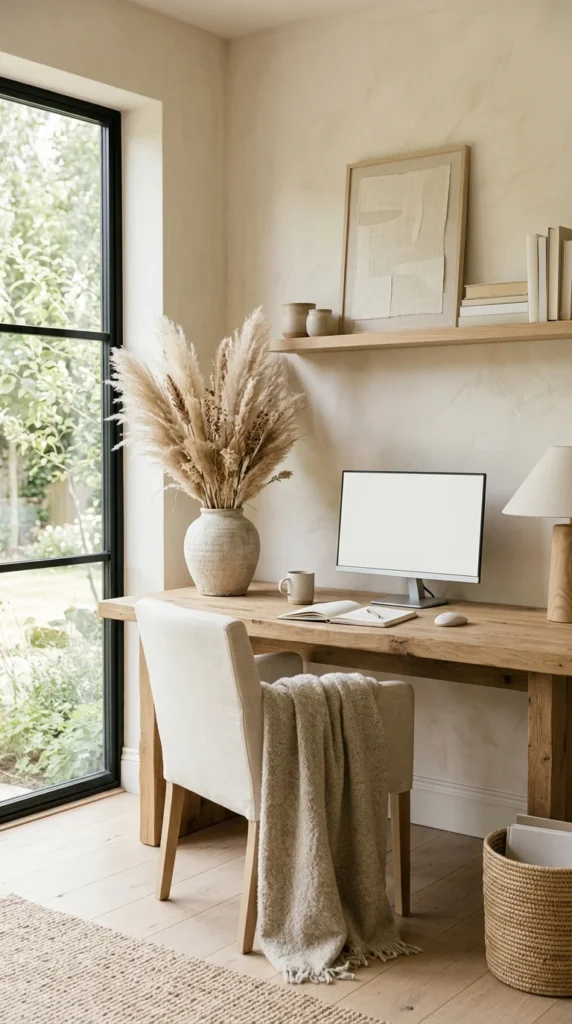
A neutral color palette—think whites, beiges, and soft greys—creates a serene environment that fosters concentration. Neutral tones are timeless and make the space feel larger and brighter. To prevent a neutral room from feeling flat, incorporate different textures like a linen chair, a wooden desk, and a wool throw blanket.
14. Accent Walls
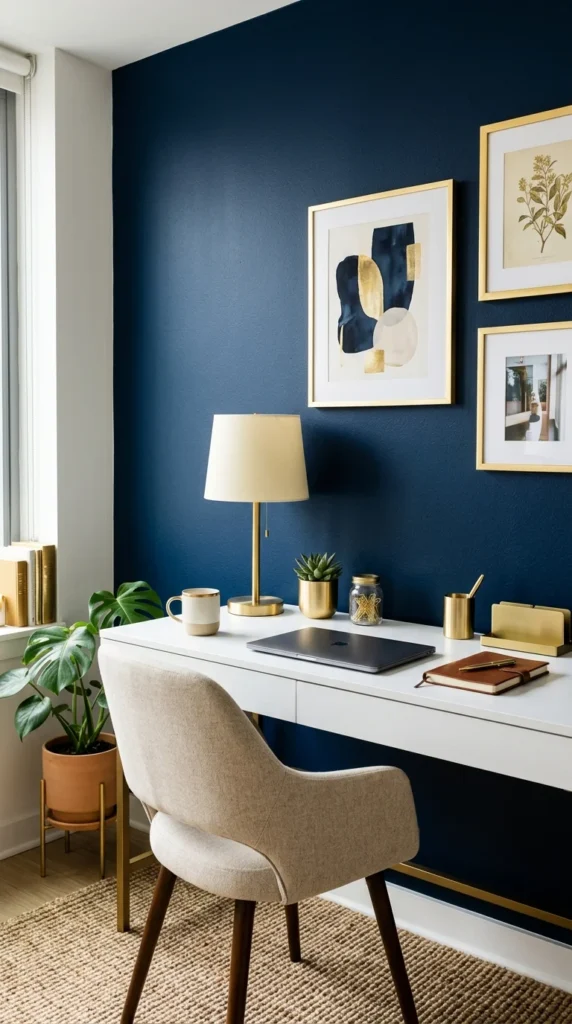
If you prefer a bolder look, an accent wall can define the energy of your office. Darker colors like forest green, charcoal, or navy create a “den-like” feel that is cozy and sophisticated. Alternatively, a textured accent wall using wood paneling or grasscloth wallpaper can add architectural interest without overwhelming the space.
15. Bookshelf Backdrops
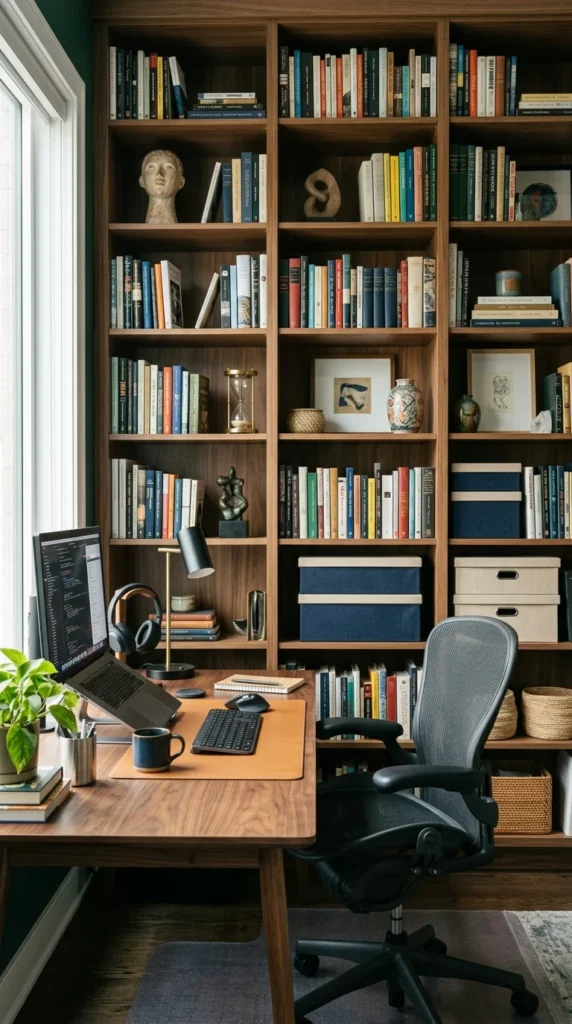
The “bookshelf wealth” aesthetic is perfect for a home office. A well-organized library behind your desk serves as an impressive background for virtual meetings and provides easy access to reference materials. Mix your books with decorative objects, vases, and plants to create a look that is both intellectual and stylish.
16. Vintage Touches
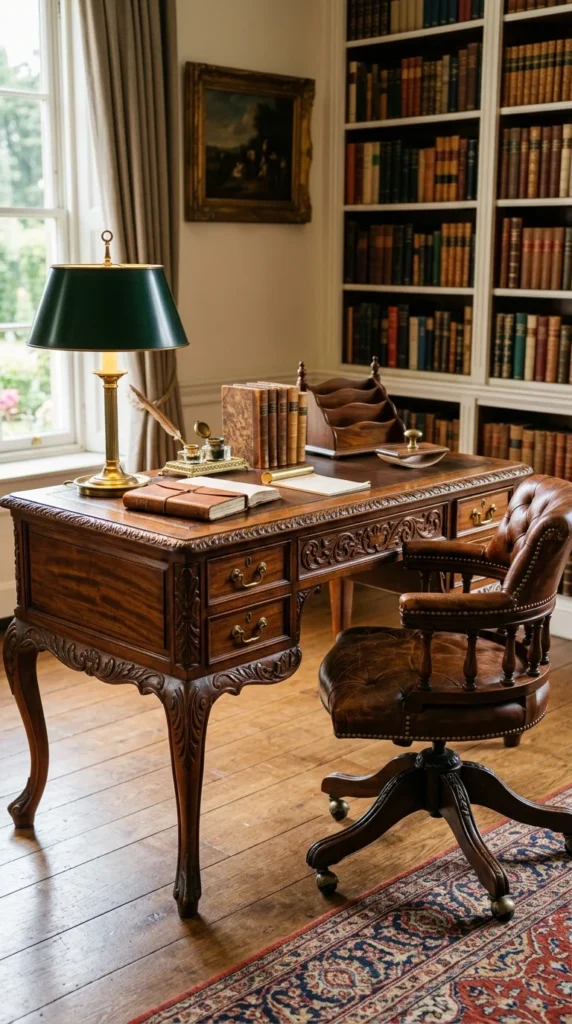
Incorporating vintage or antique furniture adds a sense of history and soul to your workspace. An old apothecary chest can be used for filing, while a mid-century modern credenza can house a printer and office supplies. These pieces often feature superior craftsmanship and bring a unique, non-commercial feel to a home office.
17. Smart Tech
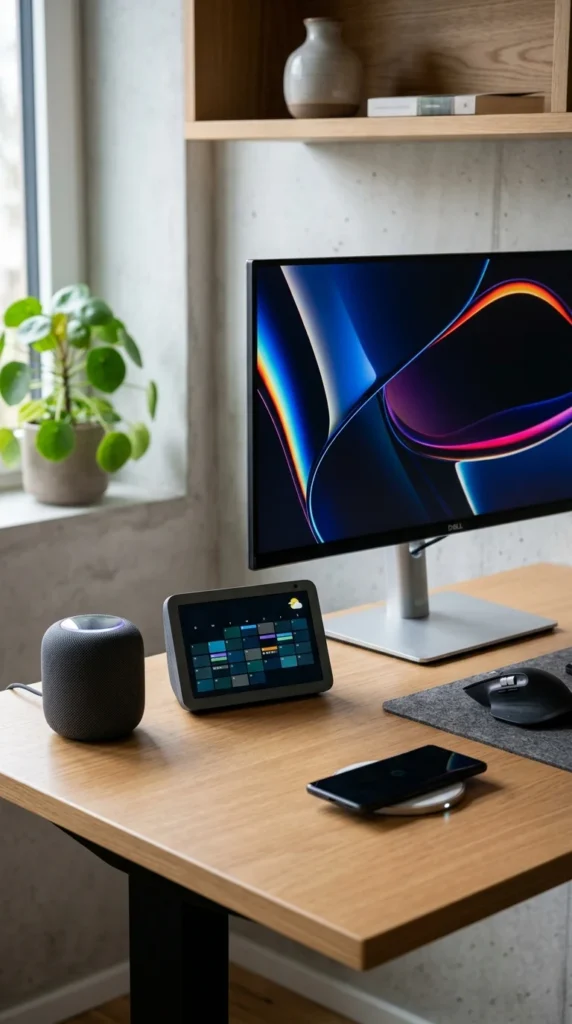
A functional workspace should work for you. Integrating smart home technology can streamline your workday. Voice-controlled assistants can set timers for the Pomodoro technique, smart plugs can turn your coffee machine on from your desk, and automated blinds can adjust based on the sun’s position to prevent glare.
18. Acoustic Panels
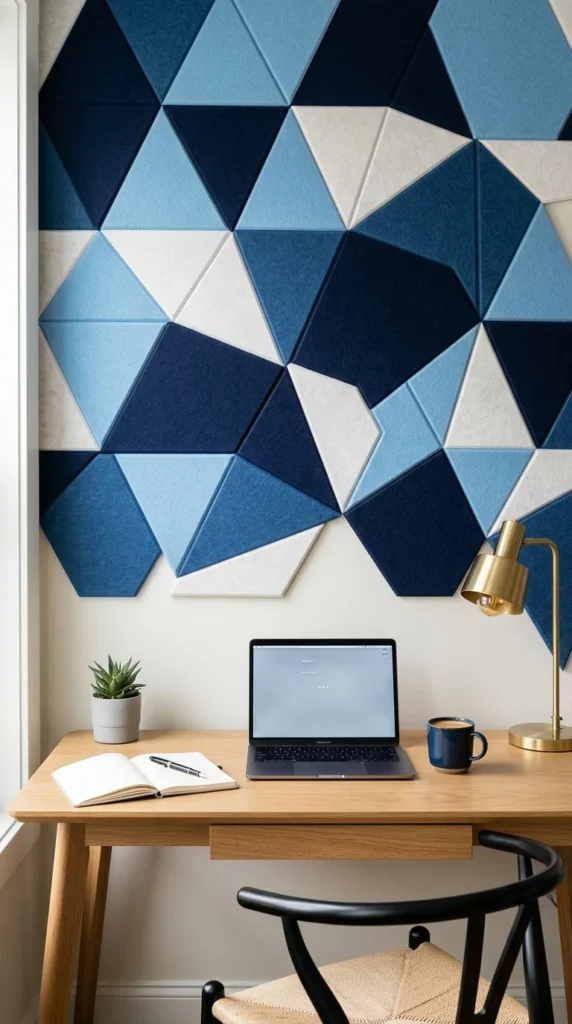
In a busy household, noise can be a major distraction. Acoustic panels are designed to absorb sound waves, reducing echo and background noise. Modern acoustic solutions are no longer just plain foam; they come in various shapes, colors, and materials that look like contemporary art, allowing you to improve your audio quality while enhancing the room’s design.
19. Window Seats
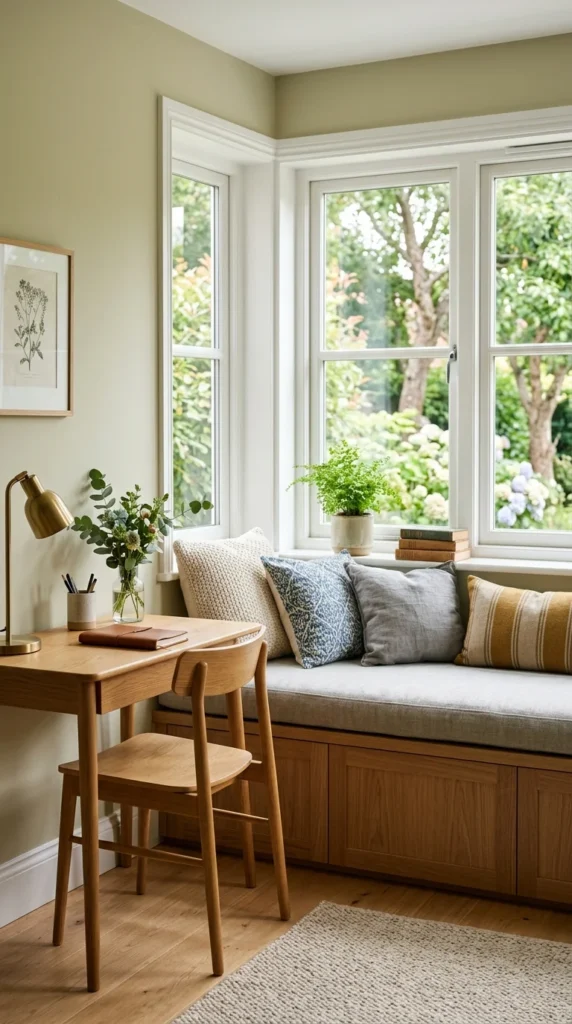
If your office is located in a room with a window, consider adding a window seat. This provides a secondary location for reading, brainstorming, or taking a break from the screen. Having a separate “low-tech” zone within your office encourages you to step away from your computer while still remaining in a productive mindset.
20. Corner Desks
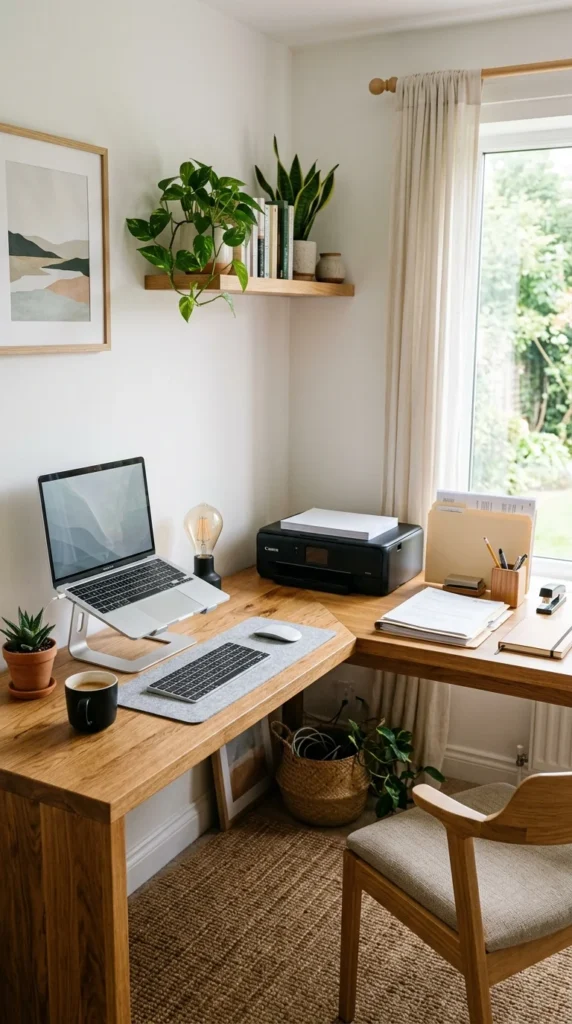
Corner desks, or L-shaped desks, are highly efficient for multi-taskers. They provide a large amount of surface area without taking up the center of the room. You can dedicate one side of the “L” to digital work and the other to analog tasks like sketching, writing, or reviewing physical documents. This physical separation of tasks can improve mental clarity.
21. Bold Colors
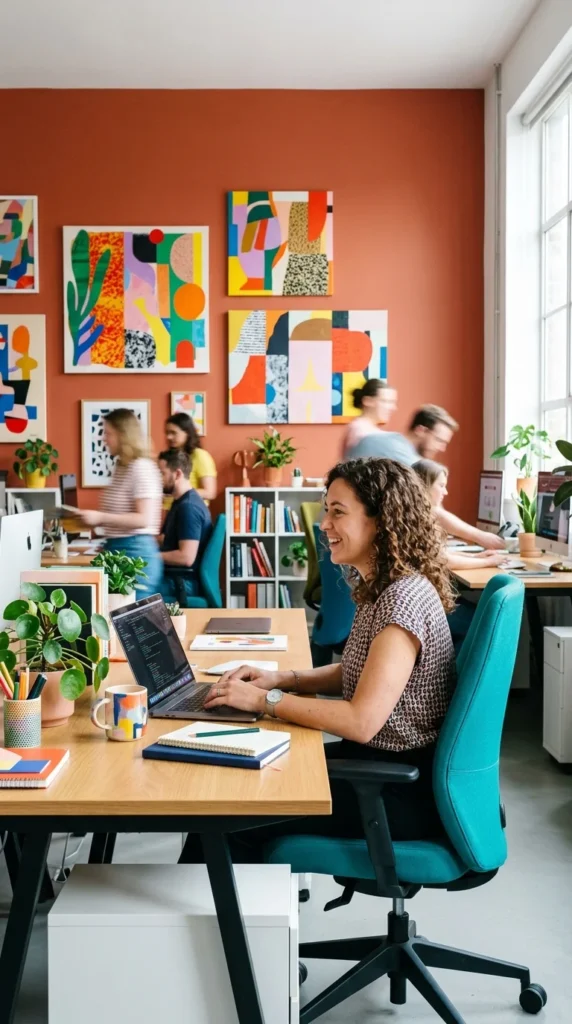
For those in creative fields, a bold color palette can be incredibly stimulating. Vibrant colors like orange, yellow, or teal can spark creativity and keep energy levels high. When using bold colors, try to balance them with neutral floors or ceilings to ensure the space doesn’t become visually overwhelming.
22. Dual Workspaces
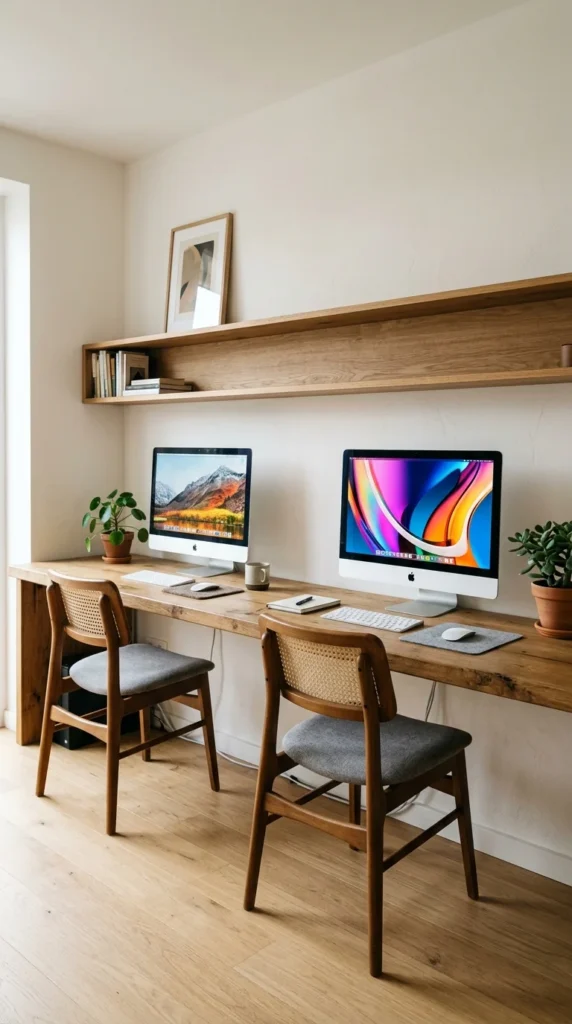
If you share your home with another remote worker, a dual workspace is essential. A long, continuous desk along one wall provides enough room for two people to work side-by-side. Use identical chairs and lighting to create a cohesive look, or personalize each “half” with different desk accessories to reflect each person’s individual style while maintaining a shared footprint.