
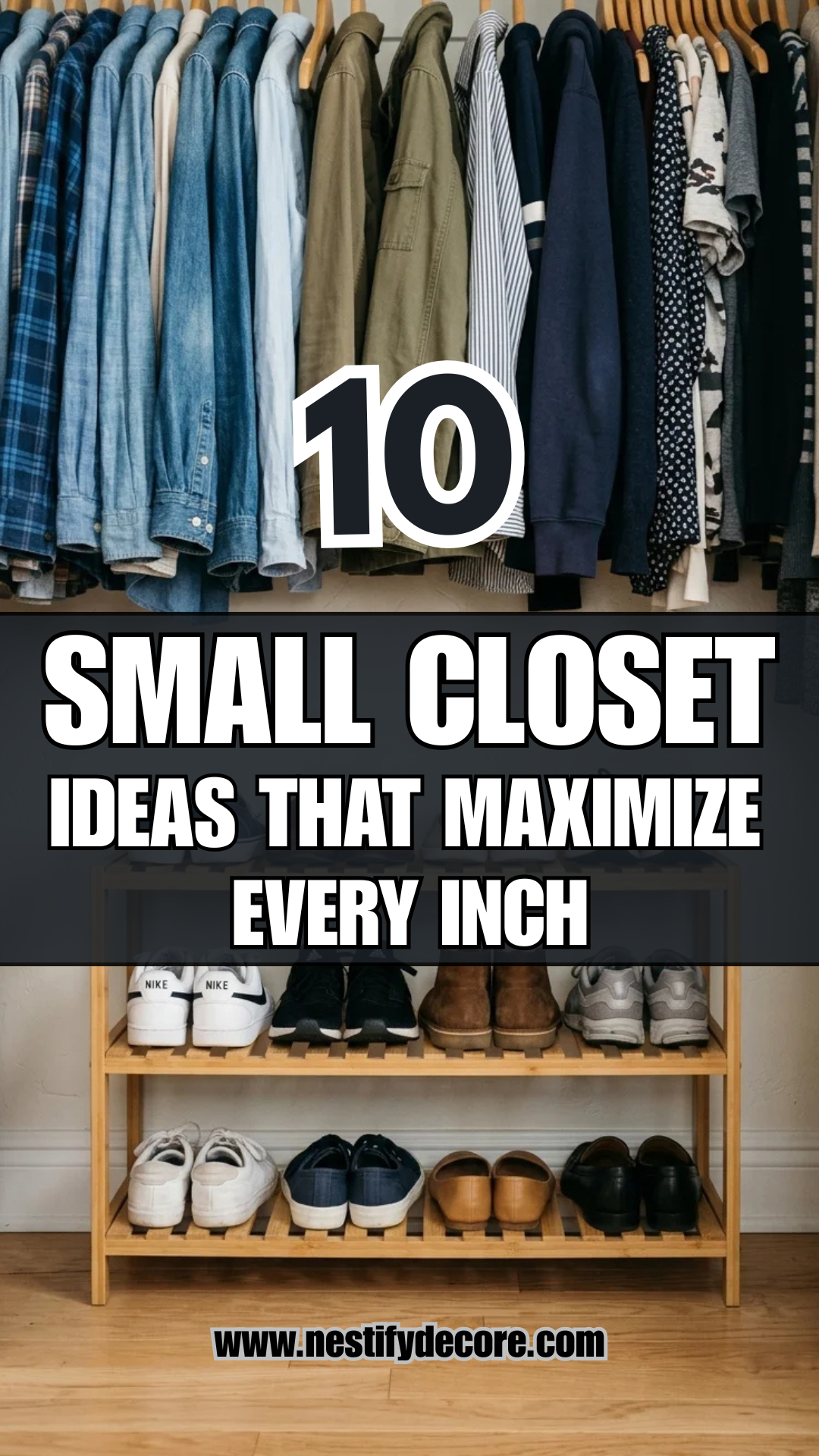
Living in a home with limited square footage often means grappling with the “small closet struggle.” When space is at a premium, a closet can quickly transform from a functional storage area into a chaotic catch-all for clothes, shoes, and miscellaneous clutter. However, a small closet doesn’t have to be a limitation. With a bit of strategic planning and the right organizational tools, even the tiniest reach-in can become a highly efficient wardrobe hub.
Maximizing every inch requires a shift in perspective. Instead of seeing a cramped box, see a three-dimensional puzzle where every wall, door, and floor tile offers potential. The goal is to eliminate “dead space”—those pockets of air where nothing is stored—and replace them with smart systems that make your morning routine seamless.
1. Vertical Shelving
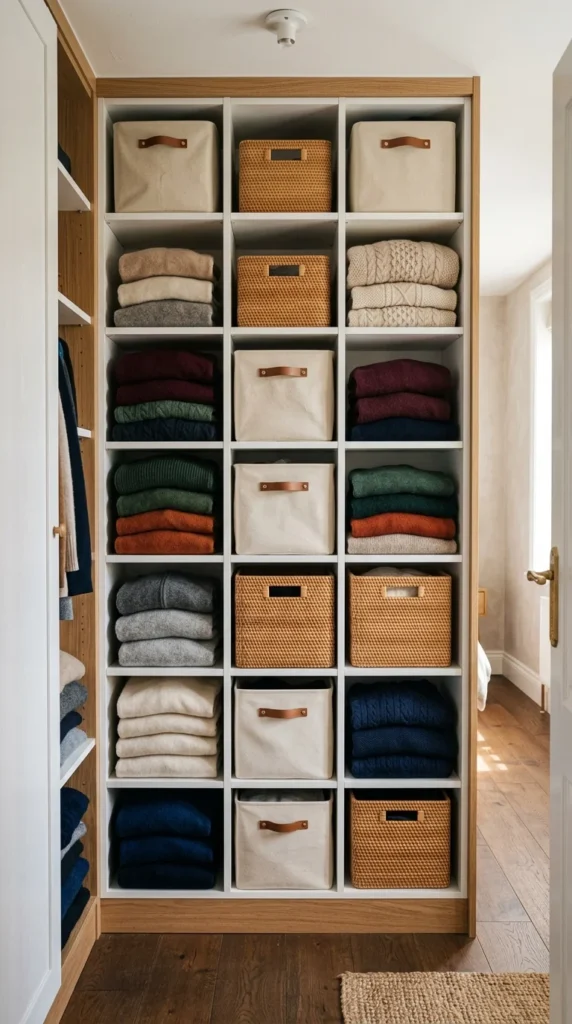
The most common mistake in small closet design is failing to use the full height of the walls. Most standard closets have a single rod and one shelf above it, leaving several feet of wasted space near the ceiling. By installing vertical shelving that reaches all the way up, you instantly increase your storage capacity by 30% or more.
High-altitude shelves are the perfect home for items you don’t use every day, such as heavy winter blankets, formal wear, or luggage. To make this work, keep a stylish folding step stool nearby so you can access the top tier without a struggle. Utilizing verticality shifts the storage burden off the floor, making the entire closet feel larger and more organized.
2. Double Rods
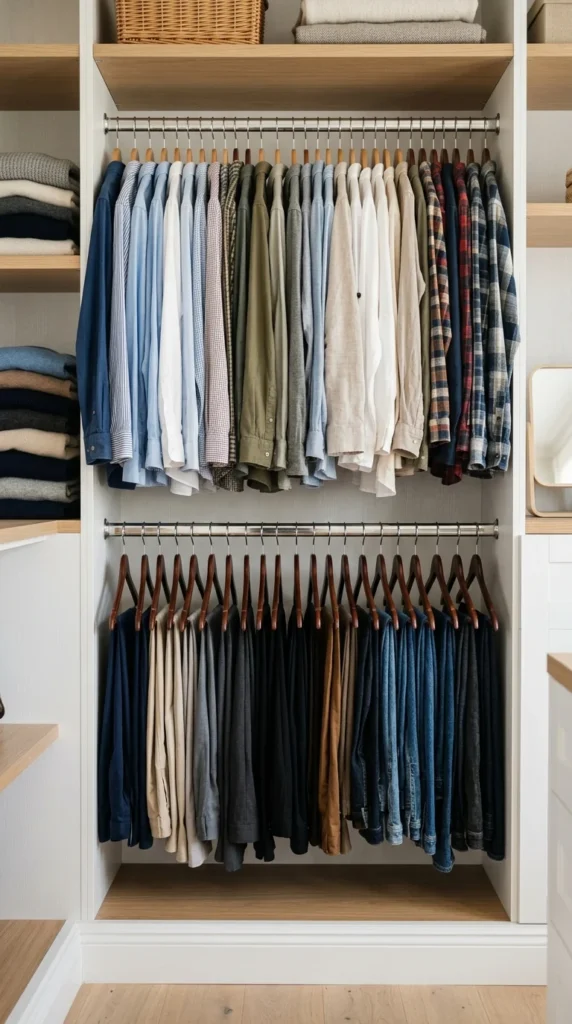
If your closet consists of one long rod with a vast empty space beneath your hanging shirts, you are losing valuable real estate. Installing a double rod system is one of the most effective ways to double your hanging capacity instantly. By placing one rod high for shirts and jackets and a second rod below it for pants and skirts, you utilize the vertical plane of the closet more efficiently.
This setup works best for “short-hang” items. You can leave a small section of the closet with a single high rod for “long-hang” items like dresses or overcoats, but for the rest of your wardrobe, the double-up method is a game-changer. It keeps your clothes visible and prevents the bottom of the closet from becoming a graveyard for fallen hangers and shoes.
3. Door Organizers
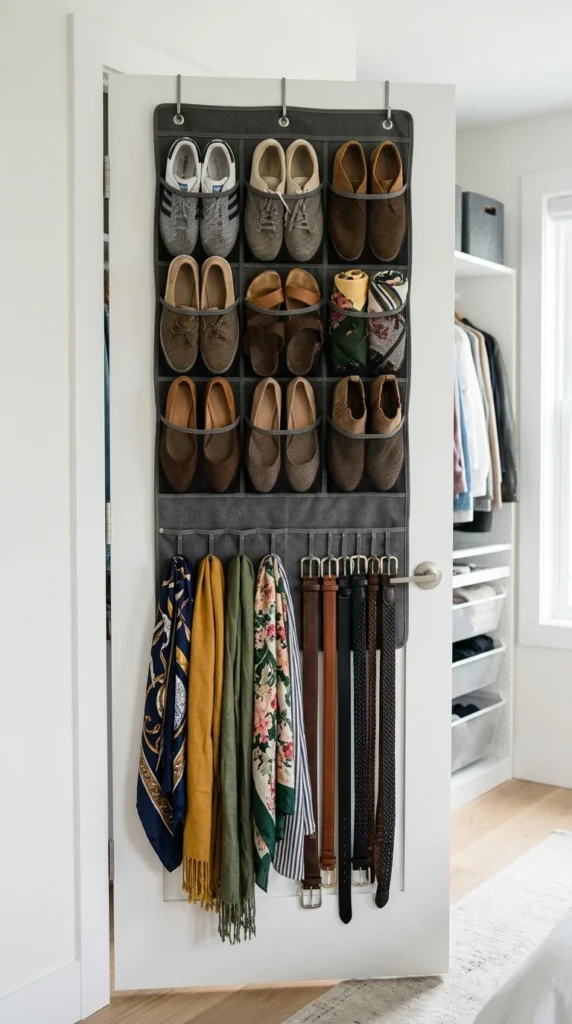
The back of the closet door is often the most overlooked area in a bedroom. In a small space, this is “prime real estate” that can hold dozens of items without taking up any internal shelf or rod space. Over-the-door organizers come in various styles, from clear plastic pockets for shoes to metallic racks for handbags and accessories.
Beyond just shoes, these organizers can store rolled-up leggings, umbrellas, lint rollers, or even jewelry. If you prefer a more custom look, you can install a pegboard or a grid system directly onto the door. This allows you to move hooks around and create a bespoke storage station for your daily essentials, keeping your main shelves clear for bulkier items.
4. Uniform Hangers
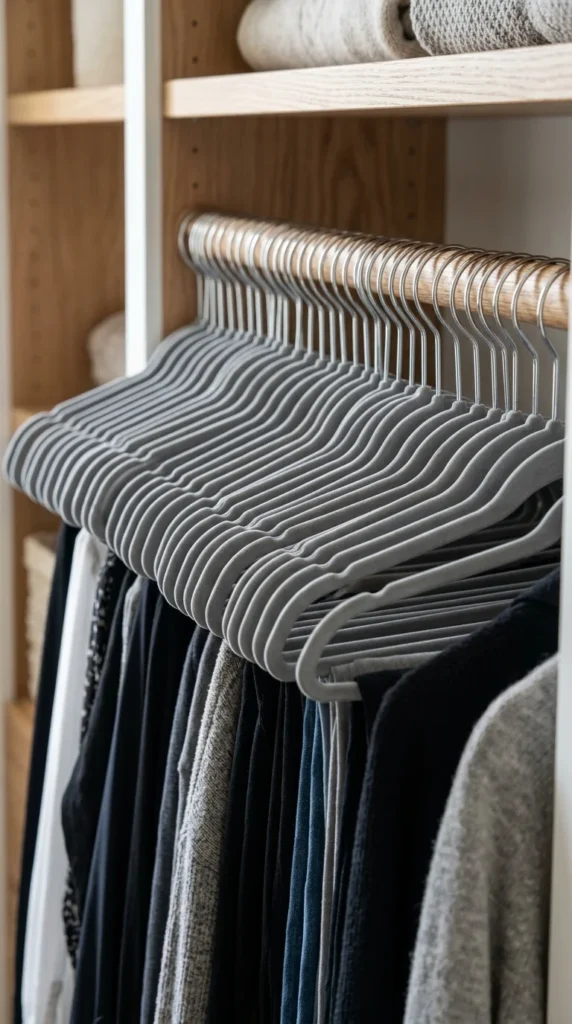
It may seem like a small detail, but the type of hangers you use significantly impacts how much you can fit in a closet. Mismatched plastic, wood, and wire hangers are bulky and create “visual noise” that makes a small space feel cluttered. They also take up more horizontal space on the rod than necessary.
Switching to ultra-slim velvet hangers can save a surprising amount of room—sometimes allowing you to fit up to 20% more clothing on the same rod. The non-slip surface also prevents clothes from sliding off and piling up on the floor. For even more efficiency, look for cascading hooks that allow you to hang multiple hangers vertically from one another, further exploiting the vertical space.
5. Pull-out Bins
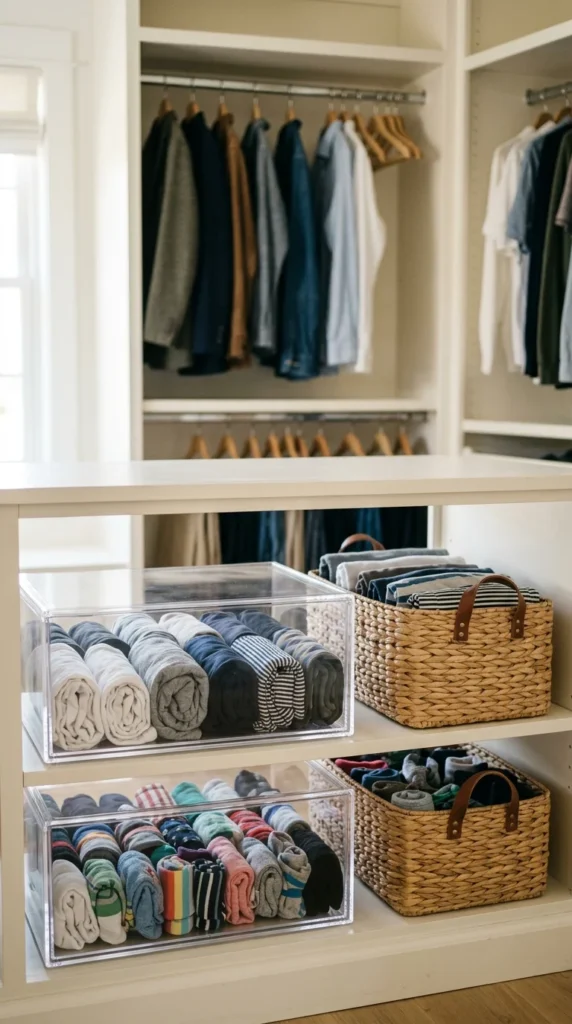
Deep shelves can be a curse in a small closet because items at the back tend to get lost and forgotten. The solution is to treat your shelves like drawers. By using pull-out bins or baskets, you can easily access items at the very back of the shelf without having to dig through stacks of clothing.
Transparent bins are excellent for seeing exactly what you have at a glance, while opaque wicker or fabric bins offer a cleaner, more uniform look. Use these for categories of items that don’t hang well, such as workout gear, socks, or swimwear. Labeling the front of each bin adds an extra layer of organization that ensures everything is returned to its proper home.
6. Lighting
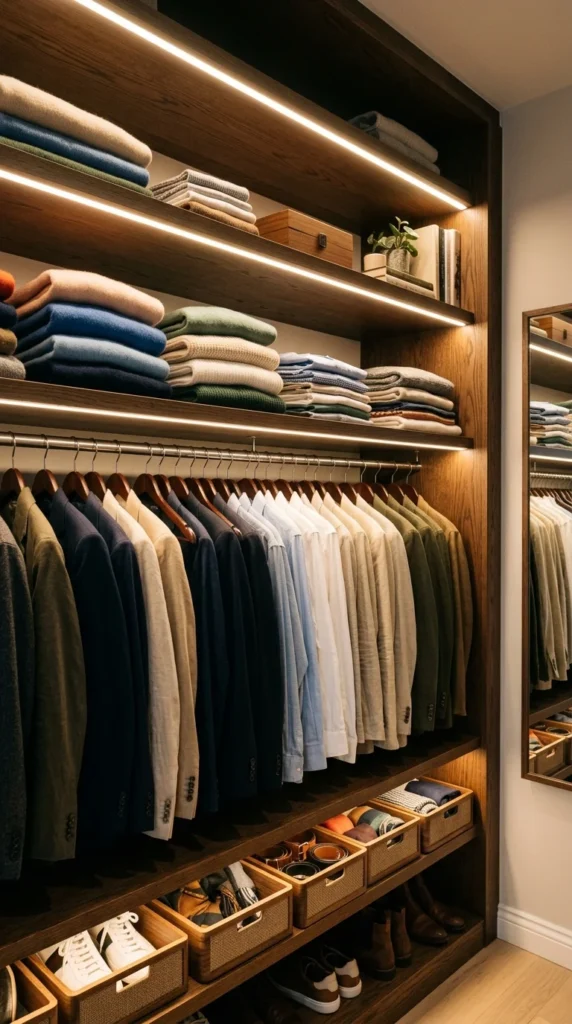
A dark closet is a messy closet. When you can’t see into the corners of your wardrobe, clutter tends to accumulate, and you end up wearing the same three outfits because everything else is hidden in shadows. Adding high-quality lighting can transform the functionality and feel of a small space.
You don’t need a licensed electrician to brighten things up. Battery-operated LED motion-sensor lights are an affordable and easy-to-install option. They turn on automatically when you open the door, illuminating every shelf and rod. Good lighting makes the space feel more expansive and helps you distinguish between navy blue and black garments, saving you time and frustration during your morning routine.
7. Floor Space
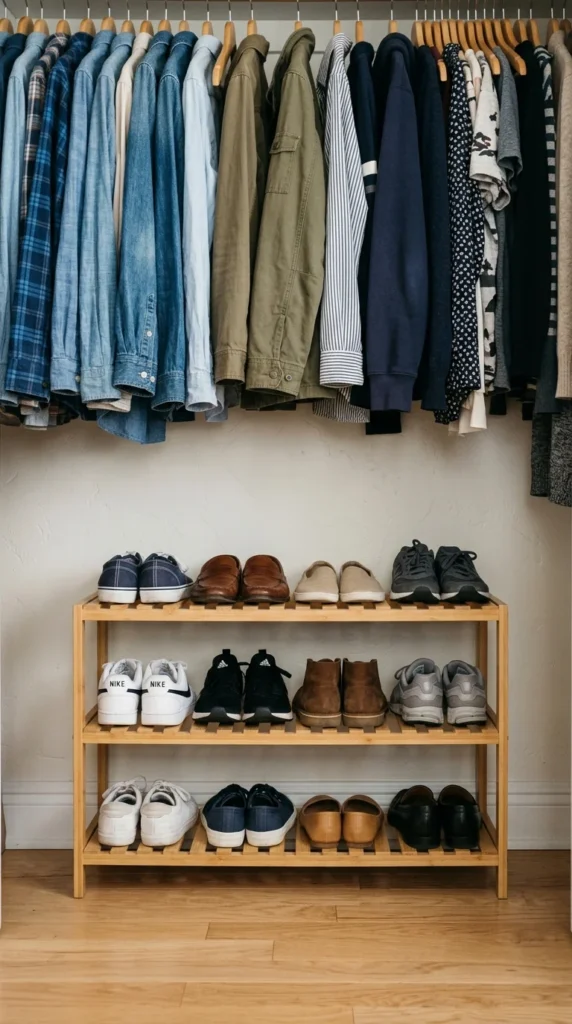
The floor of a small closet is often a chaotic pile of shoes and bags. To maximize this area, you must give everything a designated spot. A tiered shoe rack is the gold standard for floor organization, as it prevents shoes from being crushed and keeps them accessible.
If you have a very narrow closet, consider using “shoe slots” which stack one shoe on top of the other to save 50% of the footprint. If you don’t have many shoes, use the floor space for a small rolling cart or a set of stackable drawers. The key is to keep items off the actual floor surface, which makes the closet easier to clean and creates the illusion of more space.
8. Shelf Dividers
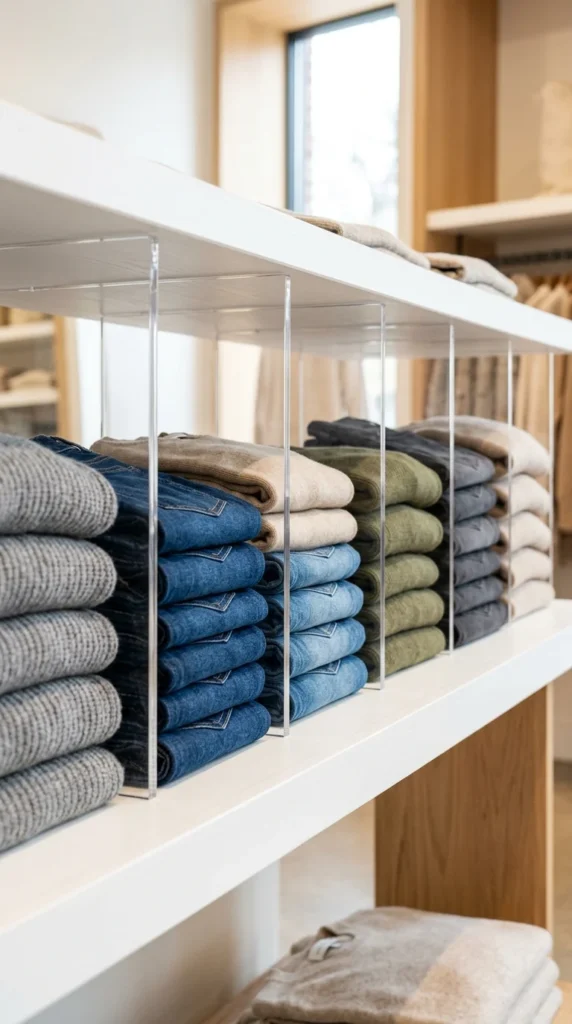
One of the biggest challenges with shelving is the “avalanche effect,” where stacks of clothes eventually tip over and merge into one giant mess. Shelf dividers act as invisible boundaries that keep your folded items upright and organized.
These dividers are particularly useful for bulky items like sweaters, jeans, and handbags. By keeping stacks separate, you can pull one item out without disturbing the rest of the pile. This maintains the integrity of your organization system over time and prevents you from having to reorganize the entire closet every week. Clear acrylic dividers are popular because they provide structure without adding visual bulk.
9. Corner Units
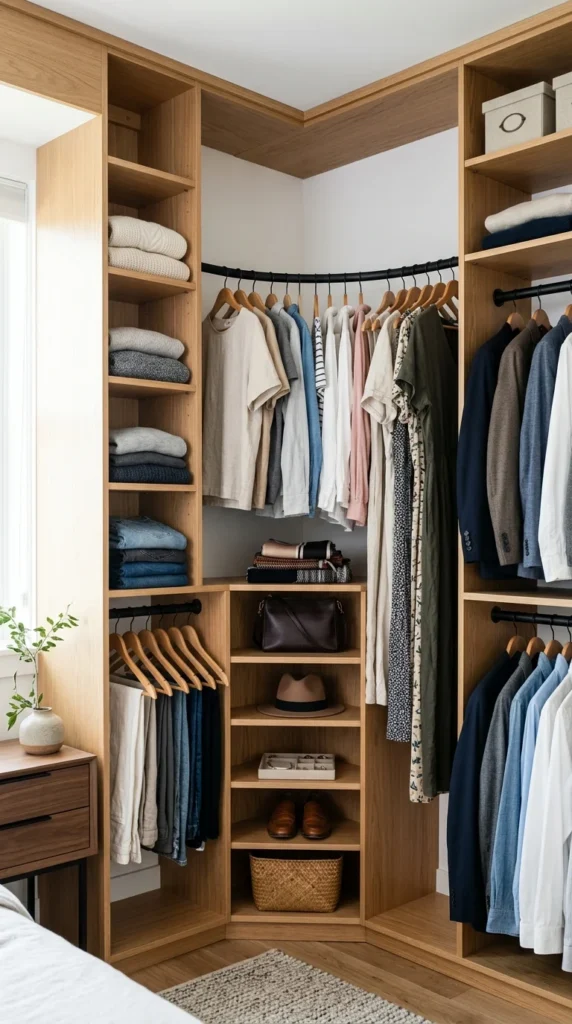
The corners of a closet are notoriously difficult to use. In many standard designs, the rod simply stops before the corner, leaving a “dead zone” that is hard to reach. Specialized corner units or curved rods are designed to reclaim this space.
Alternatively, you can use the corner for “dead storage”—items you only need once a month—or install a series of small corner shelves for accessories like hats or rolled-up belts. If you have a walk-in closet with a corner, a “lazy Susan” style rotating rack can also be an ingenious way to access shoes or handbags that would otherwise be buried in the back.
10. Seasonal Rotation
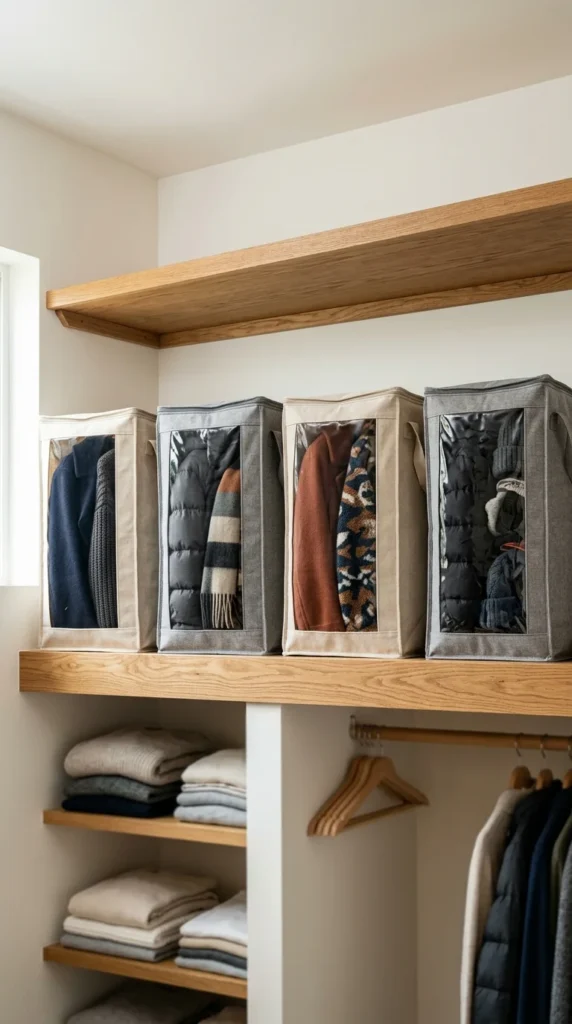
The best way to maximize a small closet is to ensure that only the items you are currently wearing are inside it. If your closet is jammed with heavy wool coats in the middle of July, you are wasting valuable space. Implementing a seasonal rotation system is essential for small-space living.
Twice a year, go through your wardrobe and remove items that aren’t appropriate for the current weather. Store these off-season clothes in vacuum-sealed bags or under-bed storage containers. This “breathes” life back into your closet, making it easier to see your current options and reducing the physical density of the hanging clothes. When you only see what you can actually wear, getting dressed becomes an enjoyable experience rather than a chore.