
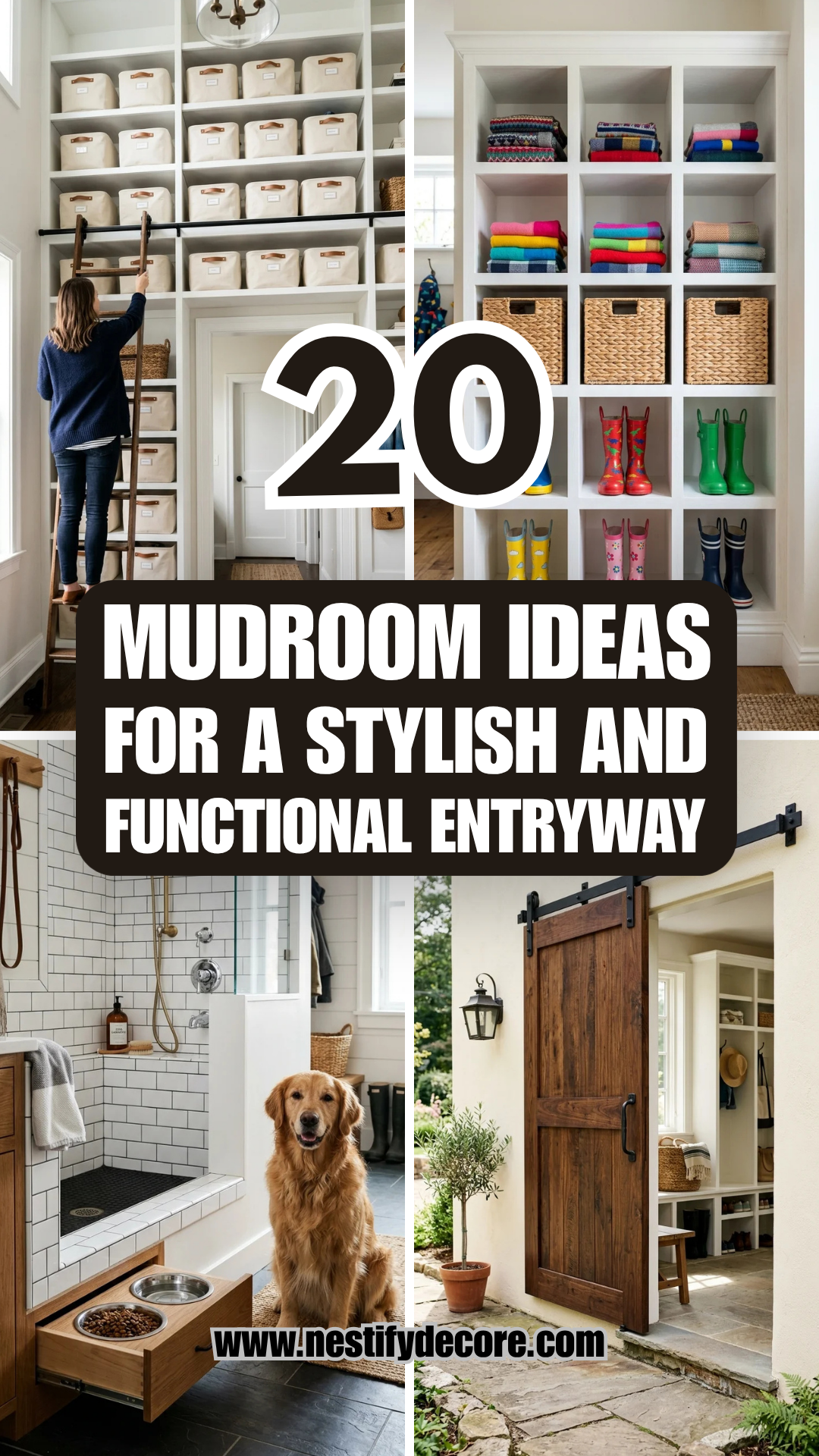
The mudroom is the unsung hero of the home. It serves as the transition zone between the chaotic outdoor world and the sanctuary of your interior. A well-designed mudroom doesn’t just keep the dirt out; it organizes your daily life, provides a designated spot for every family member’s gear, and sets the aesthetic tone for the rest of your house. Whether you have a dedicated room or a small corner near the back door, these twenty ideas will help you maximize both style and utility.
1. Custom Lockers
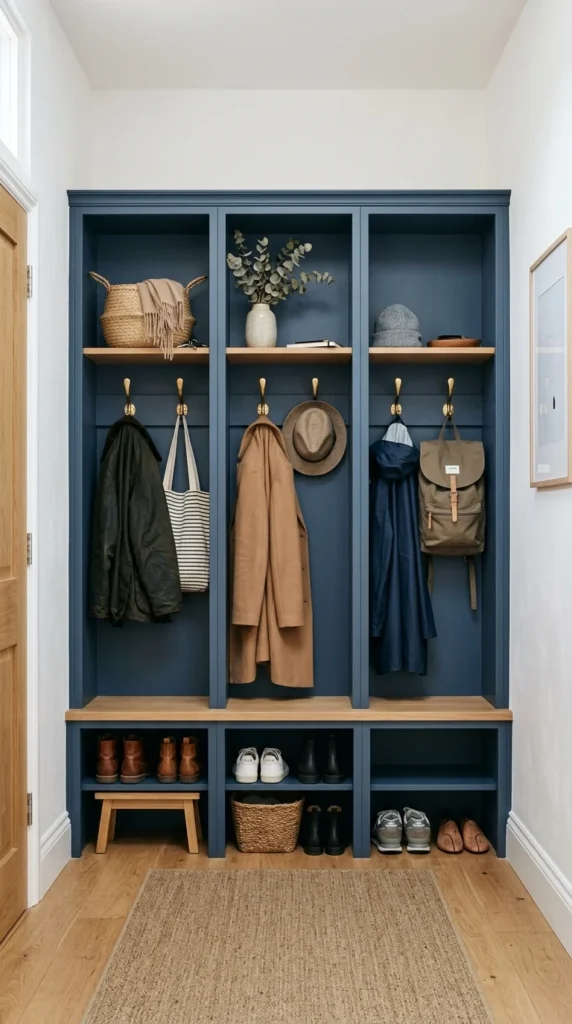
Custom lockers are the gold standard for mudroom organization. By providing a dedicated “stall” for each family member, you eliminate the morning scramble for lost backpacks or misplaced coats. To make them truly functional, ensure each locker has at least two hooks and a shelf for smaller items like hats or sunglasses. Painting them a contrasting color to the walls can turn a utility feature into a stunning architectural focal point.
2. Integrated Benches
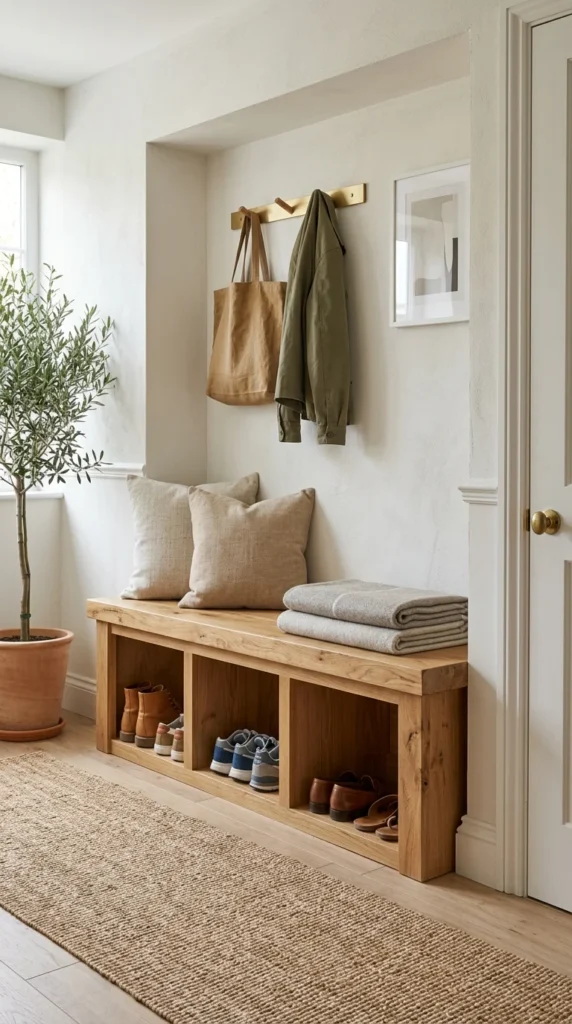
A mudroom without a place to sit is only half-functional. An integrated bench provides a stable surface for putting on boots or setting down heavy grocery bags. Choosing a durable material like sealed hardwood or even a stone slab ensures it can withstand the moisture of wet raincoats and the scratches of daily use. Adding a cushion in a performance fabric can soften the look without sacrificing durability.
3. Patterned Tiles
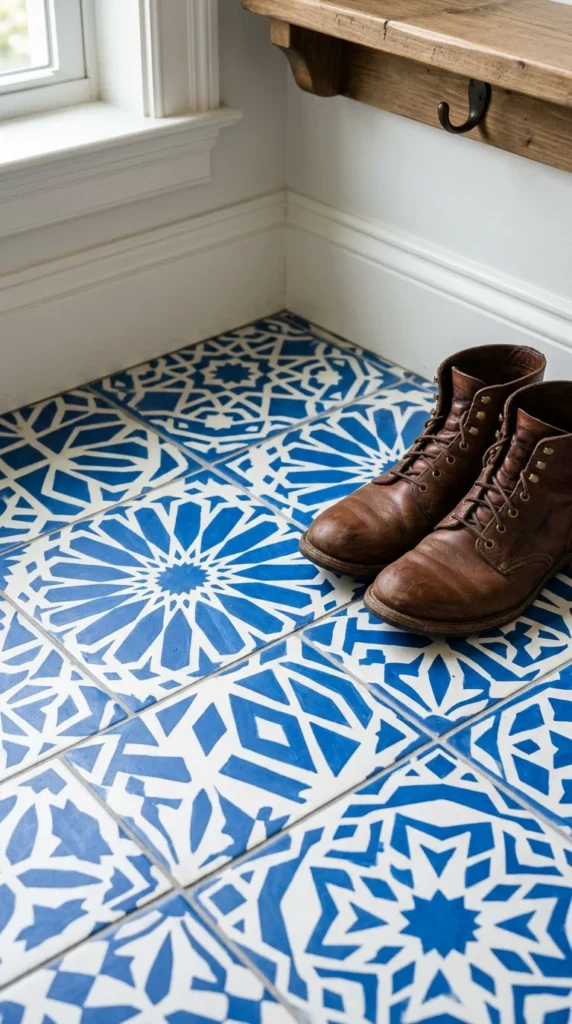
Flooring is the most important practical decision in a mudroom. While hardwood is beautiful, it often fails under the stress of mud, snow, and salt. Patterned cement or porcelain tiles are waterproof, easy to clean, and incredibly stylish. A busy pattern is also excellent at hiding minor dirt and dust between cleanings, keeping your entryway looking pristine even on a busy Tuesday.
4. Open Cubbies
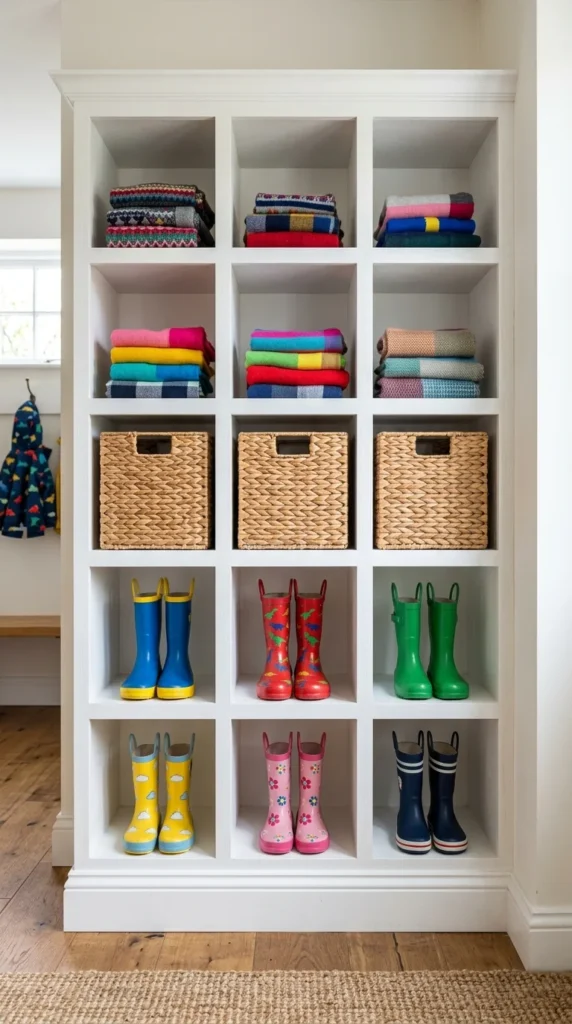
Open cubbies offer the ultimate in accessibility. For families with young children, “out of sight, out of mind” often leads to clutter. Open cubbies allow kids to easily see where their belongings go and grab them on their way out the door. You can use the upper cubbies for seasonal items like summer hats and the lower ones for frequently used footwear.
5. Floor-to-Ceiling Cabinetry
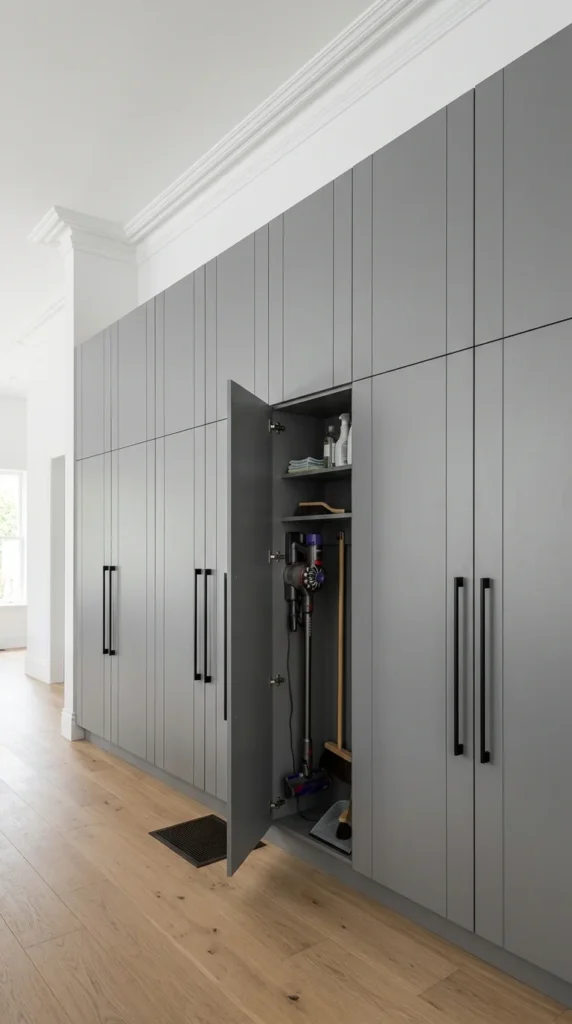
If you prefer a clean, minimalist aesthetic, floor-to-ceiling cabinetry is the way to go. This “hidden” storage approach allows you to stow away everything from bulky winter parkas to sports equipment behind closed doors. Utilizing the full height of the room maximizes your square footage, providing extra space for items you only use occasionally, like holiday decorations or camping gear.
6. Pet Stations
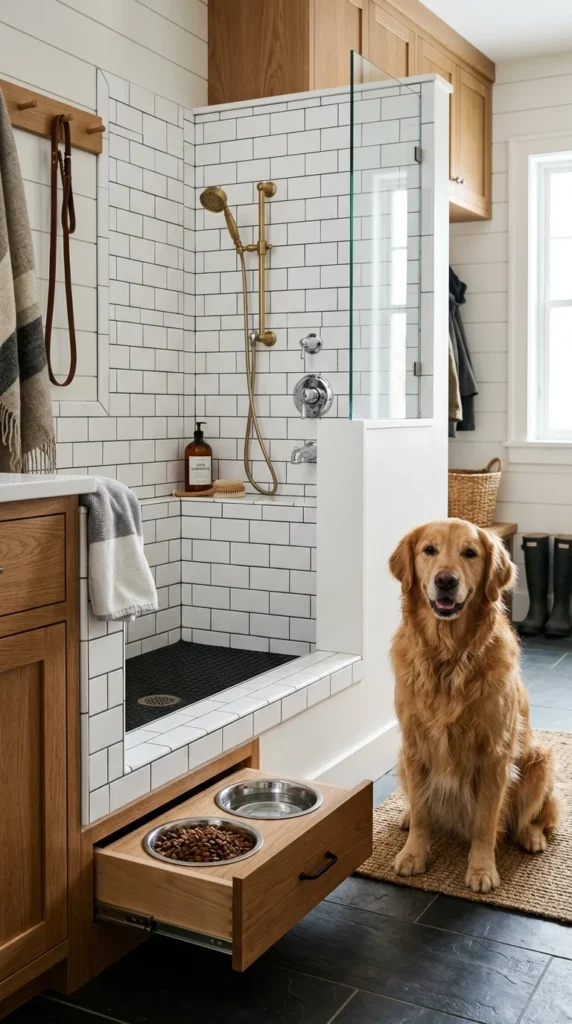
Mudrooms are the perfect place to manage the needs of your furry friends. A built-in pet station can include a small tiled shower for washing muddy paws, a pull-out drawer for food and water bowls, and dedicated hooks for leashes. This keeps pet-related mess contained in one easy-to-clean area rather than spreading through the rest of your home.
7. Heavy-Duty Hooks
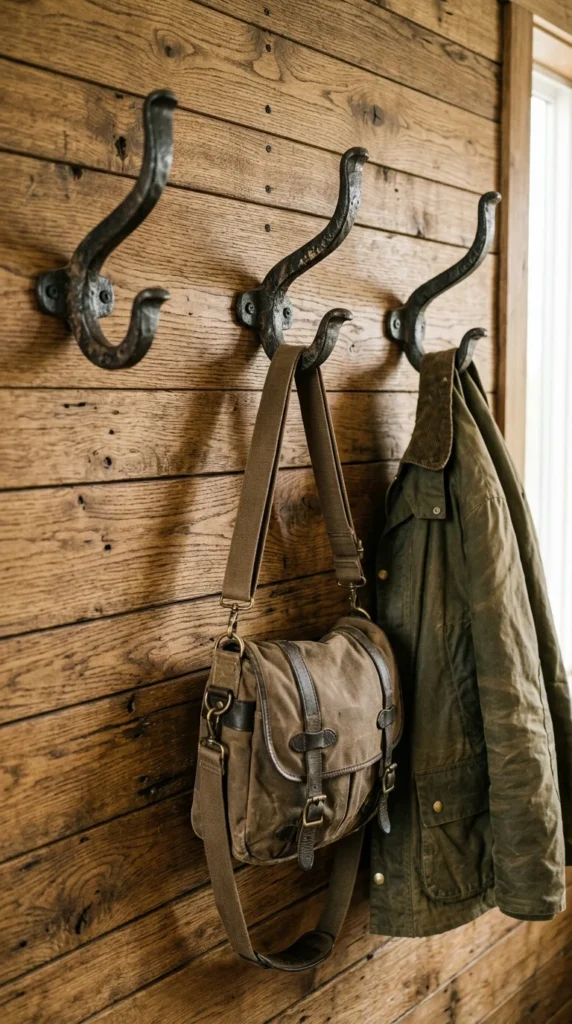
Never underestimate the power of a good hook. In a mudroom, hooks are often more practical than hangers because they are faster to use. Opt for heavy-duty, double-pronged hooks that can support the weight of wet winter coats or heavy backpacks. Spacing them at different heights—lower for kids and higher for adults—ensures that everyone has an accessible spot for their gear.
8. Natural Wood
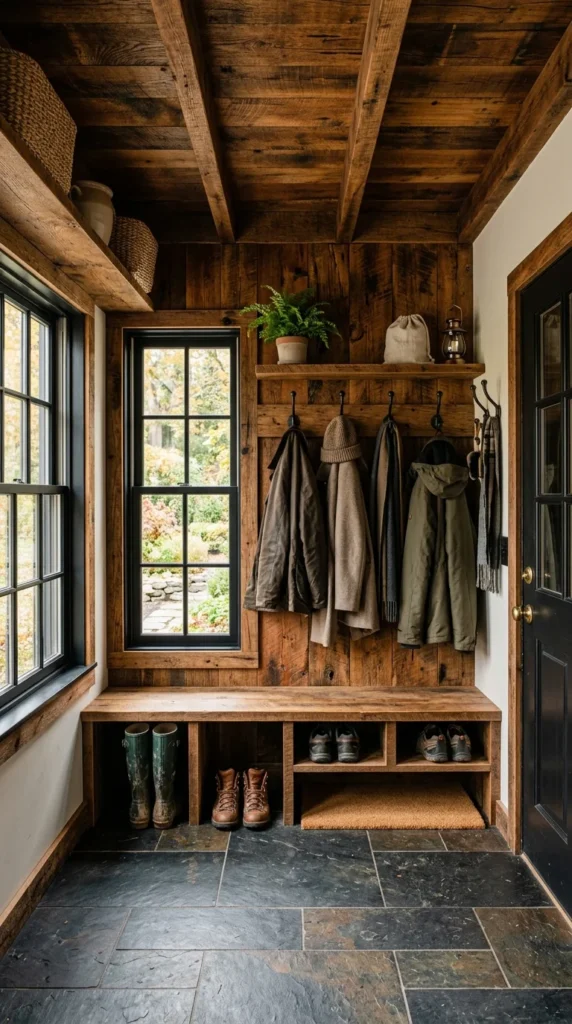
Incorporating natural wood elements brings warmth to a space that can otherwise feel sterile and utilitarian. Whether it’s a reclaimed wood accent wall, a thick timber bench, or wooden ceiling beams, these organic textures create an inviting atmosphere. Wood also ages gracefully; a few scratches on a rustic wooden bench often add to its character rather than detracting from its beauty.
9. Farmhouse Sinks
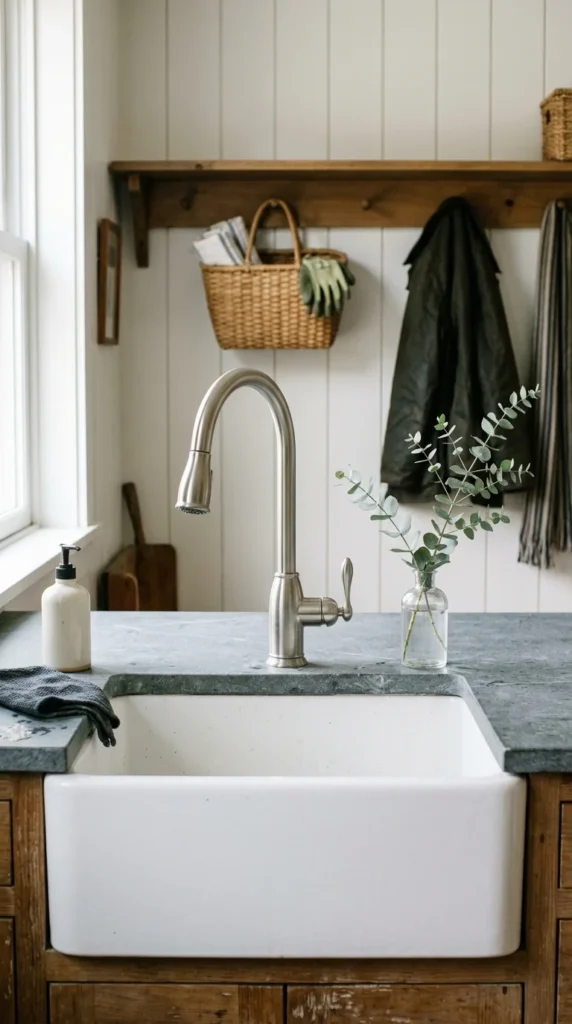
A utility sink in the mudroom is a game-changer for active households. It provides a place to pre-scrub stained clothes, wash garden vegetables, or clean paintbrushes without dirtying the kitchen or bathroom. A large, deep farmhouse-style sink is particularly effective because it can accommodate bulky items and minimizes splashing on the surrounding surfaces.
10. Sliding Barn Doors
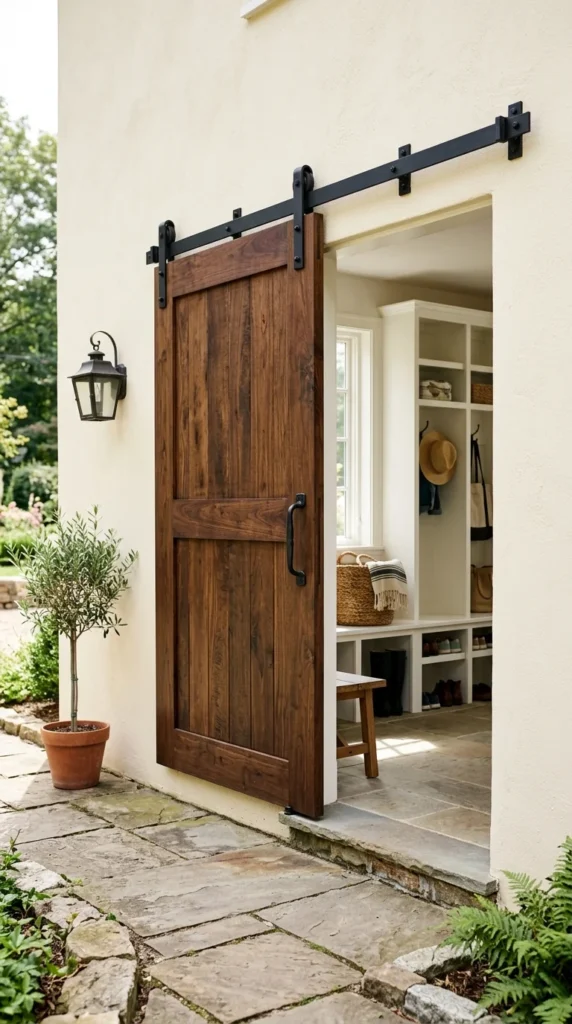
Not everyone wants their mudroom on display at all times. Sliding barn doors are an excellent solution for closing off the “mess” from the rest of the house. They save space because they don’t swing out into the hallway, and they provide a large-scale decorative element that can complement a variety of interior styles, from rustic farmhouse to industrial modern.
11. Bold Colors
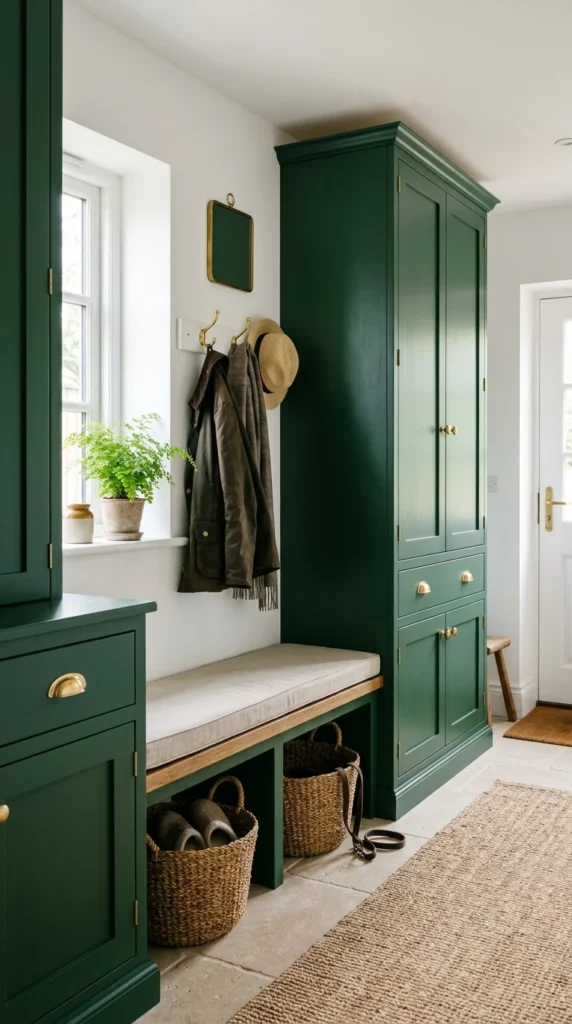
Since the mudroom is often a small, enclosed space, it’s a great place to experiment with bold color choices that might feel overwhelming in a living room. Deep greens, moody blues, or even a vibrant terracotta can make the room feel like a deliberate design choice rather than just a utility closet. Pairing bold cabinet colors with neutral walls and floors keeps the space feeling balanced and bright.
12. Mirror Accents
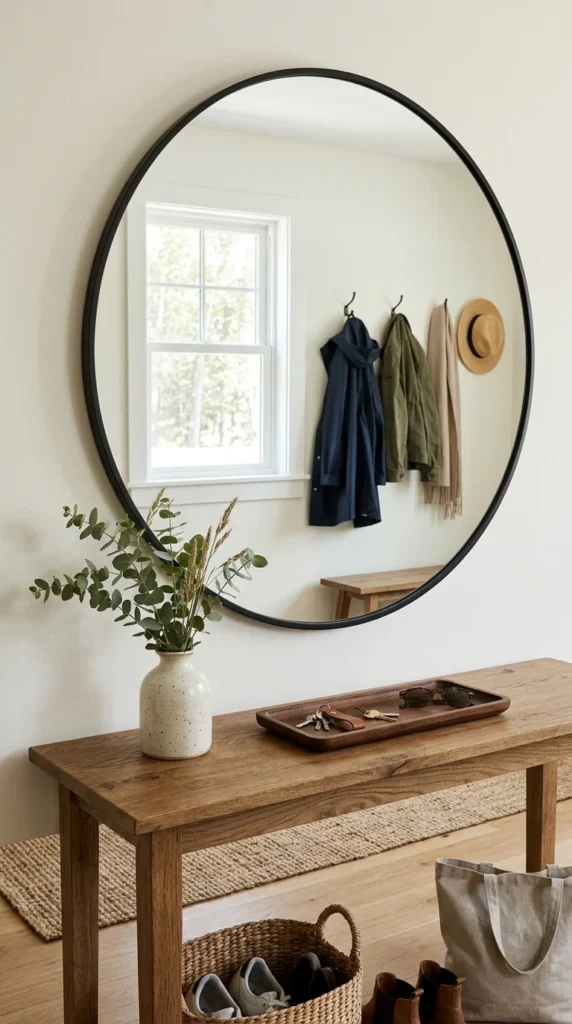
A mirror is a functional necessity for that final check before you head out the door. Beyond its utility, a well-placed mirror can bounce light around a windowless mudroom, making it feel much larger and more open. A large circular mirror can soften the straight lines of cabinets and cubbies, adding a touch of elegance to the entryway.
13. Woven Baskets
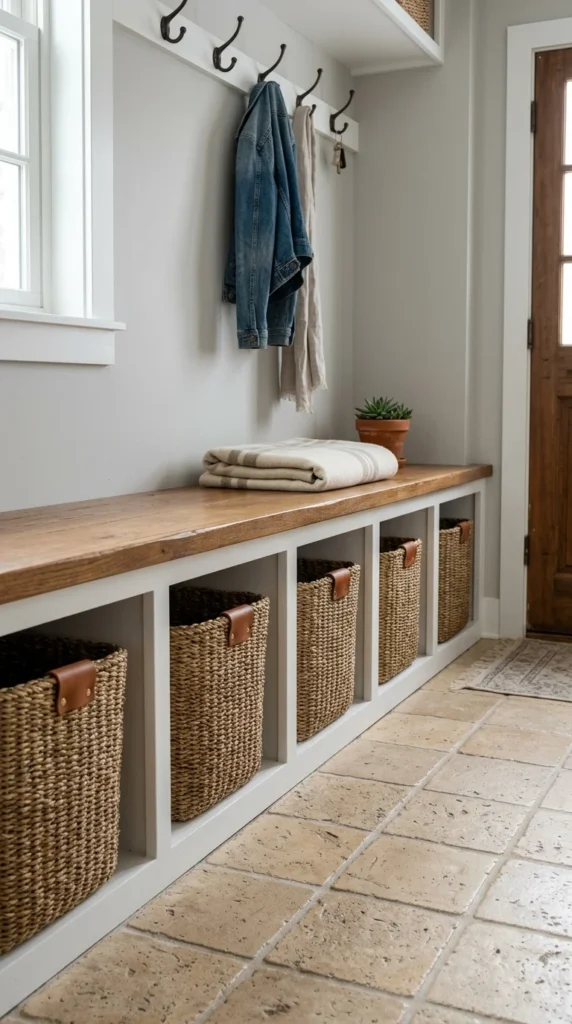
Woven baskets are the secret weapon of mudroom organization. They provide a textural element that softens the hard surfaces of the room while hiding a multitude of sins—like a jumble of mismatched mittens or dog toys. Using identical baskets creates a sense of visual rhythm and order, making the room look professionally organized even if the contents of the baskets are chaotic.
14. Industrial Lighting
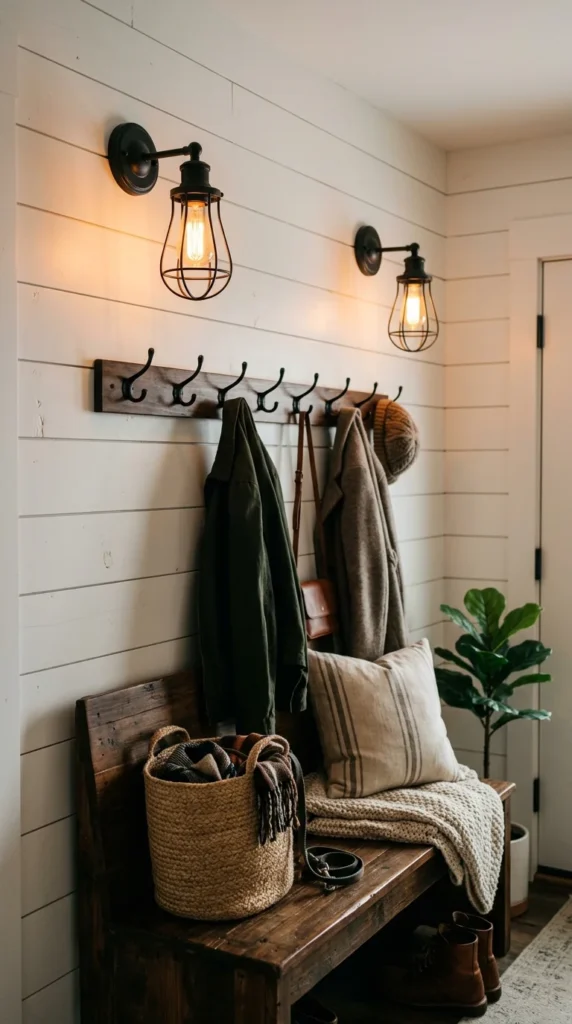
Lighting in a mudroom should be both functional and atmospheric. While recessed ceiling lights are great for general illumination, adding wall sconces or a pendant light can elevate the design. Industrial-style fixtures with metal finishes and exposed bulbs are particularly popular in mudrooms because they feel sturdy and “hard-working,” matching the room’s purpose.
15. Durable Rugs
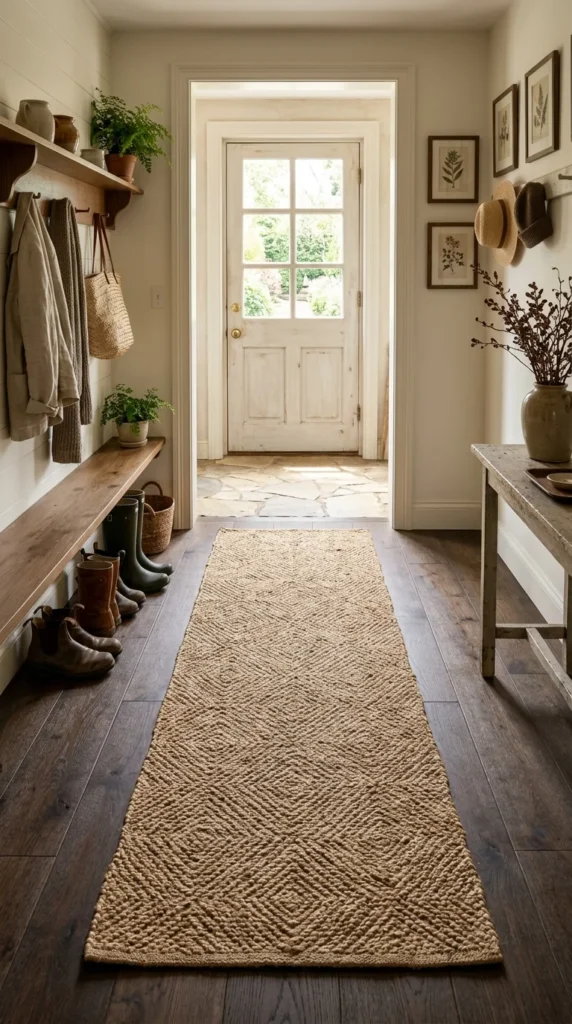
Even with the best tile or wood flooring, a rug can add comfort and an extra layer of protection. For a mudroom, look for high-traffic materials like jute, sisal, or indoor/outdoor polypropylene. These materials can stand up to heavy foot traffic and are easy to shake out or hose down. A long runner can also lead the eye through the space, making a narrow mudroom feel more expansive.
16. Command Centers
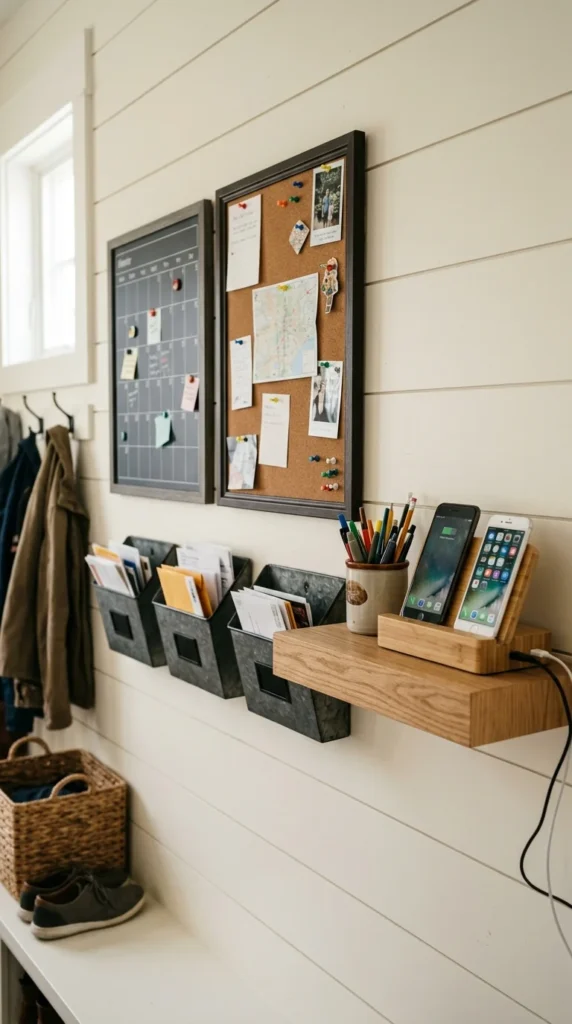
The mudroom is the logical “brain” of the home. Incorporating a command center allows you to manage the family calendar, sort incoming mail, and charge electronic devices in one place. By keeping these items in the mudroom, you prevent paper clutter from migrating to the kitchen island or dining table, keeping the rest of your home feeling more organized.
17. Vertical Shelving
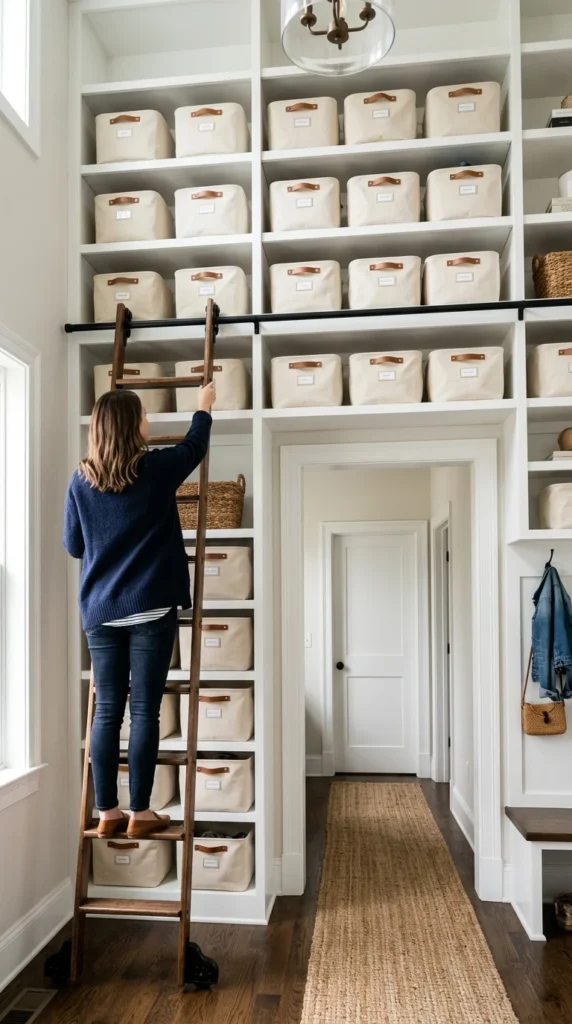
If you are dealing with a small footprint but high ceilings, go vertical. Shelving that extends all the way to the ceiling can hold items that aren’t used daily, such as out-of-season sports gear or extra cleaning supplies. Using a rolling ladder or a sturdy step stool allows you to access these high-up areas safely while keeping the floor area clear for movement.
18. Chalkboard Walls
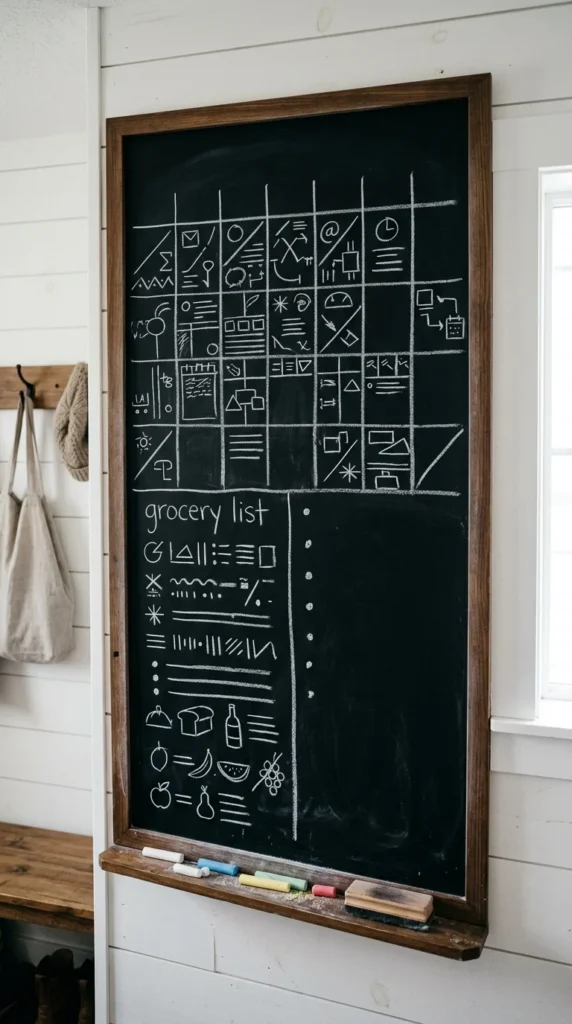
A chalkboard wall adds a playful and practical element to the mudroom. It’s perfect for jotting down quick reminders, writing out the week’s sports schedule, or leaving encouraging notes for family members as they leave for the day. If you don’t want to paint a whole wall, a large framed chalkboard can provide the same functionality with a more contained look.
19. Brick Flooring
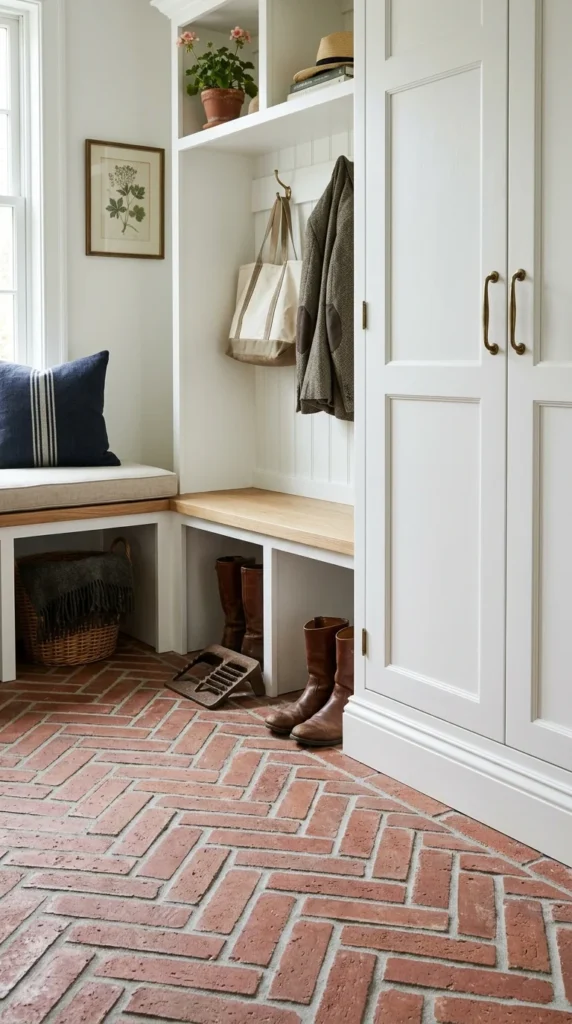
Brick is an incredibly durable and timeless choice for mudroom flooring. When laid in a pattern like herringbone or basketweave, it provides a high-end, classic look that hides dirt exceptionally well. Brick is naturally slip-resistant, making it a safe choice for an area that frequently gets wet. It also pairs beautifully with both modern and traditional cabinetry.
20. Indoor Plants
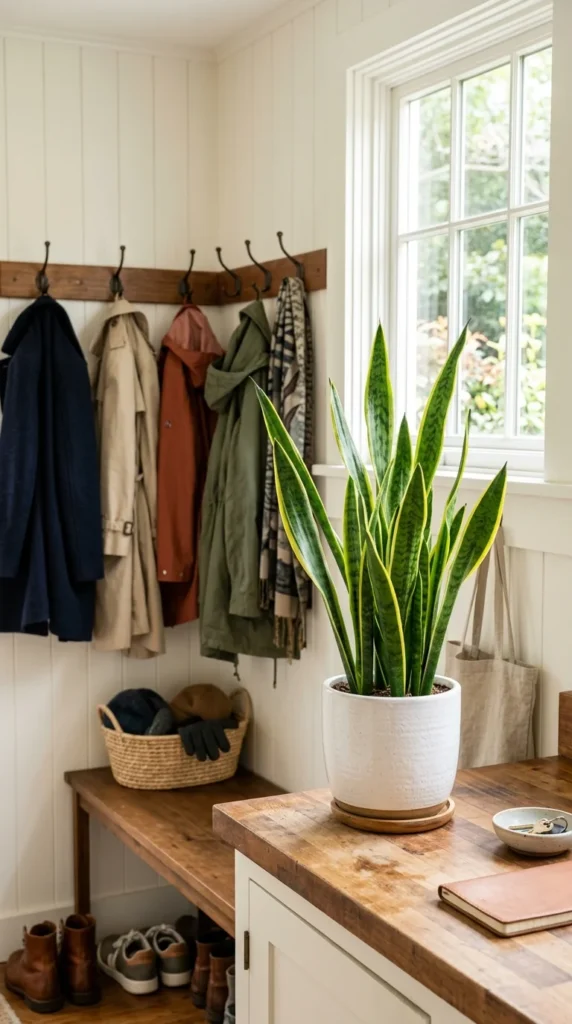
Bringing a bit of the outdoors in can make a mudroom feel more like a living space and less like a storage closet. Plants like snake plants or pothos are excellent choices because they are hardy and can often tolerate the fluctuating temperatures or lower light levels sometimes found in entryways. A touch of greenery refreshes the air and adds a final “designer” touch to your functional mudroom.