

For years, the interior design world was dominated by “millennial gray” and stark white minimalism. While those aesthetics offer cleanliness and light, they often lack the soulful, cocooning embrace that many homeowners crave. Enter “Moody Decor”—a design philosophy that leans into deeper palettes, rich textures, and dramatic lighting to create spaces that feel both expensive and incredibly intimate.
Moody decor isn’t just about painting a wall black; it’s about the artful layering of shadows and light. When done correctly, dark interiors don’t feel small or cave-like; they feel expansive, sophisticated, and deeply personal. Whether you are looking to transform a small powder room or a sprawling master suite, here are eight ways to master the moody aesthetic for a home that feels like a high-end sanctuary.
1. Deep Paint
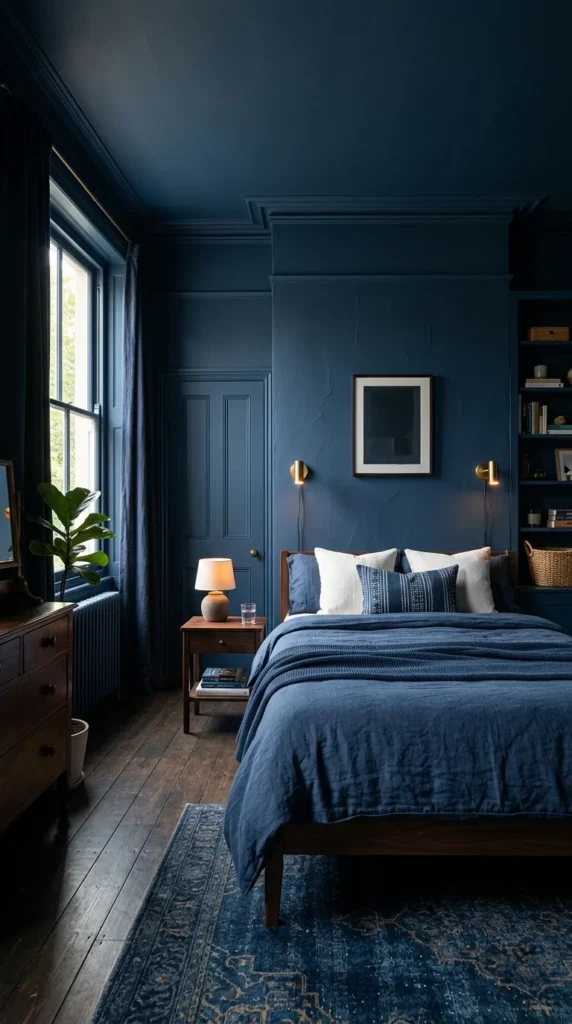
The foundation of any moody room is the color palette. Moving away from whites and beiges, moody decor embraces “jewel tones” and “earthy darks.” Think forest green, charcoal, navy blue, deep plum, or even a warm, chocolate brown.
One of the most effective techniques for achieving a rich look is “color drenching.” This involves painting the walls, baseboards, crown molding, and even the ceiling in the same dark hue. By removing the high-contrast white trim, you eliminate visual breaks, which actually makes the walls feel like they are receding, giving the illusion of more space. This monochromatic approach creates a sophisticated, “enveloped” feeling that is the hallmark of luxury hotels and private libraries.
2. Velvet Fabrics
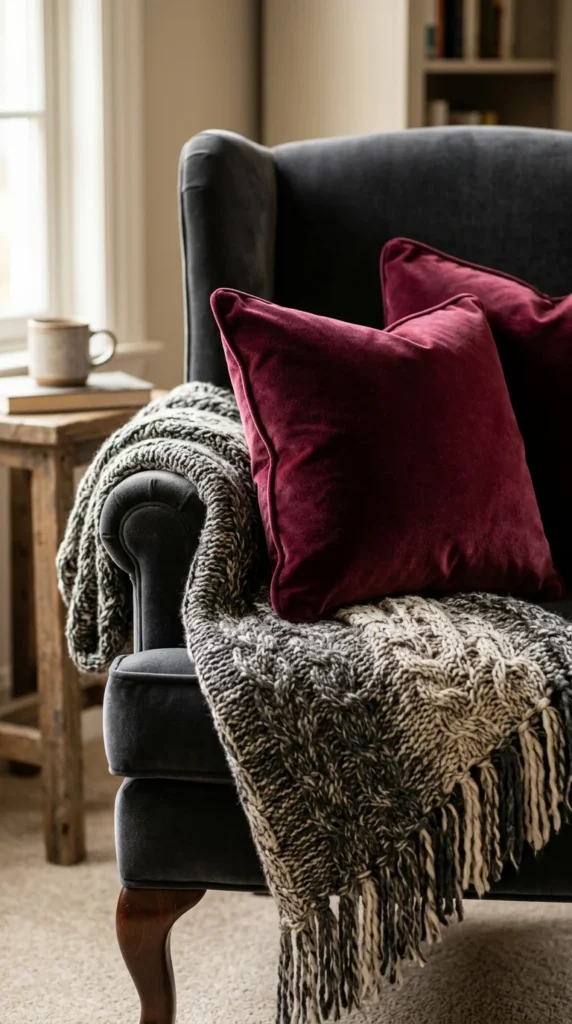
Texture is the secret weapon of moody design. When you use dark colors, you need variety in how those colors catch the light. Velvet is the quintessential “moody” fabric because of its high pile and sheen. It absorbs light in some areas and reflects it in others, preventing a dark room from looking flat or “muddy.”
To incorporate this, consider a statement piece like a velvet sofa in a deep teal or garnet. If a new sofa isn’t in the budget, velvet curtains are a game-changer. Floor-to-ceiling velvet drapes in a dark shade add immediate height to a room and provide a sense of “heaviness” that contributes to the cozy, quiet atmosphere. The way the fabric pools on the floor adds a touch of old-world opulence that cotton or linen simply cannot replicate.
3. Ambient Lighting
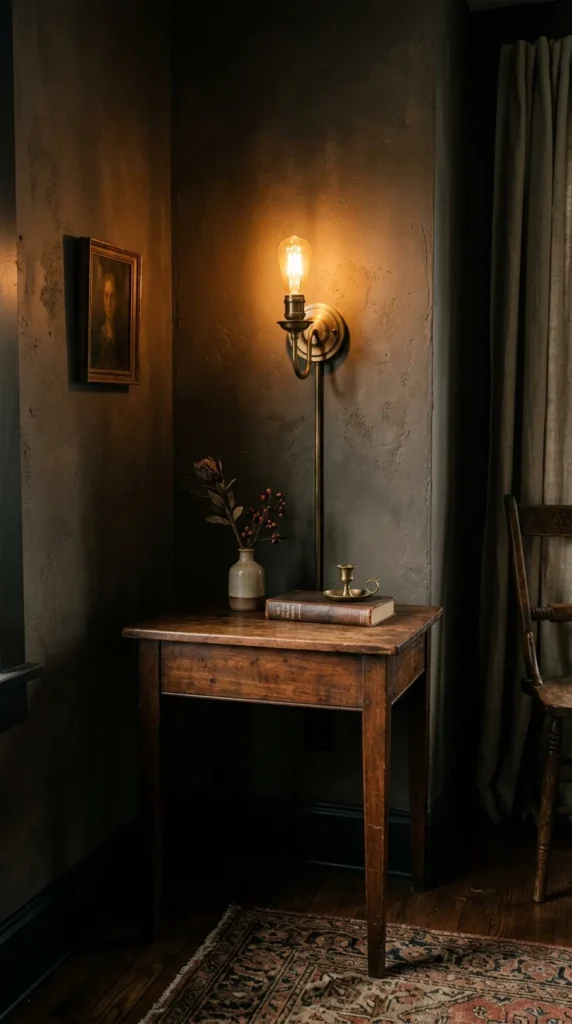
In a moody room, the “Big Light” (the overhead ceiling fixture) is often the enemy. To make a room feel rich and cozy, you must prioritize “layered lighting.” This means using multiple light sources at different heights to create pockets of warmth and shadow.
Focus on warm-toned bulbs (2700K or lower) to mimic the glow of candlelight. Wall sconces, floor lamps with pleated shades, and table lamps with opaque shades help direct light downward rather than diffusing it everywhere. Dimmer switches are also essential; they allow you to control the “intensity” of the mood depending on the time of day. By highlighting specific corners or pieces of art while letting other areas fall into shadow, you create a sense of mystery and depth that defines the moody aesthetic.
4. Metallic Accents
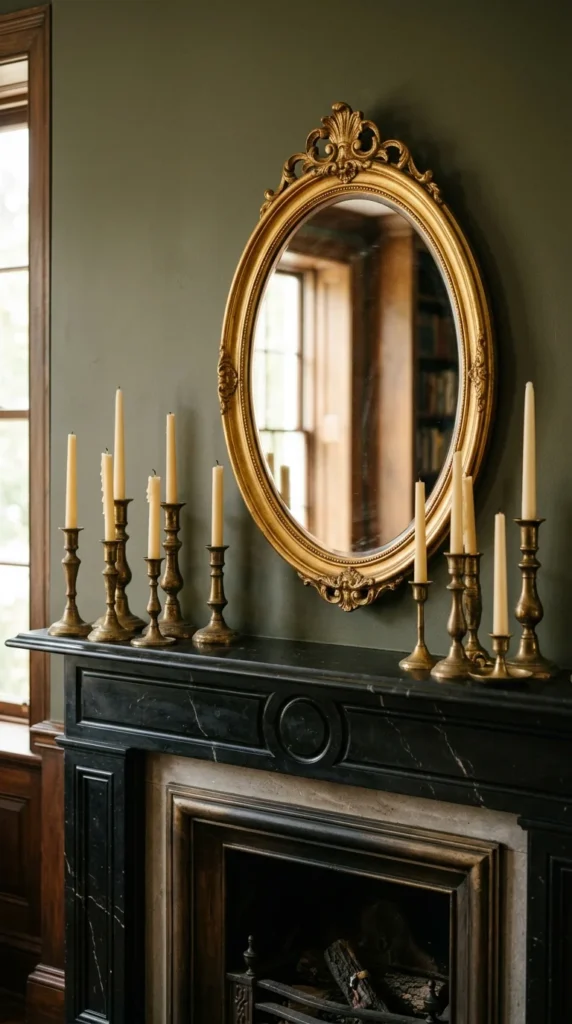
Dark rooms provide the perfect backdrop for metals to shine—literally. Without some shimmer, a dark room can feel a bit heavy. Incorporating metallic accents in gold, brass, or copper adds a “jewelry” element to the space, elevating the richness of the dark paint.
The key is to stick to “living finishes” or brushed metals rather than high-shine chrome, which can feel too cold. A brass picture light over a dark painting, gold cabinet hardware in a charcoal kitchen, or a copper tray on a coffee table provides a necessary “spark” that breaks up the deep tones. These warm metals act as a bridge, reflecting the ambient light and adding a sense of curated history to the room.
5. Dark Woods
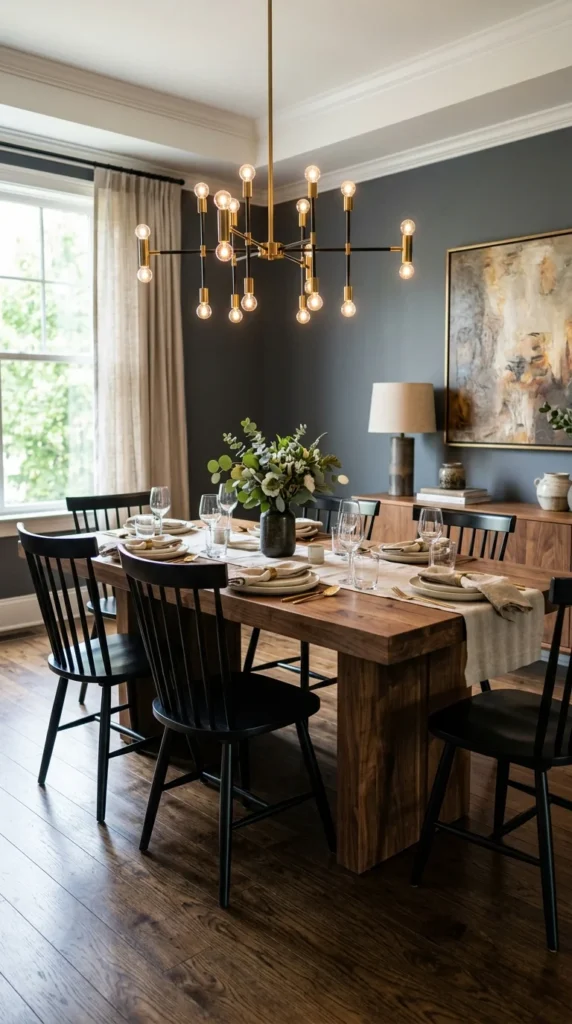
While light oak and pine are popular in Scandinavian design, moody decor leans into the heritage of dark woods like walnut, mahogany, and ebony. Dark wood furniture provides a grounding element that feels permanent and sturdy.
If you have light floors, adding a dark-stained piece of vintage furniture can instantly “anchor” the room. Look for pieces with interesting grains or carved details. The richness of the wood grain adds a natural, organic texture that complements velvet and metal perfectly. Mixing different dark wood tones is also encouraged; it makes the room feel like it was furnished over time rather than bought as a matching set from a showroom.
6. Moody Art

The art you choose dictates the narrative of the room. For a rich and cozy feel, opt for “moody” subjects: stormy landscapes, classical portraits, or abstract pieces with deep, saturated colors.
The framing is just as important as the art itself. Large, ornate, “museum-style” frames in gold or dark wood add a layer of sophistication. Don’t be afraid to go big; one oversized piece of art on a dark wall creates a powerful focal point. Alternatively, a tightly packed gallery wall can make a room feel like a cozy, curated “cabinet of curiosities.” The dark wall behind the art acts as a shadowbox, making the colors within the paintings pop with more intensity.
7. Textural Rugs
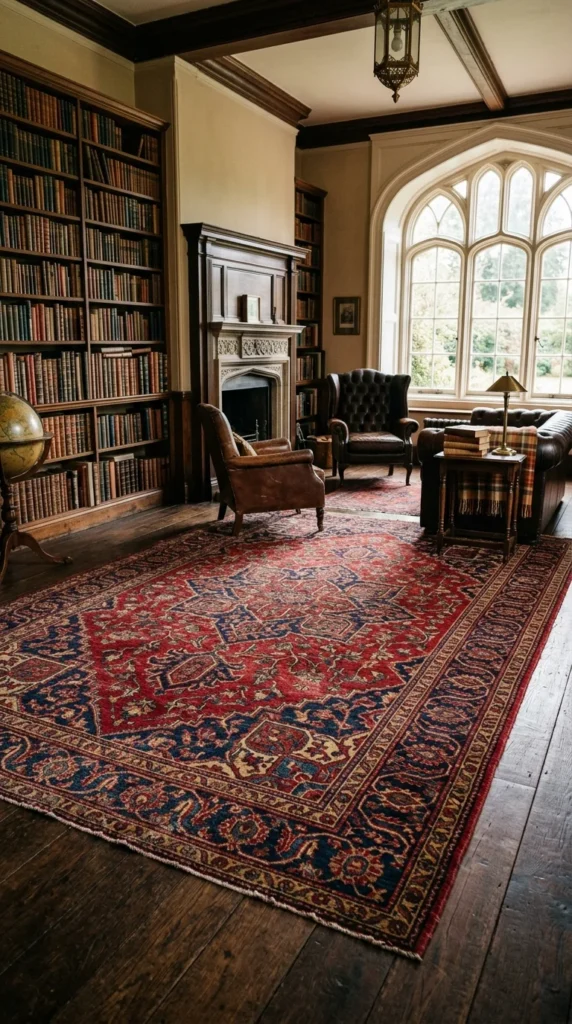
A room isn’t truly “cozy” until the floor is addressed. In moody decor, rugs serve as the “fifth wall,” adding pattern and softness. Distressed Persian or Oriental rugs with deep reds, indigos, and forest greens are perfect for this style. They bring in a sense of history and “soul” that new, modern rugs often lack.
If you prefer a more modern look, consider a high-pile shag or a thick wool rug in a solid dark tone. The goal is to dampen sound and provide a soft landing for your feet, which enhances the “hushed” and private atmosphere of the room. Layering a smaller vintage rug over a larger jute or sisal rug is another way to add tactile interest while keeping the palette grounded and rich.
8. Natural Leather
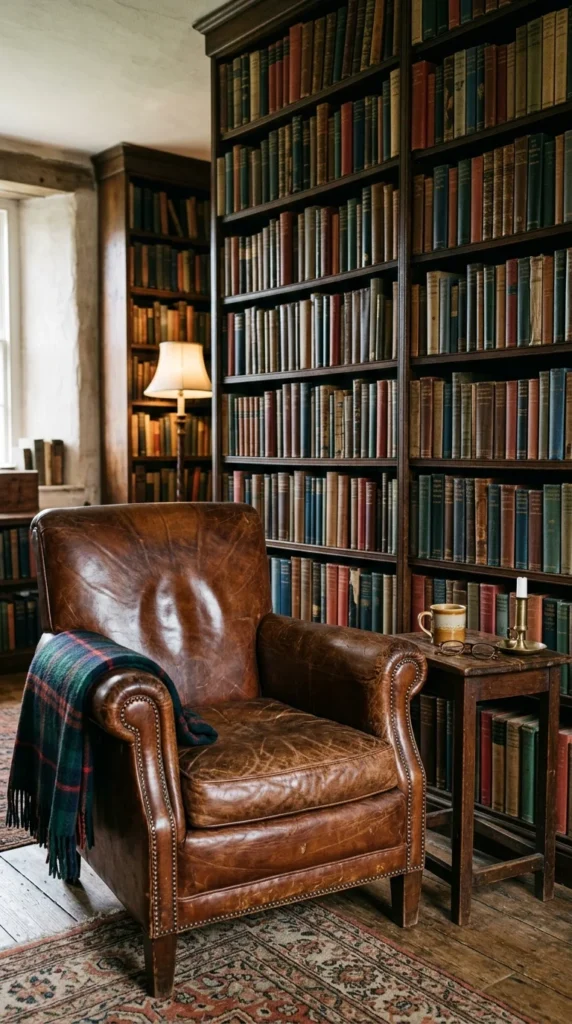
Leather is a fantastic material for moody spaces because it ages beautifully and adds a “masculine” edge to the softness of velvet. A cognac or chestnut leather chair provides a warm contrast against navy or black walls, preventing the room from feeling too “one-note.”
The beauty of leather in a moody room is the patina. Scuffs, wear, and the natural variation in the hide tell a story of use and comfort. This “lived-in” quality is essential for a home to feel cozy rather than like a museum. Pair a leather armchair with a soft wool throw and a small side table for the ultimate reading nook that feels like it belongs in an old English manor.