
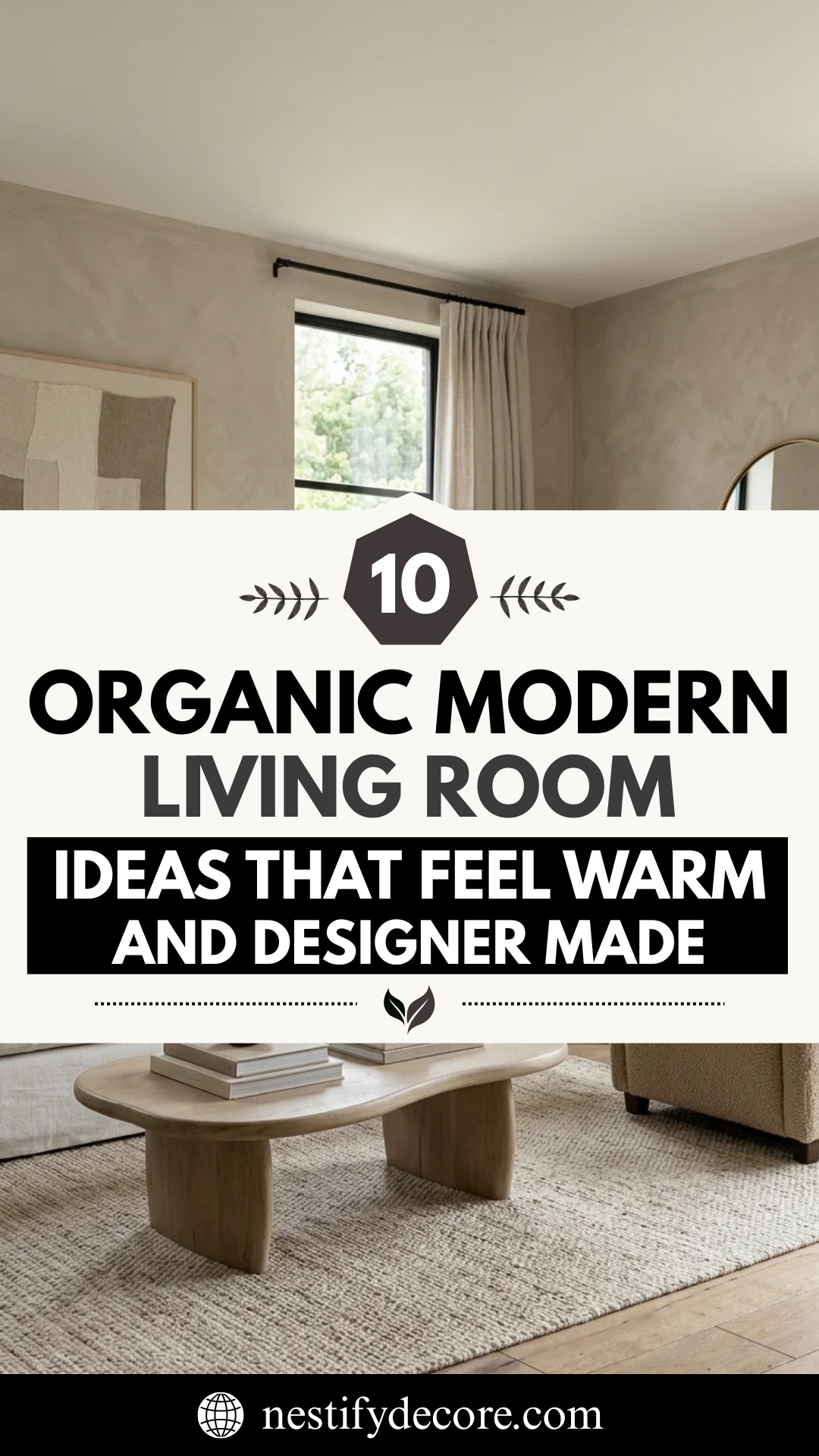
The “Organic Modern” aesthetic has taken the interior design world by storm, offering a sophisticated balance between the clean lines of modernism and the soulful, tactile elements of the natural world. Unlike the stark minimalism of the past, organic modernism prioritizes comfort, warmth, and a connection to the outdoors. It is an approach that feels both curated and lived-in—a “designer-made” look that doesn’t sacrifice the “homey” feel.
Achieving this look requires a careful selection of materials, a restrained color palette, and an emphasis on silhouette. Here are ten comprehensive ideas to help you transform your living room into an organic modern sanctuary.
1. Curated Textures
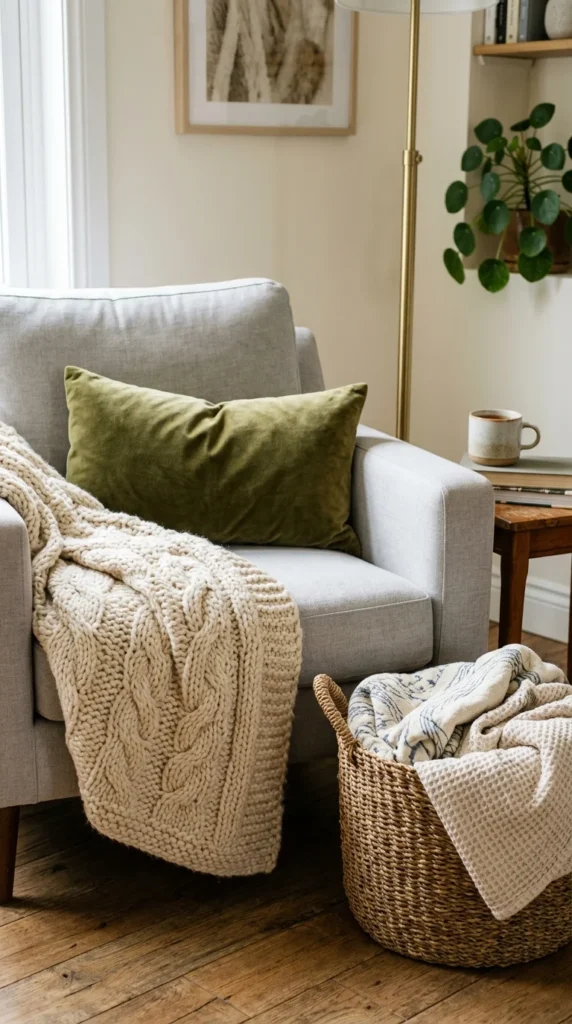
In an organic modern space, texture takes the place of bold colors. When you work with a restricted palette, the variation in “hand-feel” is what prevents the room from looking flat or sterile. The goal is to layer materials that invite touch and create visual depth.
Start with your largest pieces. A bouclé sofa provides a nubby, architectural texture that instantly signals high-end design. Pair this with window treatments in heavy, unbleached linen to filter light softly. Incorporate smaller accents like sheepskin rugs, mohair pillows, or a chunky wool-knit pouf. By mixing smooth surfaces (like a polished stone table) with rough ones (like a hand-woven jute rug), you create a sensory experience that feels rich and intentional.
2. Curved Silhouettes
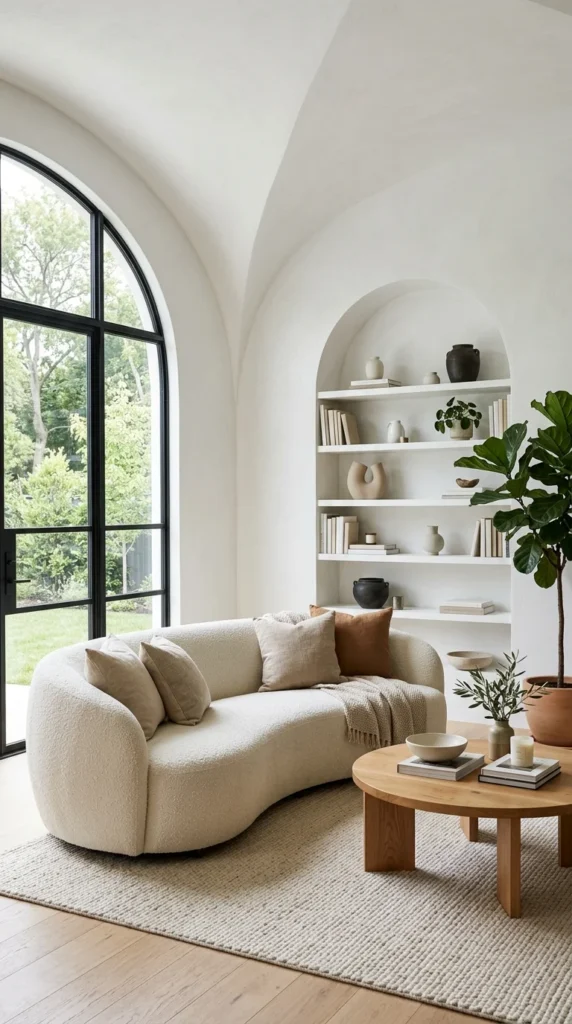
One of the hallmarks of organic modernism is the departure from sharp, 90-degree angles. Nature rarely moves in straight lines, and your furniture shouldn’t either. Soft, undulating shapes create a sense of flow and ease, making the room feel more approachable and relaxing.
Look for “pill-shaped” coffee tables, arched floor mirrors, or sofas with rounded backs and sloping arms. Even architectural details can embrace this trend—curved doorways or rounded fireplace mantels add an instant designer touch. These soft edges help the eye travel smoothly around the room, fostering a peaceful environment that mimics the gentle curves found in landscapes.
3. Biophilic Accents
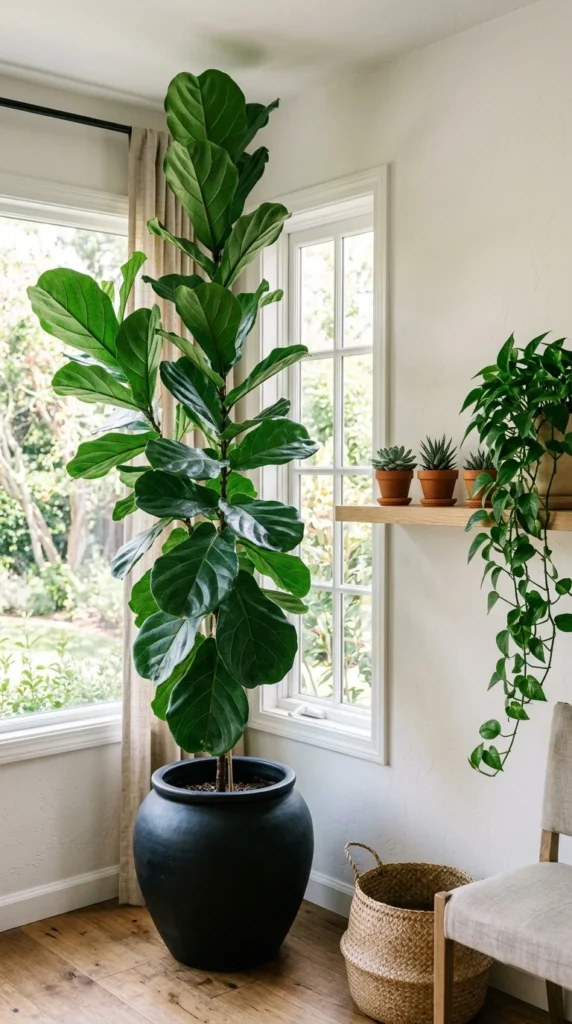
Biophilic design is the practice of connecting humans with nature within the built environment. In a living room, this goes beyond simply adding a plant; it’s about making greenery a central architectural element. Large-scale indoor trees, such as an Olive tree or a Fiddle Leaf Fig, provide height and a “living” sculpture that changes with the seasons.
To make this feel designer-made rather than cluttered, focus on the “hero” plant—one large, healthy specimen in a high-quality vessel. Use natural materials for your planters, such as aged terracotta, stone, or hand-fired ceramic. The organic shapes of the leaves break up the geometry of the furniture, while the green provides a much-needed pop of natural color against a neutral backdrop.
4. Neutral Palettes
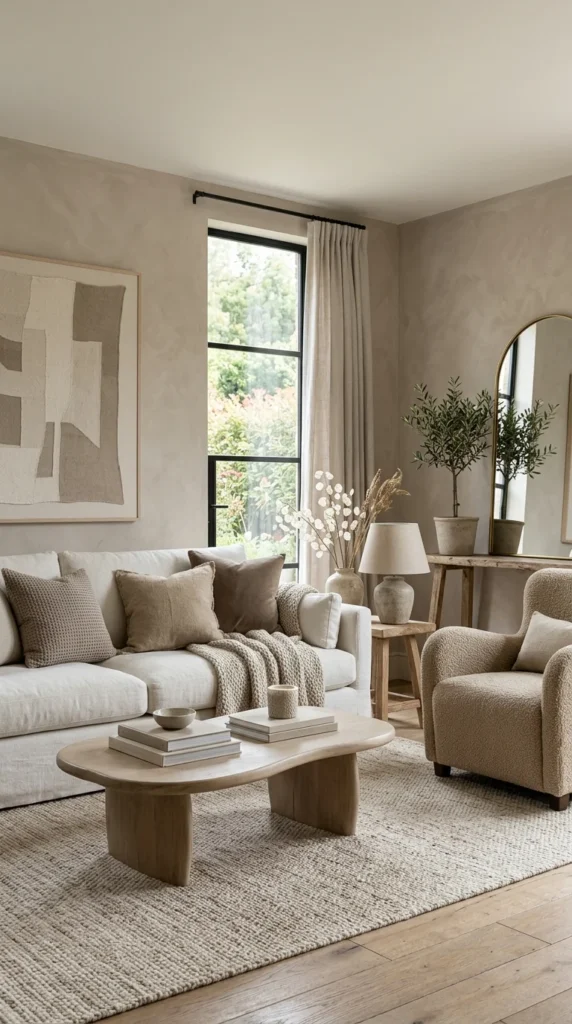
The organic modern color story is rooted in the earth. However, “neutral” doesn’t just mean white. To achieve a warm, sophisticated look, you must layer varying tones of beige, cream, sand, mushroom, and taupe. This “tone-on-tone” approach creates a cohesive environment that feels expansive and calm.
When selecting paint, look for “living” finishes like lime-wash or Roman clay. These products have a slight movement and mottling that mimic the appearance of natural stone or aged plaster, adding an immediate sense of history and warmth to the walls. Avoid stark, “refrigerator” whites; instead, opt for whites with warm yellow or grey undertones to ensure the space feels inviting even on cloudy days.
5. Natural Wood
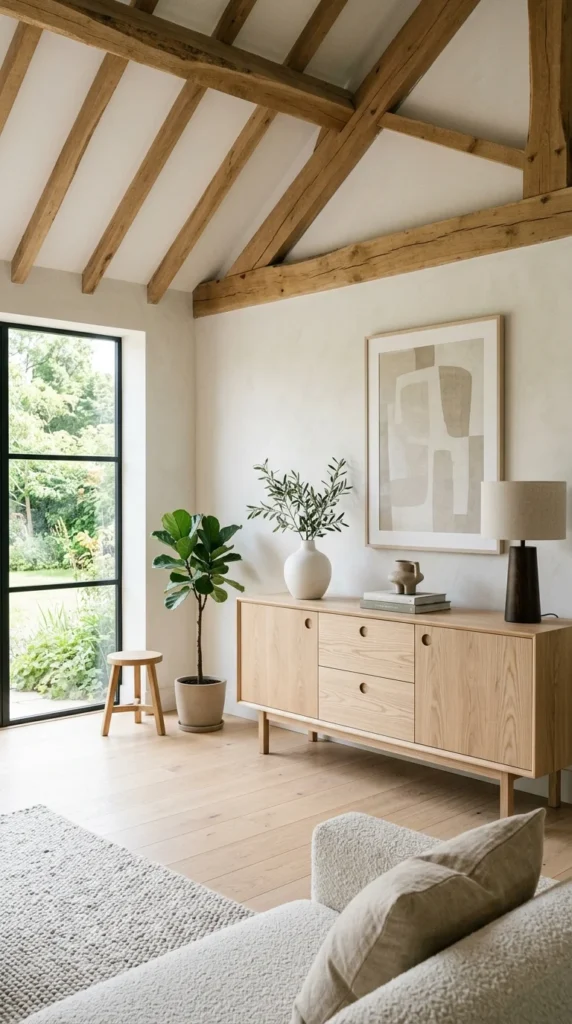
Wood is the backbone of the organic modern style. It brings an inherent warmth and organic pattern (the grain) that synthetic materials cannot replicate. The key to keeping it “modern” is the finish and the tone. Light-to-medium woods like white oak, ash, and walnut are the preferred choices for this aesthetic.
Avoid heavy varnishes or high-gloss finishes. Instead, look for matte or “oil-rubbed” finishes that allow the natural texture of the wood to shine through. Incorporate wood through structural elements like ceiling beams, or through furniture like a slat-backed chair or a live-edge coffee table. Mixing different wood species is encouraged, provided they share similar undertones, as this makes the room feel like it was assembled over time rather than bought as a matching set.
6. Layered Lighting
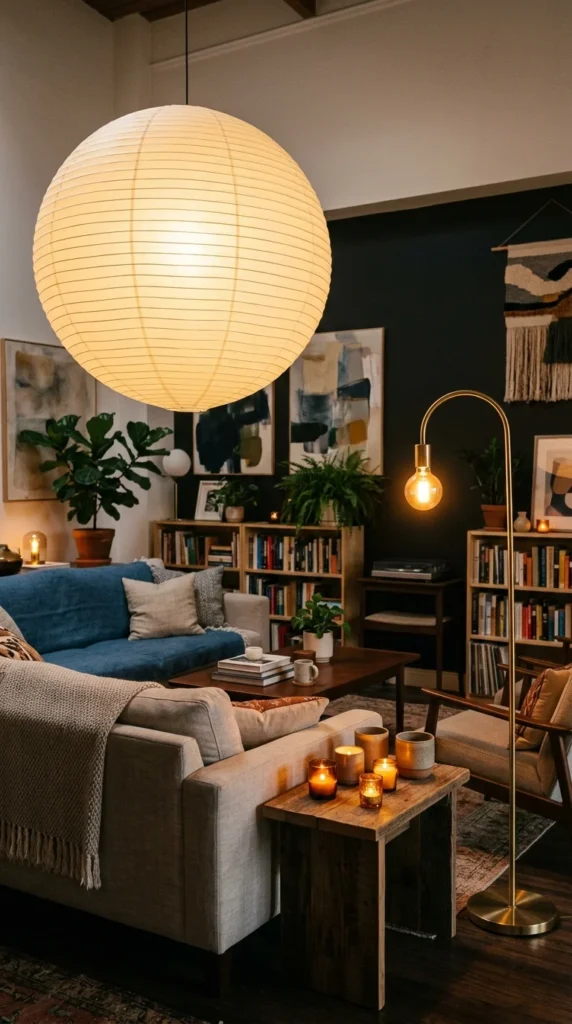
Lighting is the most effective tool for creating atmosphere. In an organic modern living room, the goal is to create “pools” of light rather than one harsh overhead source. This is achieved through layering different types of fixtures that double as art pieces.
Sculptural lighting is a staple of this style. Think of a large Noguchi-style paper lantern that glows like a moon, or a floor lamp with a base made of travertine or forged iron. Use warm-toned bulbs (2700K or lower) to enhance the warm wood tones and soft textiles in the room. By placing lights at different heights—table lamps, floor lamps, and pendants—you create a dynamic environment that transitions beautifully from day to night.
7. Earthy Ceramics
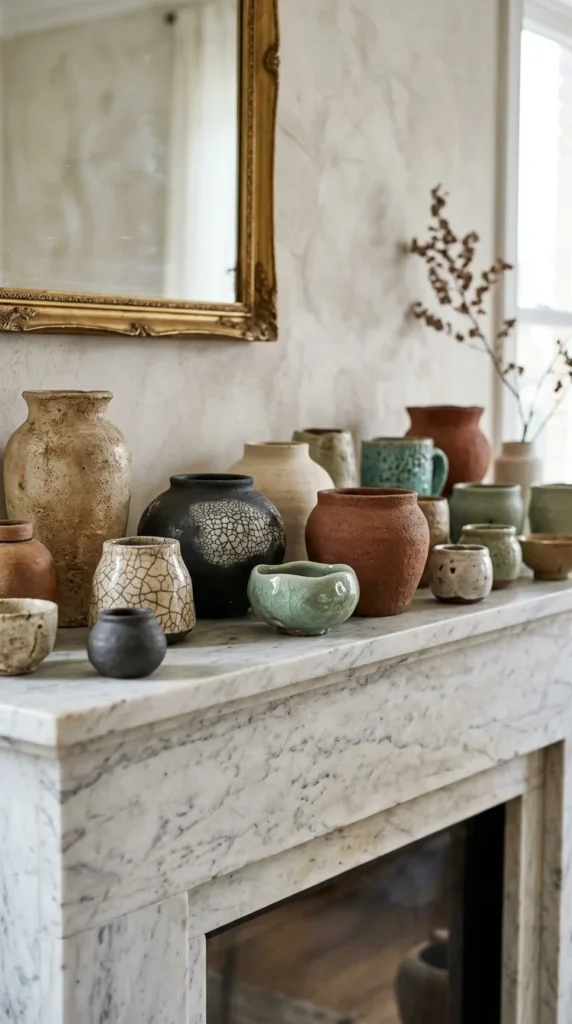
Accessorizing in an organic modern home follows the “less but better” philosophy. Instead of many small trinkets, choose a few high-quality ceramic pieces that celebrate imperfection. This is often referred to as wabi-sabi—the beauty of things that are modest, humble, and unconventional.
Look for hand-thrown pottery with visible finger marks, asymmetrical vases, and bowls with matte, sandy finishes. These items feel “of the earth” and provide a grounded, artisanal quality to the room. When styling, group them in odd numbers (threes or fives) and vary the heights to create a visual rhythm on your shelves or coffee table.
8. Sisal Rugs
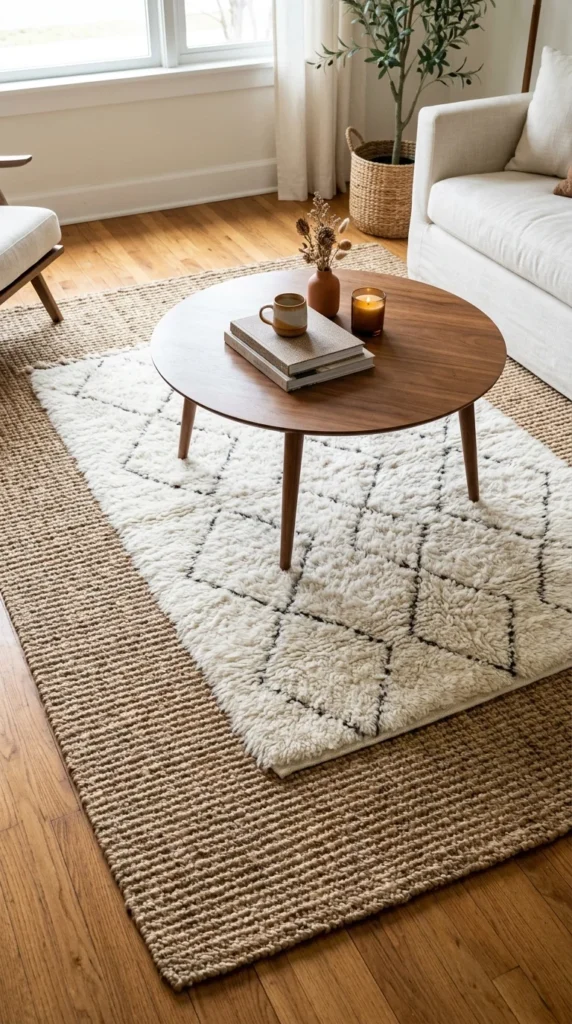
The floor is the largest surface area in your room, and it needs to feel grounded. Natural fiber rugs, such as sisal, jute, or seagrass, are the perfect foundation for an organic modern space. They offer a rugged, earthy texture and a durable quality that stands up to foot traffic while looking effortlessly chic.
To add a layer of “designer” luxury, try the layering technique: place a large, wall-to-wall sisal rug down first, and then layer a smaller, softer rug (like a plush Moroccan Beni Ourain or a vintage Persian rug in muted tones) on top in the seating area. This provides the best of both worlds—the organic texture of the natural fibers and the underfoot comfort of wool.
9. Stone Elements
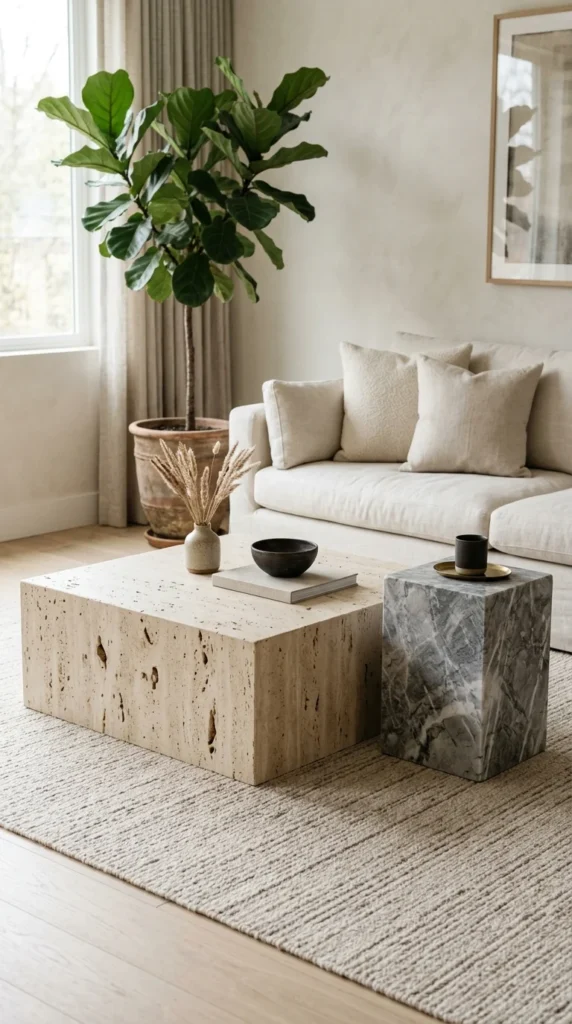
Incorporating stone brings a sense of permanence and weight to the living room. In organic modern design, the preference is for stones with matte or “honed” finishes rather than high-shine polish. Travertine, limestone, and marble with soft veining are excellent choices.
A travertine coffee table is a quintessential organic modern piece; its porous surface and sandy color perfectly bridge the gap between “stone” and “warmth.” If a large stone table isn’t in the budget, consider smaller stone accents like marble coasters, a limestone chain link decor piece, or a side table with a stone base. These cold, hard surfaces provide a necessary contrast to the soft sofas and plush rugs.
10. Minimalist Art
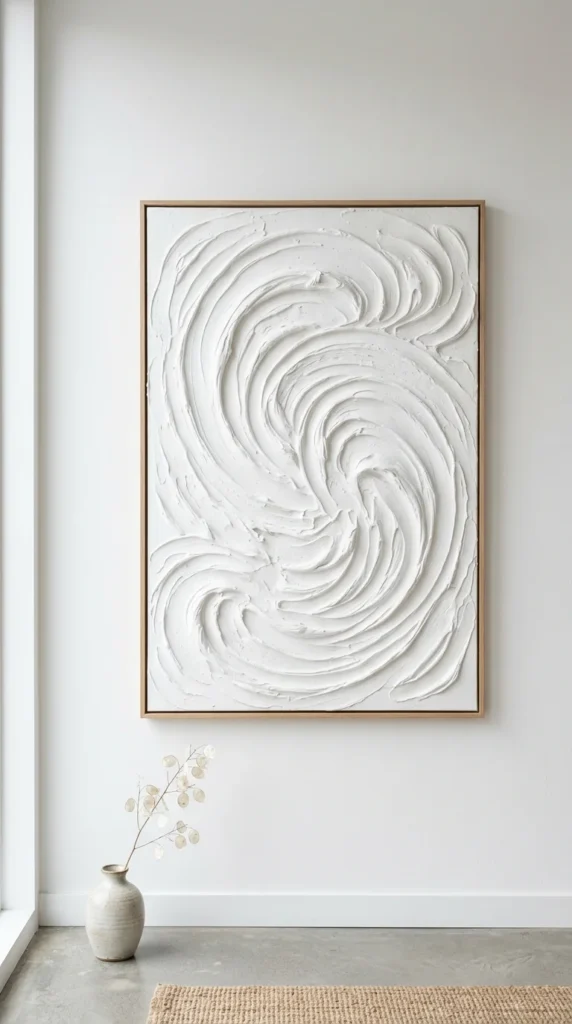
Art in an organic modern living room should feel like an extension of the walls rather than a distraction. Large-scale, minimalist pieces are preferred over busy galleries. The focus should be on texture, line, and form rather than vibrant color or complex subjects.
Consider “plaster art”—canvases where thick compound has been applied to create 3D ridges and valleys. Other great options include framed botanical sketches, abstract line drawings, or even a large piece of framed vintage textile. The frame itself should be simple—typically a thin “floater” frame in a light wood like oak—to keep the focus on the organic nature of the artwork itself. This approach ensures the art complements the serene, high-end atmosphere of the room.