
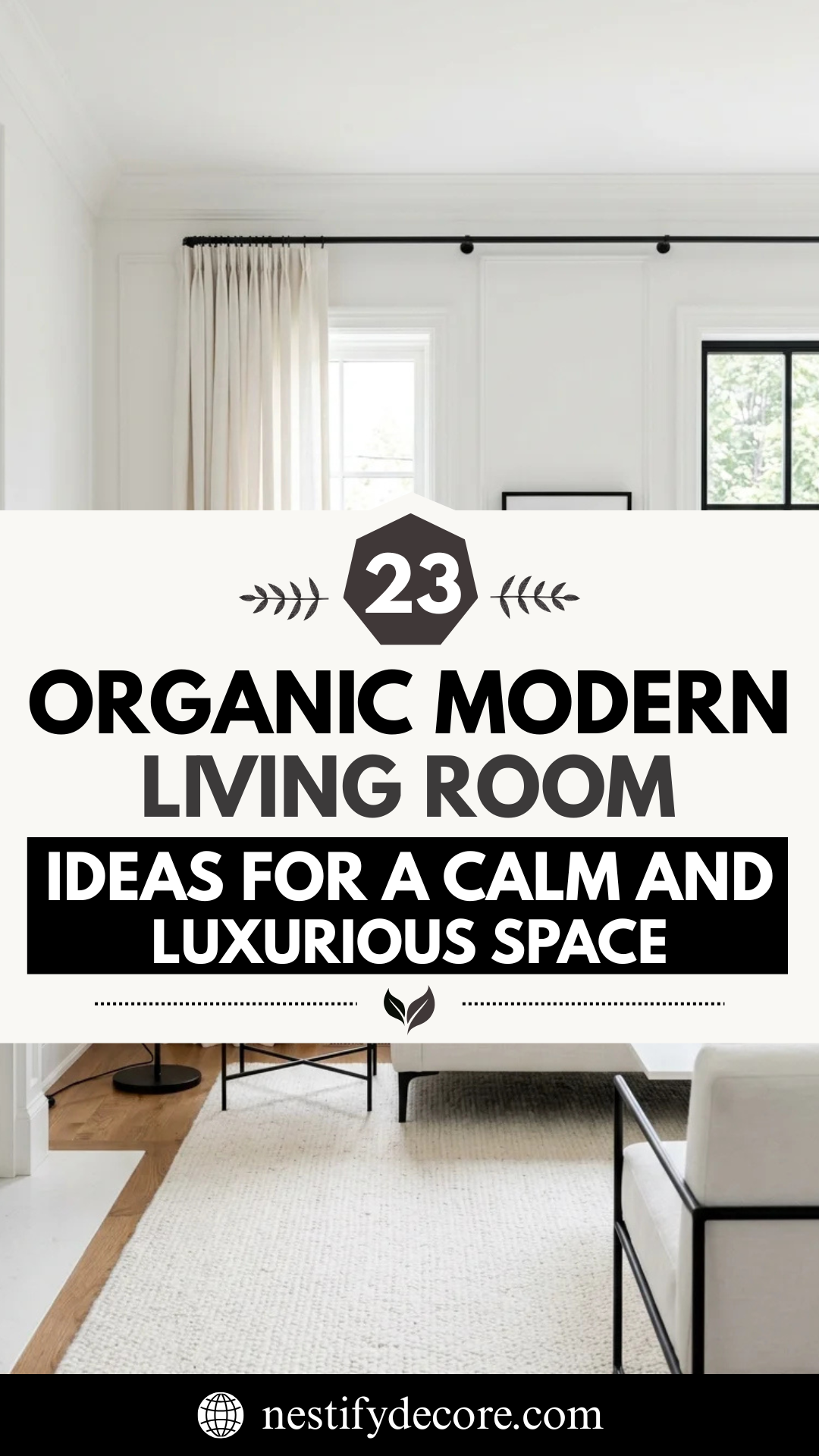
Organic modern design is the art of balancing the sleek, clean lines of contemporary minimalism with the warmth, texture, and imperfections of the natural world. It is a style that prioritizes tranquility, inviting the outdoors in to create a sanctuary that feels both sophisticated and lived-in. In a world that is increasingly digital and fast-paced, the organic modern living room offers a tactile and visual reprieve.
By focusing on a palette of earth tones, sustainable materials, and a “less is more” philosophy, you can transform your living space into a luxurious retreat. Here are 23 organic modern living room ideas to help you master this timeless aesthetic.
1. Neutral Palette
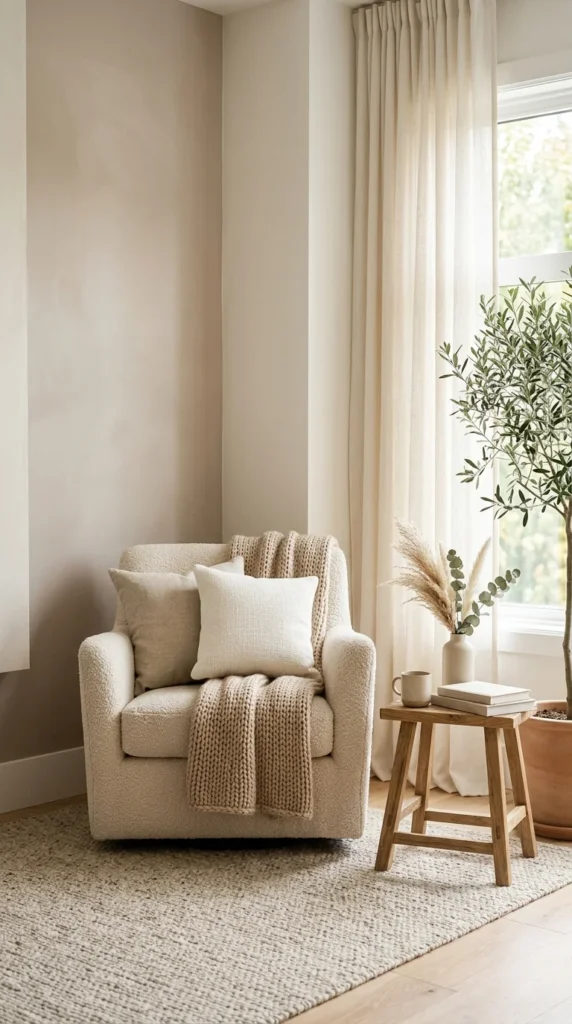
The foundation of any organic modern space is a sophisticated neutral color palette. Rather than stark whites, opt for “warm” neutrals like cream, sand, oatmeal, and greige. These colors reflect natural light beautifully and create a cohesive backdrop that allows textures to take center stage. By keeping the walls and large furniture pieces in the same color family, you create a sense of expansive, uninterrupted space that immediately lowers the heart rate.
2. Curved Furniture
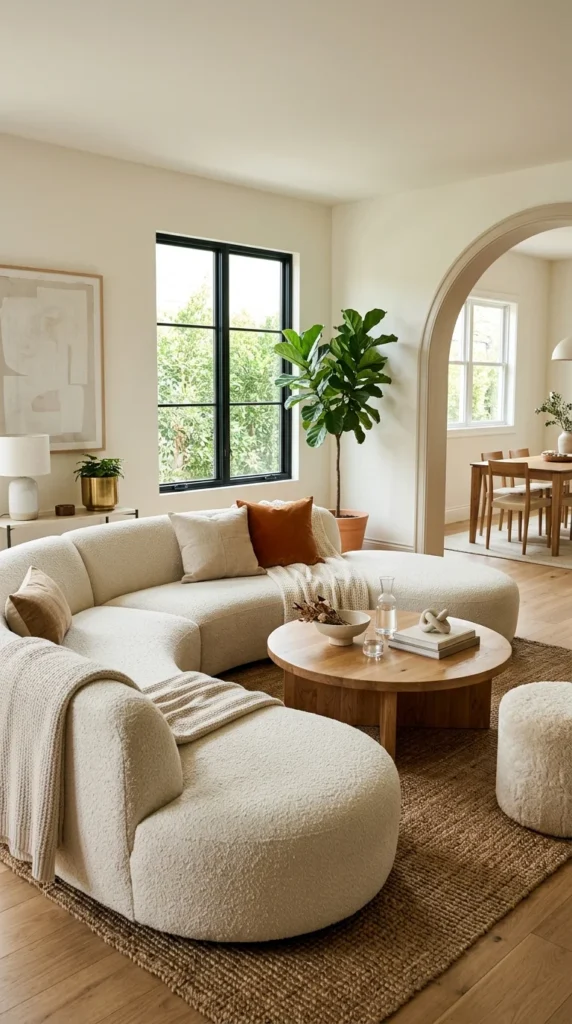
To soften the sharp angles often found in modern architecture, incorporate curved furniture. A rounded sofa, a circular coffee table, or an arched armchair breaks the rigidity of a room. These organic shapes mimic the curves found in nature—like river stones or rolling hills—making the environment feel more approachable and fluid. The lack of sharp corners also improves the “flow” of the room, encouraging movement and relaxation.
3. Raw Wood
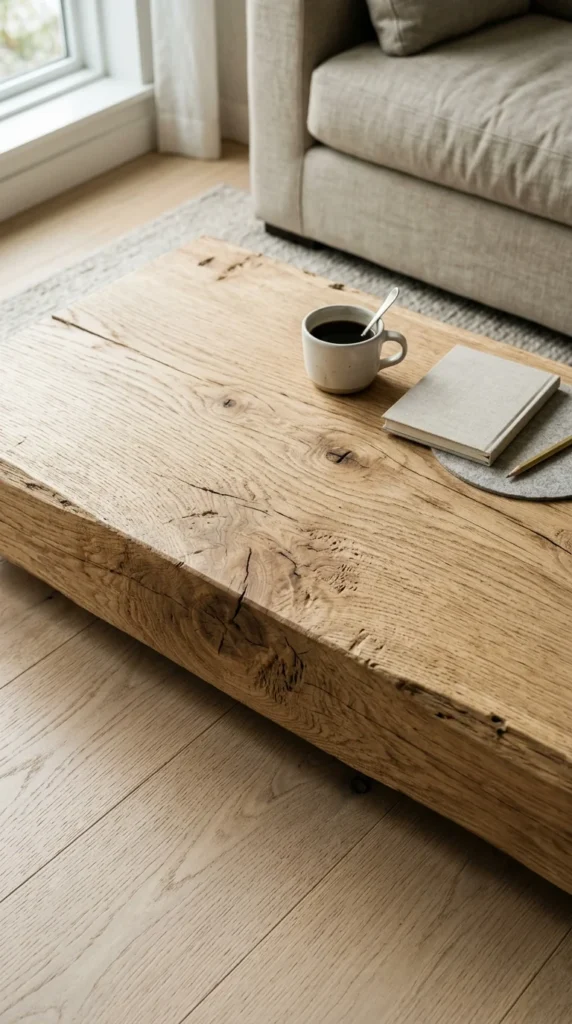
Wood is a staple of organic design, but the key to the modern interpretation is the finish. Look for raw, light-toned woods like white oak, ash, or maple with a matte or oiled finish rather than a high-gloss stain. Incorporating elements like a live-edge coffee table, exposed ceiling beams, or a simple wooden stool brings a grounding, earthy element to the room. The visible grain and natural imperfections of the wood provide a “wabi-sabi” charm that celebrates nature’s flaws.
4. Stone Accents
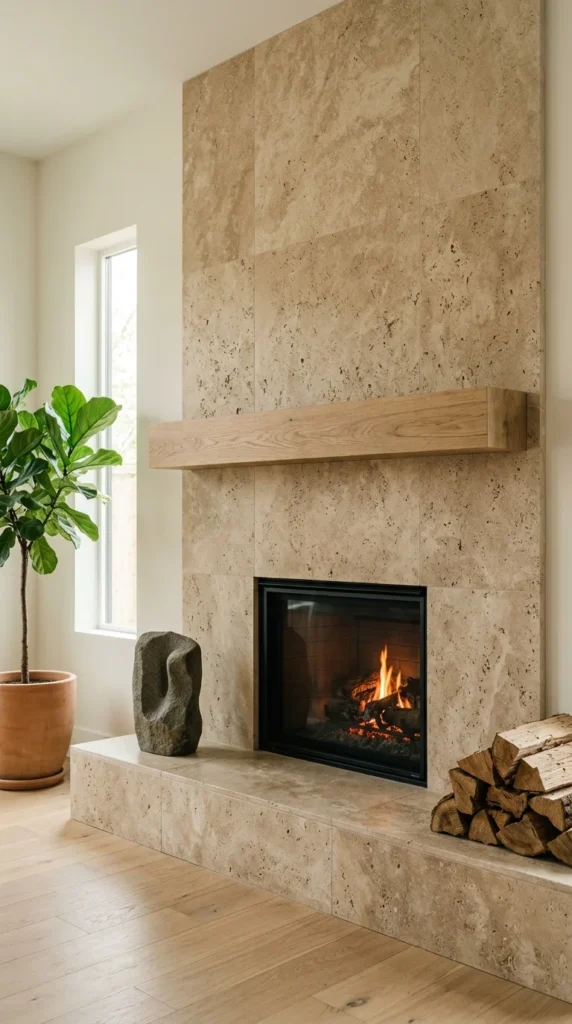
Integrating stone elements adds a sense of permanence and luxury. Materials like travertine, marble, slate, and limestone are perfect for organic modern living rooms. Whether it’s a travertine side table, a marble fireplace surround, or even small limestone coasters, the cool touch and unique veining of natural stone provide a beautiful contrast to soft textiles and warm wood.
5. Indoor Trees
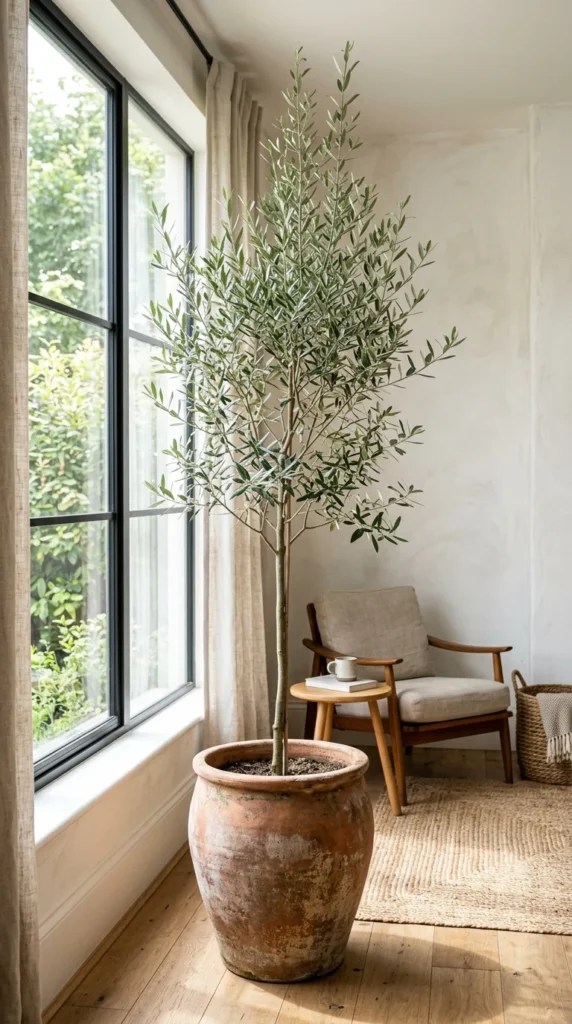
No organic modern space is complete without greenery. Instead of many small plants, choose one or two large statement plants to maintain a minimalist feel. An olive tree, a Fiddle Leaf Fig, or a Bird of Paradise adds height, color, and a literal breath of fresh air. The organic structure of the branches contrasts beautifully with the straight lines of modern shelving and walls.
6. Linen Textiles
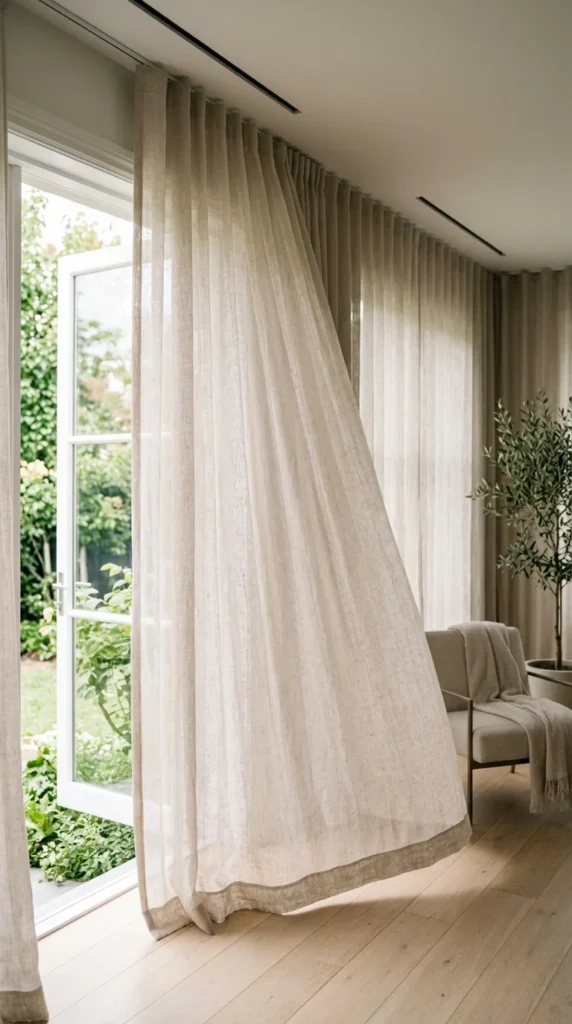
Textured fabrics are essential for adding warmth to a neutral room. Linen is the ultimate organic modern fabric because of its breathability and natural, slightly wrinkled texture. Use linen for sofa upholstery, throw pillows, or floor-to-ceiling curtains. The way linen filters light creates a soft, ethereal glow that enhances the calm atmosphere of the space.
7. Layered Rugs
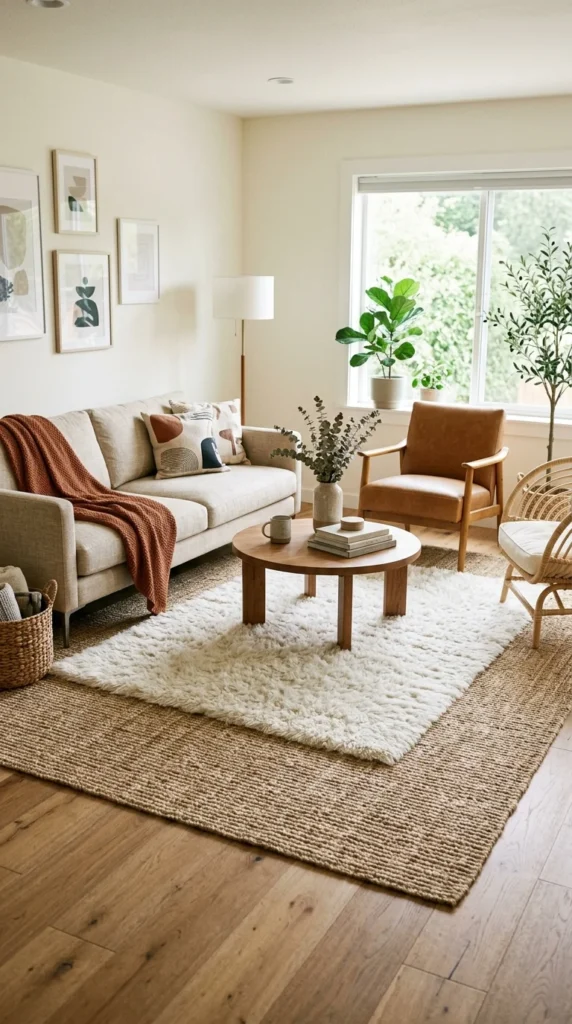
Layering rugs is an excellent way to add depth and comfort. Start with a large, flat-weave natural fiber rug like jute or sisal as a base. Then, layer a smaller, softer rug—like a plush wool rug or a Moroccan Beni Ourain—on top. This combination provides both the raw, organic texture of the grass fibers and the luxurious softness of the wool underfoot.
8. Statement Lighting
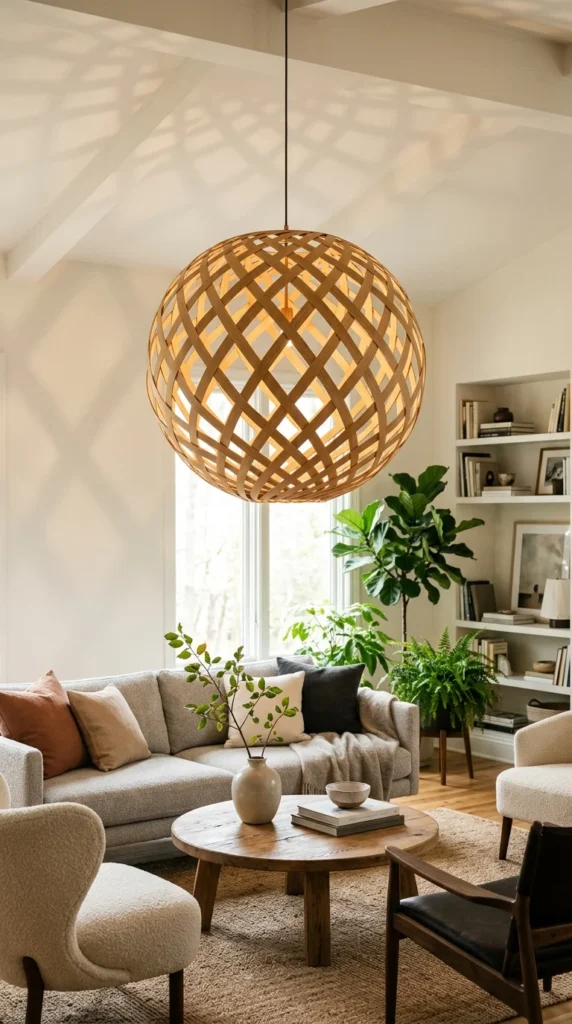
Lighting in an organic modern living room should be both functional and sculptural. Look for oversized pendant lights made from natural materials like rattan, bamboo, or handmade paper. Alternatively, a sleek, matte-finish branch chandelier can act as a piece of art. The goal is to choose a fixture that feels like a deliberate design choice while maintaining a soft, diffused light quality.
9. Matte Black Accents
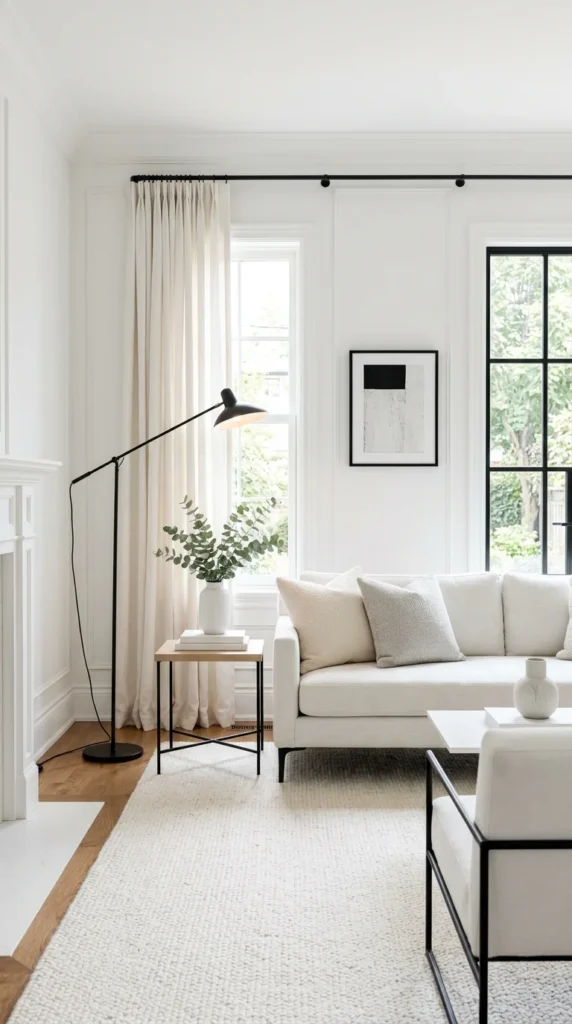
To prevent a neutral room from feeling “washed out,” incorporate matte black accents. Small doses of black—found in floor lamps, picture frames, or furniture legs—provide a modern edge and help ground the space. The contrast makes the lighter, organic elements pop, giving the room a more curated and high-end feel.
10. Minimalist Art
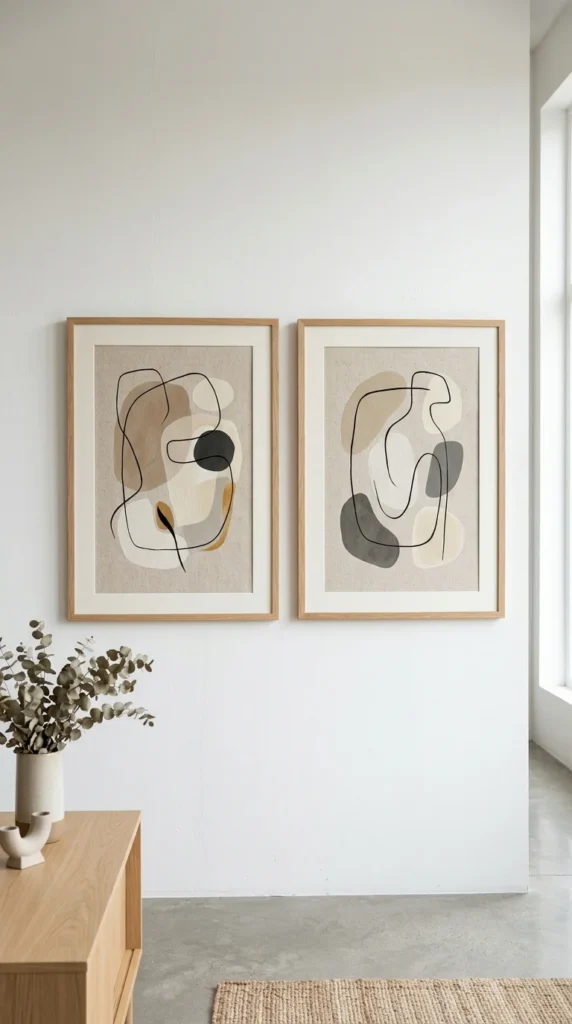
The art in an organic modern living room should be understated. Think abstract line drawings, large-scale plaster relief pieces, or framed textiles. The focus should be on texture and form rather than bold color or busy patterns. A single, large-scale piece of art often feels more luxurious and intentional than a cluttered gallery wall.
11. Woven Baskets
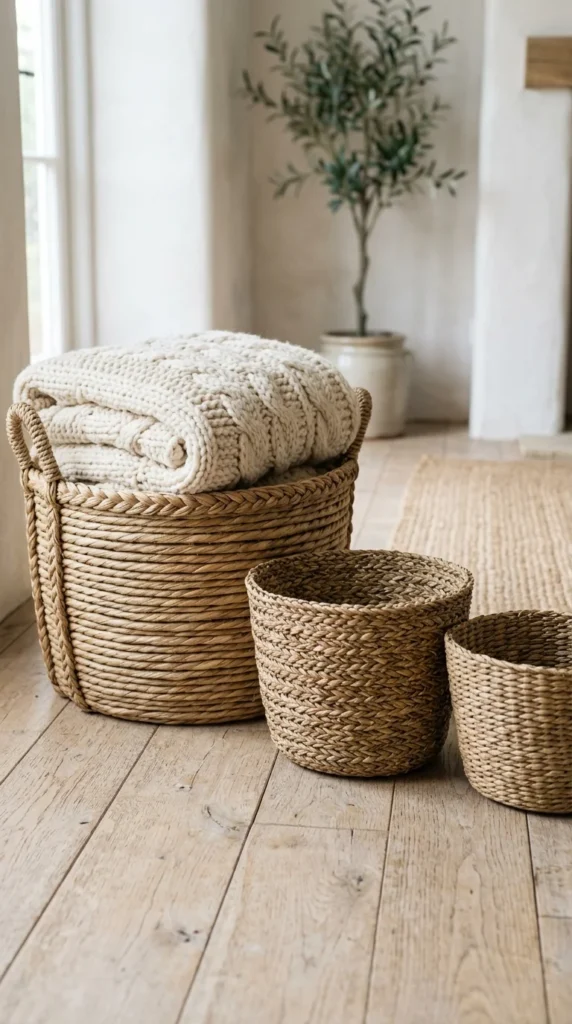
Baskets are the perfect marriage of form and function. They provide necessary storage for blankets and toys while introducing a hand-crafted, artisanal element to the room. Look for baskets made from seagrass, water hyacinth, or rattan to add a variety of woven textures to your corners or under open console tables.
12. Large Windows
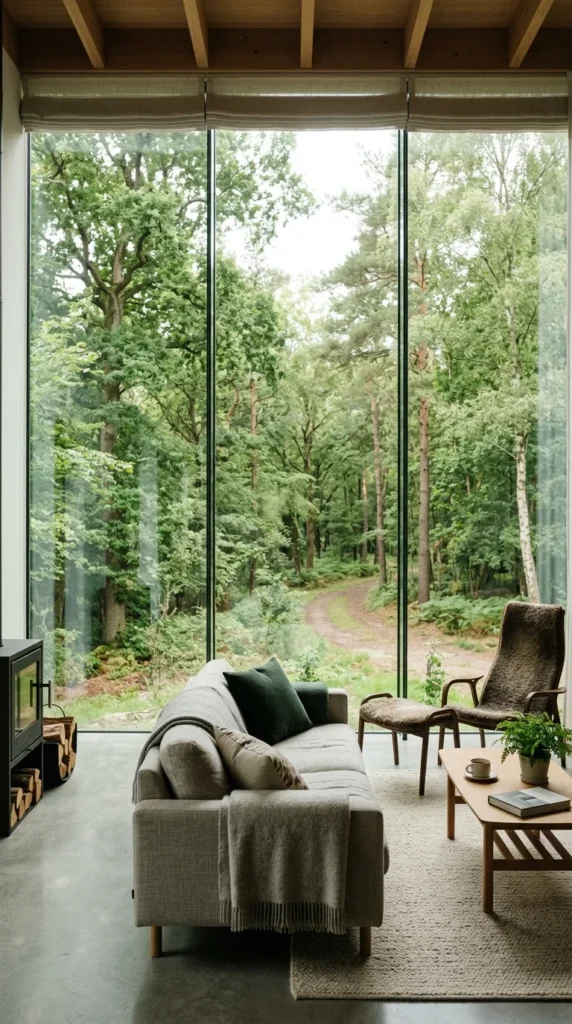
One of the core tenets of organic modernism is the connection to the outdoors. If possible, maximize natural light with large, unobstructed windows. Skip heavy drapes in favor of sheer panels or no window treatments at all. The view of the sky, trees, or garden becomes a living piece of art that changes throughout the day and the seasons.
13. Bouclé Fabrics
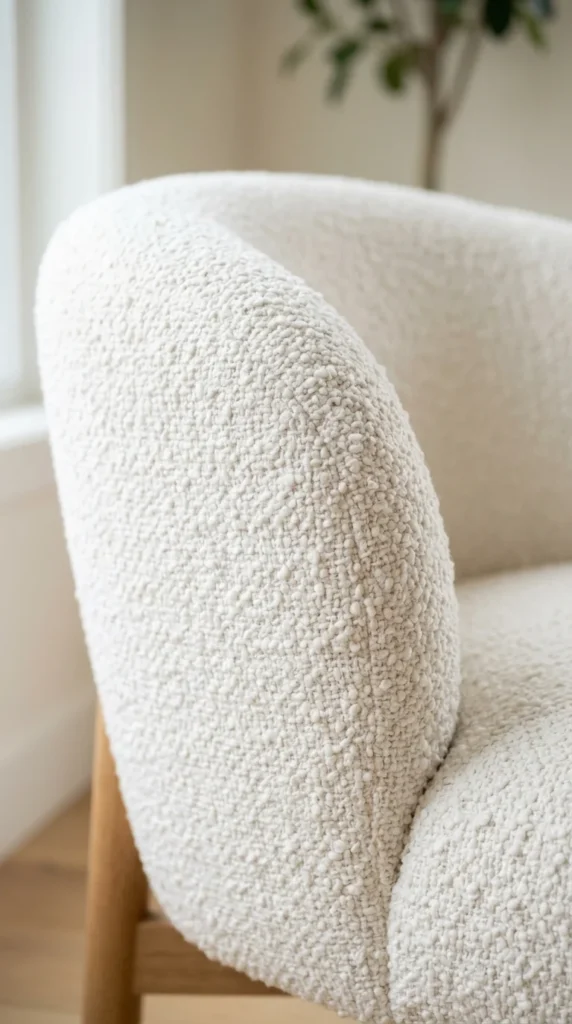
Bouclé has become a hallmark of the organic modern aesthetic. This knobby, looped fabric adds incredible tactile interest and a sense of cozy luxury. A bouclé accent chair or a set of bouclé pillows adds a “cloud-like” softness that balances the harder surfaces of wood and stone.
14. Terracotta Pots
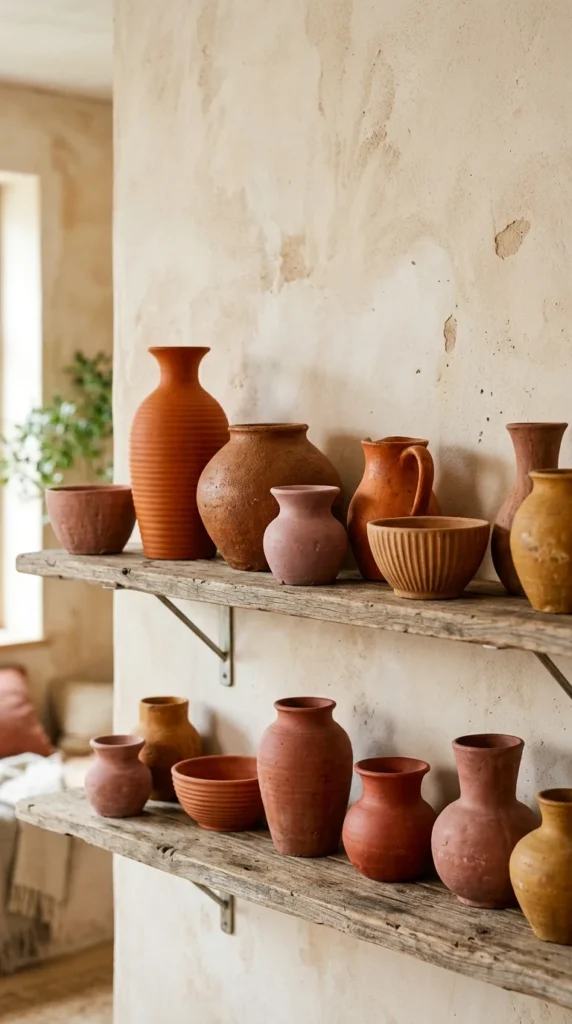
Terracotta brings an essential “earth” element to the living room. The warm, reddish-clay tones of terracotta pots provide a subtle pop of color that remains within the natural spectrum. Choose handmade, unglazed pots for a more rustic, organic feel, and use them to house your indoor plants or simply as sculptural objects.
15. Open Shelving
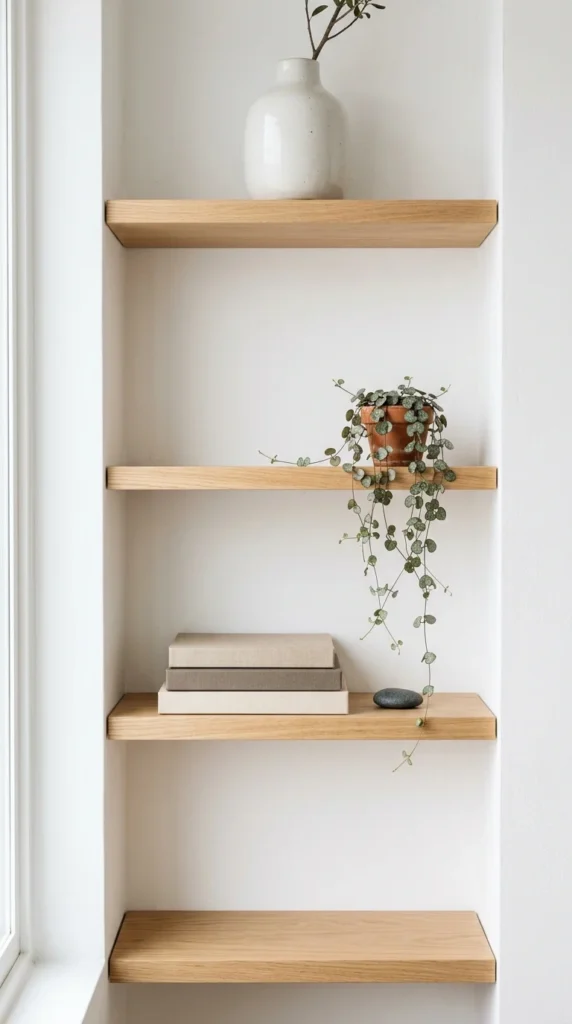
In an organic modern living room, shelving should be used for curation, not just storage. Use open shelves to display a few well-chosen items: a piece of driftwood, a stack of linen-bound books, and hand-thrown ceramic bowls. The key is “negative space”—leaving room between objects so the eye can appreciate each piece.
16. Leather Seating
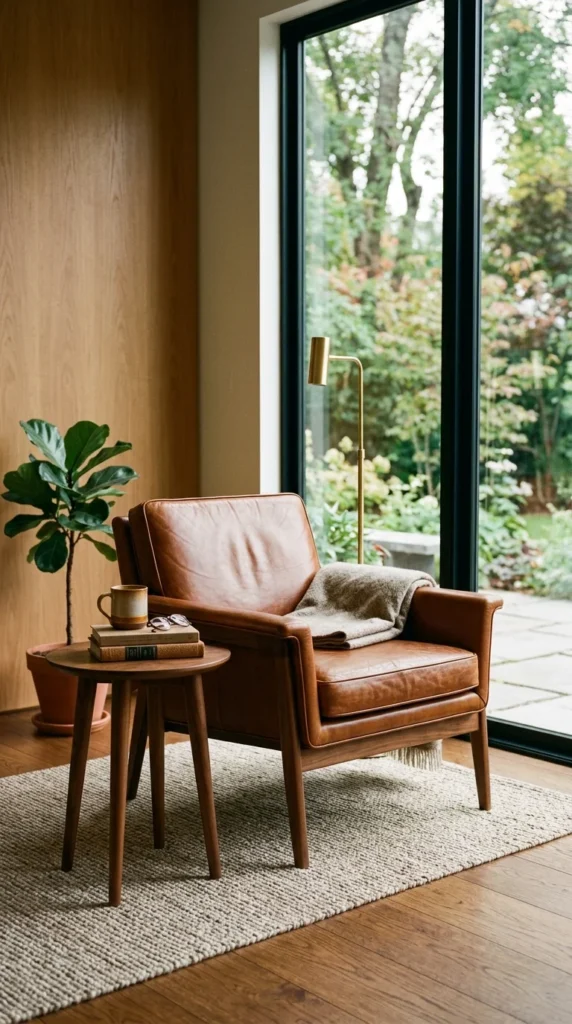
Leather adds a rich, organic texture that ages beautifully over time. In a modern space, choose leathers in warm tones like cognac, tan, or caramel. A leather sling chair or a low-slung leather ottoman provides a smooth contrast to the rougher textures of jute rugs and linen sofas.
17. Symmetry
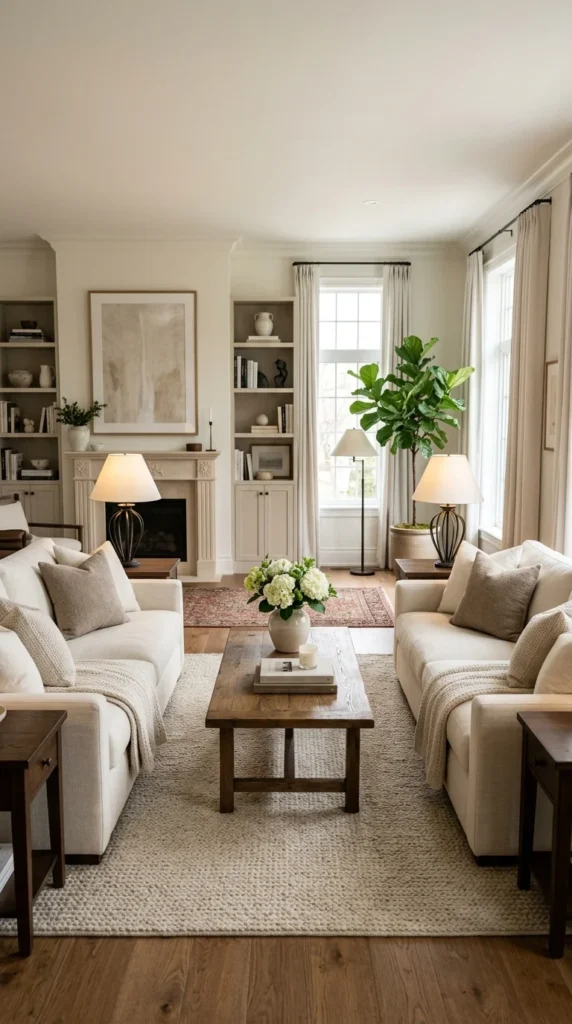
While organic design can sometimes feel eclectic, the “modern” half of the equation benefits from a sense of order. Creating a symmetrical layout—such as two identical armchairs facing a sofa—creates a feeling of balance and calm. This visual stability is a hallmark of luxury design and makes the room feel more formal yet inviting.
18. Sculptural Vases
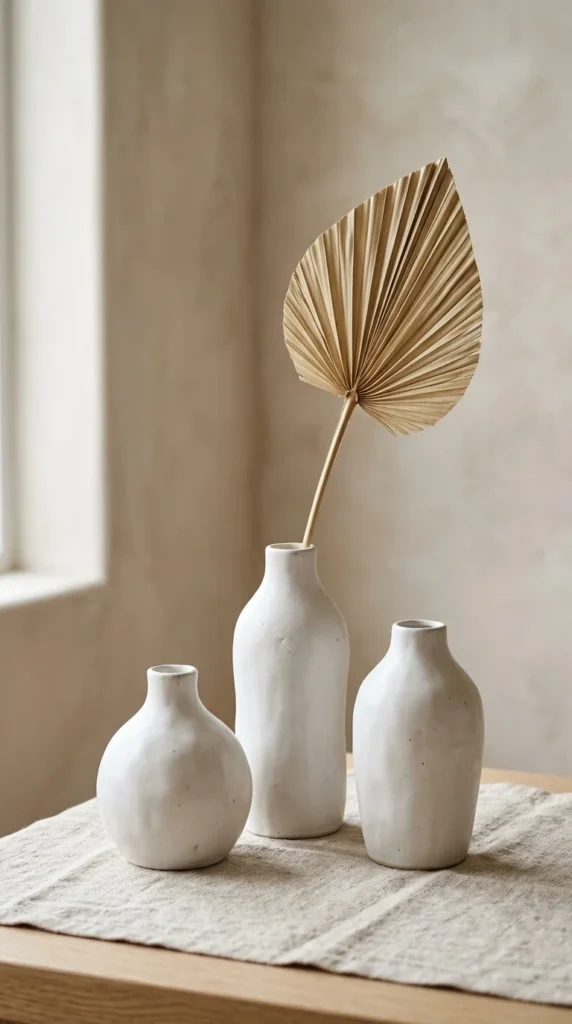
Instead of traditional glass vases, look for sculptural ceramic pieces with matte or sandy finishes. These objects should look beautiful even when empty. When you do add florals, keep them simple—a single branch of eucalyptus, a few dried stems, or a lone architectural leaf.
19. Wool Throws
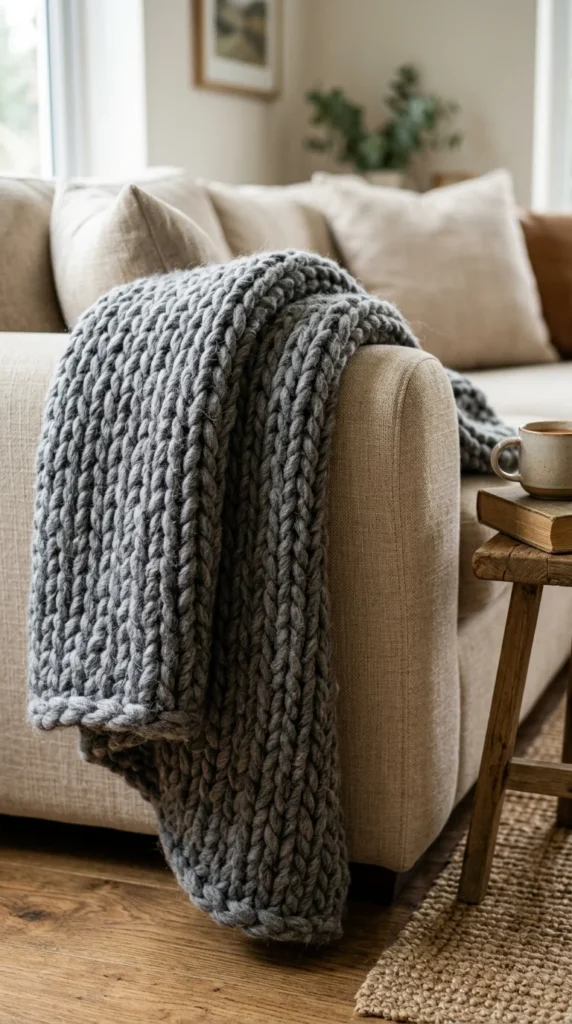
To make a large living room feel intimate and warm, layer in heavy textiles. A chunky-knit wool throw or a cashmere blanket draped over the sofa invites people to get comfortable. The weight and texture of high-quality wool provide a tactile sense of luxury that synthetic fabrics cannot replicate.
20. Concrete Surfaces
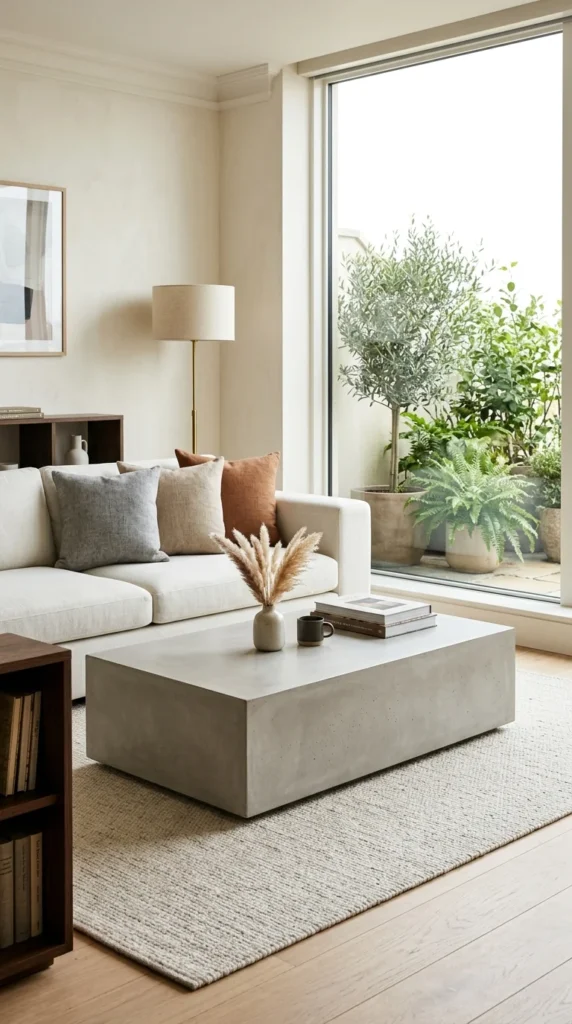
Concrete isn’t just for industrial spaces; in an organic modern setting, it provides a cool, stony texture that feels incredibly grounded. A concrete coffee table or a concrete-rendered fireplace wall offers a smooth, monolithic look that pairs beautifully with soft rugs and warm wood accents.
21. Tonal Layering
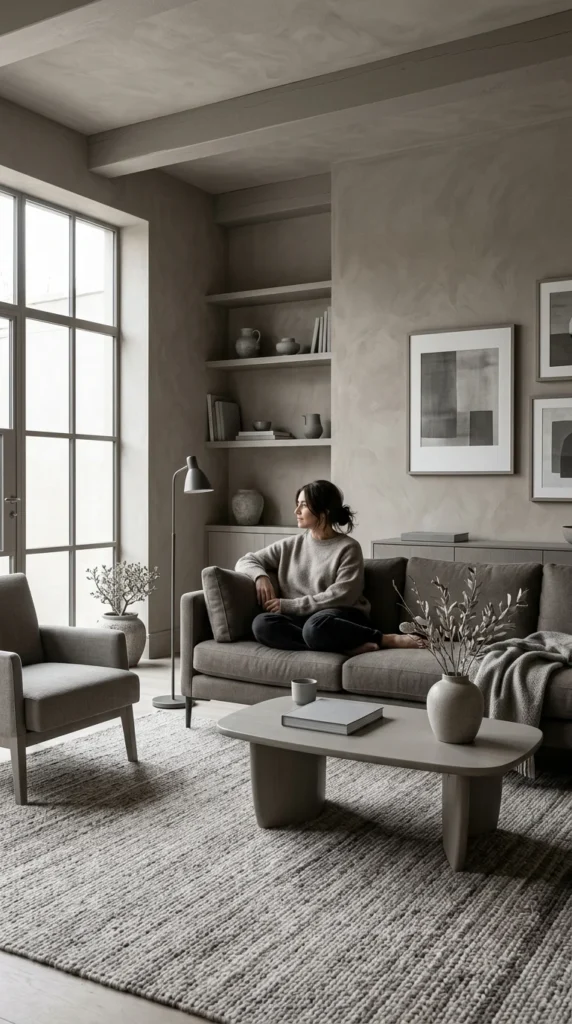
Tonal layering is the practice of using different shades of the same color throughout a room. For example, you might have oatmeal walls, a biscuit-colored sofa, and sand-toned pillows. This creates a sophisticated “quiet” look that feels incredibly cohesive and intentional, emphasizing texture over color contrast.
22. Natural Light
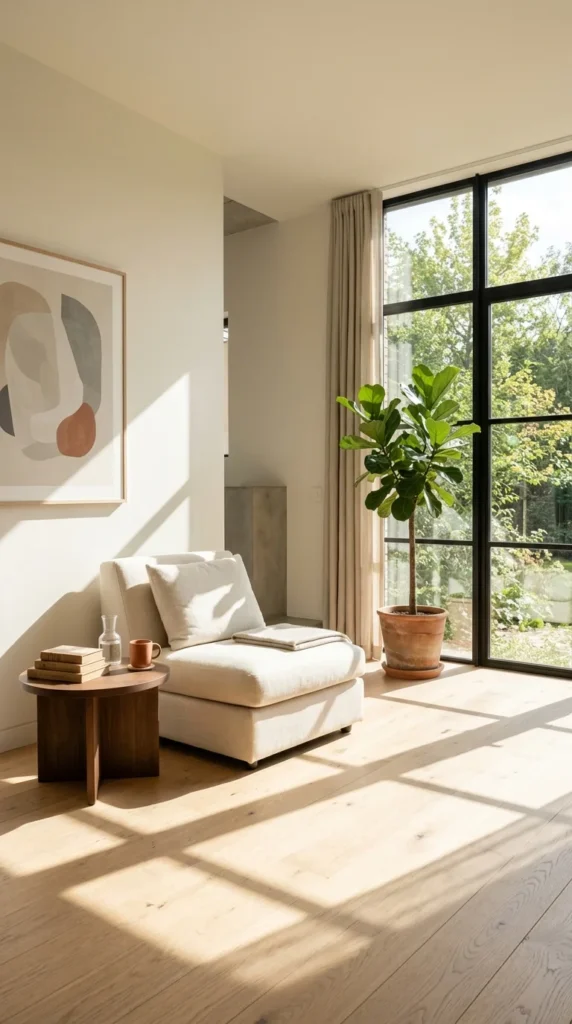
The way light interacts with a room is a key element of organic design. Use mirrors strategically to bounce light into darker corners, and keep furniture low to the ground so as not to block window views. The goal is to have the room feel as bright and airy as possible during the day, mimicking the feeling of being outdoors.
23. Hidden Tech
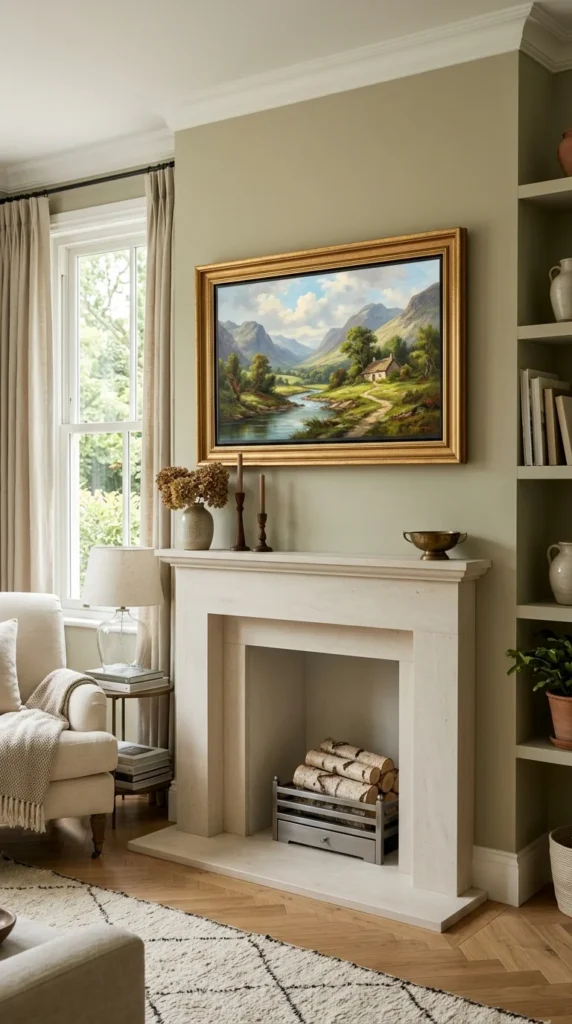
To maintain a truly calm and organic environment, minimize the visual impact of technology. Hide wires inside walls or furniture, and consider a television that looks like framed art when not in use. By removing the “black box” of the TV and the clutter of electronics, the room remains focused on human connection and natural beauty.