
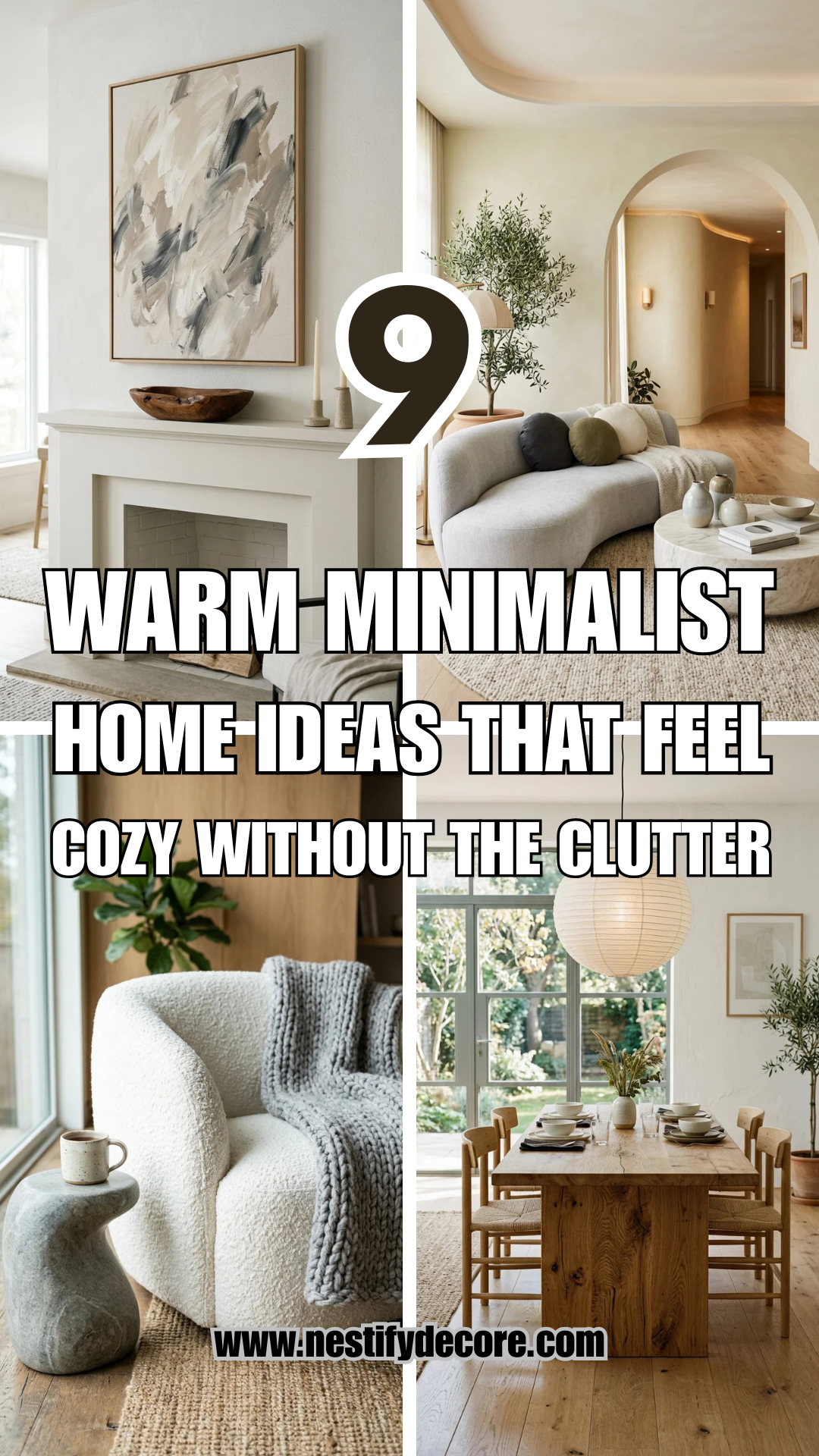
Minimalism often gets a bad reputation for being “cold,” “sterile,” or “uninviting.” However, the rise of “Warm Minimalism” has transformed the design landscape, proving that you can have a clean, uncluttered home that still feels incredibly cozy and lived-in. This aesthetic borrows the simplicity of Scandinavian design and the organic elements of Japanese “Wabi-Sabi” to create spaces that breathe.
Warm minimalism isn’t about having nothing; it’s about having the right things. It is a philosophy of intentionality, where every object serves a purpose or brings joy, and where the architecture and materials do the heavy lifting of decoration. If you are looking to strip away the chaos of modern life while retaining the comfort of a sanctuary, here are nine essential ideas to master the art of warm minimalism.
1. Neutral Tones
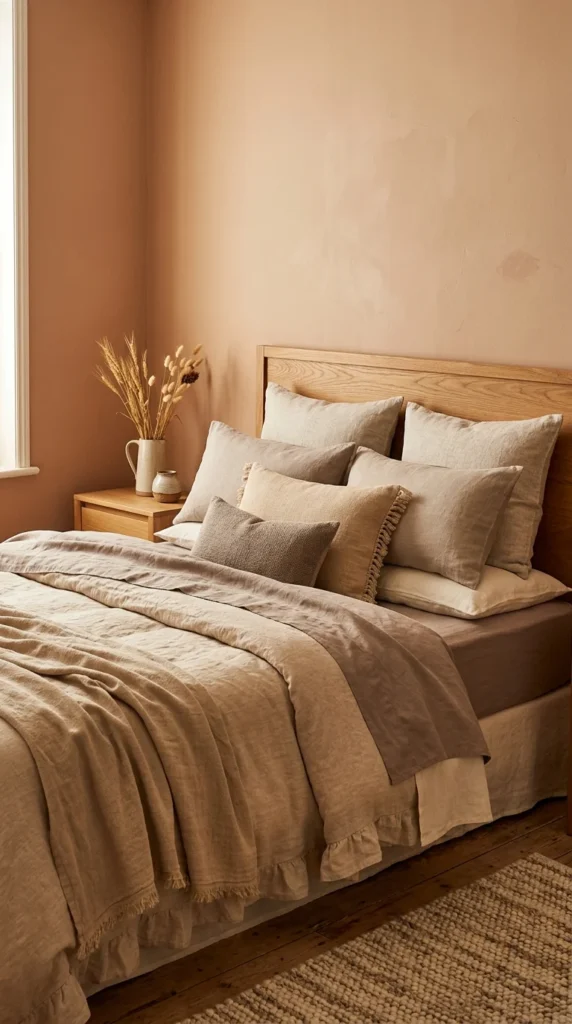
The foundation of any warm minimalist home is a palette that favors “warm” neutrals over stark, clinical whites. While traditional minimalism often relies on “cool” whites and greys, warm minimalism leans into the “greige,” cream, sand, and even soft ochre or terracotta spectrum.
- Layering Tones: Instead of painting everything one flat color, use varying shades of the same hue. This creates depth without visual noise.
- The Power of Undertones: Look for whites with yellow, pink, or brown undertones. These colors catch the sunlight and radiate a glow, making a room feel inhabited even when it is sparsely furnished.
- Earthy Accents: Incorporate “new neutrals” like sage green or dusty rose in small doses to add personality without breaking the monochromatic flow.
2. Raw Wood
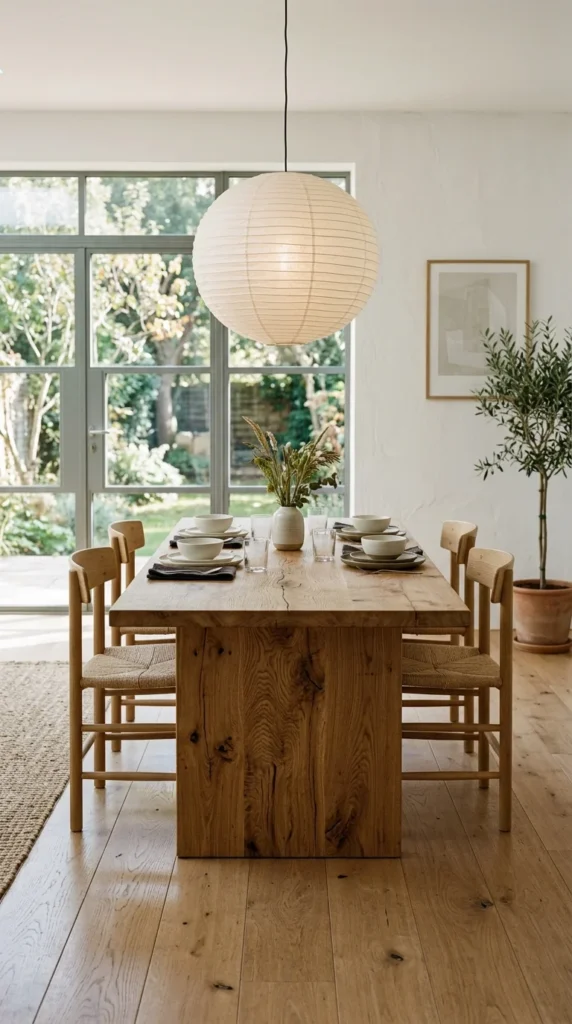
Nothing adds warmth to a room faster than wood. In a minimalist setting, the natural grain, knots, and texture of raw wood act as a substitute for traditional decor like wallpaper or knick-knacks.
- Light Woods: Choose oak, ash, or pine to keep the space feeling airy and bright. These woods reflect light and help maintain that “open” minimalist feel.
- Consistency is Key: To keep the look cohesive, try to match the wood tones across your furniture and flooring. Too many different types of wood can start to feel cluttered.
- The “Living” Element: Wood is an organic material that ages. Embracing the slight imperfections in a wooden stool or a handcrafted bowl adds a sense of history and “wabi-sabi” (the beauty of imperfection) to your home.
3. Textured Layers
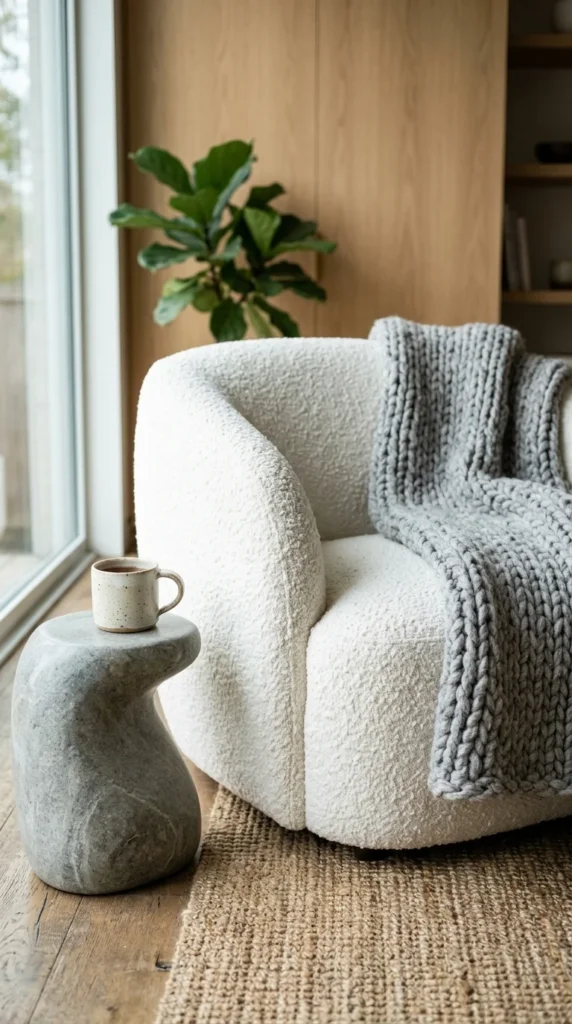
When you remove “stuff” from a room, you have to replace the visual interest with texture. In warm minimalism, we talk about “tactile interest”—the way a room feels to the touch and how the eyes perceive different surfaces.
- Mixing Fabrics: Combine a smooth linen sofa with a chunky wool throw and a bouclé accent chair. The contrast between the fabrics creates a sensory experience that feels luxurious and inviting.
- Natural Fibers: Use jute, sisal, or seagrass rugs to add a rugged, earthy element to the floor. These materials are durable and ground the room.
- Velvet and Silk: For a touch of sophistication, add one or two high-quality silk or velvet pillows. The way these materials catch the light adds a layer of “warmth” that doesn’t require extra furniture.
4. Soft Curves
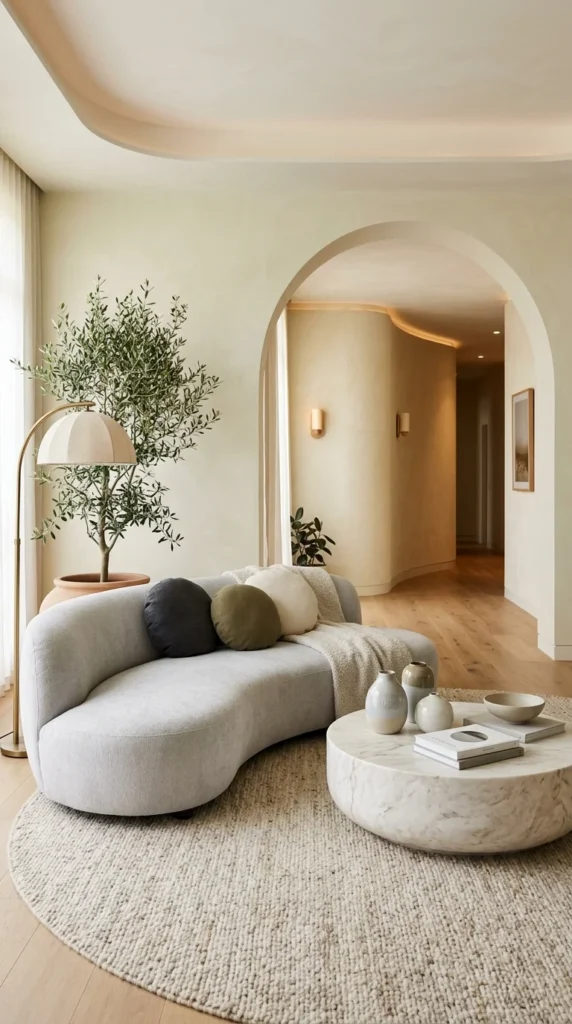
Minimalism is often associated with sharp lines and hard angles, which can contribute to that “cold” feeling. Warm minimalism breaks those lines with soft, organic curves.
- Furniture Shapes: Look for “bean” sofas, round coffee tables, and chairs with curved backs. These shapes feel more “human” and less industrial.
- Architectural Interest: If you are renovating, consider adding arched doorways or curved alcoves. These features provide built-in character, meaning you need fewer decorative items to make the room look finished.
- Round Accessories: Even small items like circular mirrors, round vases, and spherical lamps can soften the rigid lines of a standard rectangular room.
5. Ambient Light
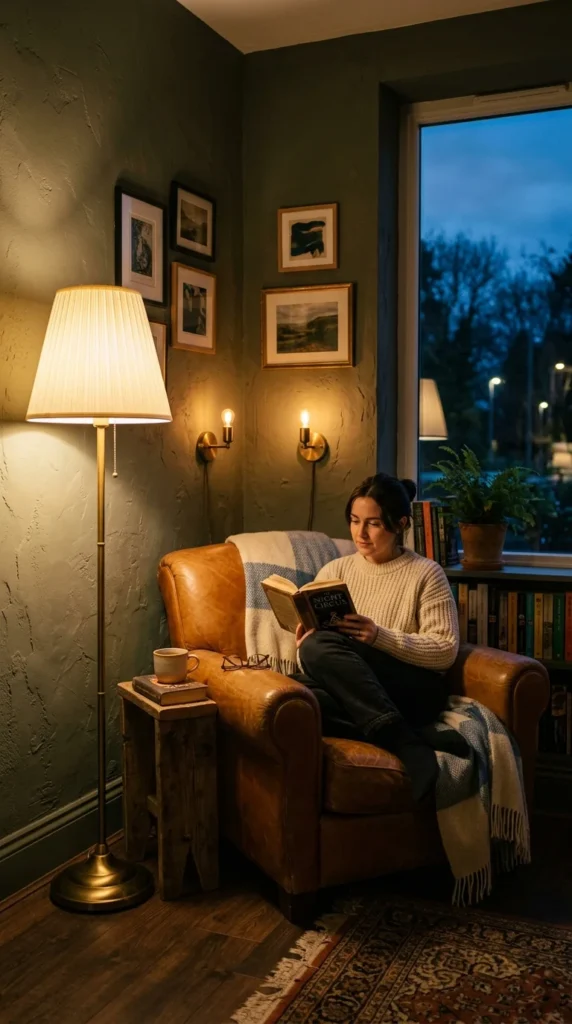
Lighting is the “secret sauce” of warm minimalism. Harsh overhead lights can flatten a room and make it feel like an office. To achieve a cozy vibe, you must layer your lighting.
- Ditch the “Big Light”: Rely on floor lamps, table lamps, and wall sconces instead of ceiling fixtures.
- Warm Bulbs: Use “warm white” LED bulbs (around 2700K). This mimics the glow of sunset or candlelight, which triggers a relaxation response in the brain.
- Sculptural Fixtures: Choose lamps that look like art pieces. A large paper lantern or a brass sconce can serve as the primary “decor” in an otherwise empty corner.
6. Verdant Life
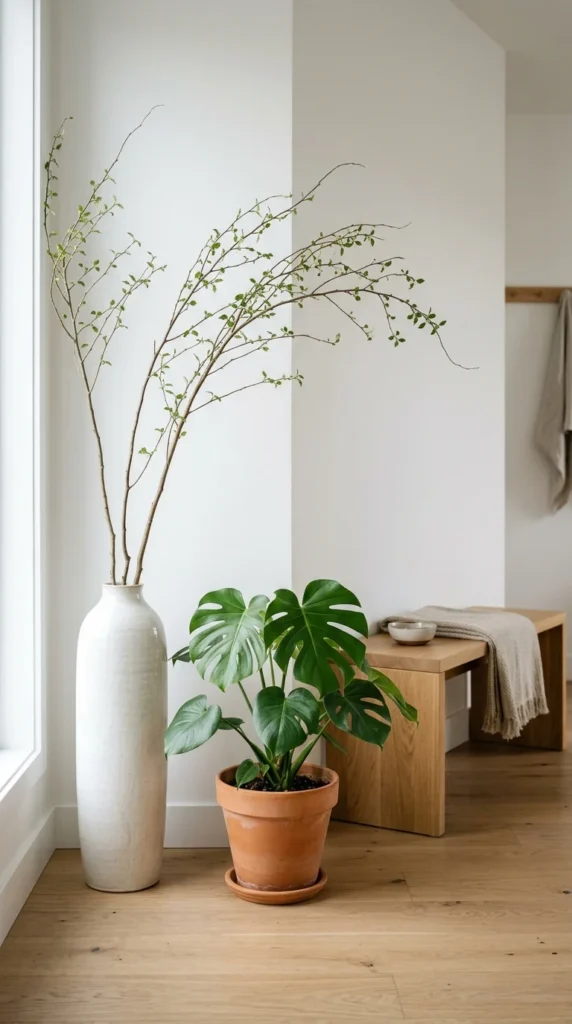
Plants are the ultimate minimalist accessory. They add color, life, and oxygen to a space without contributing to the feeling of “clutter.” In warm minimalism, the focus is on “quality over quantity” when it comes to greenery.
- Architectural Plants: Instead of dozens of small succulents, choose one or two “statement” plants, like a Fiddle Leaf Fig, an Olive Tree, or a tall Bird of Paradise.
- Dried Florals: If you prefer a low-maintenance approach, dried branches, pampas grass, or eucalyptus in a tall vase can provide that organic, vertical element without needing water.
- Natural Pots: Use clay, stone, or unglazed ceramic pots to keep the look grounded and earthy.
7. Tactile Walls
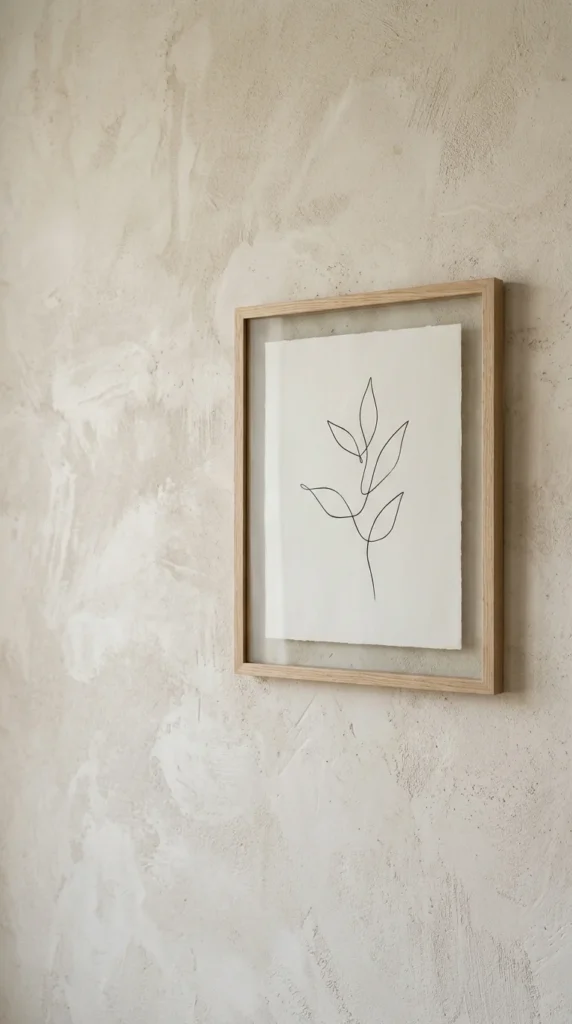
In a minimalist home, the walls are often the largest surface area. Leaving them flat and white can feel boring. Warm minimalism uses “wall treatments” to add soul to the structure itself.
- Limewash and Plaster: Limewash paint creates a mottled, matte finish that looks like stone. It adds movement and depth to the walls, making the room feel like a sanctuary.
- Wood Paneling: Vertical wood slats (slat walls) can add texture and height to a room while maintaining a very clean, modern silhouette.
- Woven Wall Art: A single large textile wall hanging or a set of woven baskets can add warmth and sound-dampening qualities to a large, empty wall.
8. Sleek Storage
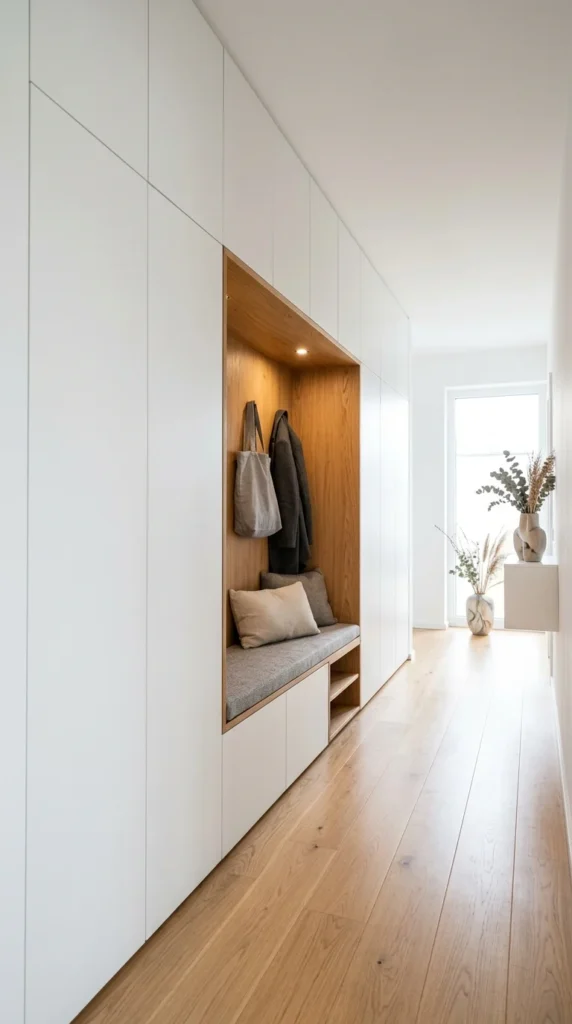
You cannot have a cozy, minimalist home if there is clutter everywhere. The “warmth” comes from the peace of mind that a clean space provides. The trick is to have “invisible” storage.
- Built-in Cabinetry: Invest in floor-to-ceiling cabinets that match the color of your walls. This makes the storage “disappear,” giving you plenty of space to hide the mess of daily life.
- Dual-Purpose Furniture: Use ottomans with hidden compartments or bed frames with drawers.
- The “One-In, One-Out” Rule: To maintain the minimalist aesthetic, ensure that for every new item you bring into your home, one item is donated or recycled. This keeps the “visual weight” of your home consistent.
9. Artful Accents
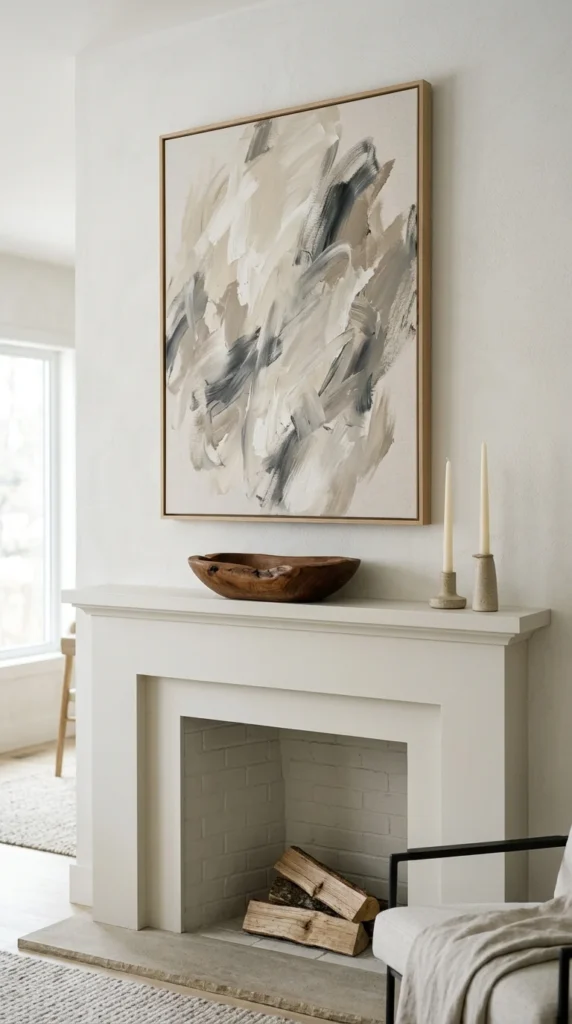
The final step in creating a warm minimalist home is the curation of accents. Instead of filling shelves with “filler” items, choose a few high-quality pieces that have a story.
- Large-Scale Art: One large piece of art on a wall is often more “minimalist” than a gallery wall of twenty small pictures. It creates a focal point and feels more intentional.
- Handmade Ceramics: Pieces that show the hand of the maker—irregular edges, thumbprints, or unique glazes—add a human touch to a clean space.
- Meaningful Curation: Only display things that you truly love. A stack of your favorite books, a vase from a trip abroad, or a single candle that smells like your favorite season. When you reduce the number of items, the items that remain become much more powerful.