
A cramped kitchen can feel like a logistical puzzle that’s impossible to solve. When square footage is at a premium, every design choice—from the color of the walls to the style of the cabinet pulls—carries significant weight. However, a small kitchen doesn’t have to feel claustrophobic. With strategic design interventions, you can trick the eye into perceiving more depth, height, and breadth than actually exists.
The secret to a successful tiny kitchen makeover lies in two principles: maximizing light and minimizing visual clutter. By streamlining the “visual noise” and inviting the eye to move freely across the room, you can transform a galley or a corner kitchenette into a culinary sanctuary. Here are nine transformative ideas to make your small kitchen feel exponentially larger.
1. Open Shelving
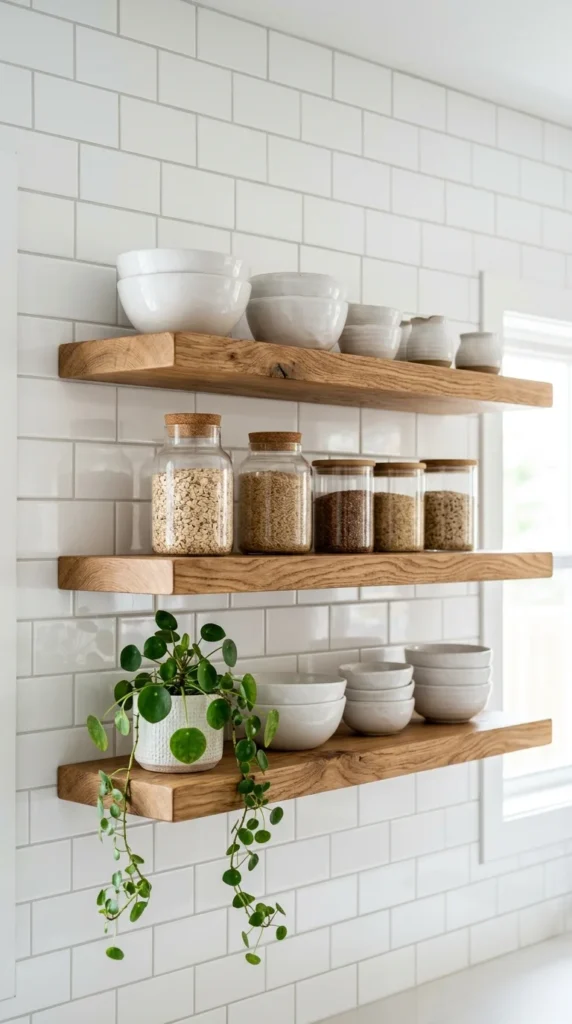
One of the most effective ways to open up a kitchen is to remove the “heavy” visual weight of upper cabinets. Standard wall-hung cabinets stick out into the room at eye level, making the walls feel like they are closing in. Replacing some or all of these with open, floating shelves immediately creates breathing room.
- Create Depth: Because you can see the back wall behind the shelves, the boundaries of the room feel further away.
- Encourage Organization: Open shelving forces a degree of minimalism. Displaying only your most beautiful or frequently used items (like matching glassware or white plates) creates a sense of intentionality and order.
- Boutique Aesthetic: This approach mimics the look of high-end cafes, making the space feel curated rather than cluttered.
2. Glossy Surfaces
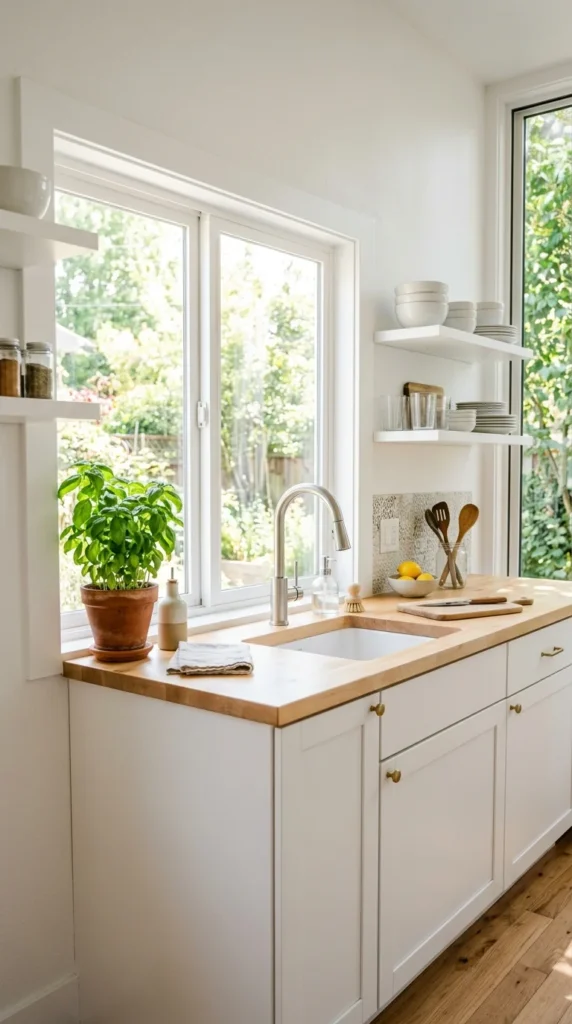
Light is the best friend of a small space. In a tiny kitchen, your goal is to bounce light around as much as possible. Matte finishes absorb light, while glossy surfaces act like mirrors, reflecting both natural and artificial light back into the room.
- Cabinet Finishes: Opt for high-gloss lacquer or acrylic cabinets. The subtle reflections will create a sense of movement and depth.
- Mirror Backsplashes: While a traditional tile backsplash is lovely, a mirrored or metallic backsplash can effectively “double” the appearance of your countertop space.
- Polished Stone: Use polished quartz or marble countertops. The sheen adds a layer of sophistication while helping brighten dark corners.
3. Monochromatic Palette
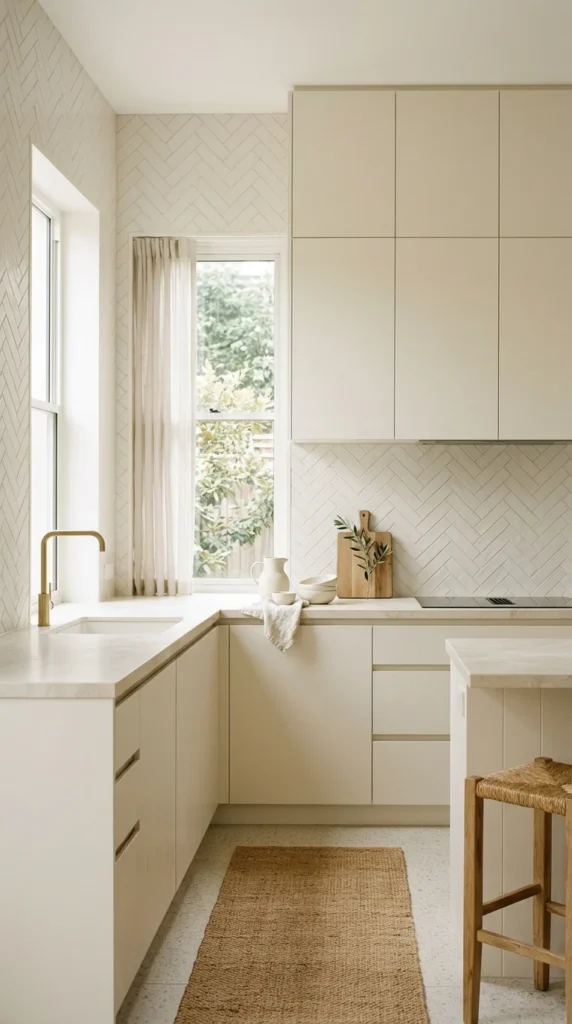
Using a single color for walls, cabinets, and trim eliminates visual boundaries. When there is no sharp contrast between the cabinets and the walls, the eye glides smoothly across the space without stopping, which creates the illusion of a larger area.
- The Power of White: White is the classic choice for small spaces as it has the highest Light Reflectance Value (LRV).
- Soft Neutrals: If white feels too clinical, consider “greige,” soft sand, or pale blue. The key is to keep the saturation low and the tone consistent across all surfaces.
- Texture Over Color: To prevent a monochromatic kitchen from looking flat, introduce texture through a tactile backsplash, a ribbed island base, or a woven rug.
4. Vertical Storage
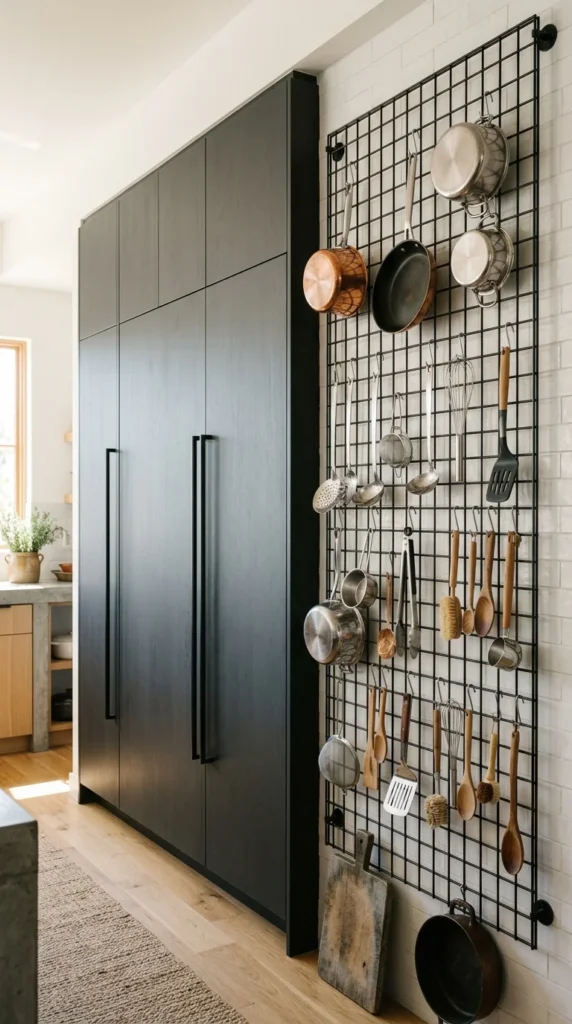
When you lack horizontal square footage, the only way to go is up. Most kitchens have a “dead zone” between the top of the cabinets and the ceiling. This space is a missed opportunity for both storage and the perception of height.
- To-the-Ceiling Cabinets: If you are doing a full remodel, install cabinets that reach all the way to the ceiling. This draws the eye upward, making the ceiling appear higher.
- The High Shelf: If you have existing cabinets, place a matching shelf above them to store items used only once a year, such as holiday platters or large stockpots.
- Hanging Racks: Use the ceiling to hang a pot rack or the undersides of shelves to hang mugs and wine glasses. This keeps the countertops clear and functional.
5. Glass Cabinetry
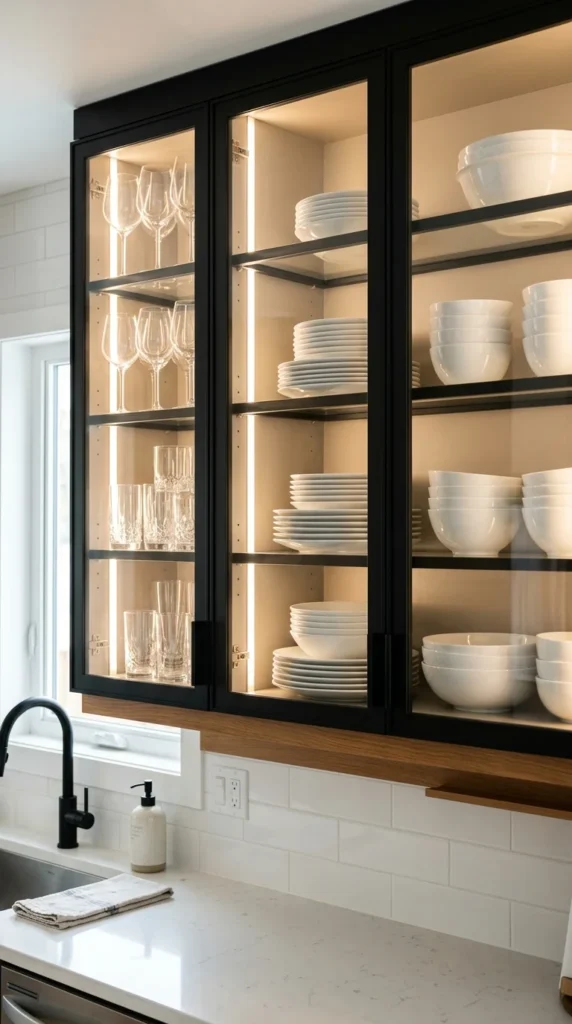
If you aren’t ready to commit to the total exposure of open shelving, glass-front cabinets offer a perfect middle ground. They provide the protection of a cabinet door while offering the visual depth of an open shelf.
- See-Through Effect: Clear glass allows the eye to travel into the cabinet, effectively extending the room’s visual boundary to the back of the cupboard.
- Frosted Options: If you’re worried about perfectly organized stacks, frosted or fluted glass offers a blurred view that still maintains a sense of lightness without showing every detail.
- Interior Lighting: Adding small LED puck lights inside glass cabinets creates a “lantern” effect that adds warmth and a sense of luxury to the kitchen at night.
6. Recessed Lighting
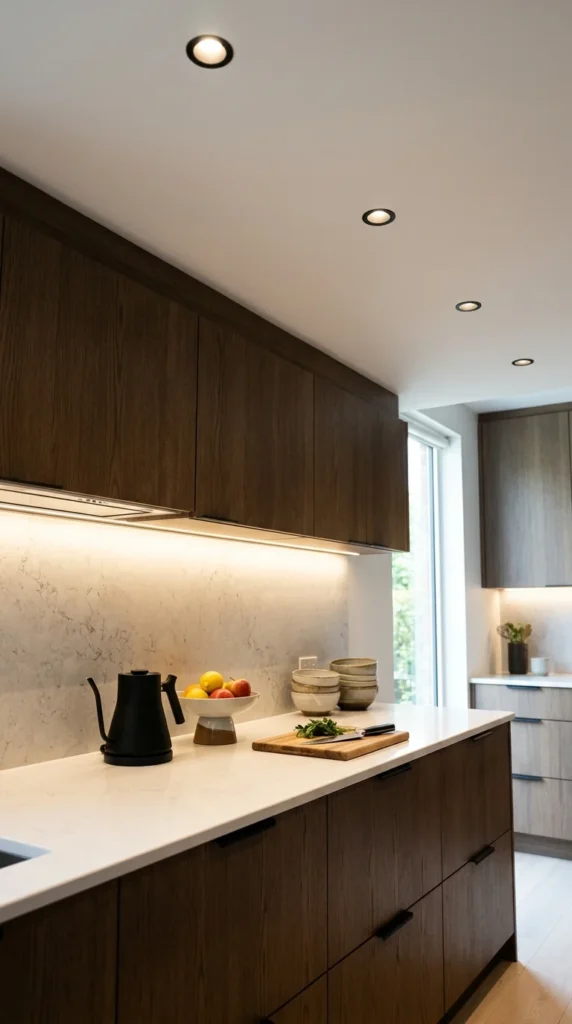
Large, hanging light fixtures can often “crowd” the air in a small kitchen. To make the space feel more expansive, lean into recessed and integrated lighting solutions that don’t take up any physical space.
- Under-Cabinet LEDs: These are essential for small kitchens. They eliminate the dark shadows under cabinets that make a room feel small and dingy.
- Toe-Kick Lighting: Placing LED strips along the base of your cabinets (the toe-kick) creates a “floating” effect, making the floor area feel wider.
- Flush Mounts: Instead of a low-hanging chandelier, choose flush-mount or semi-flush-mount fixtures that stay close to the ceiling to maintain an unobstructed line of sight.
7. Minimalist Hardware
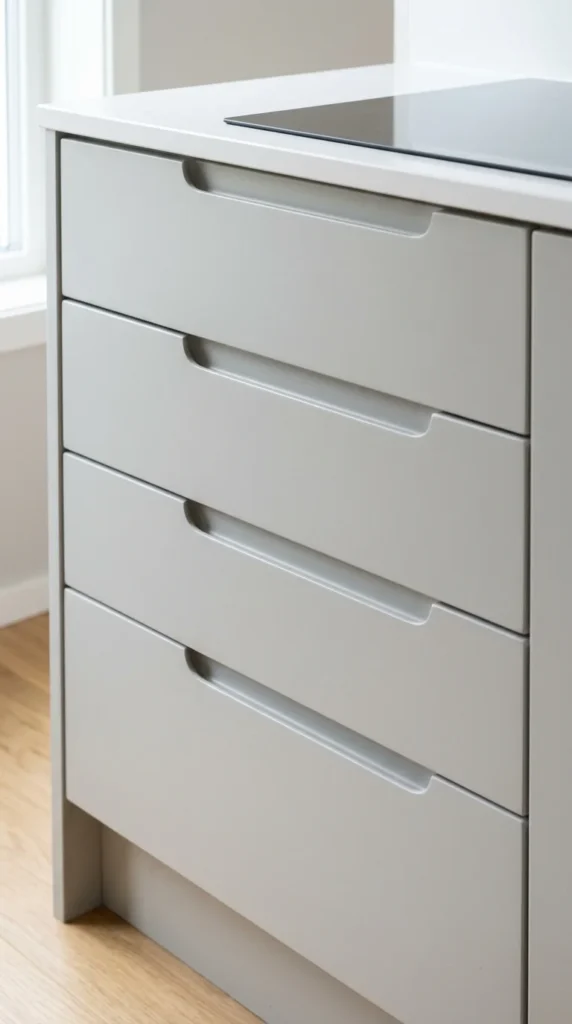
In a small kitchen, even the handles on your drawers can contribute to a sense of “clutter.” Bulky knobs or long pull-bars can snag clothing and visually break up the clean lines of your cabinetry.
- Handleless Cabinets: Push-to-open mechanisms or integrated “J-pulls” create a completely flat surface. This “seamless” look is incredibly effective at making a small room feel like a unified, large piece of custom furniture.
- Slim Profiles: If you prefer hardware, choose slim, low-profile designs in a finish that matches your cabinets. For example, white pulls on white cabinets blend away, while black pulls on white cabinets create “dots” that the eye has to process.
- Consistency: Keep the hardware style consistent throughout to maintain a streamlined aesthetic.
8. Portable Islands
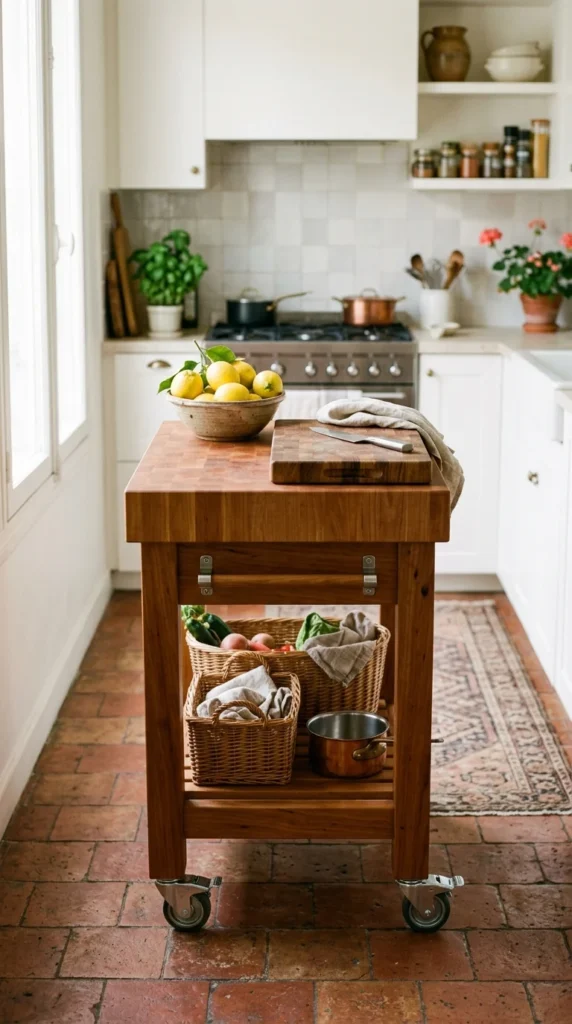
A permanent kitchen island can often be the “death knell” for a small kitchen’s flow. However, the need for extra prep space is real. The solution is a portable island or a rolling cart.
- On-Demand Space: A rolling cart provides a surface for chopping or serving when you need it and can be tucked against a wall or into a closet when you don’t.
- Leggy Designs: Choose a cart with thin legs rather than a solid block base. Being able to see the floor underneath the furniture makes the room feel less crowded.
- Multi-Purpose: Look for a cart that includes towel racks, spice tiers, or a drawer to add extra functionality to its small footprint.
9. Lucite Seating
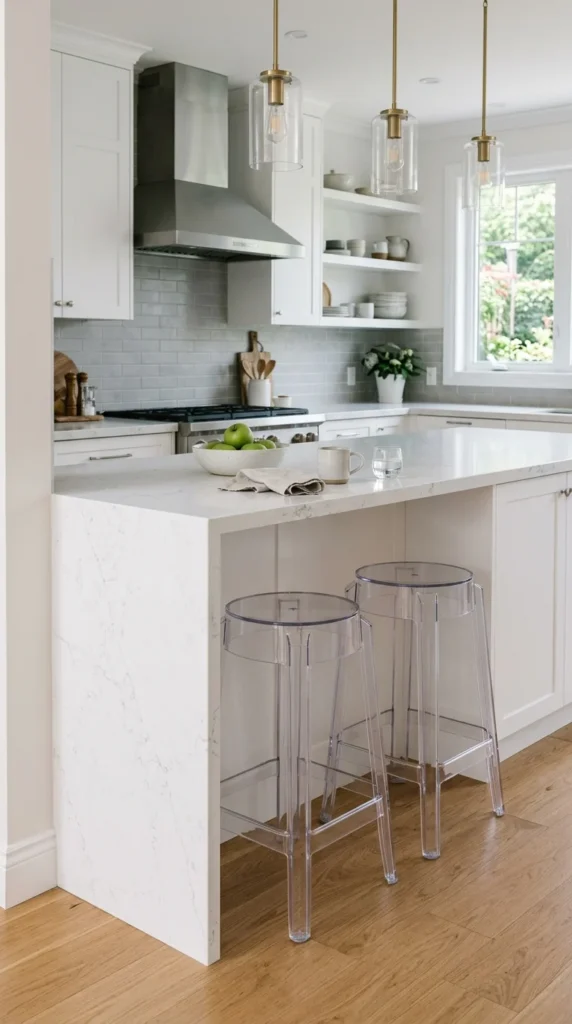
If your tiny kitchen includes a breakfast bar or a small dining nook, the furniture you choose can make or break the room’s “flow.” Heavy wooden chairs act like visual roadblocks.
- The Ghost Effect: Lucite (acrylic) chairs or stools are essentially “invisible.” They provide the seating you need without taking up any visual space.
- Uninterrupted Lines: Because you can see through the furniture, the floor and the base of the island remain visible, which tricks the brain into thinking the area is unoccupied and spacious.
- Modern Edge: Beyond the space-saving benefits, acrylic furniture adds a modern, chic vibe that complements almost any color scheme.