
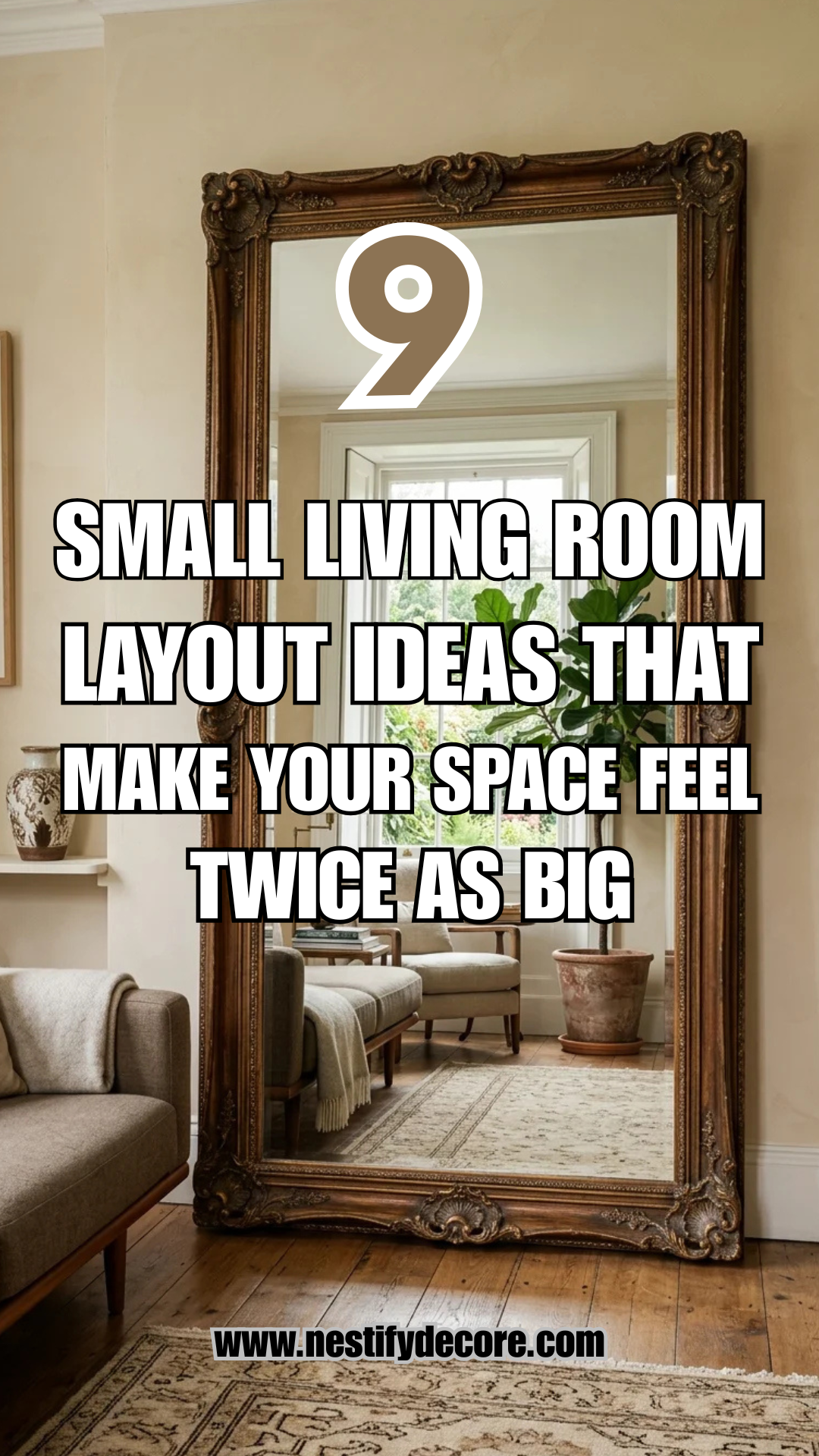
Living in a compact space doesn’t have to mean compromising on style or comfort. The secret to a successful small living room isn’t just about finding the smallest furniture possible; it is about strategic placement, visual weight, and the art of tricking the eye. When square footage is at a premium, every inch must be intentional. By manipulating light, scale, and traffic flow, you can transform a cramped seating area into a sophisticated sanctuary that feels significantly larger than its physical dimensions suggest.
1. Floating Furniture
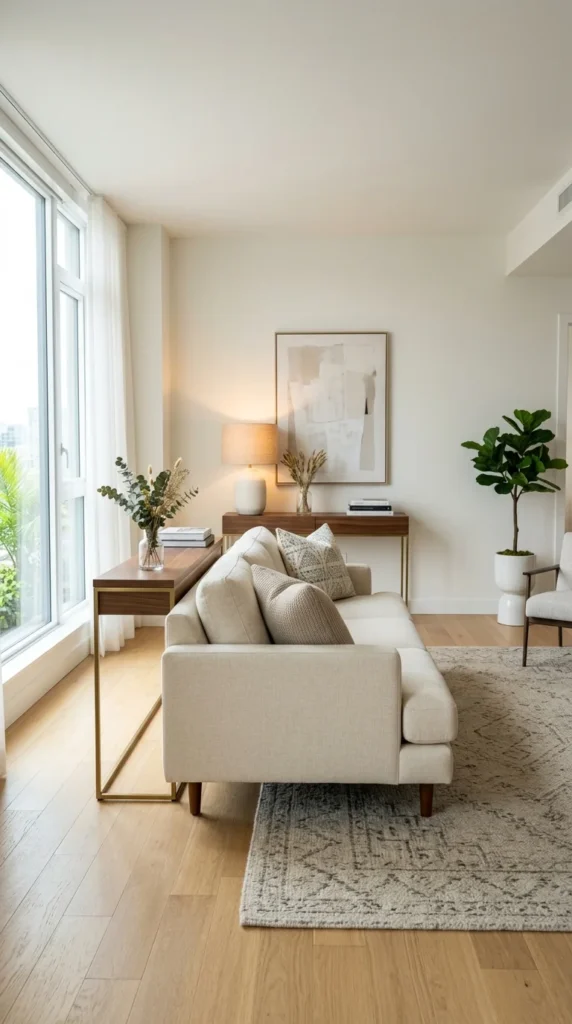
The most common mistake in small rooms is pushing every piece of furniture flush against the walls. While this seems like it would open up the floor, it actually highlights the room’s boundaries and can make the space feel “boxed in.” By “floating” your furniture—pulling the sofa and chairs even just six inches away from the wall—you create breathing room.
This layout creates a central “island” of activity. When you can see the shadows and the floor behind a piece of furniture, the brain perceives more depth. For an even more functional floating layout, place a slim console table behind the sofa. This provides a surface for lighting and decor without the bulk of a large coffee table, keeping the center of the room clear and accessible.
2. Vertical Storage
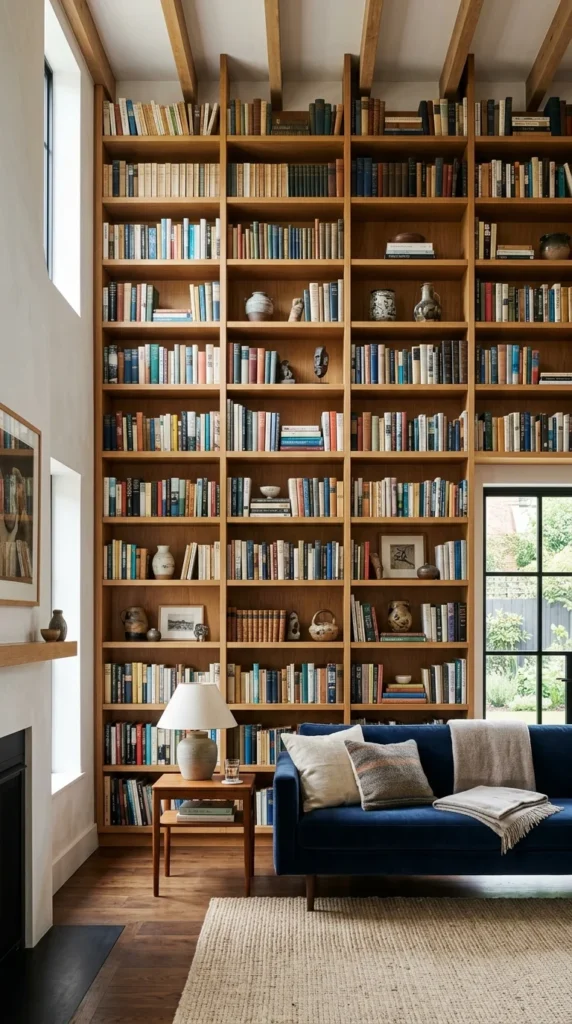
When you run out of floor space, the only way to go is up. Utilizing your vertical real estate is a powerful design trick that draws the eye toward the ceiling, making the room feel taller and more grand. Floor-to-ceiling shelving units or high-mounted floating shelves serve two purposes: they provide essential storage for books and media, and they create a strong vertical line.
To maximize this effect, keep the shelves organized and avoid over-cluttering them. Mixing books with open space and decorative objects prevents the wall from feeling heavy. If you have low ceilings, painting the shelves the same color as the walls can help them blend in, providing storage that feels like a natural architectural feature rather than an intrusive piece of furniture.
3. Acrylic Accents
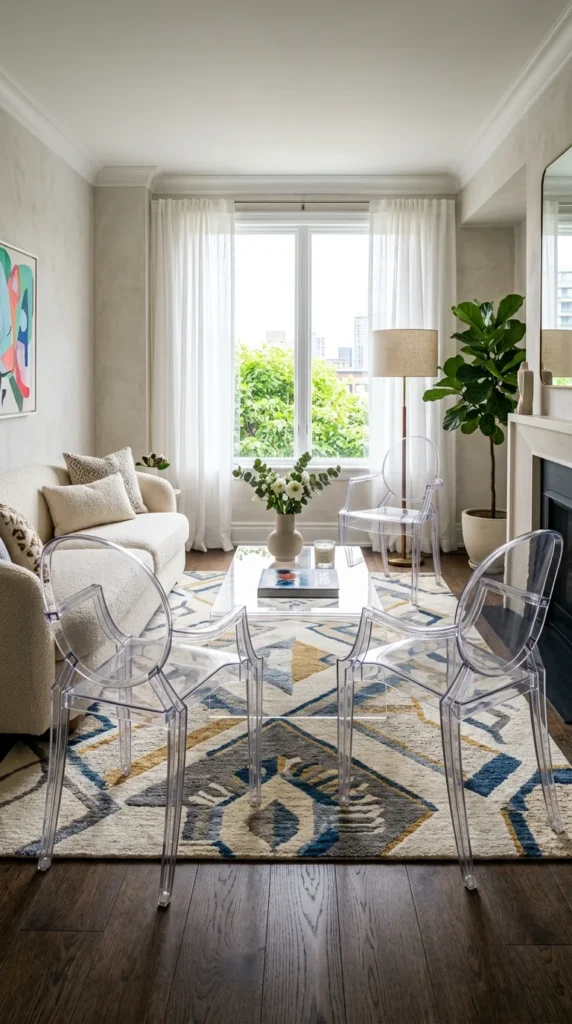
Visual weight is a crucial concept in small-space design. A heavy, dark wood coffee table can act like a visual anchor, stopping the eye and making the room feel occupied. On the other hand, furniture made of glass, acrylic, or Lucite is virtually “invisible.”
Incorporating a clear coffee table or “ghost” chairs allows the eye to travel through the piece to the floor and walls beyond. This maintains the functionality of a surface for drinks or books without taking up any visual real estate. It creates an unobstructed sightline that immediately makes a small layout feel twice as big. Pair these “see-through” pieces with a bold rug to let the pattern shine through the furniture.
4. Oversized Rugs
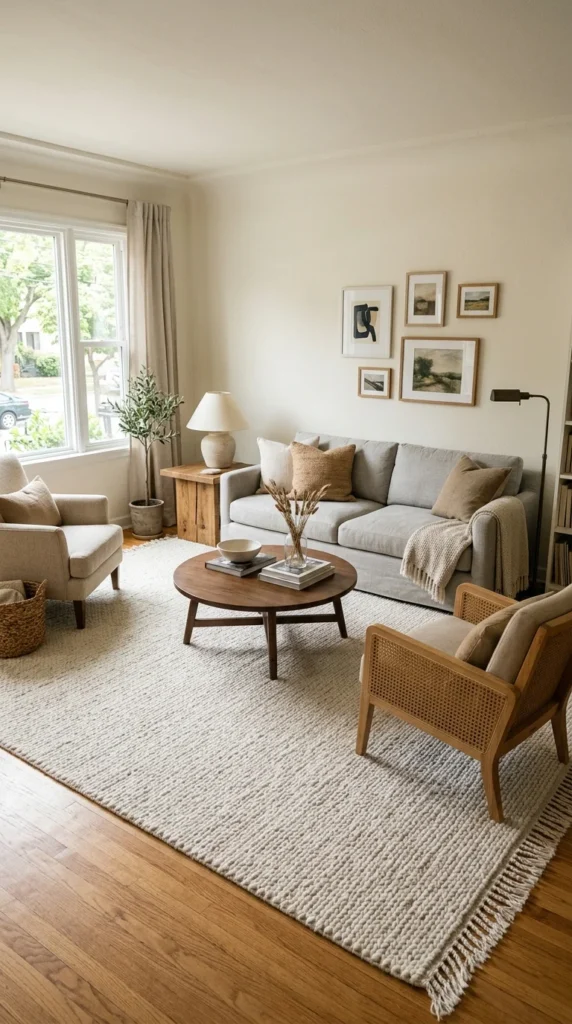
It sounds counterintuitive, but a small rug makes a room feel smaller. A tiny rug creates a “postage stamp” effect, segmenting the floor and making the seating area feel cramped and disjointed. To make a space feel expansive, choose a rug that is large enough to sit under all the major pieces of furniture.
An oversized rug acts as a boundary that defines the living area while pushing the visual limits of the room toward the walls. Ideally, the rug should be large enough that there are only 6 to 12 inches of bare floor showing around the perimeter. This creates a unified “zone” that feels generous and intentional. Opt for light colors or subtle, low-contrast patterns to keep the floor looking open and bright.
5. Mirrored Surfaces
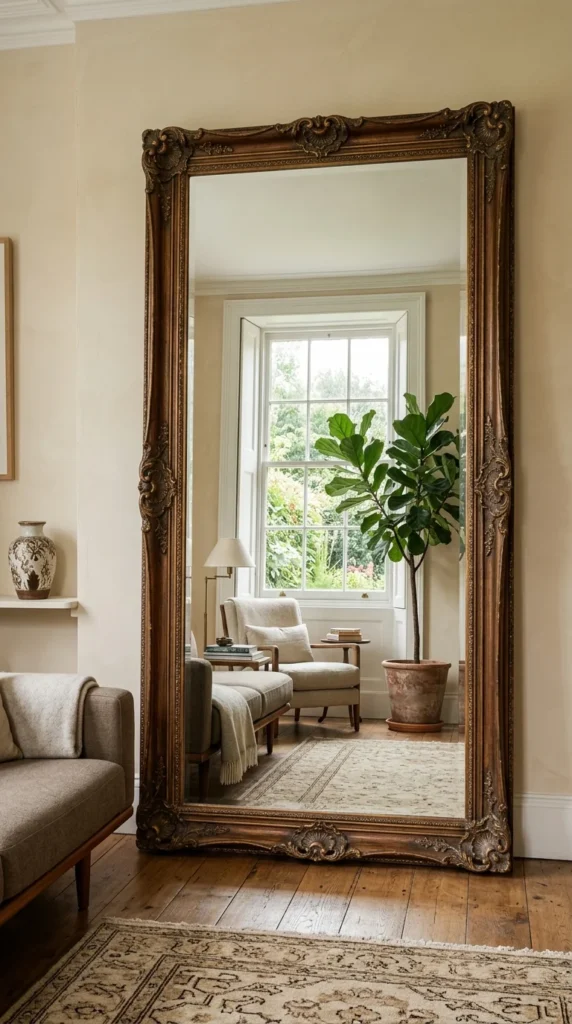
Mirrors are the oldest trick in the decorator’s handbook for a reason: they work. A strategically placed mirror can double the amount of light in a room and create the illusion of a “window” where there isn’t one. By reflecting the opposite side of the room, a mirror adds artificial depth that tricks the brain into thinking the space continues.
For maximum impact, place a large mirror directly across from a window. This catches the natural light and bounces it into the darker corners of the room. You can also use mirrored furniture, such as a side table or a bar cart, to add a touch of glamour while serving the same light-reflecting purpose. The key is to reflect something pleasant—like a piece of art or a view—rather than a cluttered corner.
6. Corner Sectionals
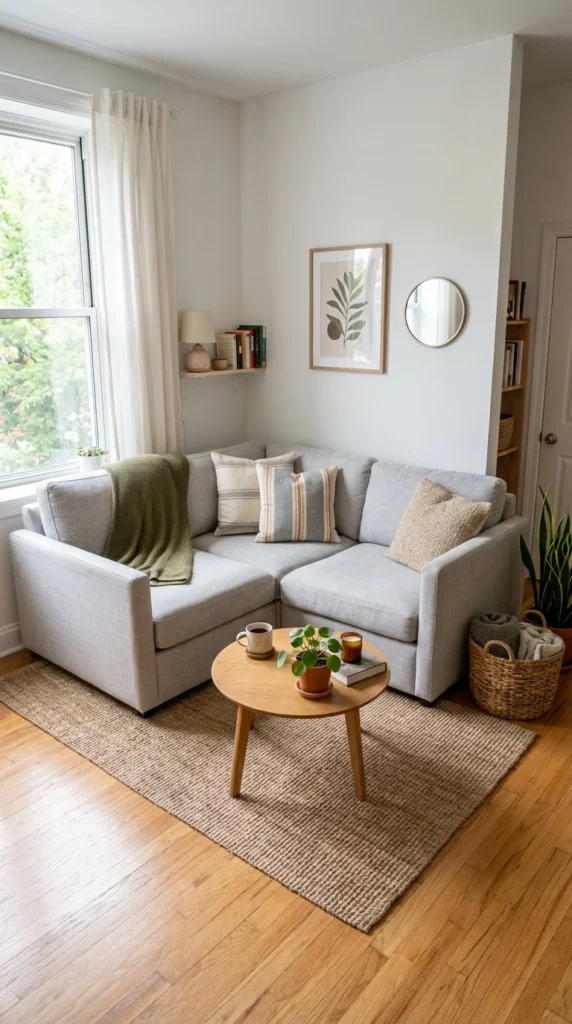
Many people shy away from sectionals in small rooms, fearing they will overwhelm the space. However, one large piece of furniture can actually feel less cluttered than several smaller pieces (like a sofa and two chairs). A sectional that fits perfectly into a corner utilizes space that often goes to waste.
This layout eliminates the “dead space” that often occurs between chairs and end tables. By tucking the seating into a corner, you open up the rest of the floor for traffic flow and play. Look for a sectional with a “chaise” end rather than a full backrest on both sides; this maintains an open feel and prevents the sofa from acting as a wall that cuts off the room.
7. Leggy Pieces
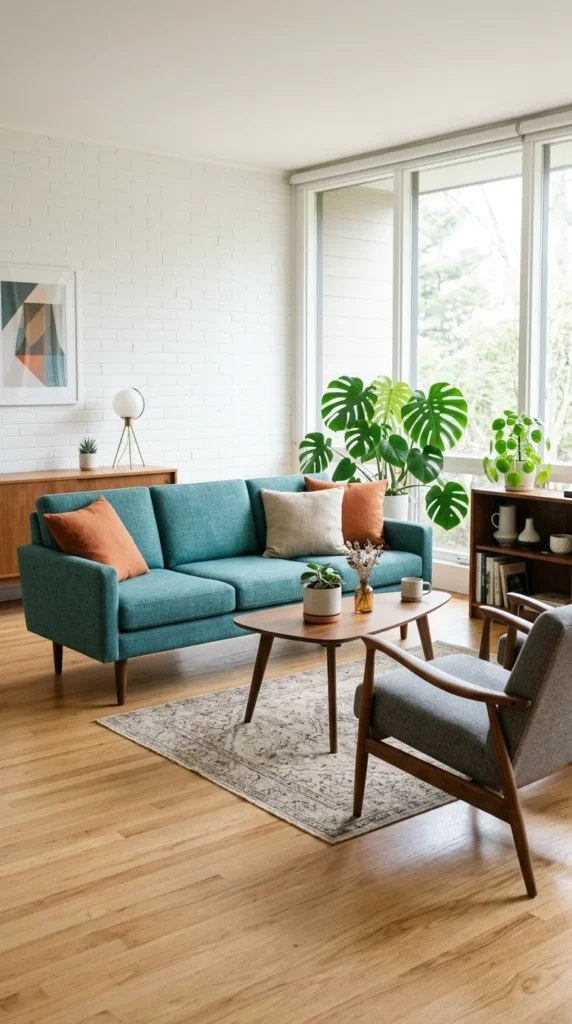
Furniture that sits directly on the floor can look heavy and blocky, acting like a solid wall that stops the eye. To make a room feel larger, choose furniture with “legs.” Whether it’s a mid-century modern sofa with tapered legs or a TV stand on slim metal stilts, raising the bulk of the furniture off the ground is a game-changer.
When you can see the floor extending underneath a sofa or a cabinet, your brain registers that floor space as part of the room’s total area. This creates a sense of “airiness” and flow. It also makes cleaning easier, which helps keep the small space feeling fresh and tidy—two essential components of a room that feels spacious.
8. Defined Zones
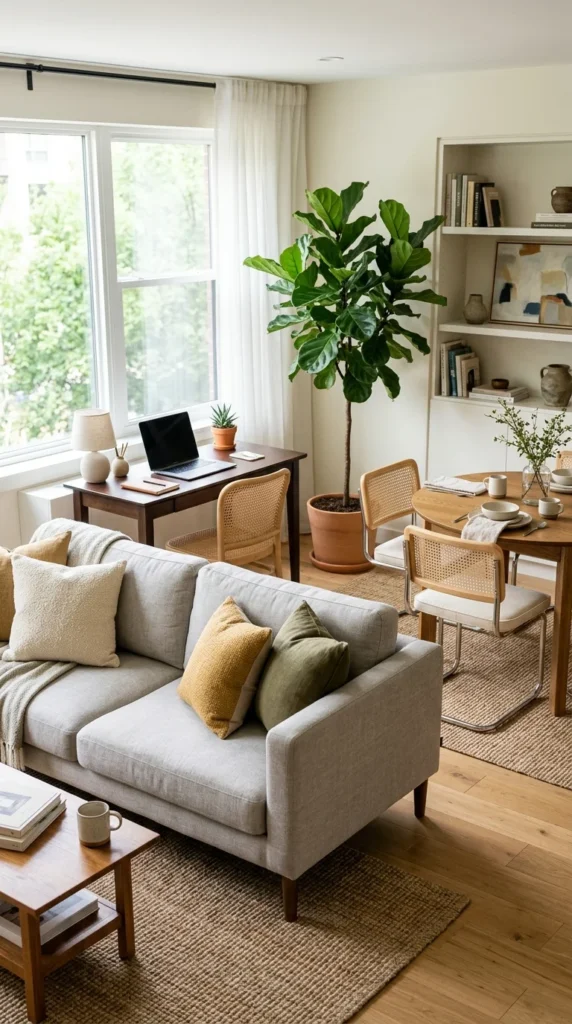
In a small apartment or home, the living room often has to serve multiple purposes—office, dining room, and relaxation hub. If the layout is messy, the room will feel chaotic and small. The key is to create “zones” using furniture placement and rugs to give each activity its own dedicated spot.
Use the back of a sofa to act as a divider between a living area and a small desk or dining table. By clearly defining where one “room” ends and another begins, you create a sense of order. This organized approach prevents the “crammed” feeling that occurs when different functions bleed into one another. Even in a tiny room, having a clear “pathway” between these zones makes the layout feel professional and expansive.
9. Light Maximization
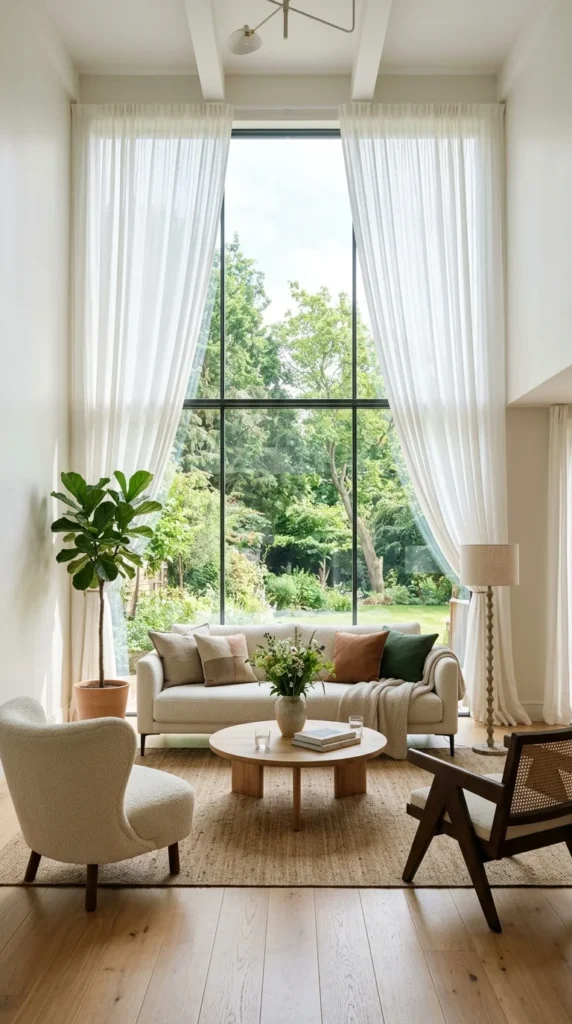
Natural light is the ultimate space-expander. A dark room always feels smaller than a bright one. To make your living room feel twice as big, focus your layout around the windows. Avoid blocking your light source with high-backed chairs or heavy cabinets.
Instead of heavy drapes, use sheer curtains that provide privacy while letting the sunlight filter through. To enhance this, use a light color palette on the walls and large furniture pieces. Light colors reflect more light, whereas dark colors absorb it. If you lack natural light, use a “layered” lighting approach: a mix of overhead lights, floor lamps, and table lamps at different heights to eliminate dark shadows and make every corner of the room visible and inviting.