
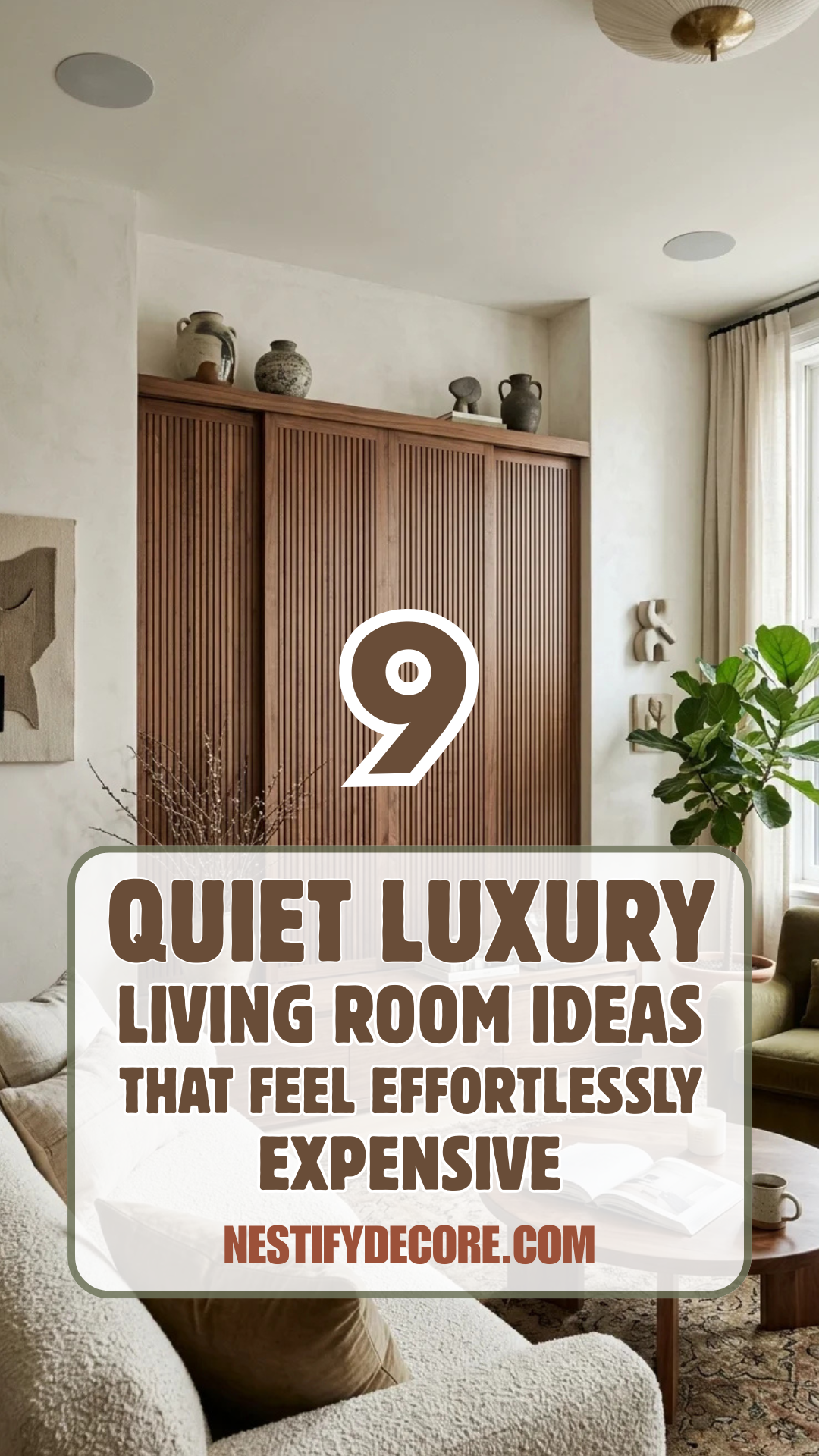
The concept of “Quiet Luxury” has transcended the fashion runways to become the ultimate standard in interior design. Unlike the flashy “nouveau riche” aesthetics characterized by loud logos and excessive gilding, quiet luxury—often referred to as “stealth wealth”—relies on the quality of materials, the precision of craftsmanship, and a restrained color palette. It is an aesthetic that doesn’t shout for attention but commands it through timelessness and comfort.
Creating a living room that feels effortlessly expensive requires a shift in mindset: moving away from trends and focusing on longevity. It is about curated spaces that tell a story of sophistication without saying a word. Here are nine essential ideas to achieve the quiet luxury look in your living room.
1. Neutral Palettes
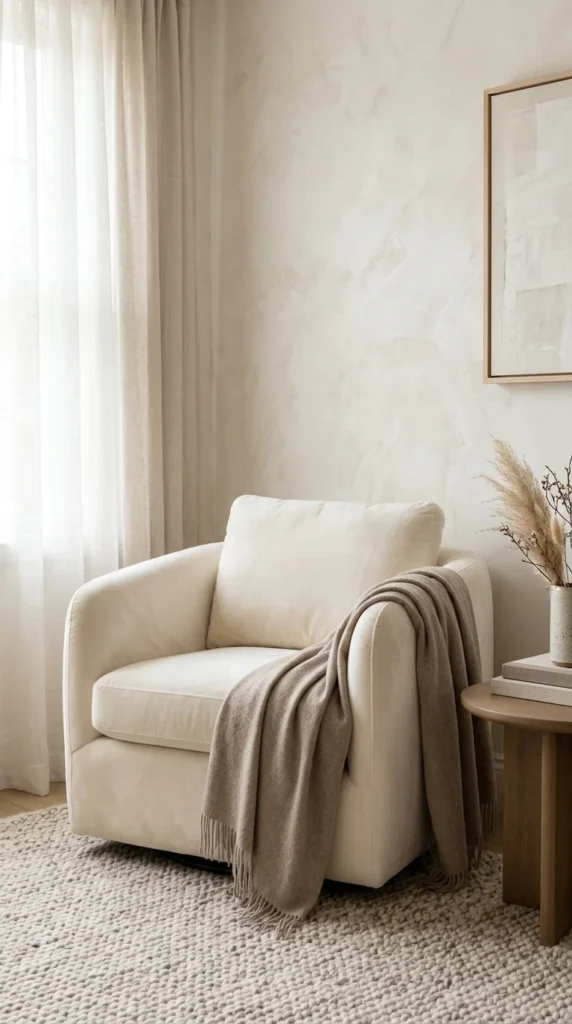
The foundation of any quiet luxury space is a sophisticated, monochromatic, or tonal color palette. While “all-white” rooms can sometimes feel cold, quiet luxury leans into “warm neutrals”—shades of oatmeal, sand, biscuit, and mushroom. The goal is to create a seamless flow where the eye isn’t jarred by bold contrasts.
- Layering Tones: Instead of using one flat color, layer three or four variations of the same hue. For instance, pair a cream sofa with beige linen curtains and a taupe wool rug.
- The Power of Off-White: Avoid clinical whites. Opt for paints with subtle yellow or grey undertones to give the room an inviting, lived-in glow.
- Accent Colors: If you must use color, stick to “nature-inspired” muted tones like olive green, navy, or slate grey in very small doses.
2. Tactile Textures
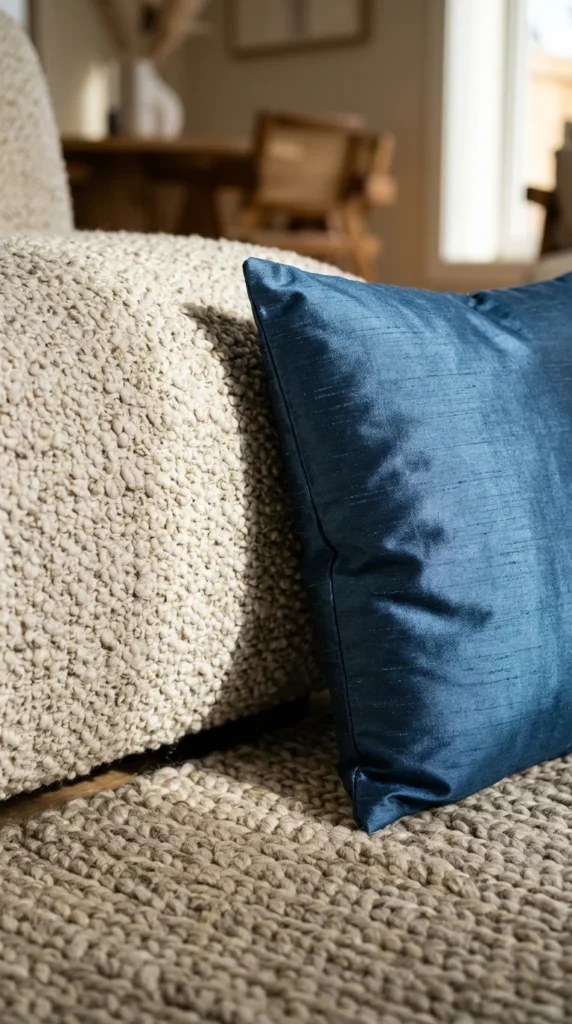
When color is kept to a minimum, texture must do the heavy lifting. Quiet luxury is deeply tactile; it is about how a space feels as much as how it looks. The secret to an expensive-feeling room is the juxtaposition of different high-end fabrics.
- Noble Fibers: Incorporate natural materials like silk, cashmere, mohair, and Belgian linen. These fabrics have a natural luster and weight that synthetic alternatives cannot replicate.
- Bouclé and Velvet: Use bouclé for structural furniture to add visual interest and matte velvet for cushions to provide a sense of opulence.
- The “Hand” of the Fabric: In the design world, “hand” refers to the feel of a fabric. Choose textiles that are soft to the touch and drape beautifully.
3. Natural Materials
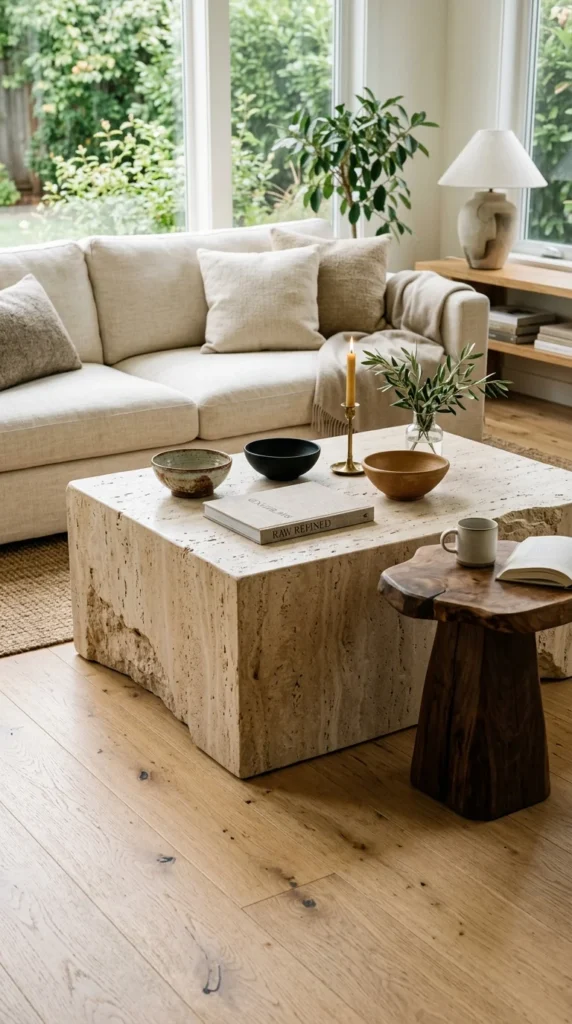
Nothing says “expensive” quite like authentic natural materials. Quiet luxury rejects plastic, laminate, and faux finishes in favor of stone, wood, and metal. These materials age gracefully, developing a patina that adds character over time.
- Honed Stone: Move away from high-gloss polished marble. Instead, choose honed (matte) travertine, limestone, or marble. The matte finish feels more contemporary and understated.
- Warm Woods: Look for wide-plank European oak or walnut. The grain of the wood should be visible and celebrated, not covered by thick, dark stains.
- Metals with Patina: Use unlacquered brass, bronze, or blackened steel for hardware and accents. These metals will darken and change with use, signaling authenticity.
4. Sculptural Furniture
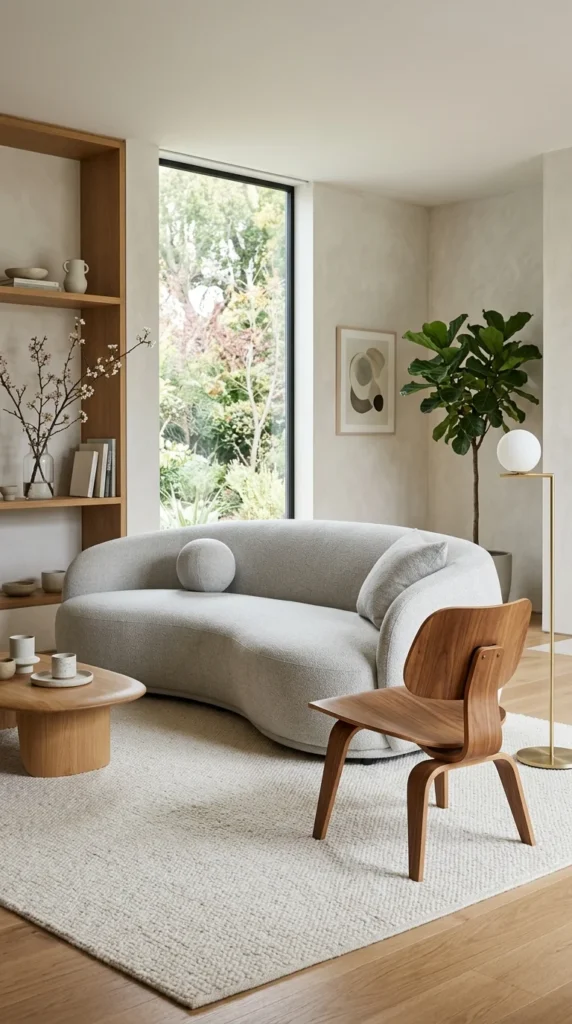
In a quiet luxury living room, furniture is treated as functional sculpture. Instead of bulky, boxy sets from big-box retailers, opt for pieces with unique silhouettes and organic curves.
- Organic Shapes: Soft, rounded edges feel more sophisticated and inviting than sharp corners. A curved sofa or a circular coffee table creates a sense of flow.
- Negative Space: Don’t overcrowd the room. Choose a few “hero” pieces and give them room to breathe. This highlights their form and makes the space feel larger and more intentional.
- Statement Seating: A single iconic lounge chair—such as a vintage mid-century piece or a custom-designed armchair—can act as the focal point of the entire room.
5. Curated Art
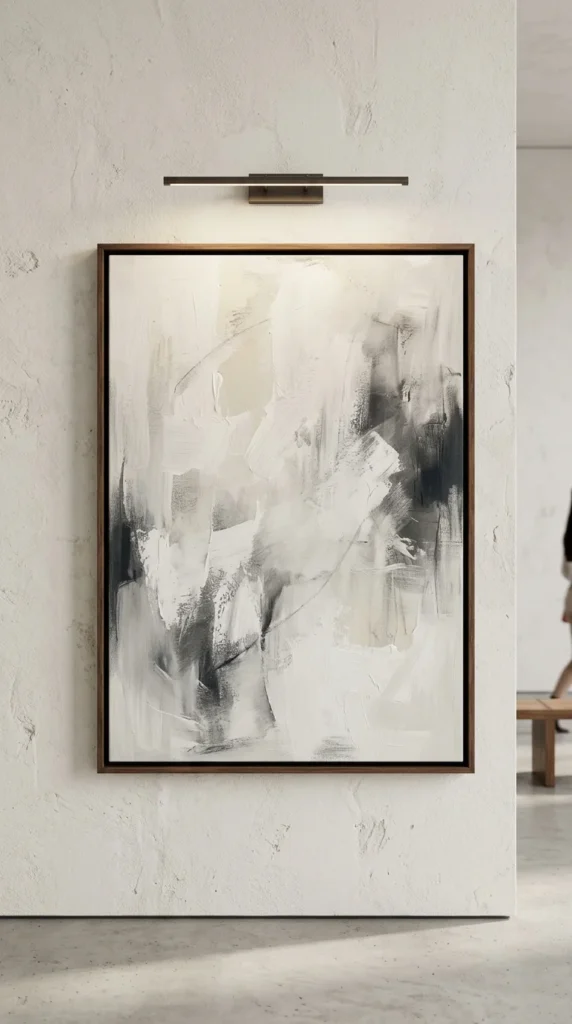
Quiet luxury is not about filling every wall with decor; it’s about choosing one or two significant pieces that resonate. The art should feel curated and personal, rather than “commercial.”
- Scale Over Quantity: One oversized canvas often looks more expensive than a gallery wall of ten smaller prints. Large-scale art simplifies the visual field and adds drama.
- Textural Art: Consider 3D wall art, such as plaster reliefs or framed textiles. This adds depth without introducing unwanted colors.
- Quality Framing: Never underestimate the power of a professional frame. A simple, high-quality wood frame with a deep mat can make even a simple sketch look like a museum piece.
6. Bespoke Lighting
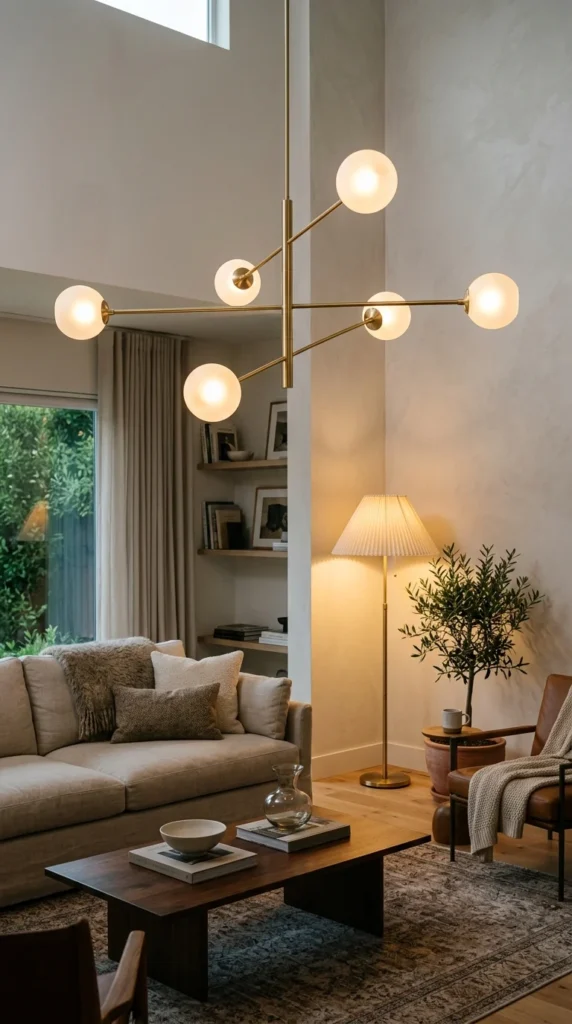
Lighting is the “jewelry” of the room. In quiet luxury design, lighting is layered and purposeful, avoiding the “stadium effect” of too many recessed ceiling lights.
- Layered Lighting: Combine ambient lighting (chandeliers), task lighting (reading lamps), and accent lighting (picture lights) to create a warm, multidimensional glow.
- Architectural Fixtures: Choose fixtures that are made of high-quality materials like hand-blown glass, alabaster, or solid brass.
- The Warmth Factor: Always use warm-toned bulbs (2700K). Dimmer switches are essential to adjust the mood and keep the atmosphere soft and inviting.
7. Minimalist Styling
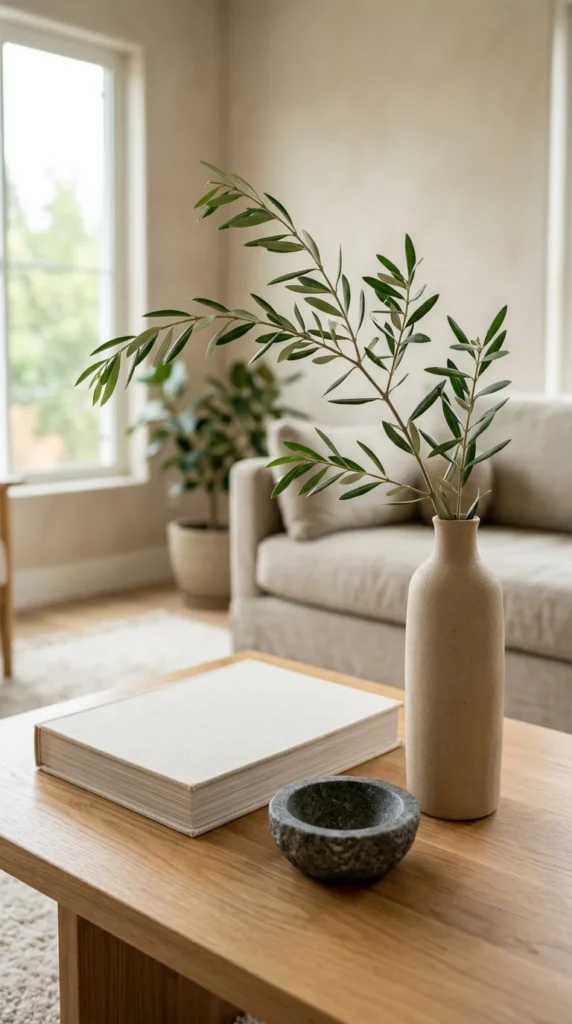
The “stealth wealth” look is famously uncluttered. Every object in the room should serve a purpose or bring immense aesthetic value. If it doesn’t fit, it goes.
- The Rule of Three: When styling coffee tables or shelves, group items in odd numbers. Vary the heights and textures to create a balanced composition.
- Books as Decor: Use high-quality coffee table books on art, architecture, or fashion. They provide height for other objects and signal a cultured lifestyle.
- Greenery: Avoid colorful floral arrangements. Opt for a single, architectural branch (like olive or eucalyptus) in a handmade ceramic vase.
8. Integrated Technology
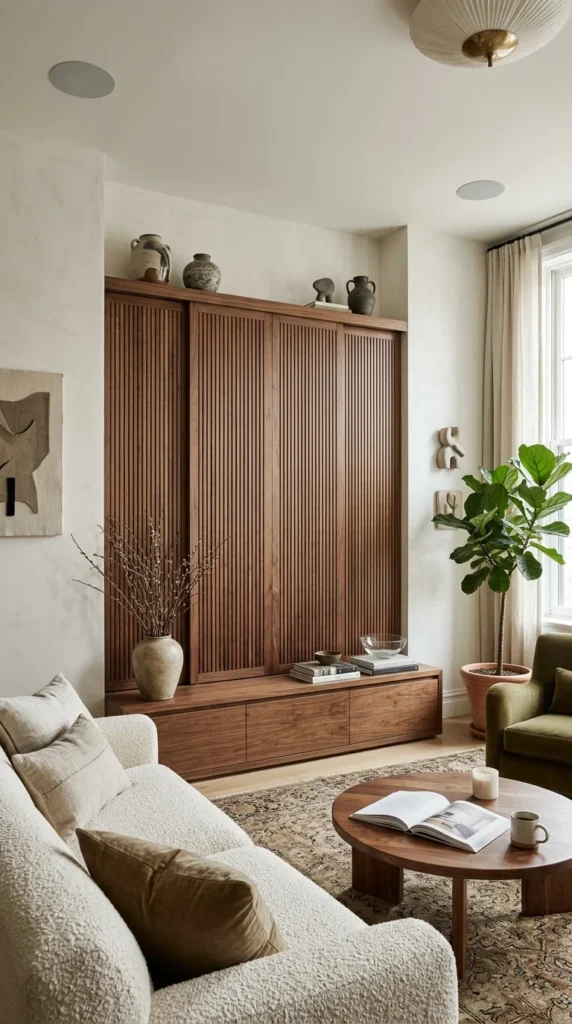
Nothing ruins a luxury aesthetic faster than a tangle of black wires and a giant plastic television screen. Quiet luxury hides the technology to keep the focus on the design.
- Hidden TV: Use a “Frame” TV that displays art when not in use, or hide the screen behind custom cabinetry or a motorized tapestry.
- Invisible Audio: Invest in in-wall or in-ceiling speakers that blend into the architecture.
- Cord Management: Ensure all charging cables and power cords are routed through furniture or hidden behind baseboards.
9. Architectural Details
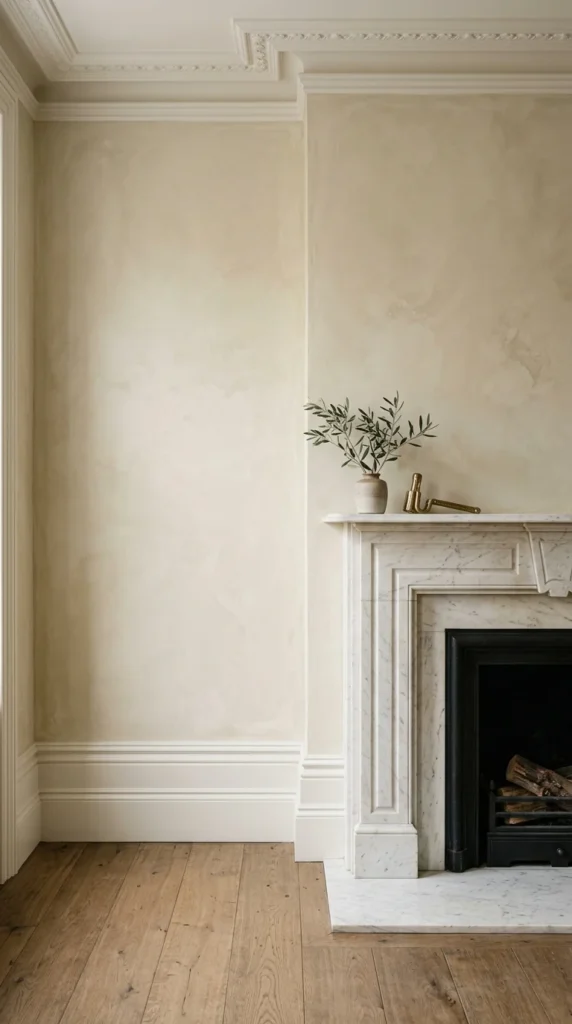
The final element of quiet luxury is the “bones” of the room. Architectural interest adds a layer of history and permanence that furniture alone cannot achieve.
- Wall Treatments: Consider lime-wash paint, Venetian plaster, or subtle wainscoting. These finishes add depth and a sense of “old world” craft.
- Custom Millwork: Built-in bookshelves or custom fireplace surrounds that match the room’s color palette create a cohesive, high-end look.
- Ceiling Details: Don’t ignore the “fifth wall.” Subtle crown molding or even a simple plaster medallion can elevate the entire space.
By focusing on quality over quantity and choosing timeless materials over fleeting trends, you can create a living room that feels deeply luxurious, remarkably comfortable, and—most importantly—effortlessly expensive.