
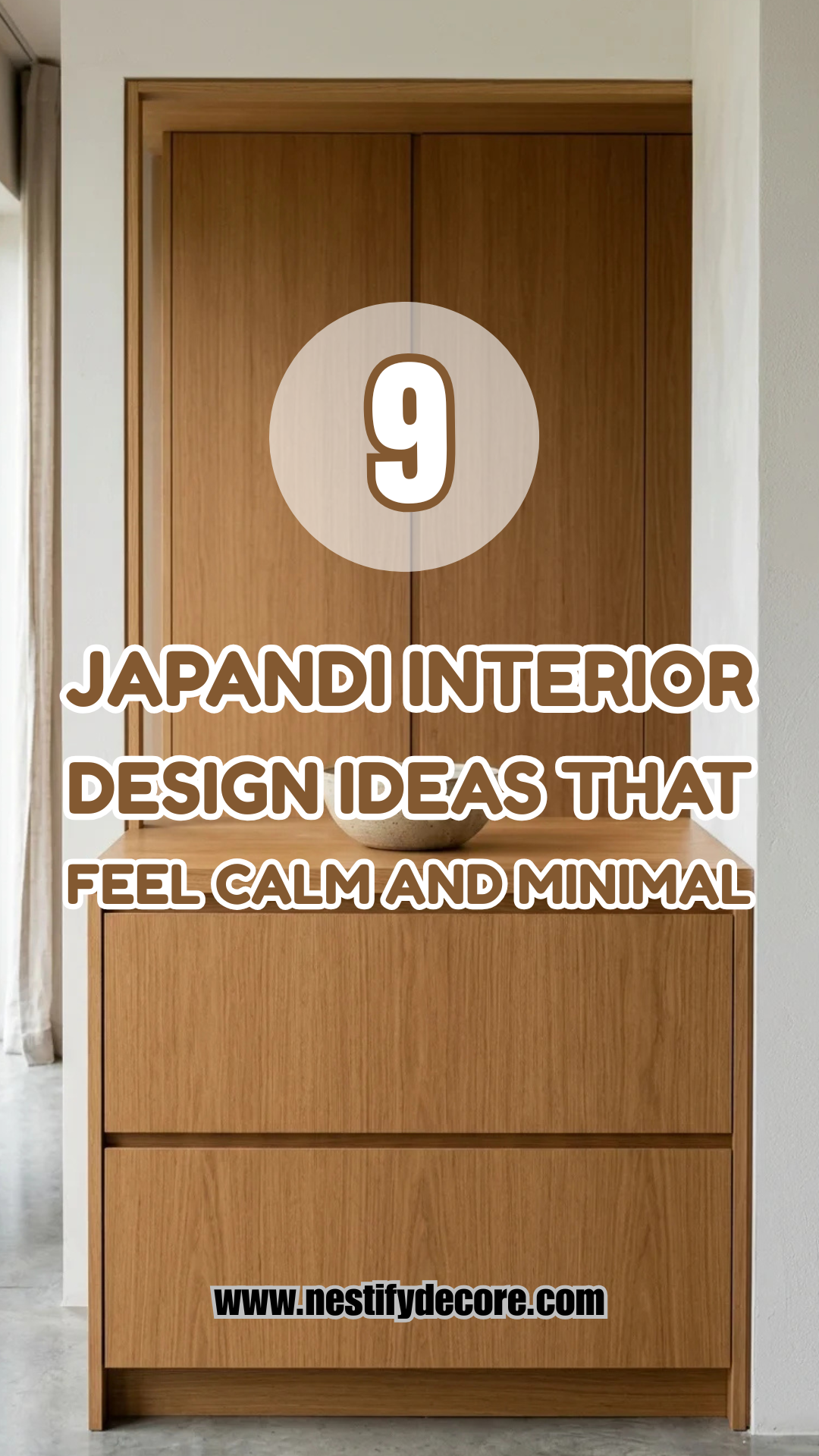
Japandi design is more than just a passing interior trend; it is a philosophy that marries the functional minimalism of Scandinavian design with the rustic, intentional aesthetics of Japanese tradition. This hybrid style creates a sanctuary-like atmosphere, focusing on clean lines, bright spaces, and a deep connection to the natural world. By blending the “Hygge” (coziness) of the North with the “Wabi-sabi” (finding beauty in imperfection) of the East, Japandi offers a timeless approach to modern living.
If you are looking to transform your home into a tranquil retreat, these nine Japandi design ideas will help you master the art of curated simplicity.
1. Natural Materials
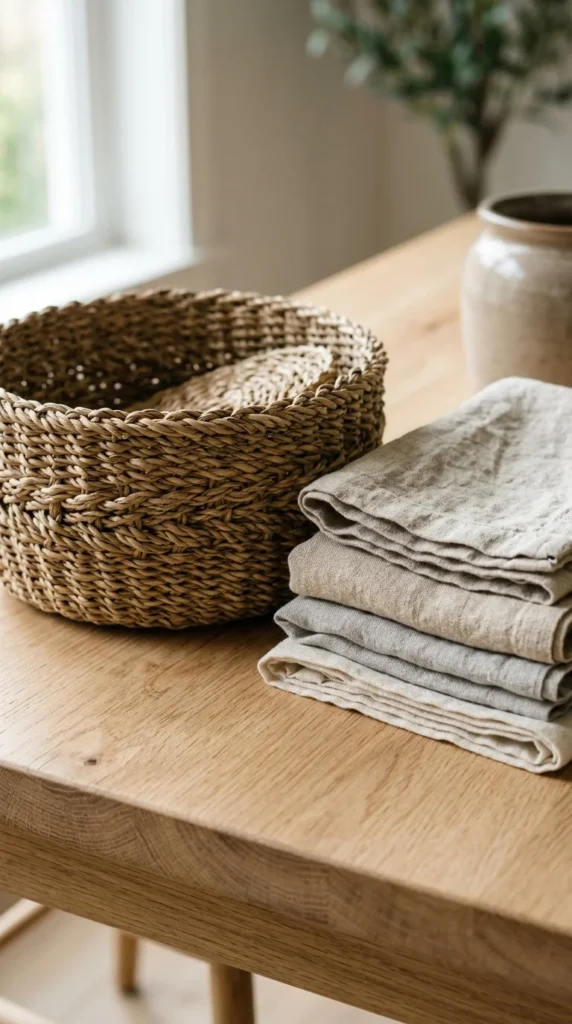
At the heart of Japandi style is a reverence for the earth. This design aesthetic prioritizes raw, organic materials over synthetic ones. To achieve this look, lean heavily into light-toned woods like oak, ash, and pine, which are common in Scandinavian homes, or darker, more refined timbers like cedar and cypress often found in Japanese architecture.
Beyond wood, integrate stones like slate or travertine and fibers such as jute, hemp, and bamboo. These materials age gracefully, adding character to the home over time. The goal is to create a tactile experience where every surface feels grounded and authentic. When selecting furniture, look for pieces that celebrate the natural grain of the wood rather than hiding it under heavy lacquers or paints.
2. Neutral Palettes
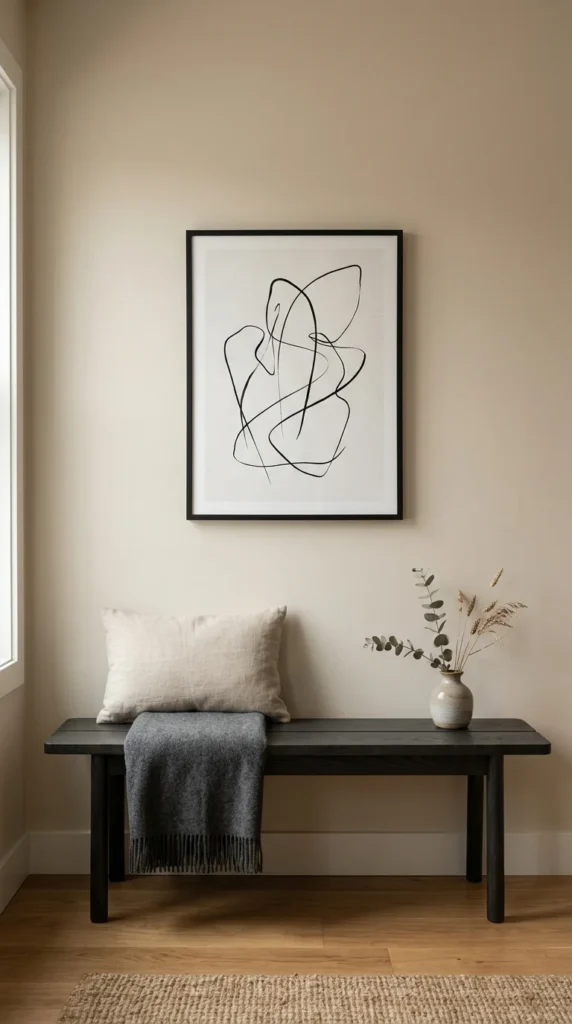
The Japandi color palette is a sophisticated blend of Scandi-cool and Japanese warmth. While traditional Scandinavian interiors often rely on stark whites and cool grays, the Japanese influence introduces warmer, earthy tones like cream, sand, and terracotta.
To create a balanced Japandi space, start with a base of soft neutrals—think oatmeal, stone, and biscuit. From there, introduce “muted” pops of color inspired by nature, such as sage green, dusky blue, or deep charcoal. These darker accents provide the necessary contrast to keep the room from looking washed out, adding a sense of depth and architectural interest without overwhelming the senses.
3. Low Furniture
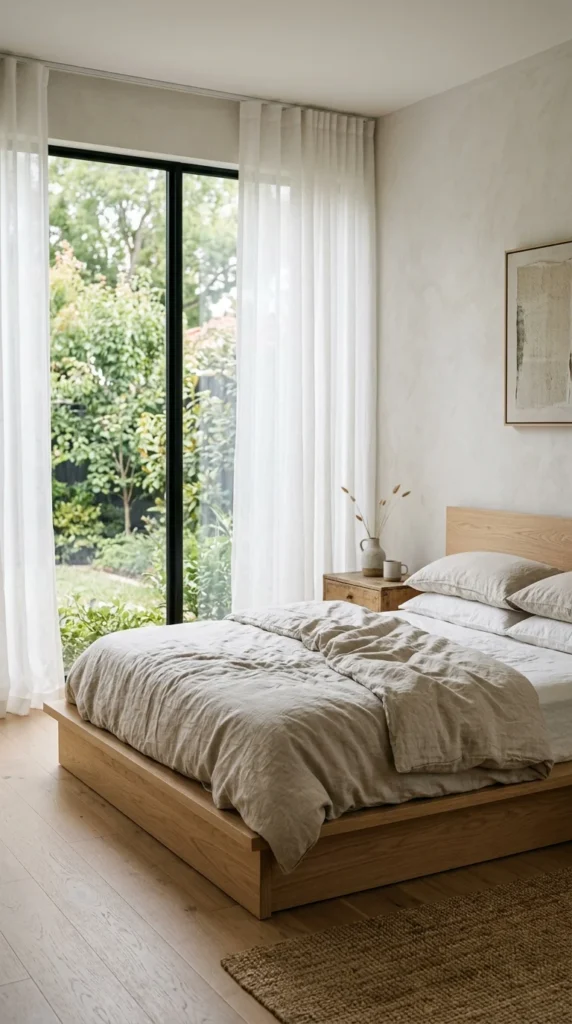
In Japanese culture, there is a traditional emphasis on being close to the earth. This translates into Japandi design through the use of low-profile furniture. Choosing sofas, coffee tables, and bed frames that sit closer to the floor creates an immediate sense of spaciousness and tranquility.
Low furniture allows the eye to travel across the room uninterrupted, making the ceiling feel higher and the overall environment feel more expansive. This “grounded” aesthetic encourages a slower pace of life and a different perspective on the living space. When shopping for these pieces, look for clean, straight lines and a lack of ornate detailing to maintain the minimalist vibe.
4. Indoor Greenery
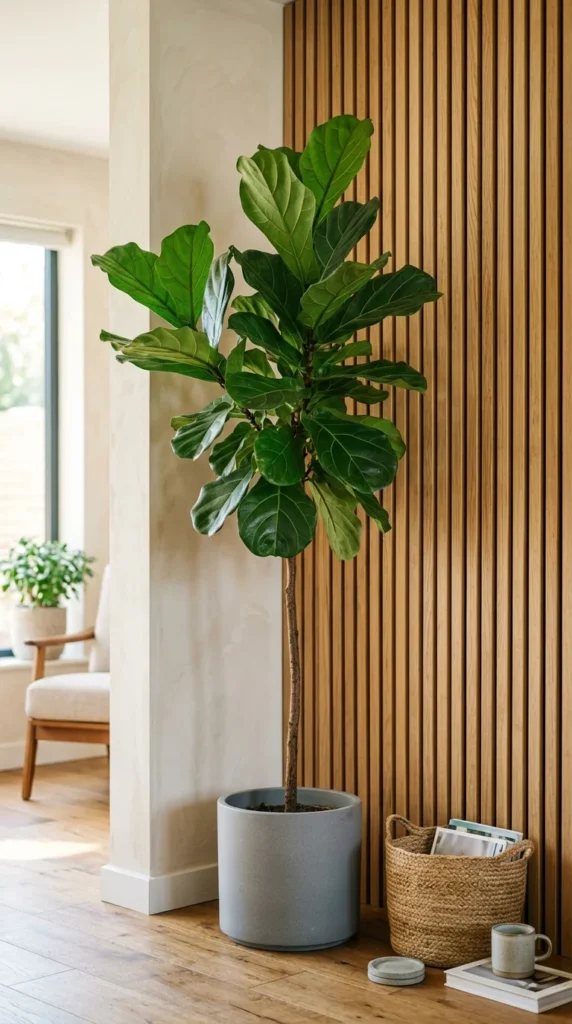
Bringing the outdoors in is a crucial element of Japandi design, but unlike the “urban jungle” trend, Japandi greenery is deliberate and sparse. Instead of a room filled with dozens of small plants, choose one or two “hero” plants that have a sculptural quality.
A tall, airy olive tree, a delicate Bonsai, or a single stem of dried Eucalyptus in a tall vase can make a powerful statement. The focus is on the shape of the leaves and the silhouette of the plant. This minimalist approach to nature ensures that the space feels alive and fresh without becoming cluttered or high-maintenance.
5. Intentional Decluttering
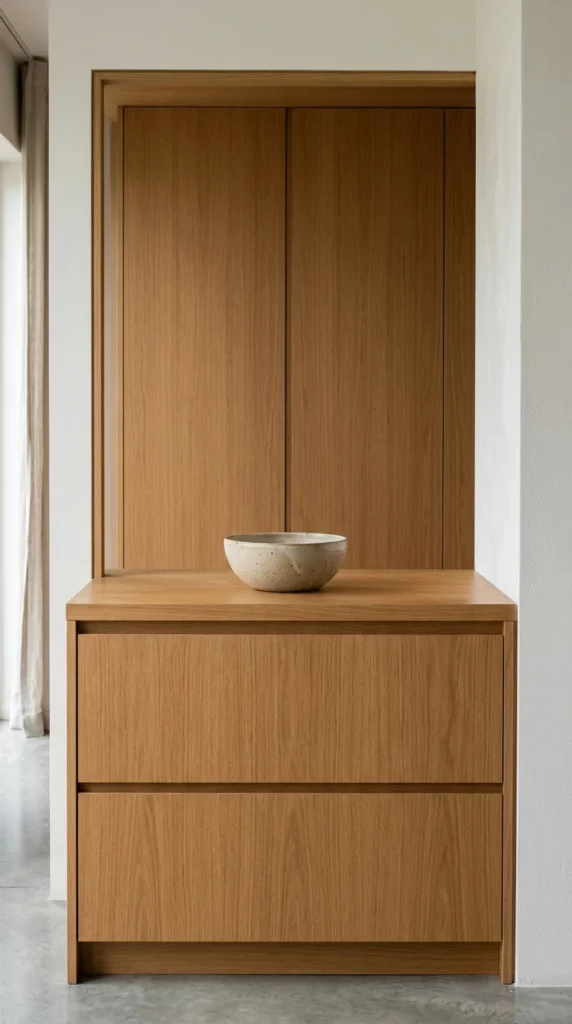
Japandi is the antithesis of clutter. However, it is not about living in a void; it is about “intentionality.” Every item in a Japandi home should have a purpose, whether it is functional or deeply aesthetic. This design style utilizes the Japanese concept of “Ma”—the celebration of empty space.
To achieve this, invest in smart, hidden storage solutions. Use beautiful wooden cabinetry or woven baskets to hide everyday items that don’t contribute to the visual calm. By leaving large portions of shelves or table surfaces empty, you allow the pieces you do display to breathe and be appreciated.
6. Functional Decor
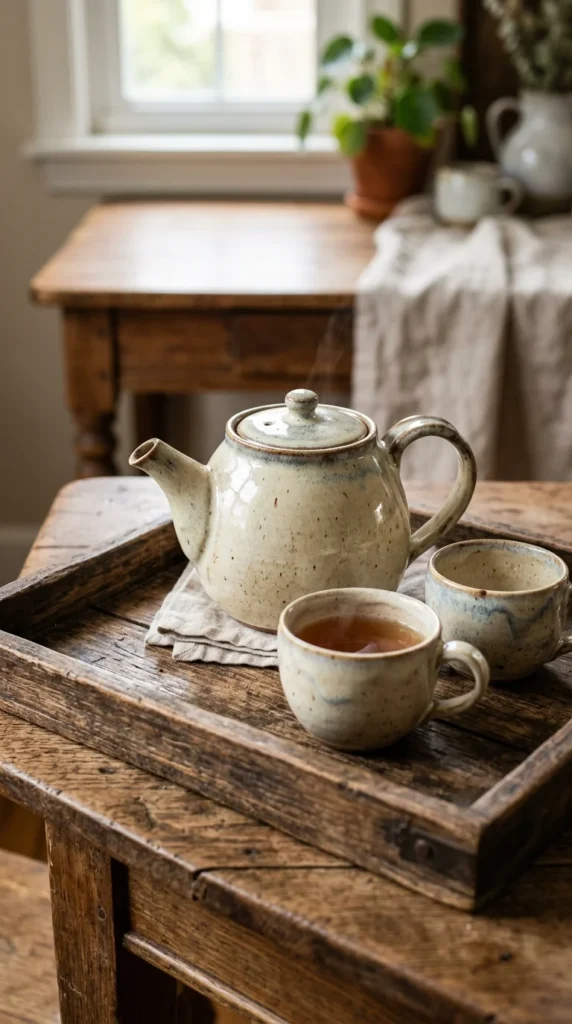
In a Japandi home, decoration and function are one and the same. Rather than buying knick-knacks for the sake of filling space, look for everyday objects that are beautiful enough to be displayed. A hand-blown glass carafe, a set of artisanal ceramic mugs, or a beautifully crafted wooden cutting board are all examples of functional decor.
This approach ensures that your home remains minimal while still feeling lived-in and personal. The objects you choose should tell a story of craftsmanship and quality over mass production.
7. Soft Lighting
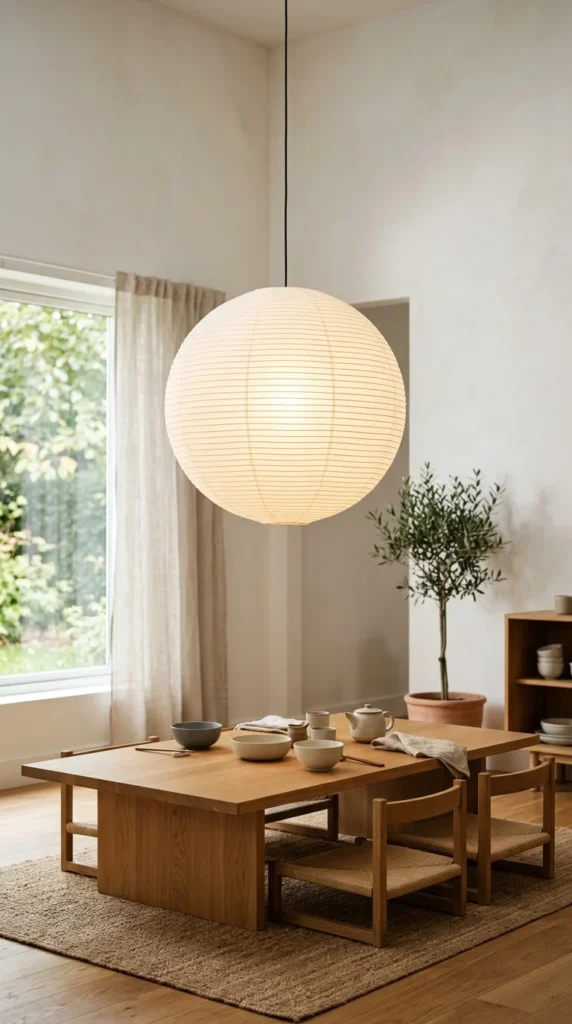
Lighting is the key to creating the “hygge” aspect of Japandi design. Harsh, overhead lights are avoided in favor of soft, diffused sources of illumination. Traditional Japanese paper lanterns (Akari lamps) are a staple of this style, as they emit a warm, golden glow that mimics candlelight.
Layer your lighting by using floor lamps with fabric shades, sleek sconces, and plenty of natural light during the day. The goal is to create an atmosphere that is cozy during the evening and bright and airy during the day, enhancing the emotional well-being of anyone in the space.
8. Textural Contrast
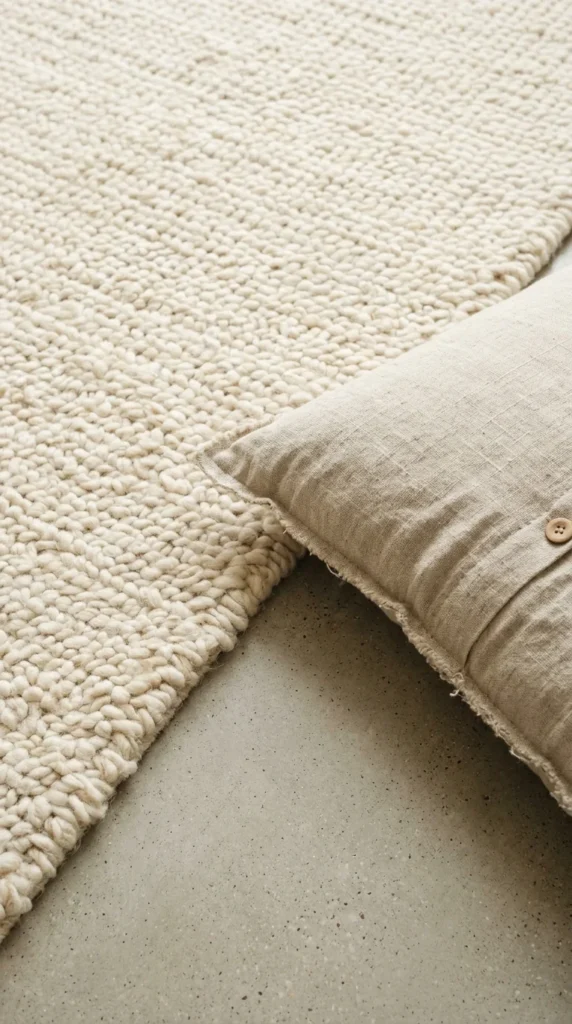
Since Japandi relies on a restricted color palette, visual interest is created through texture. Mixing different tactile elements prevents a minimalist room from feeling cold or sterile. Contrast is the secret ingredient here: pair a smooth, polished stone floor with a chunky wool rug, or a sleek silk cushion with a rough-hewn wooden bench.
This interplay of textures adds a layer of “sensory richness” to the home. It invites you to touch and feel your surroundings, grounding you in the present moment and adding warmth to the minimalist structure.
9. Wabi-Sabi Accents
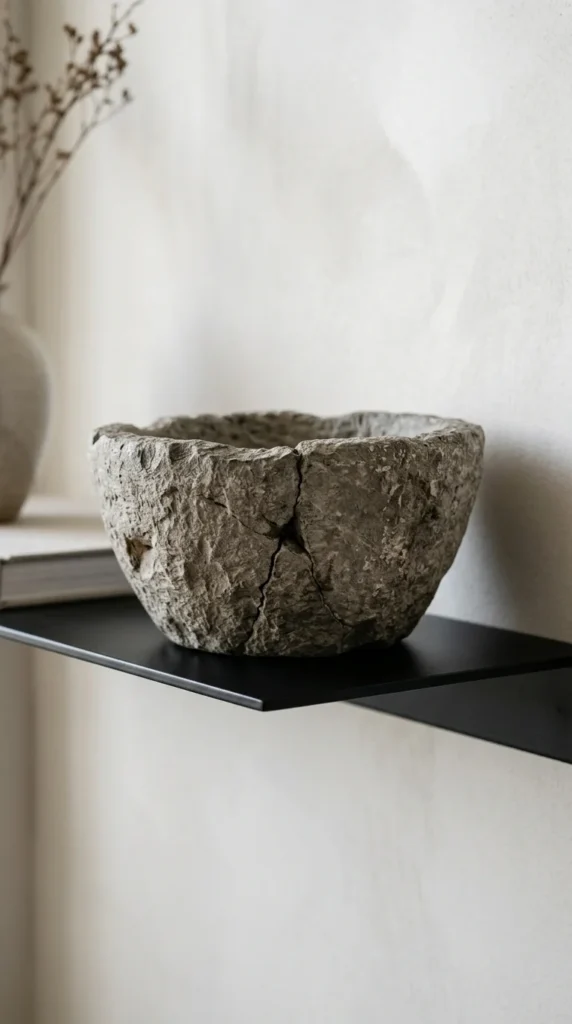
Finally, embrace the Japanese philosophy of Wabi-sabi—the appreciation of beauty in imperfection and the natural cycle of growth and decay. In a design world that often strives for flawless perfection, Japandi welcomes the irregular.
Incorporate items that show the hand of the maker or the passage of time. This could be a piece of reclaimed wood with visible knots, a handmade ceramic vase with an asymmetrical shape, or linen bedding that looks better when it’s slightly wrinkled. These “perfectly imperfect” details give the home a soul and make the minimalist environment feel approachable and deeply human.