
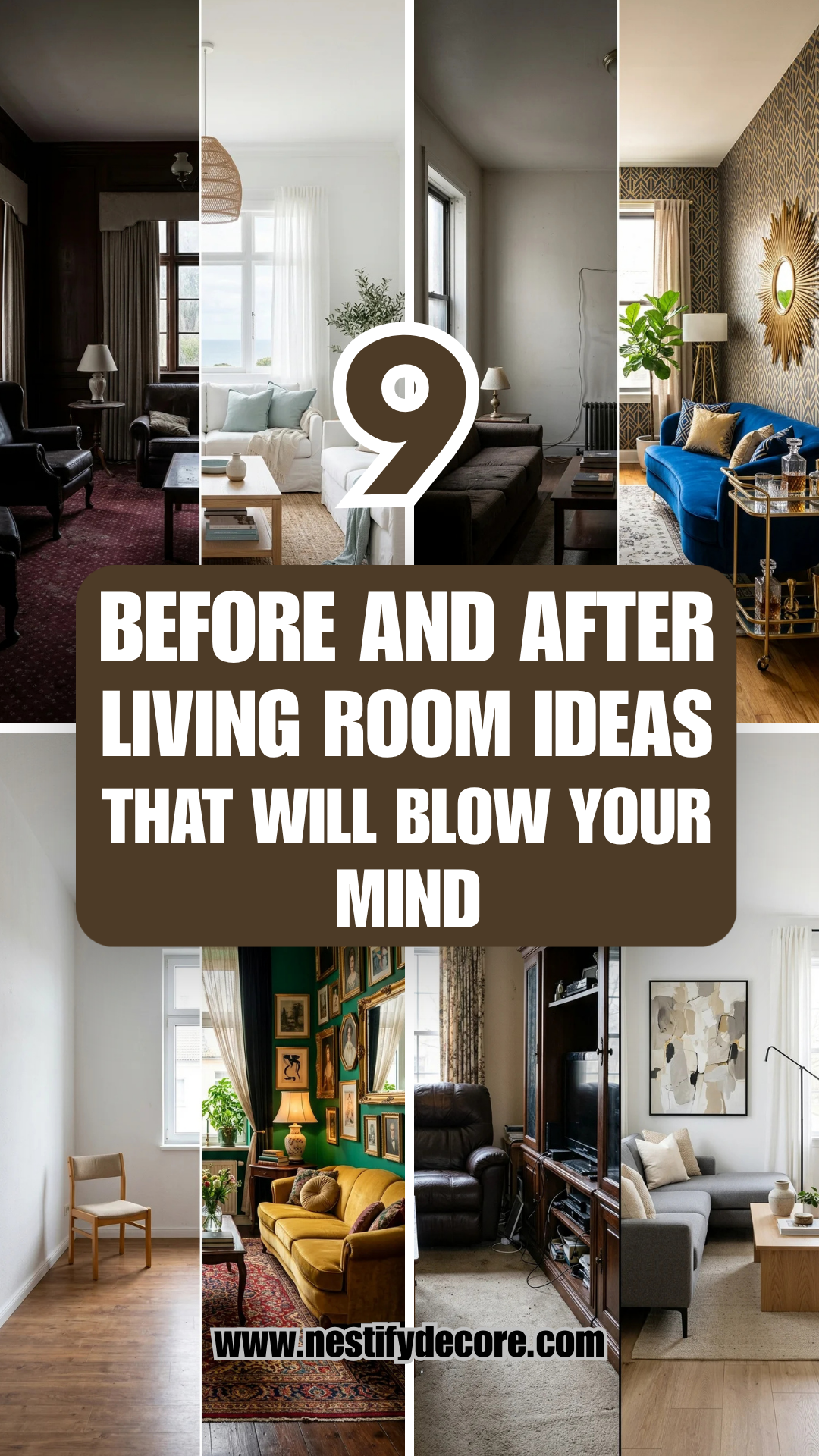
The living room is the heartbeat of the home. It is where we unwind after a long day, entertain guests, and create lasting memories with family. However, over time, even the most beloved spaces can begin to feel stagnant, cluttered, or outdated. Transforming a living room doesn’t always require a massive budget; often, it is about vision, color theory, and the strategic placement of furniture. From the cold and clinical to the warm and inviting, these nine “before and after” living room transformations showcase the power of interior design to completely redefine a home’s atmosphere.
1. Modern Minimalism
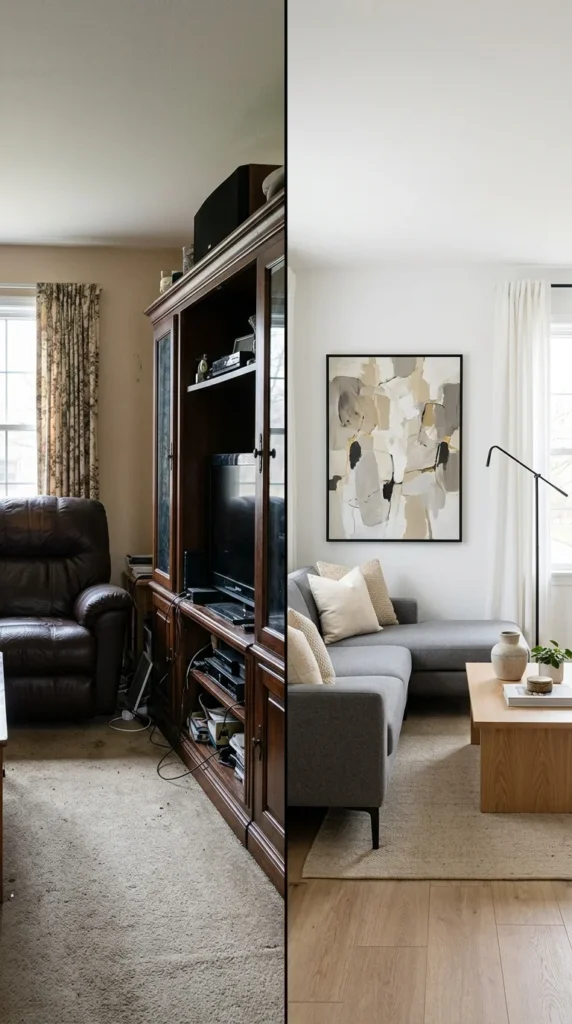
The transition to modern minimalism is less about what you add and more about what you remove. In this transformation, the “before” room suffered from oversized furniture that choked the floor space. By swapping out heavy, dark leather for a low-profile sectional in a light gray fabric, the room immediately feels twice as large.
Key Elements of the Transformation:
- Decluttering: Removing large entertainment centers in favor of wall-mounted televisions.
- Neutral Palette: Using whites, grays, and light woods to reflect natural light.
- Negative Space: Allowing the floor to be visible around furniture to create a sense of openness.
2. Moody Maximalism
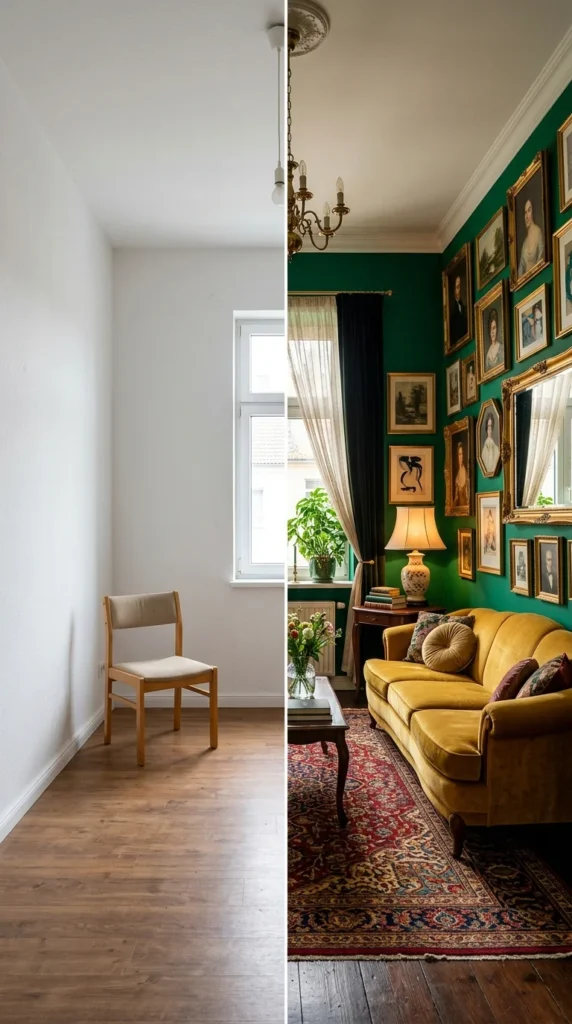
Maximalism is not about mess; it is about curated abundance. This transformation takes a “boring box” room and injects it with a bold personality. By painting the walls a deep, saturated jewel tone like emerald or navy, the room gains an immediate sense of intimacy and luxury.
Key Elements of the Transformation:
- Bold Color: Moving away from safe neutrals to deep, dark hues.
- Texture Overload: Combining velvet, silk, and wool within the same space.
- Gallery Walls: Filling vertical space with art, mirrors, and heirlooms to tell a personal story.
3. Coastal Escape
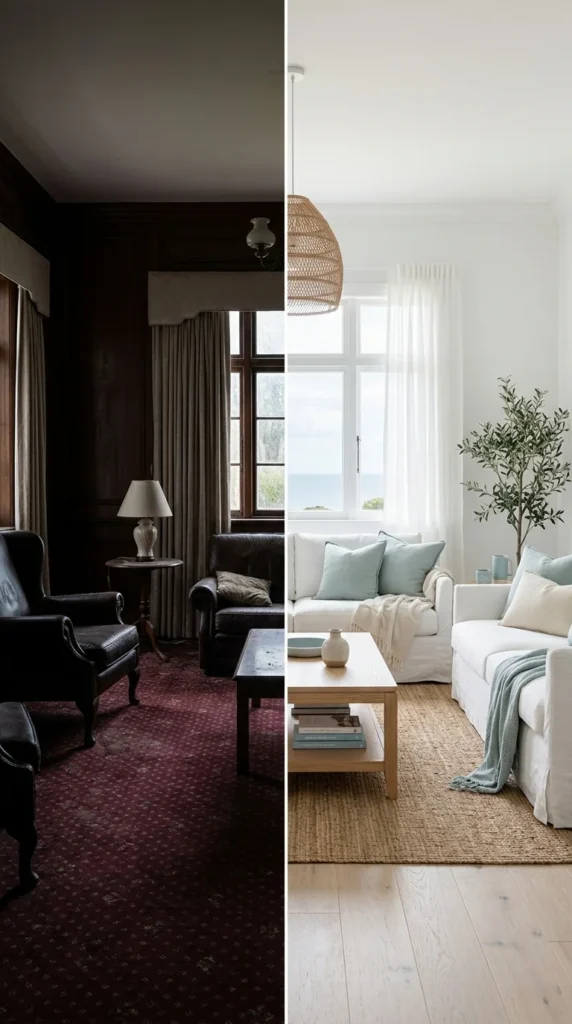
The “before” version of this room was bogged down by the trends of the 1990s—dark wood and heavy, dark carpets. The transformation into a coastal retreat focuses on “lightness.” By sanding down dark floors and applying a light wash or replacing them with blonde oak, the foundation of the room is reset.
Key Elements of the Transformation:
- Natural Materials: Incorporating rattan, jute, and seagrass for a tactile, organic feel.
- Airy Fabrics: Replacing heavy drapes with linen or cotton sheer curtains.
- Soft Contrast: Using a base of white and cream with subtle pops of oceanic blues and greens.
4. Industrial Loft
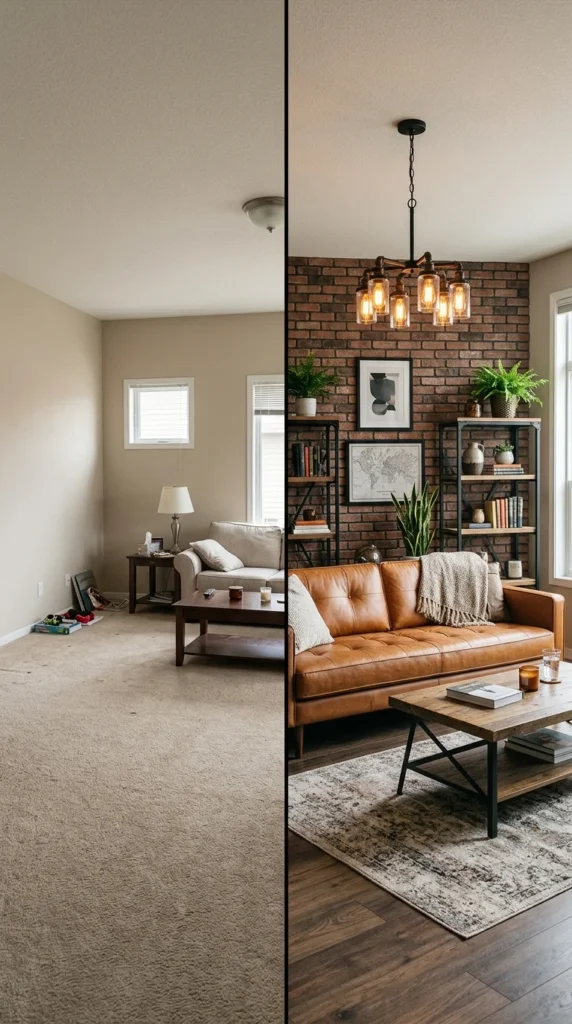
You don’t need to live in a converted warehouse to achieve an industrial look. This transformation shows how architectural elements can be “faked” to great effect. The addition of a thin-brick veneer wall completely changes the structural feel of the room, providing a rugged backdrop for sleek furniture.
Key Elements of the Transformation:
- Structural Accents: Adding elements like faux beams or brick-effect wallpaper.
- Metal and Wood: Mixing cold black steel with warm, reclaimed wood.
- Vintage Lighting: Using oversized metal pendants or lamps with exposed filaments.
5. Mid-Century Magic
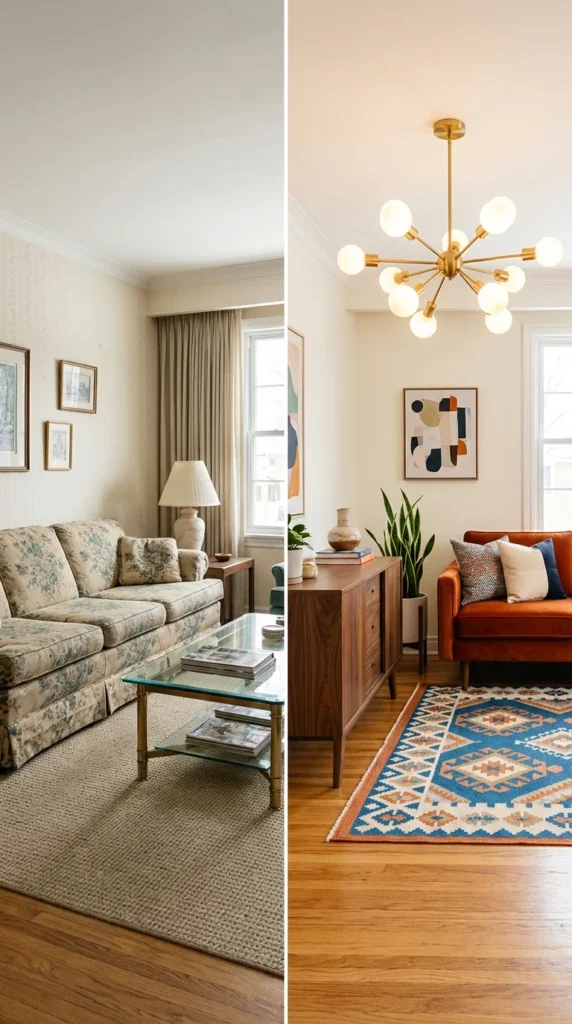
Mid-century modern design remains a favorite because of its timeless “cool” factor. This transformation focuses on the “legs” of the furniture. Replacing boxy, floor-length furniture with pieces that sit on tapered wooden legs allows light to flow under the furniture, making the room look sleek and sophisticated.
Key Elements of the Transformation:
- Iconic Silhouettes: Integrating kidney-shaped tables or Eames-style lounge chairs.
- Warm Wood Tones: Prioritizing walnut and teak finishes.
- Pop of Color: Using a single, bold vintage color like mustard yellow, teal, or orange against a neutral background.
6. Bohemian Rhapsody
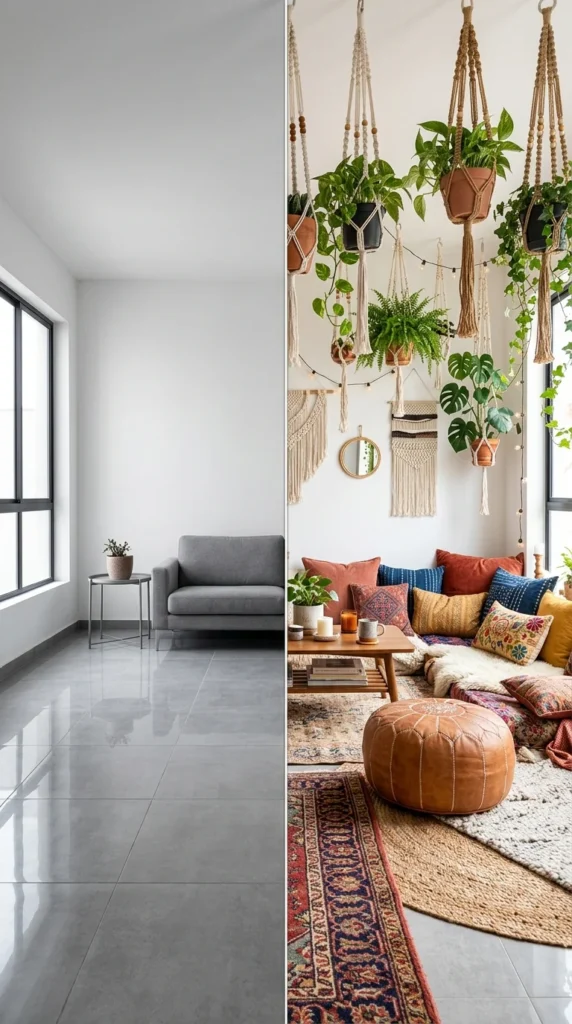
The “Boho” transformation is perfect for those who want their living room to feel like a permanent vacation. The “before” was likely cold and uninviting. The “after” uses “layering” as its primary tool—layering rugs, layering pillows, and layering plants.
Key Elements of the Transformation:
- Greenery: Adding plants at different heights—floor pots, shelf trailers, and hanging baskets.
- Textural Variety: Mixing macramé, fringe, and woven textures.
- Global Influence: Using Moroccan lanterns and Turkish kilim rugs for an eclectic, traveled look.
7. Scandinavian Serenity
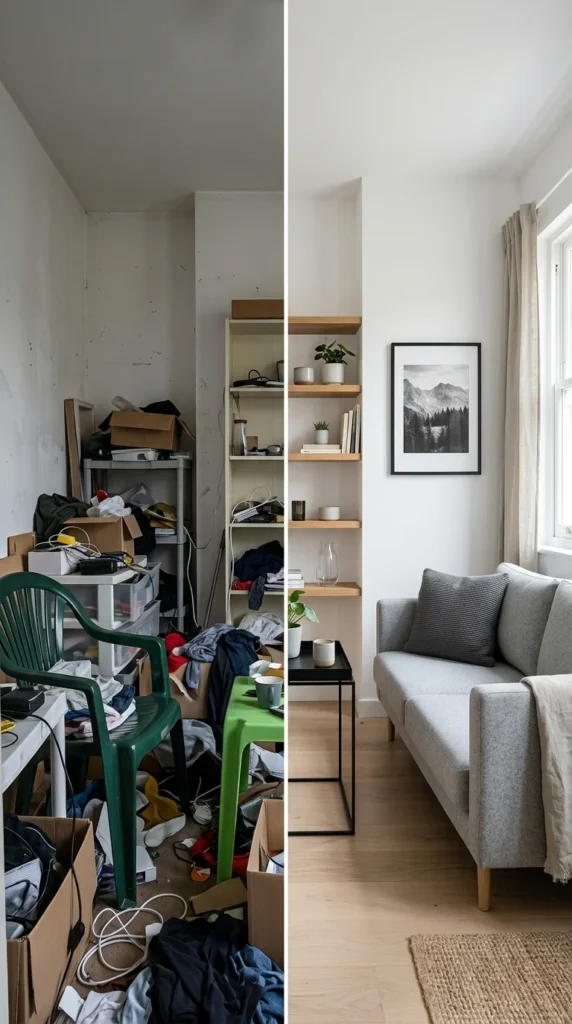
Scandinavian design is the art of “Hygge”—creating a space that is both functional and cozy. This transformation takes a chaotic, cluttered room and streamlines it. Every piece of furniture in the “after” serves a purpose, and the color palette is strictly limited to whites, grays, and light wood to maximize the feeling of peace.
Key Elements of the Transformation:
- Functionality: Choosing furniture with hidden storage to keep surfaces clear.
- Monochromatic Palette: Using various shades of the same color to create a cohesive look.
- Quality Over Quantity: Investing in a few high-quality, beautifully designed pieces rather than many cheap ones.
8. Farmhouse Charm
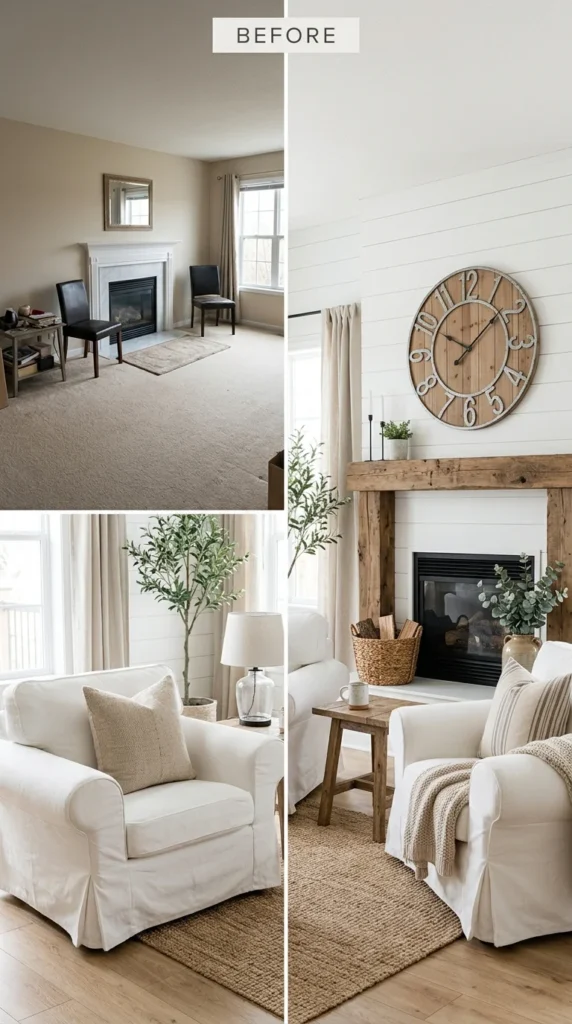
Modern farmhouse style brings the warmth of the countryside into the modern home. The biggest change in this “before and after” is the addition of texture to the walls. Shiplap or wainscoting provides a rustic foundation that makes even a new-build home feel like it has history.
Key Elements of the Transformation:
- Wall Treatments: Using shiplap or beadboard to add architectural interest.
- Rustic Wood: Incorporating thick wood mantels or chunky coffee tables.
- Comfort First: Choosing deep, soft seating that invites people to curl up and stay a while.
9. Glamorous Art Deco
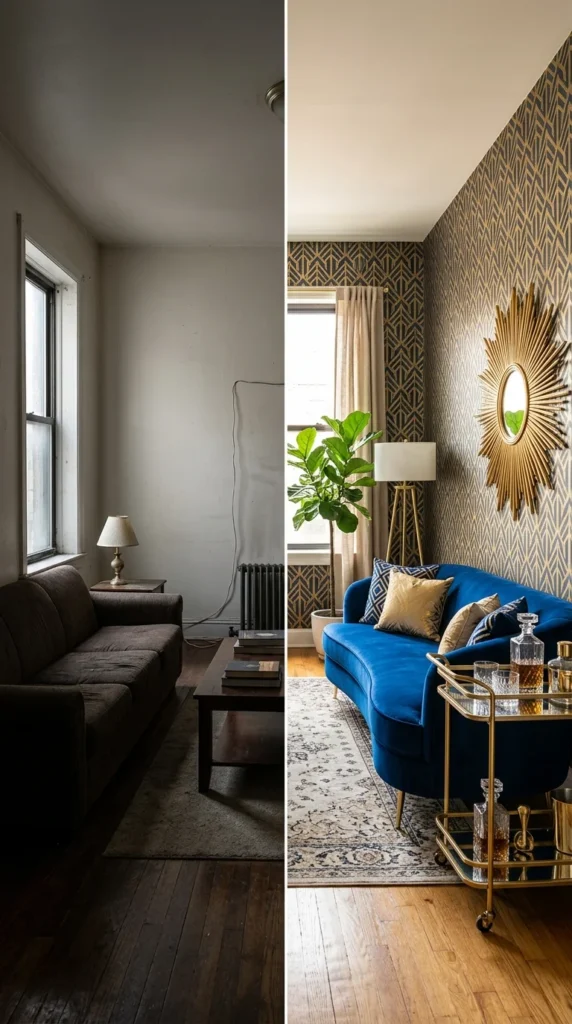
For those who love a bit of drama, the Art Deco transformation is the ultimate choice. This “after” room feels like a set from a high-end film. By introducing metallic accents—specifically gold and brass—the room gains an expensive, polished feel without a full structural renovation.
Key Elements of the Transformation:
- Metallic Accents: Using gold-framed mirrors, brass lamps, and metallic furniture legs.
- Geometric Patterns: Incorporating bold shapes in rugs, wallpapers, or throw pillows.
- Luxurious Fabrics: Prioritizing velvet and silk to enhance the “glam” factor.
Conclusion: Finding Your Style
The most successful living room transformations are those that reflect the personality of the people living in them. Whether you prefer the clean lines of Minimalism or the cozy layers of a Bohemian retreat, the “before and after” journey is about reclaiming your space. By identifying the elements that make you feel most at home—be it light, color, or texture—you can turn any “before” into a “mind-blowing after.”