

Wood slat walls have transitioned from a niche architectural feature to one of the most sought-after interior design trends of the decade. Combining the organic warmth of natural timber with the precision of rhythmic, linear patterns, these installations offer a sophisticated way to add depth, texture, and acoustic benefits to any room. Whether you are aiming for a Japandi aesthetic, a mid-century modern vibe, or a contemporary industrial look, wood slats provide a versatile foundation that works in harmony with various materials like stone, metal, and fabric.
The beauty of the slat wall lies in its versatility. It can serve as a subtle backdrop or a bold focal point, depending on the wood species, slat width, and spacing. Beyond aesthetics, many modern slat panels come with felt backing, which significantly improves room acoustics by reducing echoes and absorbing sound.
1. Media Center
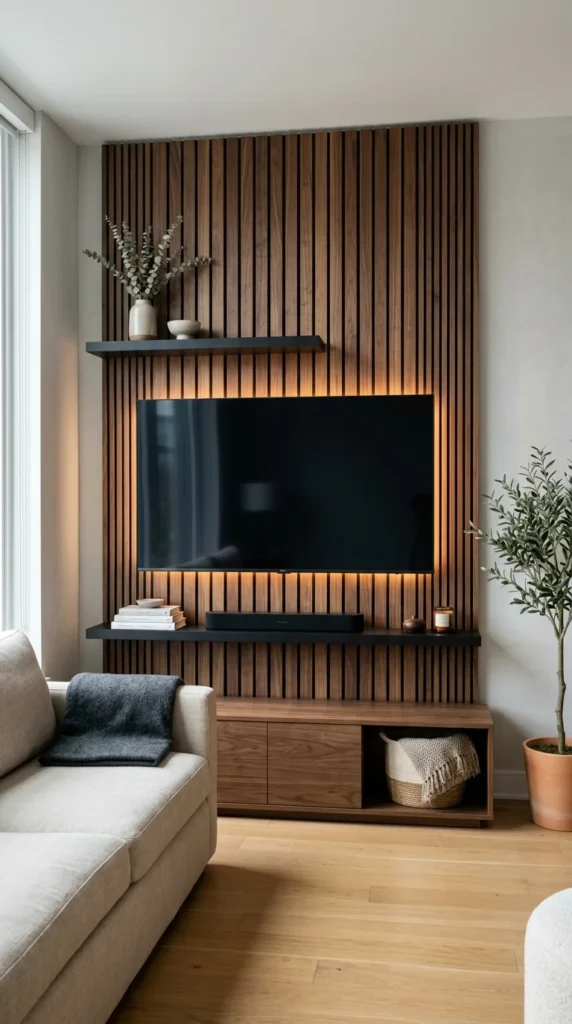
The living room is often the heart of the home, and the television area is typically its visual anchor. However, a large black screen can often feel like a void on a plain white wall. Installing a wood slat feature wall behind your media console instantly elevates the space.
Using dark woods like walnut or charred oak creates a moody, cinematic atmosphere that allows the TV to blend in more seamlessly. To enhance the effect, integrate recessed LED strips between the slats or behind the perimeter of the paneling. This creates a soft “halo” effect that reduces eye strain during late-night movie sessions and highlights the three-dimensional texture of the wood.
- Pro Tip: Ensure you plan for cable management before installation. Many DIYers run wires behind the slats or within the gaps to maintain a clean, wire-free appearance.
2. Statement Headboard
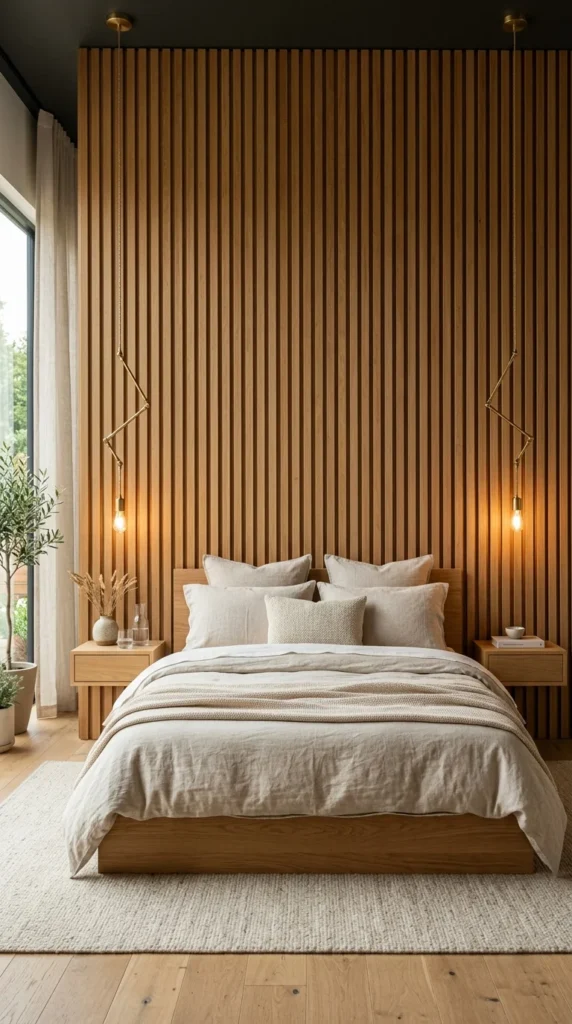
In the bedroom, comfort and tranquility are paramount. A wood slat wall used as a floor-to-ceiling headboard adds a sense of height and grandeur while maintaining a cozy, grounded feel. Unlike traditional upholstered headboards, a slat wall covers the entire width of the room or a specific vertical section, creating a “zone” for sleep.
Light-toned woods like ash or pine are excellent for creating a Scandi-inspired sanctuary. When paired with soft textiles—such as linen sheets, wool throws, and plush rugs—the hard lines of the wood provide a perfect architectural contrast. For an added layer of functionality, you can mount floating nightstands directly onto the slats, creating a streamlined, modern look that saves floor space.
3. Ceiling Connection
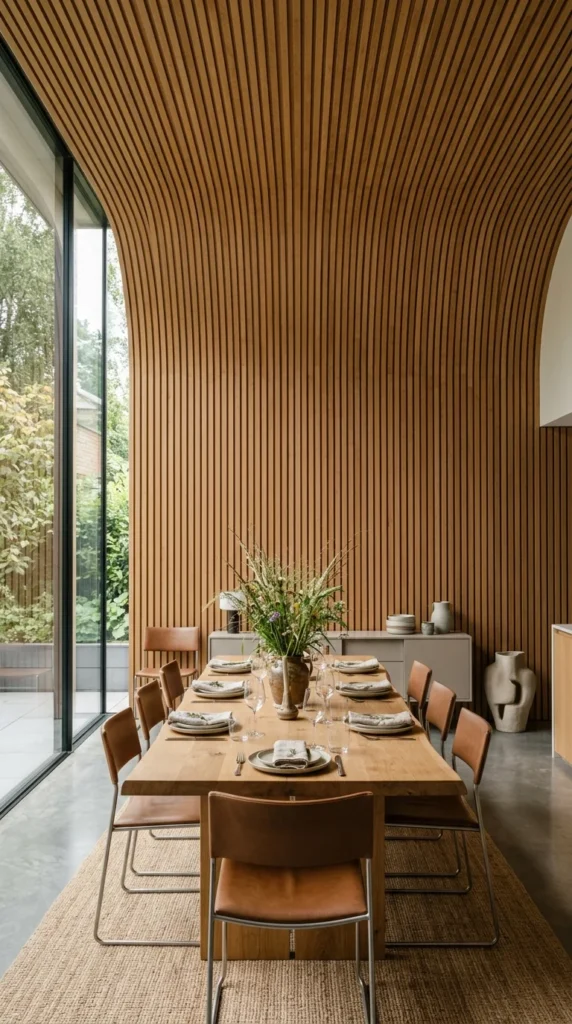
One of the most dramatic ways to use wood slats is to break the “fourth wall” and extend the installation from the wall onto the ceiling. This technique, often referred to as a “waterfall” or “canopy” effect, creates an immersive architectural experience that makes a room feel more intimate and intentionally designed.
This design choice is particularly effective in open-concept homes. By wrapping a specific area—like a dining nook or a reading corner—in wood slats that travel up the wall and across the ceiling, you visually define that “room” without the need for physical dividers. It draws the eye upward, highlighting the height of the space and adding an unexpected element of luxury.
4. Entryway Organization
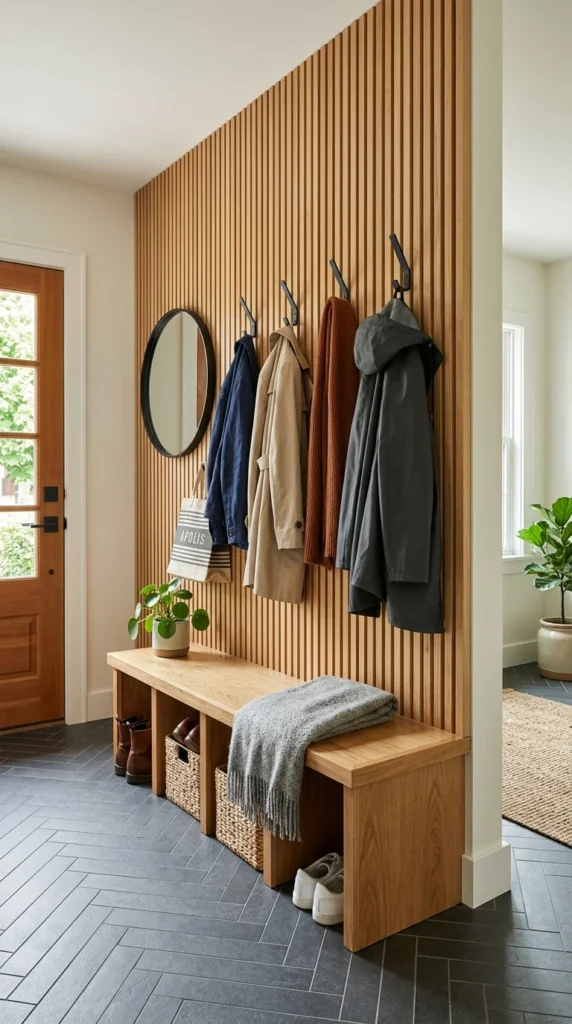
The entryway sets the tone for the rest of the home. Unfortunately, it is often a cluttered space filled with shoes, coats, and keys. A wood slat wall can transform a chaotic mudroom into an organized, high-end gallery space.
Because of the gaps between the slats, this design is perfect for modularity. You can install “pegboard-style” hooks or floating shelves that fit snugly between the timber pieces. This allows you to customize your storage based on the season—hanging heavy coats in the winter and light bags or hats in the summer. A matching slat-front bench provides a cohesive place to sit while putting on shoes, making the entire entryway feel like a custom-built unit.
5. Kitchen Texture
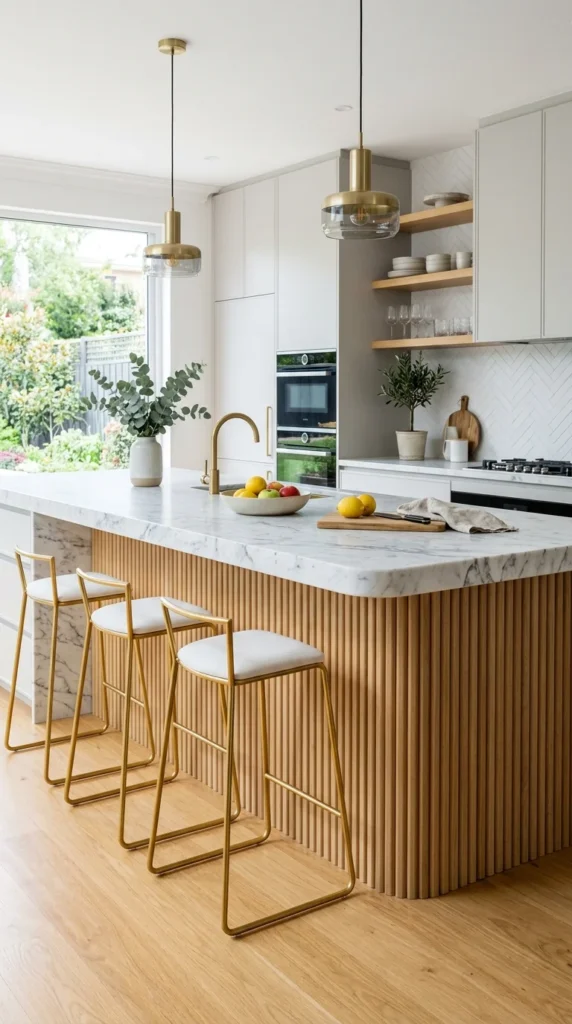
Modern kitchens can sometimes feel “cold” due to the abundance of hard, flat surfaces like stone countertops, stainless steel appliances, and lacquered cabinetry. Wood slats are the perfect antidote to this clinical feel.
One of the most popular ways to introduce this texture is by wrapping the kitchen island. Vertical slats on the island base add a rhythmic quality that breaks up the horizontal lines of the flooring and counters. Additionally, wood slats are surprisingly durable; when finished with a high-quality sealant, they can withstand the occasional scuff from bar stools. If you prefer a more subtle look, consider using slat inserts for upper cabinet doors or as a backsplash (protected by a glass sheet) to add warmth to your culinary workspace.
6. Office Backdrop
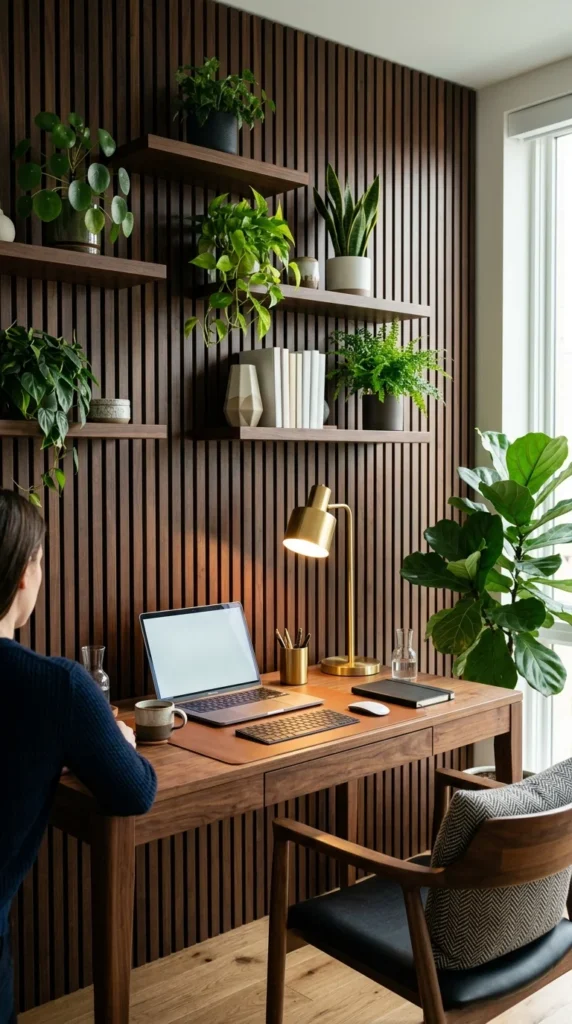
With the rise of remote work, the “video call background” has become a genuine interior design consideration. A plain wall can look flat on camera, while a cluttered bookshelf can be distracting. A wood slat wall provides the perfect balance: it is sophisticated, professional, and visually interesting without being overwhelming.
Beyond the aesthetics, the acoustic properties of slat walls are a game-changer for home offices. If your office has hardwood floors or large windows, sound can bounce around, creating a hollow “echo” during calls. Slat panels with an acoustic felt backing absorb these sound waves, making your voice sound clearer and richer. Pair the wood with deep greens or navy blues for a classic, scholarly look, or keep it light and bright for a high-energy creative space.
7. Spa Bathroom
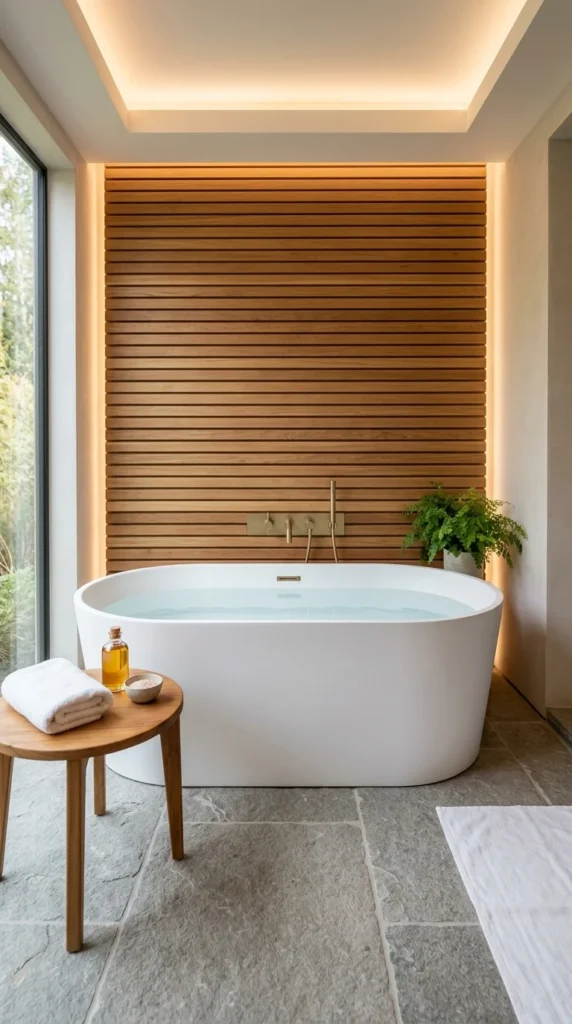
Bringing wood into the bathroom used to be a design “no-go” due to moisture concerns. However, with modern timber treatments and the use of moisture-resistant species like teak, cedar, or thermally modified ash, you can now achieve a high-end spa aesthetic.
A slat wall behind a freestanding bathtub creates an immediate focal point, mimicking the atmosphere of a luxury Japanese Onsen or a high-end Scandinavian sauna. The linear lines of the wood provide a beautiful organic contrast to the smooth, curved porcelain of the tub. To ensure longevity, always maintain a small gap between the bottom of the slats and the floor to prevent water wicking, and ensure the room is well-ventilated.
8. Hidden Transitions
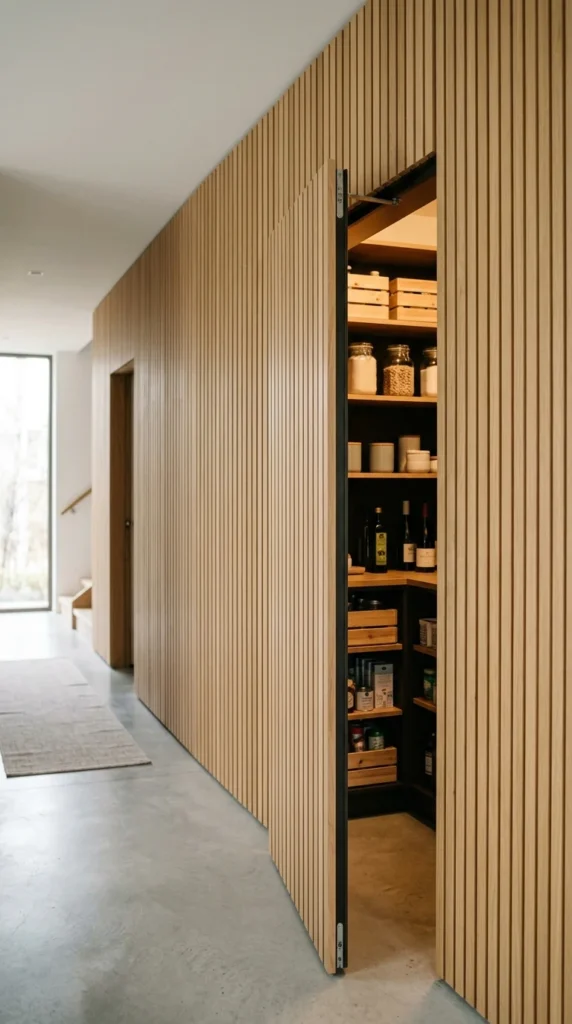
For those who love a “James Bond” level of sophistication, wood slats are the ultimate tool for creating hidden doors and secret rooms. Because the vertical lines create a consistent pattern, the seams of a door can be perfectly camouflaged within the gaps of the slats.
This is an excellent solution for concealing unsightly but necessary spaces, such as coat closets under the stairs, laundry rooms, or walk-in pantries. By using “jib doors” (doors that are flush with the wall and have no visible trim or hinges), the slat pattern remains uninterrupted across the entire surface. It creates a sleek, minimalist look that keeps the focus on the architecture rather than the utility of the home.
Choosing the Right Materials
When planning your wood slat project, the choice of material will dictate both the cost and the final look:
- Solid Wood: The premium choice. It offers the most authentic grain and can be sanded and refinished. Best for areas where the wood will be touched frequently.
- Veneered MDF: The most common choice for pre-fabricated acoustic panels. It provides the look of real wood but is more stable (less likely to warp) and usually comes with a felt backing for sound absorption.
- Reclaimed Wood: Perfect for a rustic or industrial look. Each slat carries its own history, with unique knots and color variations.
Installation Tips for Success
- Orientation Matters: Vertical slats make a ceiling feel higher, while horizontal slats can make a narrow room feel wider.
- Contrast the Backing: For a high-contrast look, paint the wall behind the slats matte black before installation. This makes the wood “pop.” For a more subtle look, paint the wall a color that matches the wood.
- Lighting is Key: Slat walls are defined by the shadows they cast. Position your lighting (either from the ceiling or the floor) to graze the surface of the slats, emphasizing their depth and three-dimensional quality.