

In an era of constant digital notifications and fast-paced living, the reading nook has transitioned from a luxury to a psychological necessity. A dedicated space for literature does more than just hold your books; it acts as a sanctuary for the mind, a place where the boundaries of the physical world blur and the narratives of the page take hold. Creating the perfect reading environment requires a delicate balance of ergonomics, lighting, and sensory comfort. Whether you have an entire spare room or just a forgotten corner behind a door, there is a design philosophy that can transform that space into a literary haven.
The most effective reading nooks are those that cater to the individual’s “reading personality.” Some readers crave the clinical focus of a minimalist space, while others find peace in a “cluttered-core” environment surrounded by every book they own. By focusing on specific themes and structural elements, you can curate a space that doesn’t just look good on camera, but actively encourages you to put down your phone and pick up a book for hours on end.
1. Window Seat
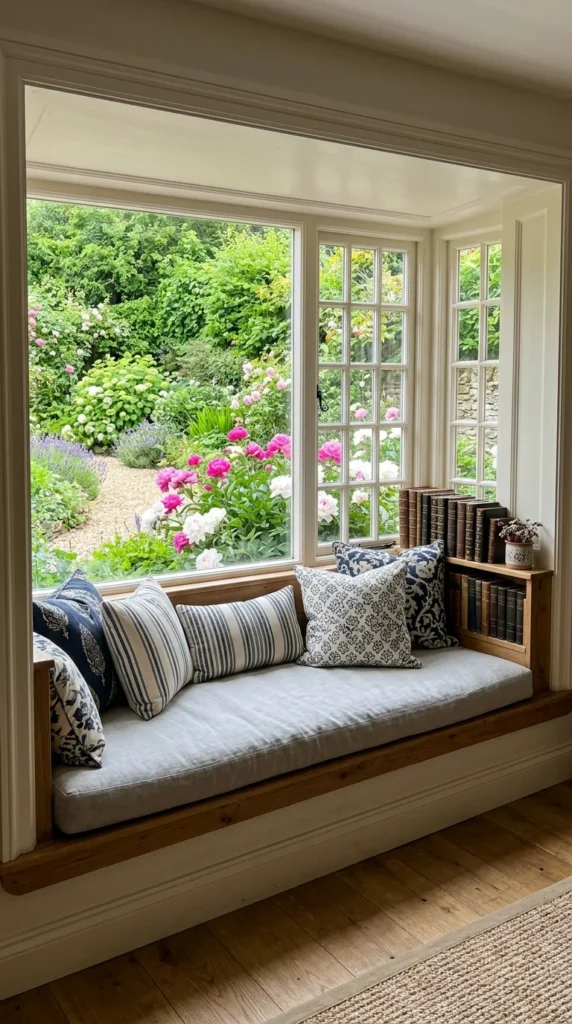
The window seat is the gold standard of reading nooks for a reason: natural light. Biophilic design suggests that humans have an innate tendency to seek connections with nature and other forms of life. By positioning your reading space at a window, you benefit from the shifting spectrum of natural light, which is easier on the eyes than most artificial bulbs.
To maximize a window seat, focus on the “depth” of the cushion. A shallow seat will lead to back fatigue, whereas a deep seat allows you to tuck your legs in or sit cross-legged. Consider adding “blackout” or sheer curtains so you can control the intensity of the sun during peak afternoon hours. The view itself serves as a mental palate cleanser between chapters, allowing your eyes to rest by focusing on the distant horizon—a technique known to reduce digital eye strain.
2. Closet Conversion
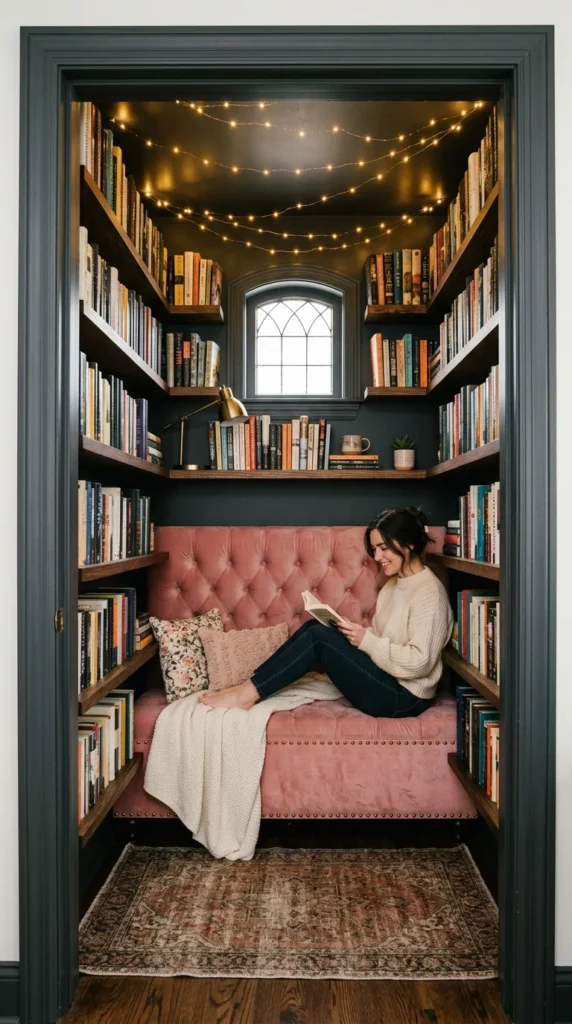
Often referred to as a “cloffice” when used for work, a “clook” (closet-nook) is the ultimate space-saving solution for small apartments. By removing the door of a standard reach-in or walk-in closet, you create an architectural “alcove” that feels separate from the rest of the room. This physical separation is key to entering a “flow state” while reading.
The psychological benefit of a closet conversion is the feeling of enclosure, or “prospect-refuge theory,” which suggests we feel most relaxed when our backs are protected and we have a clear view of the room. When designing a closet nook, lighting is your biggest challenge. Since closets rarely have windows, you must invest in high-quality warm-toned LED strips or a sleek wall-mounted sconce. Using dark, moody paint inside the closet can make the space feel like a secret cavern, heightening the sense of escape.
3. Floor Cushions
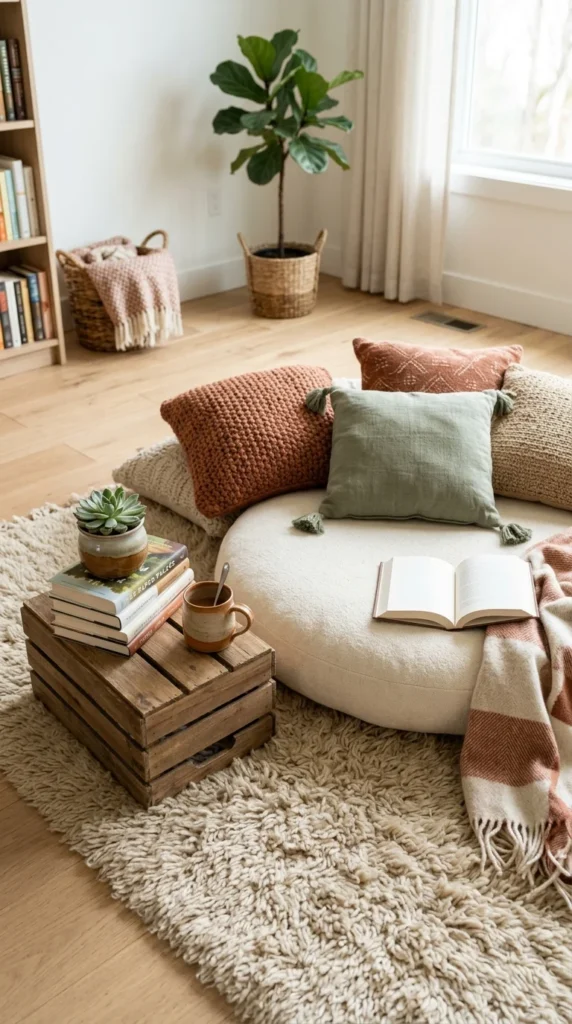
For those who prefer an informal, bohemian aesthetic, the floor-level nook offers unparalleled comfort. This setup is particularly effective for “active” readers who tend to shift positions frequently—moving from sitting to reclining to lying flat on their stomachs.
The key to a successful floor nook is layering. Start with a thick rug to insulate against the cold floor, then add a primary base, such as a papasan cushion, a Japanese tatami mat, or a memory foam floor mattress. The lack of rigid furniture makes the space feel more expansive and less formal. To keep the area organized, use low-profile baskets to store your “to-be-read” pile and a small tray to prevent coffee spills on the fabric. This setup is also the most budget-friendly, as it relies on textiles rather than expensive carpentry or designer chairs.
4. Built-in Shelves
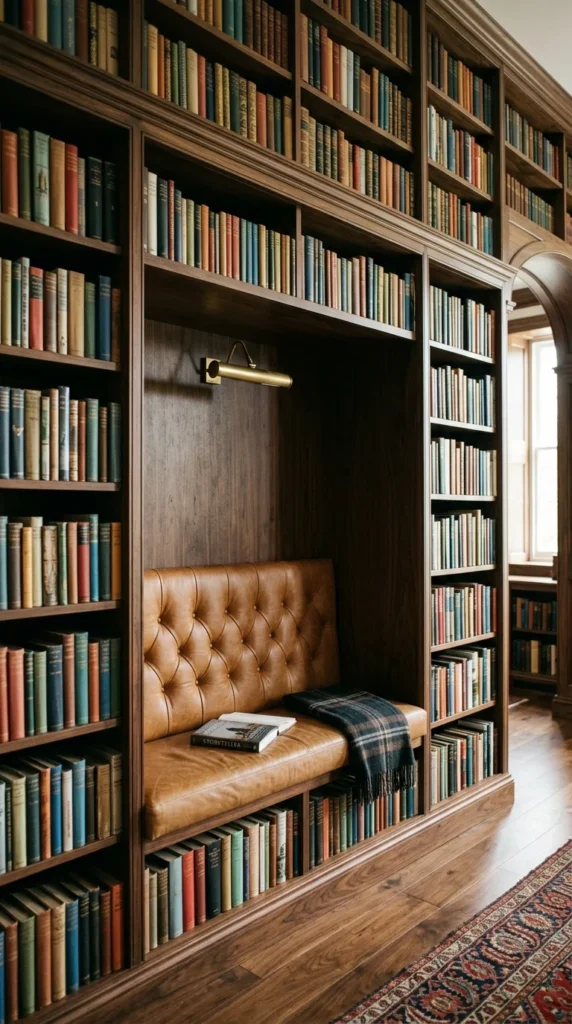
There is a unique sensory experience in being literally surrounded by books. A built-in shelf nook integrates your seating directly into your library, creating a seamless transition between storage and consumption. This design is highly efficient, as it utilizes vertical space that would otherwise be wasted.
When planning a shelf-integrated nook, consider the “reach factor.” Designing the space so that you can pull a new book from the shelf without having to stand up creates a friction-less reading experience. Use “wraparound” shelving to create a cockpit-like feeling. If you are retrofitting existing shelves, you can remove the lower middle sections of a standard bookshelf unit and slide a small armchair into the gap. The acoustic properties of books—being excellent sound absorbers—mean that this type of nook is often the quietest spot in the house.
5. Attic Retreat
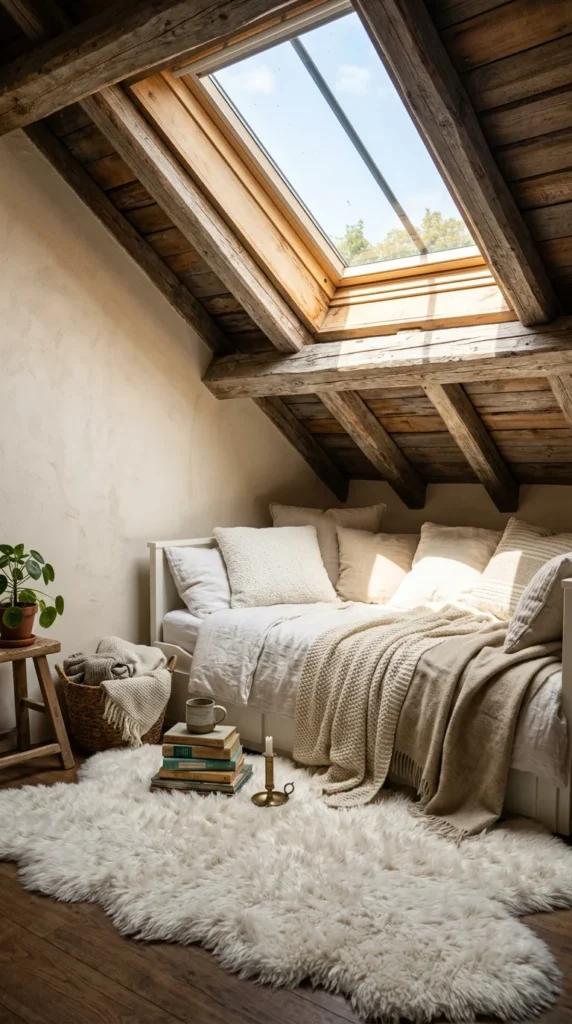
The attic is often the most underutilized space in a home, yet its architectural quirks make it the perfect location for a reading retreat. The sloped ceilings and unusual angles create a sense of intimacy and “coziness” that is difficult to replicate in standard rectangular rooms.
Attic nooks benefit immensely from skylights, which provide top-down lighting—the best kind for reading as it eliminates shadows on the page. Because attics are physically removed from the main living areas (kitchen, living room, entryway), they provide a level of silence and seclusion that is essential for deep, immersive reading. When decorating an attic nook, embrace the low ceilings by using low-profile furniture like daybeds or chaise lounges. This turns the “cramped” nature of the architecture into a feature rather than a flaw.
6. Outdoor Hammock

Reading doesn’t have to be an indoor activity. For many, the sound of rustling leaves and the feeling of a breeze are the ultimate reading accompaniments. An outdoor nook, centered around a hammock or a hanging egg chair, provides a sensory experience that shifts with the seasons.
To make an outdoor reading nook viable for “all-day” reading, you must account for the elements. Ensure the area is shaded to prevent glare on the pages and to protect your skin. Weather-resistant fabrics are a must for pillows and cushions. If you don’t have trees, a freestanding hammock frame can be placed on a balcony or patio. The gentle swaying motion of a hammock has been scientifically shown to encourage a deeper state of relaxation, making it easier to slip into the “alpha” brainwave state associated with focused reading.
7. Minimalist Corner
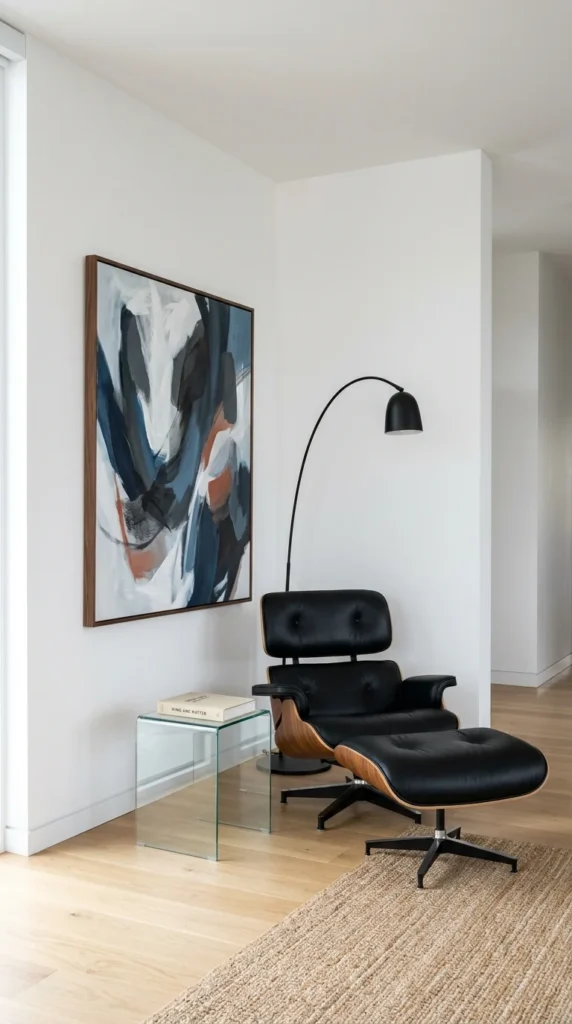
For the reader who is easily distracted, the minimalist nook is the solution. This design philosophy removes all visual “noise,” leaving only the essentials: a chair, a light, and a book. By stripping away the decor, you signal to your brain that this space is for one purpose and one purpose only.
The minimalist nook relies on high-quality furniture. Since there are fewer items to look at, the items you choose should be both beautiful and ergonomic. An Eames-style lounge chair or a classic wingback provides the necessary support for long sessions. The lighting should be a focused “task light” rather than ambient lighting, directing the beam specifically onto the book. This “spotlight” effect helps narrow your peripheral vision, further increasing your concentration on the text.
8. Canopy Bed
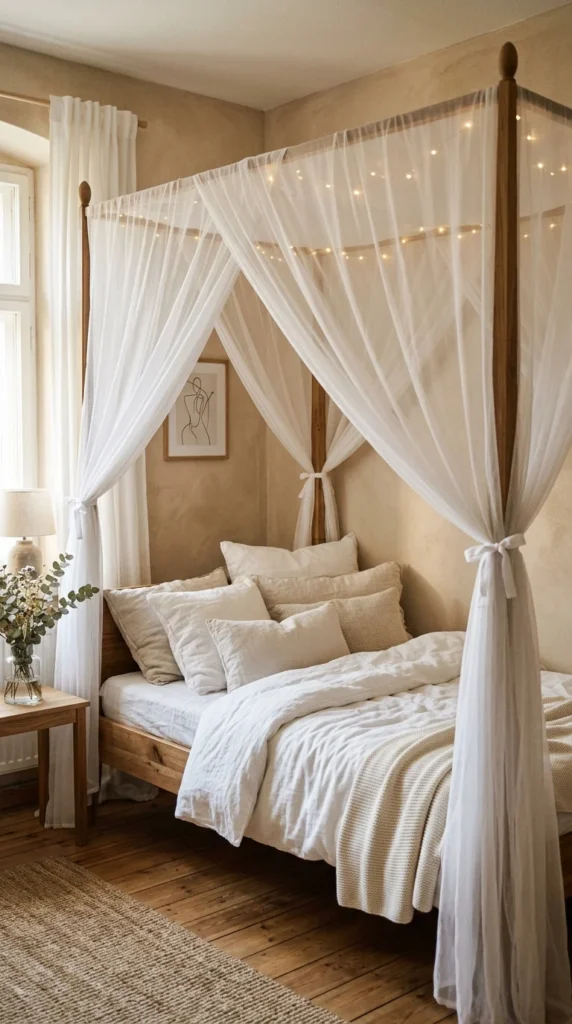
The canopy nook is about creating a “room within a room.” It is a whimsical, romantic approach to design that appeals to the inner child who once built forts out of blankets. The fabric drapes serve a functional purpose by muffling sound and creating a visual barrier between the reader and the rest of the household.
To create this look, you don’t necessarily need a four-poster bed. You can mount curtain tracks to the ceiling or use a simple hoop canopy hung from a single hook. Use breathable fabrics like linen or sheer voile to ensure the space doesn’t become too hot. This type of nook is especially effective in shared bedrooms or studio apartments, as it provides a literal “hideaway” where you can disappear into a story while life continues on the other side of the curtain.