
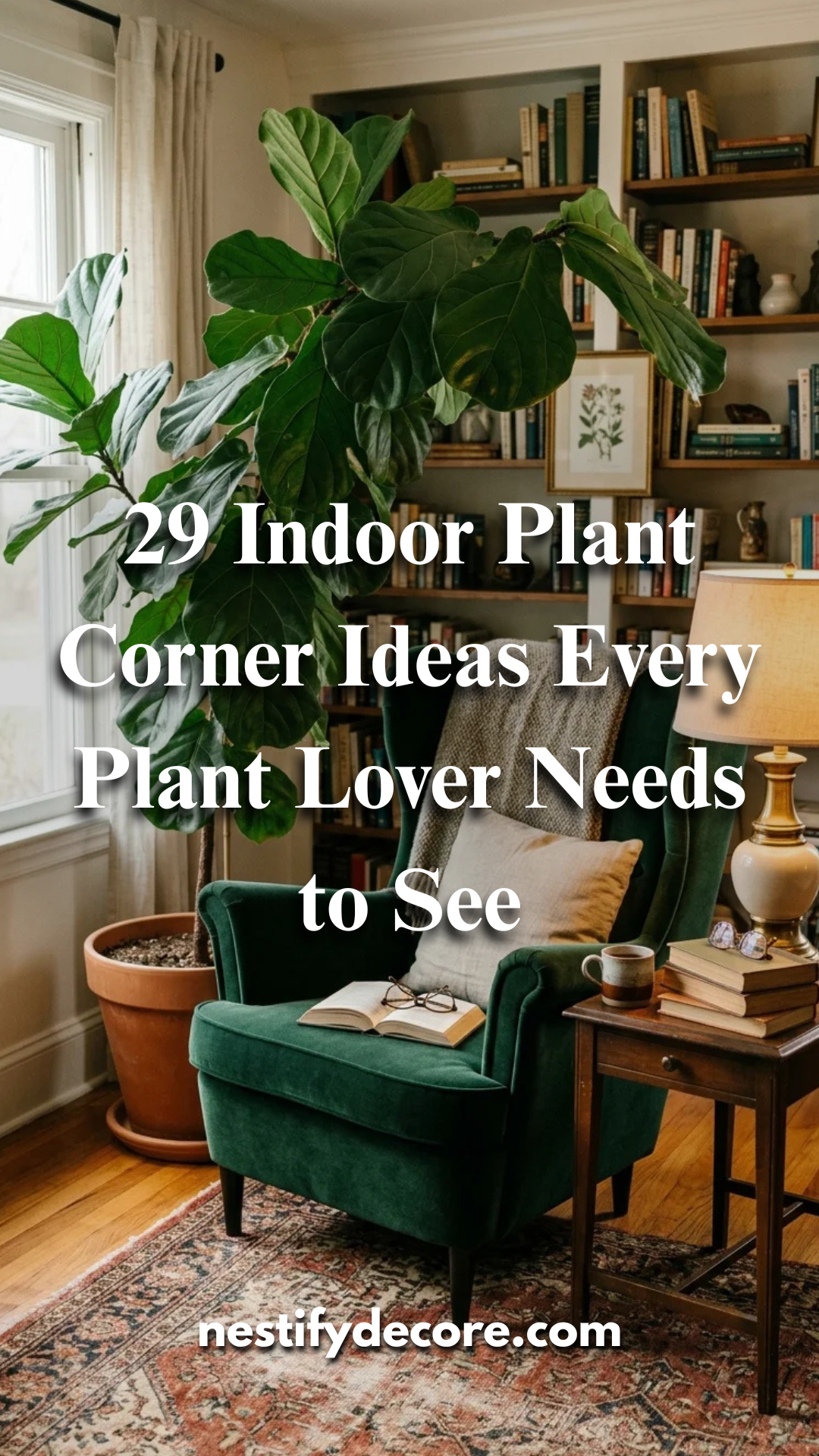
Transforming a neglected corner into a vibrant green sanctuary is one of the most rewarding interior design projects a plant enthusiast can undertake. Beyond the aesthetic appeal, indoor plant corners improve air quality, reduce stress, and create a sense of tranquility within the home. Whether you live in a sprawling estate or a compact studio apartment, there is a way to integrate nature into your architecture. Here are 29 curated ideas to inspire your next botanical renovation.
1. Tiered Stands
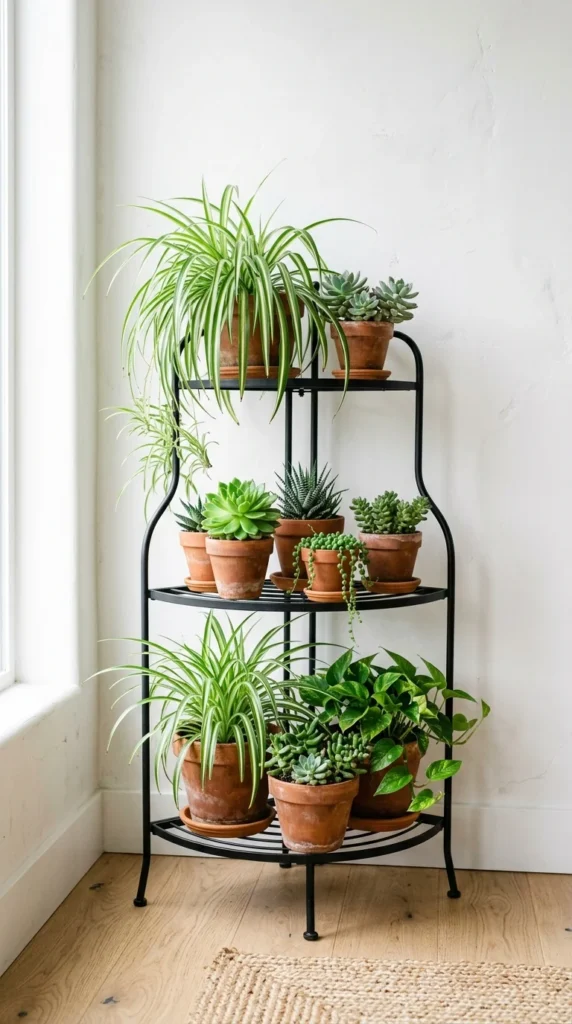
Tiered stands are the ultimate solution for maximizing vertical space in a small footprint. By elevating your plants at different levels, you create a sense of depth and ensure that every leaf gets its moment in the sun. These stands come in various materials, from minimalist wrought iron to warm bamboo, allowing you to match your existing furniture. They are particularly effective for grouping smaller species like Echeveria, Haworthia, or Pilea, creating a “stadium seating” effect for your greenery.
2. Hanging Macramé
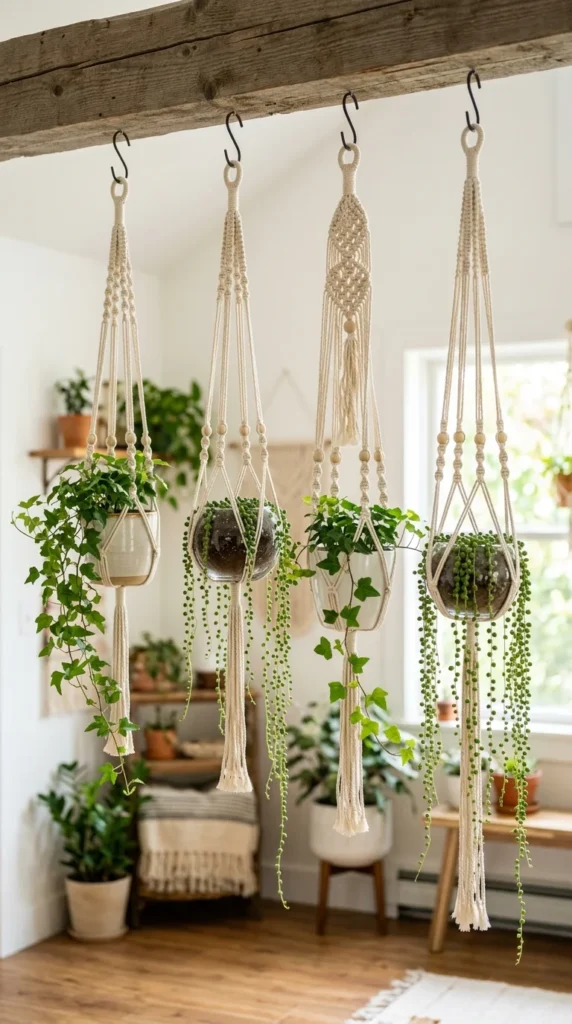
If floor space is at a premium, look to the ceiling. Macramé hangers bring a bohemian, tactile element to a corner. The intricate knots and fringed edges soften the sharp angles of a room. Use these to display trailing plants like English Ivy, Heartleaf Philodendron, or the delicate String of Pearls. When hung at varying heights, they create a living curtain that draws the eye upward, making the room feel taller and more spacious.
3. Ladder Shelves
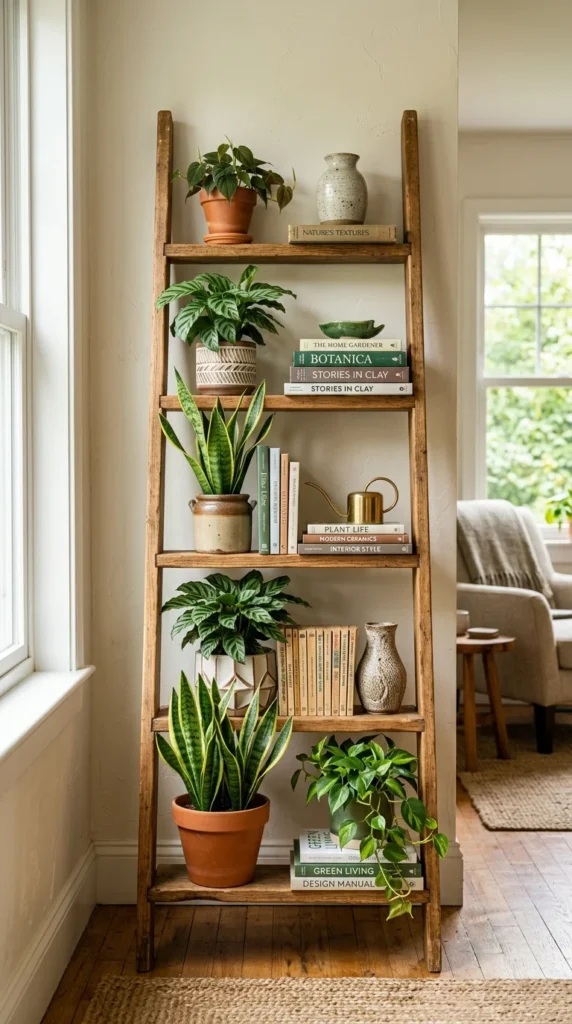
Ladder shelves provide a relaxed, casual aesthetic that fits perfectly into farmhouse or contemporary styles. The wide bottom shelves are ideal for heavier pots containing peace lilies or ZZ plants, while the narrower top rungs are perfect for smaller decorative pots. The “leaning” nature of these shelves allows them to tuck neatly into tight corners without overwhelming the space.
4. Bar Carts
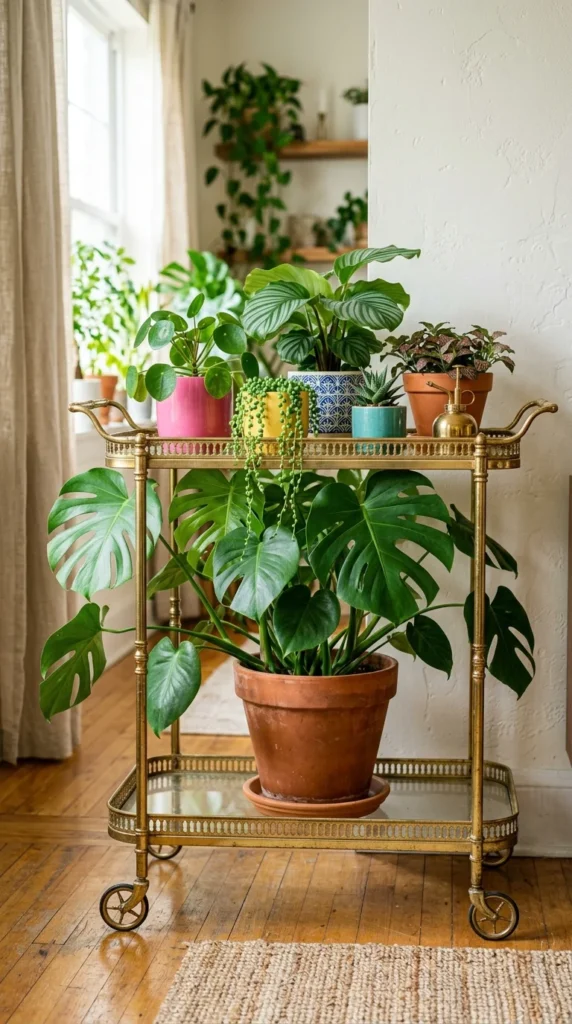
Who says bar carts are only for spirits? Repurposing a rolling cart into a mobile plant station adds a touch of glamor and functionality. The wheels make it easy to move your “garden” toward the window during the day and back into the corner at night. Use the bottom shelf for watering cans and misting bottles, and the top shelf for your showstopper plants.
5. Reading Nook
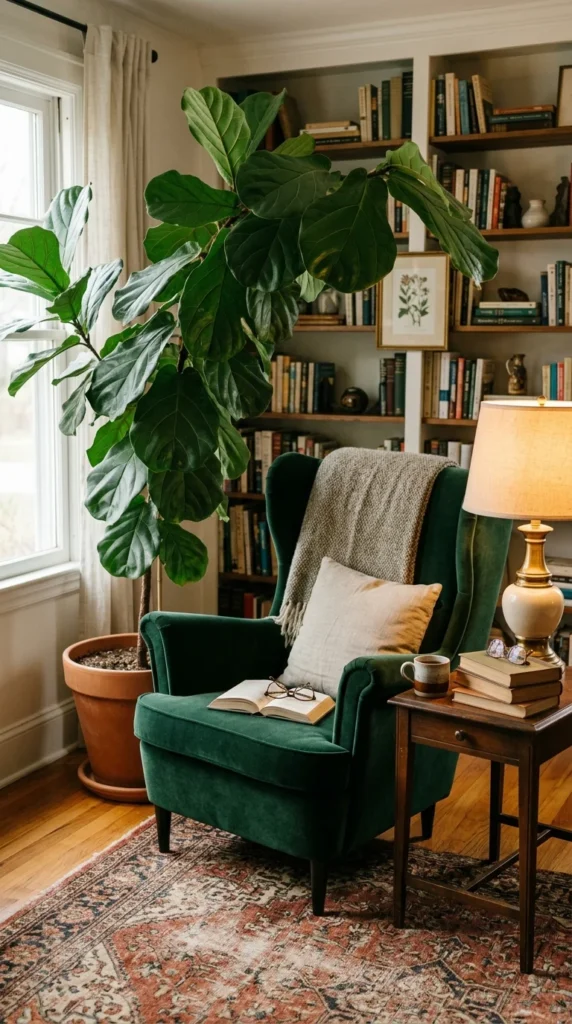
Combine your love for literature with your love for nature by surrounding your favorite reading chair with greenery. A tall, architectural plant like a Fiddle Leaf Fig or a Bird of Paradise acts as a natural canopy, creating a secluded “secret garden” feel. The presence of plants has been shown to improve focus and relaxation, making this the perfect environment for getting lost in a book.
6. Window Sills
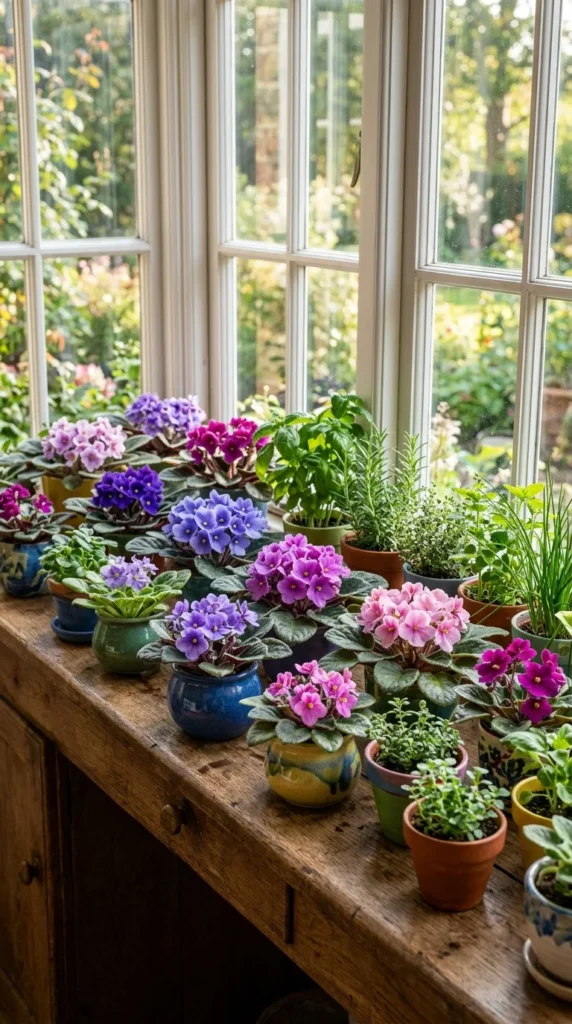
A deep window sill is prime real estate for sun-loving species. Instead of a single pot, create a dense “window garden” by lining up plants of similar light requirements. This is an excellent spot for an indoor herb garden featuring basil, mint, and rosemary, or a collection of flowering plants that thrive on direct light.
7. Corner Bench
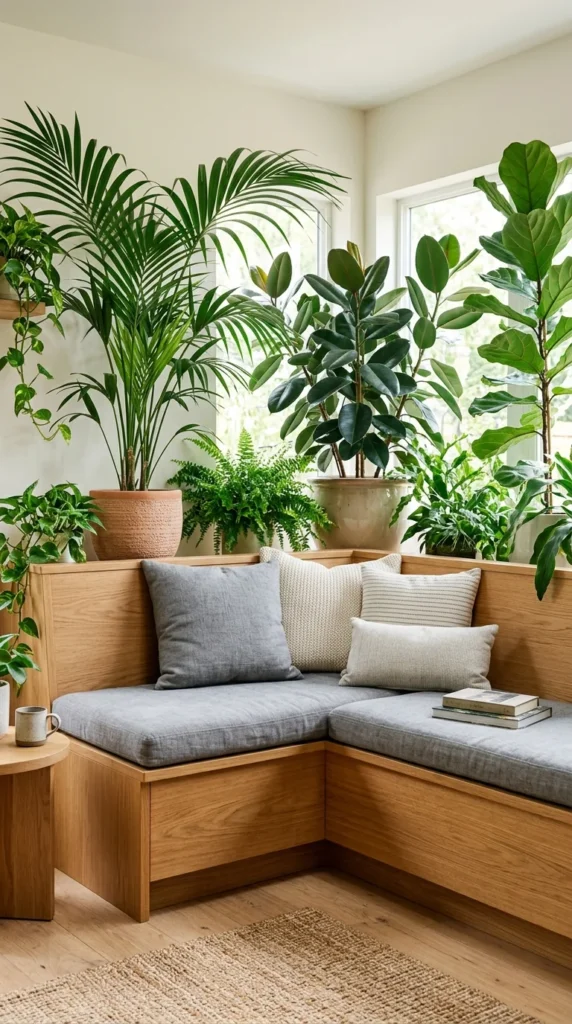
A corner bench provides a sturdy base for larger, heavier planters. By placing pots directly on the bench or on the floor tucked against it, you create a tiered seating area that feels integrated with nature. This setup works exceptionally well in dining nooks or entryways where you want to make a bold first impression.
8. Floating Shelves
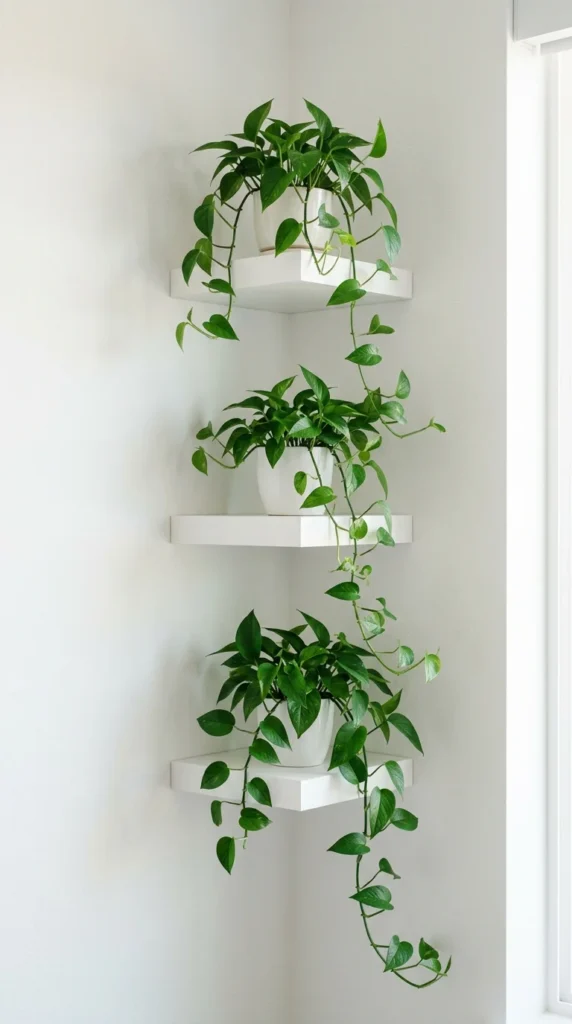
Floating shelves offer a clean, modern look. By mounting them in a “staggered” formation in a corner, you can create a waterfall effect with trailing plants like Golden Pothos or Tradescantia. This keeps the floor clear and allows the plants to become part of the wall art.
9. Ceiling Hooks
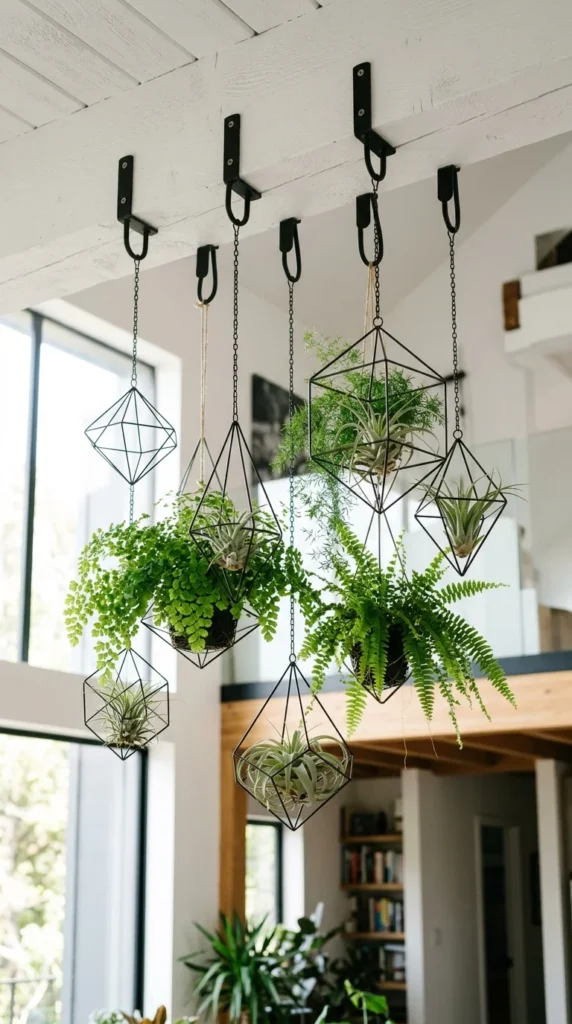
For a truly immersive “jungle” vibe, utilize heavy-duty ceiling hooks. This allows you to place plants in corners that might be blocked by furniture. Hanging Boston Ferns are particularly striking when suspended, as their fronds can spread out fully in all directions without being constricted by walls or shelves.
10. Vintage Pedestals
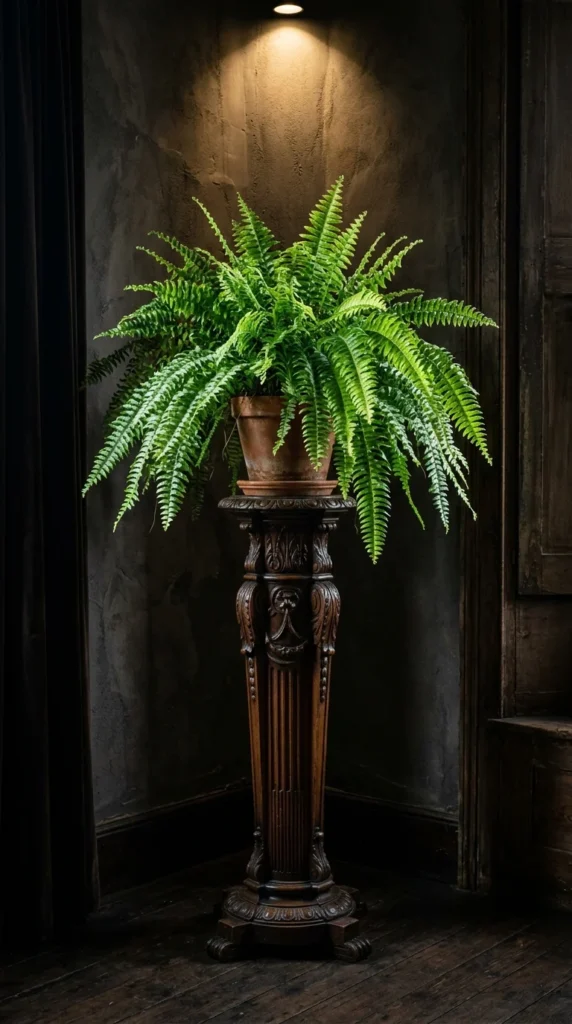
Sometimes, one magnificent plant is all you need. A vintage pedestal elevates a single specimen to the status of a masterpiece. This works best with symmetrical or high-impact plants like the Kimberly Queen Fern or a large Sansevieria. It adds a touch of classic elegance to an otherwise modern room.
11. Terrarium Cluster
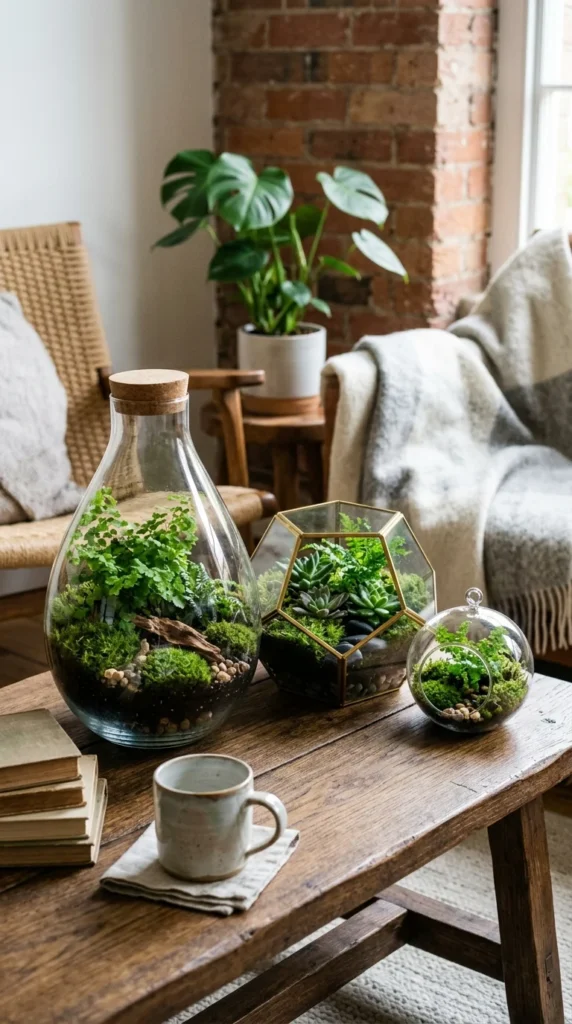
Terrariums are self-contained ecosystems that are perfect for corners with lower light or for people who want a low-maintenance option. Grouping several terrariums of different shapes—globes, pyramids, and cylinders—creates a miniature landscape that is fascinating to look at up close.
12. Mid-Century Modern
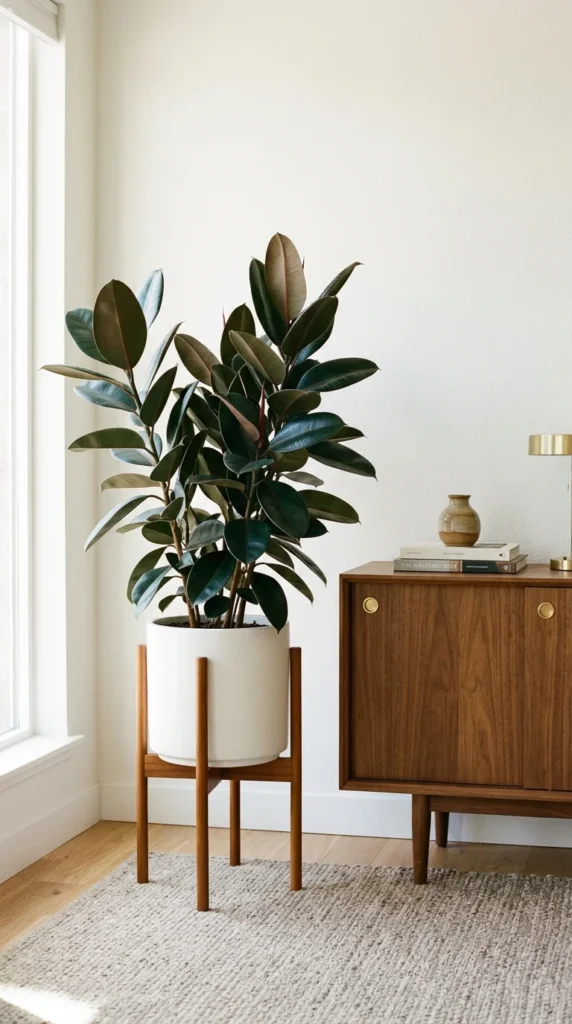
The mid-century modern aesthetic and indoor plants go hand-in-hand. A classic ceramic “bullet” planter or a pot on a wooden tripod stand adds architectural interest. The clean lines of the furniture contrast beautifully with the organic, rounded leaves of a Rubber Tree or a Monstera.
13. Boho Jungle
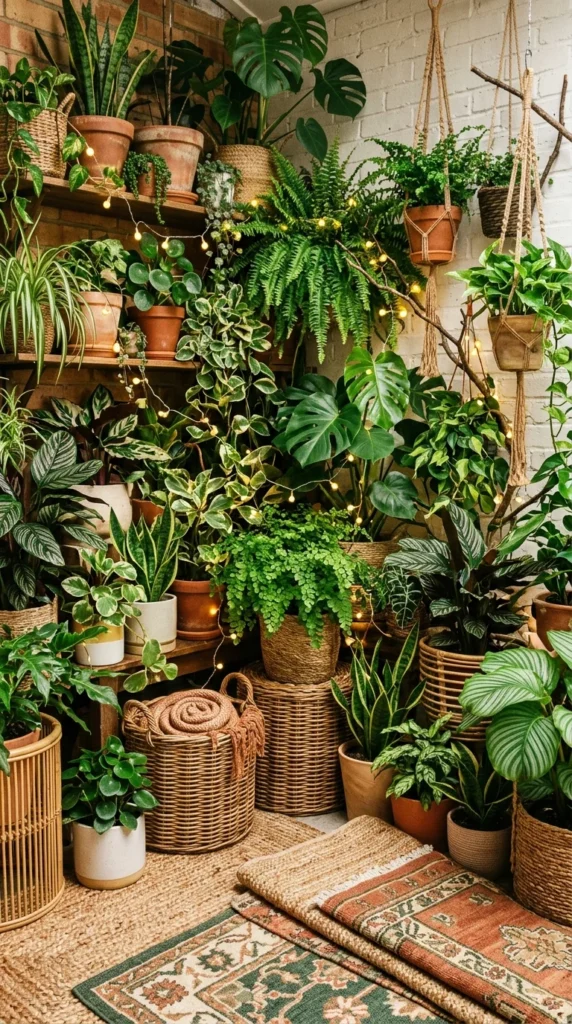
For those who believe “more is more,” the boho jungle style is the way to go. This involves layering plants of different heights, textures, and leaf shapes. Mix wicker baskets with clay pots and add textiles like Moroccan rugs to create a warm, lived-in feel.
14. Minimalist Monolith
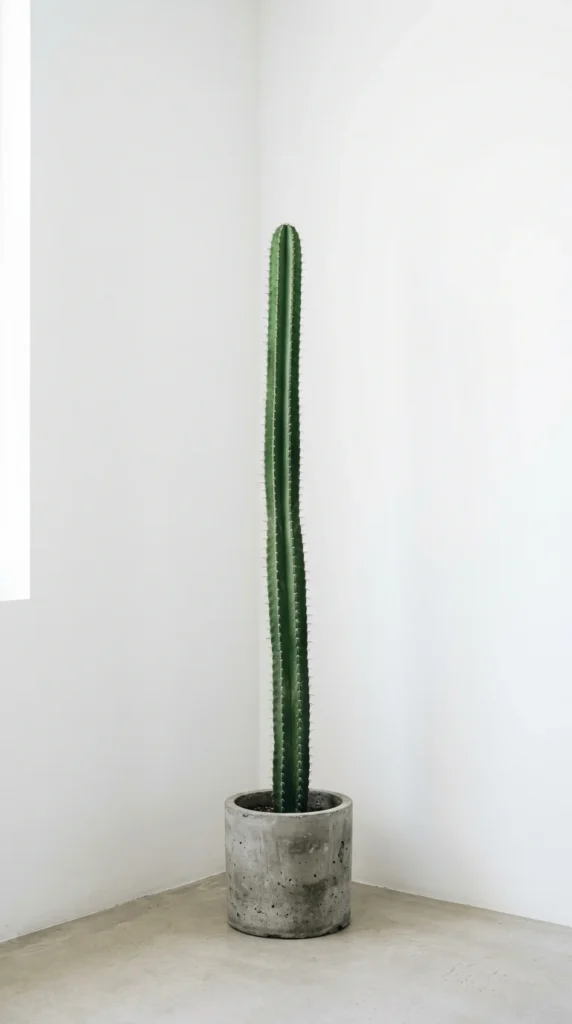
Minimalism doesn’t mean no plants; it means choosing one high-impact piece. A tall Mexican Fence Post cactus or a large Euphorbia provides a striking vertical element without the “clutter” of multiple smaller pots. This looks best in homes with industrial or ultra-modern architecture.
15. Vertical Walls
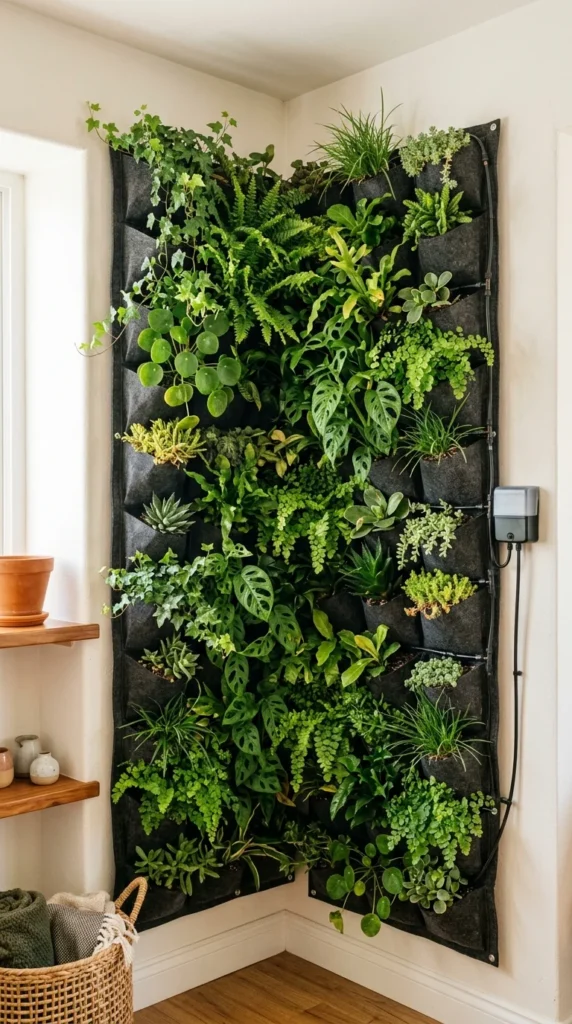
A living wall or vertical planter transforms a flat surface into a tapestry of greenery. These systems often include built-in irrigation and are perfect for creating a lush backdrop behind a desk or in a hallway corner where floor space is non-existent.
16. Lighted Cabinets
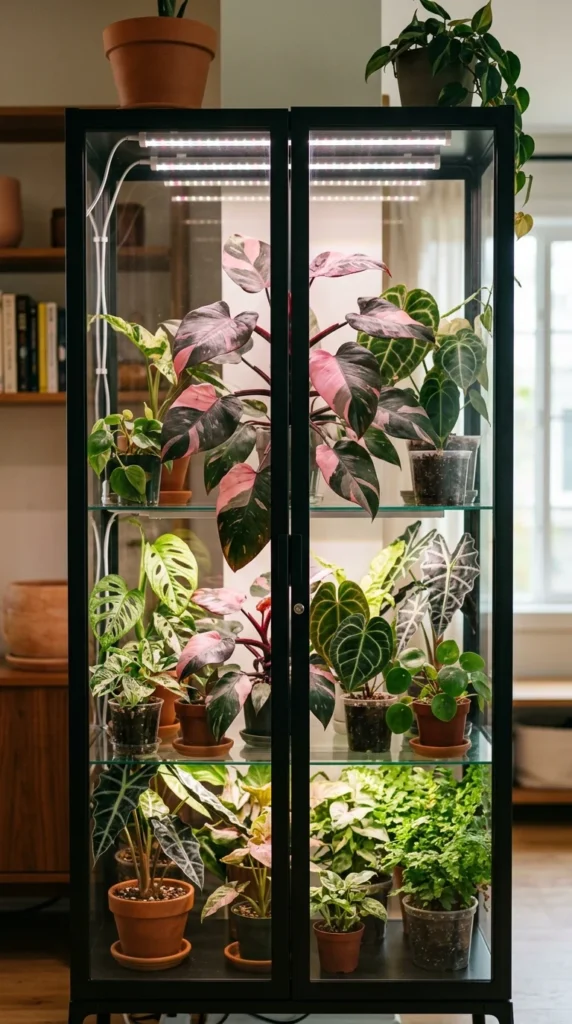
For the serious collector, a “Milsbo” or “Fabrikör” cabinet can be converted into a high-humidity greenhouse. By adding LED grow lights and fans, you can keep rare and sensitive plants thriving in a corner that might otherwise be too dark or dry.
17. Woven Baskets
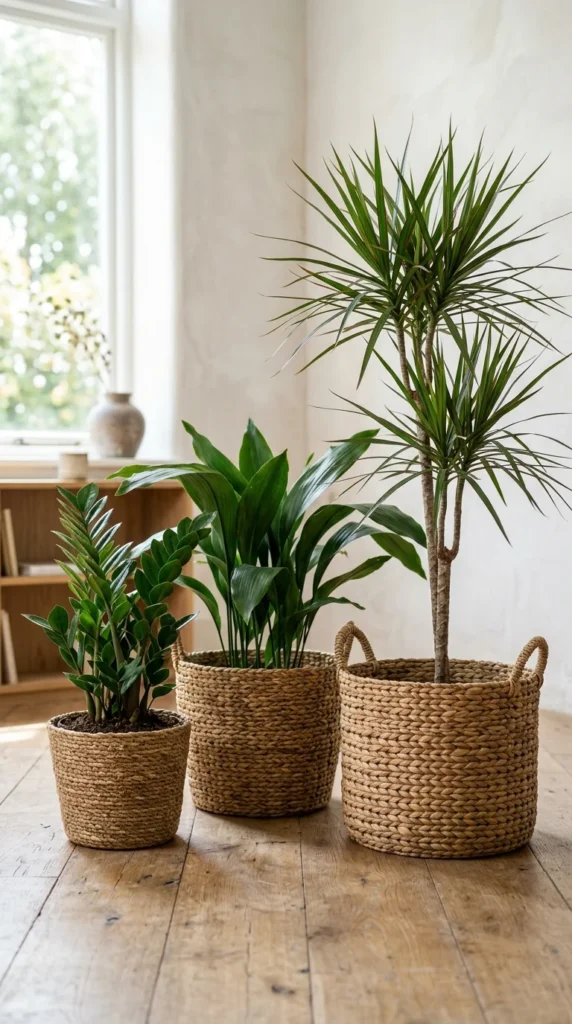
Woven baskets add a natural, earthy texture to a plant corner. They are excellent for hiding ugly plastic nursery pots. Just remember to place a plastic saucer inside the basket to catch excess water and prevent the fibers from rotting.
18. Mirrored Backdrop
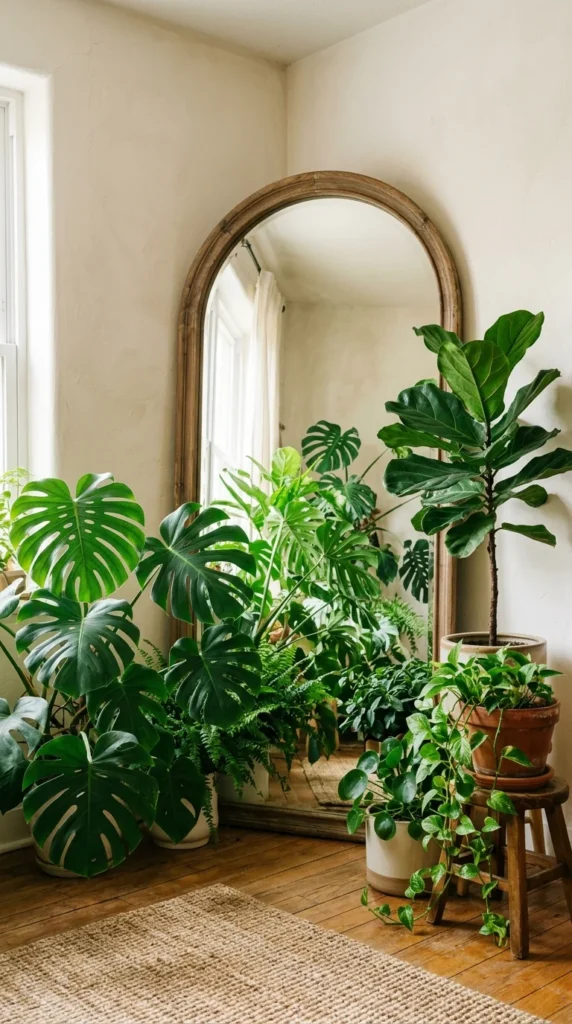
Placing a large mirror behind your plant corner is a classic designer trick. It reflects the greenery, making your “jungle” look twice as dense, and it bounces light back onto the plants, which is beneficial for their growth in darker rooms.
19. Tropical Oversized
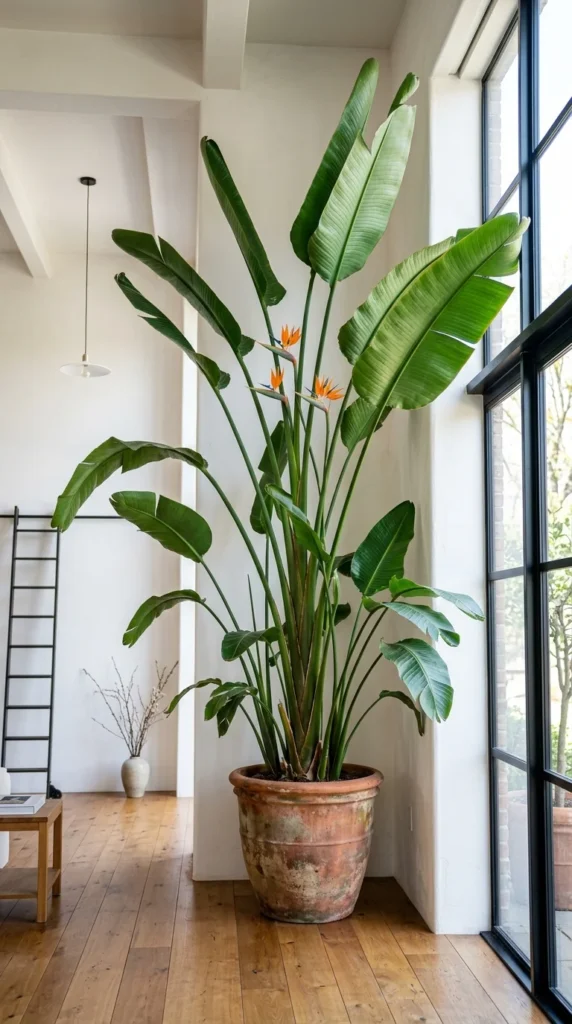
If you have high ceilings, take advantage of them with an oversized tropical plant. Species like the Bird of Paradise or the Majesty Palm can grow to impressive heights, filling the vertical volume of a room and creating a dramatic focal point.
20. Succulent Station
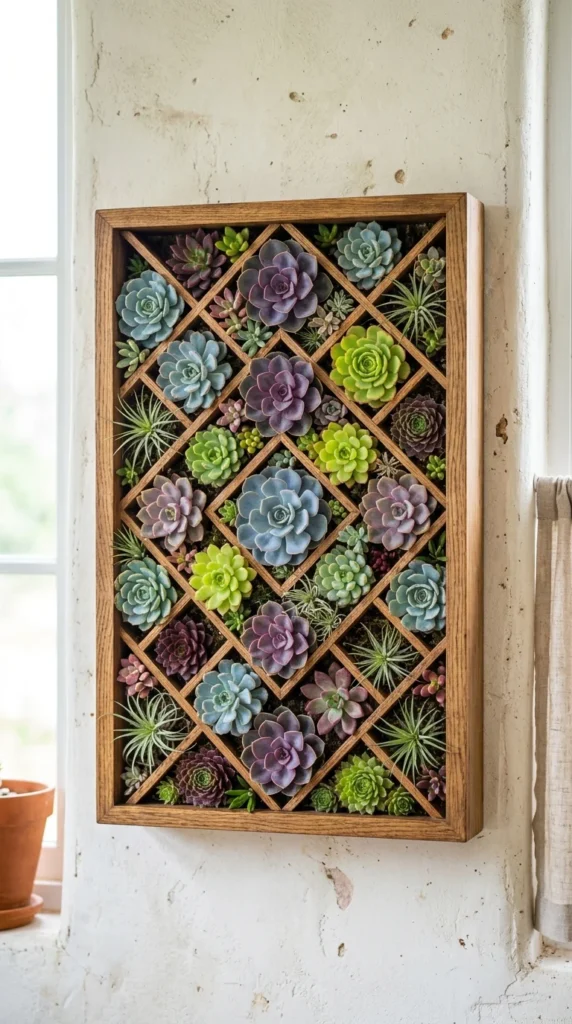
Succulents are perfect for sunny corners with limited space. A dedicated “station” using a small console table or a wall-mounted shadow box allows you to display a vast collection of these jewel-like plants in a very organized manner.
21. Bathroom Oasis
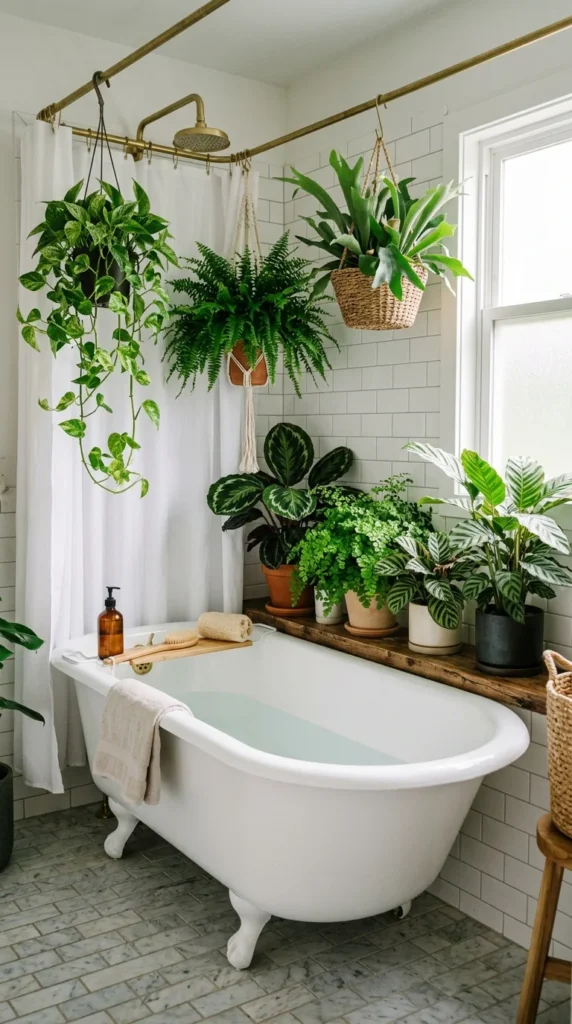
Many plants thrive in the high humidity of a bathroom. A corner near the tub or shower is the perfect spot for Calatheas, which are notorious for needing moisture. The green leaves against white tile create a spa-like atmosphere that is incredibly rejuvenating.
22. Office Greenery
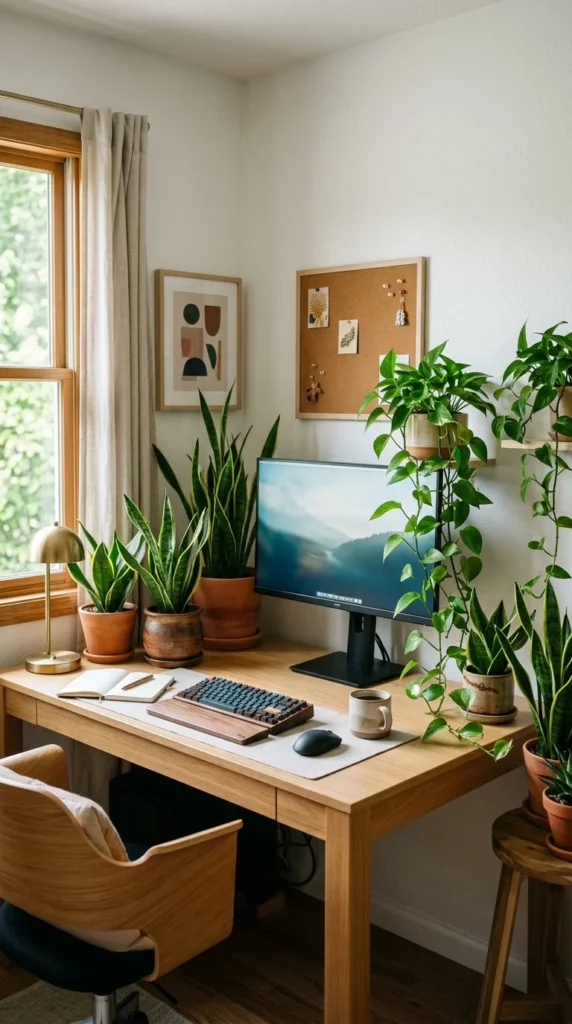
Adding plants to your workspace can boost productivity and mood. A “L” shaped desk in a corner provides the perfect nook to tuck a few low-maintenance plants. Choose species that don’t mind a bit of neglect, like the ZZ plant or the Sansevieria.
23. Wooden Crates
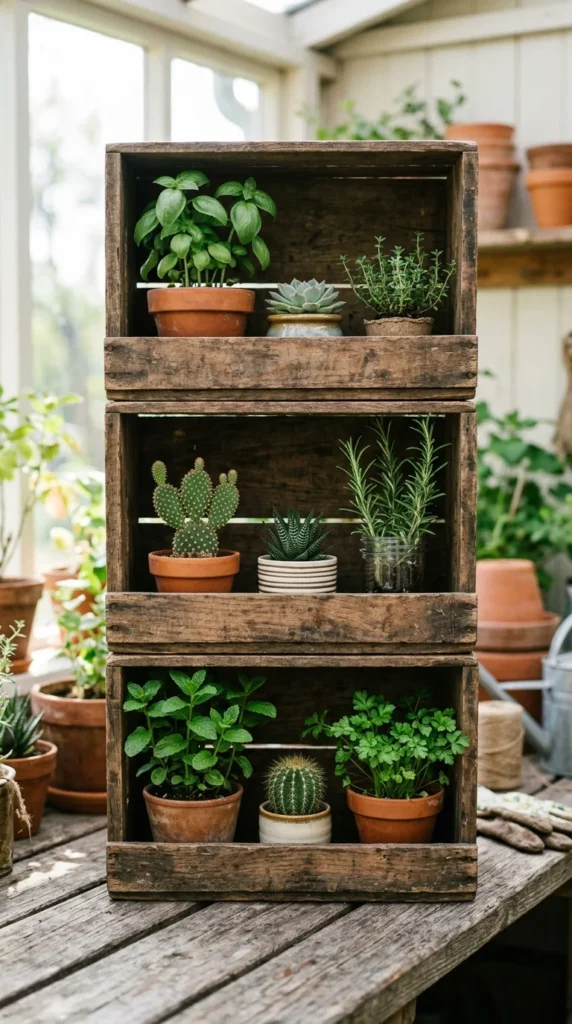
For a rustic or industrial look, stack vintage wooden crates. This creates a modular shelving unit that you can rearrange as your plant collection grows. The weathered wood provides a beautiful contrast to the bright green of the leaves.
24. Copper Accents
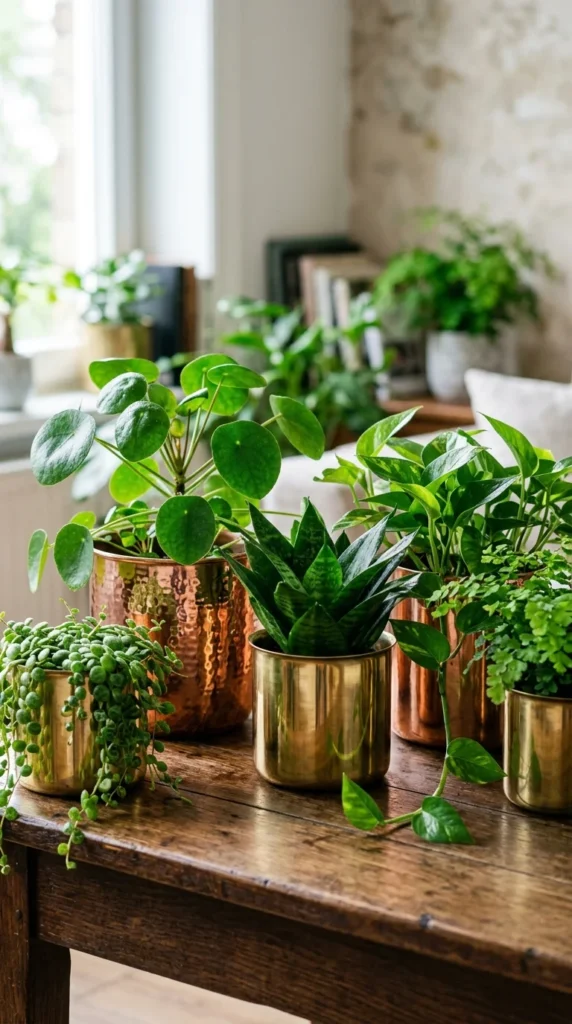
Metallic accents can elevate a plant corner from simple to sophisticated. Copper, brass, and gold planters catch the light and add a warm glow to the greenery. This works particularly well in rooms with dark or moody color palettes.
25. Layered Rugs
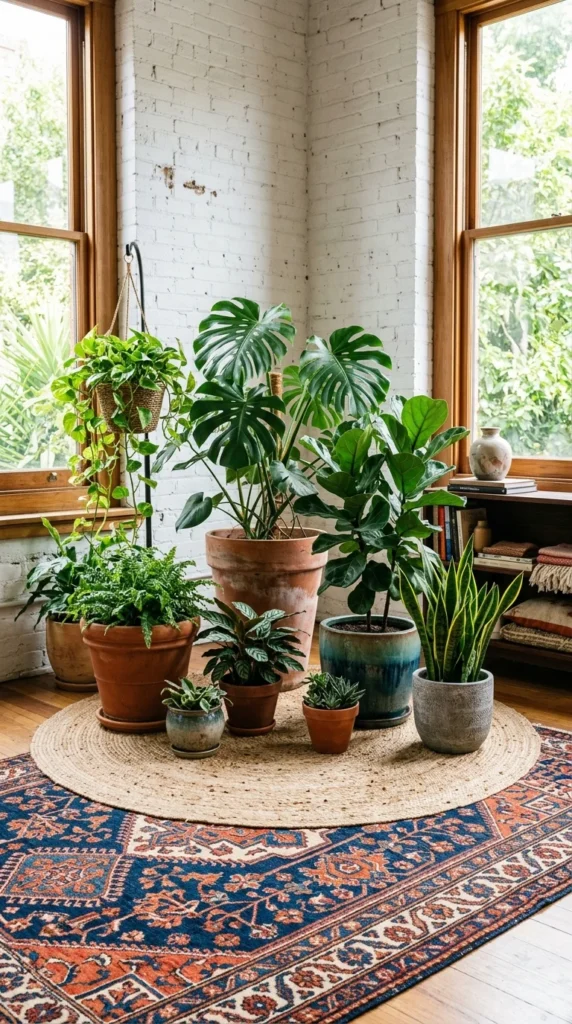
Ground your plant corner with textiles. Layering a small jute or sisal rug over a larger area rug defines the space as its own “zone.” It also provides a protective layer for your floors from accidental spills during watering.
26. Velvet Seating
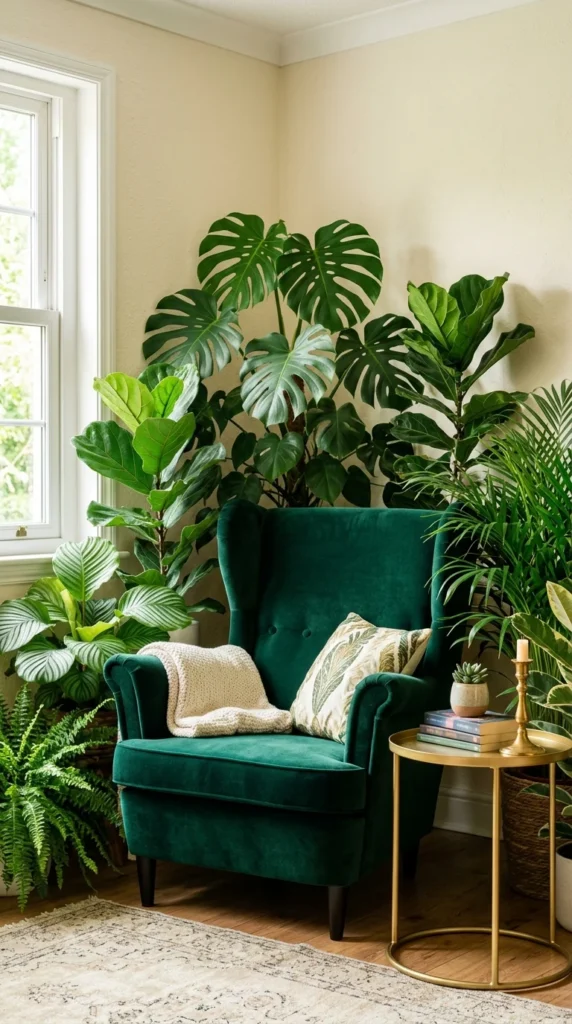
Texture is key in interior design. The softness of velvet pairs beautifully with the waxy or matte textures of plant leaves. A velvet chair in a deep jewel tone like emerald or navy will make the green of the plants pop, creating a luxurious and inviting retreat.
27. Industrial Metal
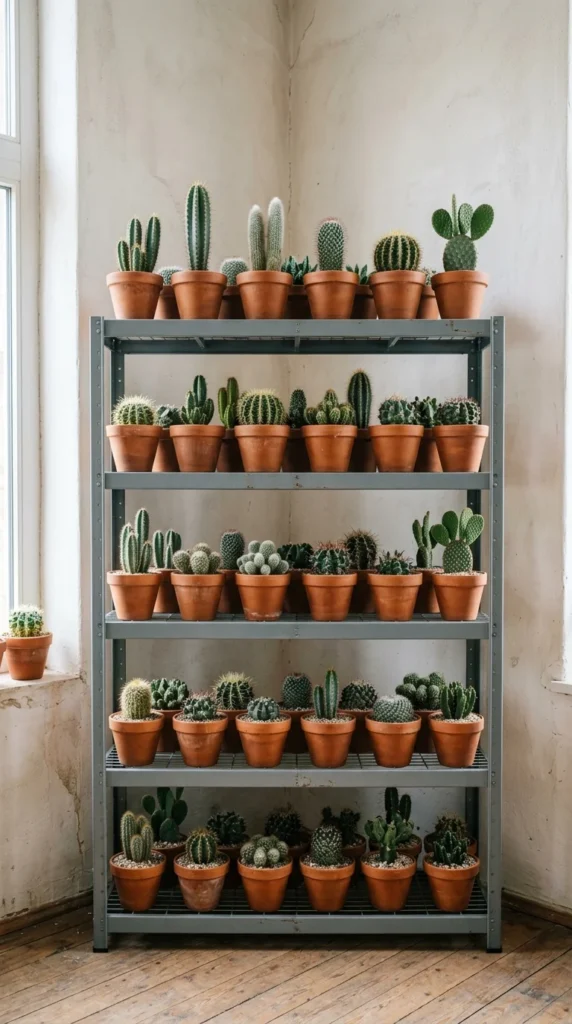
If your style is more “urban loft,” use industrial metal shelving. The cold, hard lines of the metal contrast sharply with the organic, sometimes chaotic growth of plants. This is a very sturdy option for those with large collections.
28. Fairy Lights
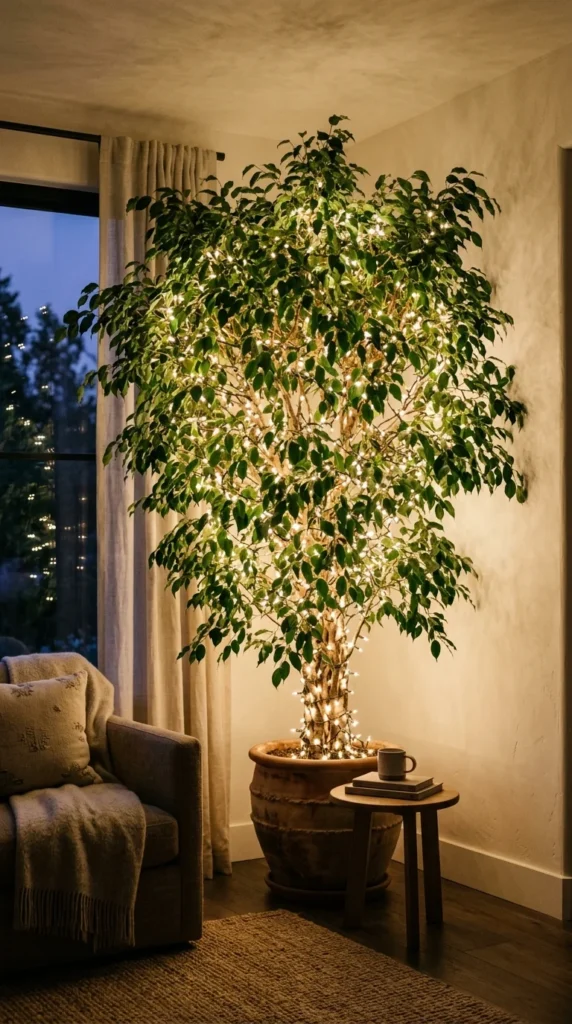
Don’t let your plant corner disappear when the sun goes down. Weaving delicate fairy lights or “seed lights” through the branches of a large plant or across a shelf of smaller ones adds a magical, cozy ambiance to your home in the evenings.
29. Color Coordination
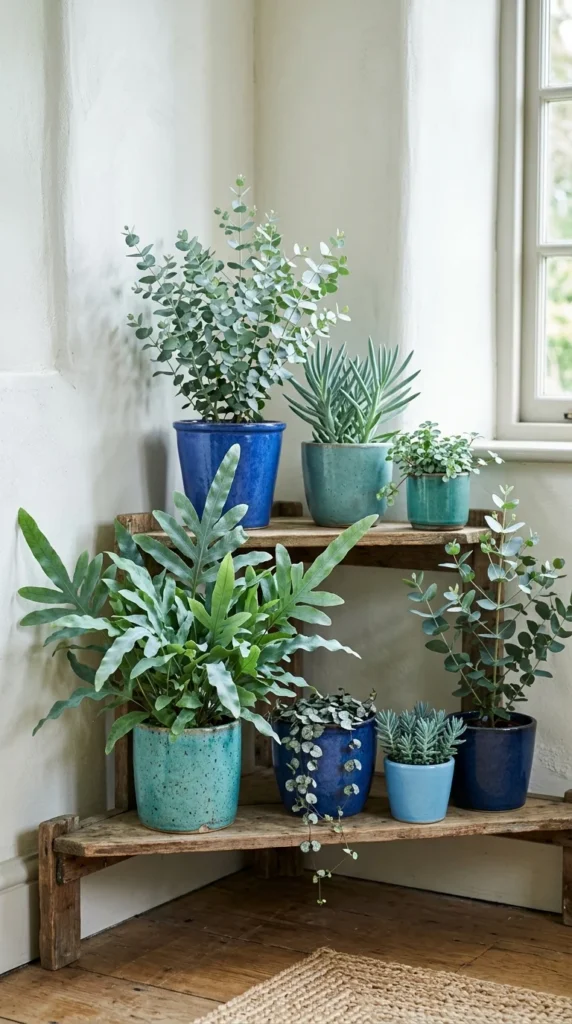
For a cohesive and curated look, choose a specific color palette for your pots or even your plants. You could go for “all white” pots for a clean look, or choose plants with variegated leaves (white and green) to create a rhythmic visual pattern throughout the corner.