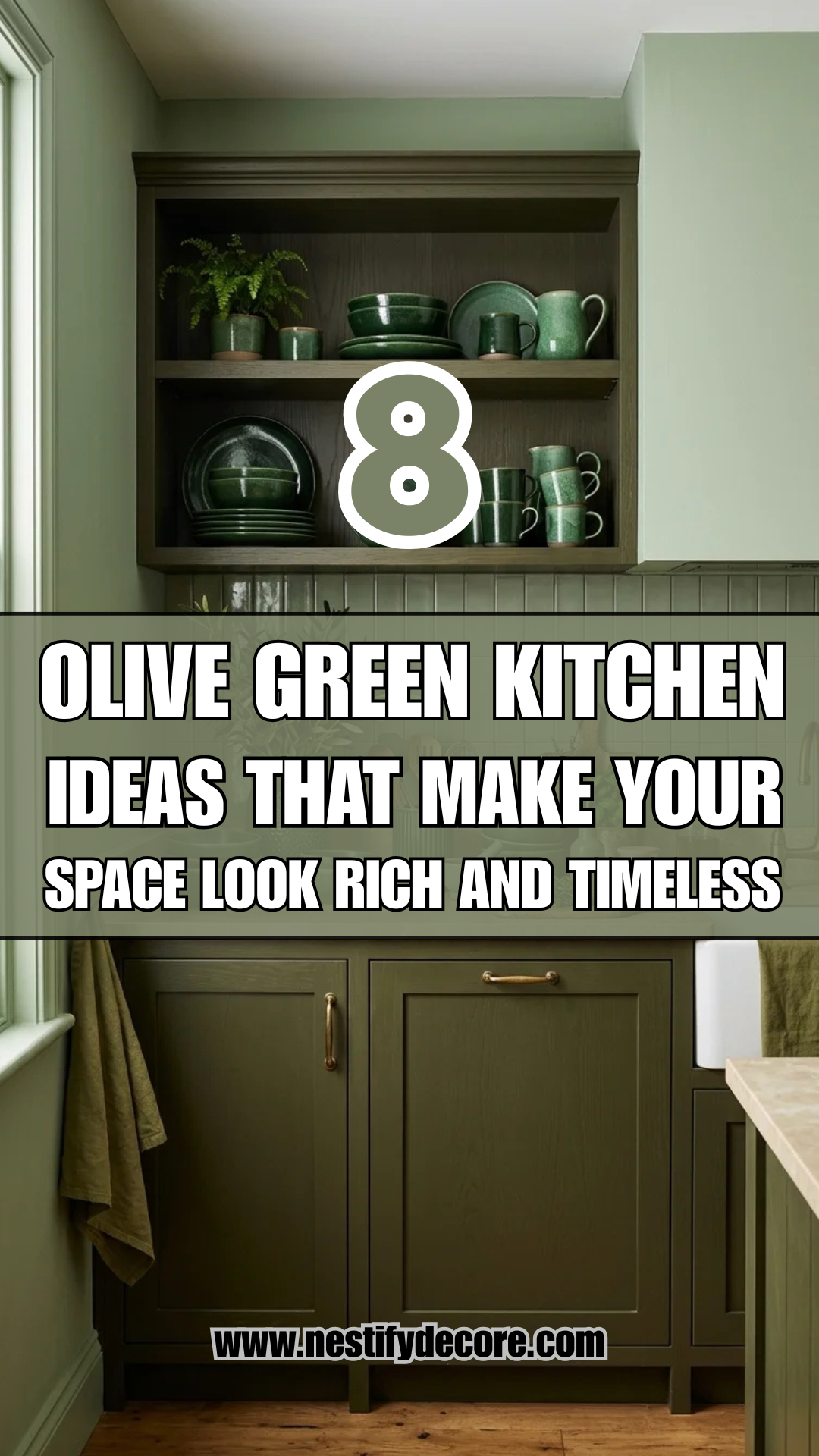
Olive green has transcended being a mere trend to become a modern classic in interior design. As a color that sits perfectly between the vibrancy of nature and the sophistication of a neutral, it offers a unique “richness” that few other palettes can achieve. In the kitchen, olive green provides an organic warmth that feels both grounded and high-end. Whether you are aiming for a rustic farmhouse vibe or a sleek, contemporary aesthetic, olive green adapts, bringing a sense of history and timelessness to the heart of the home.
Here are eight olive green kitchen ideas that will transform your space into a luxurious sanctuary.
1. Matte Finish
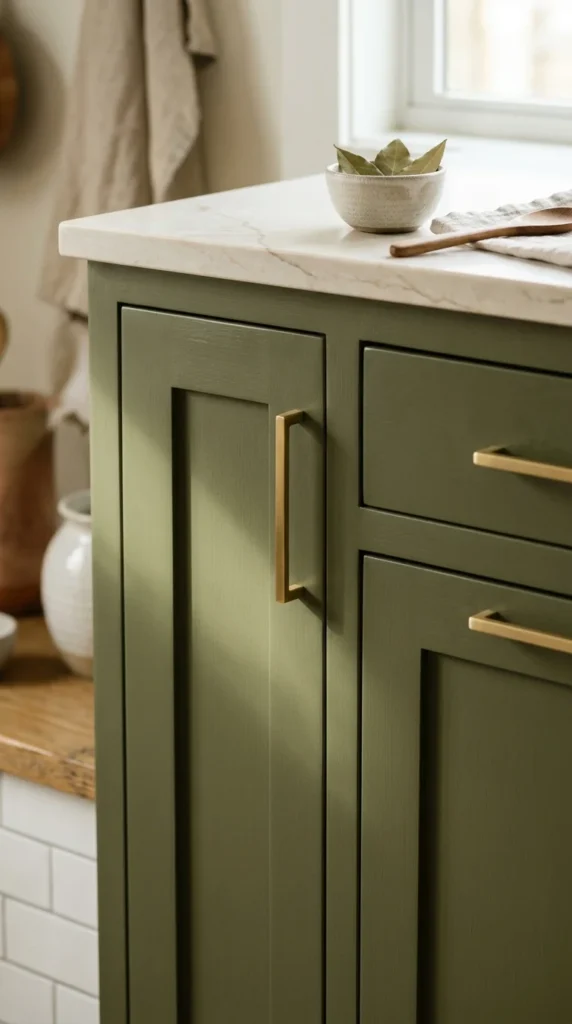
The texture of your cabinetry is just as important as the color itself. For olive green, a matte finish is often the superior choice for those seeking a “quiet luxury” look. Unlike high-gloss surfaces that reflect light and can sometimes feel sterile, a matte finish absorbs light, deepening the hue and highlighting the velvety undertones of the olive pigment.
A matte surface provides a soft, tactile quality that makes the kitchen feel more like a living space than a utility room. It hides fingerprints and smudges better than gloss, making it a practical choice for busy families. When paired with simple shaker-style doors, matte olive green creates a look that is understated yet undeniably expensive.
2. Brass Hardware
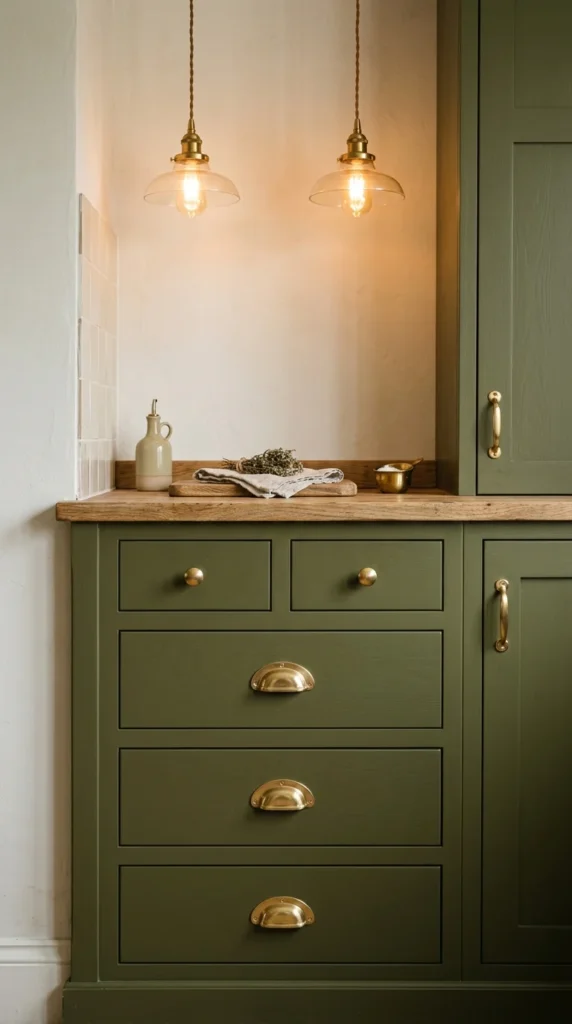
If there is a soulmate for olive green, it is brass. The yellow and gold undertones in brass hardware perfectly complement the earthy base of olive green, creating a warm, glowing contrast. This combination is a staple in high-end English kitchen design because it feels heritage-inspired and permanent.
To maximize the “rich” look, consider unlacquered brass. Over time, unlacquered brass develops a natural patina, darkening in some areas and remaining bright in others. This living finish adds a layer of character that makes a new kitchen feel like it has been part of the home for decades. From knurled handles to delicate cup pulls, the jewelry you choose for your cabinets will define the overall elegance of the room.
3. Oak Accents
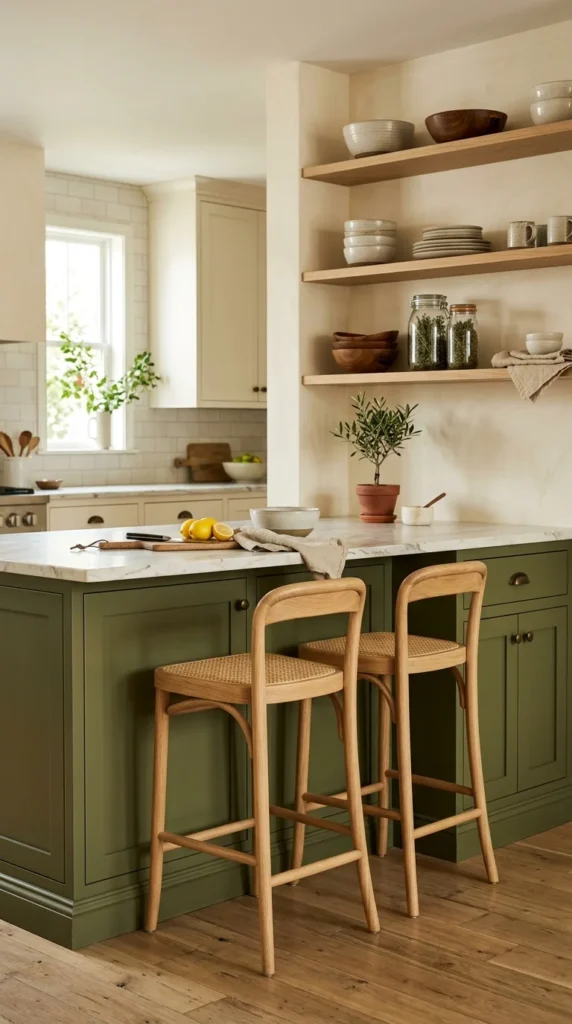
Olive green is a color derived from the natural world, so it naturally pairs beautifully with raw wood. Light oak, in particular, provides a stunning counterpoint to the moodiness of olive. The honey-toned grains of oak lift the green, preventing the space from feeling too dark or heavy.
You can incorporate oak through open shelving, flooring, or even custom-built wine racks. The juxtaposition of a “cool” organic green and “warm” organic wood creates a balanced atmosphere. This pairing is particularly effective in Scandi-industrial or modern farmhouse designs, where the goal is to create a space that feels cozy, breathable, and timeless.
4. Marble Backsplashes
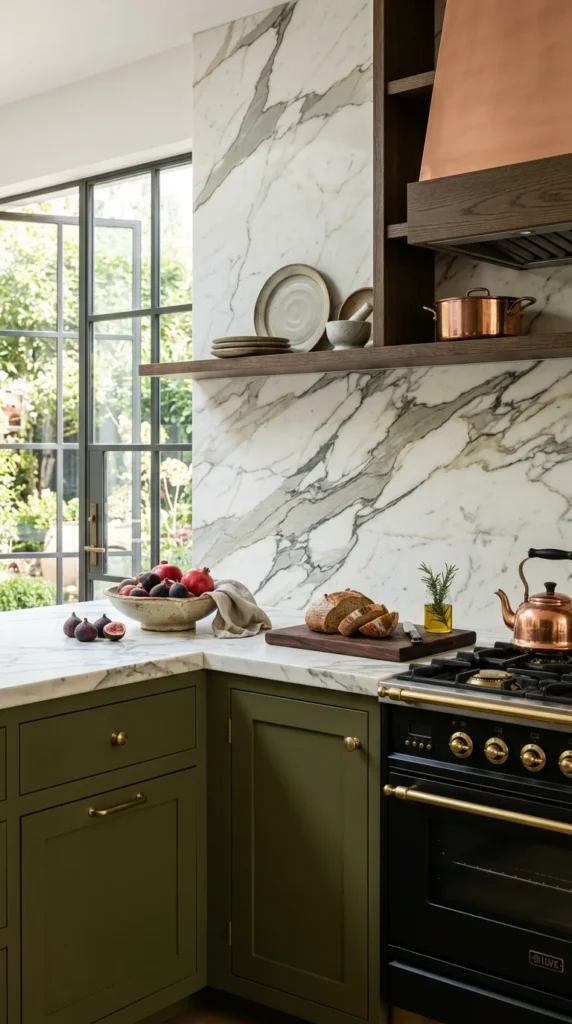
Nothing says luxury like natural stone. To make an olive green kitchen look truly elite, skip the standard subway tile and opt for a full-height marble backsplash. The natural veining in marble—whether it’s grey, charcoal, or even hints of gold—breaks up the solid blocks of green and adds a sophisticated visual texture.
Calacatta or Carrara marbles are popular choices, but for a more daring and rich look, consider “Arabescato” or “Paonazzo” marble, which feature heavier, more dramatic veining. The contrast between the solid, earthy green cabinets and the ethereal, swirling patterns of the stone creates a focal point that is both artistic and durable.
5. Tonal Layering
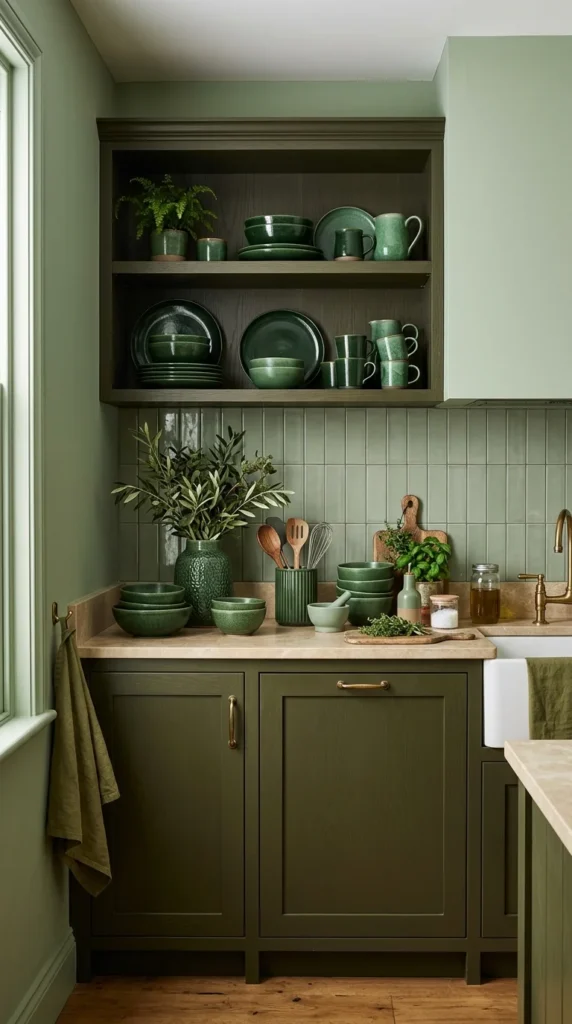
For an ultra-sophisticated and curated look, try tonal layering. Instead of using olive green as an accent color, use it as the foundation for a monochrome-adjacent palette. This involves using different shades and saturations of green throughout the space—from the walls and cabinets to the decor.
For example, you might have deep olive base cabinets, slightly lighter moss-green walls, and forest-green velvet upholstery on your dining chairs. Layering shades of the same color family adds depth and prevents the room from looking “flat.” It creates an immersive experience that feels intentional and expertly designed.
6. Statement Islands
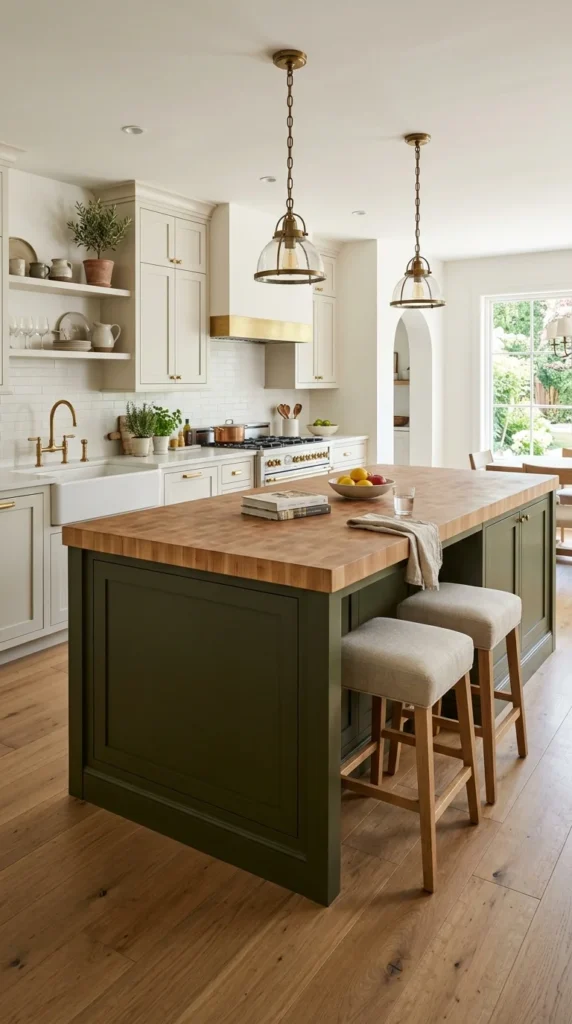
If you aren’t ready to commit to an entirely green kitchen, a statement island is the perfect middle ground. Use a neutral color like off-white, cream, or light grey for your perimeter cabinets, and then paint the central island a rich, saturated olive green.
This approach turns the island into a piece of furniture, anchoring the room and providing a heavy dose of personality without overwhelming the senses. It’s a great way to experiment with the color while keeping the rest of the kitchen bright and airy. To tie the look together, use olive green accents like tea towels, ceramics, or indoor plants on the perimeter counters.
7. Terracotta Flooring
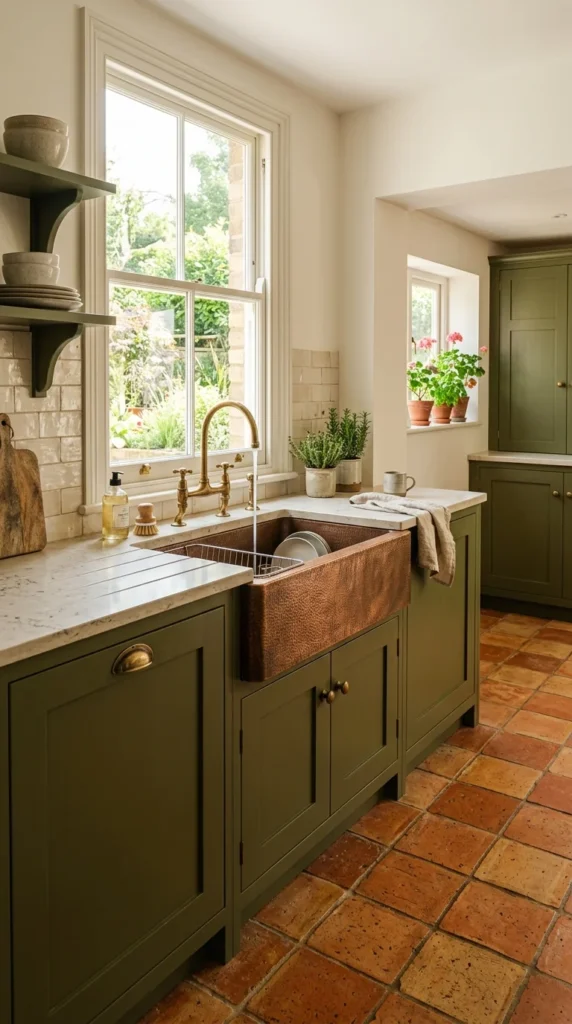
For those who love a Mediterranean or “Old World” aesthetic, pairing olive green with terracotta is a match made in heaven. The reddish-orange hues of the clay tiles provide a direct color-wheel contrast to the green, making both colors pop.
Terracotta floors bring an instant sense of warmth and history to a kitchen. They feel grounded and rustic, which softens the formality of deep olive cabinets. This combination is particularly effective in homes with lots of natural light, where the sun can play off the warm floor and the cool-toned cabinets to create a vibrant, lived-in feel.
8. Black Stone
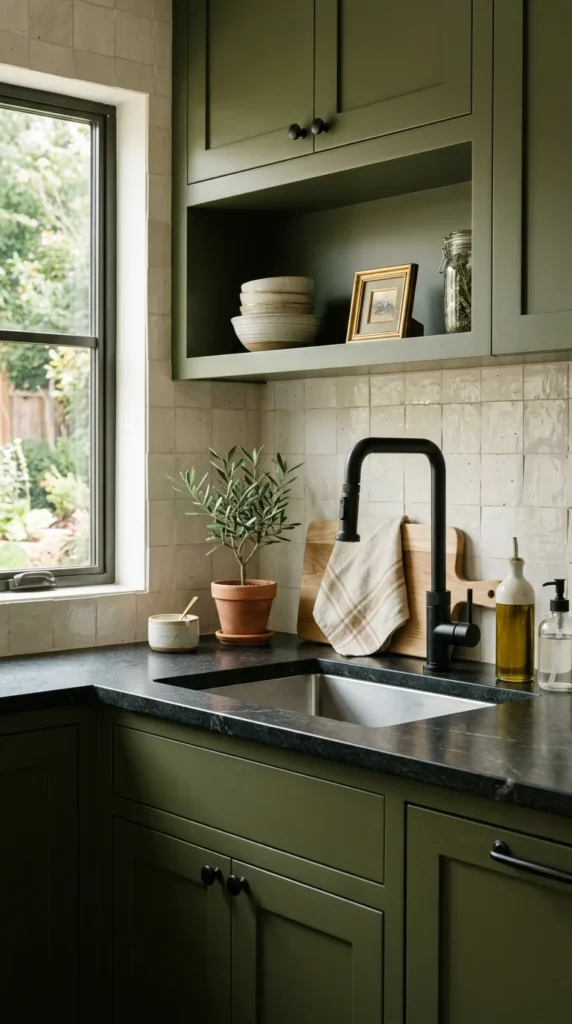
If your goal is a moody, modern, and high-fashion kitchen, pair your olive cabinets with black stone countertops. Whether it’s honed black granite, soapstone, or a dark quartz, the black-and-olive combination is incredibly sleek and masculine.
Soapstone is an especially good choice because it has a soft, matte look and often features subtle white or green veining that ties back into the cabinetry. Black hardware and faucets complete this look, creating a cohesive, “chef’s kitchen” vibe that feels expensive and professional. This palette works best in kitchens with sufficient lighting to ensure the dark tones feel cozy rather than cave-like.