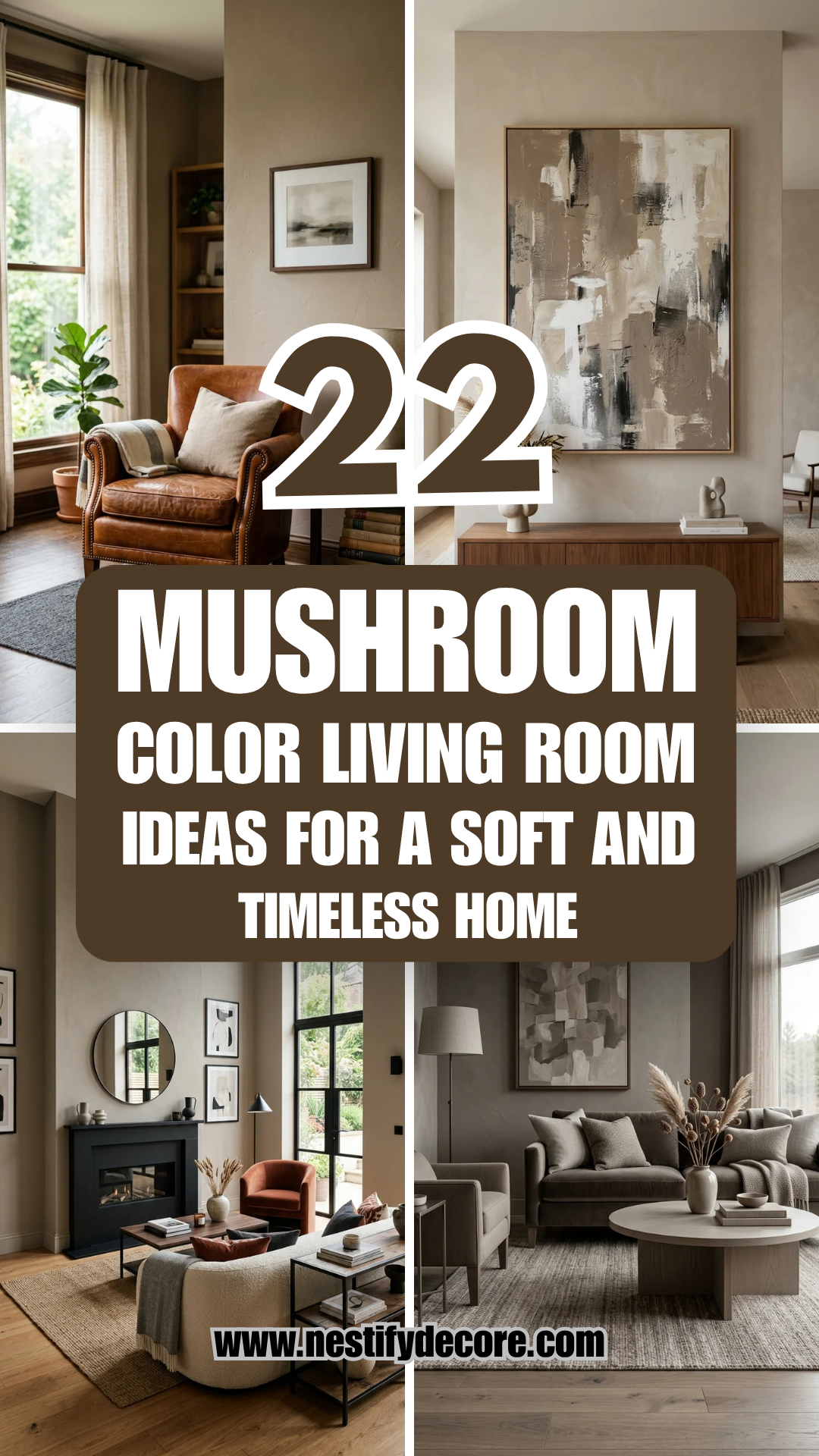
Mushroom is the ultimate “new neutral” that has taken the interior design world by storm. Neither strictly gray nor entirely beige, this sophisticated taupe hue offers a grounded, earthy warmth that adapts to almost any lighting condition. It provides a timeless backdrop that feels more intentional than off-white and more inviting than stark gray. Whether you are aiming for a rustic farmhouse vibe or a sleek contemporary aesthetic, mushroom tones create a sense of calm and cohesion. Here are 22 inspired ways to incorporate this versatile color into your living room.
1. Velvet Sofas
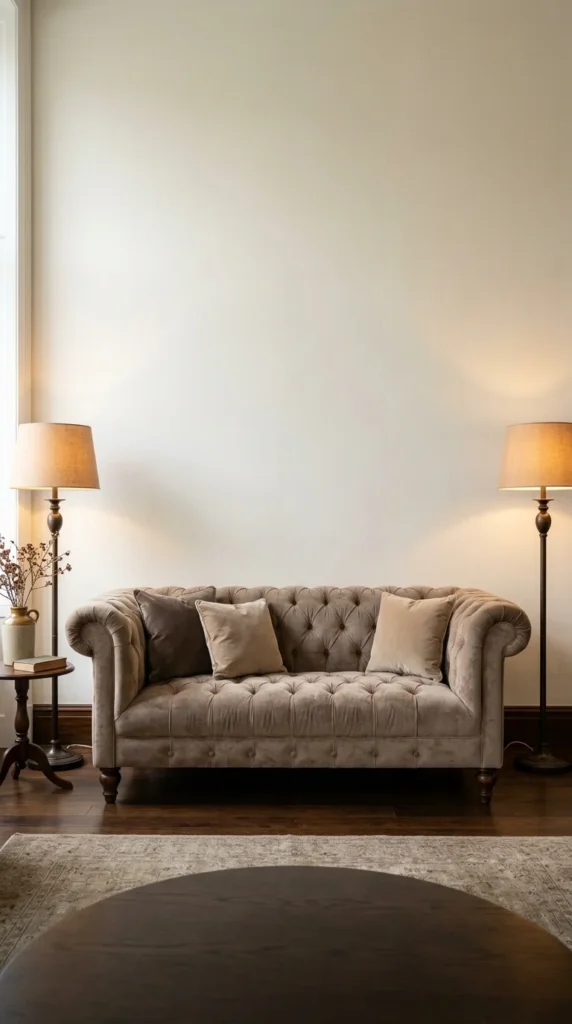
Velvet is the perfect medium for mushroom tones because the fabric’s nap catches the light, showcasing the complex undertones of the color. A mushroom velvet sofa acts as a soft focal point that feels high-end yet approachable. The slight sheen of the fabric prevents the neutral tone from looking flat, giving the room a sense of depth and luxury.
2. Tonal Layering
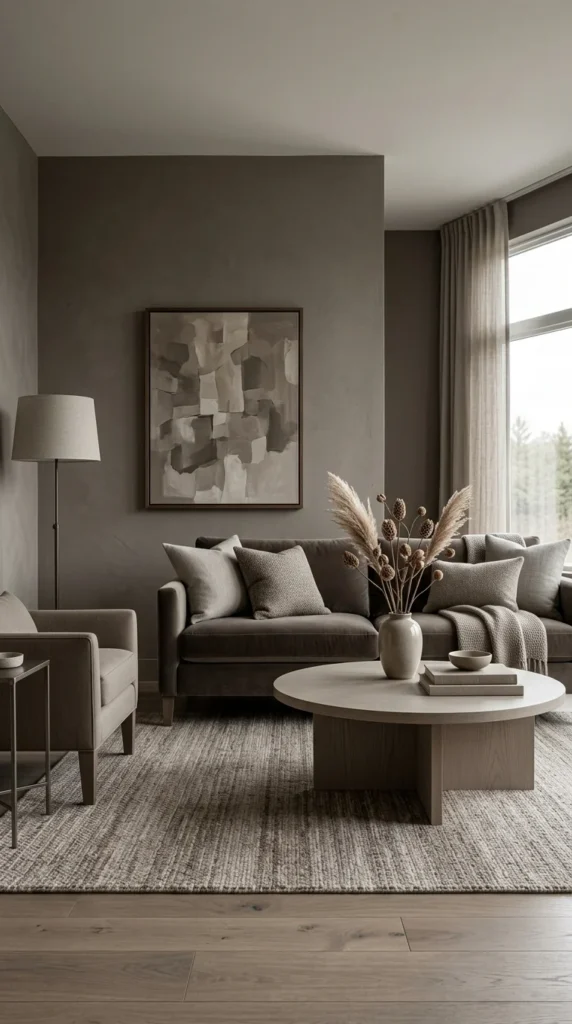
Tonal layering involves using various shades of the same color family to create a rich, multidimensional look. By mixing “light mushroom” walls with “deep taupe” pillows and “mid-tone” upholstery, you create a space that feels curated and cozy. This approach eliminates visual clutter by sticking to a tight color palette while maximizing tactile interest.
3. Linen Curtains
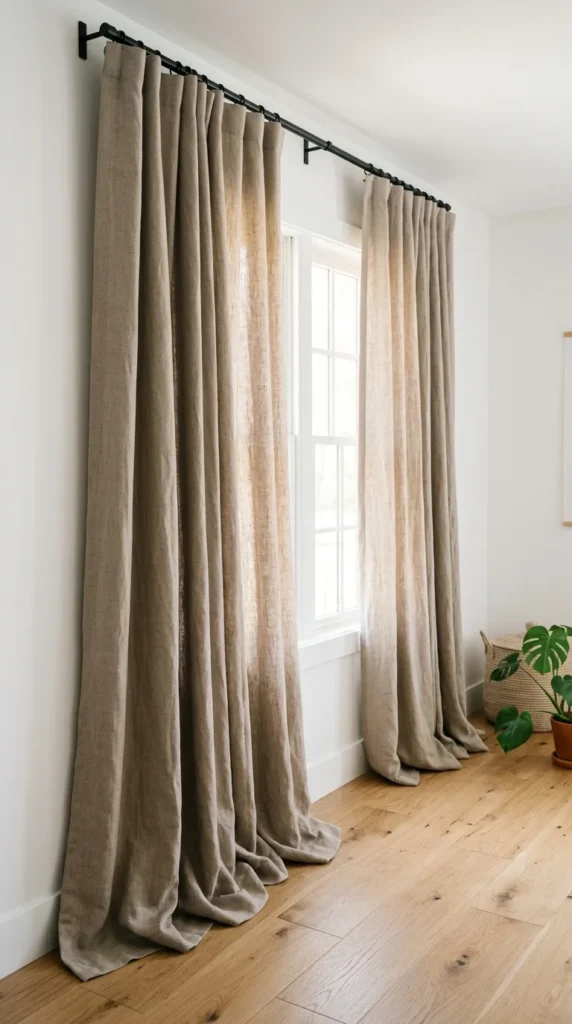
Linen drapes in a mushroom hue provide an organic, breezy feel to the living room. Because linen has a natural weave, it complements the earthy nature of the color perfectly. When the sun shines through, these curtains cast a warm, diffused glow across the room, making the entire space feel softer and more private without blocking out all the light.
4. Brass Accents
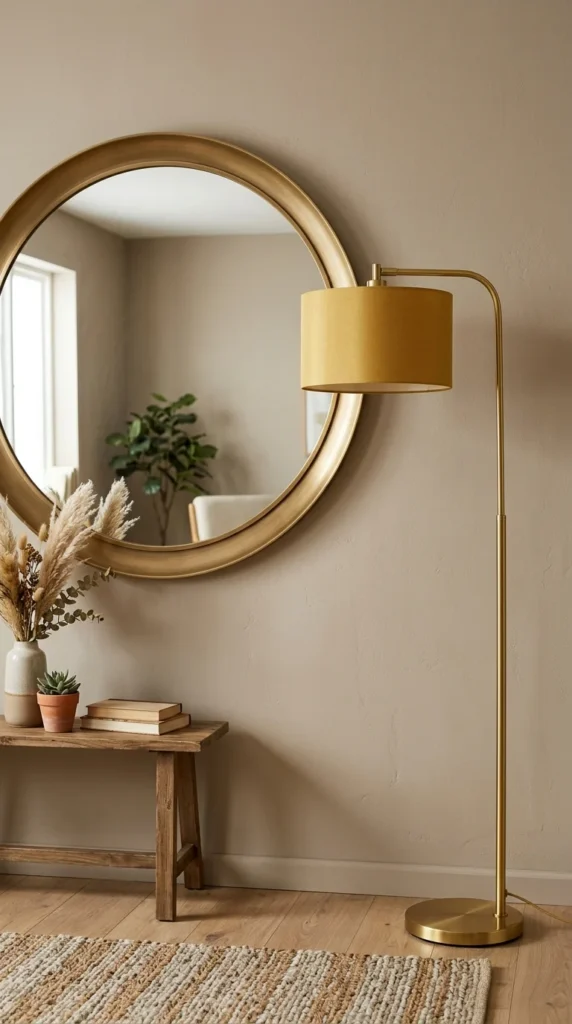
The warm, yellow undertones of brass and gold are the perfect partners for mushroom walls. While silver can sometimes make mushroom look too cool or “muddy,” brass brings out its inherent warmth. Consider incorporating brass through picture frames, light fixtures, or the legs of a coffee table to add a touch of metallic sophistication.
5. Natural Wood
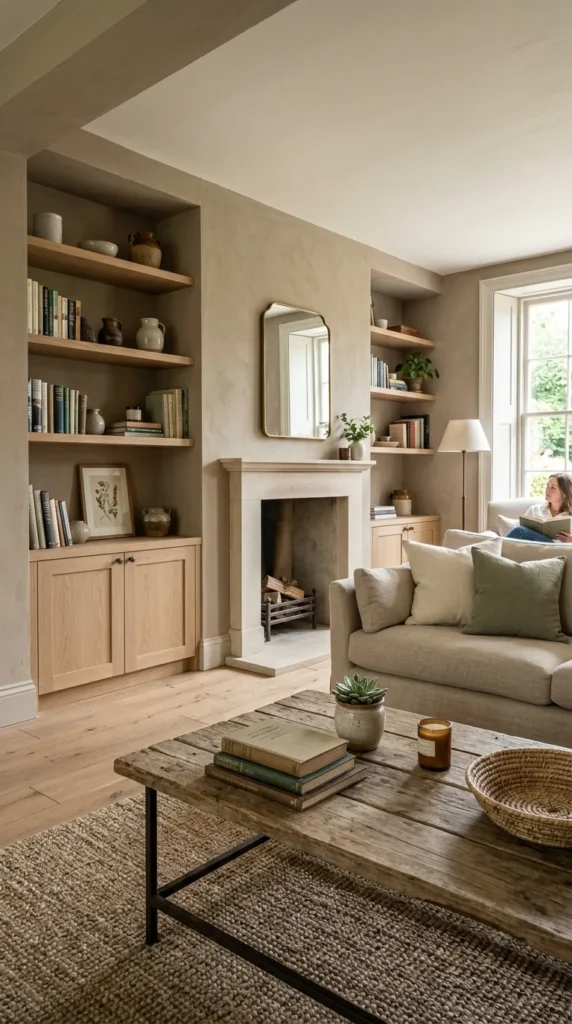
Mushroom is an “earth” tone, which means it pairs naturally with raw wood elements. Whether it’s a light white oak, a medium walnut, or reclaimed barn wood, the organic grain of the wood enhances the softness of the mushroom paint. This combination is essential for achieving the popular “Organic Modern” look.
6. Limewash Walls
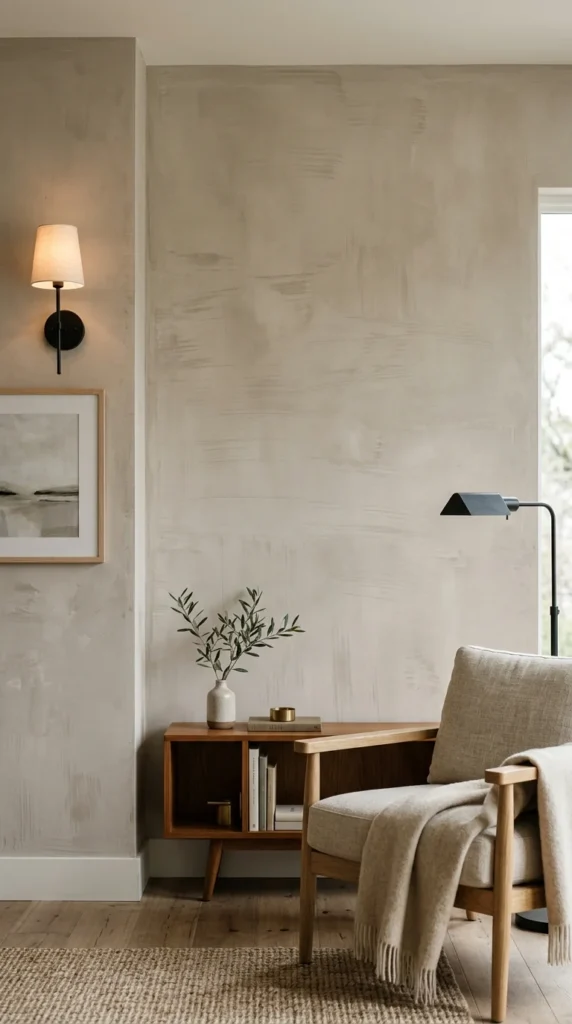
Limewash paint adds a historical, old-world texture to a modern color. A mushroom-toned limewash wall creates a “cloud-like” effect with subtle variations in color and texture. This is an excellent way to add movement to a room without using wallpaper or bold patterns, making the walls themselves a work of art.
7. Wool Rugs
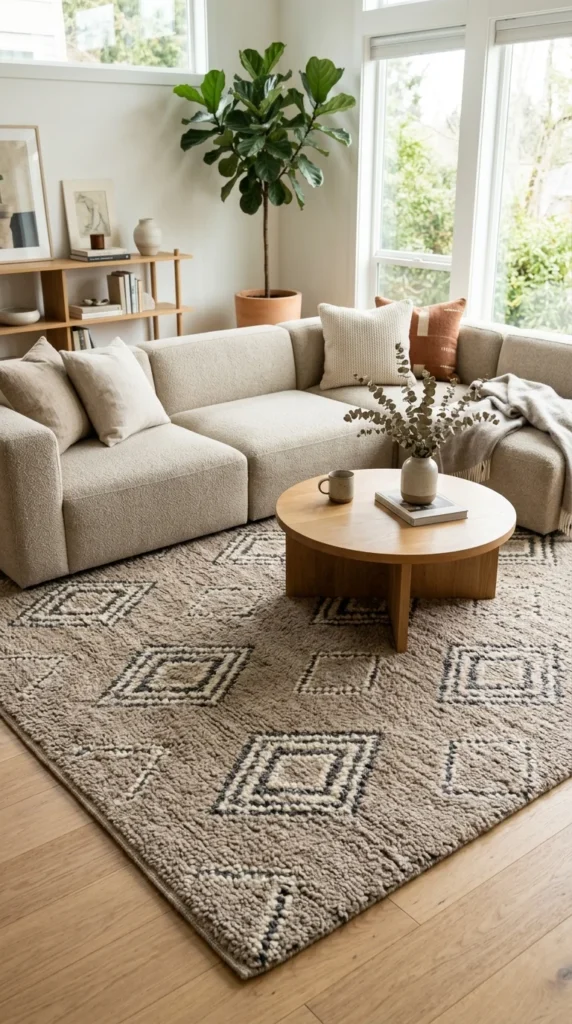
An oversized wool rug in a mushroom shade anchors the room and provides a soft landing for your feet. Because mushroom is a forgiving color, it hides small bits of lint or dust better than pure white or dark black rugs. Look for rugs with a high-low pile or a subtle weave to add extra dimension to the floor.
8. Matte Black
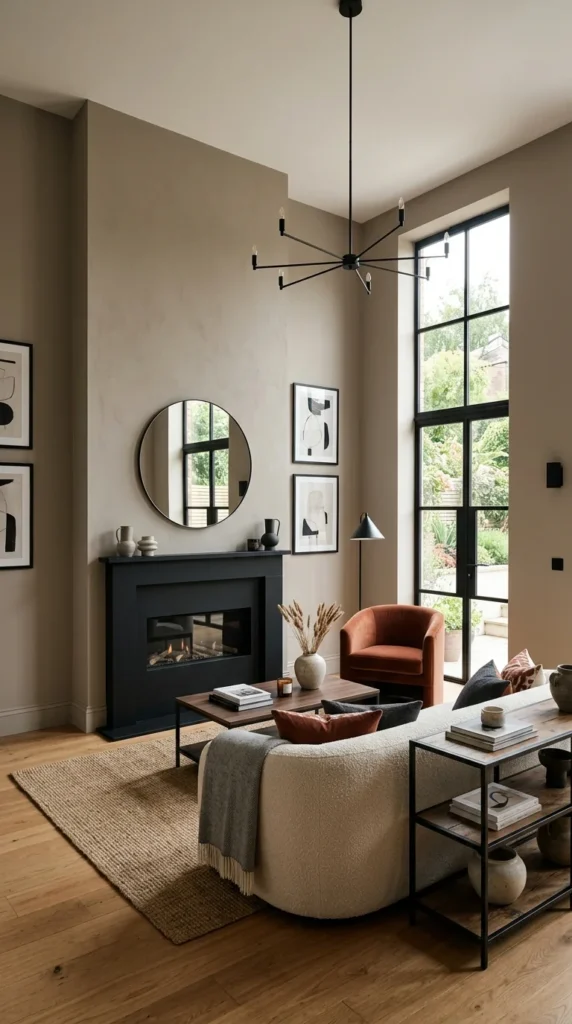
For those who want a more modern or industrial edge, mushroom pairs beautifully with matte black. The black provides a sharp “punctuation mark” against the soft, muted backdrop of the mushroom walls. This high-contrast look is sophisticated and prevents the neutral palette from feeling too “sleepy.”
9. Abstract Art
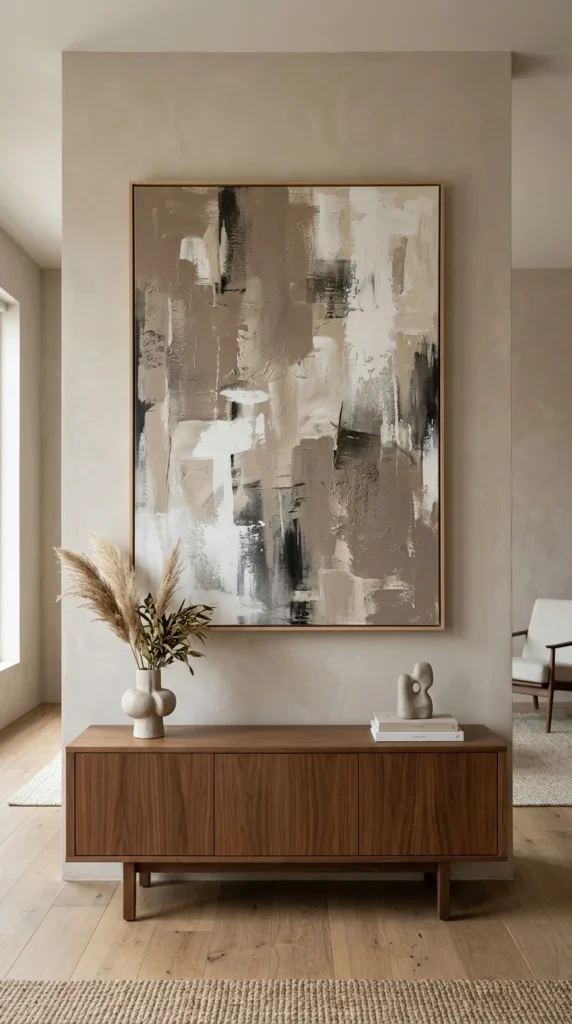
If you aren’t ready to paint your entire room, consider introducing mushroom tones through large-scale abstract art. Pieces that use mushroom, cream, and charcoal can pull a room’s color scheme together. Art helps define the “temperature” of the room, and mushroom-based pieces often lend a serene, gallery-like atmosphere to the space.
10. Woven Baskets
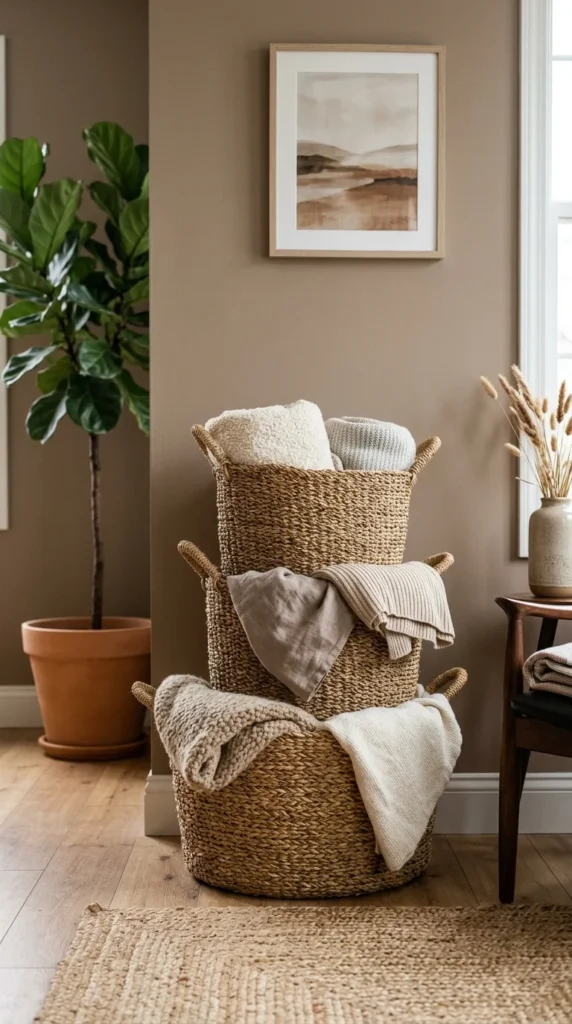
Woven textures like seagrass, jute, and rattan share the same organic DNA as mushroom colors. Placing a set of woven baskets against a mushroom wall adds a layer of rustic charm. These materials emphasize the “earthy” side of the color, making the living room feel grounded and relaxed.
11. Greenery
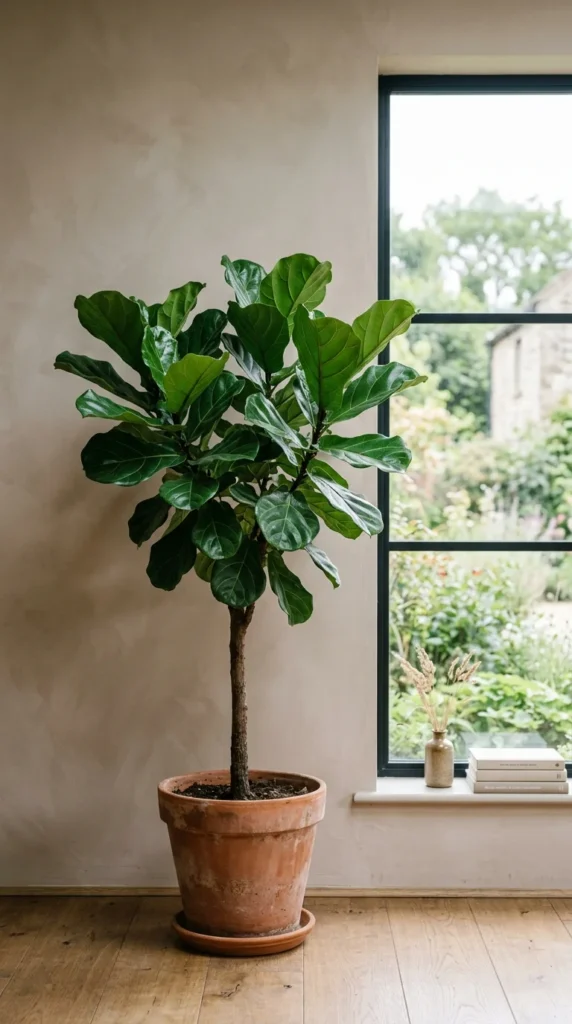
There is no better color to pair with mushroom than the green of live plants. The muted, neutral quality of mushroom makes the green leaves of a Monstera or a Fiddle Leaf Fig pop with intensity. This combination mimics the colors found in a forest or a garden, bringing a sense of life and vitality into the home.
12. Marble Tables
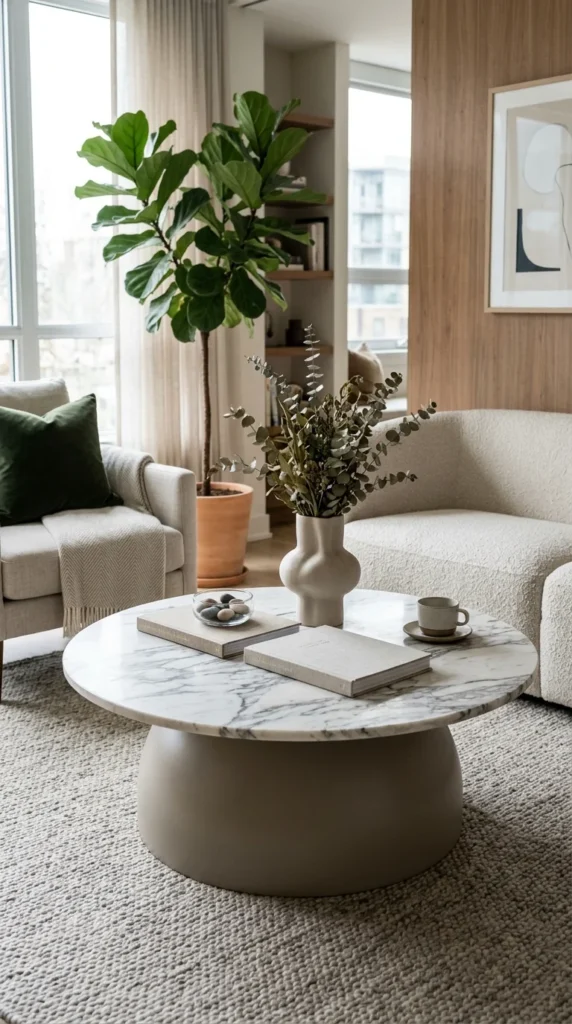
Marble coffee or side tables add a sense of weight and permanence to a living room. If you choose a marble with gray or taupe veining, it will pick up the mushroom tones in the room beautifully. This pairing feels classic and timeless, bridging the gap between traditional elegance and modern minimalism.
13. Bouclé Chairs
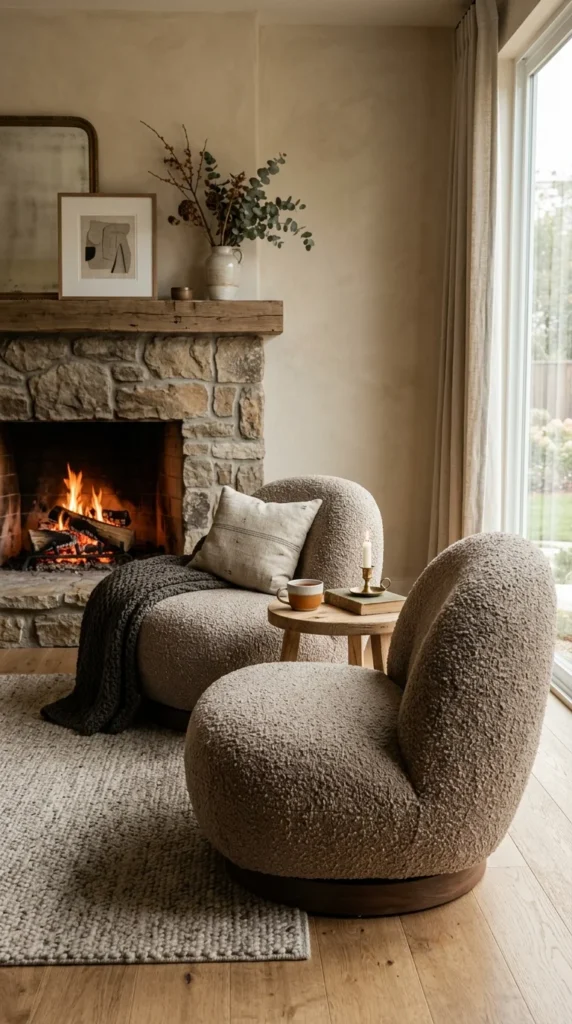
Bouclé is the ultimate “cozy” fabric, and when rendered in a mushroom shade, it looks incredibly sophisticated. The nubby texture of the fabric interacts with the light in a way that highlights the “greige” qualities of the color. A pair of mushroom bouclé chairs creates a perfect conversation nook that invites guests to stay a while.
14. Built-in Shelving
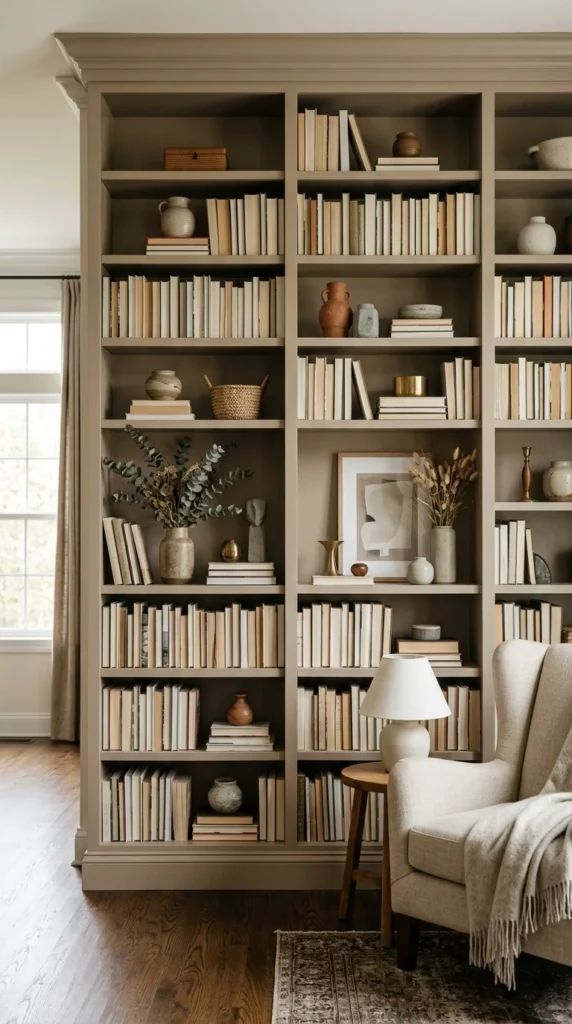
Painting your built-ins the same color as your walls (a technique known as “color drenching”) can make a living room feel significantly larger and more cohesive. Mushroom-colored shelving provides a soft, non-distracting background for your books and treasures, allowing the items on the shelves to take center stage without visual noise.
15. Moody Lighting
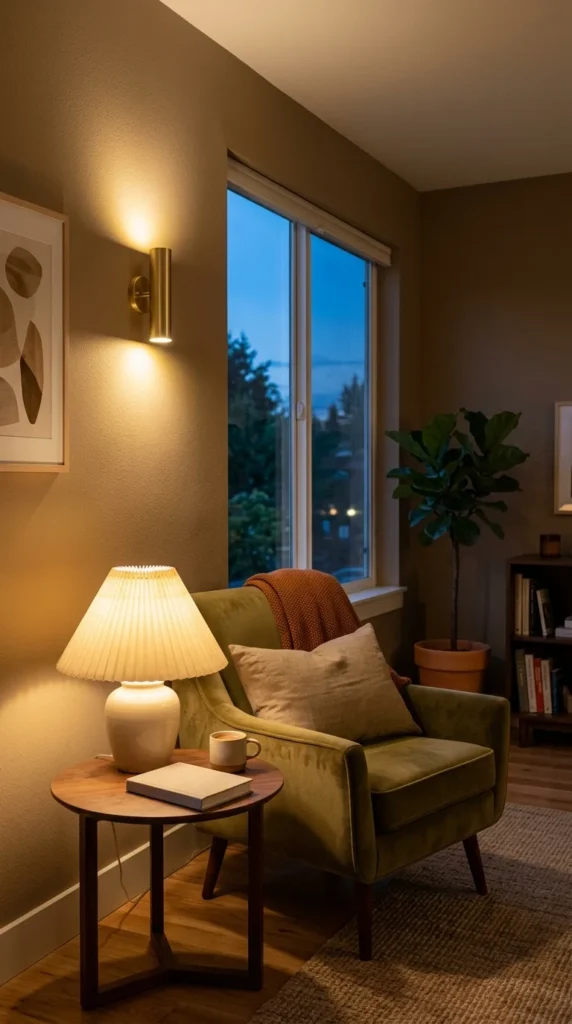
Mushroom is a “chameleon” color that changes significantly depending on the light. Under warm, low-level lighting, it becomes incredibly cozy and intimate. Use a mix of floor lamps, sconces, and candles to bring out the deeper, browner undertones of the mushroom paint during the evening hours.
16. Jute Accents
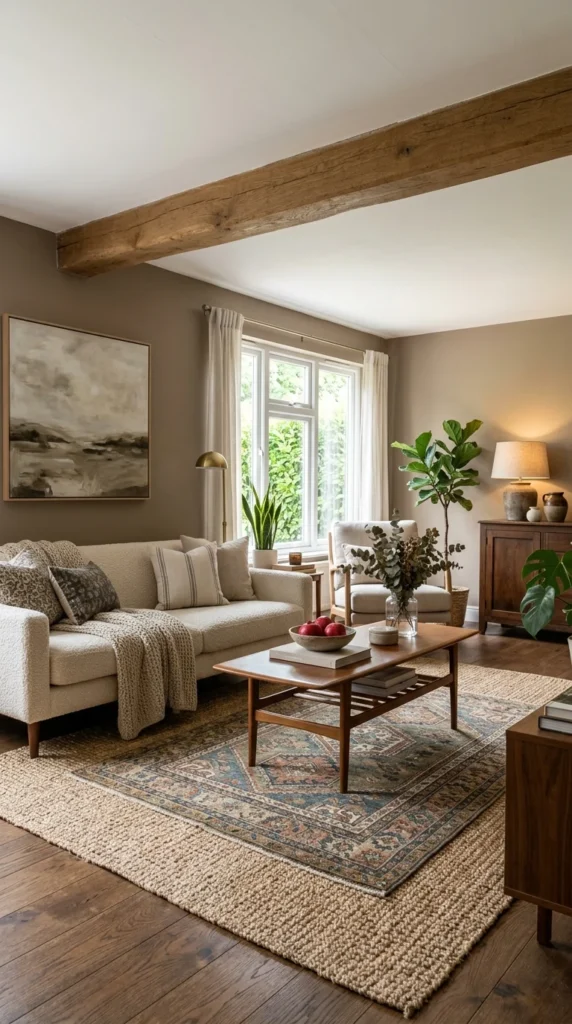
Jute and sisal rugs offer a raw, textural quality that complements the “mushiness” of mushroom tones. The golden-brown hues of natural fiber rugs provide a nice transition between the floor and mushroom-colored furniture. This combination is a staple for those who love the coastal or transitional farmhouse look.
17. Mixed Metals
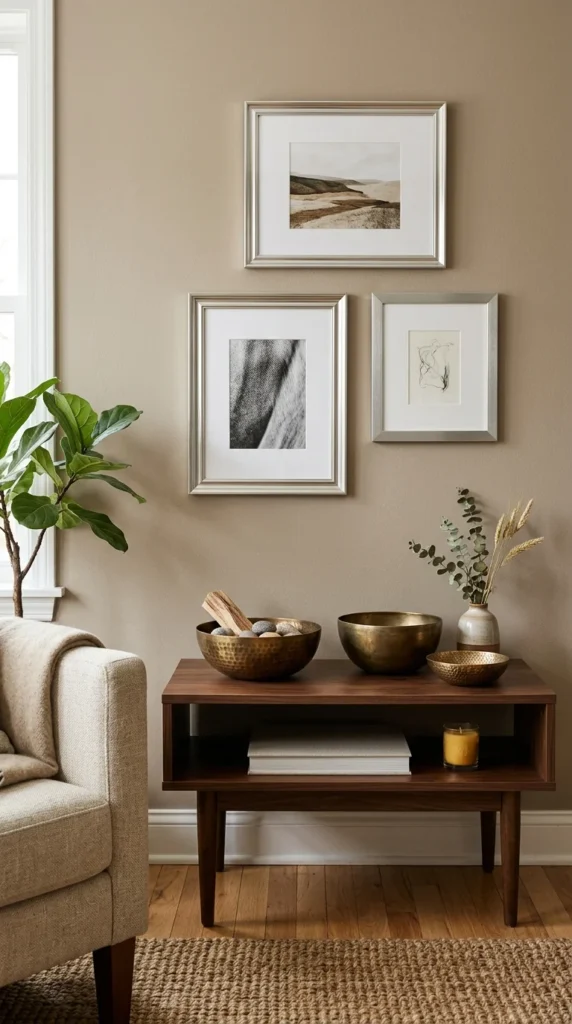
You don’t have to stick to just one metal. Mushroom is unique because it works well with both cool and warm tones. You can successfully mix a chrome floor lamp with bronze cabinet hardware in a mushroom-colored room. This “mixed metal” approach makes the design feel more evolved over time rather than “bought from a showroom.”
18. Leather Details
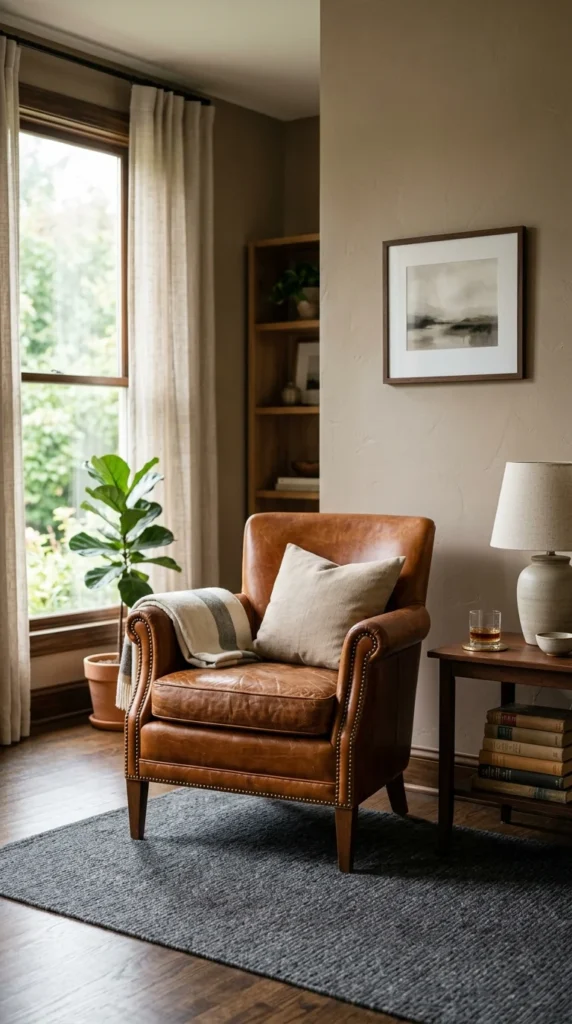
The rich, caramel tones of leather provide a stunning contrast to mushroom. Whether it’s a full leather sofa or just a few leather-bound books and coasters, the warmth of the hide prevents the mushroom color from feeling too cold or sterile. It adds a “masculine” touch that balances the softness of the wall color.
19. Sculptural Vases
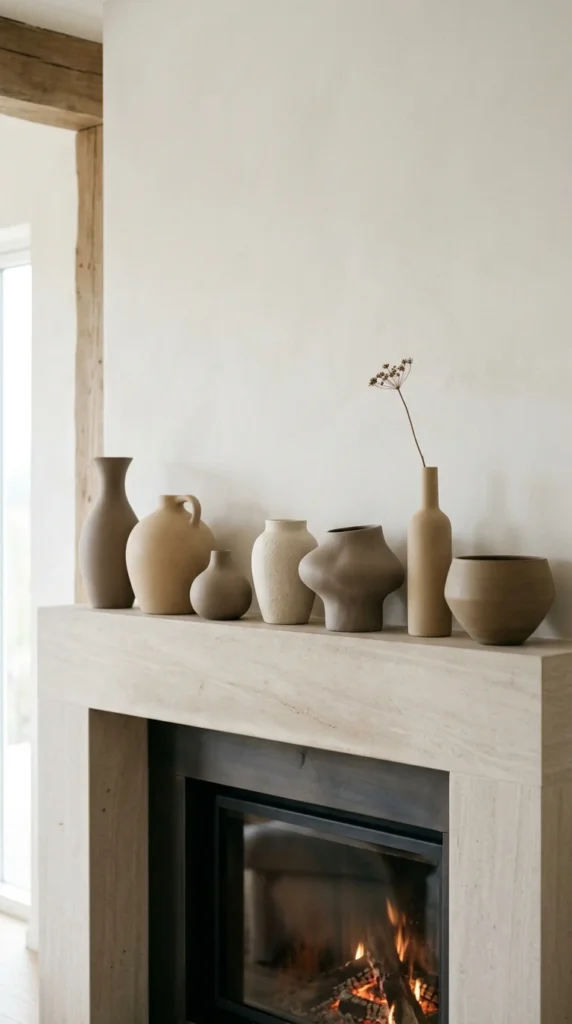
Decorating with mushroom-colored ceramics is a subtle way to reinforce the color palette. Look for sculptural, matte-finished vases in organic shapes. These small details help distribute the color throughout the room, creating a sense of rhythm and balance that is pleasing to the eye.
20. Ceiling Detail
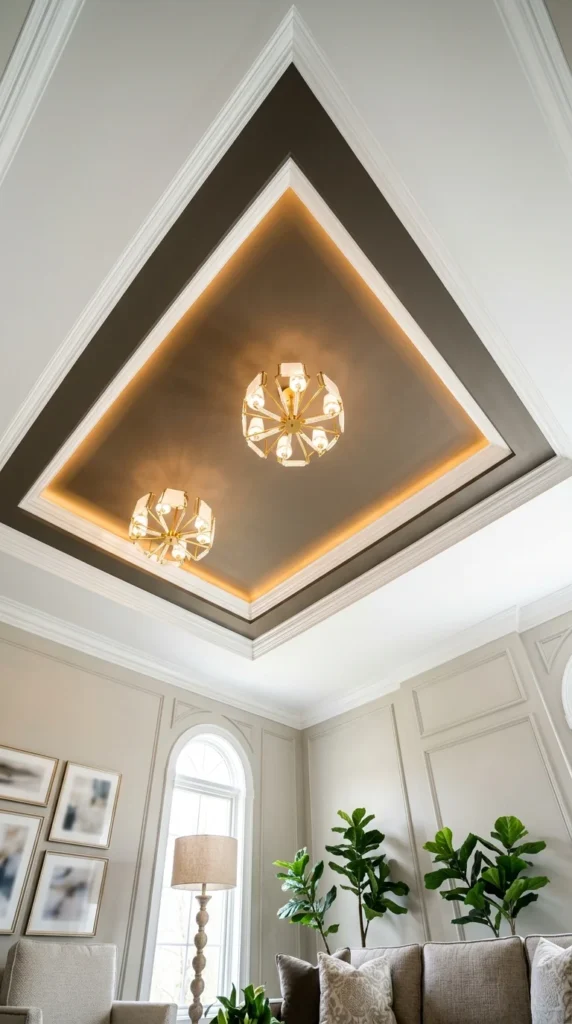
Don’t forget the “fifth wall.” Painting the ceiling a light shade of mushroom can make a room feel taller if the walls are a darker shade, or it can create a “cocoon” effect if the walls match. This is an unexpected design choice that adds a professional, high-end touch to the living space.
21. Transitional Styling
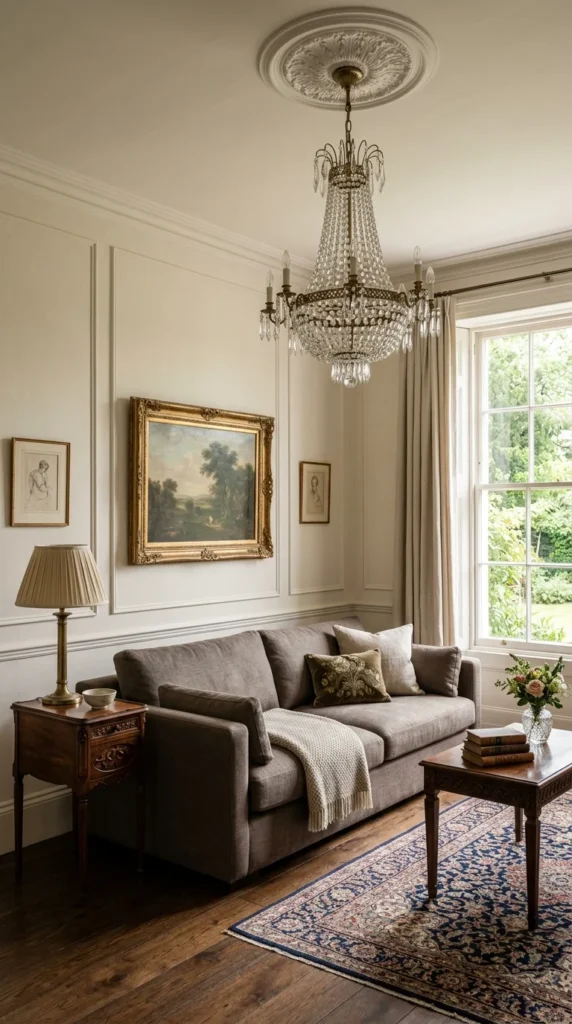
Mushroom is the perfect bridge for transitional design—a style that mixes traditional and modern elements. Because the color itself is a hybrid of different tones, it can comfortably house a sleek modern coffee table alongside an antique heirloom rug. It acts as the glue that holds disparate styles together.
22. Monochrome Calm
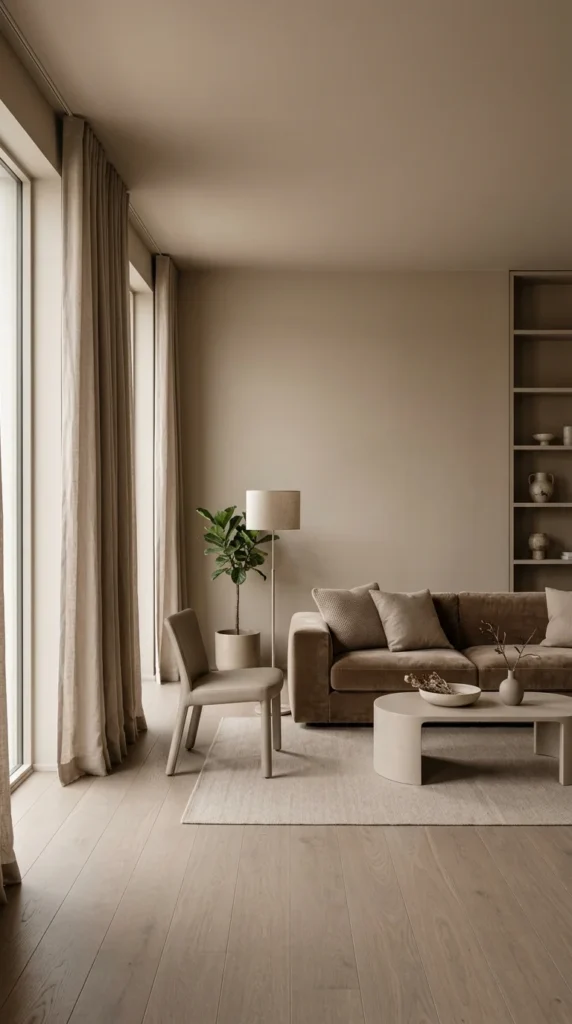
For the ultimate “zen” experience, go completely monochrome. By using the same shade of mushroom for the walls, trim, and large furniture pieces, you eliminate visual boundaries. This creates a space that feels expansive, quiet, and incredibly peaceful—a true sanctuary from the busy world outside.