
The philosophy of “less is more” has evolved. In contemporary interior design, minimalism is no longer just about bare white walls and empty spaces; it has shifted toward a concept known as “Quiet Luxury.” This aesthetic focuses on the quality of materials, the intentionality of furniture placement, and the emotional resonance of a room. Creating a living room that feels expensive through minimalism requires a disciplined eye and an understanding of how light, texture, and form interact.
When you walk into a high-end minimalist home, it doesn’t feel cold. Instead, it feels curated, serene, and incredibly intentional. The goal is to strip away the visual noise of everyday life to highlight the few, beautiful elements that remain. Here are eight minimalist living room aesthetic ideas that will elevate your home and give it that sought-after expensive feel.
1. Monochromatic Palettes
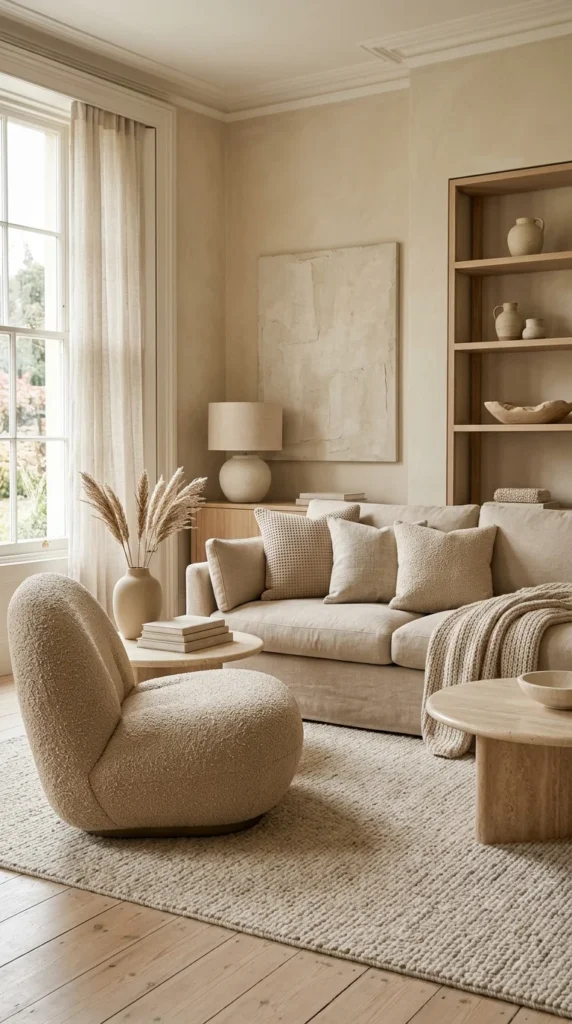
The most immediate way to make a space feel sophisticated and cohesive is by adopting a monochromatic or tonal color scheme. In high-end design, “monochromatic” rarely means one single flat color. Instead, it refers to layering various shades, tints, and tones of a single hue—usually neutrals like warm beige, soft grey, or crisp off-white.
By sticking to a tight color palette, you eliminate visual friction. The eye travels smoothly across the room, which creates an illusion of greater space and architectural harmony. To prevent the room from feeling flat, you must lean heavily into texture. Combine a linen sofa with a wool throw, a silk-infused rug, and a matte-painted wall. This interplay of materials provides the “richness” that people associate with expensive homes.
2. Sculptural Furniture
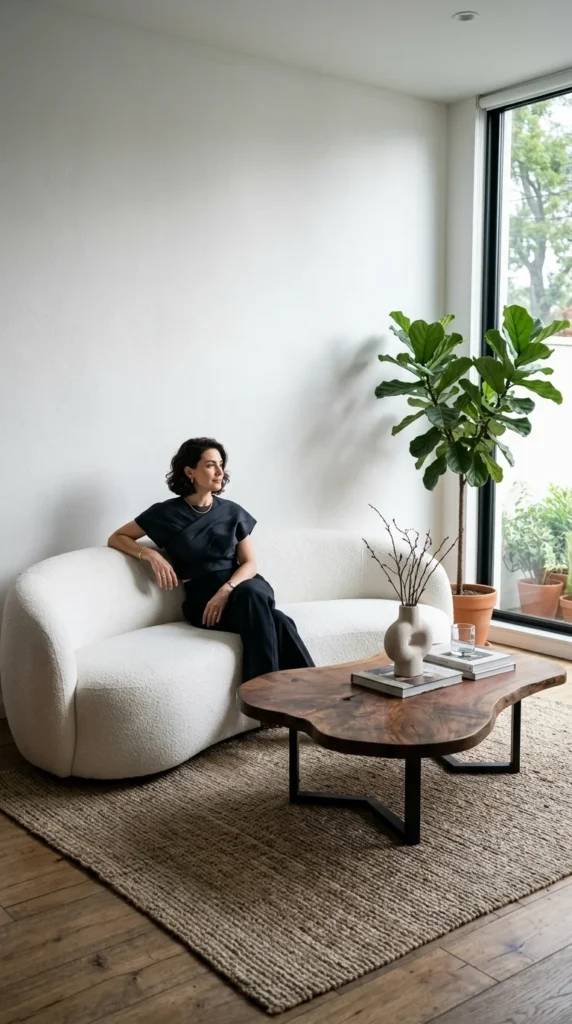
In a minimalist living room, furniture is the art. When you have fewer pieces, each one must carry more weight. Instead of standard, mass-produced silhouettes, look for furniture with sculptural qualities. Think of a sofa with a soft, curved back, a coffee table with an organic stone base, or an accent chair with a bold, geometric frame.
Expensive-looking minimalism often borrows from the “organic modernism” movement, where furniture mimics the soft curves found in nature. These shapes feel bespoke and artisanal. When furniture doubles as a sculpture, you don’t need a lot of extra decor to fill the space. A single, well-chosen statement chair can anchor the entire room, signaling a refined taste that values form as much as function.
3. Statement Art
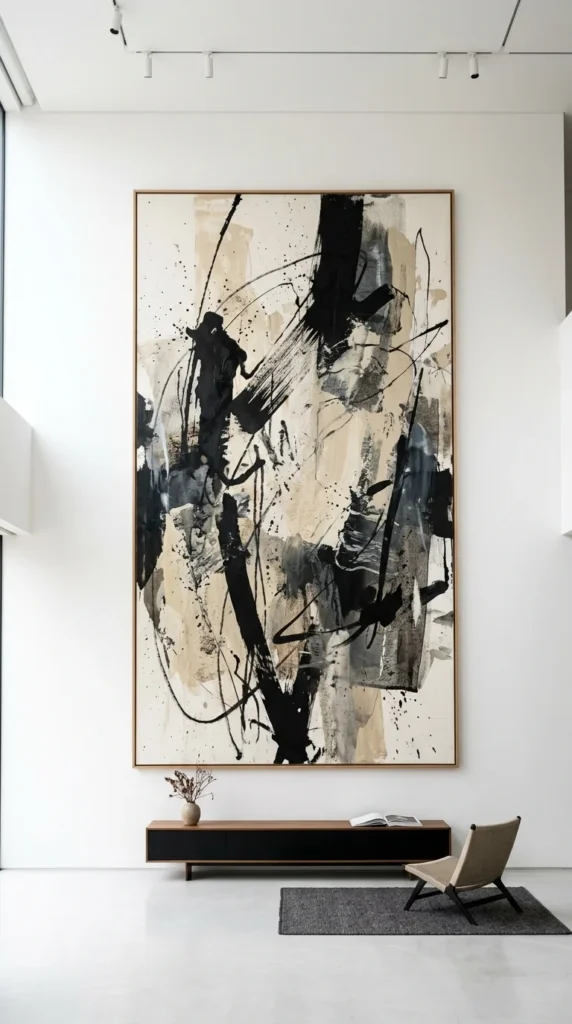
One of the biggest mistakes in home decorating is using too many small items. A gallery wall of ten small frames often feels cluttered and “budget.” To achieve an expensive aesthetic, pivot toward the “singular and massive” approach. A single, oversized piece of art creates a focal point that commands attention and makes the room feel like a private gallery.
The art doesn’t have to be expensive, but it should be large-scale. Whether it’s an abstract canvas, a large-scale photograph, or a framed textile, the sheer size creates a sense of luxury. Ensure there is plenty of “white space” around the art; this allows the piece to breathe and emphasizes the height of your ceilings, a classic hallmark of high-end real estate.
4. Premium Textiles
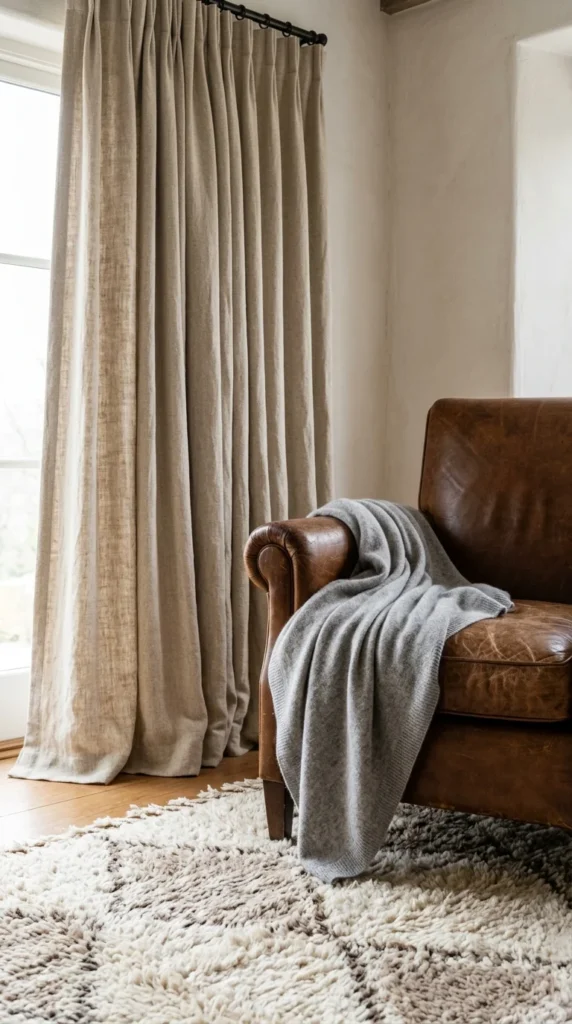
In minimalism, you cannot hide behind patterns or clutter, so the quality of your materials is exposed. To make your home feel expensive, invest in natural, high-quality textiles. Synthetic fabrics like polyester often have a sheen that can look cheap under bright lights. Natural fibers like linen, silk, wool, cashmere, and top-grain leather age beautifully and have a tactile depth that synthetics can’t replicate.
- Drapery: Use heavy-weight linen or velvet curtains that hit the floor perfectly (or “puddle” slightly).
- Rugs: A hand-knotted wool or silk rug provides a soft, matte finish that feels incredible underfoot and looks substantial.
- Upholstery: Opt for natural textures like cotton-linen blends or the currently popular bouclé, which adds a cozy, high-end architectural feel to seating.
5. Hidden Storage
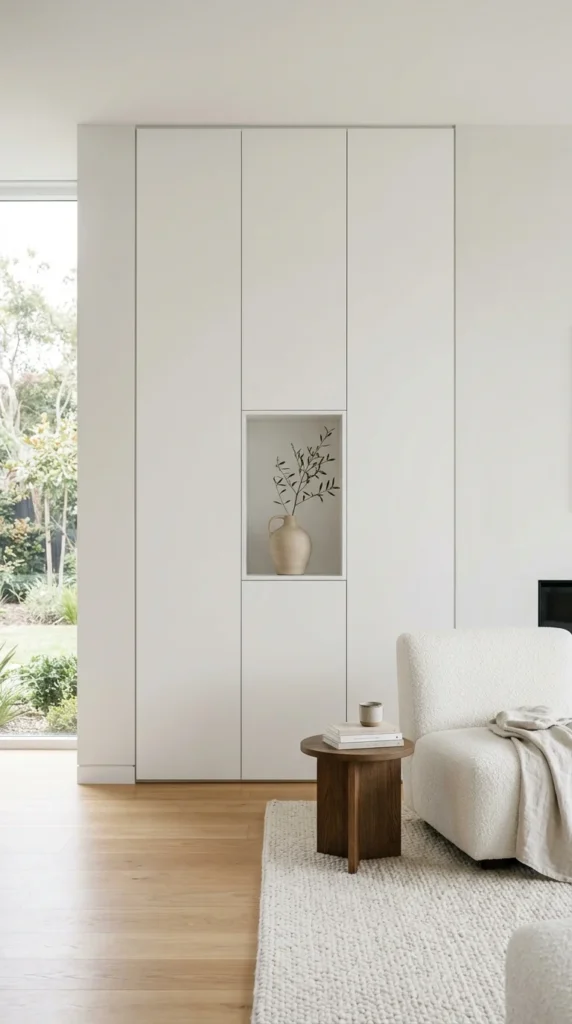
Clutter is the enemy of minimalism and the primary reason many homes fail to look “expensive.” Luxury is often defined by the absence of stress, and visual clutter creates mental friction. To maintain a high-end aesthetic, you need clever, integrated storage solutions that hide the necessities of daily life—remotes, chargers, books, and children’s toys.
Custom-built, floor-to-ceiling cabinetry that matches the color of your walls is a classic high-end design trick. By making the storage “disappear” into the architecture, the room remains open and airy. If custom built-ins aren’t an option, look for “closed” furniture—sideboards with sleek, handleless doors or ottomans with hidden compartments. The goal is to have every surface clear, save for a few curated objects.
6. Designer Lighting
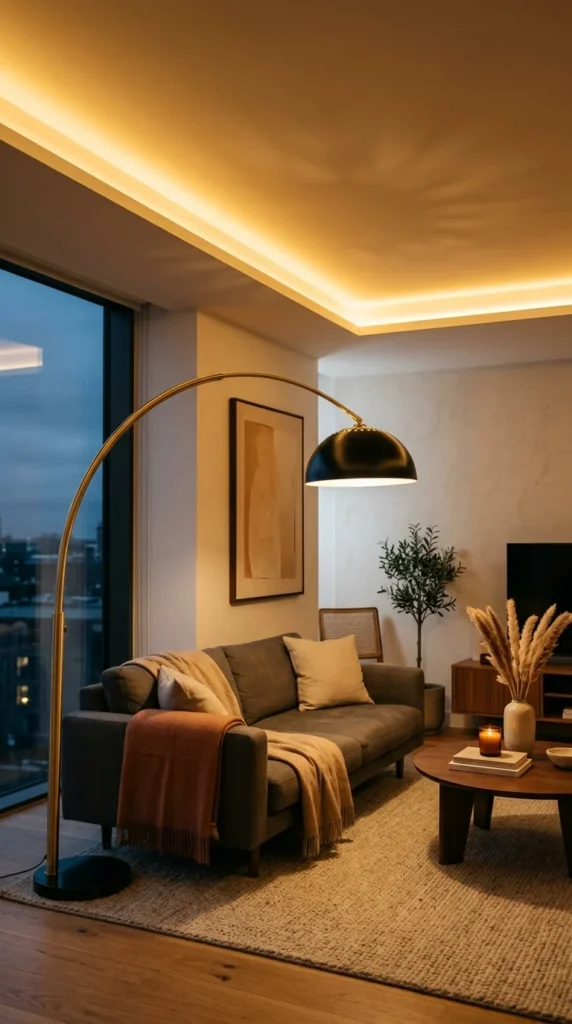
Lighting is the “jewelry” of a room. In a minimalist space, the light fixtures themselves are prominent design elements. To make a home feel expensive, avoid standard “builder-grade” ceiling mounts. Instead, layer your lighting using three sources: ambient, task, and accent.
- Statement Pendant: A large, architectural chandelier or pendant over the coffee table acts as a centerpiece.
- Floor Lamps: Look for iconic designs with slender profiles and high-quality finishes like brushed brass or matte black.
- Indirect Lighting: Use LED strips behind a television, under a cabinet, or along a ceiling cove to create a soft, “expensive” glow that eliminates harsh shadows. The goal is a warm, atmospheric light that makes the space feel inviting rather than clinical.
7. Organic Materials
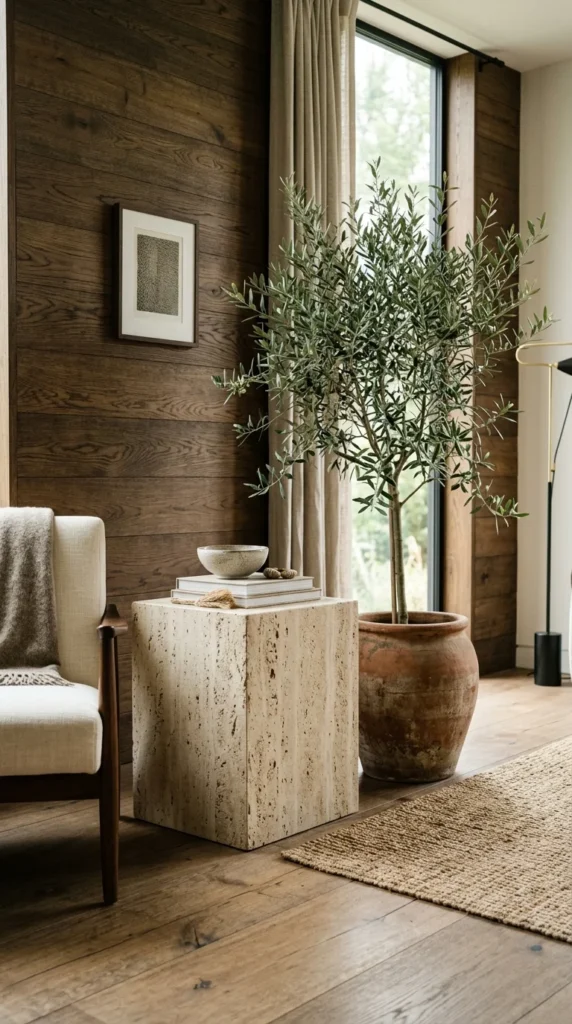
Minimalist luxury is deeply rooted in the use of raw, organic materials. There is an inherent value in things that come from the earth—marble, travertine, solid wood, and clay. These materials have unique grains and patterns that no machine can perfectly replicate, giving your home a “one-of-a-kind” feel.
Integrating a solid stone coffee table or a reclaimed wood side table adds weight and history to a room. Furthermore, bring in life through “biophilic design.” A single, large, well-maintained plant—like a Fiddle Leaf Fig or a tall Olive Tree—in a high-quality ceramic pot adds a vibrant, organic element that softens the sharp lines of minimalist furniture.
8. Negative Space
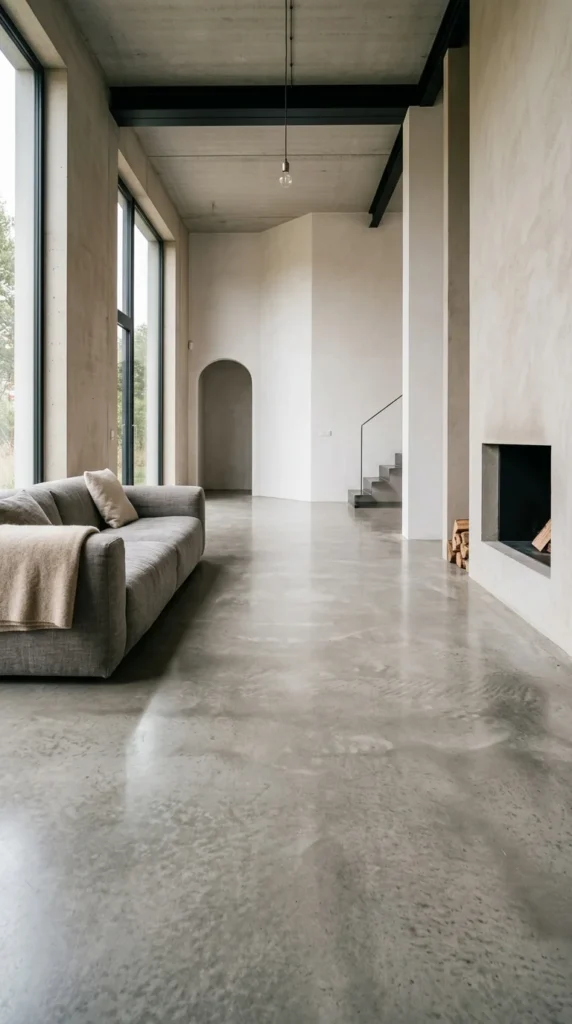
The most expensive thing you can own in a home is space. In high-end interior design, the “luxury of nothing” is a real concept. Negative space—the empty areas around and between your furniture—allows the brain to rest. It signals that you are confident enough in your design that you don’t feel the need to fill every corner with “stuff.”
To master negative space, resist the urge to push all your furniture against the walls. “Float” your sofa in the middle of the room if the layout allows. Leave entire corners empty or occupied by only a single, dramatic floor lamp. By embracing the void, you highlight the architecture of the home and the beauty of the few pieces you have chosen to display, creating a sophisticated, airy, and undeniably expensive atmosphere.