
Creating a bedroom that feels both calm and expensive is an exercise in restraint. In the world of interior design, this aesthetic is often referred to as “Quiet Luxury.” It moves away from flashy logos or cluttered surfaces and instead focuses on the quality of materials, the intentionality of space, and a refined color palette. A minimalist bedroom isn’t about having nothing; it is about having the right things.
When you strip away the unnecessary, the items that remain—the texture of the sheets, the curve of a lamp, the grain of the wood—become the stars of the room. By following specific minimalist principles, you can transform a chaotic sleeping space into a high-end sanctuary that promotes rest and exudes sophistication.
1. Monochromatic Palettes
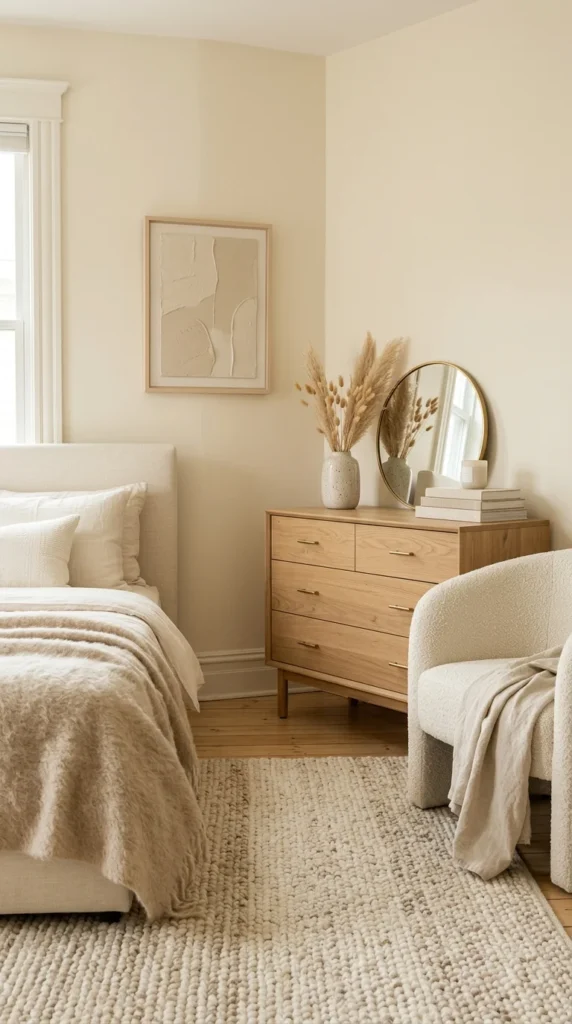
The foundation of any expensive-looking minimalist room is a cohesive color story. Using a monochromatic palette—specifically in shades of off-white, cream, sand, or soft grey—creates a visual continuity that expands the room. When there are no harsh color breaks, the eye moves smoothly across the space, which immediately induces a sense of calm.
To prevent a monochromatic room from feeling flat or cold, the secret lies in “layering.” You want to mix different tones of the same color family. For example, pair bone-white walls with an oatmeal-colored rug and ivory linen curtains. This subtle variation adds depth and richness, making the space feel curated by a professional designer rather than just unfinished.
2. Platform Beds
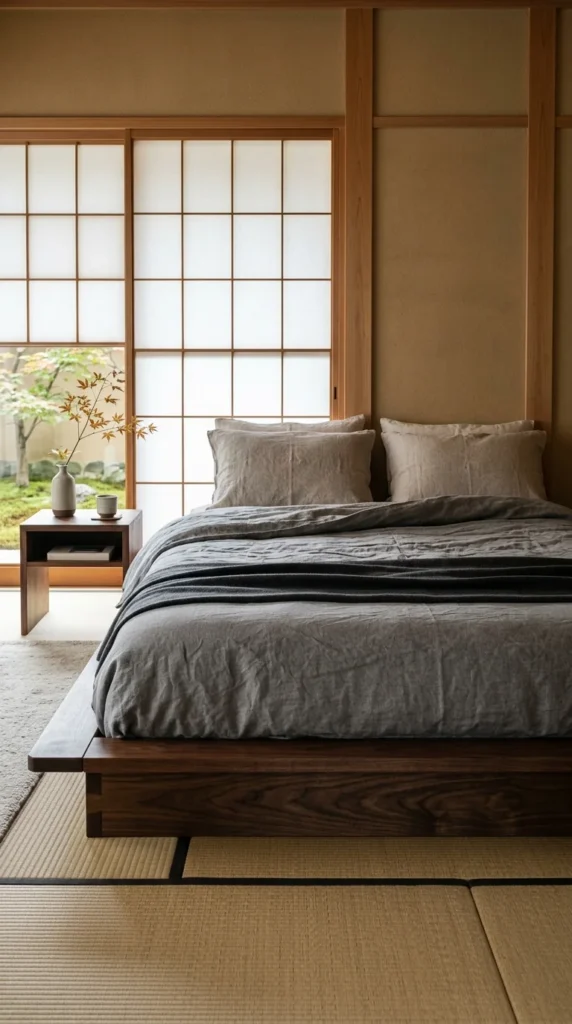
In minimalist design, furniture with a low center of gravity feels more grounded and modern. A low-profile platform bed removes the visual “noise” of bulky bed frames, box springs, and ornate headboards. This silhouette creates a sense of openness, making the ceilings appear higher and the room feel more spacious.
The most expensive-feeling platform beds are those made from high-quality natural materials like solid oak, walnut, or upholstered in heavy linen. By choosing a bed that sits close to the floor, you tap into a Zen-inspired aesthetic that prioritizes simplicity and stability. It’s a bold architectural choice that serves as the room’s anchor without overwhelming it.
3. Sculptural Lighting
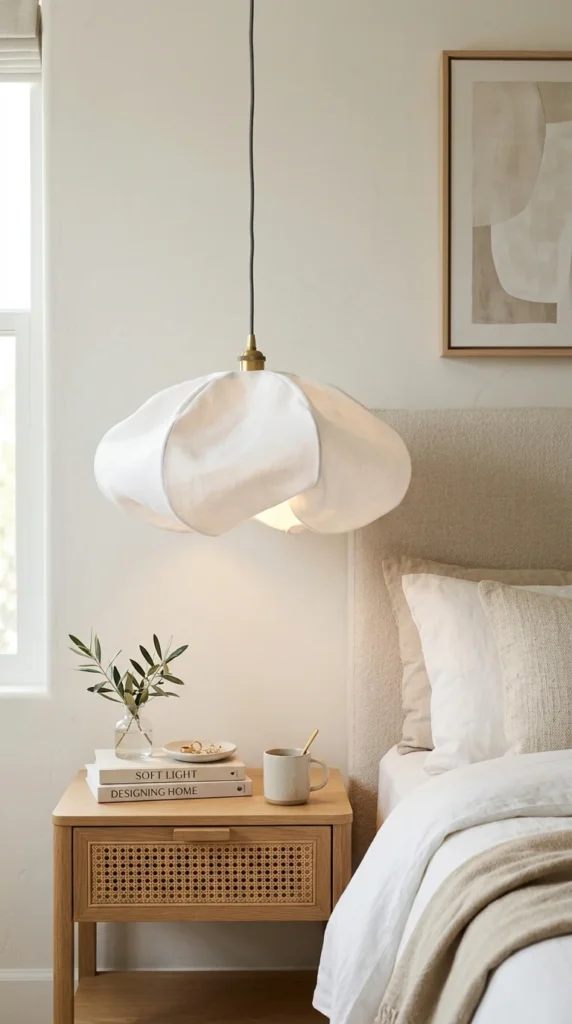
In a room with very little decor, the lighting must do double duty as functional illumination and “room jewelry.” Minimalist bedrooms often ditch standard bedside lamps in favor of sculptural pieces that look like art even when turned off.
Think of oversized paper lanterns, matte black swing-arm wall sconces, or a single glass globe pendant hanging from the ceiling. The key is to choose fixtures with clean lines and unique silhouettes. Placing a large, interesting light fixture in a sparse room creates a focal point that signals high-end taste. Furthermore, using warm-toned bulbs (2700K) ensures that the minimalist environment feels cozy and inviting rather than sterile.
4. Organic Textures
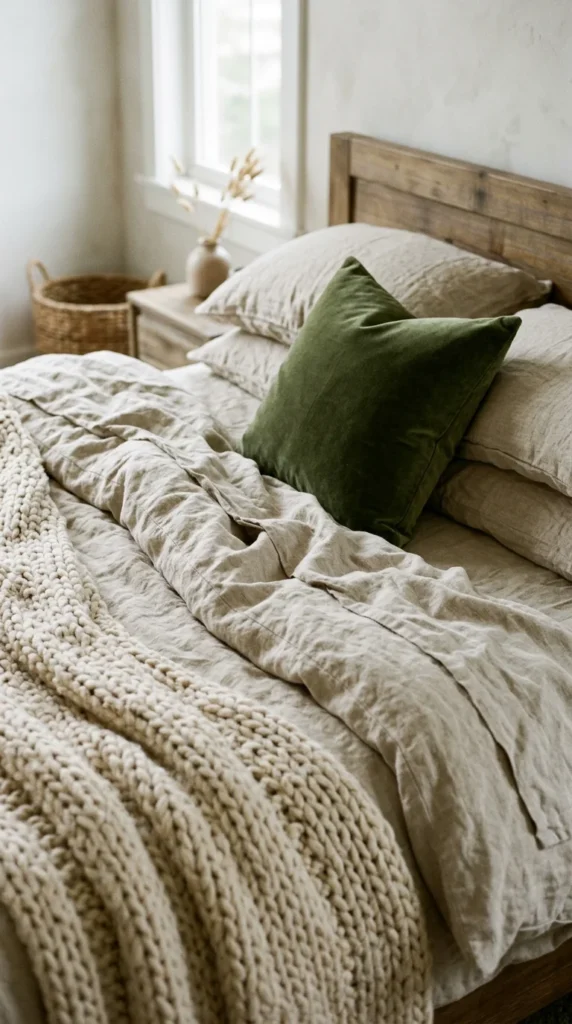
Luxury is felt as much as it is seen. To achieve an “expensive” feel, you must prioritize tactile quality. Synthetic fabrics like polyester can look shiny and cheap under bedroom lights. Instead, opt for organic, natural fibers.
Linen is the gold standard for minimalist bedrooms; its natural wrinkles add a lived-in elegance that perfectly balances the “perfection” of minimalism. Pair your linen bedding with a chunky wool throw or a silk pillowcase. These varied textures create a sensory richness that compensates for the lack of decorative objects. When every surface you touch feels premium, the entire room is elevated.
5. Hidden Storage
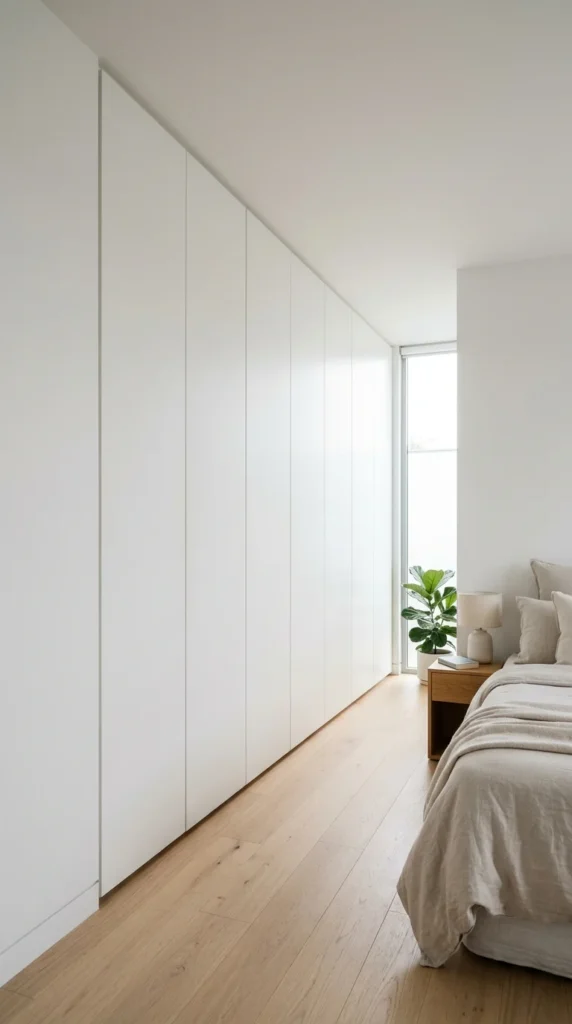
Clutter is the ultimate enemy of the minimalist aesthetic. Nothing ruins a calm vibe faster than a pile of laundry or a nightstand overflowing with charging cables and books. High-end minimalist bedrooms utilize “invisible” storage to keep the environment pristine.
Invest in furniture that serves a secondary purpose, such as a bed with hidden under-mattress drawers or a nightstand with a deep drawer to hide electronics. If your budget allows, floor-to-ceiling cabinetry that matches the wall color can blend into the architecture, providing massive amounts of storage without taking up “visual” space. When the surfaces are clear, the mind can truly relax.
6. Statement Art
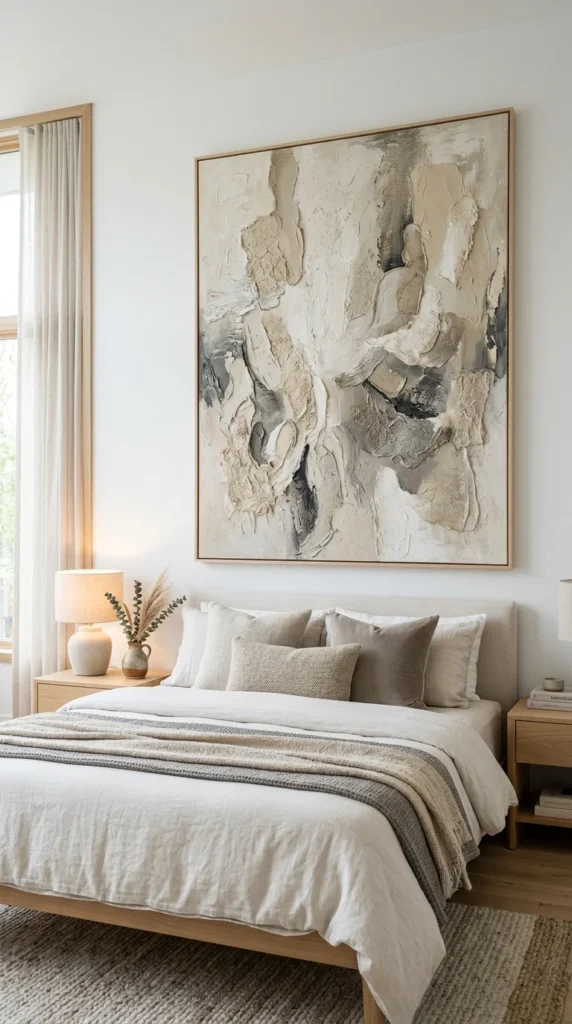
One of the most common mistakes in bedroom decor is using too many small pieces of art. This creates a “busy” look that detracts from the calm. To make a space feel expensive, follow the “gallery rule”: one large, impactful piece of art is better than ten small ones.
Choose an oversized canvas with a minimal abstract design, a large-scale black and white photograph, or even a framed textile. The art should have enough “white space” within it to breathe. By dedicating an entire wall to one significant piece, you create a sophisticated gallery-like atmosphere that feels intentional and high-value.
7. Sheer Drapes
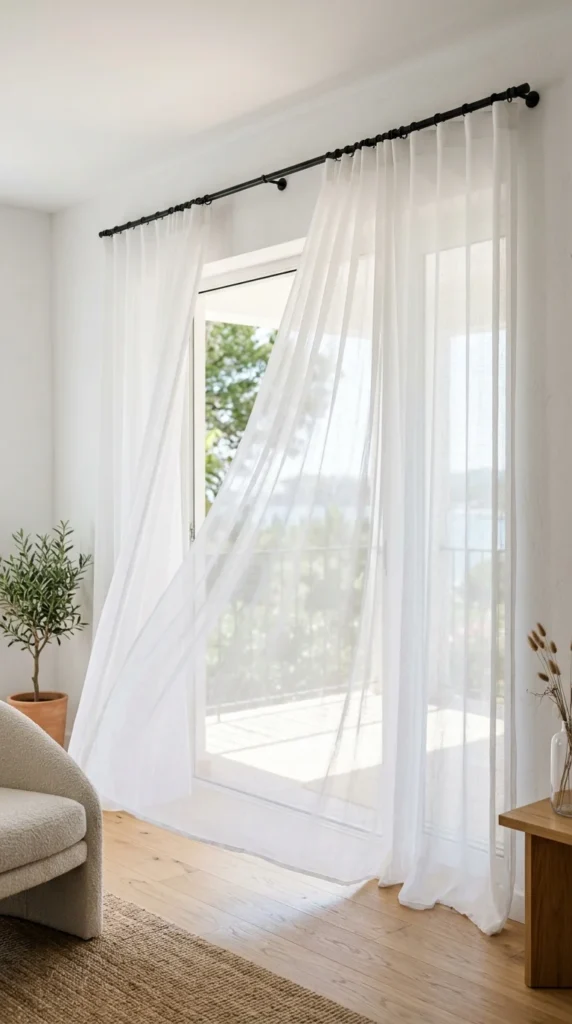
Window treatments are often an afterthought, but they are crucial for softening the hard lines of a minimalist room. To achieve a high-end look, hang your curtains as high as possible—ideally right at the ceiling line—and let them pool slightly on the floor.
Sheer linen or light cotton drapes are ideal. They allow natural light to filter through, creating a soft, ethereal glow during the day while providing privacy. The vertical lines of long drapes add height to the room, while the fabric adds a layer of softness that absorbs sound, contributing to the overall quietness and tranquility of the space.
8. Natural Wood
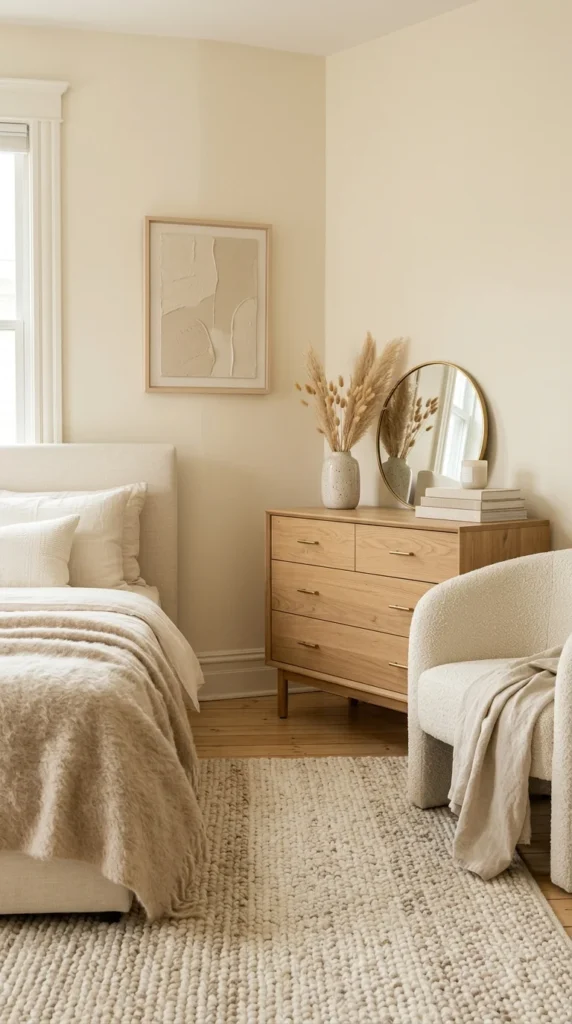
Incorporating natural wood is the best way to add warmth to a minimalist bedroom. Without the presence of wood grain, a white or grey room can feel clinical. The most expensive minimalist designs often feature “blonde” woods like ash, oak, or maple, which feel light and airy.
Whether it’s a simple wooden bench at the foot of the bed, a set of nesting tables, or even a exposed ceiling beam, wood introduces an organic element that connects the indoors with nature. The imperfections in the wood grain provide a visual “pattern” that is calming and timeless, ensuring the room feels like a high-end retreat rather than a temporary space.