

Minimalism in interior design is more than just a trend; it is a philosophy centered on intentionality, clarity, and the removal of physical and mental clutter. In the bedroom—the most private sanctuary of the home—minimalism translates to a space that promotes restorative sleep and mental calm. A minimalist bedroom focuses on quality over quantity, utilizing clean lines, a restricted color palette, and purposeful furniture. By stripping away the unnecessary, you allow the architecture and a few cherished items to breathe, creating a timeless aesthetic that never feels dated.
1. Neutral Palette
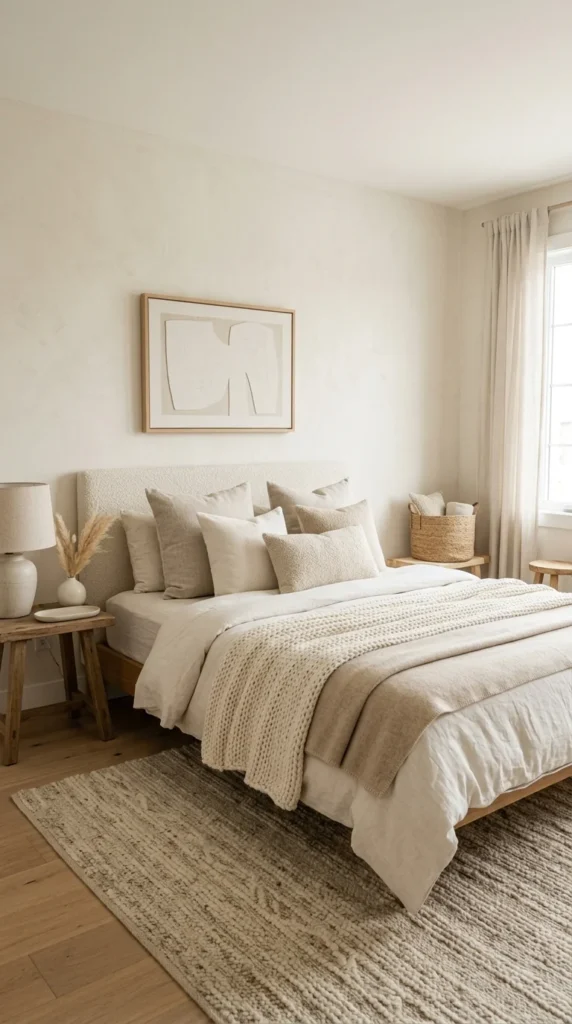
The foundation of any minimalist bedroom is a cohesive color scheme. Neutral tones like crisp white, soft grey, warm beige, and oatmeal create a sense of expansiveness and airiness. Unlike bold colors that can be overstimulating, neutrals provide a quiet backdrop that reflects light efficiently. To prevent the room from feeling cold, layer different shades of the same neutral family to create depth and warmth without introducing visual noise.
2. Platform Bed
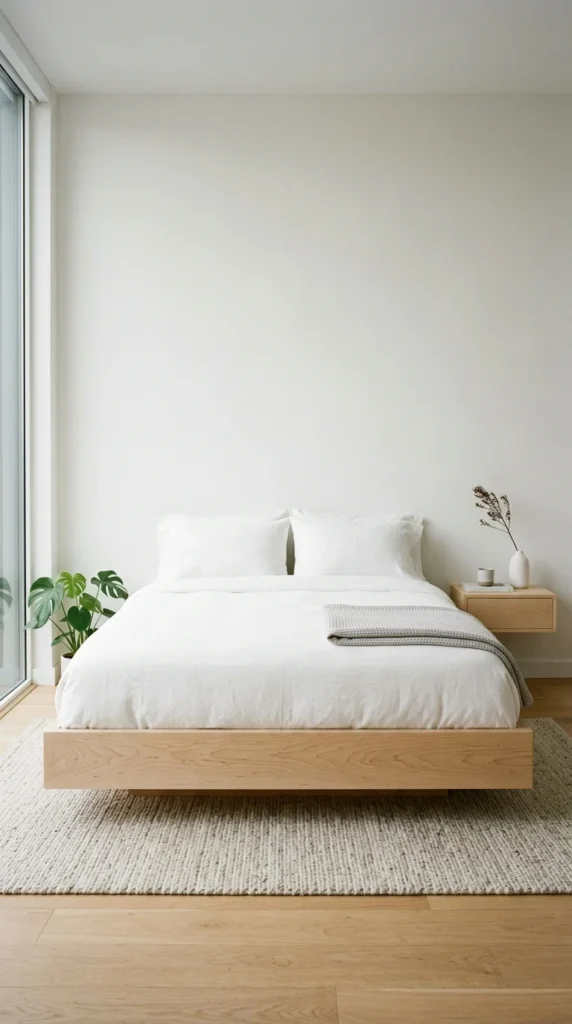
The bed is the focal point of the room, and in a minimalist setting, a low-profile platform bed is the gold standard. By removing the need for a bulky box spring and an ornate headboard, platform beds keep the sightlines low and the room feeling open. Look for frames with clean, straight edges and hidden legs to create a “floating” effect that enhances the sense of floor space.
3. Floating Nightstands
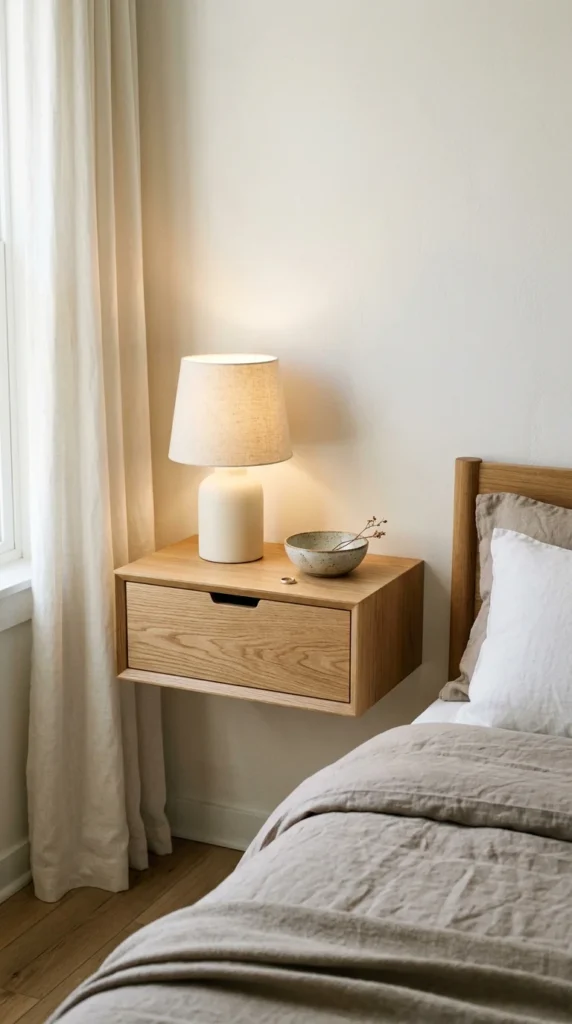
Floor space is precious in minimalist design. Floating nightstands attach directly to the wall, leaving the area beneath them clear. This not only makes the room feel larger but also simplifies cleaning. Choose a design with a single drawer to hide essentials like charging cables and reading glasses, keeping the top surface completely clear of clutter.
4. Natural Light
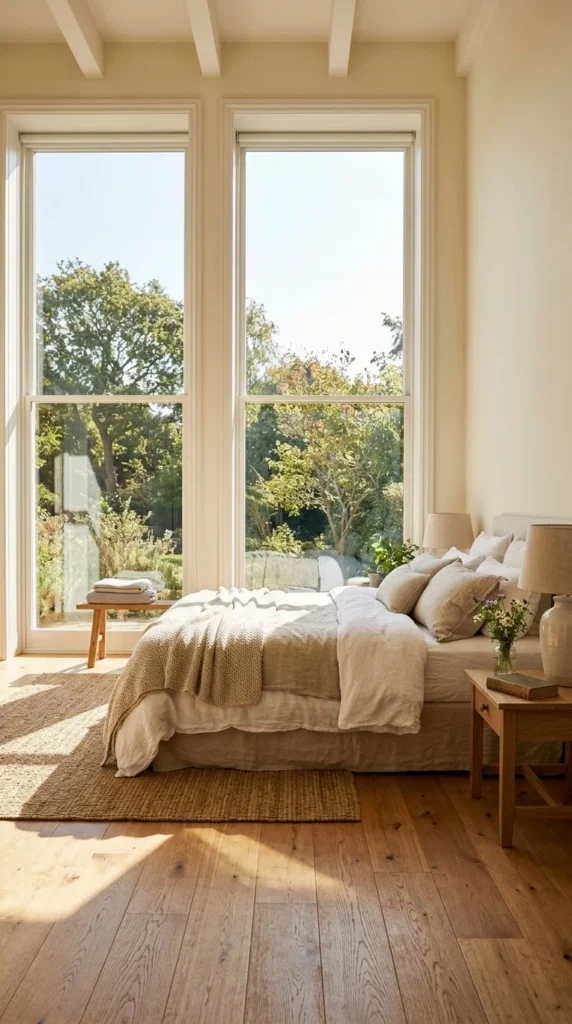
Light is one of the most important “materials” in minimalist decor. Maximize natural light by keeping window treatments to a minimum. If privacy is an issue, opt for sheer panels or recessed motorized shades that disappear when not in use. The presence of natural light highlights the textures of your decor and makes even the smallest bedroom feel grand and inviting.
5. Statement Artwork
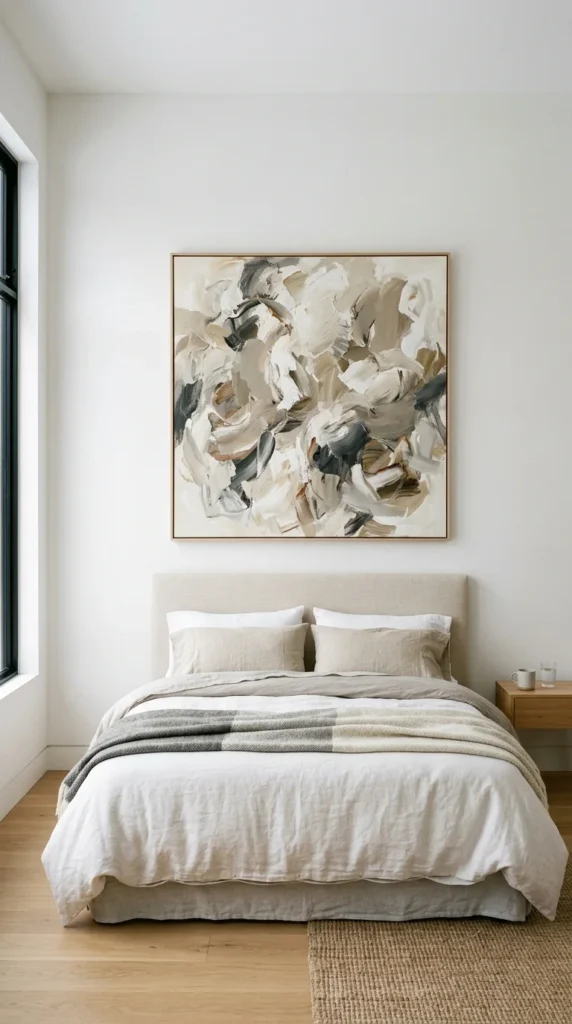
In minimalism, you don’t need a gallery wall. Instead, choose one large-scale piece of art that resonates with you. Whether it’s a monochromatic abstract painting, a black-and-white landscape photograph, or a textile wall hanging, a single focal point provides a sense of purpose and prevents the walls from feeling cluttered.
6. Indoor Plants
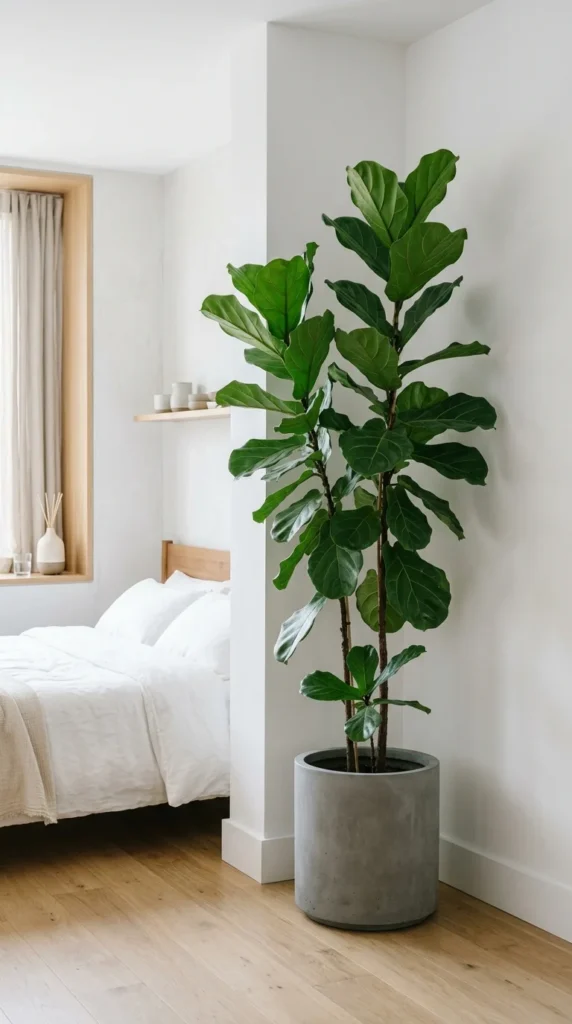
Plants bring life and organic shapes to a room dominated by straight lines. A single large plant, such as a Monstera or a Dracaena, can act as a living sculpture. The green foliage provides a natural pop of color that complements a neutral palette perfectly, while also improving indoor air quality and creating a connection to nature.
7. Textured Bedding
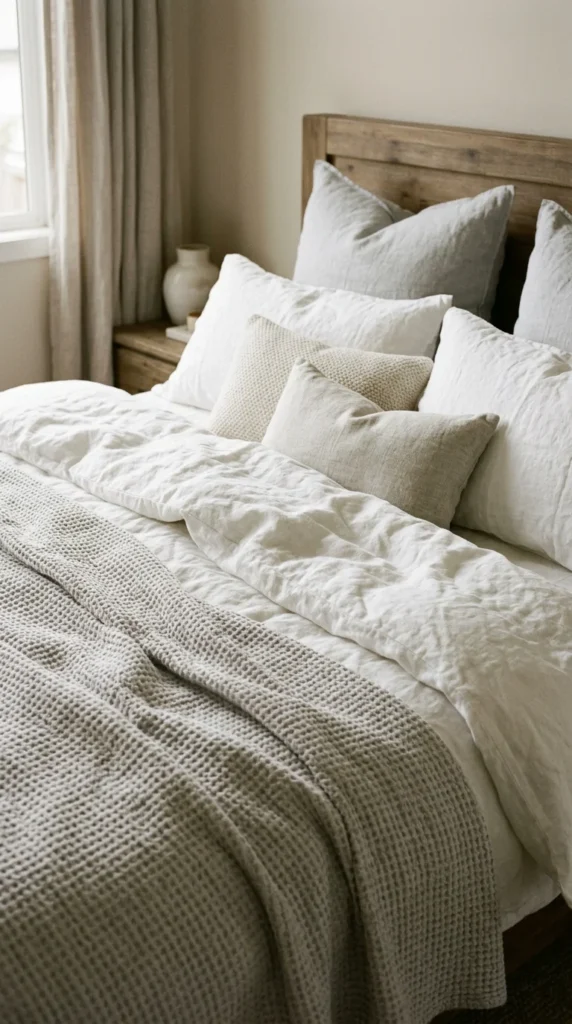
When you remove color and pattern, texture becomes the primary tool for visual interest. Mix and match materials like stone-washed linen, organic cotton, and wool. A chunky knit throw or a quilted coverlet adds a tactile element that makes the bed look inviting and cozy without the need for decorative “throw pillows” that serve no functional purpose.
8. Symmetrical Layout
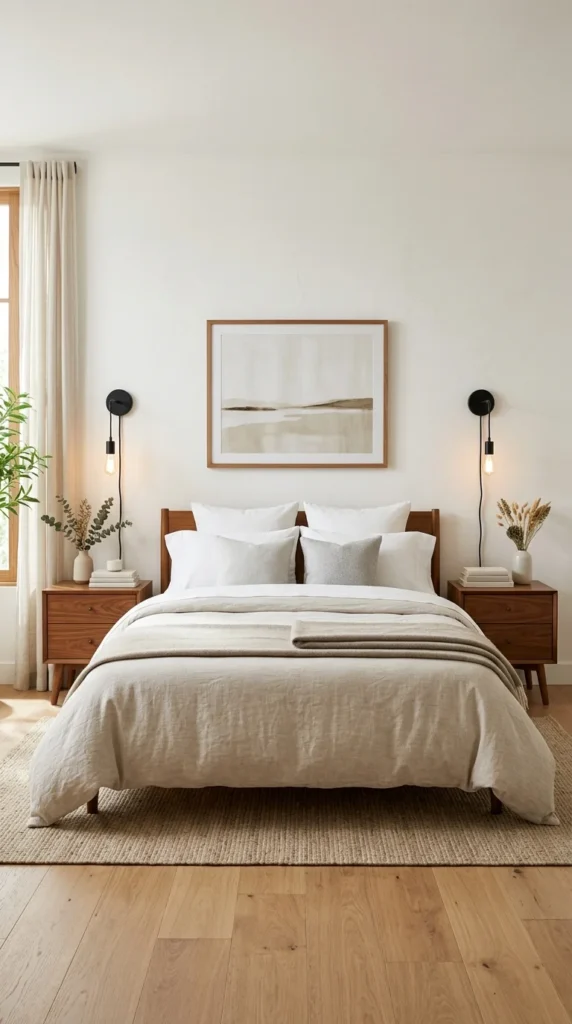
Symmetry creates an immediate sense of order and balance, which is essential for a peaceful environment. Positioning the bed in the center of the main wall with identical nightstands and lighting on either side creates a harmonious visual rhythm. This structured approach helps the brain process the space quickly, leading to a more relaxed state of mind.
9. Floor Mirrors
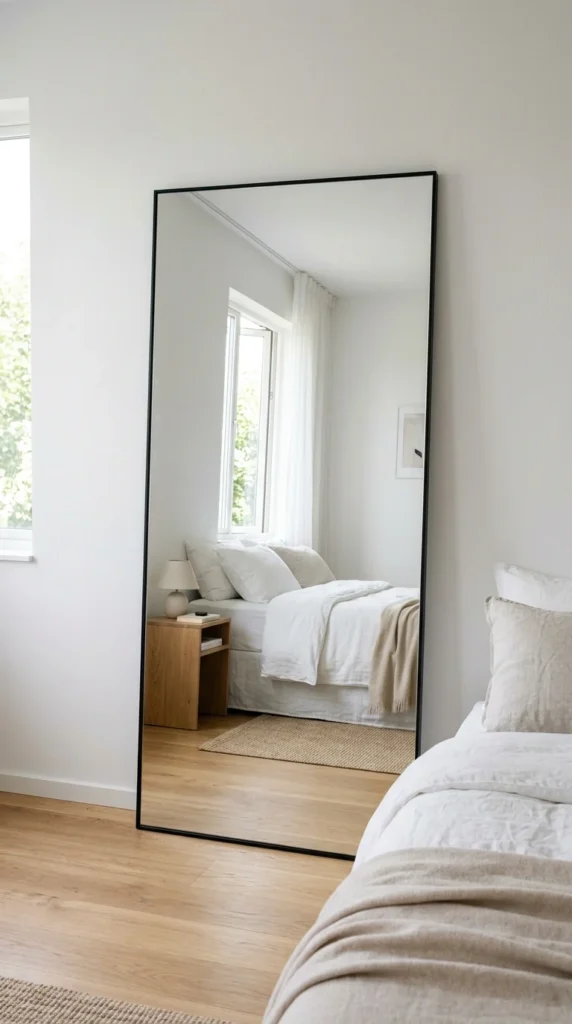
An oversized floor mirror serves two purposes: it is a functional piece of decor and a tool to expand the room visually. By reflecting light and the surrounding space, a mirror can make a small bedroom feel twice its size. Opt for a frame with a thin profile or a frameless design to maintain a sleek, unobtrusive look.
10. Linen Curtains
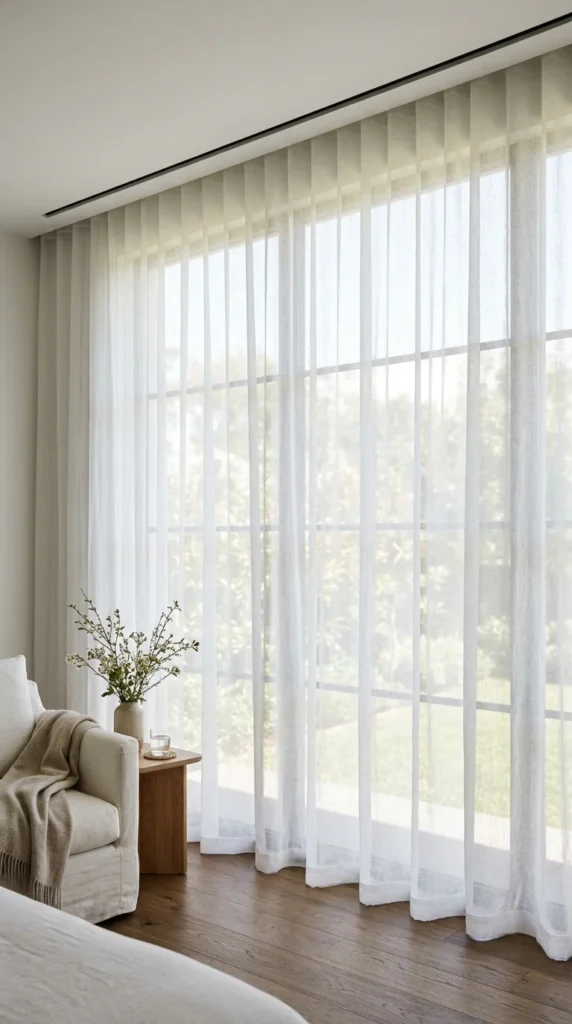
Avoid heavy drapes or ornate valances. Light, airy linen curtains add a soft, romantic touch to a minimalist room while maintaining a clean aesthetic. The way the fabric pools slightly on the floor adds a touch of “wabi-sabi”—the beauty of imperfection—which keeps a minimalist room from feeling too clinical.
11. Wooden Accents
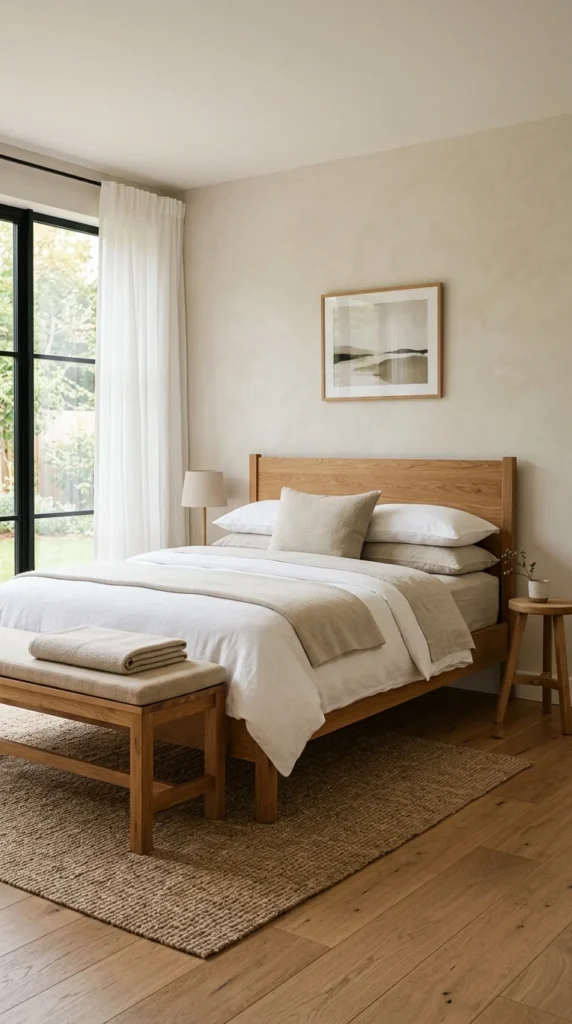
Wood adds an essential organic warmth to minimalist spaces. Whether it’s a light white oak, a warm walnut, or a rustic reclaimed timber, wooden elements ground the room. Use wood for the bed frame, a simple bench at the foot of the bed, or even a set of floating shelves to bring a sense of the outdoors inside.
12. Sculptural Lighting
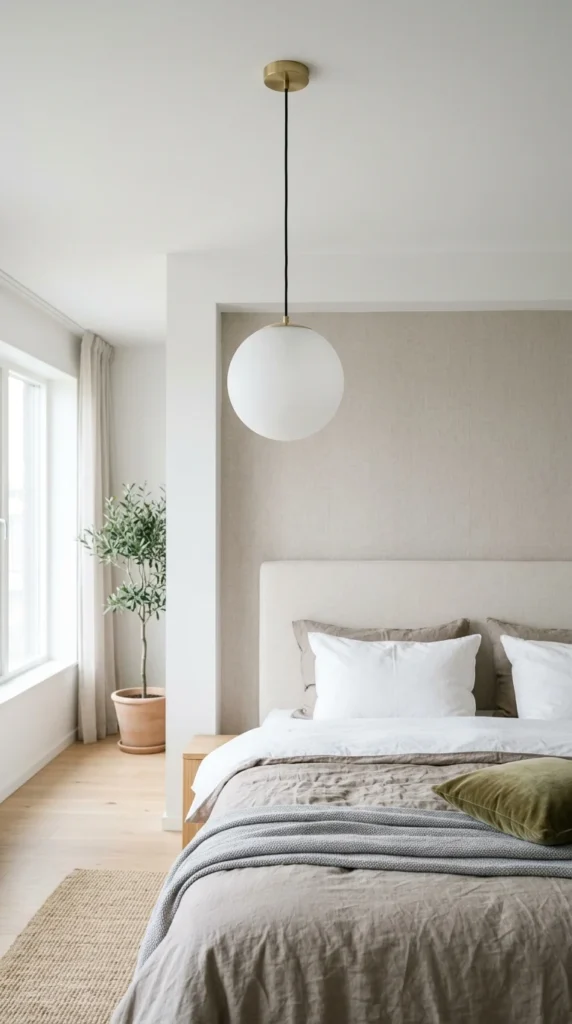
In a room with little decor, the light fixtures themselves can act as functional art. Look for fixtures with interesting silhouettes—perhaps a mid-century modern globe, a sleek linear LED pendant, or a matte black swing-arm sconce. Avoid “busy” chandeliers and stick to shapes that feel deliberate and balanced.
13. Decluttered Surfaces
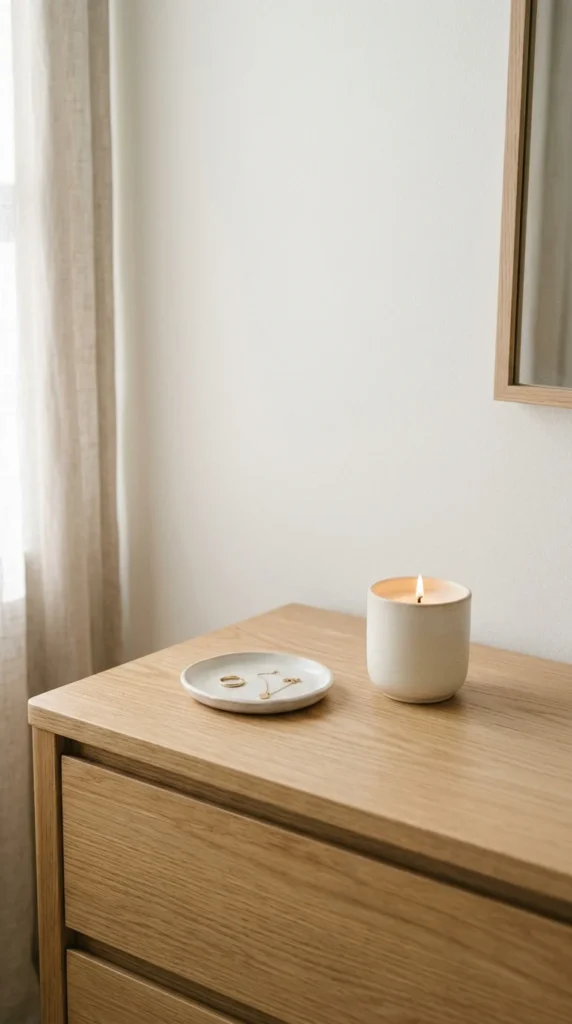
The hallmark of minimalism is the absence of clutter. Surfaces like dressers and nightstands should be kept clear of “knick-knacks.” Follow the “one-in, one-out” rule and only display items that are either beautiful or highly functional. A clean surface reflects a clean mind, making it easier to unwind at the end of the day.
14. Low-Profile Furniture
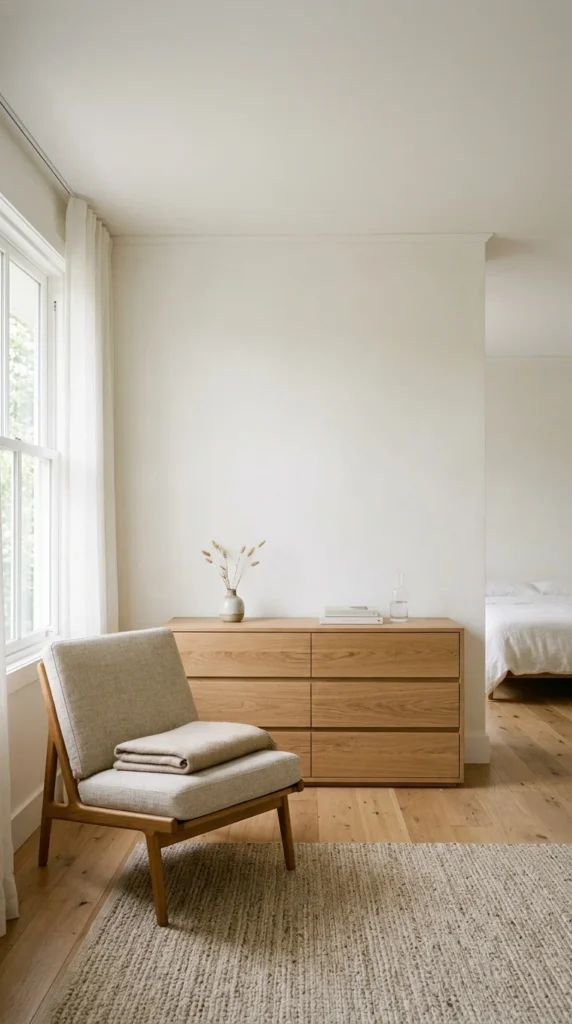
To maintain a sense of openness, choose furniture that sits low to the ground. This keeps the upper half of the room clear, which makes the ceiling feel higher and the room more expansive. From the bed frame to the seating, keeping the height consistent creates a sleek, modern silhouette throughout the space.
15. Monochrome Accents
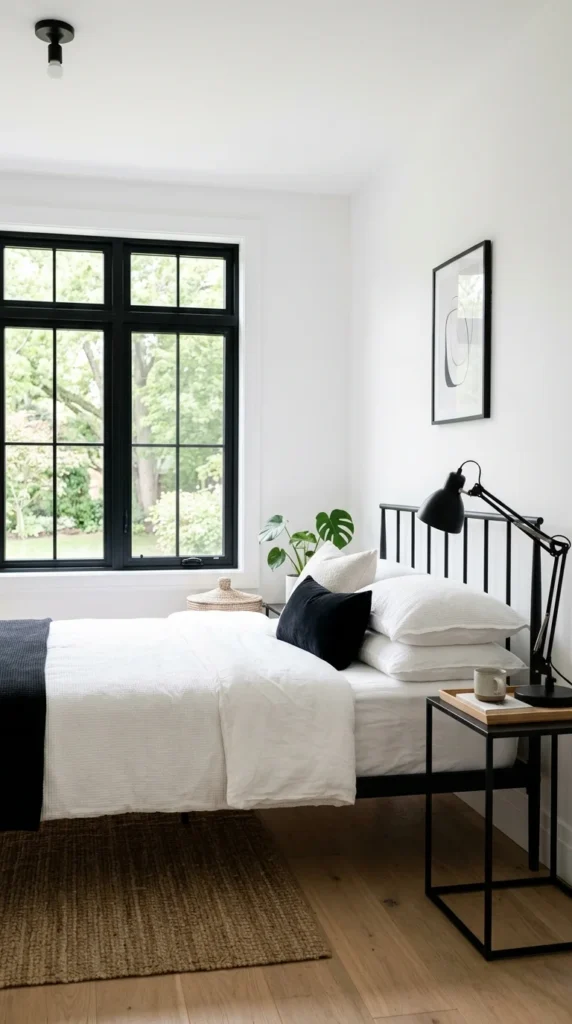
If a purely neutral room feels too soft, introduce high-contrast monochrome accents. Black picture frames, black metal lamps, or a black bedside carafe can provide a “sharp” edge to the room. These accents act as anchors, drawing the eye and providing structure to the ethereal neutral surroundings.
16. Woven Rugs
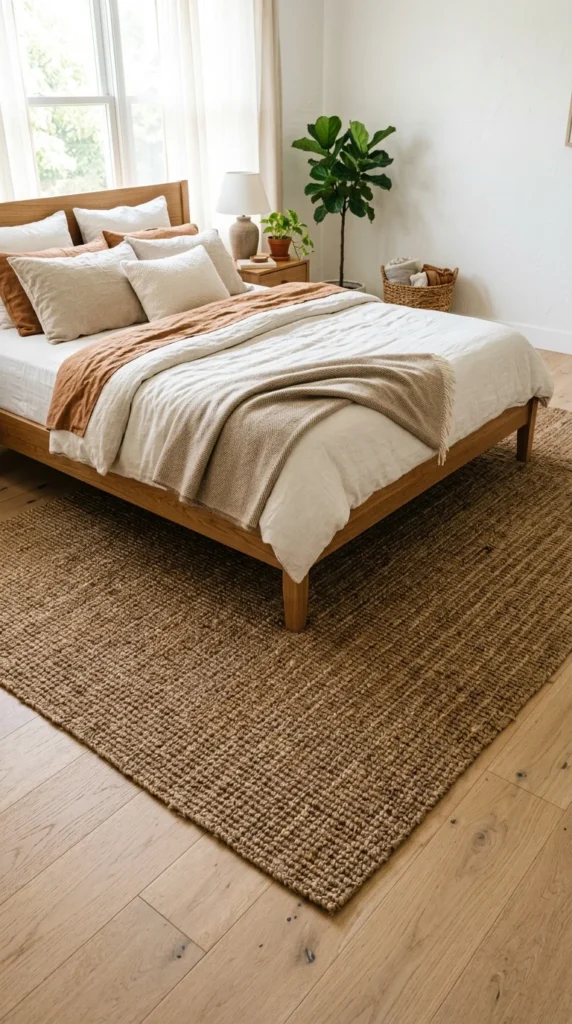
A rug defines the sleeping area and adds comfort underfoot. For a minimalist look, choose natural fibers like jute, sisal, or wool in a flat-weave or low-pile construction. A rug with a subtle geometric pattern in tonal colors can add interest without being distracting. Ensure the rug is large enough that the bed and nightstands sit comfortably on it, which creates a sense of “zoning.”
17. Concealed Tech
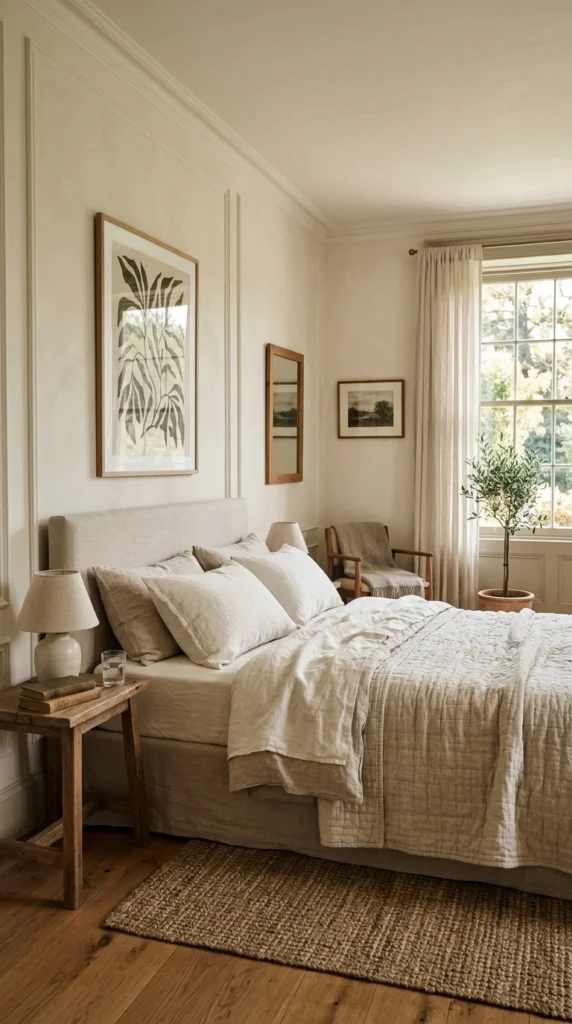
Technology is often the enemy of minimalism and relaxation. Keep the bedroom a tech-free zone as much as possible. If you must have a TV, consider a model that looks like art when off, or hide it within a sleek cabinet. Use cable management boxes to hide unsightly wires, ensuring that the clean lines of your furniture aren’t interrupted by tangled cords.
18. Open Space
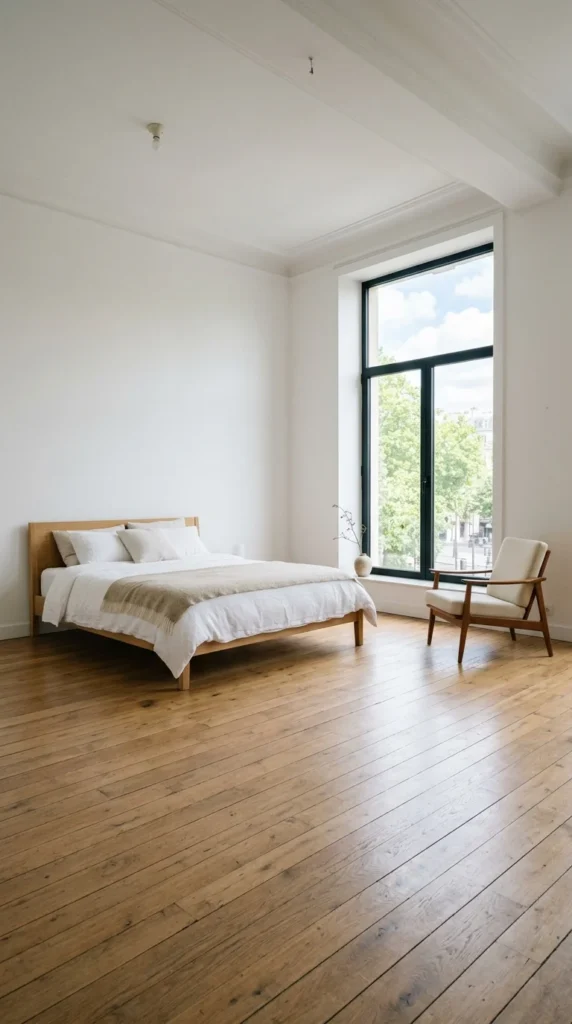
Don’t feel the need to fill every corner. In minimalism, the “negative space” (the empty areas) is just as important as the furniture. Leaving a corner empty or keeping a wall bare allows the eye to rest. This intentional emptiness contributes to the feeling of luxury and calm often found in high-end spas and boutiques.
19. Soft Ambient Lighting
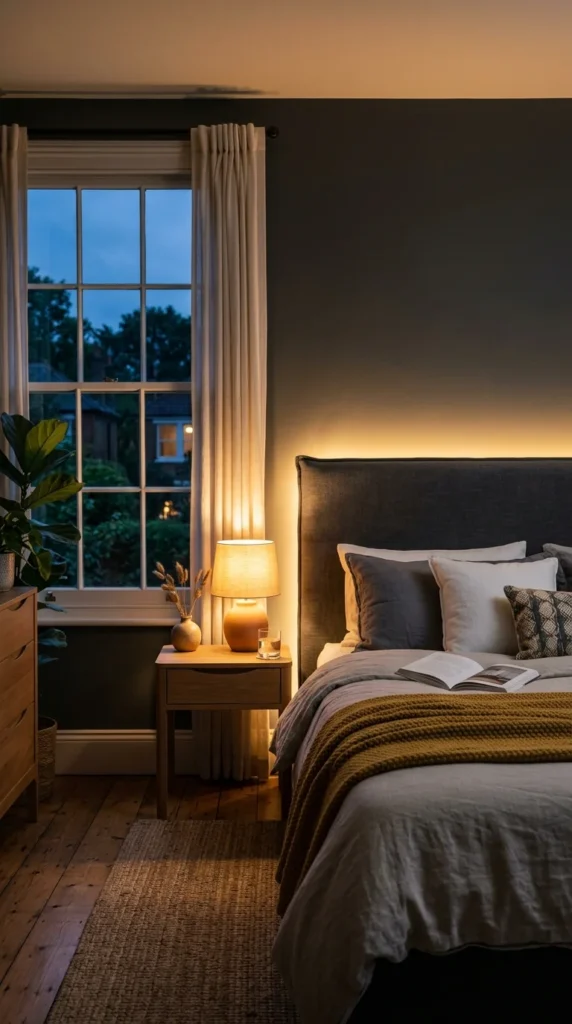
Instead of relying on a single harsh overhead light, use multiple sources of warm, dimmable ambient light. LED strips hidden behind a headboard or under a floating nightstand can create a soft glow that feels modern and calming. Use warm-toned bulbs (2700K) to create an atmosphere conducive to sleep.
20. Natural Materials
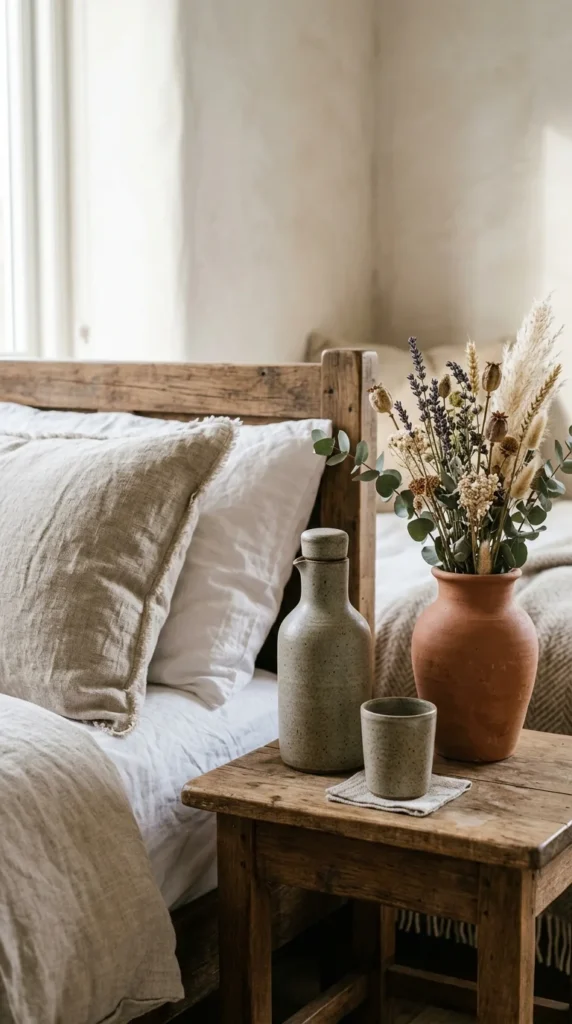
Incorporate materials that age gracefully and feel good to the touch. Stone, clay, linen, cotton, and wood all have a tactile quality that synthetic materials lack. These “honest” materials provide a sense of timelessness and quality that defines the minimalist ethos.
21. Functional Storage
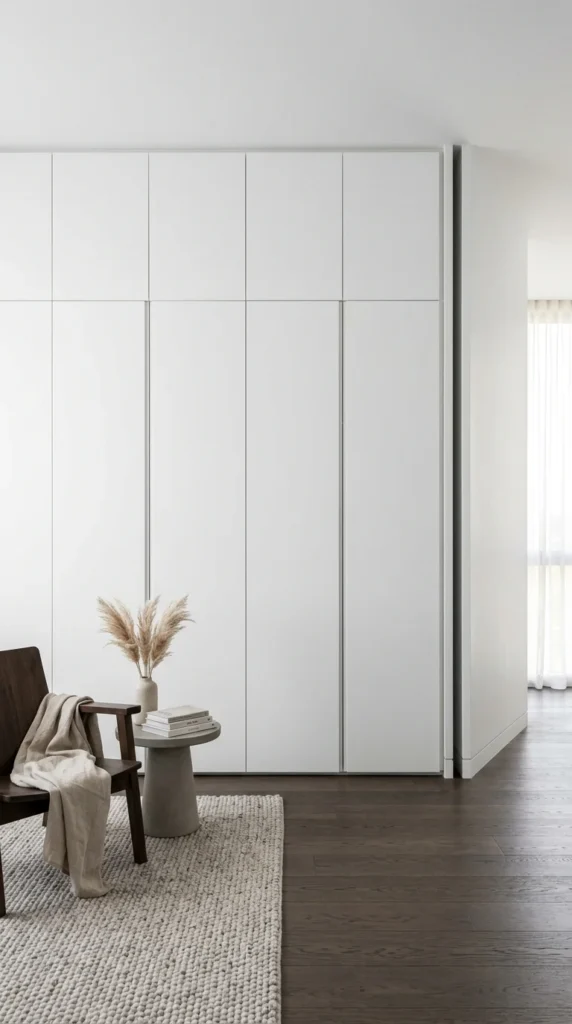
Minimalism doesn’t mean you don’t have stuff; it just means your stuff is organized and out of sight. Built-in wardrobes with handle-less “push-to-open” doors can blend into the walls, providing massive amounts of storage without taking up visual space. Under-bed storage drawers are another great way to keep seasonal clothing and extra linens tucked away neatly.