
The combination of black and wood has become the gold standard for high-end interior design, offering a perfect balance between organic warmth and modern sophistication. While a purely black kitchen can feel too cold or imposing, and an all-wood kitchen can sometimes lean too traditional or rustic, merging the two creates a timeless aesthetic that feels both curated and expensive. This design duo plays with contrast, texture, and light to elevate a functional space into a culinary sanctuary.
1. Matte Cabinets
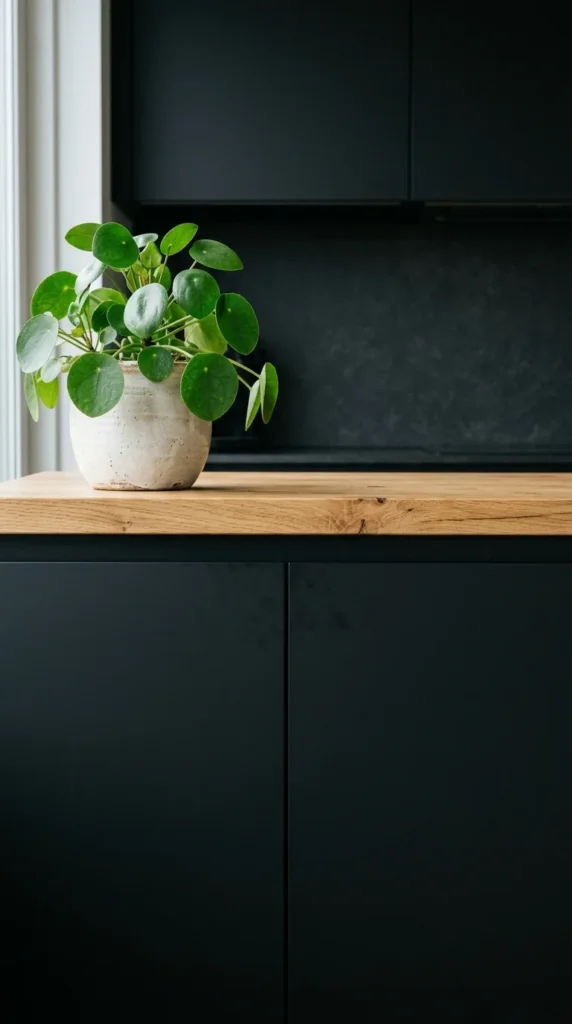
Matte black cabinetry is the cornerstone of a luxury kitchen. Unlike glossy finishes, which can show every smudge and reflect light in a distracting way, matte surfaces absorb light, creating a sense of depth and weight. When paired with light-colored woods like white oak or ash, the contrast is striking.
To make this look feel truly expensive, opt for handle-less or “push-to-open” cabinets. This creates a streamlined, architectural look that mimics high-end custom millwork. The key is the tactile experience; the smoothness of the black panels against the slight grain of the wood provides a sensory contrast that screams “custom-made.”
2. Slatted Panels
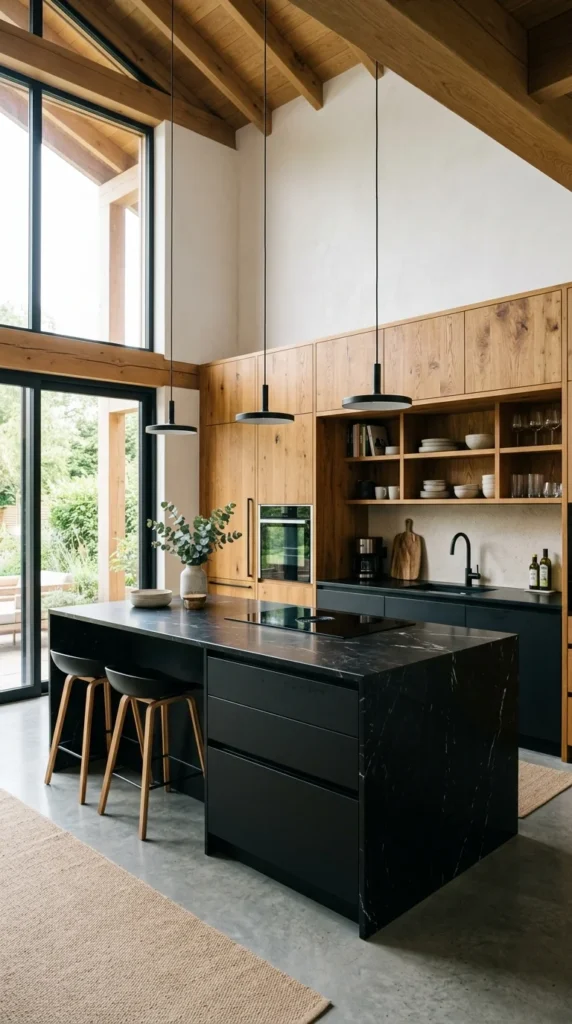
Texture is a secret weapon in expensive-looking design. Incorporating slatted wood panels—often referred to as “tambour” or “fluted” wood—adds an architectural layer that flat surfaces simply cannot provide. Using these slats on the base of a kitchen island or as a feature wall behind black open shelving creates a vertical rhythm that makes the ceilings feel higher.
This technique is particularly effective when the wood is left in a medium-to-dark stain, such as walnut or teak. The shadows created by the slats interact beautifully with black countertops, giving the kitchen a bespoke, artisanal quality that is frequently seen in luxury penthouse designs.
3. Charcoal Stone
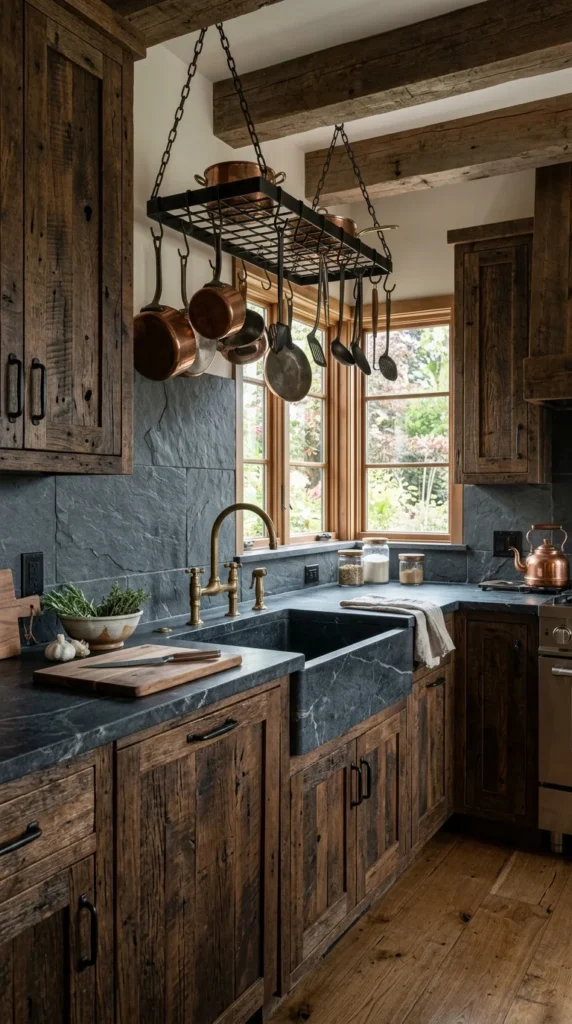
While “black” is the primary theme, using natural stone in charcoal or deep obsidian tones adds a layer of raw luxury. Soapstone, honed granite, or dark quartz with subtle white veining provides a “quiet luxury” vibe. These materials feel substantial and permanent.
When you pair these heavy, dark stones with reclaimed or distressed wood, the result is a sophisticated industrial-organic look. The imperfections in the wood (like knots and burls) are grounded by the solid, unyielding nature of the black stone. This prevents the kitchen from feeling too “perfect” or sterile, giving it a lived-in yet high-value character.
4. Walnut Accents
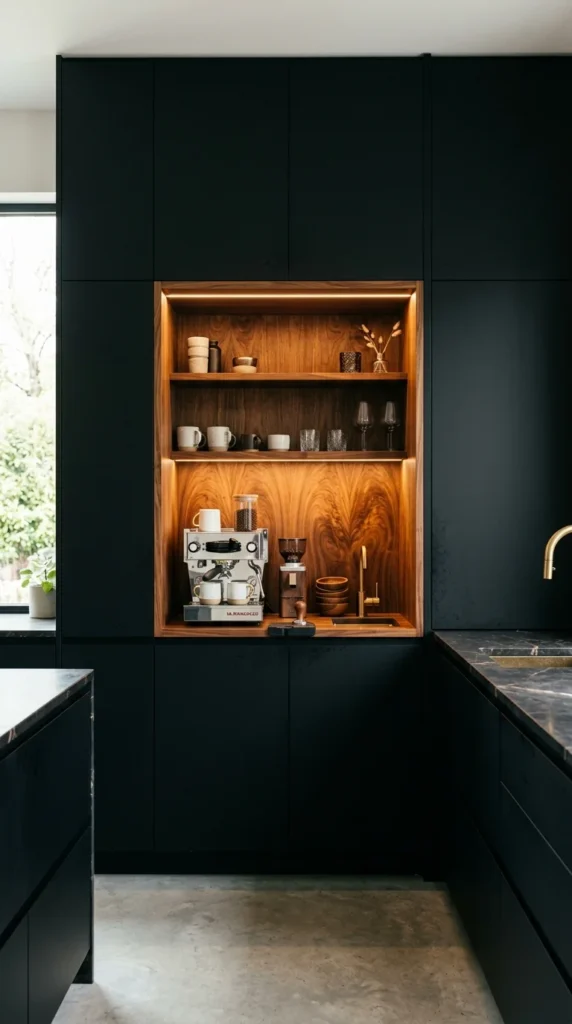
Walnut is widely considered the most “expensive” looking wood due to its rich, dark brown hues and elegant grain patterns. In a black kitchen, walnut acts as a bridge between the darkness of the cabinets and the brightness of the rest of the home.
The most effective way to use walnut is in “nooks” or “cut-outs.” For example, a black kitchen wall with a walnut-lined breakfast station or a walnut-lined wine rack creates a focused point of warmth. This intentional “frame” of wood inside a black structure is a hallmark of high-end European kitchen design, offering a sophisticated play on negative space.
5. Industrial Steel
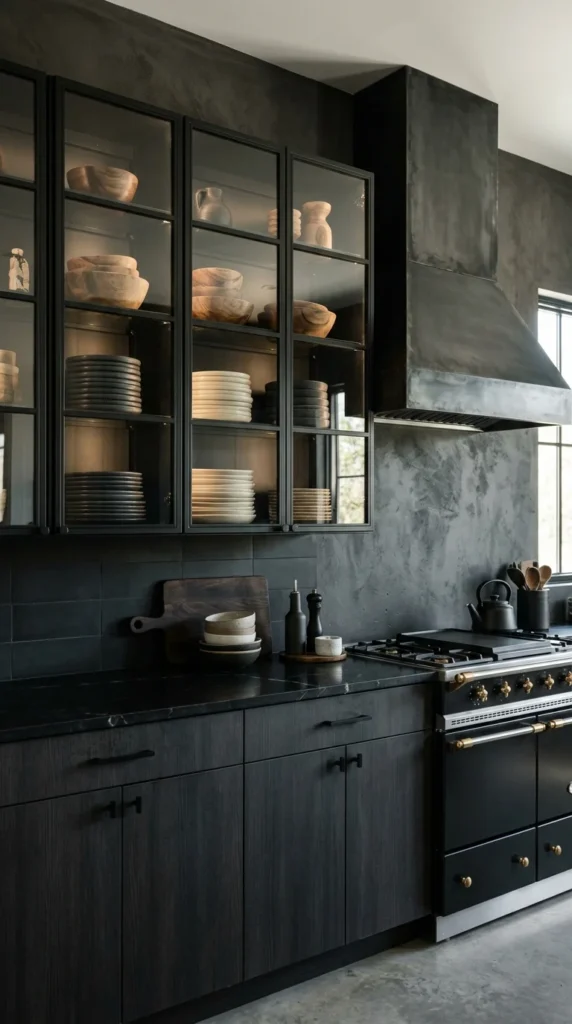
Integrating black steel or iron elements brings a structural, professional-grade feel to the space. Think of black steel-framed glass cabinets or a custom black range hood. These metal elements provide a different sheen and texture than painted wood, adding complexity to the design.
When these industrial black elements are set against warm wood flooring or thick wooden floating shelves, the kitchen feels like it belongs in a high-end loft or a custom-built modern estate. The steel provides a “frame” for the organic beauty of the wood, highlighting its natural colors and making the entire space look more structured and intentional.
6. Floating Shelves
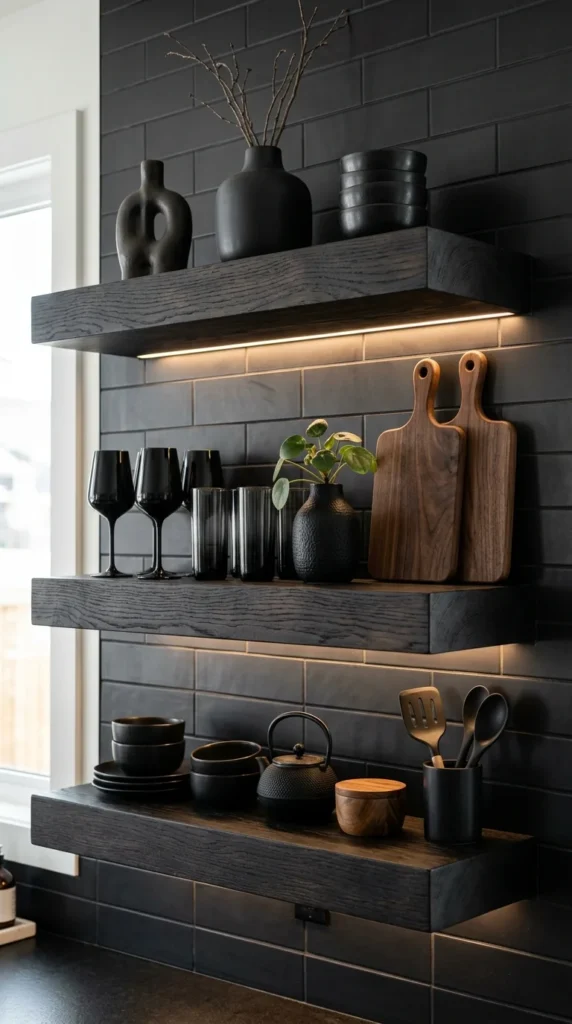
Open shelving can often look cluttered, but when executed with a black and wood palette, it looks like a gallery. Thick, “chunky” wood shelves—specifically in dark stains like ebony or dark mahogany—mounted against a black backsplash create a seamless, sophisticated look.
The trick to making this look expensive is the thickness of the shelves. Thin shelves can look flimsy; shelves that are at least 2 to 3 inches thick look like a permanent part of the architecture. By using hidden mounting hardware, the wood appears to float effortlessly against the dark background, providing a perfect stage for high-quality kitchenware and decor.
7. Gold Hardware
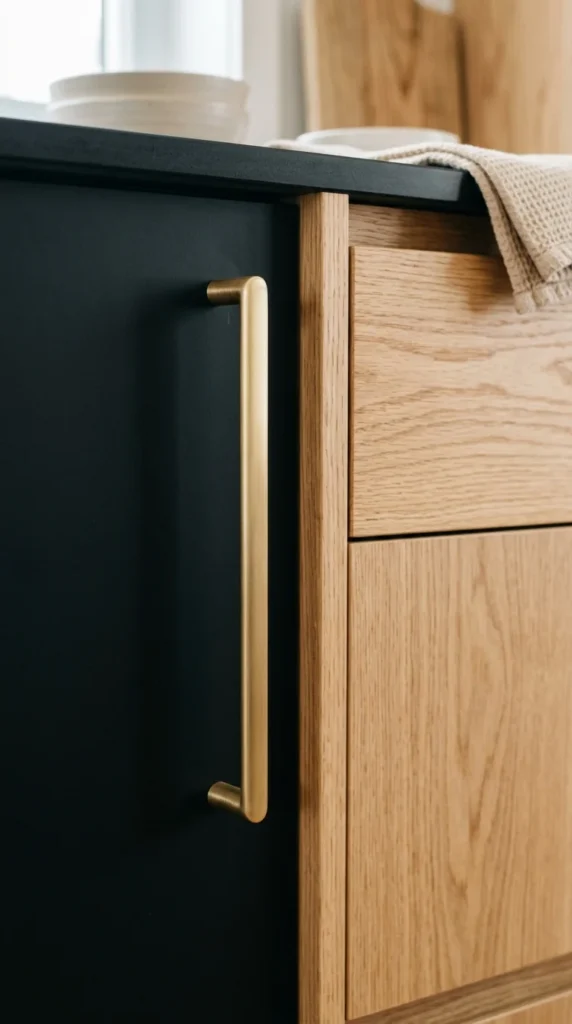
If black and wood are the “outfit” of the kitchen, hardware is the jewelry. To make a black and wood kitchen look truly expensive, replace standard silver or chrome hardware with brushed gold, brass, or bronze. The yellow undertones of gold hardware pull out the natural warmth in the wood, creating a cohesive visual link.
This combination works exceptionally well on black cabinets. A matte black door with a slender, satin-brass handle looks instantly more premium. It adds a touch of “glam” that prevents the wood and black from feeling too rustic or heavy, ensuring the space feels polished and high-end.
8. Integrated Lighting
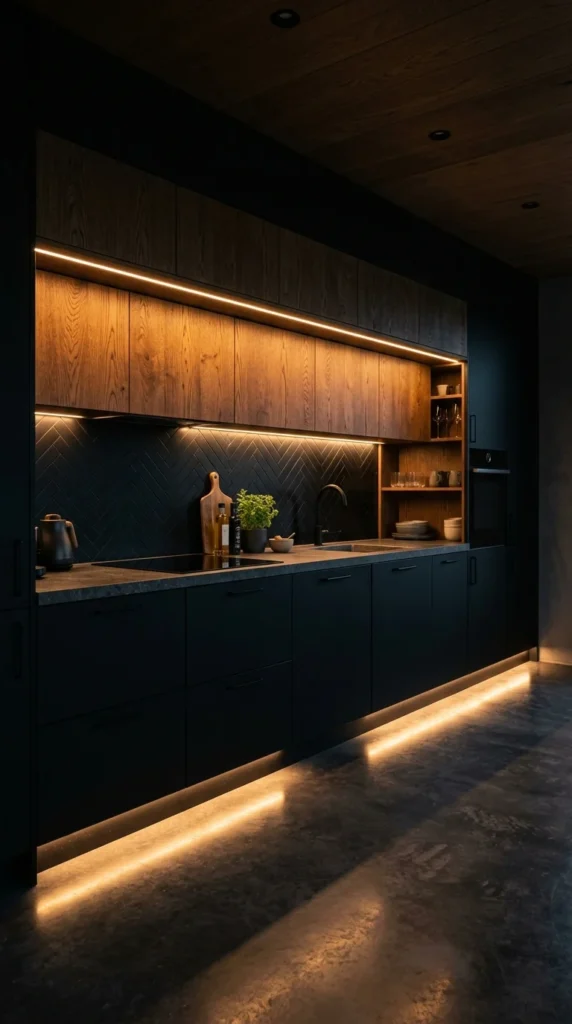
Lighting is the final touch that separates a standard kitchen from a luxury one. In a black and wood kitchen, lighting is crucial because dark surfaces absorb light. Integrated LED “task lighting” under cabinets and “accent lighting” along the toe-kicks (the space near the floor) makes the cabinets look as if they are floating.
When you bathe wood surfaces in warm light, the grain becomes more prominent and the wood feels more inviting. High-end kitchens often use “layered lighting”—pendant lights over the island for style, recessed cans for general light, and hidden LEDs to highlight the black and wood textures. This depth of light ensures the space looks expensive at any time of day, particularly in the evening when the shadows can create a sophisticated, lounge-like atmosphere.