
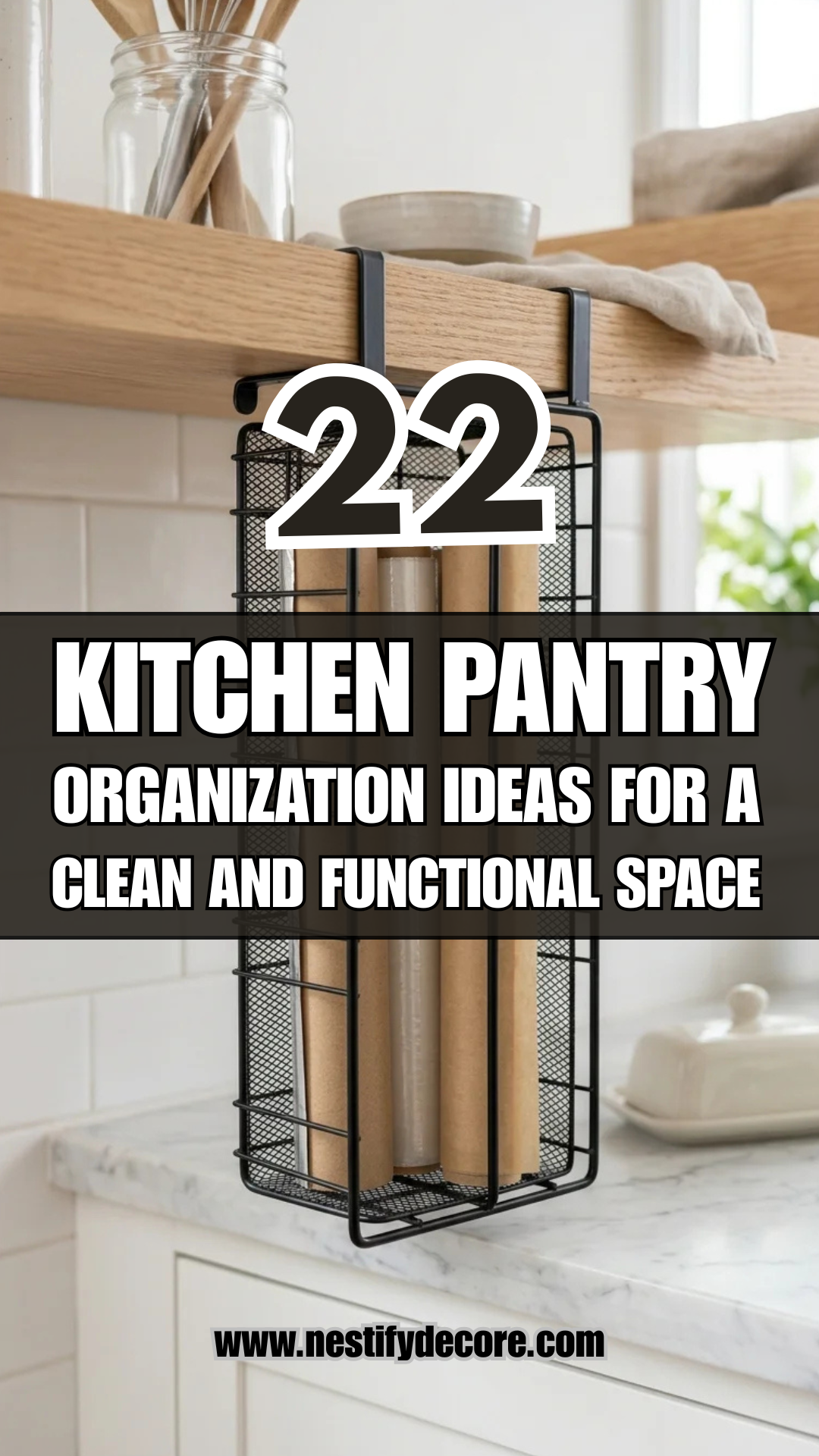
The kitchen pantry is often the engine room of the home. It is where meal movements begin, where school lunches are assembled, and where bulk buys go to find their place. However, without a proper system, this vital space can quickly devolve into a chaotic graveyard of expired canned goods and half-empty pasta boxes. An organized pantry doesn’t just look beautiful on social media; it saves you money by preventing overbuying, reduces food waste, and cuts down on the stress of meal preparation. To transform your pantry into a sanctuary of efficiency, consider these 22 transformative organization ideas.
1. Clear Bins
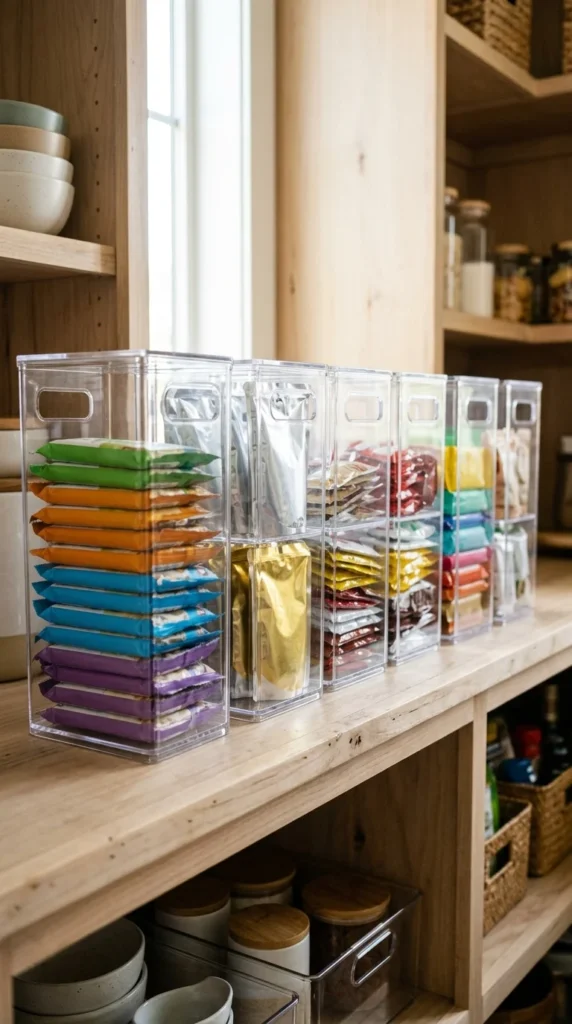
Visibility is the cornerstone of an organized pantry. Using clear acrylic bins allows you to see exactly how much inventory you have left at a glance. Instead of digging through opaque boxes, you can group similar items—like granola bars, fruit snacks, or individual chip bags—into these containers. They are easy to wipe clean and create a streamlined, modern look that makes your shelves feel less crowded.
2. Lazy Susans
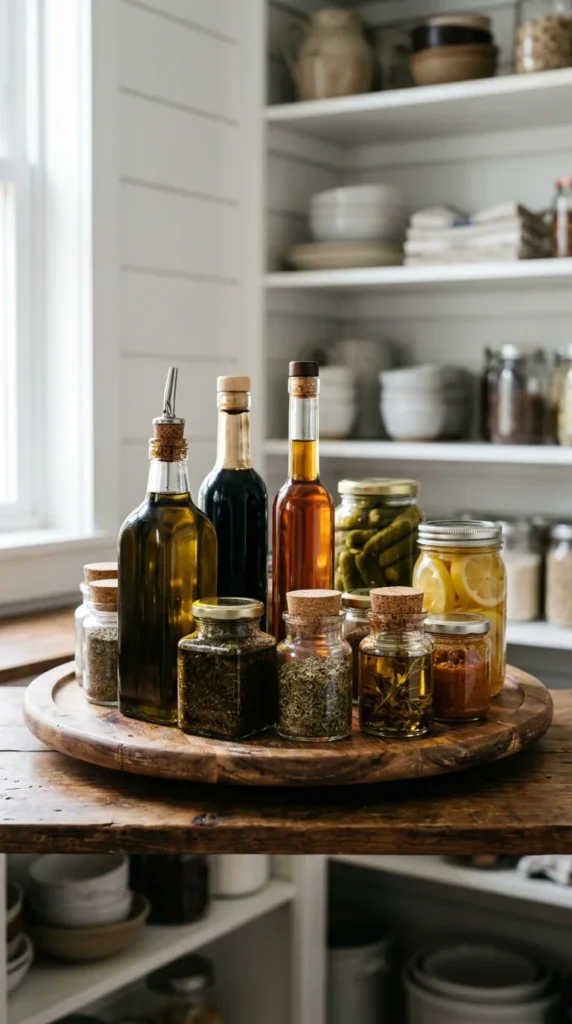
Corners are notoriously difficult to manage in any pantry. Items pushed into the back often disappear for months. A Lazy Susan, or turntable, solves this by bringing everything to the front with a simple spin. These are perfect for oils, vinegars, honey, and heavy jars that are difficult to shuffle around. Choose a non-slip version to ensure bottles stay upright during rotation.
3. Airtight Canisters
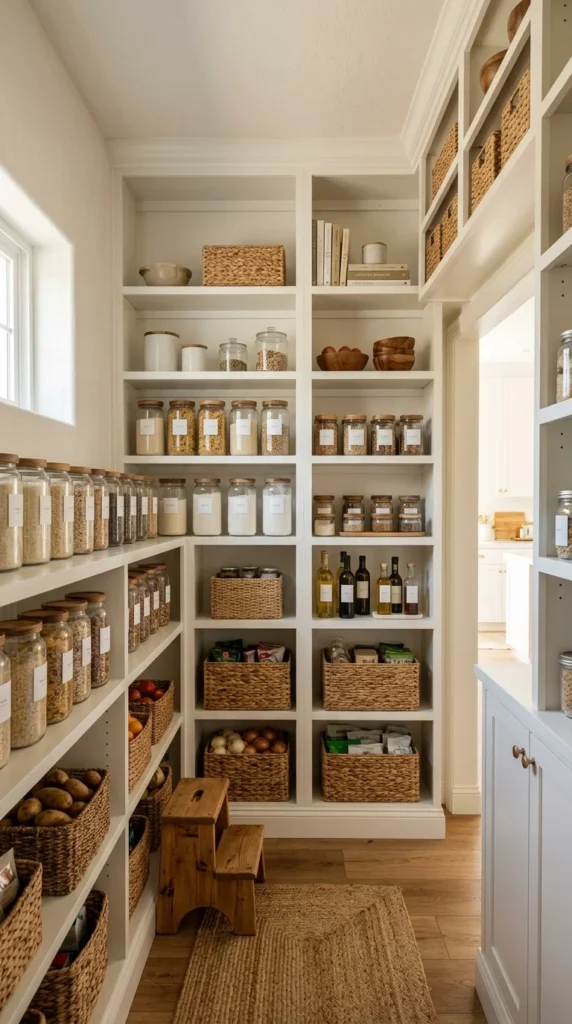
Decanting dry goods into airtight canisters is a game-changer for both freshness and aesthetics. Flour, sugar, cereal, and pasta last much longer when sealed away from humidity and pests. By removing bulky, mismatched original packaging, you maximize shelf space and create a cohesive, high-end look. Stick to a specific brand or style to keep the visual “noise” to a minimum.
4. Tiered Shelving
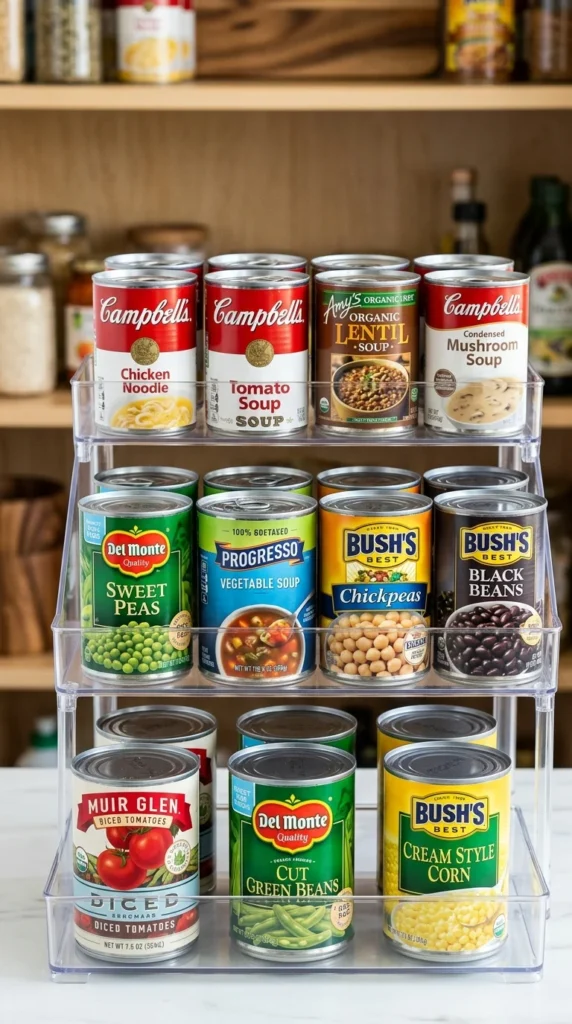
Canned goods are the primary culprits of pantry clutter. When stacked one in front of the other, the back rows become invisible. Tiered shelving (often called “stadium seating” for cans) elevates the rear rows so you can see every label. This prevents you from buying a fourth can of chickpeas when you already have three hiding in the shadows.
5. Door Racks
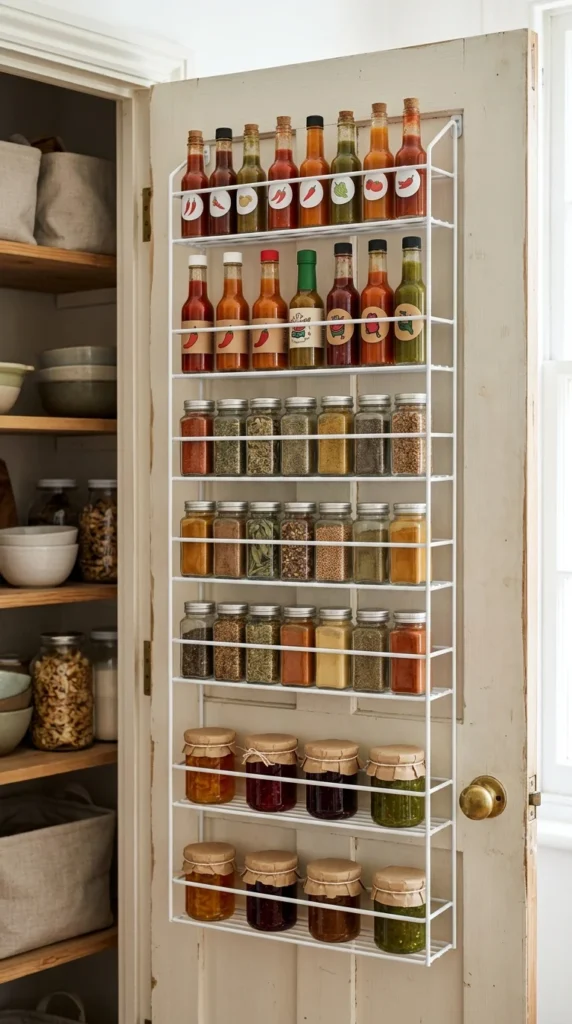
Don’t ignore the “hidden” real estate of your pantry door. An over-the-door rack can add significant storage capacity without taking up any shelf space. These are ideal for small, lightweight items like spices, sprinkles, or extracts. It keeps these frequently used items within arm’s reach while freeing up the main shelves for bulkier items.
6. Pull-out Drawers
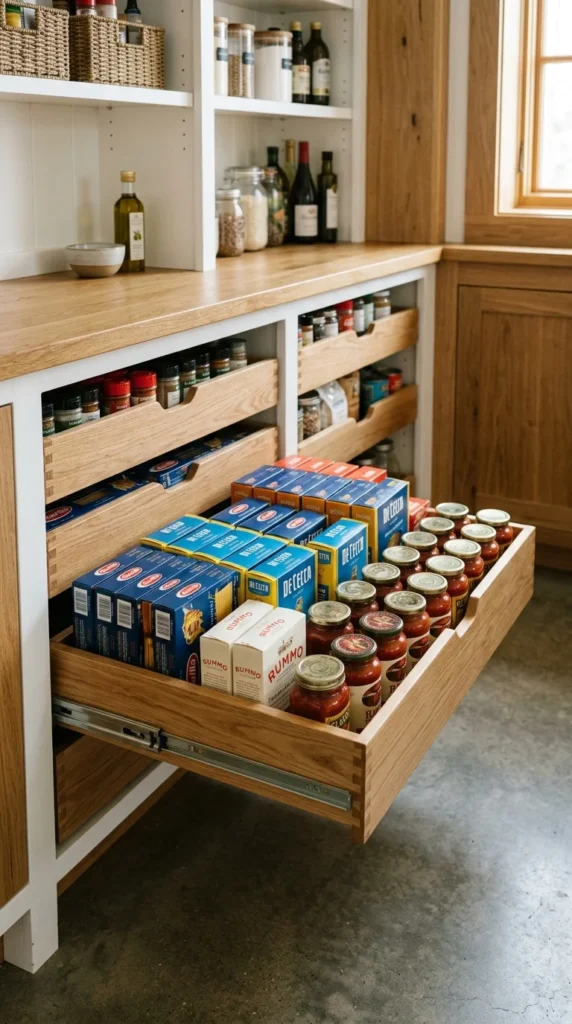
Deep pantry shelves are a blessing for storage but a curse for accessibility. Installing pull-out drawers or sliding baskets allows you to access items at the very back of the cabinet without having to get on your hands and knees. This is particularly useful for heavy items like small appliances or bulk bags of rice and flour.
7. Label Systems
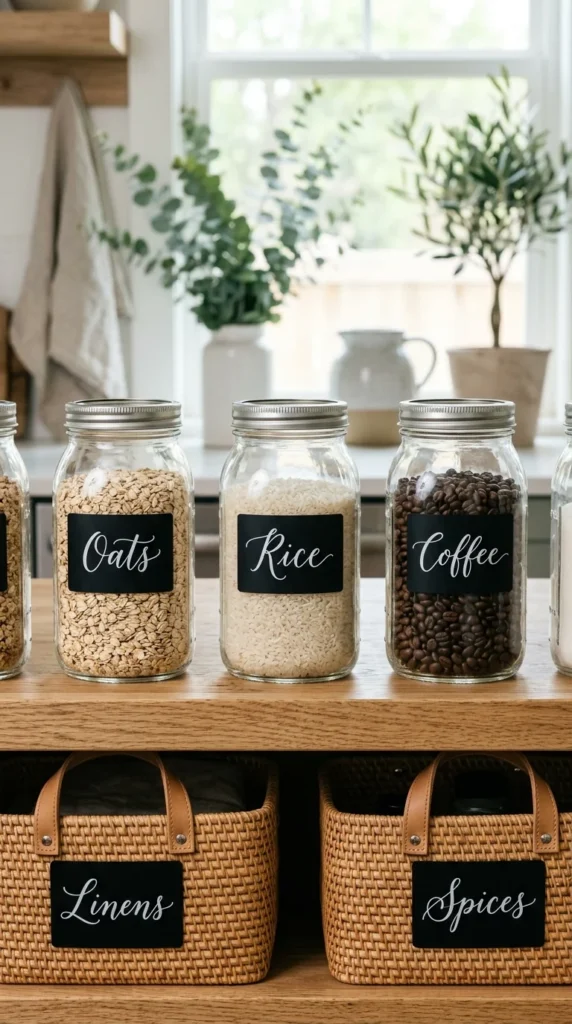
Labels are the “GPS” of your pantry. They ensure that every member of the household knows exactly where things go, which is the only way to maintain an organized system long-term. Whether you use a high-tech label maker, chalkboard stickers, or custom vinyl decals, consistency is key. Label the bins and baskets by category, such as “Baking,” “Pasta,” “Breakfast,” and “Snacks.”
8. Basket Grouping
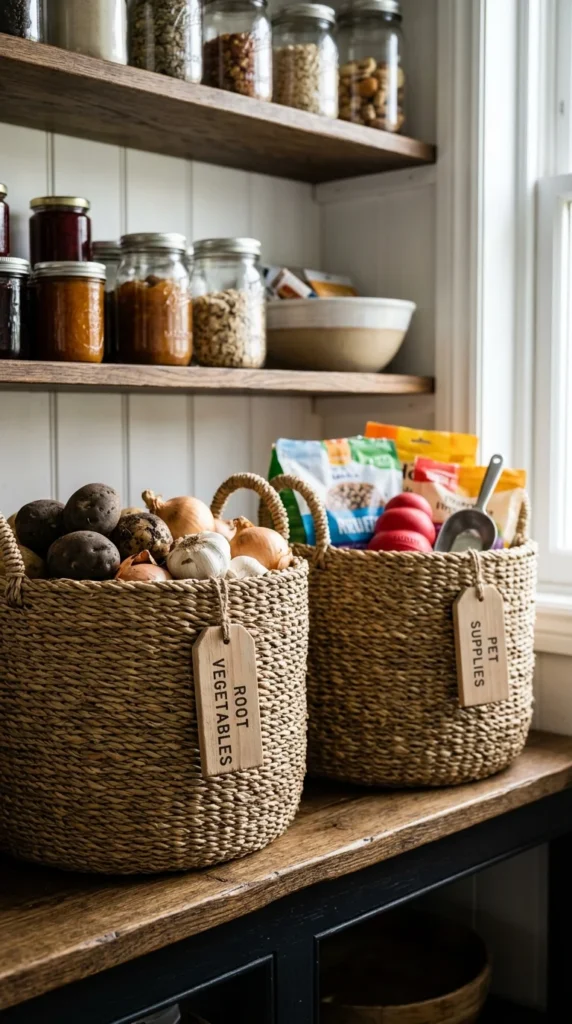
Woven or wire baskets add texture and warmth to a pantry while hiding the visual clutter of mismatched packaging. Use them for items that don’t need to be decanted, such as bags of chips, packets of seasoning, or potatoes and onions. Baskets are also great for “kit” storage—group all your taco night ingredients or baking supplies into one basket that you can pull out and bring to the counter.
9. Stackable Risers
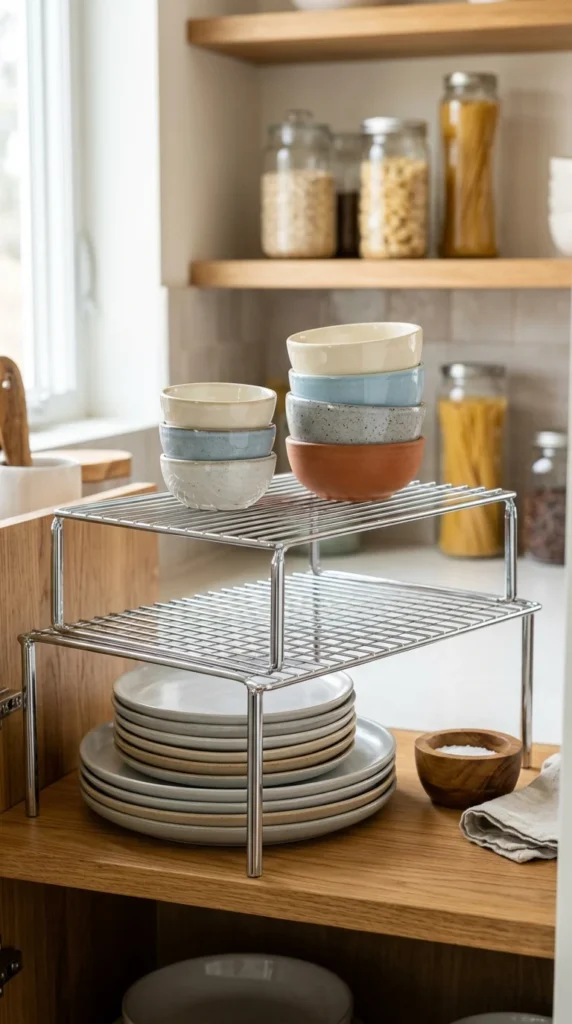
If your pantry has high ceilings but few shelves, you are wasting vertical space. Stackable shelf risers create a “second floor” on your existing shelves. This is perfect for stacking plates, tuna cans, or small boxes of gelatin. It effectively doubles your storage capacity in sections where items aren’t tall enough to reach the next shelf.
10. Under-shelf Baskets
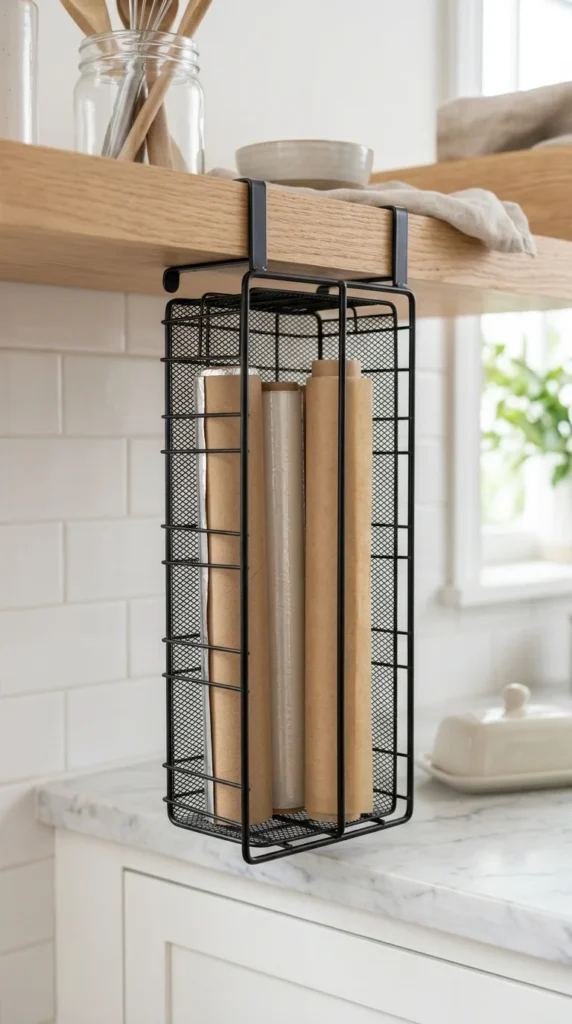
Utilize the “dead space” that often exists between the top of your items and the bottom of the shelf above them. Under-shelf baskets slide onto the existing shelf and provide a hanging storage solution for flat or lightweight items. They are excellent for storing wraps, foils, napkins, or even loaves of bread that you don’t want to get crushed.
11. Cereal Dispensers
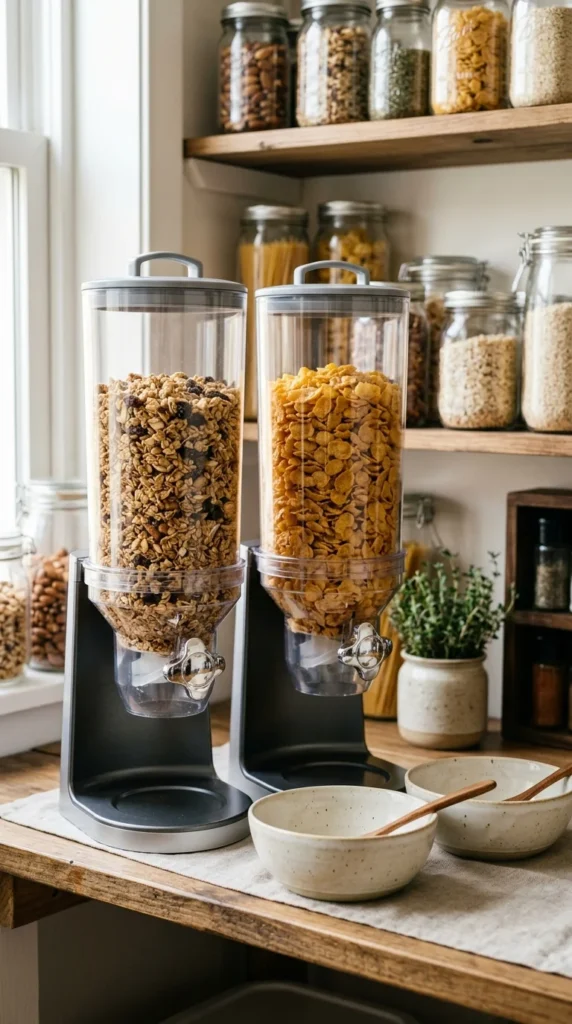
Cereal boxes are notorious for being half-empty and taking up massive amounts of room. Moving cereal into specialized dispensers keeps it fresh and makes it easier for children to serve themselves without creating a mess. Modern dispensers often feature a portion-control dial, which helps reduce waste and keeps the pantry looking like a gourmet hotel breakfast bar.
12. Spice Racks
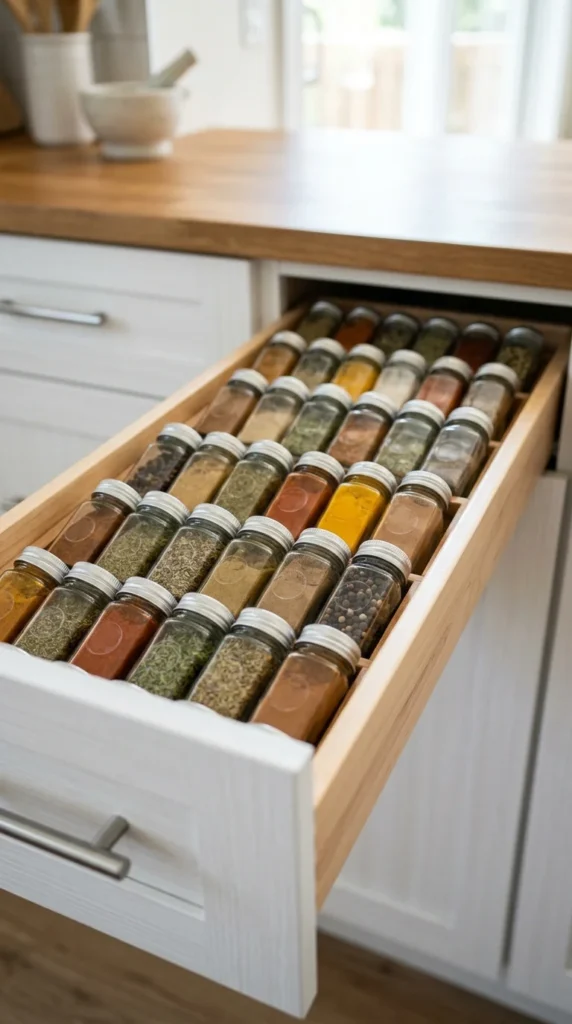
Spices are small but can create a massive mess. To keep them organized, choose a dedicated system like a tiered spice riser, a magnetic wall-mounted strip, or a dedicated spice drawer. The secret to a beautiful spice collection is uniformity—transferring spices into matching jars with cohesive labels instantly elevates the entire pantry’s appearance.
13. Chalkboard Paint
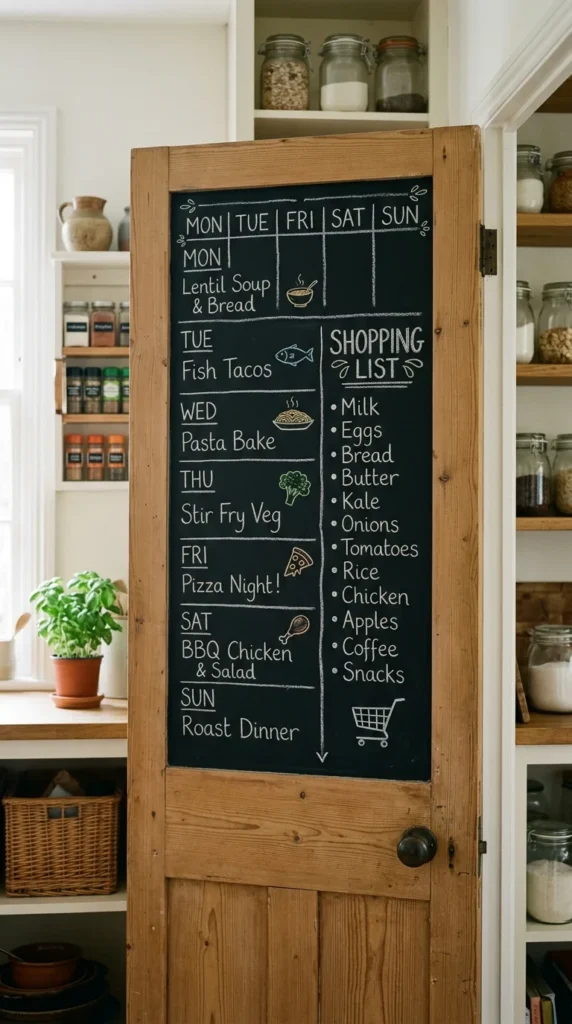
Transform your pantry door or a section of the wall into a functional command center using chalkboard paint. This provides a space to jot down grocery lists as items run out, plan the week’s meals, or leave notes for the family. It’s an easy DIY project that adds both utility and a rustic, farmhouse charm to the space.
14. Corner Solutions
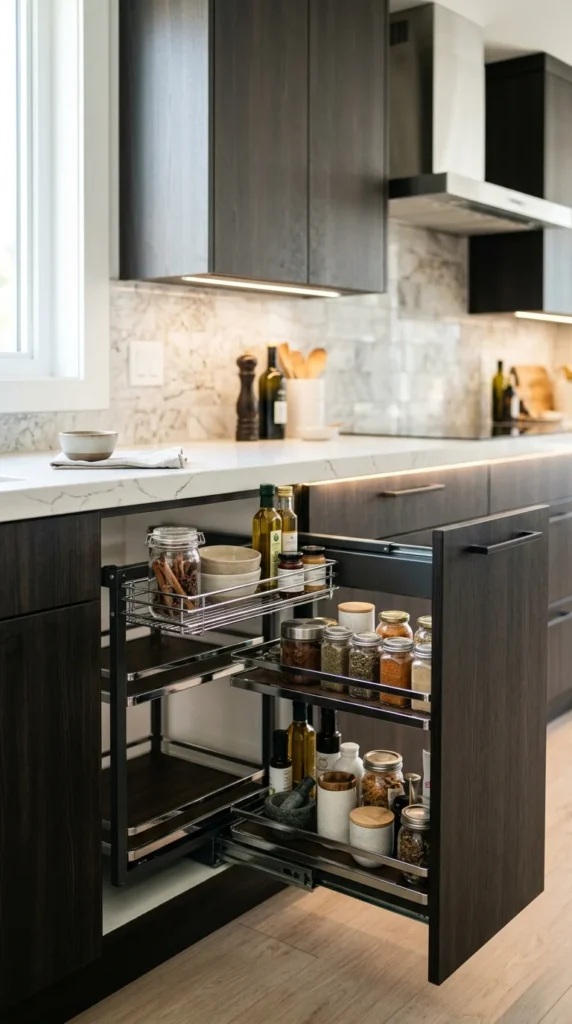
If you have a deep corner cabinet, a standard shelf won’t suffice. Look into specialized corner solutions like “Blind Corner” pull-outs or “Kidney-shaped” rotating shelves. These mechanical inserts pull the contents of the corner out into the room, ensuring that nothing is ever lost in the dark “vortex” of the kitchen cabinetry.
15. Zone Mapping
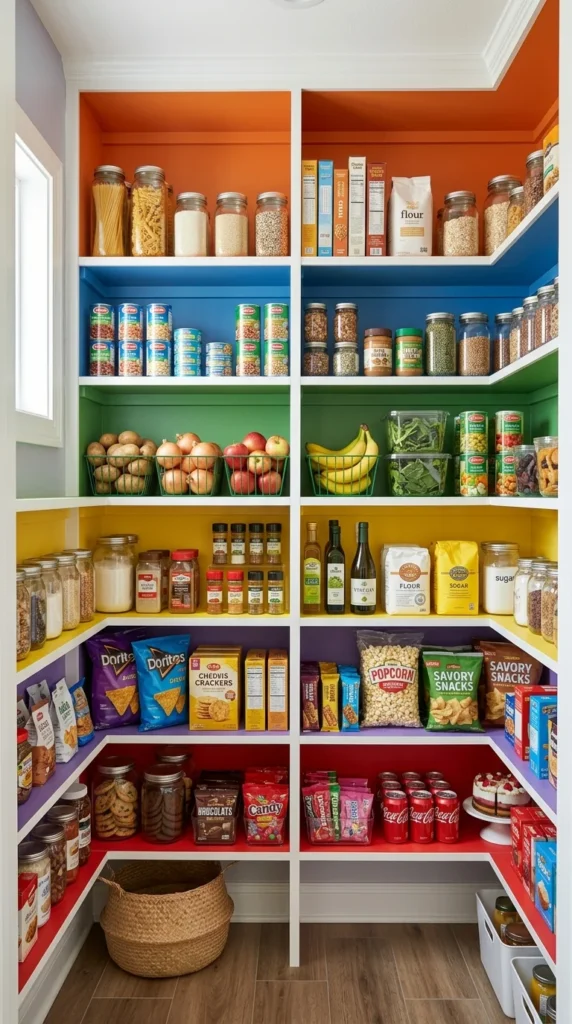
The most functional pantries are organized by “zones.” Group items based on how you use them. For example, keep all baking ingredients (flour, sugar, baking soda) in one area, breakfast items in another, and dinner staples like pasta and sauces in a third. This logical flow makes cooking more intuitive and helps you spot what’s missing before you start a recipe.
16. Wire Baskets
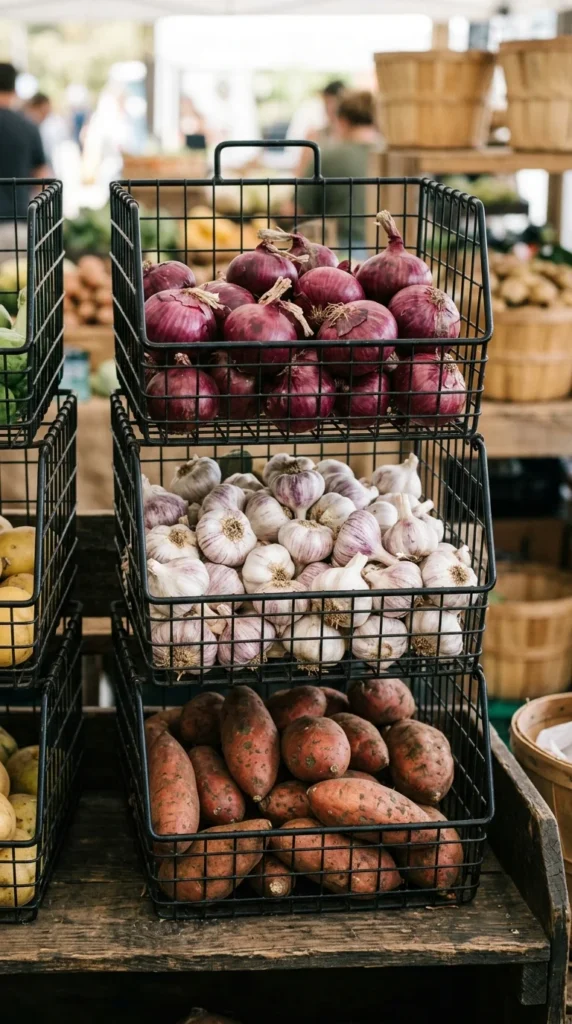
For items that need airflow, such as onions, potatoes, and garlic, wire baskets are the ideal solution. They prevent moisture buildup, which can lead to rot, while keeping the produce contained. Wire bins also work well for bulkier items like paper towels or extra-large bags of pretzels that don’t fit into standard bins.
17. Floor Storage
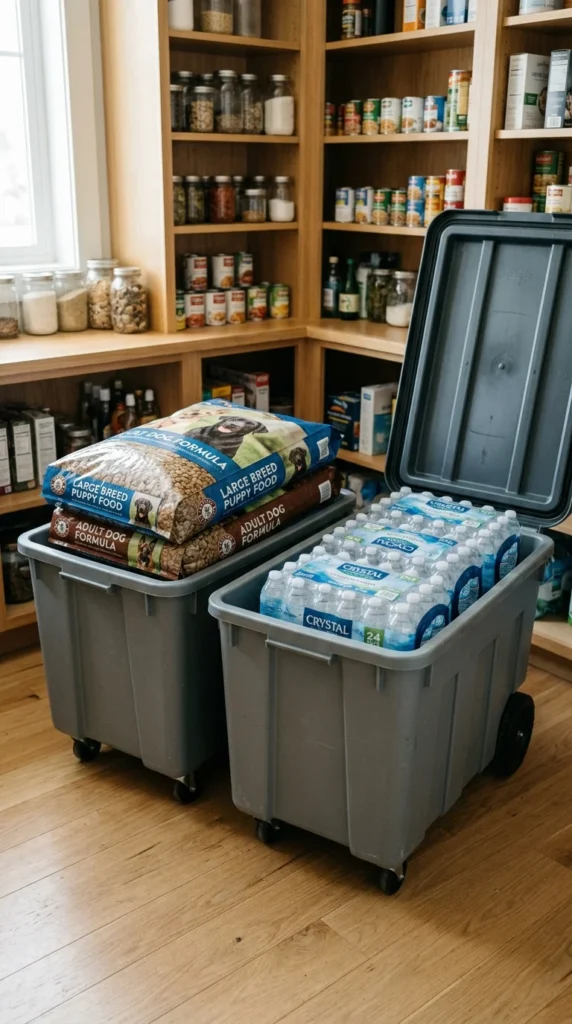
The floor of the pantry is often overlooked. To keep it clean and organized, use large, heavy-duty bins or baskets for bulk items. Putting these on wheels (casters) is a smart move, as it allows you to easily roll out heavy bags of pet food or flour for cleaning or access. Keeping items in bins also prevents the floor from becoming a cluttered catch-all.
18. Vertical Dividers
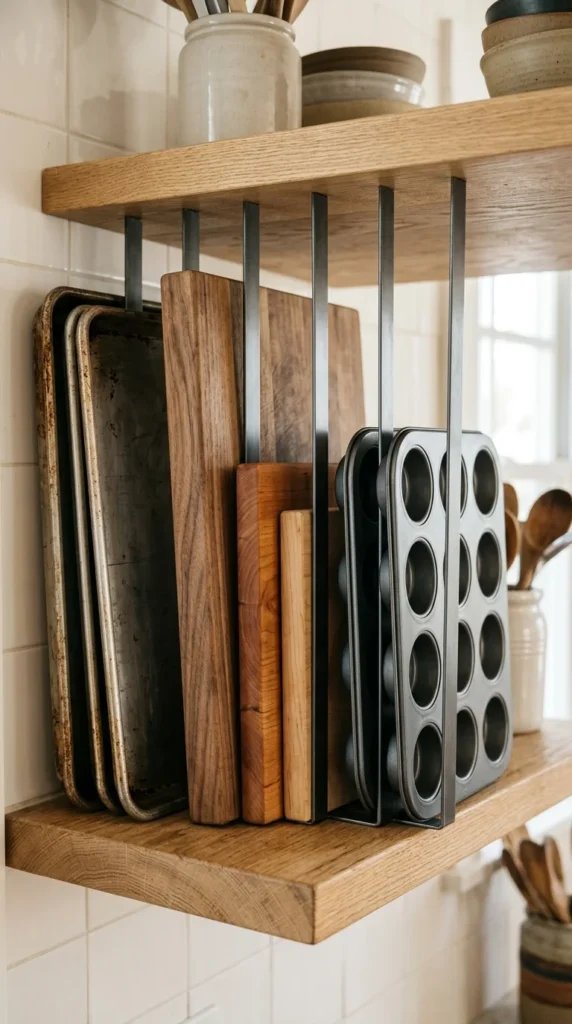
Slender, flat items like baking sheets, cutting boards, and serving platters are a nightmare to stack horizontally. You always need the one at the bottom! Vertical dividers allow you to store these items upright, like books on a shelf. This makes it incredibly easy to slide one out without disturbing the rest.
19. Over-the-Door Bags
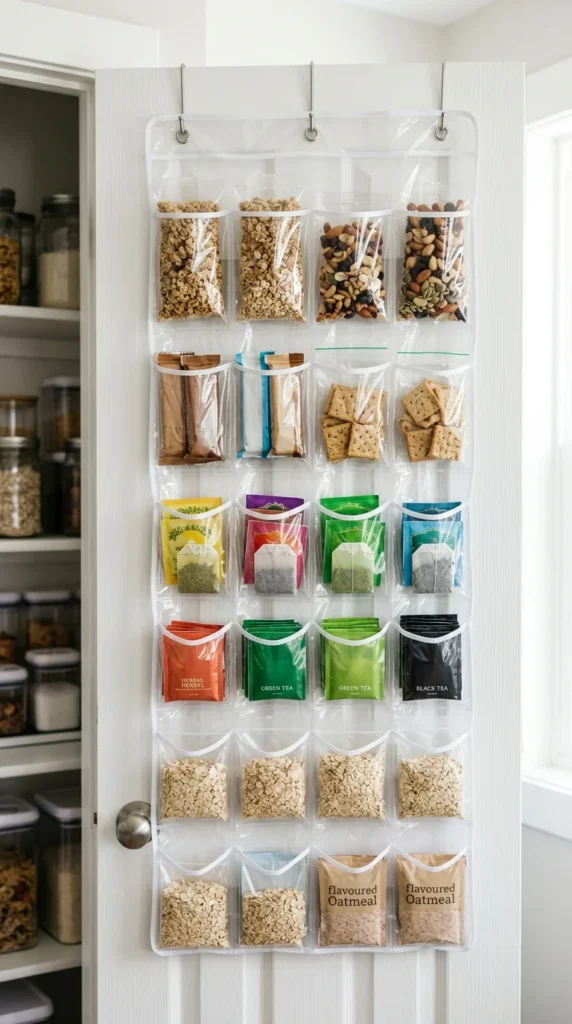
For those with a very small pantry, clear pocket organizers (typically meant for shoes) are a lifesaver. Each pocket can hold a different category of snack, packet of gravy, or individual serving of applesauce. Because the pockets are clear, kids can easily see and grab what they need for their lunchboxes.
20. Decanting Station
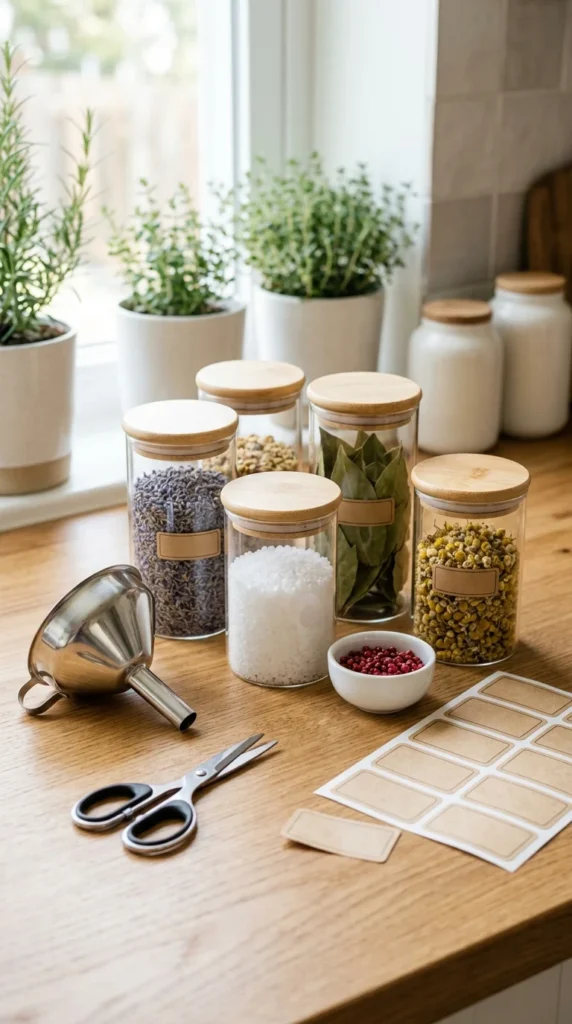
Maintaining an organized pantry requires a bit of effort. Setting up a small “decanting station” near the pantry makes the process easier. Keep a funnel, a pair of scissors (for opening bags), and your labels in one place. When you come home from grocery shopping, you can quickly transfer items into their jars and discard the bulky packaging immediately.
21. Rolling Carts
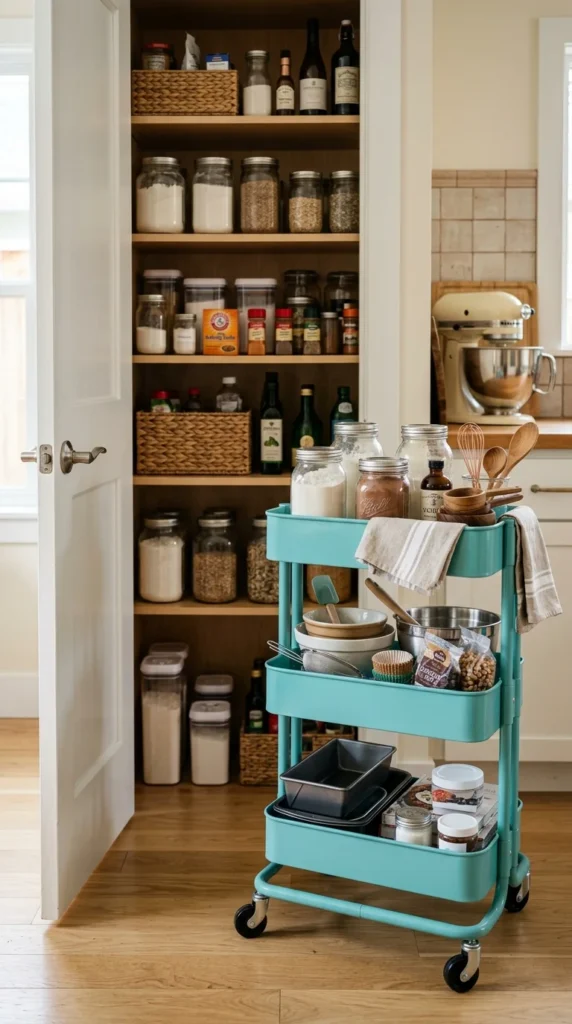
If your pantry is overflowing, a rolling utility cart can act as a “pantry extension.” You can use it for specific purposes, such as a “baking cart” or a “coffee and tea station.” The beauty of a cart is its mobility; you can roll it to your workspace while you cook and tuck it back into a corner when you’re finished.
22. Inventory Sheets
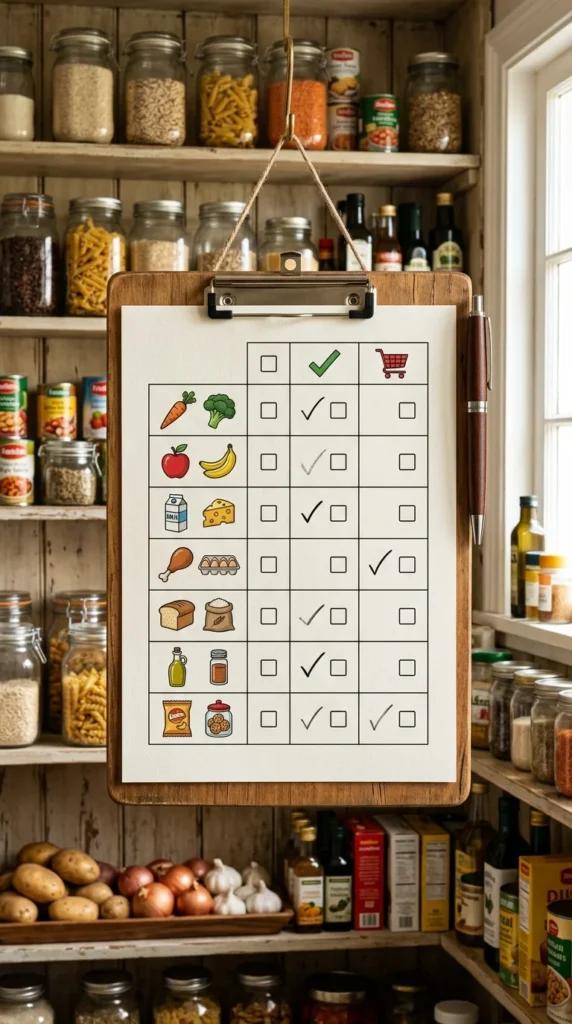
The final step in pantry mastery is tracking. An inventory sheet—whether it’s a printed list, a whiteboard, or a digital app—helps you track what you have. This prevents the frustration of starting a recipe only to realize you’re out of a key ingredient. Update it weekly before your grocery run to keep your kitchen running like a well-oiled machine.
Conclusion: Maintaining the Flow
Creating a functional pantry is not a one-time event; it is a lifestyle change for your kitchen. By implementing these 22 ideas, you create a system that works for your specific needs. Start small by decanting a few items or adding labels, and gradually build toward a fully optimized space. A clean, functional pantry doesn’t just improve the look of your home—it simplifies your life, one meal at a time.