
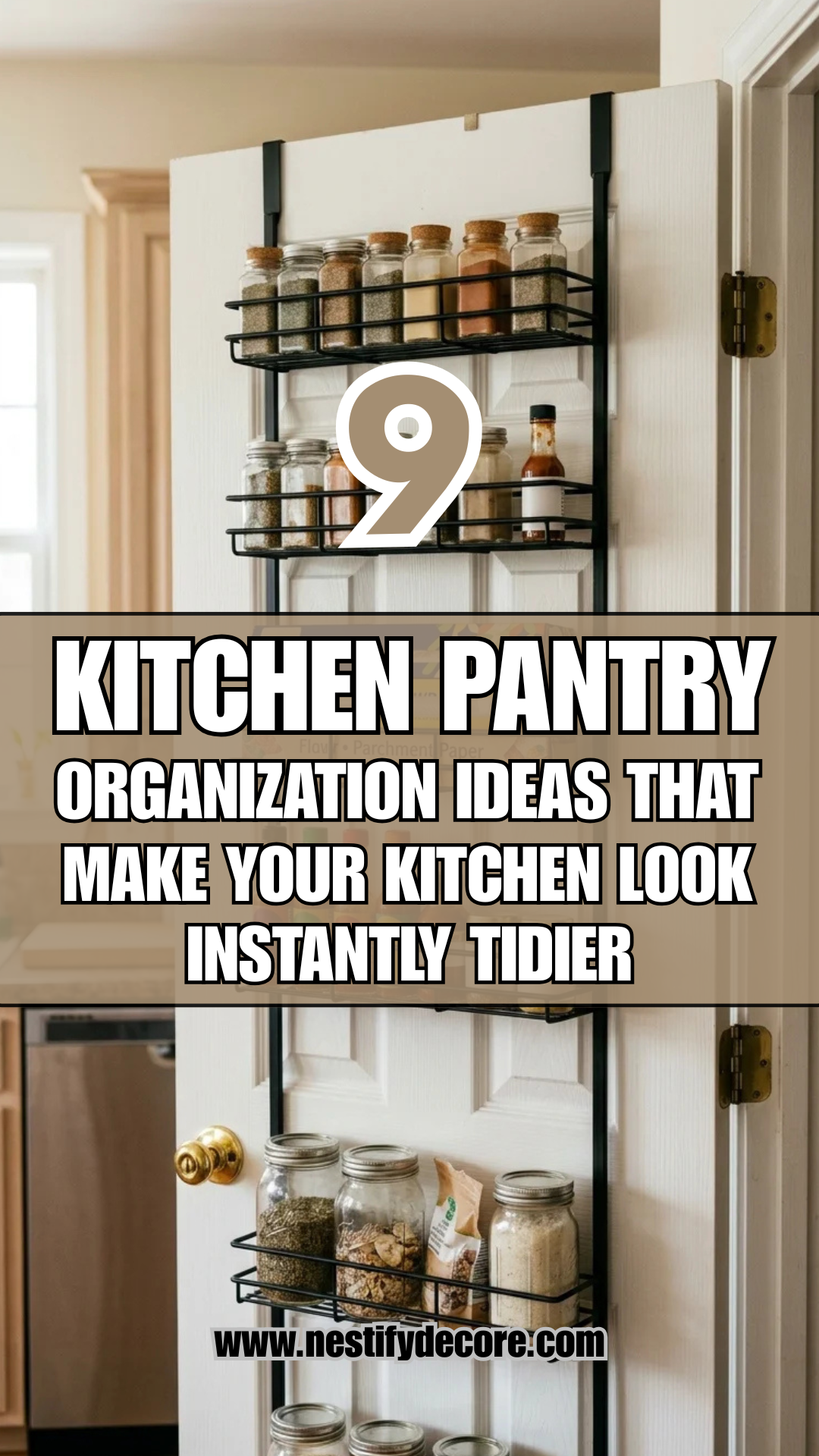
A cluttered pantry is more than just a visual eyesore; it is a source of daily friction that slows down meal preparation, leads to food waste, and creates unnecessary stress. When you can’t see what you have, you end up buying duplicates, while older items migrate to the dark corners of the shelves only to be discovered long after their expiration dates. Transforming this space doesn’t require a full kitchen remodel. With a few strategic organizational shifts, you can turn a chaotic cabinet into a streamlined, Pinterest-worthy pantry that makes your kitchen look instantly tidier and more sophisticated.
Here are nine transformative pantry organization ideas to elevate your kitchen’s functionality and aesthetic.
1. Clear Canisters
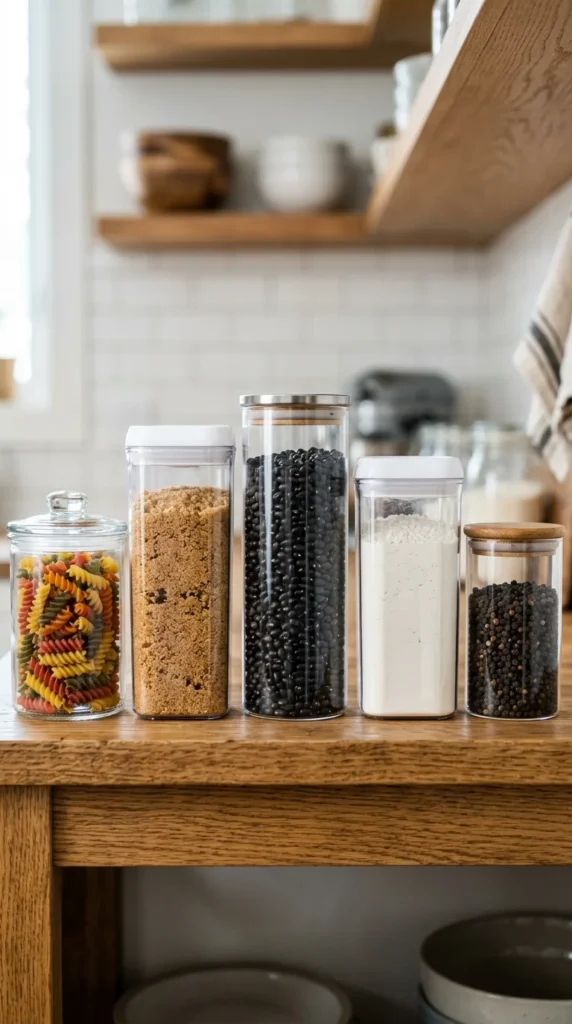
The “decanting” method is perhaps the most effective way to achieve an instant visual upgrade. By removing dry goods from their original, clashing cardboard and plastic packaging and transferring them into uniform clear canisters, you eliminate visual noise. This creates a cohesive look that allows the natural colors and textures of your ingredients to serve as decor.
Beyond aesthetics, clear canisters serve a vital functional purpose. They allow you to see exactly how much of a staple—like flour, sugar, or rice—you have left at a single glance, making grocery list creation a breeze. Choose airtight containers with silicone seals to keep your dry goods fresher for significantly longer than open bags held together by chip clips.
2. Tiered Shelving
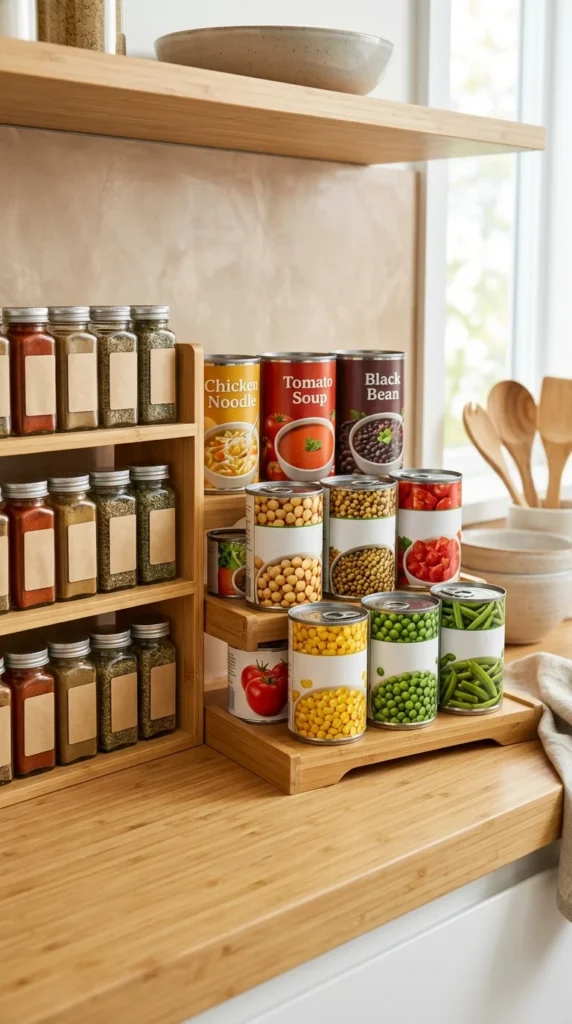
One of the biggest challenges in any pantry is the “disappearing act” that happens on deep shelves. Small items like spice jars, canned goods, and condiments often get pushed to the back, where they are forgotten. Tiered shelving, often referred to as “stadium seating” for your food, solves this problem by elevating the back rows.
By using tiered risers made of bamboo, acrylic, or non-slip plastic, you ensure that every single label is visible. This prevents you from digging through layers of cans to find the tomato paste and ensures you use what you have before it expires. It’s an inexpensive solution that maximizes vertical space on a single shelf.
3. Woven Baskets
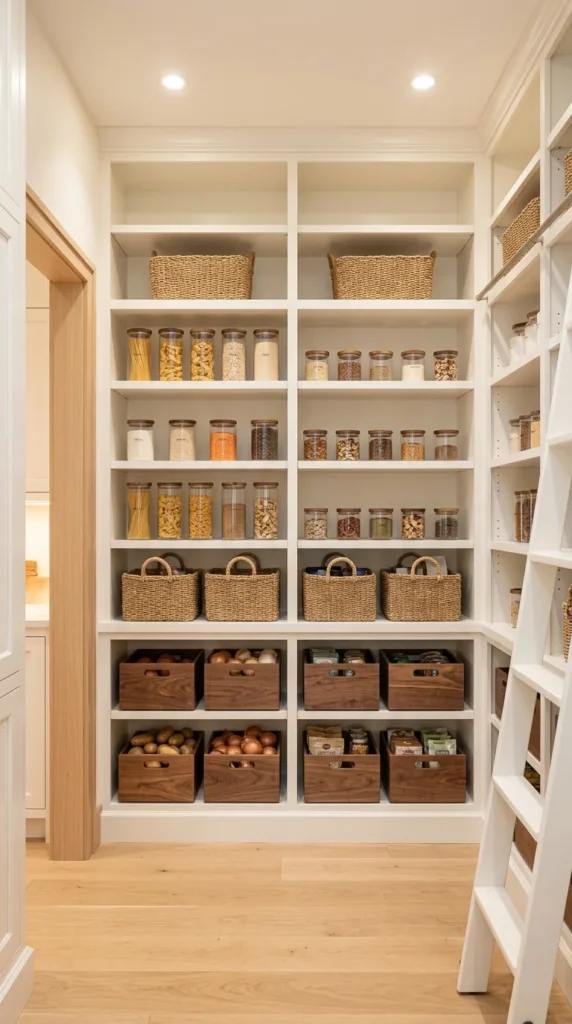
Not everything in a pantry is meant to be displayed in glass. Items like bags of snacks, potatoes, onions, or backstock paper goods often come in bulky, unattractive packaging that creates a sense of clutter. Woven baskets—made from seagrass, water hyacinth, or wicker—are the perfect solution for “hiding” the chaos.
These baskets add a layer of warmth and texture to your pantry, making it feel like a designed room rather than just a storage closet. They are excellent for “category dumping,” where you can toss all lunchbox snacks into one basket and all baking supplies into another, keeping the shelves looking uniform and tidy while making it easy for family members to find what they need.
4. Lazy Susans
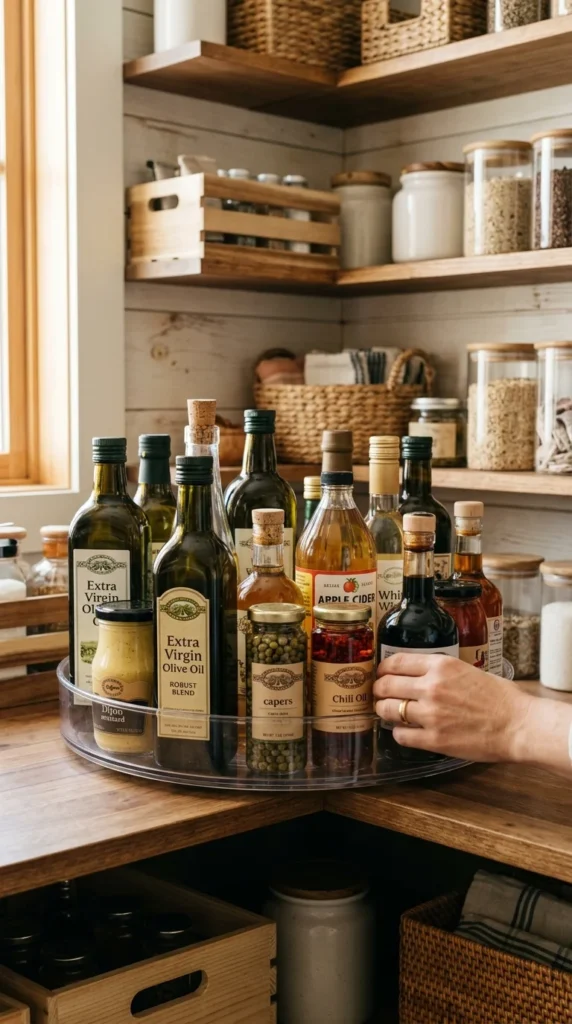
Pantry corners are notorious “dead zones” where jars go to die. Because corners are deep and often difficult to reach, items stored there are frequently overlooked. A Lazy Susan (or turntable) turns these awkward spaces into high-functioning storage hubs.
With a simple flick of the wrist, you can rotate the tray to bring items from the back to the front. These are particularly useful for oils, vinegars, honey, and large condiment jars that might otherwise leak or leave sticky rings on your shelves. Look for models with a high “lip” or rim to prevent bottles from tipping over as the tray spins.
5. Door Racks
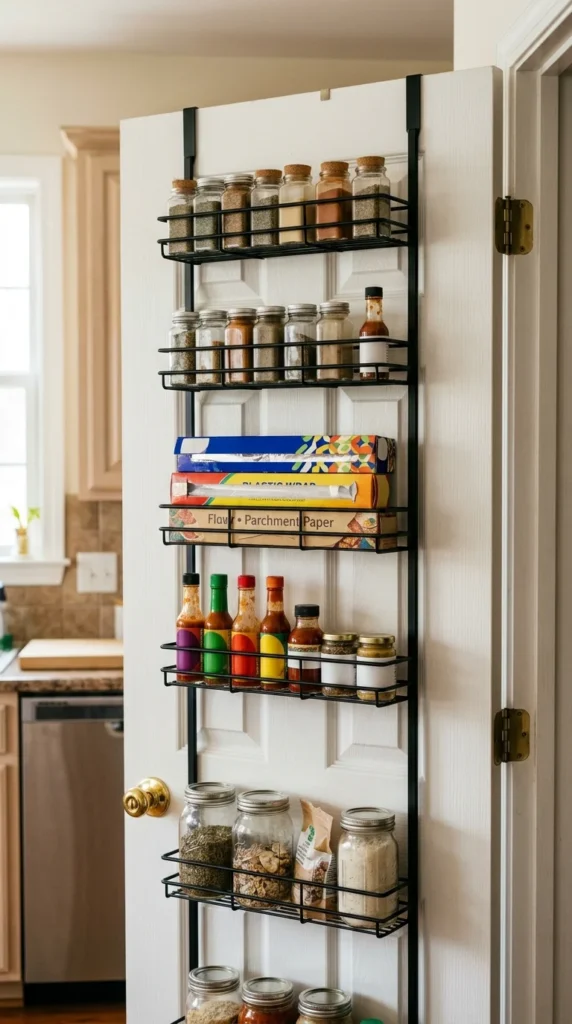
If you are dealing with a small kitchen, the back of the pantry door is prime real estate that is often completely ignored. Installing an over-the-door rack or a mounted shelving system can effectively add 15% to 20% more storage space to your pantry without taking up any floor or shelf room.
These narrow racks are perfect for storing slim items that often get lost on deep shelves, such as spice jars, boxes of aluminum foil, jars of peanut butter, or even a collection of tea boxes. By moving these smaller items to the door, you free up the main shelves for larger, bulkier containers, making the entire pantry feel more spacious.
6. Uniform Labels
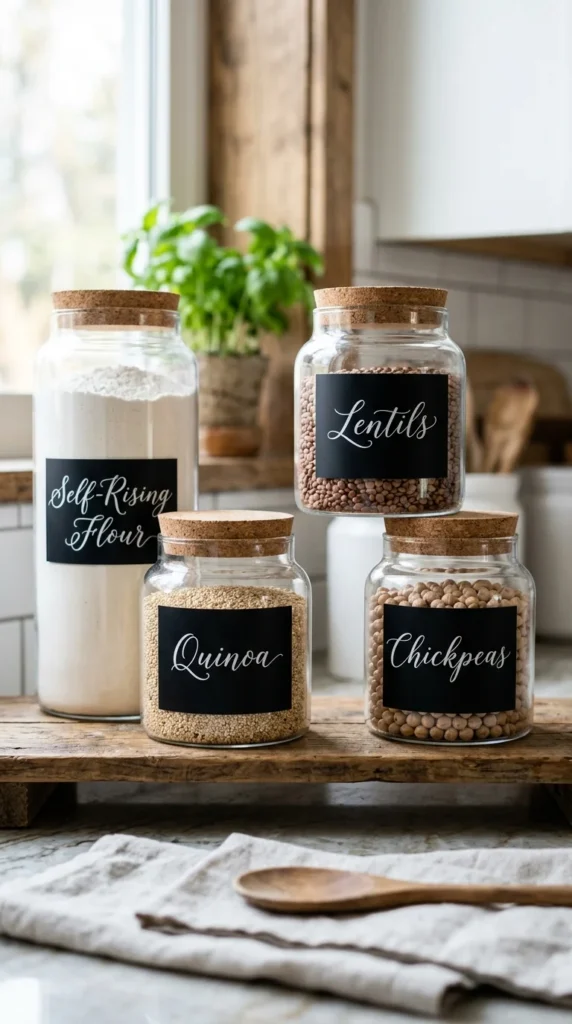
Even the most organized pantry can quickly fall back into disarray if there isn’t a clear system that everyone in the household understands. Uniform labeling is the “secret sauce” that maintains order. When every basket, bin, and canister has a clear label, there is no ambiguity about where items belong.
For the best aesthetic results, choose a consistent style. Minimalist white labels with black text offer a modern look, while chalkboard labels provide a rustic, farmhouse feel. Beyond just naming the item, consider adding “expiration date” or “cooking instruction” stickers to the bottom of canisters to keep important information handy once the original packaging is discarded.
7. Pull-out Drawers
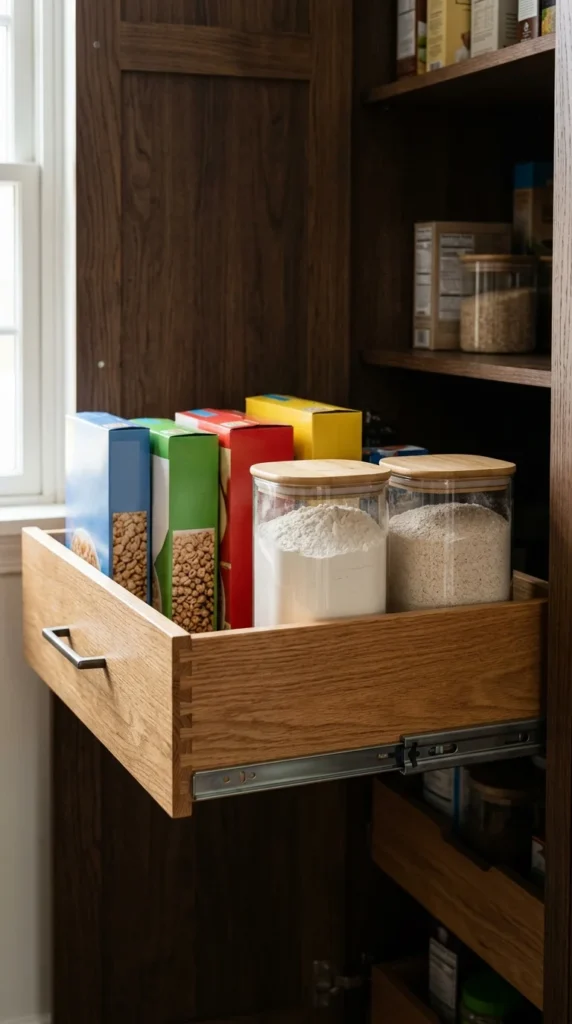
Deep cabinetry is a blessing for storage capacity but a curse for accessibility. Items at the very back of a 24-inch deep shelf are rarely used because they are too difficult to get to. Retrofitting your pantry with pull-out drawers or sliding wire baskets allows you to bring the back of the shelf to you.
This modification ensures that no space is wasted and that you have a full birds-eye view of your inventory. Pull-out drawers are especially effective for heavy items like bags of flour, liters of soda, or small kitchen appliances that are used infrequently. They provide the ergonomic benefit of not having to crouch and reach into dark spaces.
8. Under-shelf Baskets
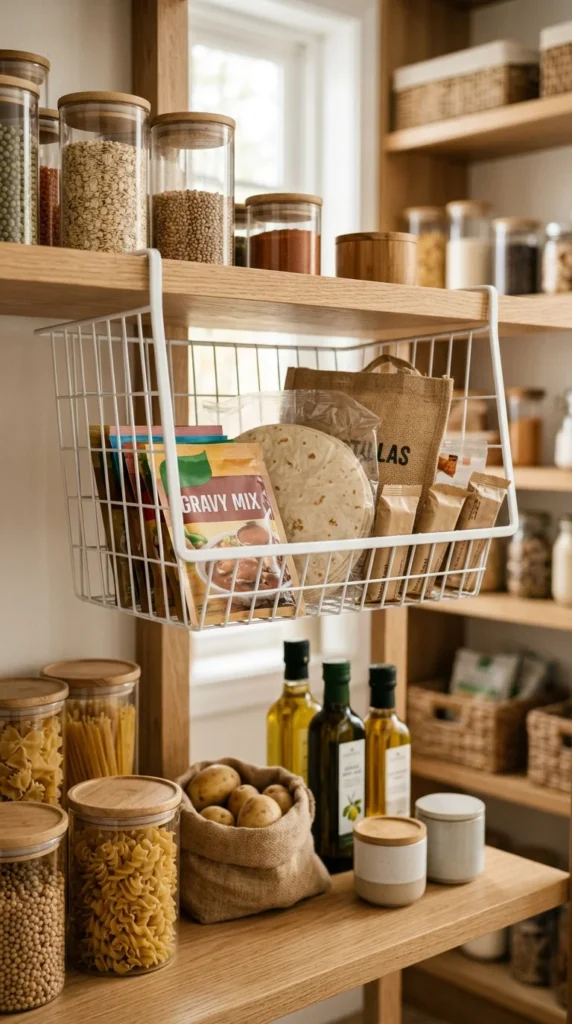
In many pantries, there is a significant amount of “dead air” between the top of your items and the bottom of the shelf above them. Under-shelf baskets are a brilliant way to reclaim this vertical space without having to install new permanent shelving.
These wire baskets simply slide onto your existing shelves, providing a “floating” drawer for flat or lightweight items. They are the ideal home for things that often get squashed or lost, such as bread, tortillas, foil packets, or loose snack bars. By utilizing this gap, you increase your storage density while keeping the main shelf surface clear and uncluttered.
9. Zone Grouping
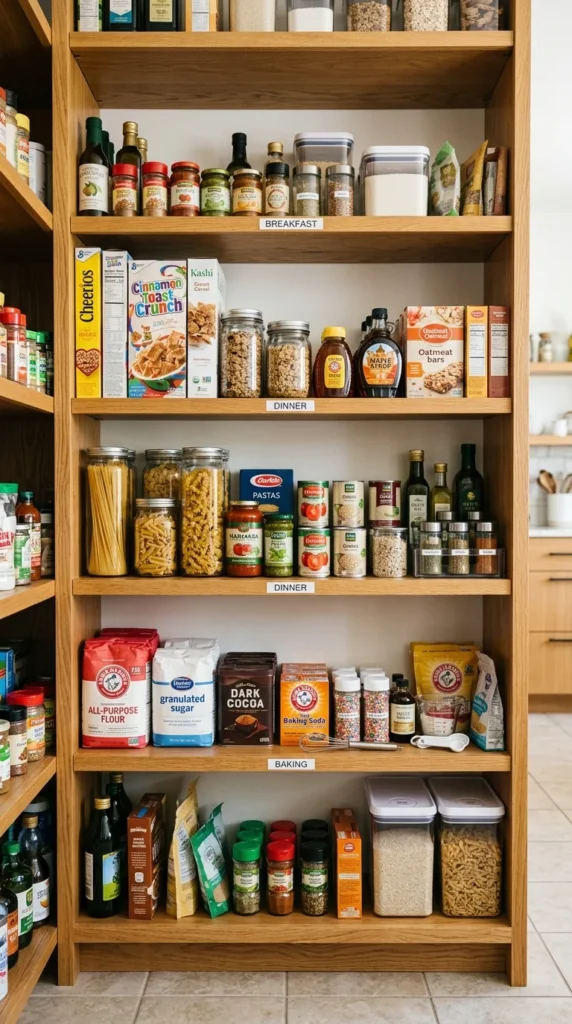
The final step in creating a professional-grade pantry is organizing by “zone.” Instead of grouping items solely by size or type, group them by how you use them. This logic-based system makes cooking and packing lunches significantly faster because everything you need for a specific task is located in one spot.
Common zones include:
- The Breakfast Zone: Cereals, oatmeal, syrups, and pancake mix.
- The Baking Zone: Flours, sugars, baking soda, and chocolate chips.
- The Snack Zone: Crackers, chips, and nuts (ideally at eye level for kids or higher up for adults).
- The Pasta/Grain Zone: Different shapes of pasta, rice, quinoa, and jarred sauces.
- The Dinner Prep Zone: Canned beans, stocks, and tinned tomatoes.
By establishing these zones, you create a workflow within your pantry that mirrors the way you actually live, ensuring that the tidiness you’ve worked so hard to achieve lasts for the long term.