

In the world of interior design, few colors possess the transformative power of sage green. It is a hue that bridges the gap between the vibrancy of the natural world and the sophisticated restraint of modern minimalism. Often described as a “new neutral,” sage green has become the go-to palette for those looking to create a sanctuary that feels both tranquil and high-end.
Unlike brighter greens that can feel overstimulating or darker forest tones that can sometimes feel heavy, sage green provides a muted, earthy base that reflects light beautifully. When paired with the right textures and accents, it can elevate a standard bedroom into a space that looks like it was curated by a top-tier designer. Here are nine sage green bedroom ideas to help you achieve a calm, expensive aesthetic.
1. Velvet Textures
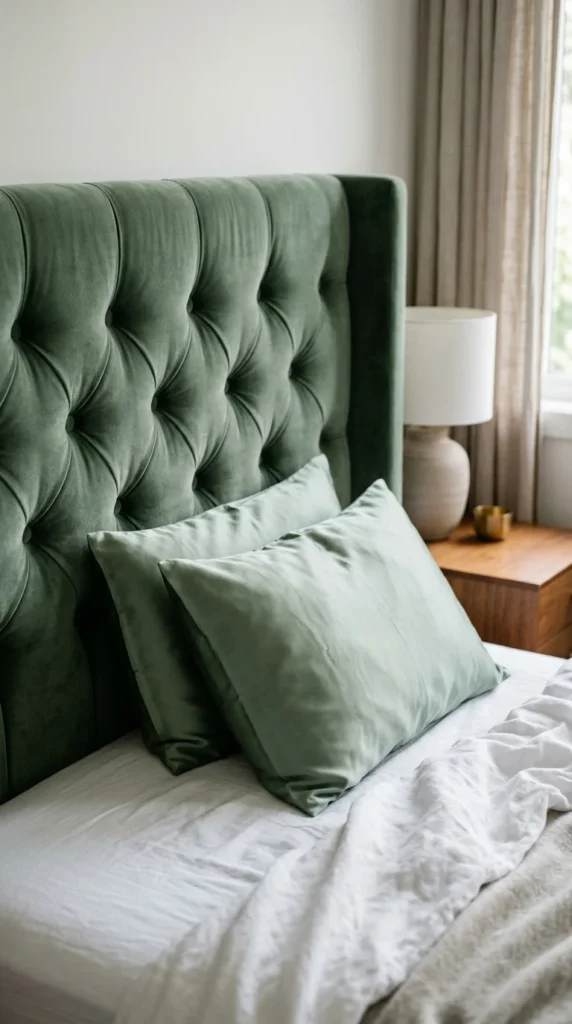
To make a bedroom feel “expensive,” you must play with tactile depth. Velvet is a material that naturally exudes luxury, and when rendered in a sage green tone, it gains an extra layer of sophistication. The way velvet catches the light creates highlights and shadows, preventing the color from looking flat or one-dimensional.
A sage green velvet headboard serves as an immediate focal point, grounding the room and providing a soft, comfortable surface for lounging. If a full headboard feels like too much of a commitment, consider adding a velvet bench at the foot of the bed or a few oversized velvet throw pillows. These small additions introduce a “quiet luxury” vibe that feels intentional and curated.
2. Brass Accents
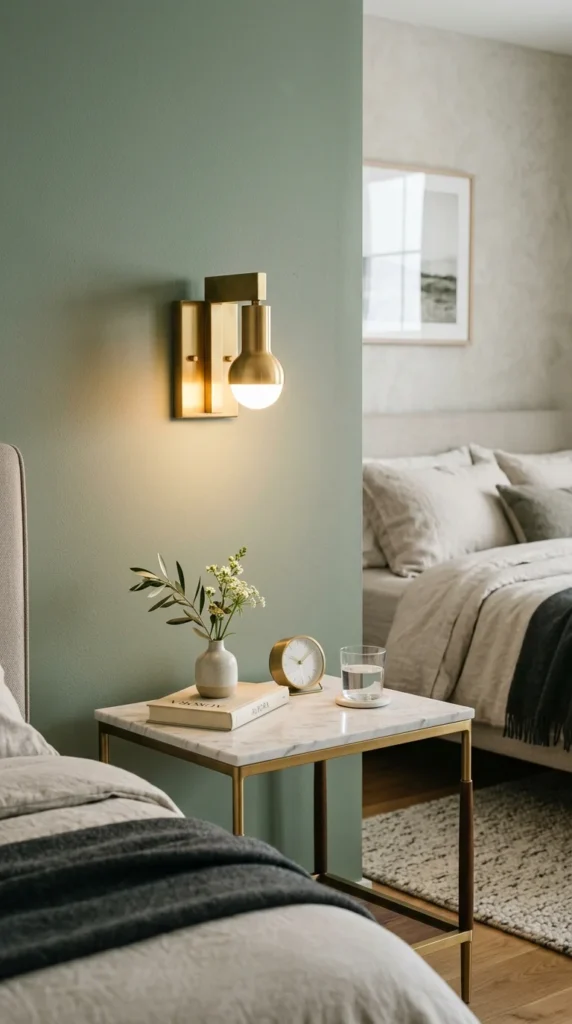
The coolness of sage green—which often has grey or blue undertones—pairs exquisitely with the warmth of gold or brass metals. This combination is a classic interior design trick for creating a high-end look. The metallic sheen of brass provides a sharp, polished contrast to the soft, organic feel of the green paint.
Incorporate brass through your hardware and lighting fixtures. Think about switching out standard drawer pulls for brushed brass handles or installing a modern brass chandelier as a statement piece. Even small details, like a brass-framed mirror or a gold-trimmed clock on the nightstand, can catch the eye and give the room a cohesive, expensive-looking finish.
3. Natural Wood
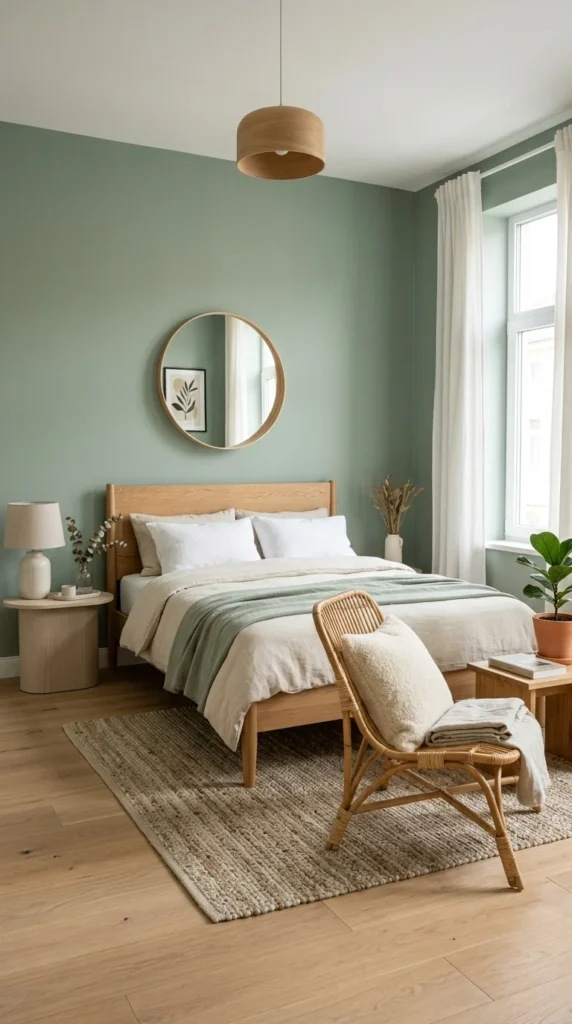
To enhance the “calm” aspect of a sage green bedroom, look to biophilic design—the practice of connecting indoor spaces with the natural world. Sage green is essentially a color found in nature, so it naturally harmonizes with organic materials like wood.
The key to keeping it expensive-looking is the finish of the wood. Light oak, walnut, or ash woods provide a clean, contemporary feel that complements the earthy tones of sage. Avoid overly orange or red stains, as these can clash with the green’s cool undertones. A solid wood bed frame or a set of floating wooden shelves adds a sense of permanence and quality to the space that synthetic materials simply cannot replicate.
4. Layered Monochrome
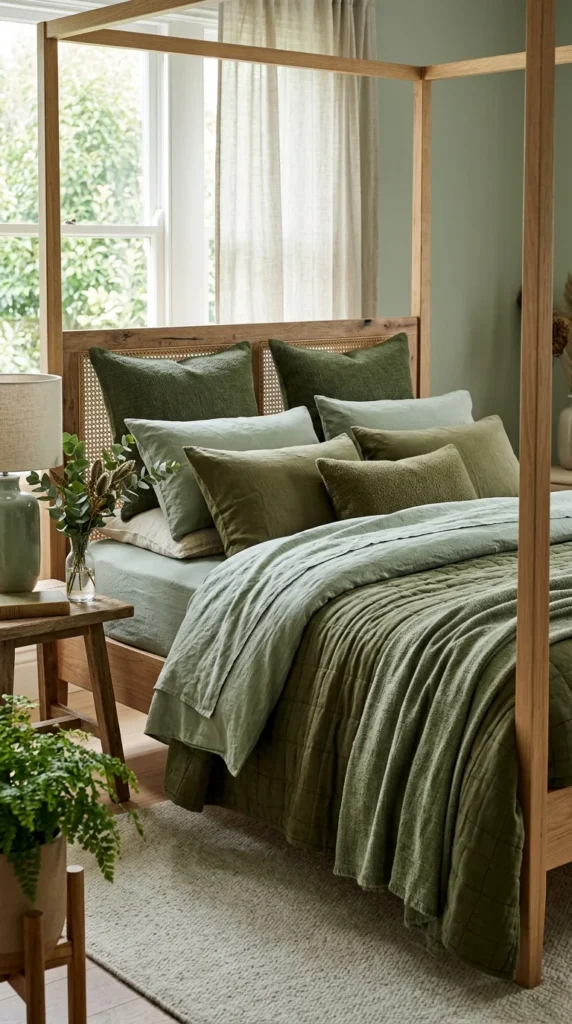
One of the most sophisticated ways to use sage green is to lean into a monochromatic color scheme. However, “monochrome” doesn’t mean everything should be the exact same shade. To achieve an expensive look, you should layer various tints and tones of green throughout the room.
Start with a light sage on the walls, then bring in a deeper olive for the duvet cover, and perhaps a dusty forest green for a wool throw rug. By staying within the same color family but varying the intensity and fabric textures (mixing linen, wool, and cotton), you create a space that feels complex and professionally designed. This layering technique adds “visual weight,” making the room feel cozy and expensive rather than sparse.
5. Statement Paneling
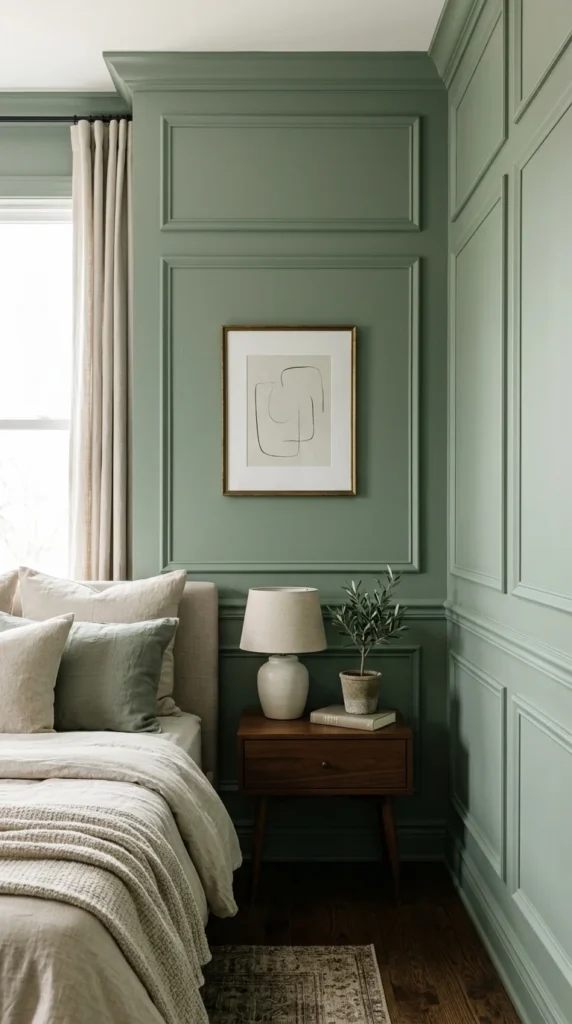
Nothing says “expensive” like architectural detail. If your bedroom feels like a plain white box, adding wall paneling or wainscoting can instantly give it a sense of history and character. When you paint these details in a rich sage green, the shadows created by the molding add a level of sophistication that flat paint cannot achieve.
Picture frame molding is a popular choice for sage green bedrooms because it feels traditional yet can be styled with modern furniture for a “transitional” look. Shiplap, when installed vertically and painted sage, can offer a more contemporary, boutique-hotel vibe. The uniform color across both the wall and the molding keeps the look streamlined and serene.
6. Tall Drapes
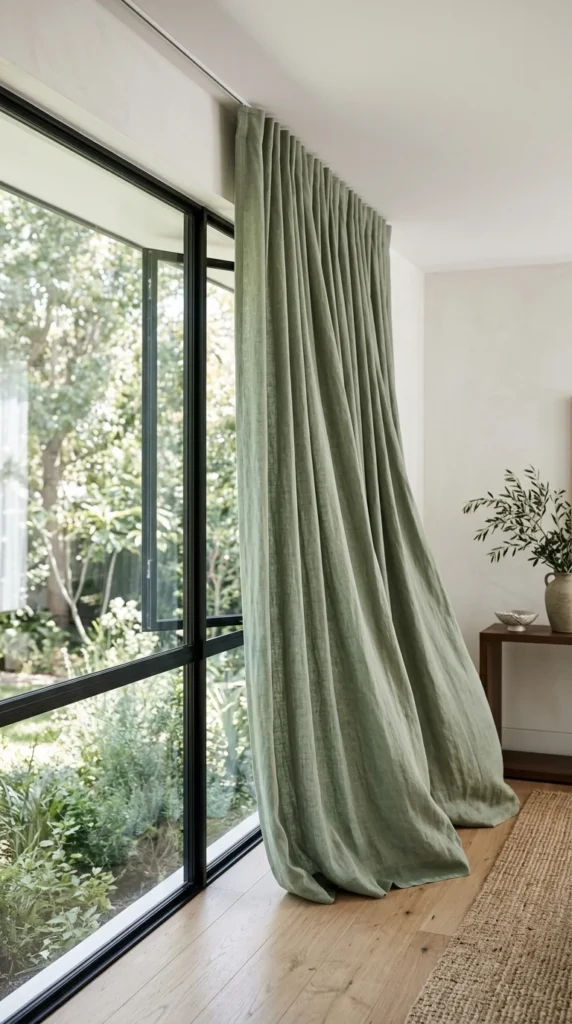
In high-end interior design, window treatments are never an afterthought. To make your space feel taller and more grand, install your curtain rod as close to the ceiling as possible and let the fabric “puddle” slightly on the floor.
Sage green drapes in a heavy linen or a light-filtering cotton can soften the entire room. Linen, in particular, has a beautiful natural weave that feels expensive and relaxed at the same time. When the sun shines through sage-colored curtains, it casts a soft, botanical glow throughout the room, reinforcing that sense of calm you’re striving for.
7. White Linens
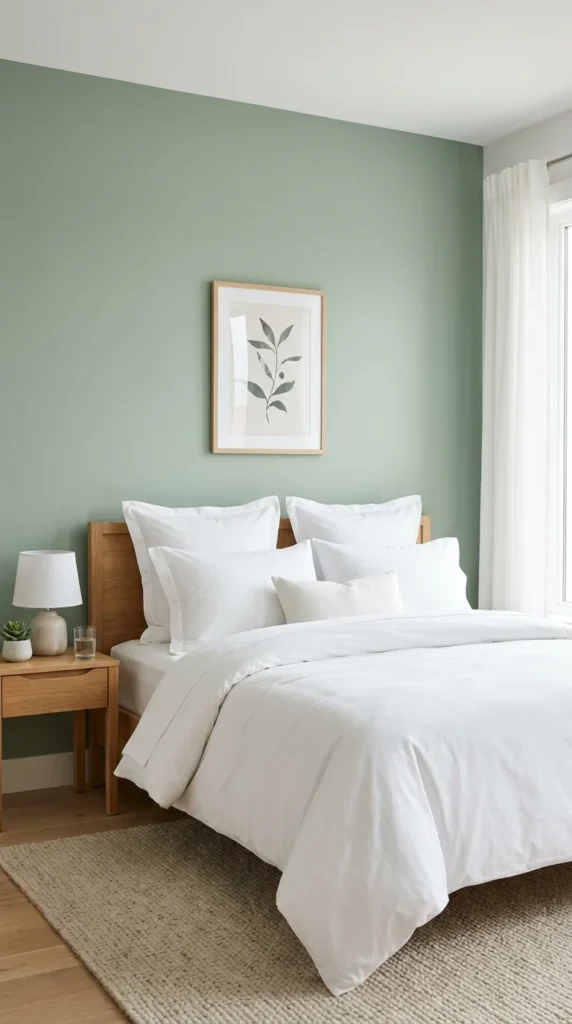
While layering greens is one approach, the other classic way to style a sage bedroom is to pair it with crisp, bright white. This creates a “hotel-chic” aesthetic that feels incredibly clean and fresh. The white linens act as a bright canvas that allows the sage green walls to truly pop.
For the most expensive feel, opt for high-thread-count cotton or percale sheets. The contrast between the organic, muted green and the sharp, clean white is visually refreshing and helps the room feel airy and spacious. This combination is particularly effective in smaller bedrooms where you want to maintain a sense of openness.
8. Botanical Art
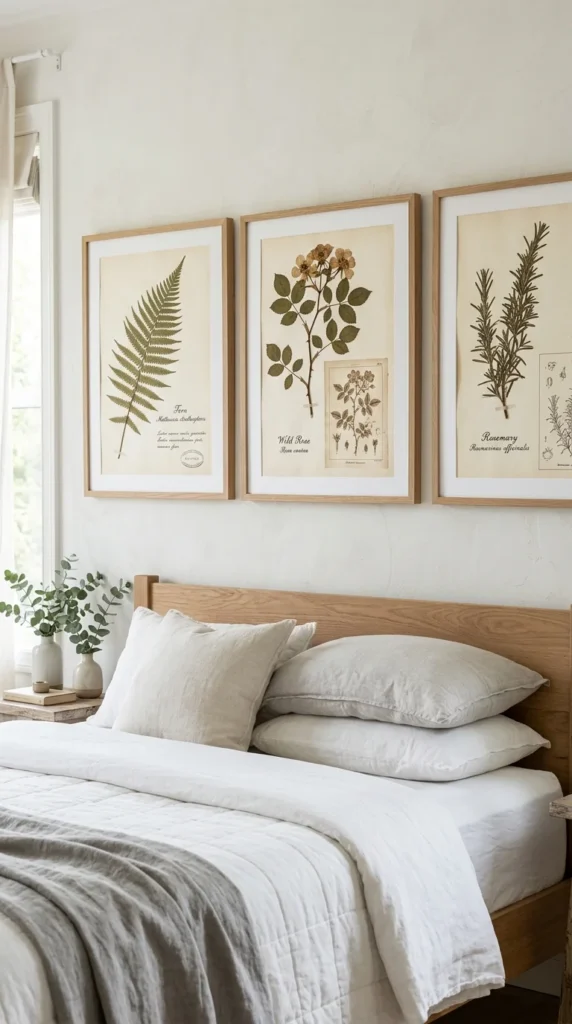
Since sage green is a color rooted in the garden, decorating with botanical art is a natural fit. However, to keep it looking “expensive” rather than “crafty,” focus on the framing and the scale of the art.
Instead of many small, cluttered pictures, try a triptych of three large, matching frames with vintage-style botanical prints or minimalist line drawings of leaves. Using high-quality frames—perhaps in a dark wood or a thin black metal—elevates the art and makes it feel like a curated collection. This reinforces the tranquil, nature-inspired theme of the room while adding a touch of intellectual sophistication.
9. Warm Lighting
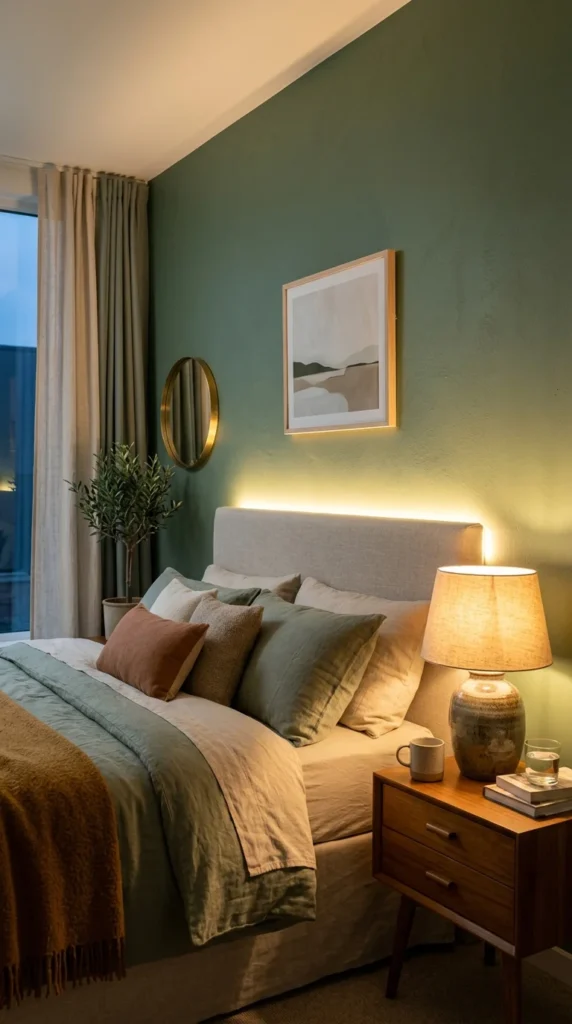
The way sage green looks can change dramatically depending on the lighting. To keep the space feeling expensive and cozy, avoid harsh overhead “big lights” which can make muted greens look washed out or grey.
Instead, layer your lighting. Use bedside lamps with warm-toned bulbs, floor lamps in the corners, and perhaps even some indirect LED strip lighting behind a headboard or along a bookshelf. Warm light (around 2700K to 3000K) brings out the yellow undertones in sage green, making the room feel golden and inviting in the evening. This creates a peaceful “cocoon” effect that is perfect for winding down after a long day.