

Sage green has emerged as the quintessential color for modern sanctuaries. As a muted, earthy hue that sits comfortably between grey and green, it evokes a sense of tranquility, growth, and renewal. Unlike bolder emeralds or neon greens, sage acts as a sophisticated neutral that brings the calming essence of the outdoors inside. Whether you are looking for a complete overhaul or a few simple updates, these 21 ideas will help you harness the power of sage green to create the ultimate dreamy retreat.
1. Accent Wall
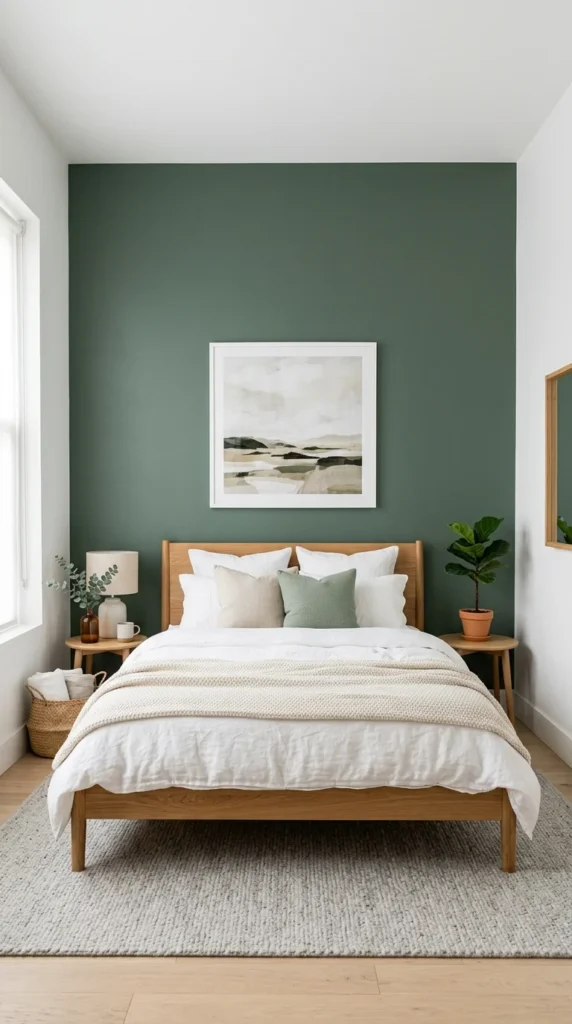
An accent wall is the most direct way to introduce sage green without overwhelming a small space. By painting the wall behind your headboard, you create a natural focal point that anchors the room. This technique allows you to experiment with deeper shades of sage that might feel too dark if applied to all four walls. Pair it with light-colored furniture to make the color pop, or go for a tonal look with dark wood for a more grounded, traditional feel.
2. Velvet Textures
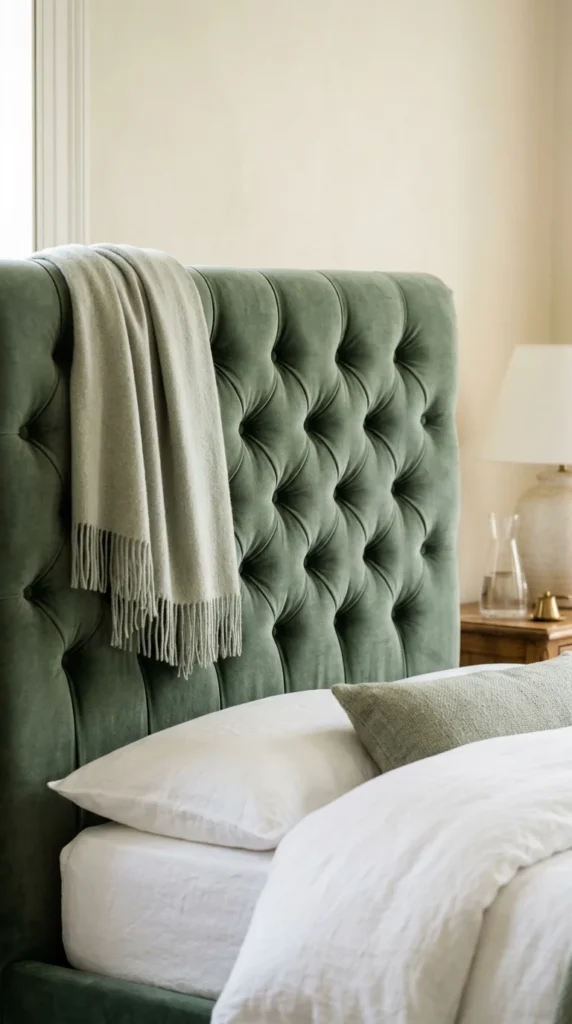
Velvet and sage green are a match made in interior design heaven. The inherent sheen of velvet catches the light, giving sage green a multi-dimensional look that shifts from silvery-grey to deep moss. A sage velvet headboard or a pair of upholstered armchairs adds an instant touch of luxury and tactile warmth. This material choice is particularly effective in “softening” the bedroom, making it feel more like a high-end hotel suite.
3. Natural Wood
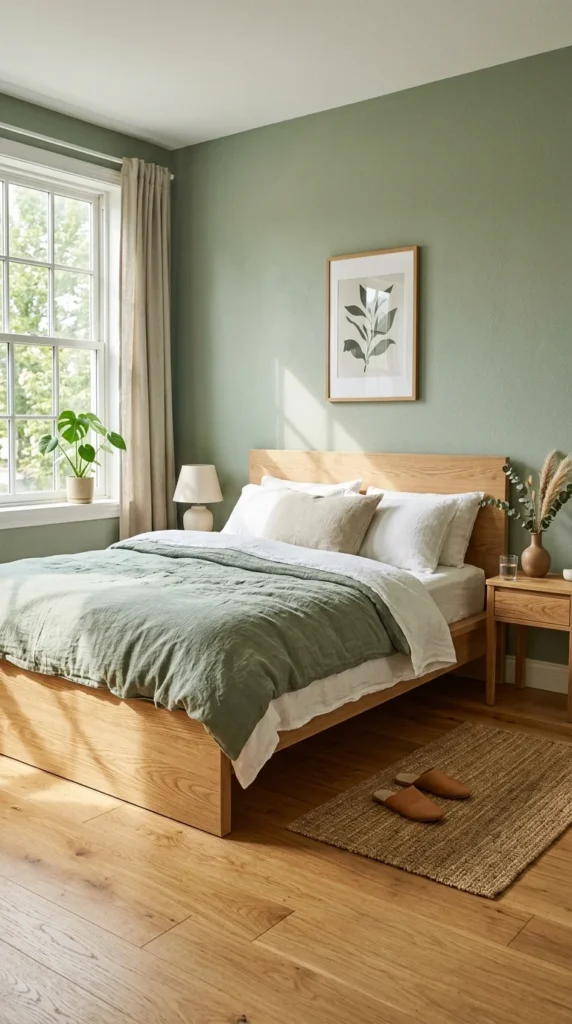
Sage green is a color derived from nature, which is why it pairs so effortlessly with natural wood elements. Light woods like oak, ash, and pine bring out the brightness of the green, creating a Scandi-inspired, airy atmosphere. Conversely, dark woods like walnut or mahogany provide a stately contrast that feels grounded and timeless. Consider exposed ceiling beams or a simple wooden nightstand to reinforce this organic connection.
4. Botanical Prints
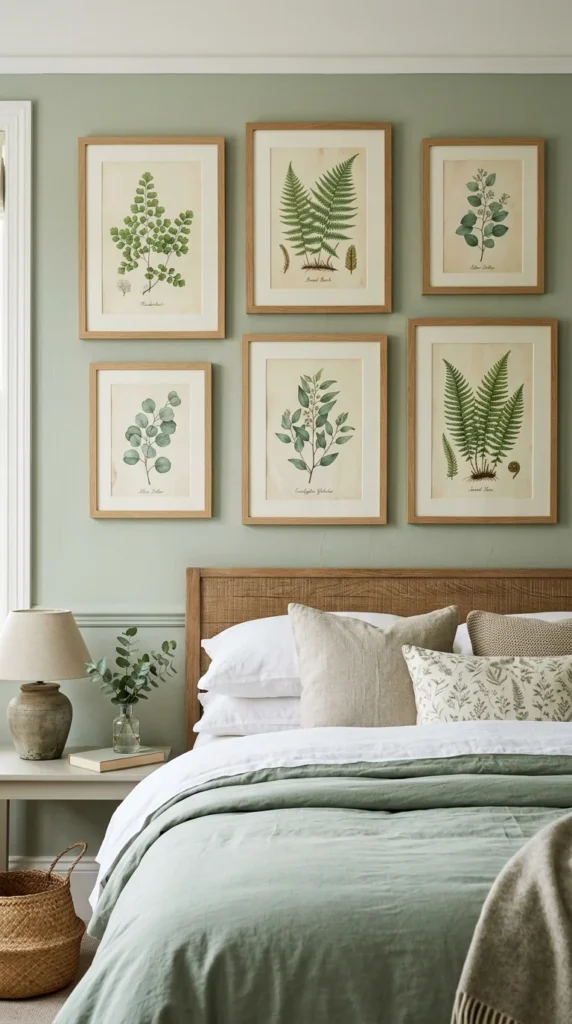
To lean into the “garden-inspired” aesthetic, incorporate botanical prints. Whether it’s a series of framed fern leaves or a large-scale piece of abstract floral art, these elements emphasize the organic roots of the color palette. This is an excellent way to introduce other shades of green and cream, creating a layered visual interest that keeps the eye moving without disrupting the room’s peace.
5. Layered Bedding
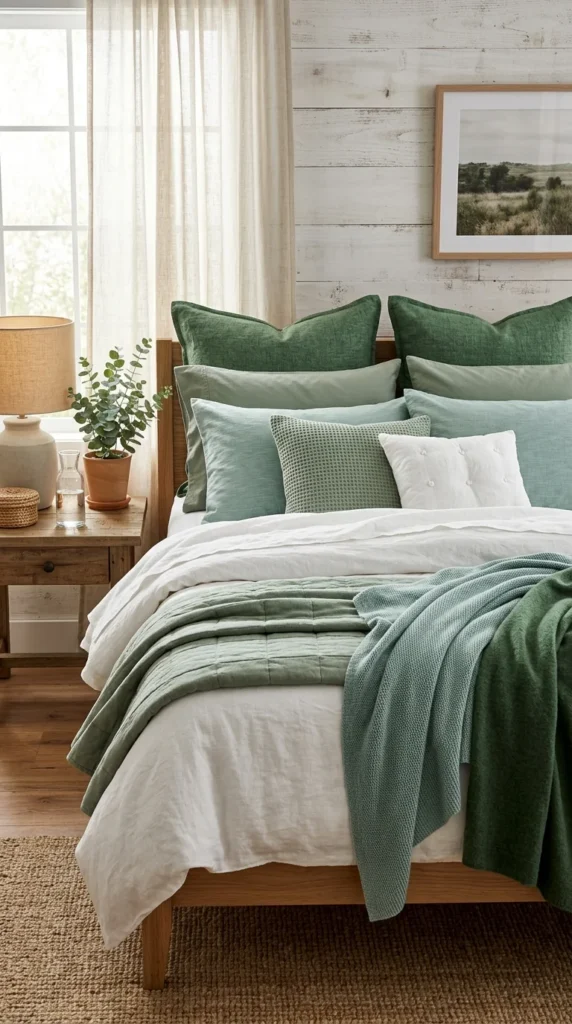
The bed is the heart of the room, and layering different shades and textures of sage bedding can create a “cloud-like” effect. Mix a sage green duvet cover with forest green throw pillows and a cream-colored chunky knit blanket. Using different materials—such as linen, cotton, and wool—adds depth and prevents the single-color palette from looking flat or clinical.
6. Metallic Accents
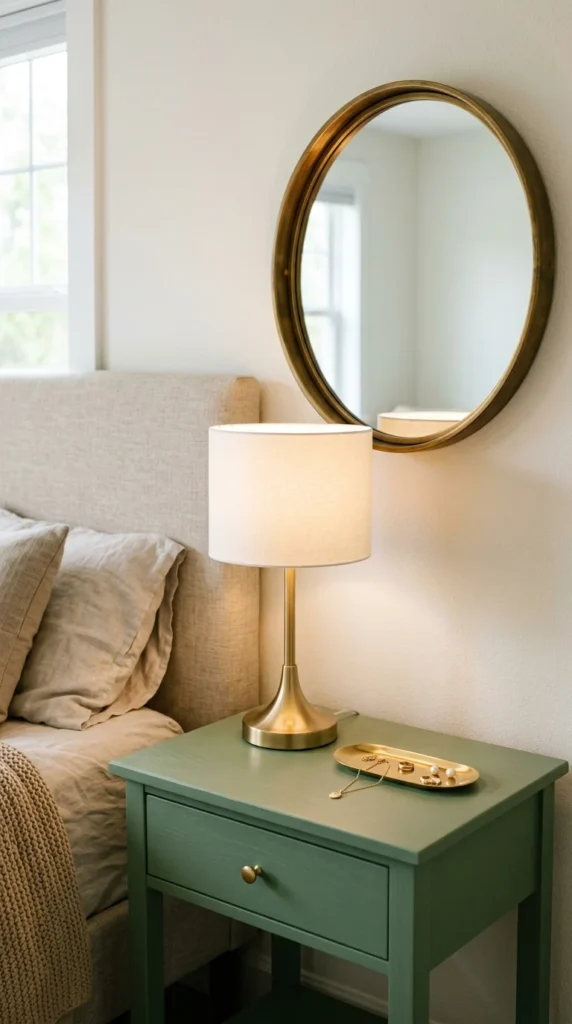
To prevent a sage bedroom from looking too rustic, introduce metallic accents. Brushed gold, brass, and copper work exceptionally well with the warm undertones of sage green. These metals add a “glow” to the room, especially when caught by candlelight or soft bedside lamps. Think of drawer pulls, picture frames, or light fixtures as the “jewelry” of your bedroom.
7. Minimalist Scandi
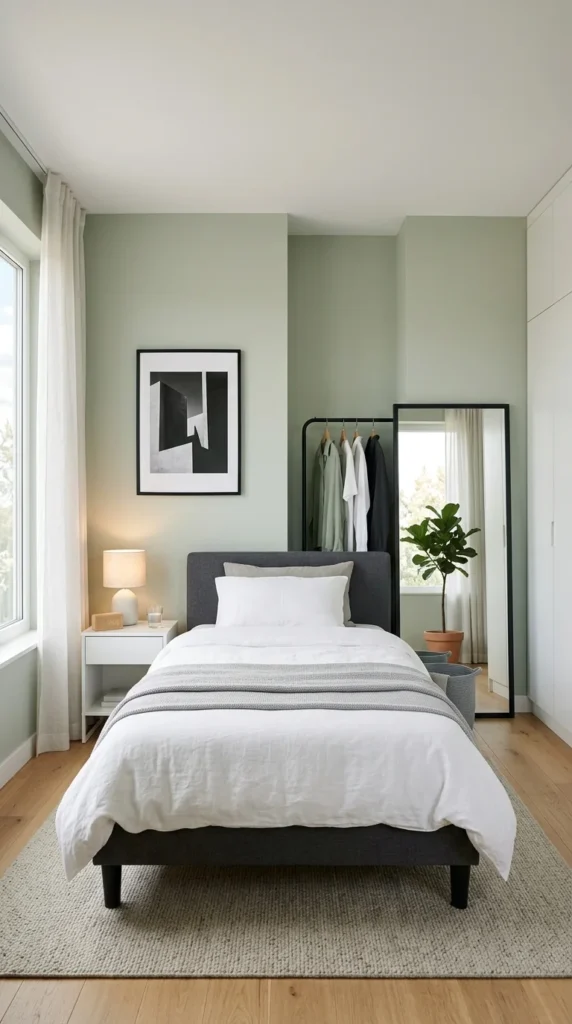
For those who prefer a “less is more” approach, sage green serves as the perfect base for a Scandinavian design. Use a very pale, desaturated sage on the walls and keep furniture lines clean and functional. This approach relies on a restricted color palette of sage, white, and light grey to create a clutter-free environment that promotes mental clarity and rest.
8. Moody Sage
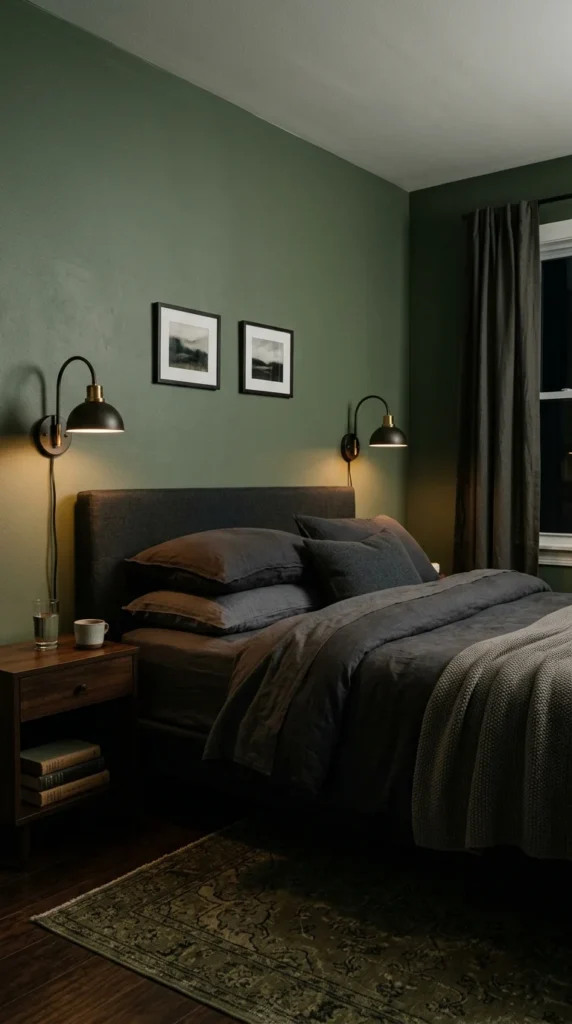
While sage is often thought of as light and airy, choosing a darker, muddier version can create a “cocoon” effect. This is ideal for bedrooms that don’t receive much natural light. By leaning into the darkness with deep sage walls and dark-toned textiles, you create a sophisticated, moody retreat that feels incredibly private and secure—perfect for deep sleep.
9. Boho Vibes
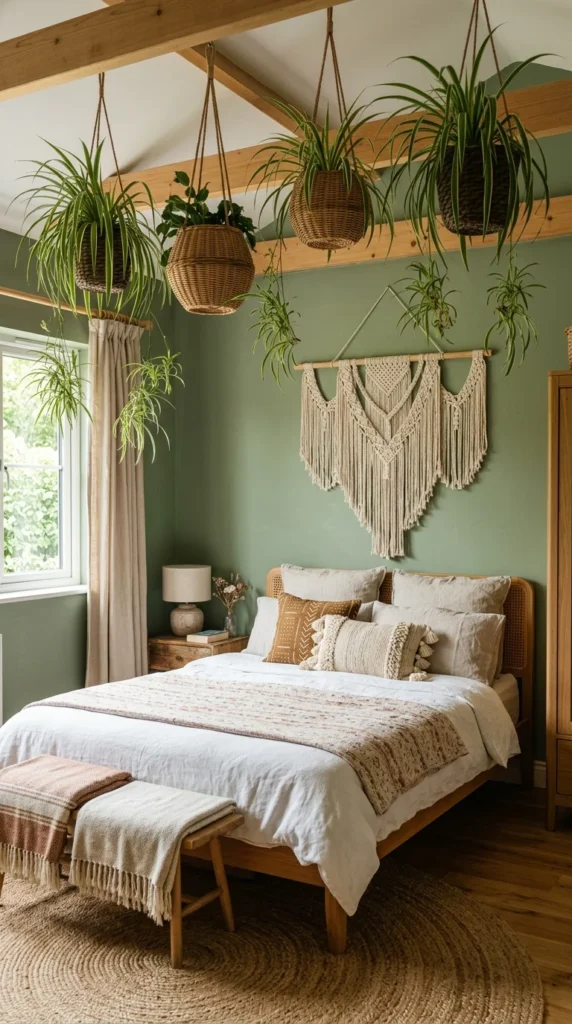
Sage green is a staple of the bohemian aesthetic. Its earthy quality complements natural fibers like jute, rattan, and wicker. To achieve this look, pair your sage walls with a tasseled rug, a woven headboard, and plenty of “wild” greenery. The goal is to create a space that feels lived-in, curated, and deeply connected to the earth.
10. Floor-to-Ceiling Drapes
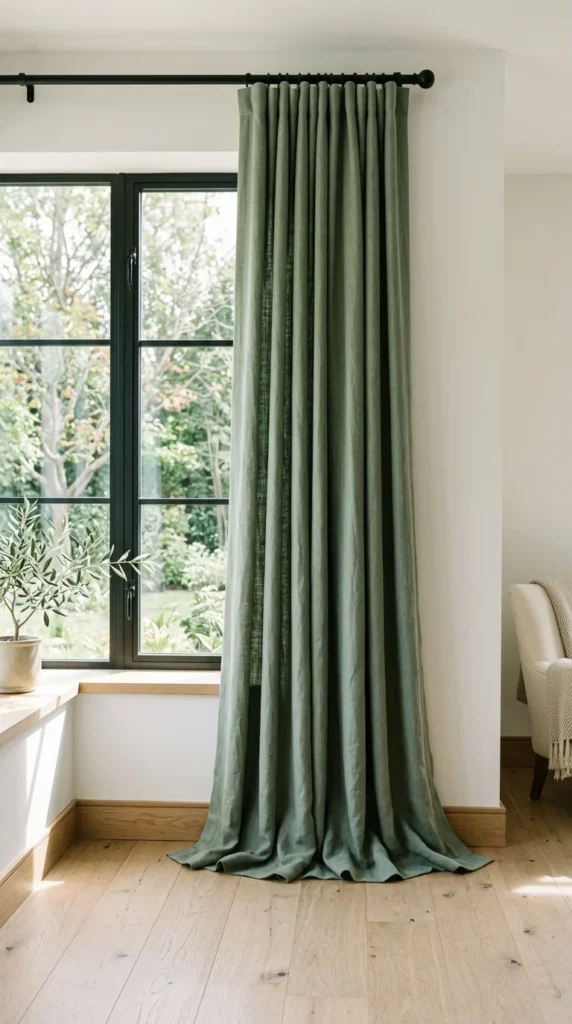
Windows are often overlooked, but they provide a massive canvas for color. Installing floor-to-ceiling sage green drapes can make a room feel taller and more cohesive. When the curtains are closed, the room is bathed in a soft, green-tinted light that is incredibly soothing. Choose linen for a breezy, casual feel or heavy velvet for better light blocking and insulation.
11. Woven Rattan
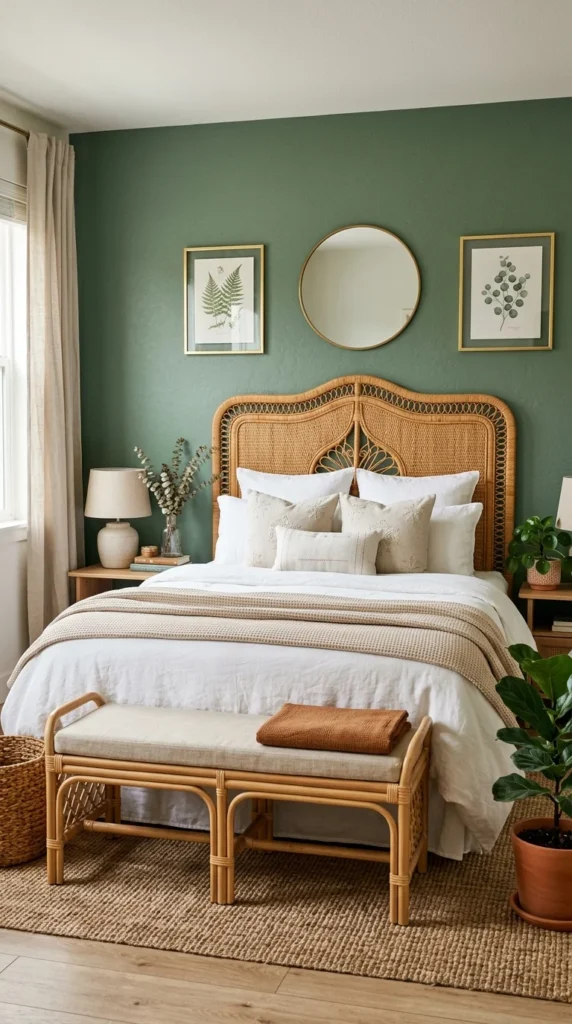
Rattan and sage green are a classic duo. The warm, honey-toned tan of the rattan provides a beautiful contrast to the cool tones of the green. This combination is particularly effective for creating a coastal or tropical “vacation” feel within your home. A rattan papasan chair or even just some woven storage baskets can easily introduce this texture.
12. Tonal Monochrome
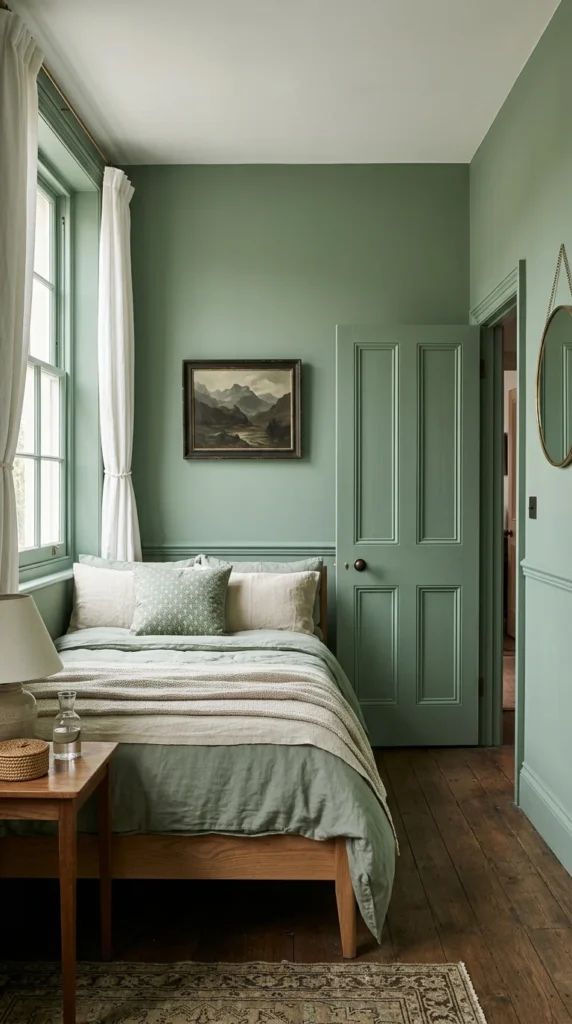
For a bold, modern statement, try a monochromatic color drench. This involves painting not just the walls, but also the baseboards, window frames, and even the ceiling in the same shade of sage. This removes visual “noise” and creates a seamless, immersive environment. It makes small rooms feel larger because there are no harsh lines breaking up the space.
13. Terracotta Pairing
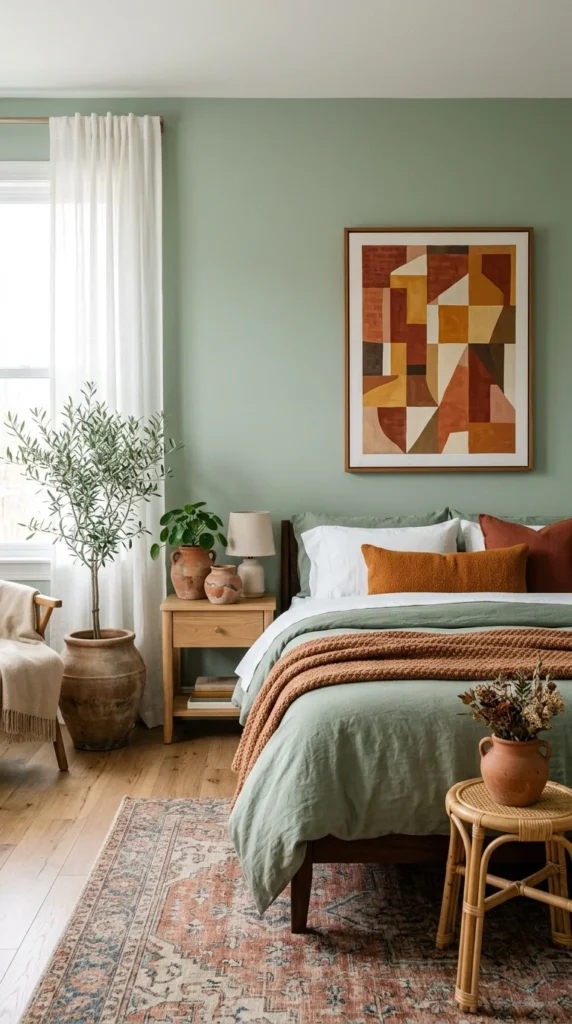
If you want to add a bit of warmth to your sage sanctuary, look to the opposite side of the color wheel. Terracotta, clay, and burnt orange are natural complements to sage green. These “clay” tones ground the airiness of the green and add a Mediterranean or Southwestern flair to the decor.
14. Industrial Edge
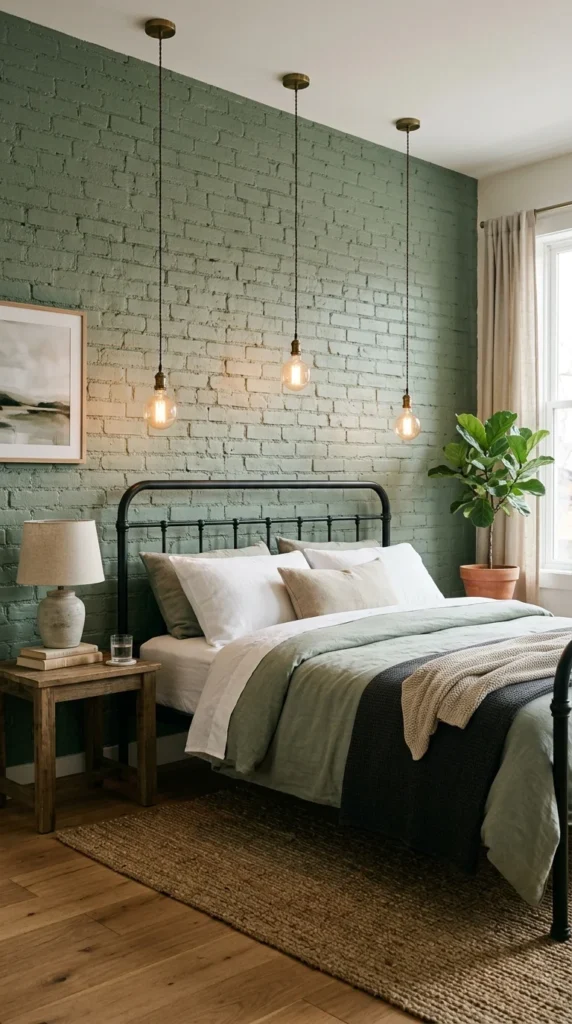
Sage green isn’t just for soft, feminine spaces. It can also soften the harshness of industrial design. In a room with exposed brick or metal pipes, a sage green wall or bedding can provide a much-needed organic touch. The contrast between the “hard” industrial elements and the “soft” sage color creates a balanced, contemporary look.
15. Vintage Flourish
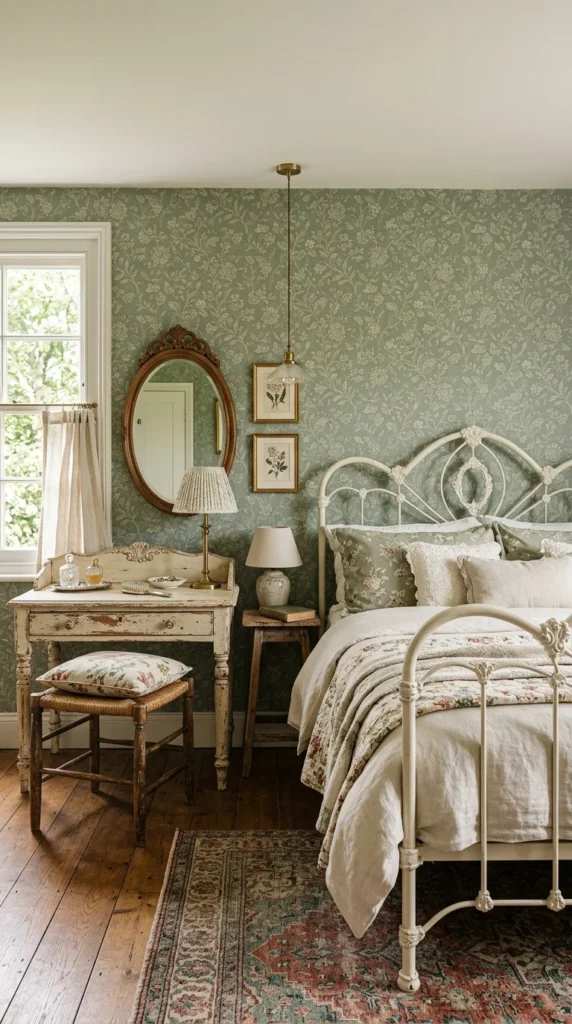
Sage green has a timeless quality that lends itself perfectly to vintage or “shabby chic” styles. Use a sage green wallpaper with a delicate white floral pattern to create a nostalgic, cottage-core vibe. Antique furniture painted in a distressed white or cream finish completes this romantic, dreamy look.
16. Soft Lighting
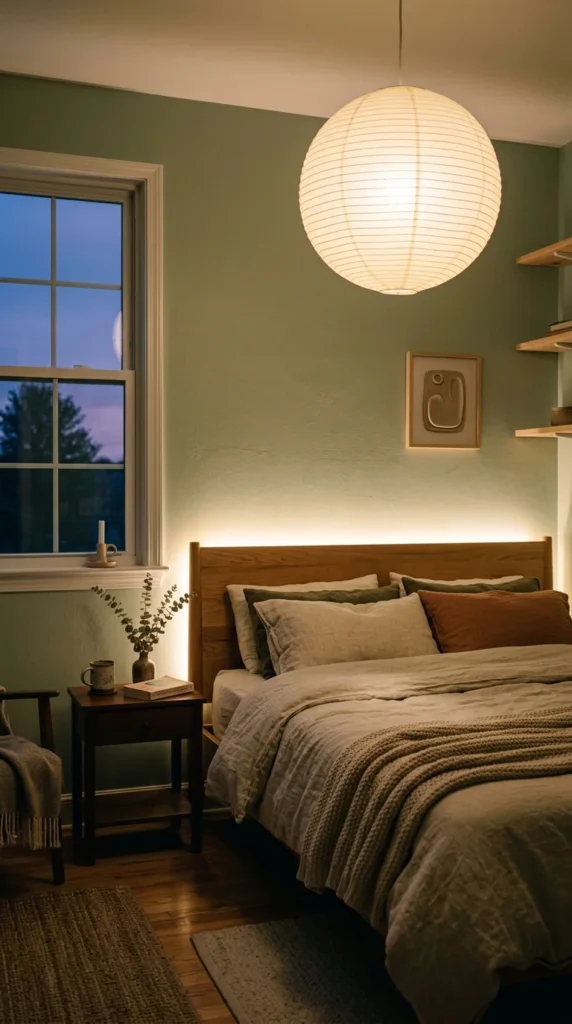
The way you light your sage green room will drastically change its mood. Avoid harsh overhead lights. Instead, use a combination of floor lamps, table lamps, and wall sconces with warm-toned bulbs. The warmth of the light will interact with the green walls to create a golden-hour glow that is exceptionally relaxing in the evenings.
17. Geometric Patterns
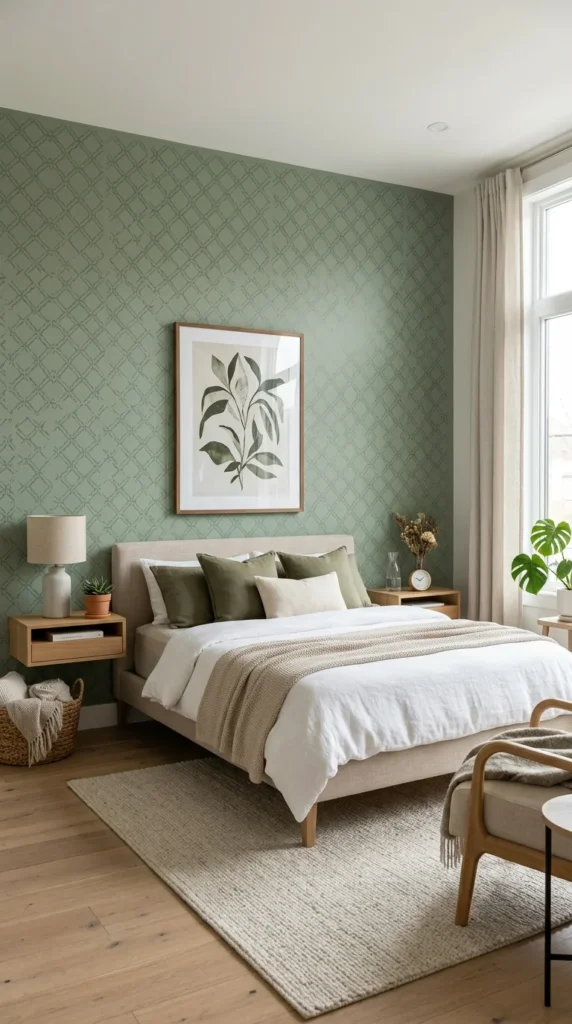
To add a bit of energy to a calm room, incorporate sage green through geometric patterns. This could be a patterned rug, a geometric wallpaper, or even a tiled feature wall. The key is to keep the pattern subtle—think tone-on-tone—so that the visual interest doesn’t override the room’s overall sense of peace.
18. Panelled Walls
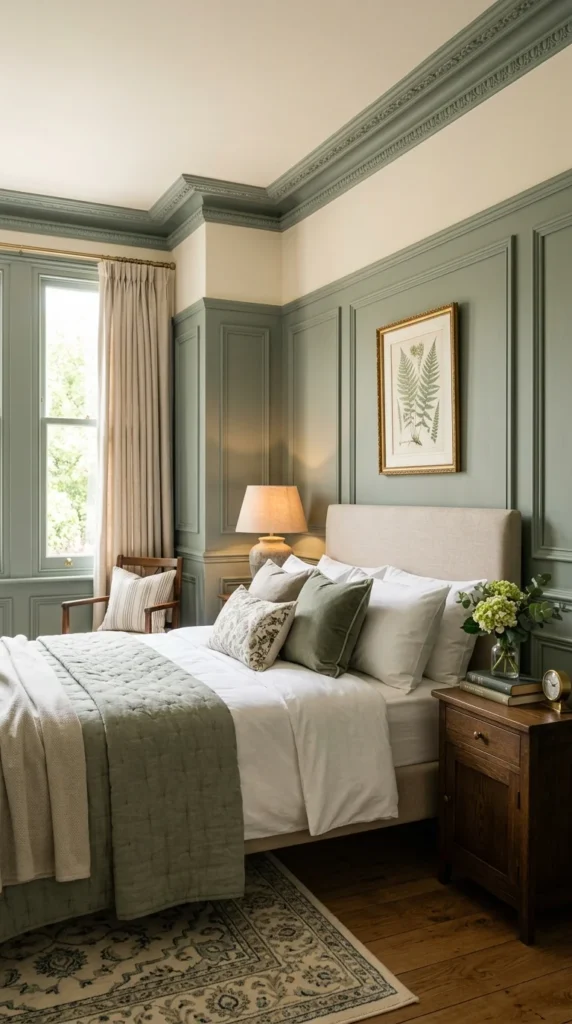
Wall panelling, such as shiplap or board and batten, adds architectural interest and depth. When painted sage green, these panels create beautiful shadows and highlights that make the color feel more expensive and intentional. This look works well in both traditional country homes and modern city apartments.
19. Indoor Greenery
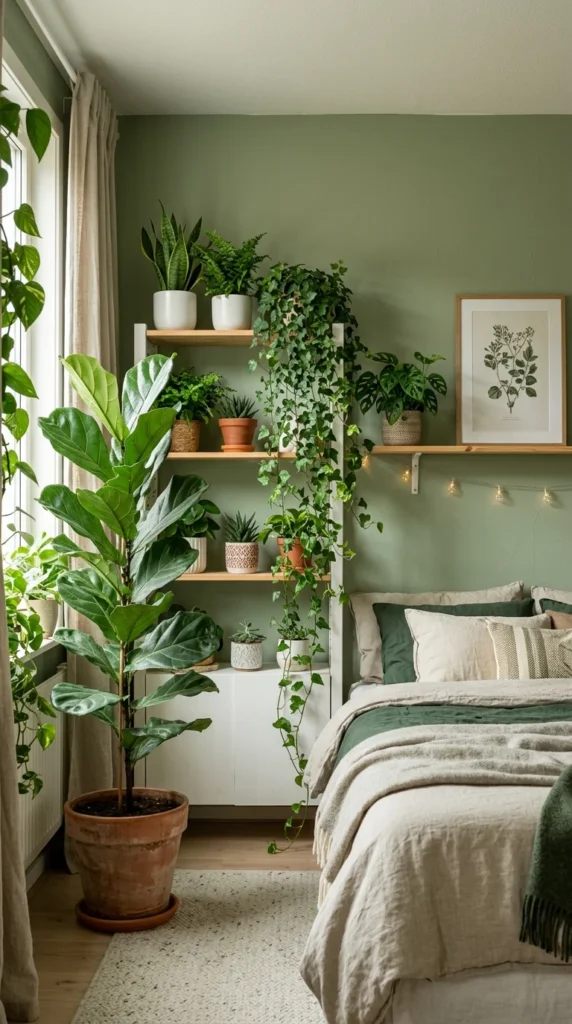
The most natural way to enhance a sage green room is with actual plants. The vibrant, living greens of a Monstera or a Snake Plant will stand out beautifully against the muted sage background. This “biophilic” design approach not only looks stunning but also improves air quality and boosts your mood.
20. Crisp White
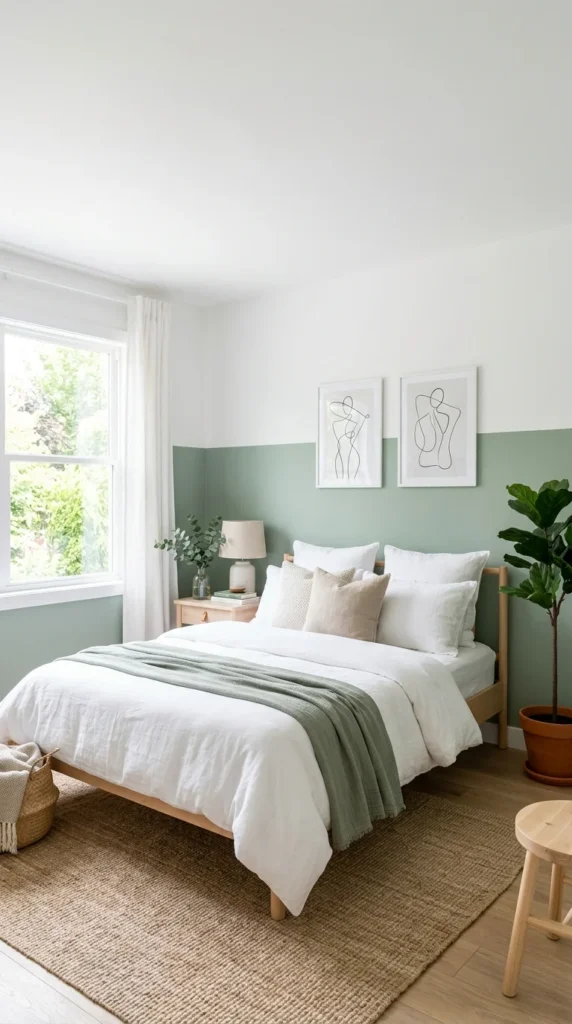
For a look that feels perpetually fresh and clean, pair sage green with plenty of crisp white. White linens, white furniture, and white trim act as a palate cleanser, preventing the sage from feeling too heavy. This combination is ideal for south-facing rooms that get a lot of sun, as it maximizes the brightness of the space.
21. Abstract Art
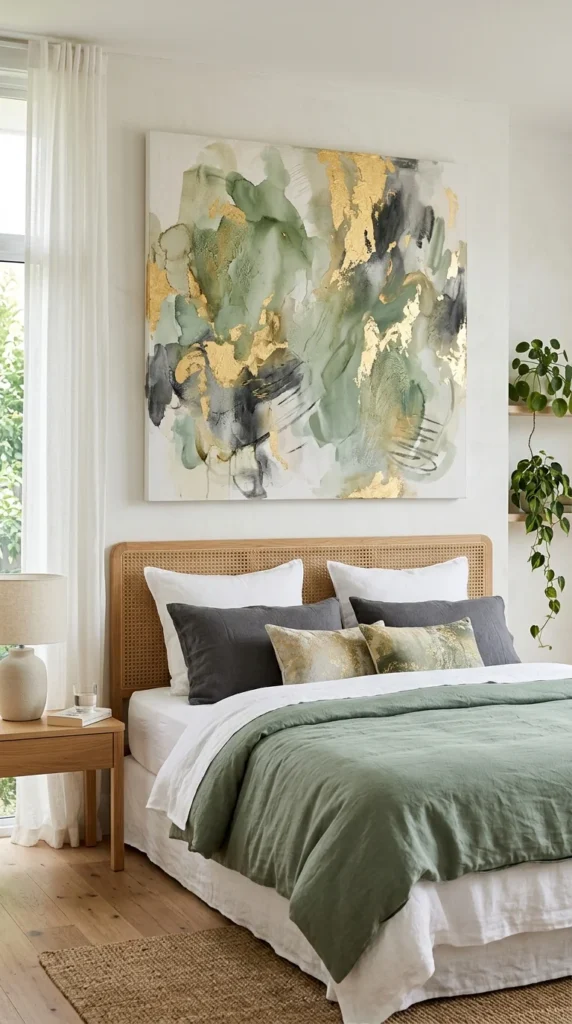
Finally, use abstract art to tie all your design elements together. A large piece of art that incorporates sage green along with your secondary colors (like gold, grey, or white) can serve as the “bridge” for the entire room’s design. It adds a sophisticated, personal touch that makes the retreat uniquely yours.