
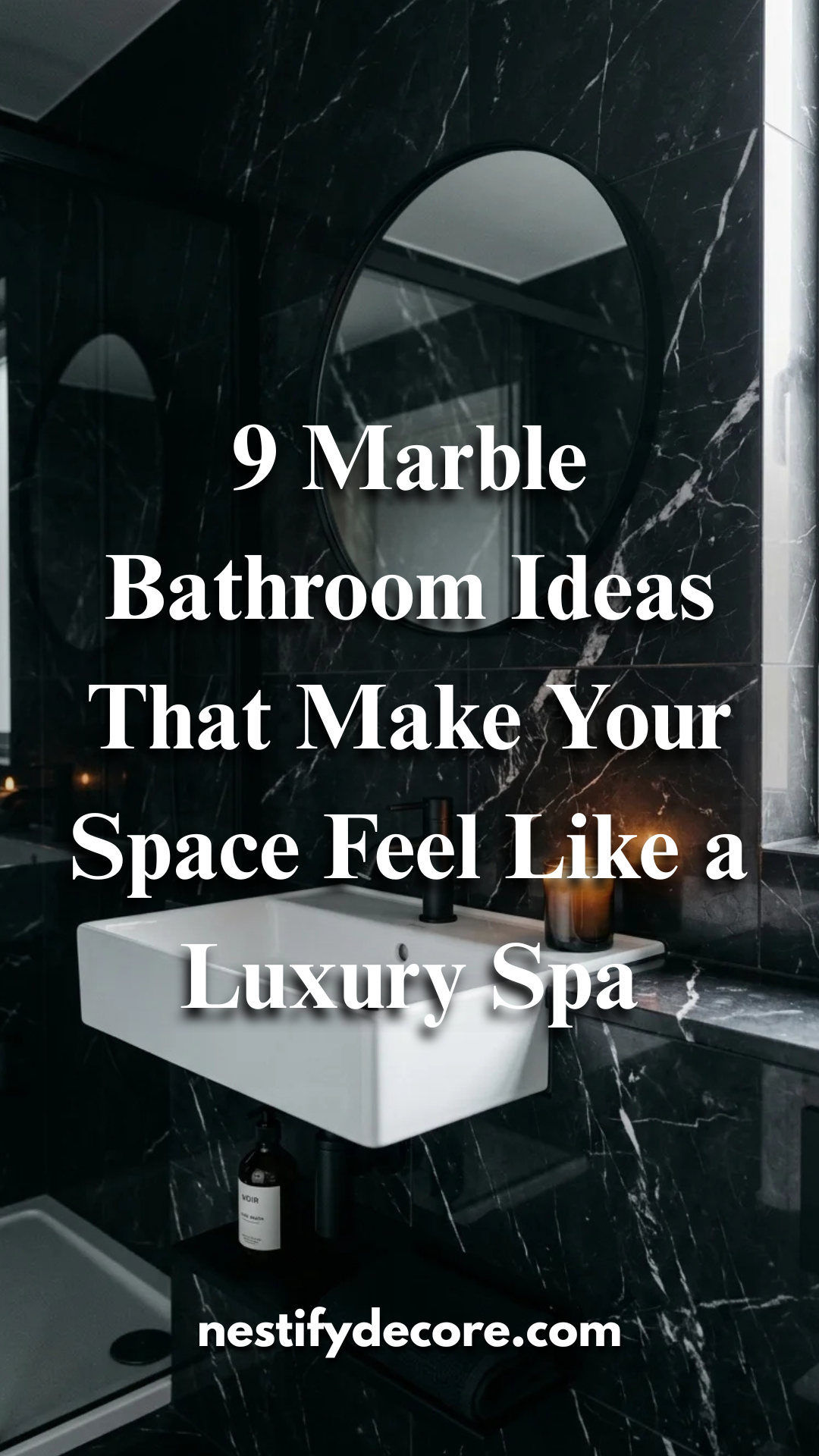
Marble has long been the hallmark of opulence, tracing its lineage back to the grand thermal baths of ancient Rome and the Renaissance palaces of Italy. In the world of interior design, it remains the ultimate material for those looking to transform a functional bathroom into a private sanctuary. Its natural cooling properties, unique organic patterns, and luminous surface quality make it the perfect candidate for creating a spa-like environment at home.
Whether you are planning a full renovation or looking for ways to integrate this noble stone into your existing decor, these nine ideas will help you harness the timeless beauty of marble.
1. Calacatta Gold
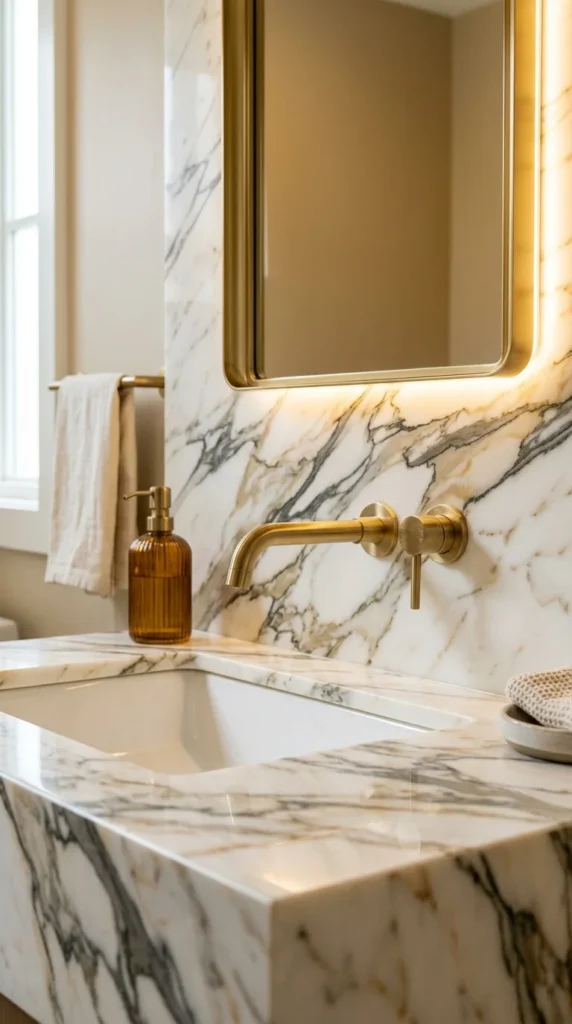
Calacatta Gold is often considered the “crème de la crème” of marble. Unlike Carrara, which typically features a greyer background and finer veins, Calacatta Gold is characterized by its crisp white field and dramatic, thick veining that ranges from charcoal grey to rich, warm gold.
To achieve a spa-like feel with this material, use it on large surfaces such as the main vanity wall or the walk-in shower. The gold undertones in the stone pair exquisitely with polished brass or champagne bronze fixtures. This combination warms up the cold nature of the stone, making the bathroom feel inviting rather than clinical. Because each slab of Calacatta Gold is a natural work of art, it serves as the primary decorative element, requiring very little additional ornamentation.
2. Nero Marquina
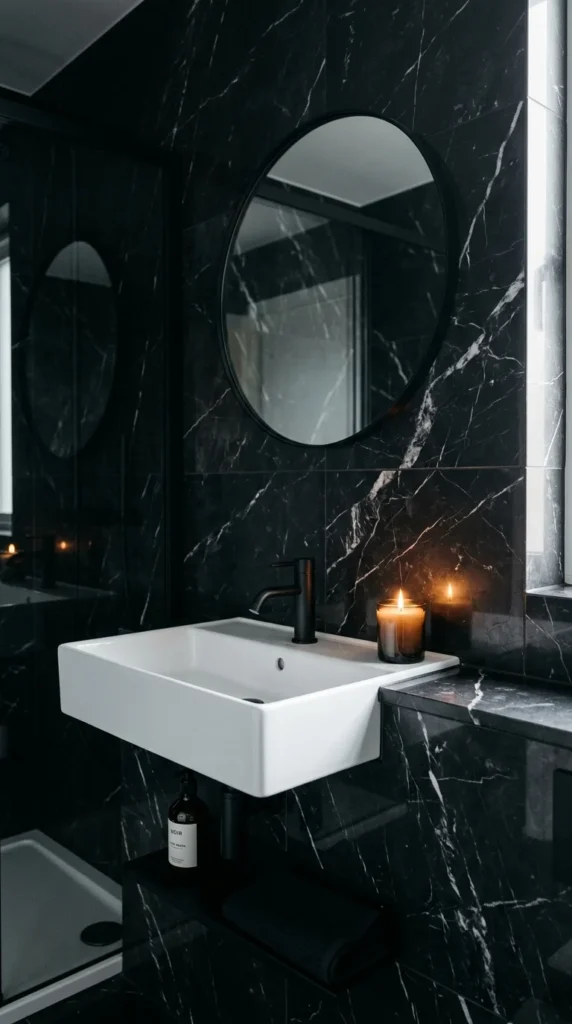
For those who find white bathrooms too traditional, Nero Marquina offers a bold, sophisticated alternative. This black marble from the Basque Country in Spain is famous for its intense dark hue and irregular white veins. Using black marble in a bathroom creates an immediate sense of “moody luxury” often found in high-end boutique hotel spas.
When working with Nero Marquina, lighting is critical. Because dark surfaces absorb light, you’ll want to incorporate layered lighting—backlit mirrors, recessed ceiling lights, and perhaps a low-hanging pendant light. To keep the space from feeling too heavy, balance the dark marble with light-colored flooring or a white ceiling. The result is a cocoon-like environment that encourages deep relaxation and a sense of privacy.
3. Bookmatched Walls
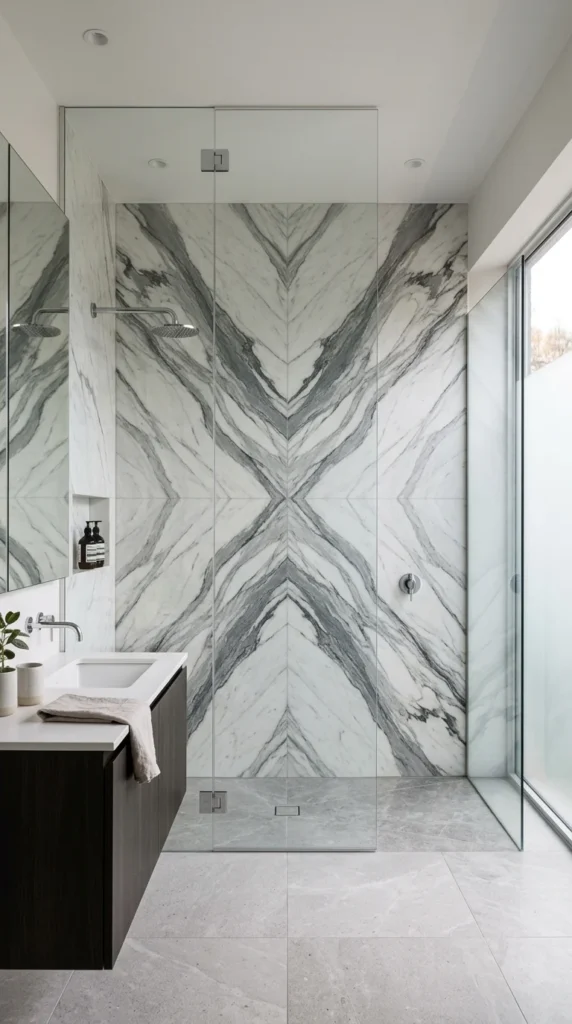
Bookmatching is a technique where two or more slabs of marble are cut from the same block and finished so that they mirror each other, much like an open book. This creates a symmetrical pattern that is nothing short of breathtaking. In a luxury spa setting, bookmatched marble acts as a focal point, drawing the eye and creating a sense of intentionality and high-end craftsmanship.
This application is most effective in the shower or behind a freestanding bathtub. It emphasizes the organic geometry of the stone. When opting for bookmatching, choose a marble with high-contrast veining—like Arabescato or Statuario—to ensure the mirrored effect is clearly visible. It is a premium choice that instantly elevates the architectural value of your home.
4. Floating Vanities
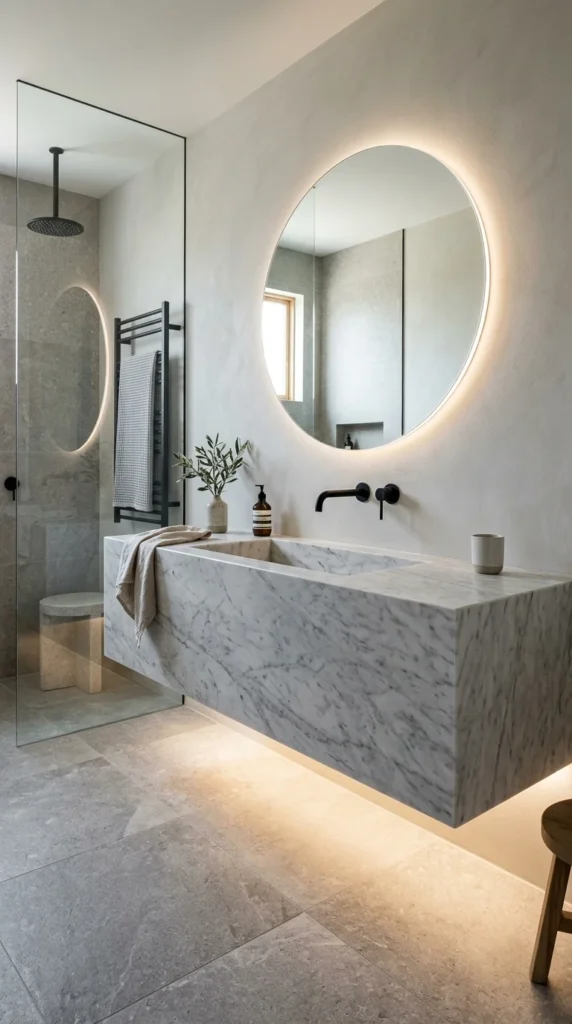
One of the hallmarks of modern spa design is the use of “floating” elements to create a sense of airiness and space. A marble floating vanity is a structural statement that removes the visual bulk of traditional cabinetry. By extending the marble from the countertop down the sides (a “waterfall” edge), you create a seamless monolithic block that looks incredibly expensive and clean.
To maximize the spa effect, keep the vanity top clear of clutter. Carved-in “integrated” sinks, where the sink basin is made of the same marble as the counter, further enhance the seamless look. This design choice is not only beautiful but also practical, as it eliminates the seams where dirt and grime typically accumulate, keeping your sanctuary pristine.
5. Herringbone Patterns
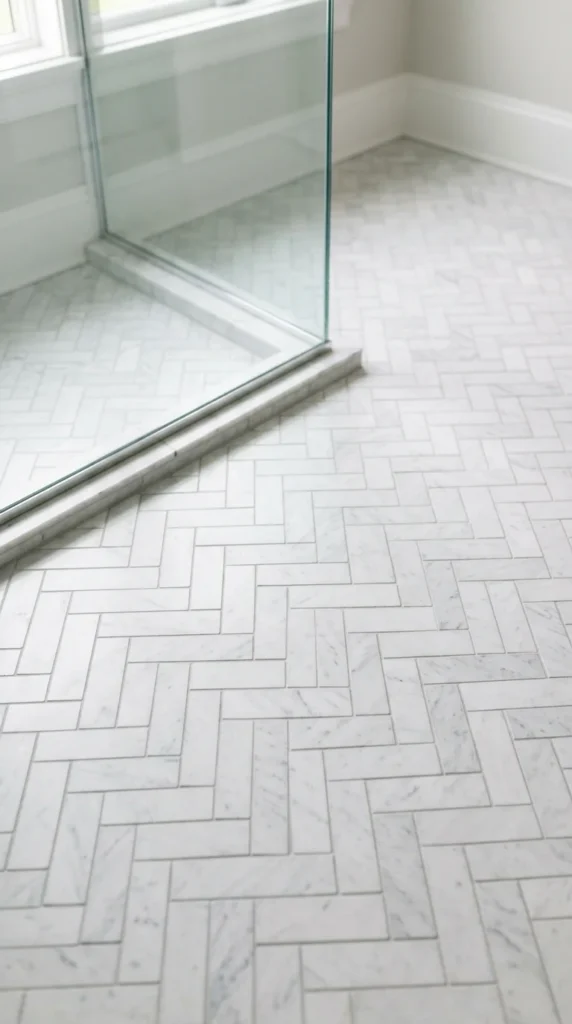
Marble doesn’t always have to come in giant slabs. Using marble tiles in a herringbone pattern adds a layer of texture and rhythmic detail that can make a large bathroom feel more intimate. This pattern is a great way to introduce marble on a budget, as tiles are generally more affordable than full slabs.
A herringbone marble floor provides a classic, Parisian-chic aesthetic. It works particularly well in smaller bathrooms where large slabs might feel overwhelming. Use a slightly darker grout to highlight the pattern, or a matching white grout for a more subtle, textured appearance. The diagonal lines of the herringbone pattern can also help to visually expand the room, making a narrow bathroom feel wider.
6. Wet Rooms
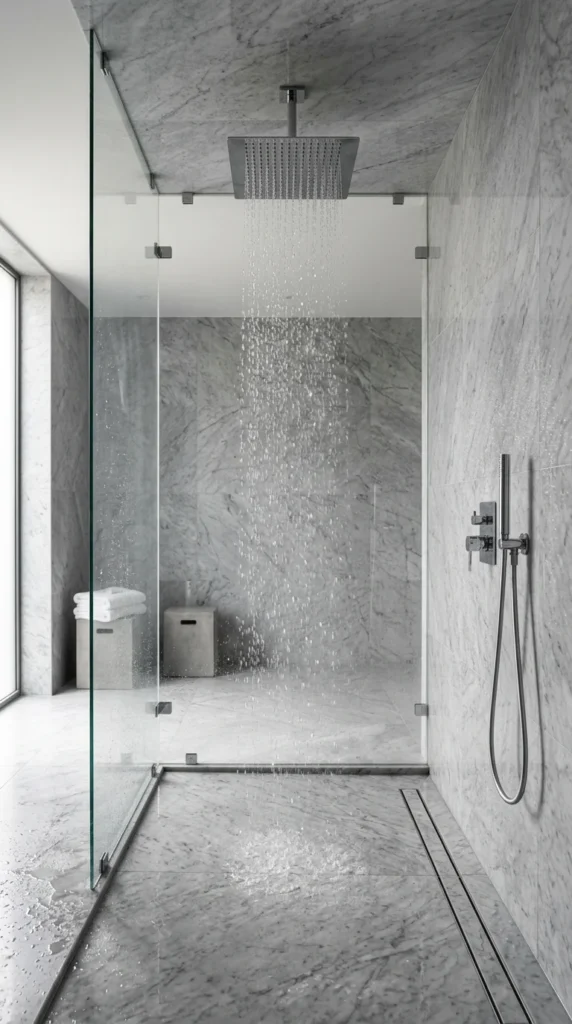
The “wet room” concept is the pinnacle of spa-inspired design. It involves waterproofing the entire bathroom area, or a large portion of it, allowing for an open-concept shower without a traditional tray or curb. Cladding a wet room entirely in marble creates a continuous, uninterrupted flow of stone that feels incredibly indulgent.
When designing a marble wet room, it is essential to consider the finish of the stone. While polished marble is beautiful, it can be slippery when wet. Opt for a “honed” or “tumbled” finish on the floors for better grip, while keeping the walls polished for maximum light reflection. This combination of textures adds depth to the design and ensures the space is as functional as it is beautiful.
7. Brass Accents
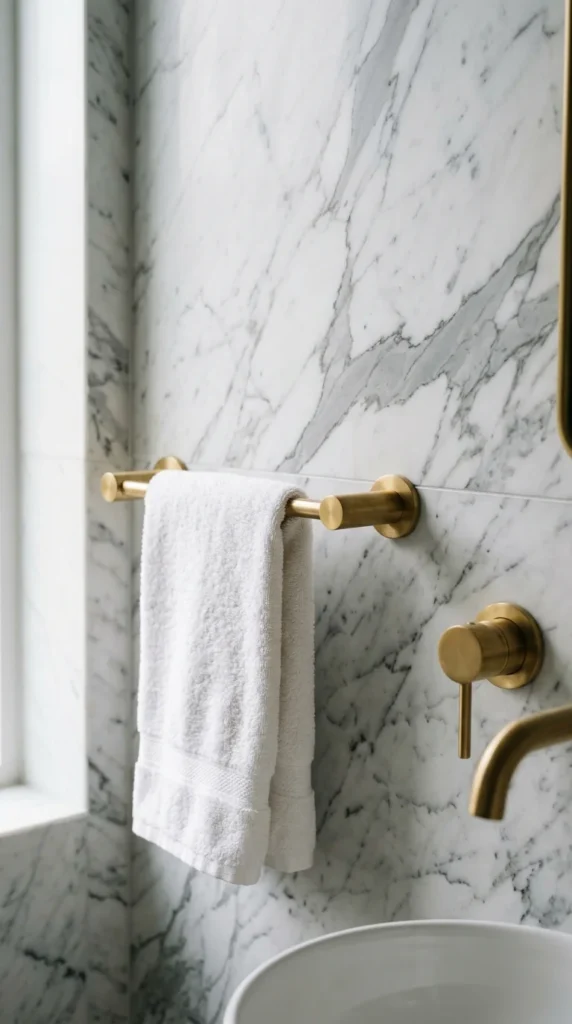
The pairing of marble and brass is a design classic that never fails to evoke luxury. The coolness of marble (both in temperature and color) is the perfect foil for the warmth of brass or gold fixtures. This contrast is what gives high-end spas their balanced, harmonious feel.
To keep the look modern, choose fixtures with clean, minimalist lines. Think of unlacquered brass that will develop a beautiful patina over time, or brushed gold for a more consistent, matte look. Beyond just faucets and showerheads, consider incorporating brass through mirror frames, cabinet hardware, and even inlay strips between marble tiles. These small “jewelry” pieces for your bathroom make the marble pop and provide a sense of finished, cohesive luxury.
8. Sculptural Tubs
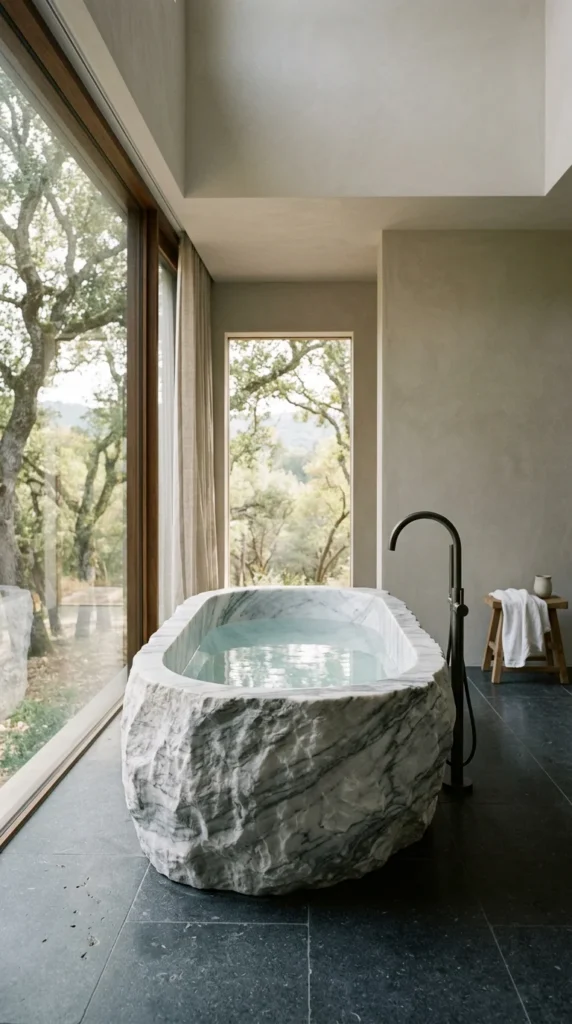
If you want the ultimate spa centerpiece, look no further than a marble bathtub. While most tubs are made of acrylic or cast iron, a tub carved from solid marble or clad in marble tiles is a statement of pure luxury. It retains heat exceptionally well, ensuring that your spa-soak stays warm for a long time.
A marble tub works best when it has room to breathe. Placing it in the center of the room or in front of a large window makes it the undisputed focal point. Because the tub itself is so visually heavy, keep the rest of the bathroom decor relatively simple. Let the natural veining of the tub provide the visual interest, turning your daily bath into a ritualistic experience.
9. Mixed Finishes
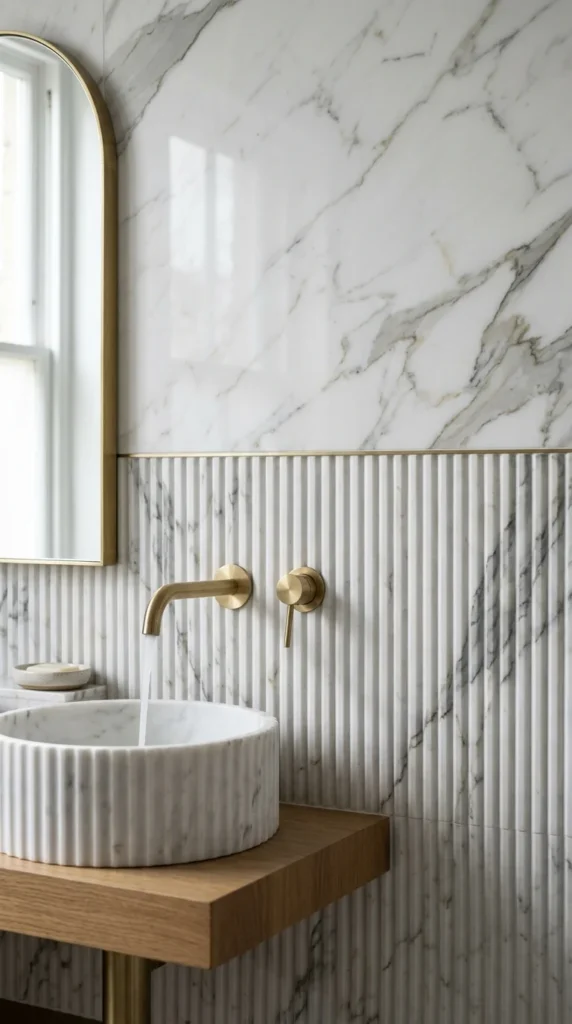
To avoid a marble bathroom feeling “flat” or one-dimensional, expert designers often mix different finishes of the same stone. For example, you might use a polished marble slab for the vanity top to catch the light, paired with fluted or ribbed marble tiles on the walls to add architectural interest and shadow.
Mixing finishes is a subtle way to add “quiet luxury.” A honed (matte) marble floor feels soft and velvet-like underfoot, which is a wonderful tactile experience when stepping out of the shower. Meanwhile, polished walls reflect the glow of candles or soft lighting, enhancing the ethereal, spa-like quality of the room. This play on light and touch is what separates a standard bathroom from a true home spa.