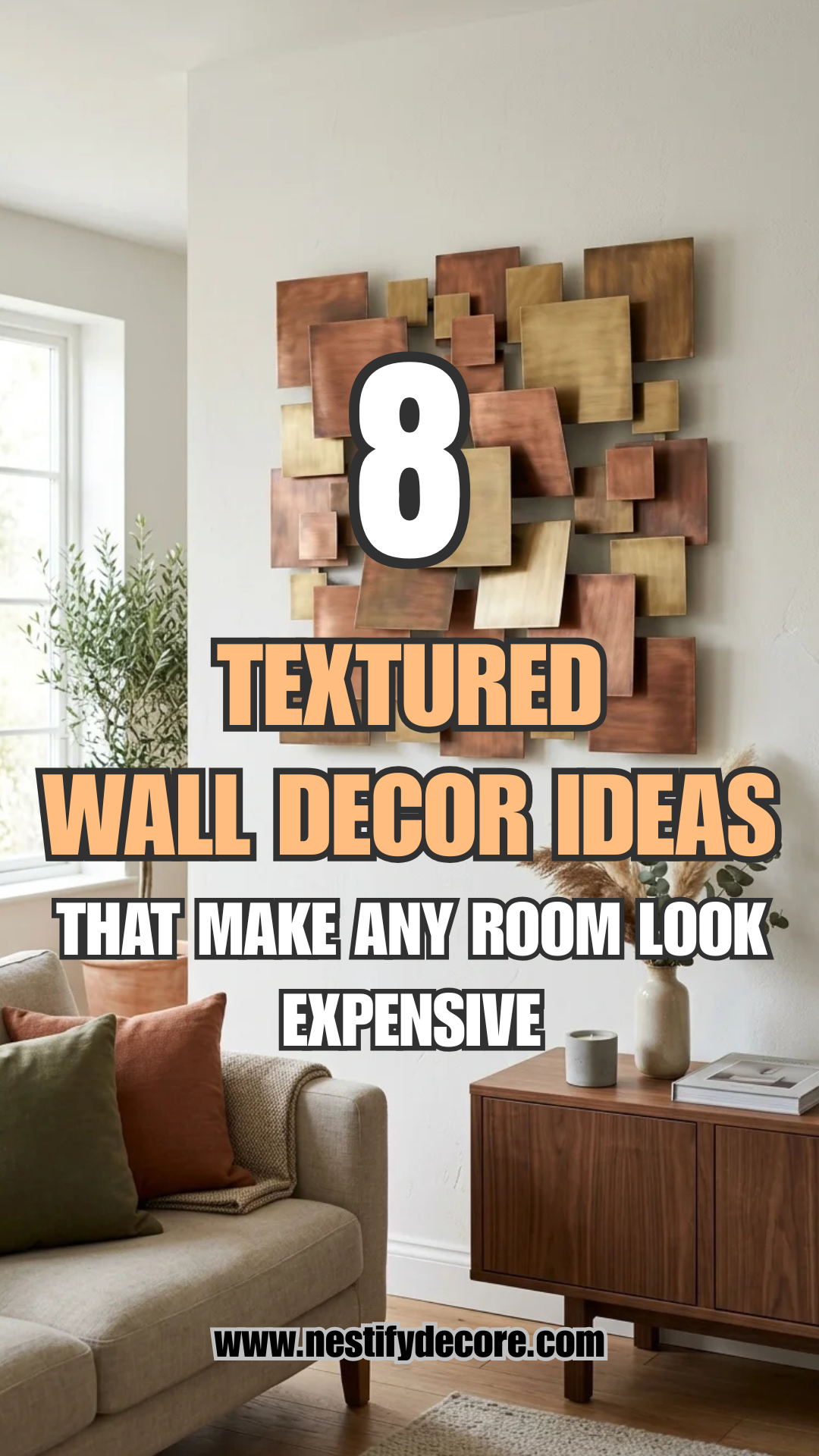
In the world of high-end interior design, the difference between a room that looks “nice” and one that looks “expensive” often comes down to a single element: texture. While flat paint and smooth finishes have their place, they often lack the character and depth required to create a truly immersive, luxurious atmosphere. Texture engages the senses, interacts with light in complex ways, and provides a tactile quality that signals craftsmanship and intentionality.
To elevate your home from standard to spectacular, you don’t necessarily need a massive renovation budget. By focusing on textured wall decor, you can introduce architectural interest and a sense of “quiet luxury” that transforms any space. Here are eight textured wall decor ideas that will instantly make your room look more expensive.
1. Slatted Wood
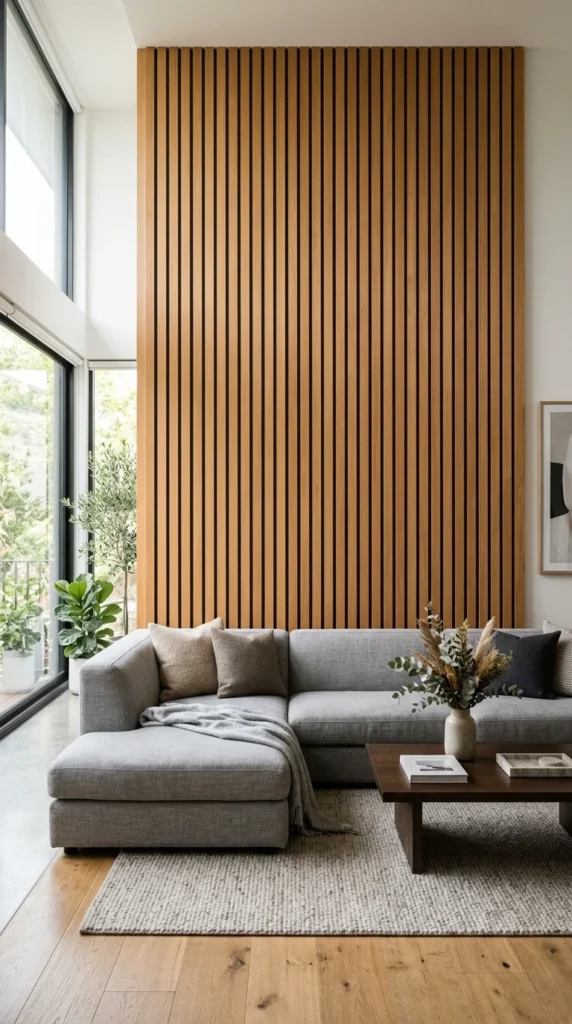
Slatted wood walls, often referred to as “tambour” or “acoustic slat panels,” have become a hallmark of contemporary luxury. The beauty of this texture lies in its repetitive, vertical lines which draw the eye upward, creating an illusion of height and architectural grandeur.
- Why It Works: The alternating rhythm of wood and shadow creates a rhythmic visual depth that flat walls cannot achieve. It brings a natural, organic warmth to modern spaces that might otherwise feel cold or sterile.
- Material Choice: For an expensive look, opt for hardwoods like white oak, walnut, or teak. Ensure the backing is a dark, matte felt or wood to emphasize the “void” between the slats.
- Placement: This works exceptionally well behind a bed as a headboard alternative or in a home office to add a professional, mid-century modern flair.
2. Plaster Art
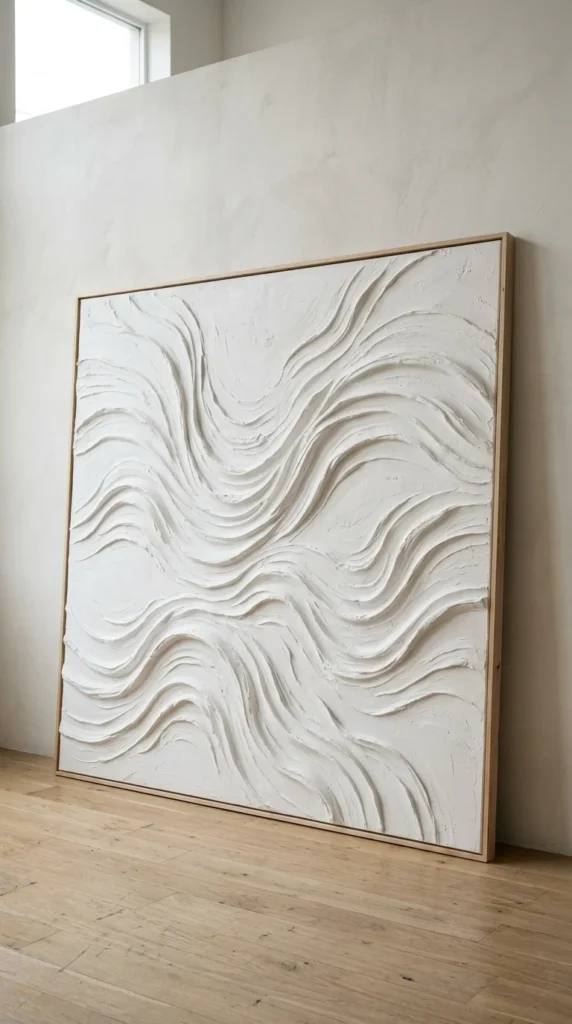
Minimalism doesn’t have to be boring. Large-scale plaster art—often monochromatic—is a favorite of interior designers who want to add “soul” to a room without cluttering it with color. This style relies entirely on the play of light and shadow over physical ridges and grooves.
- The Aesthetic: Plaster art feels bespoke and artisanal. Whether it is a DIY project using joint compound or a gallery-purchased piece, the heavy “impasto” style creates a 3D effect that changes throughout the day as the sun moves.
- Framing: To keep the look expensive, use a thin “floater” frame in a natural wood or matte black finish. This gives the textured piece a finished, professional edge.
- Design Tip: Keep the color palette tonal. A white plaster piece on a light grey or off-white wall creates a sophisticated, layered look that feels incredibly high-end.
3. Velvet Panels
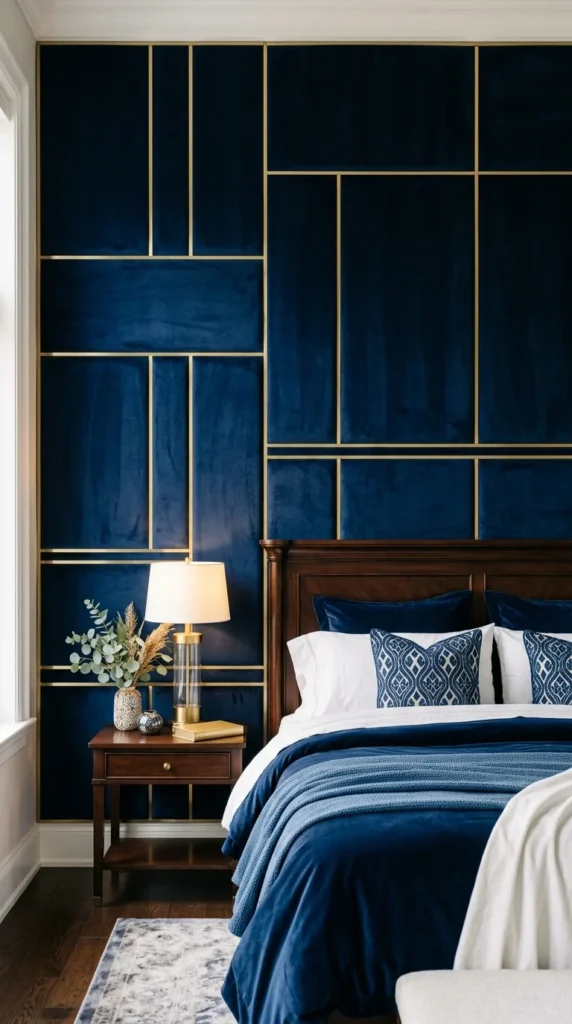
Nothing says “luxury hotel” quite like upholstered walls. Velvet panels offer a soft, matte sheen that absorbs light in a way that feels incredibly cozy and opulent. This is more than just decor; it’s a sensory experience.
- Acoustic Benefits: Beyond the visual appeal, velvet panels are excellent at dampening sound. This makes the room feel quieter and more private—a subtle hallmark of expensive real estate.
- Geometry: You can arrange these panels in a classic grid, a sophisticated herringbone, or even asymmetrical blocks. Adding metal “chanel” strips in brass or chrome between the panels adds a touch of “Art Deco” glamour.
- Color Palette: Deep, jewel tones like emerald green, sapphire, or charcoal grey provide the most dramatic texture, while champagne or silver velvet offers a more delicate, airy luxury.
4. Limestone Wash
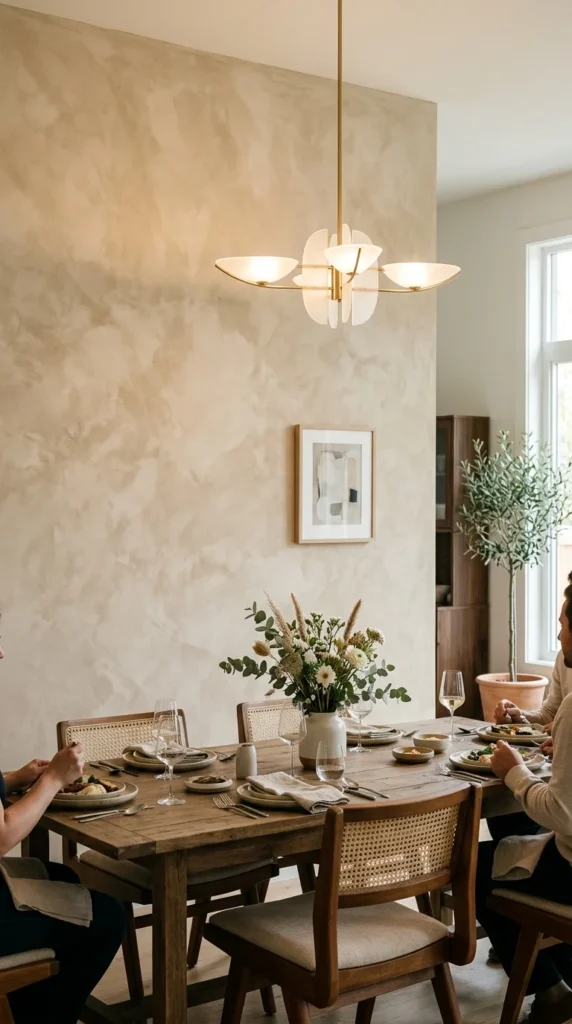
Limewash is one of the oldest decorative finishes in the world, and it is seeing a massive resurgence in high-end design. Unlike standard latex paint, limewash is made from crushed limestone and water, creating a breathable, mottled finish that looks like ancient stone.
- The Texture: The texture of limewash is visual rather than physical. It creates a soft, suede-like appearance that adds movement to the walls. It feels “lived-in” yet incredibly curated.
- Versatility: It fits perfectly in “Organic Modern” or “Wabi-Sabi” interiors. It suggests that the walls themselves are made of premium, natural materials rather than just drywall.
- Application: The “cross-hatch” brush technique used to apply limewash ensures that no two walls are exactly alike, giving your room a custom, hand-crafted feel.
5. Woven Tapestries
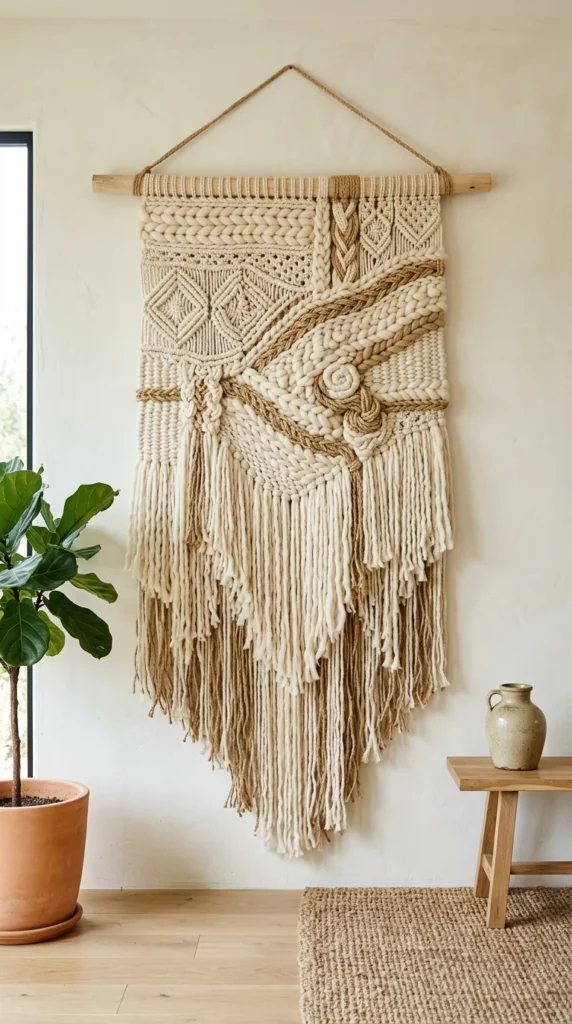
Textiles bring a necessary softness to rooms dominated by hard surfaces like wood or tile. A large, high-quality woven tapestry acts as a piece of “soft sculpture,” adding both physical weight and visual warmth to a wall.
- Artisanal Quality: To keep this look expensive, avoid mass-produced prints. Instead, look for hand-woven macramé, fiber art, or vintage kilims. The imperfections in the weave are what communicate value and history.
- Scaling: Scale is crucial. A small tapestry can look like an afterthought. A large-scale piece that takes up 60-70% of the wall space above a console or sofa creates a bold, designer statement.
- Material Mix: Look for pieces that incorporate different fibers—silk, wool, cotton, and even metallic threads—to create a multi-dimensional texture.
6. Metal Relief
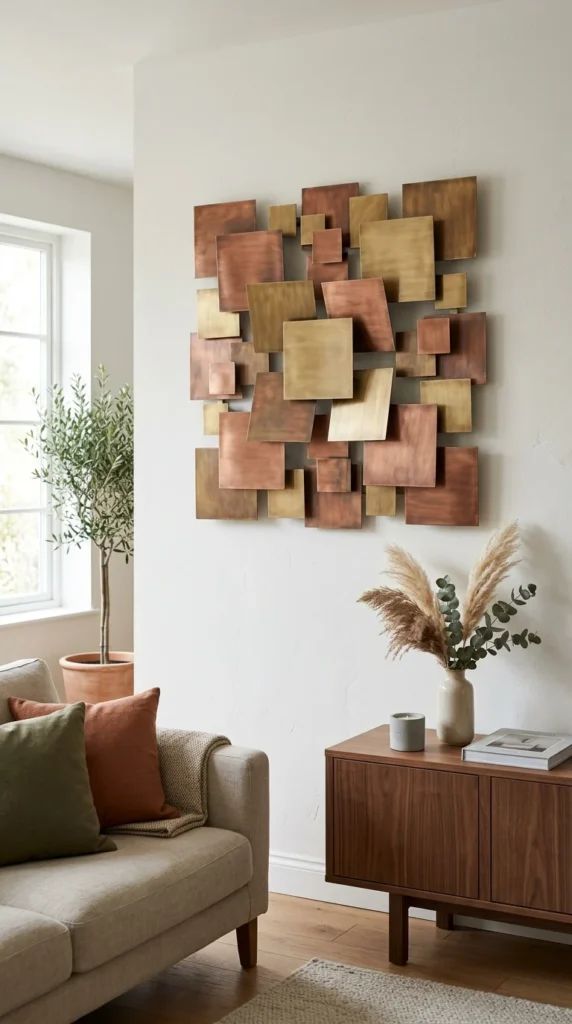
Metal wall decor has evolved far beyond the rustic “clocks and gears” of the past. Modern metal relief pieces focus on geometry, light reflection, and industrial precision. These pieces function as jewelry for the room.
- Reflective Properties: Metals like brushed brass, blackened steel, or hammered copper interact beautifully with both natural light and artificial lamps. They add a “glow” to the wall that other textures cannot replicate.
- Modern Edge: Metal decor provides a sharp contrast to soft furnishings. A 3D metal sculpture on a flat-painted wall creates a focal point that feels expensive because it suggests a gallery-like curation.
- Placement: Place metal relief art opposite a window or near a floor lamp to maximize the shadow play and shimmer.
7. Grasscloth Wallpaper
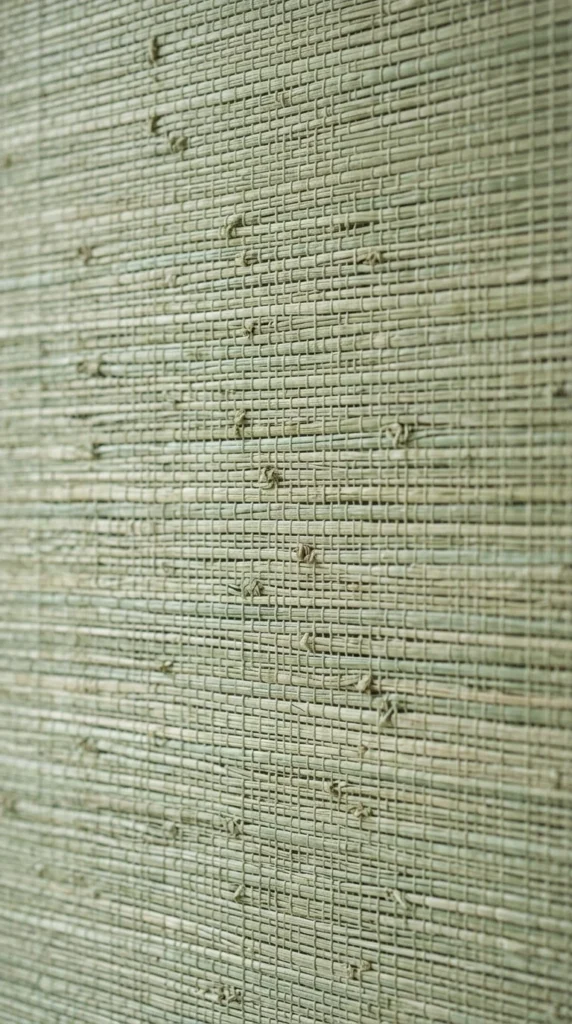
If you want the most classic, timeless version of texture, grasscloth is the answer. Made from hand-woven natural fibers like seagrass, jute, or sisal, this wall covering has been a staple in luxury homes for decades.
- Natural Variation: Because grasscloth is made from organic materials, the “seams” between rolls are often visible. In the design world, these are called “panelling,” and they are a sign of authentic, expensive material.
- Tactile Depth: It has a physical roughness and a subtle sheen that creates a sophisticated backdrop for artwork and mirrors.
- The Palette: While natural tan is classic, dyed grasscloth in navy, forest green, or even burnt orange can make a room feel incredibly moody and high-end.
8. 3D Tiles
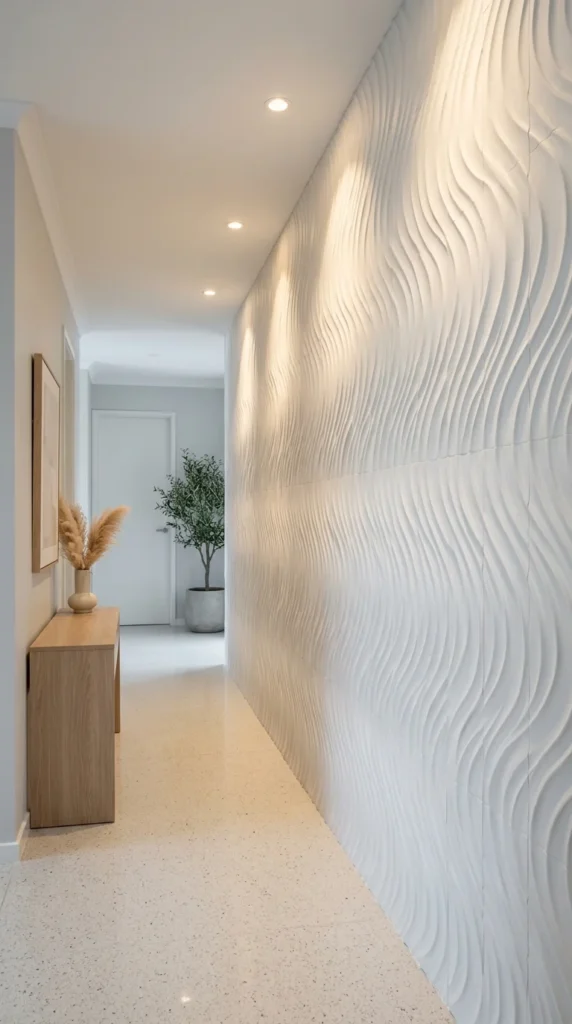
3D wall tiles (often made of ceramic, gypsum, or even high-density foam) turn a flat wall into a sculptural installation. These are particularly effective in entryways, bathrooms, or as a backdrop for a television.
- Architectural Interest: These tiles mimic the look of custom-carved stone or high-end architectural moldings. They create a “structural” feel that makes the room look like it was designed by an architect rather than just decorated.
- Shadow Play: The primary appeal of 3D tiles is the way they catch the light. Under directional lighting, the raised patterns create dramatic shadows that change as you walk through the room.
- Styling Tip: For a seamless, expensive look, paint the tiles the same color as the surrounding walls. This makes the texture the star of the show without the distraction of contrasting colors.