
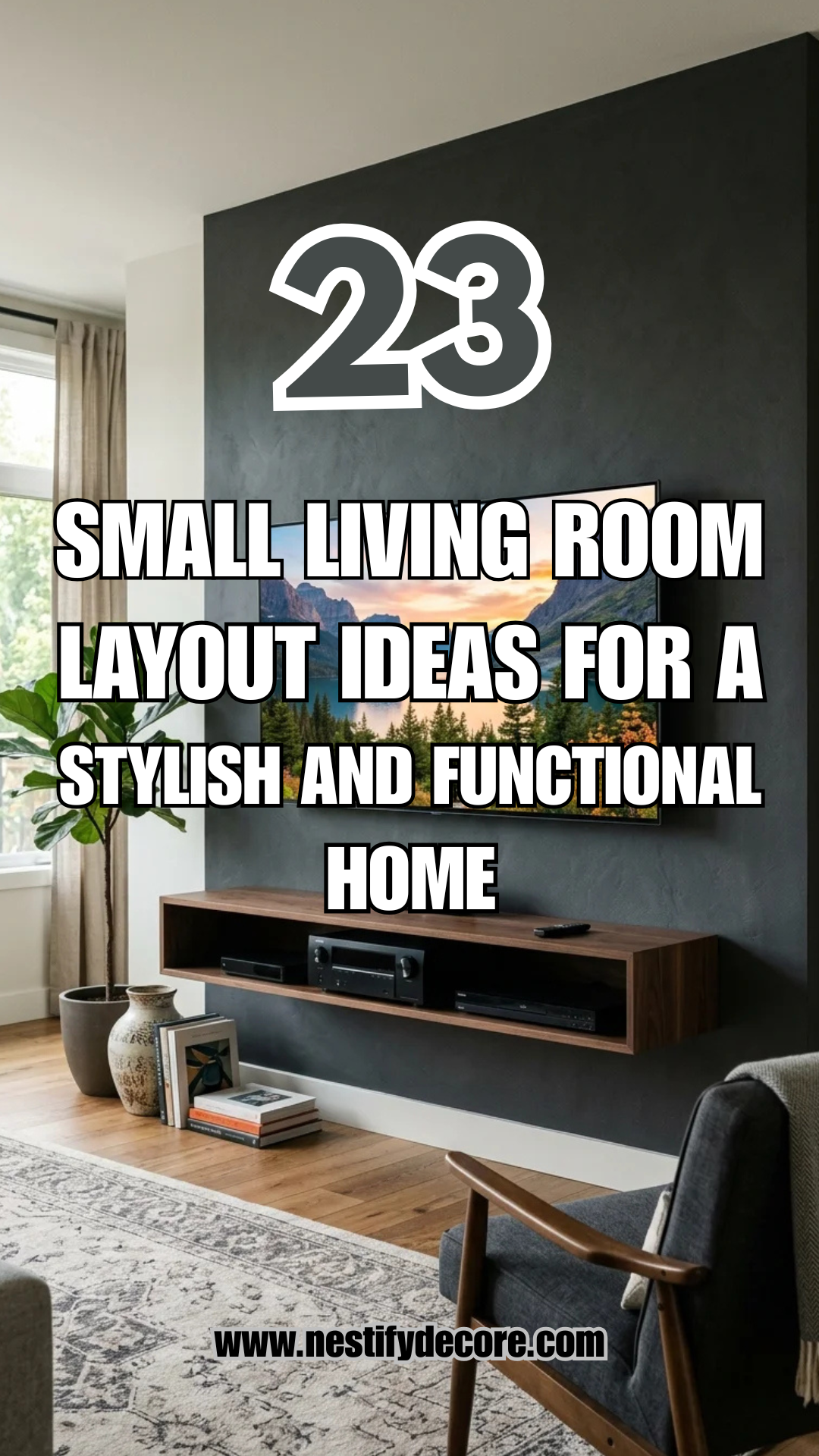
Designing a small living room can feel like a complex puzzle. You want comfort, style, and functionality, but you are limited by square footage. However, a compact footprint doesn’t mean you have to sacrifice your aesthetic. By focusing on clever spatial arrangements, multi-functional furniture, and visual tricks, you can transform even the tiniest room into a sprawling sanctuary. Here are 23 layout ideas to help you maximize your space.
1. Floating Furniture
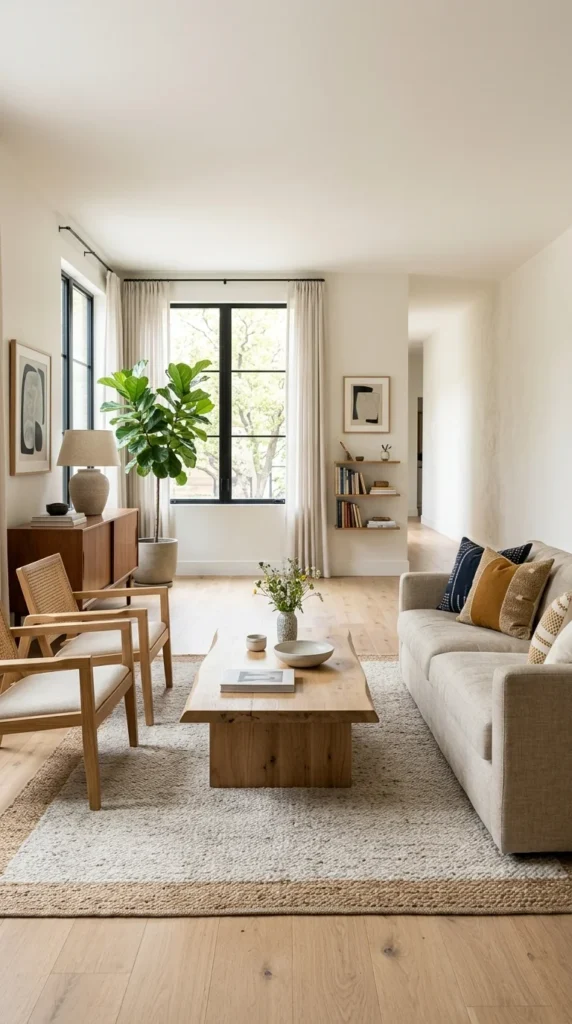
One of the most common mistakes in small living rooms is pushing all the furniture against the walls. While it seems like it would create more space, it often highlights the room’s boundaries. By “floating” your sofa even just a few inches away from the wall, you create a sense of breathing room. In an open-plan layout, floating the furniture helps define the “living” zone without the need for bulky dividers.
2. Corner Sectionals
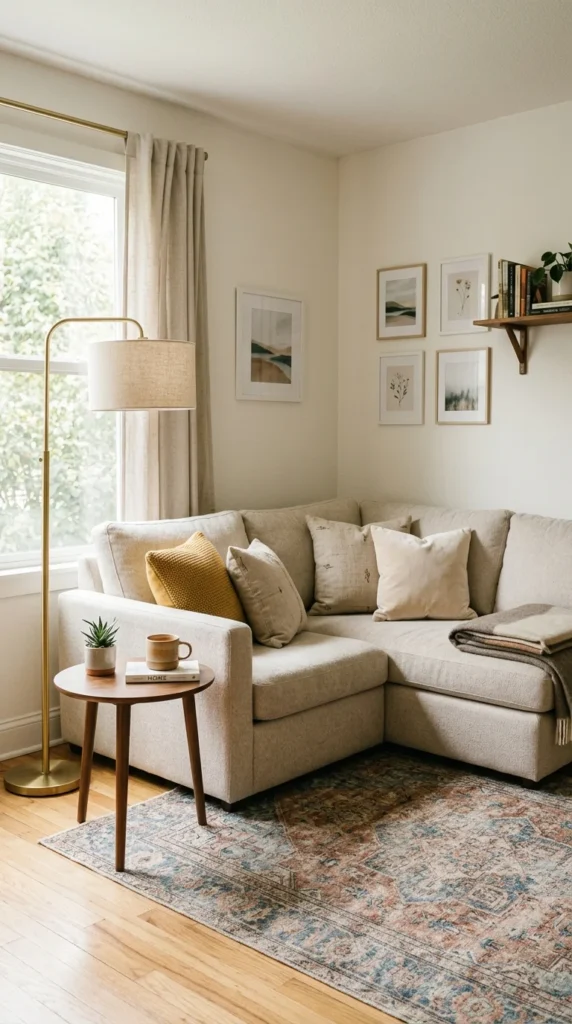
If you have a tight corner, use it. A small-scale sectional can actually provide more seating than a traditional sofa and armchair combo while taking up less visual and physical space. It eliminates the “dead space” that often occurs in corners and creates a cozy, communal nook for relaxation.
3. Clear Acrylics
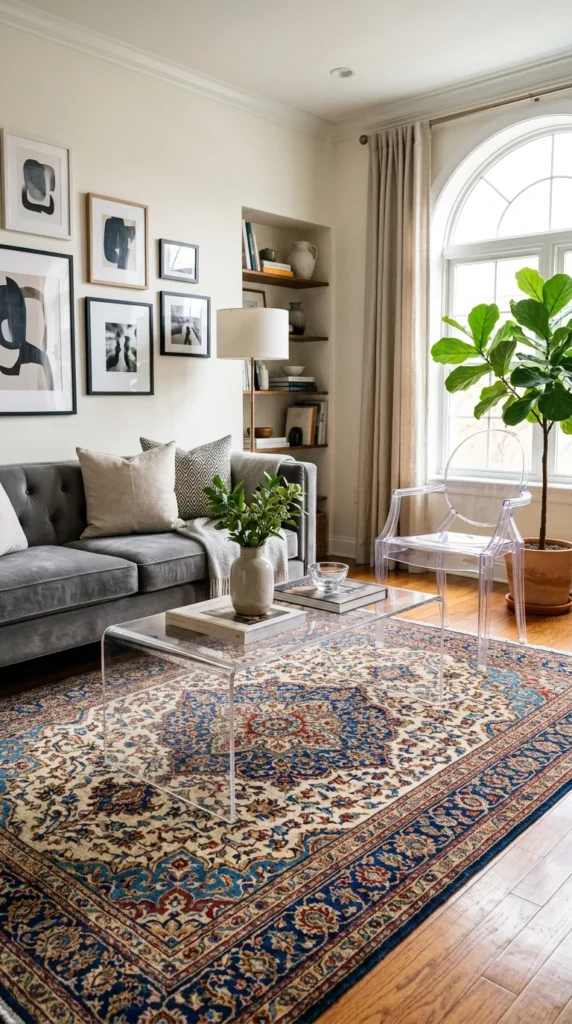
Visual weight is a crucial concept in small-space design. Furniture made of glass or clear acrylic (Lucite) serves its functional purpose without taking up “visual space.” A clear coffee table or console allows the eye to travel right through it to the floor and walls, preventing the room from feeling cluttered or boxed in.
4. Vertical Storage
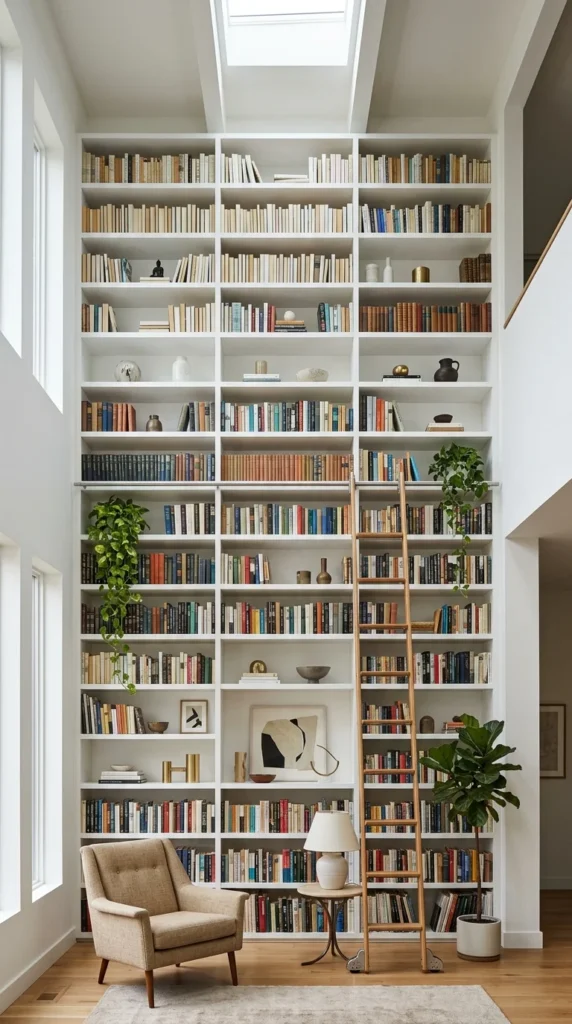
When you run out of floor space, look up. Utilizing your walls for storage is a game-changer. Tall, slender bookshelves or wall-mounted floating shelves draw the eye toward the ceiling, creating the illusion of height. This layout keeps the floor clear of clutter while providing a place for books, plants, and decorative accents.
5. Mirror Walls
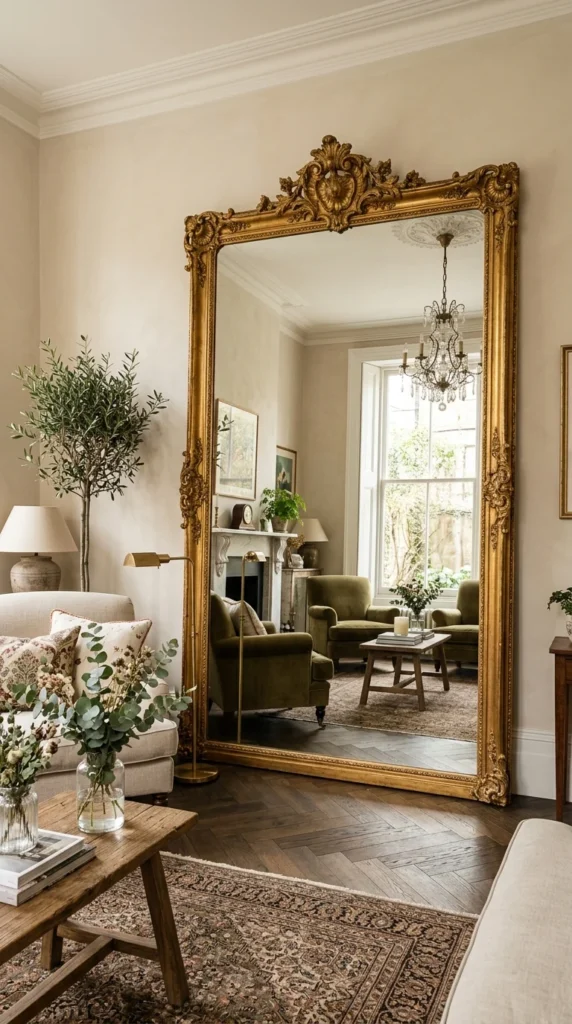
Mirrors are the oldest trick in the book for a reason—they work. Placing a large mirror opposite a window reflects natural light and the view outside, effectively “doubling” the size of the room. For a modern look, consider a gallery wall of mirrors or one oversized leaning mirror to act as a focal point.
6. Dual-Purpose Ottomans
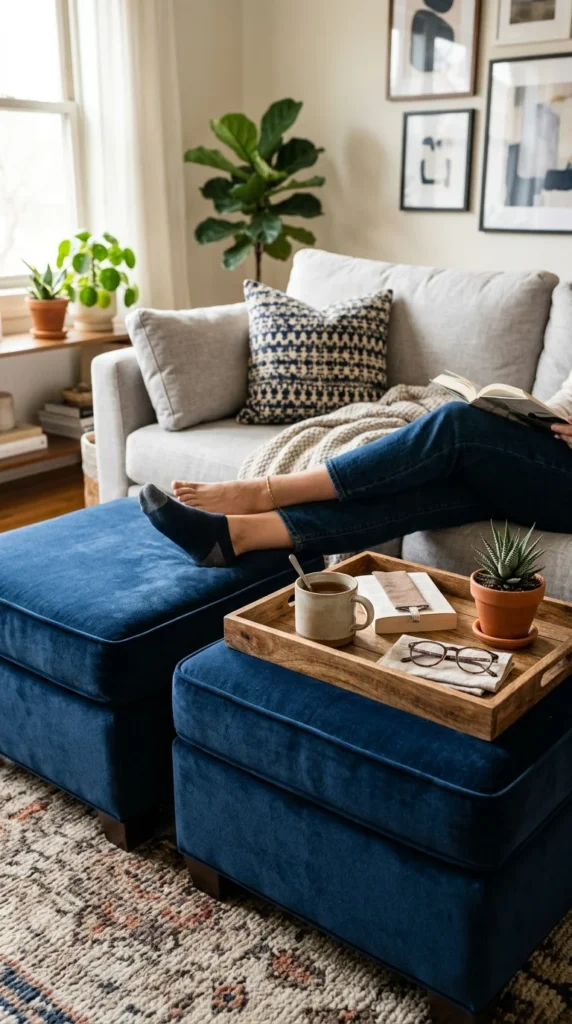
In a small living room, every piece of furniture should do at least two things. Replace a traditional coffee table with a pair of upholstered ottomans. They can serve as a table when topped with a tray, extra seating for guests, or a comfortable footrest. Because they are easy to move, they offer a flexible layout that can be adjusted on the fly.
7. Window Nooks
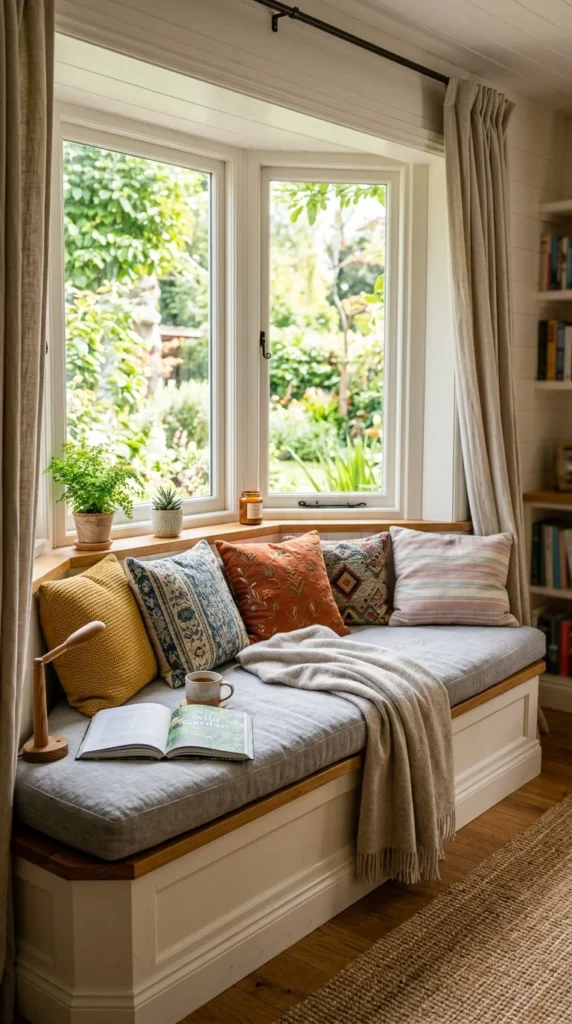
Don’t let the space under your windows go to waste. A built-in bench or a low-profile daybed placed directly under a window provides a great spot for reading and lounging without blocking the light. This layout maximizes the perimeter of the room, leaving the center open for movement.
8. Low-Profile Seating
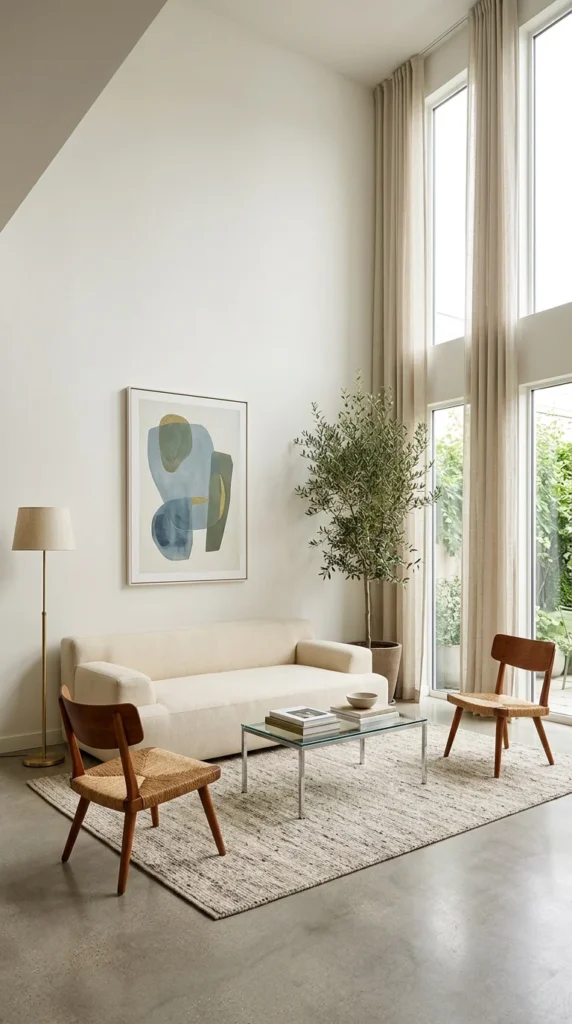
Furniture that sits low to the ground creates a feeling of spaciousness. By keeping the horizontal lines of the room low, you increase the distance between the furniture and the ceiling. This creates an airy, loft-like atmosphere, even in rooms with standard ceiling heights.
9. Leggy Furniture
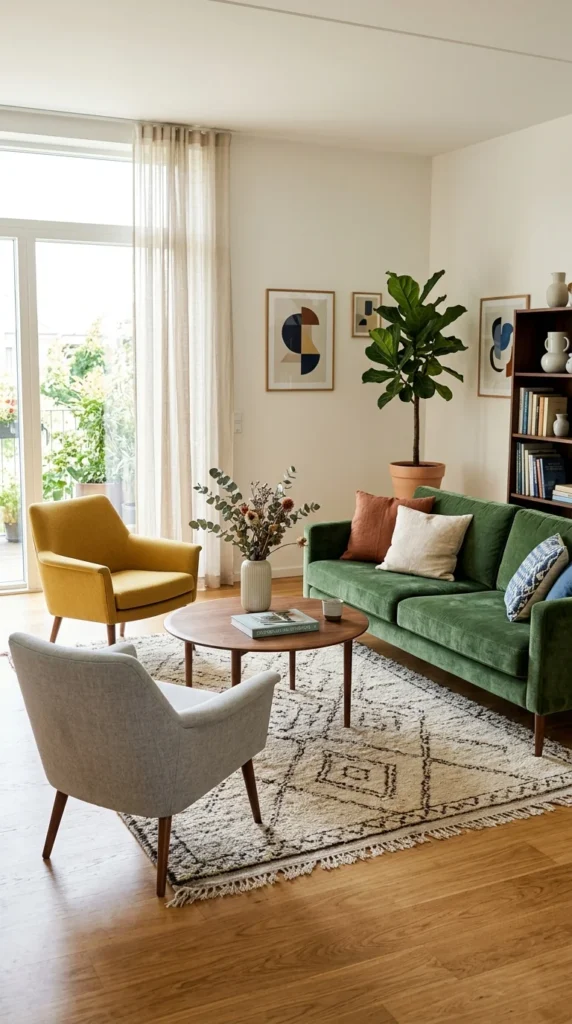
Chunky, solid furniture that goes all the way to the floor can make a small room feel heavy. Instead, opt for “leggy” pieces. Furniture with exposed legs—common in Mid-Century Modern designs—allows light and air to flow under the pieces, making the room feel lighter and less cramped.
10. Pocket Doors
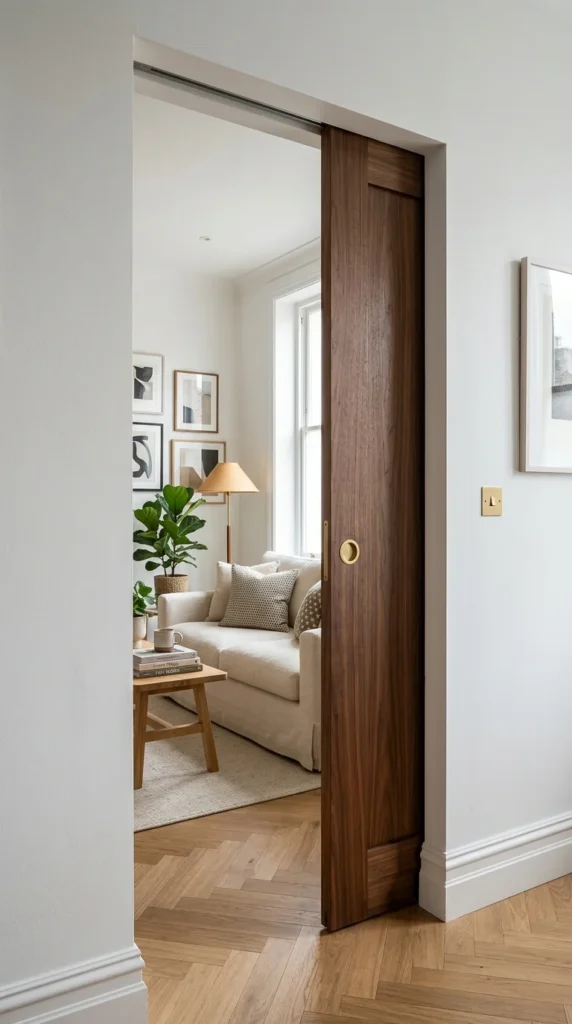
Traditional swinging doors require a significant amount of “clearance” space. In a small home, this can dictate where furniture can and cannot go. Replacing a standard door with a pocket door or a sliding barn door frees up floor space, allowing you to place a chair or a side table exactly where the door swing used to be.
11. Rug Zones
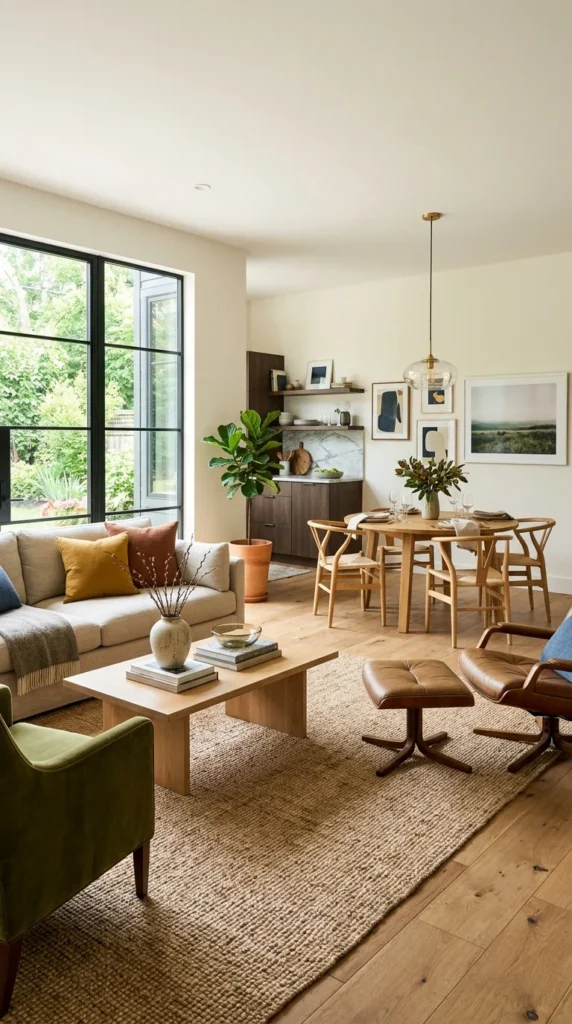
In a small living room that doubles as an office or dining area, use rugs to define the boundaries. A rug that is large enough for all the legs of your furniture to sit on creates a cohesive “island.” This prevents the furniture from looking like it’s just floating aimlessly in the room.
12. Symmetric Layouts
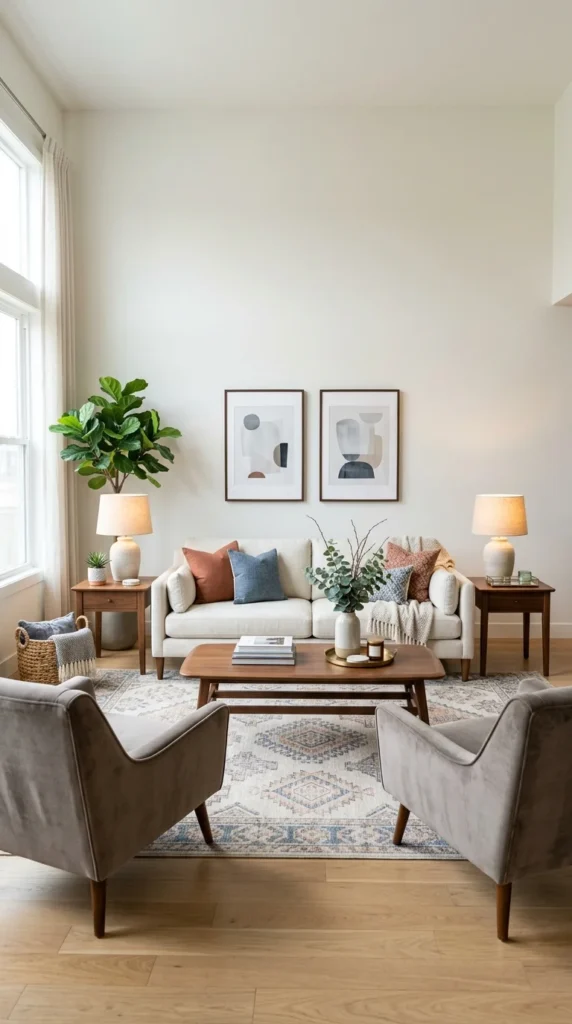
Symmetry creates a sense of order and calm, which is essential in a small space where things can easily feel chaotic. A balanced layout—such as two matching chairs opposite a sofa—provides a structured, “finished” look that feels intentional and sophisticated.
13. Nesting Tables
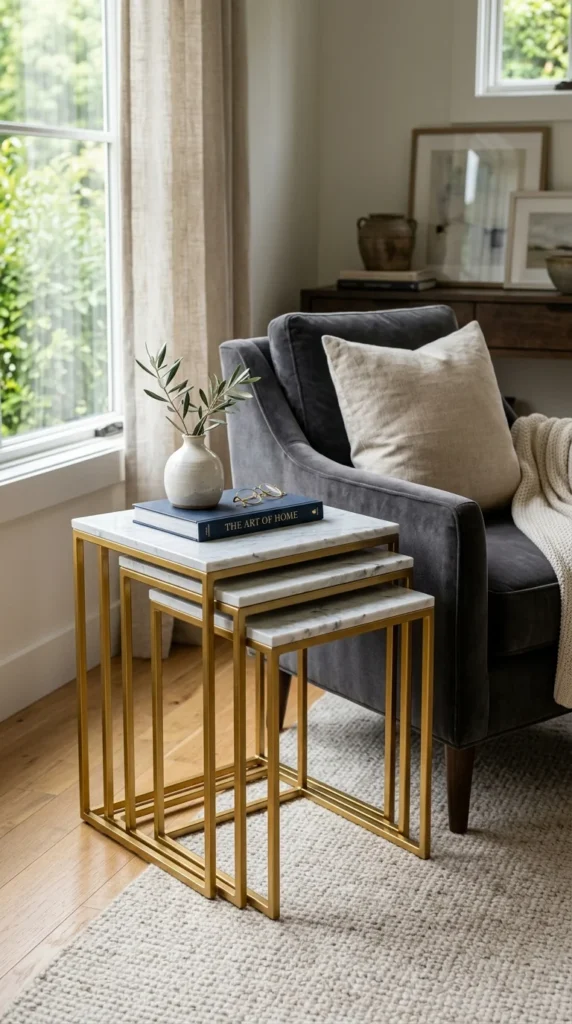
Nesting tables are the ultimate flexibility tool. You can keep them tucked away to save space during the day and pull them out when you have guests who need a place to set down a drink. They provide multiple surfaces without taking up a permanent footprint.
14. Wall-Mounted Media
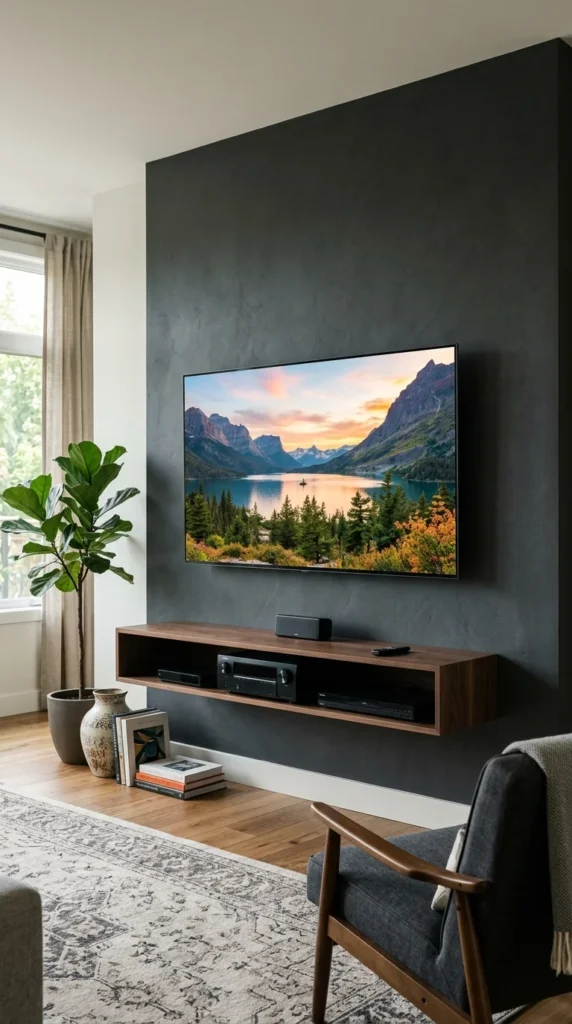
Bulky TV stands can eat up precious floor space. By mounting your television on the wall and using a slim, floating console underneath, you keep the floor visible. This creates a cleaner, more modern aesthetic and allows for extra storage underneath the console for baskets or stools.
15. Light Palettes
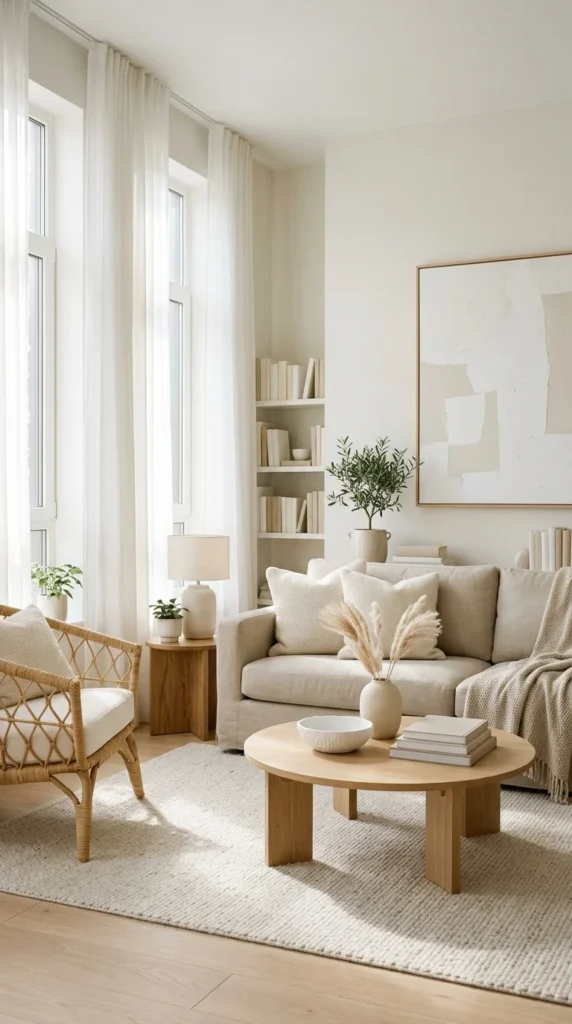
While dark colors can be cozy, they tend to absorb light and make walls feel closer. A light, neutral color palette—whites, creams, soft grays—reflects light and makes the walls recede. You can add depth and interest through different textures, such as a chunky knit throw or a woven rug, rather than heavy colors.
16. Sconce Lighting
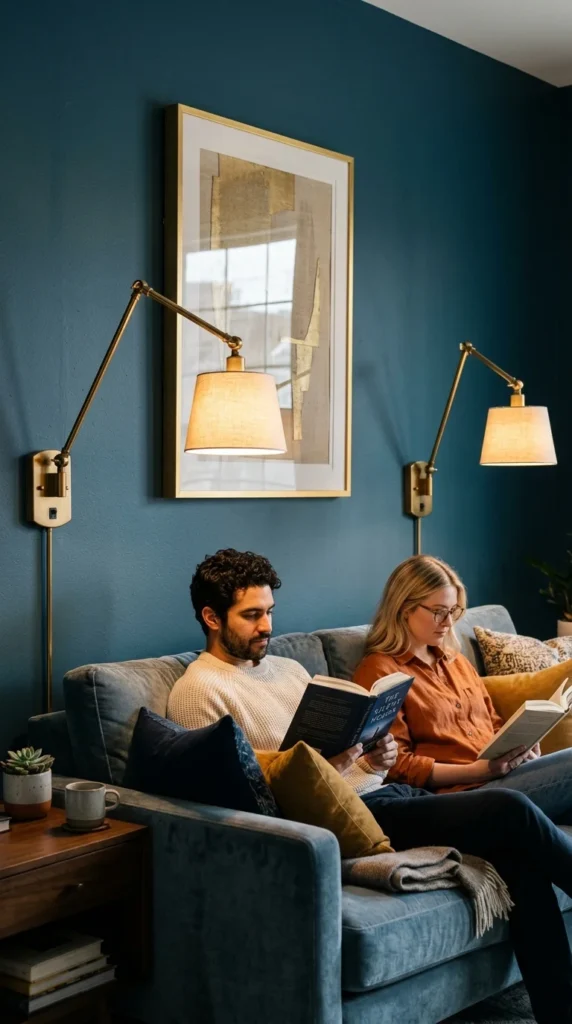
Floor lamps and table lamps require floor and surface space. Wall-mounted sconces are a brilliant alternative. They provide excellent task and ambient lighting while keeping your side tables clear for essentials like a book or a cup of tea. Swing-arm models are particularly useful as they can be moved to where they are needed most.
17. Round Tables
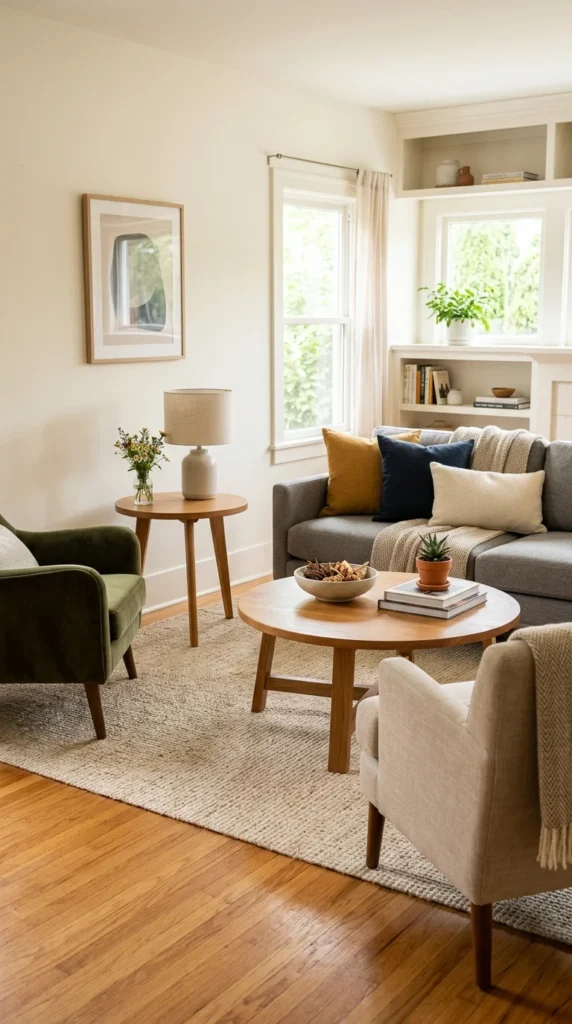
In a tight space, sharp corners can be “shin-knockers.” Round coffee tables and side tables facilitate better traffic flow because there are no hard edges to navigate around. Additionally, the curves help break up the boxy feeling of a small, rectangular room.
18. Built-in Benches
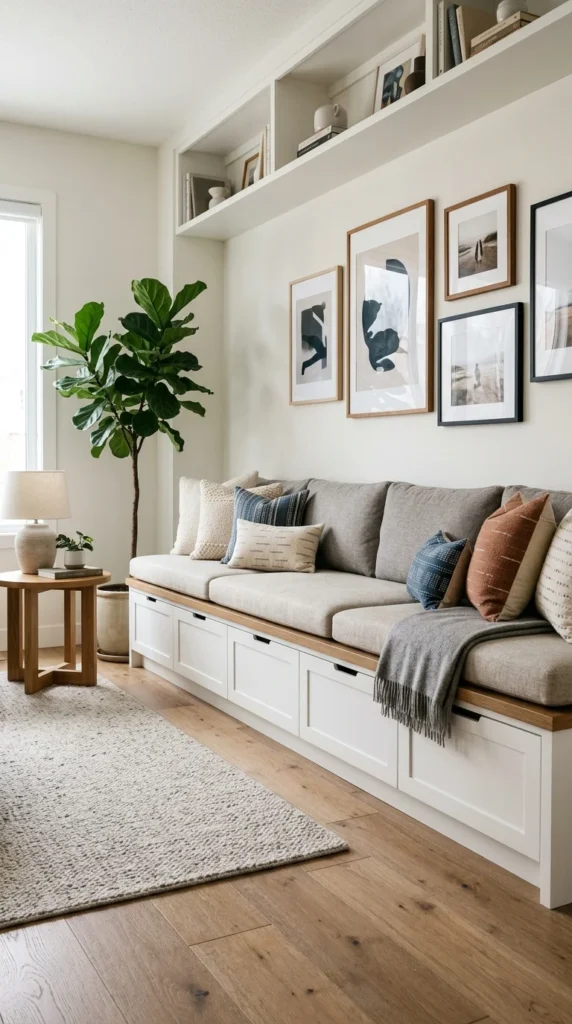
Built-ins are the gold standard for maximizing small spaces. A built-in bench along a wall can provide ample seating and incorporate hidden storage drawers for blankets, board games, or seasonal items. It creates a seamless look that feels like a natural part of the architecture.
19. Layered Lighting
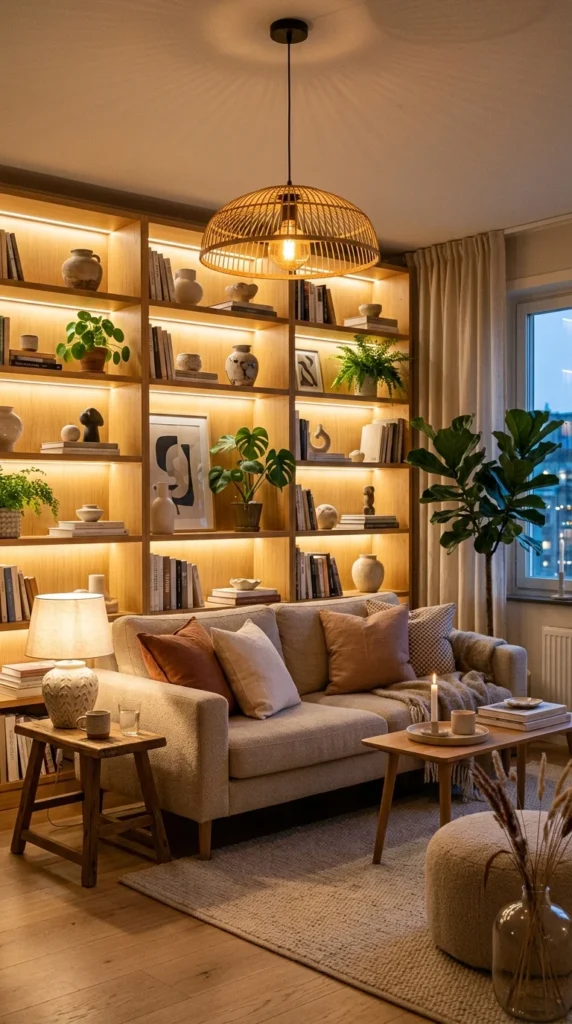
A single overhead light can make a room feel flat and small. By layering your lighting—using a mix of ambient, task, and accent lights—you create depth. Use warm lights in the corners to draw the eye outward, making the perimeter of the room feel more expansive.
20. Minimalist Decor
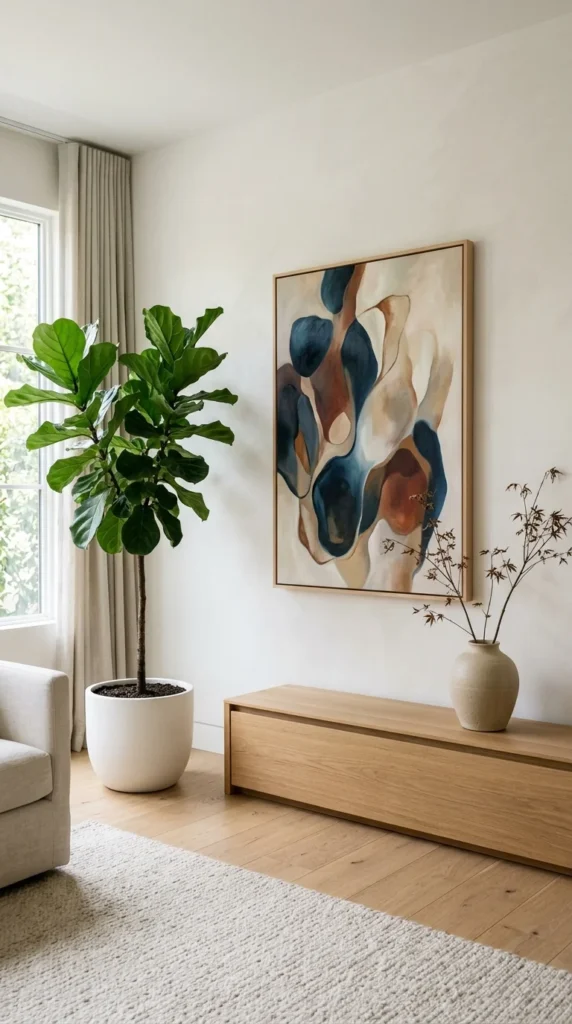
In a small room, less really is more. Avoid the urge to fill every shelf and surface. A few large-scale decor pieces (like one big painting or one tall plant) are better than dozens of small trinkets. Large items make the room feel grander, whereas many small items can make it feel cluttered and “bitty.”
21. Armless Chairs
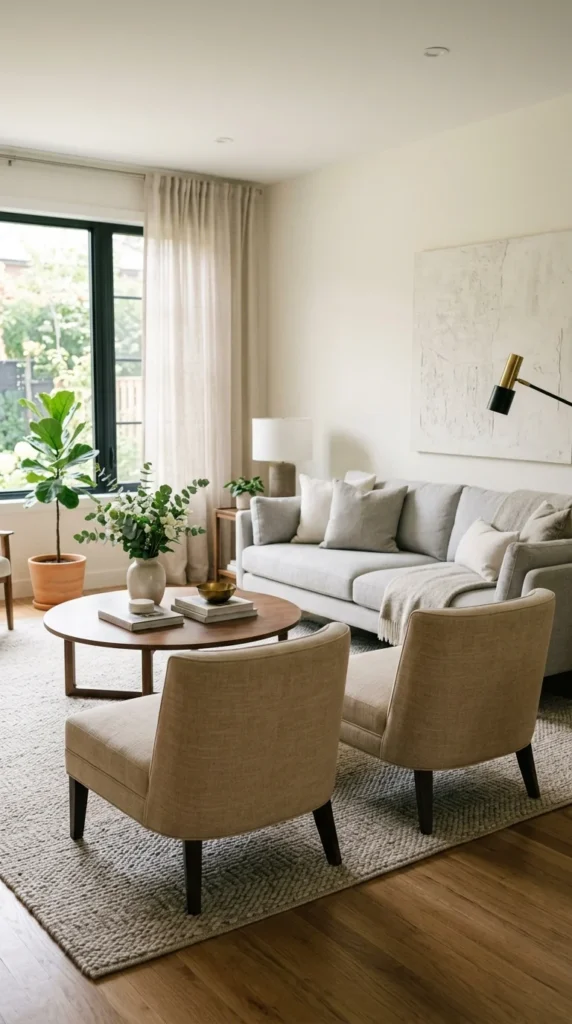
Armless chairs, often called slipper chairs, have a smaller profile than traditional armchairs. They are easier to tuck into tight spots and offer a more “open” silhouette. They provide necessary seating without the visual weight of heavy armrests, keeping the layout feeling breezy.
22. Transparent Curtains
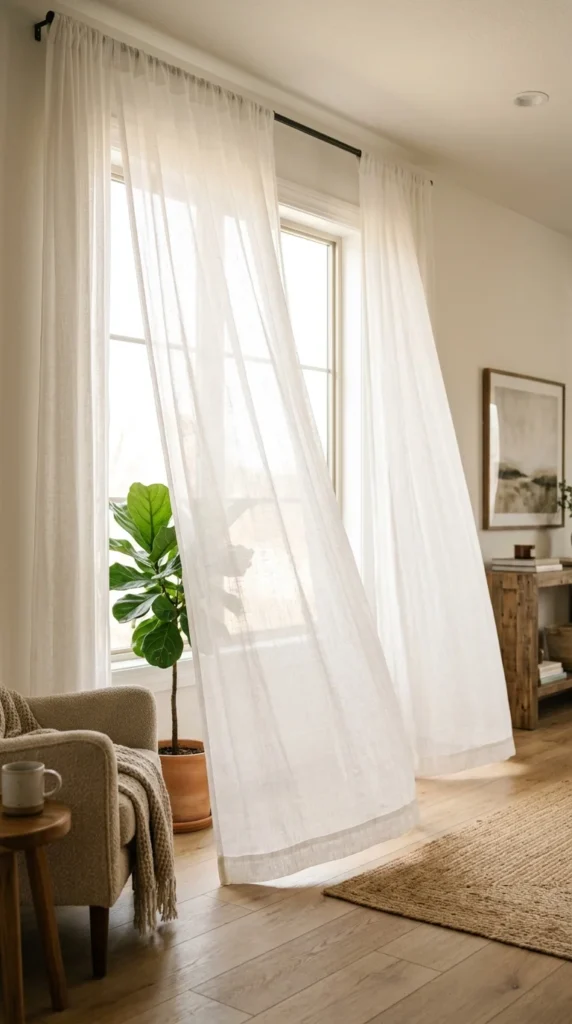
Heavy, dark drapes can close in a small room. Instead, opt for sheer or semi-transparent curtains. They provide privacy while allowing natural light to filter through, which is essential for making a small space feel connected to the outdoors and more expansive.
23. Gallery Walls
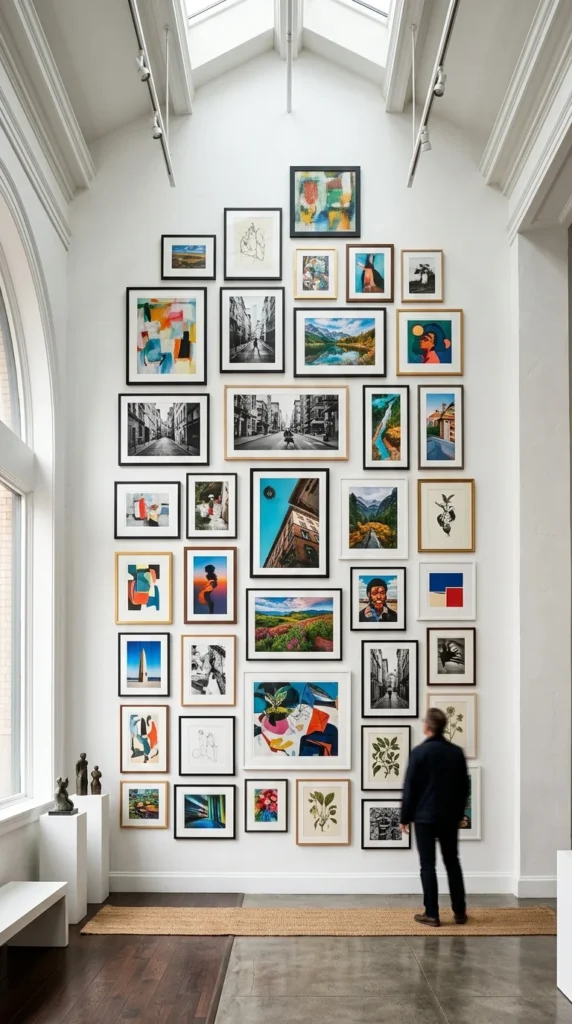
If you want to display art, go vertical. A gallery wall that extends toward the ceiling emphasizes the height of the room. By keeping the art tightly grouped, you create a singular focal point rather than scattering pieces across the room, which can make the space feel fragmented. This layout adds personality and style without encroaching on your living space.