
Living in a studio apartment often feels like a constant puzzle. You are tasked with fitting an entire life—sleeping, eating, working, and relaxing—into a single room. However, square footage is just a number. The “feel” of an apartment is dictated more by interior design strategy than by actual dimensions. By manipulating sightlines, light, and furniture scale, you can transform a cramped box into a sophisticated, multi-functional sanctuary.
Here are nine expert-backed design ideas to make your studio apartment feel significantly larger and more cohesive.
1. Vertical Space
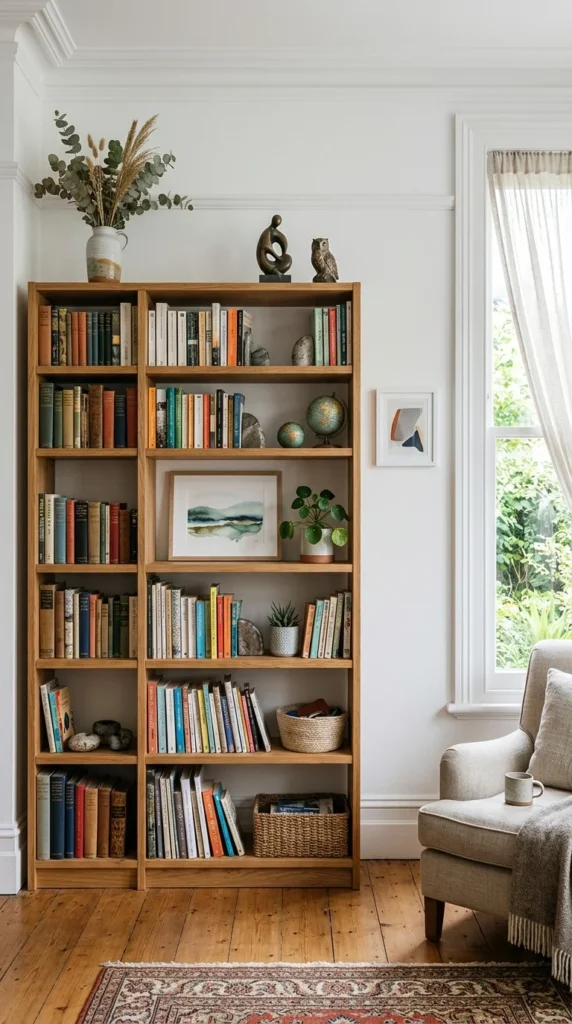
When floor space is limited, the only way to go is up. Utilizing vertical space is the most effective way to reclaim your floor while increasing storage capacity. Tall bookshelves, floor-to-ceiling cabinetry, and high-mounted floating shelves draw the eye upward, creating the illusion of higher ceilings.
Beyond storage, verticality helps in decluttering the “eye level” area of the room. When your belongings are tucked away in high cupboards or displayed on top-tier shelving, the lower half of the room feels more open and breathable. Consider installing hooks for bikes, wall-mounting your television, or using “over-the-door” organizers to ensure every inch of height is working in your favor.
2. Strategic Mirrors
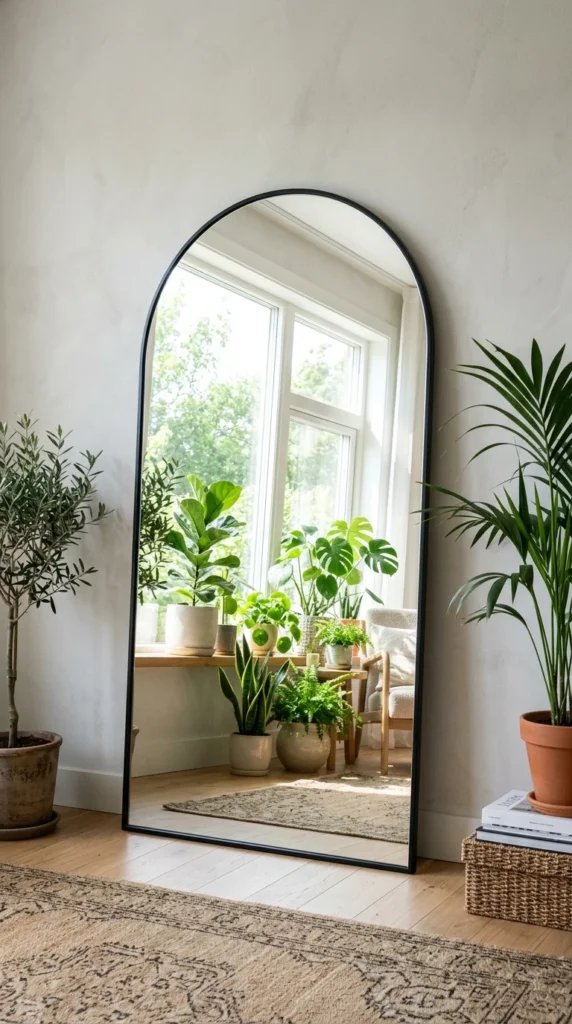
Mirrors are the oldest trick in the interior design handbook for a reason: they work. A strategically placed mirror can instantly double the perceived depth of a room. By reflecting both natural and artificial light, mirrors brighten dark corners and eliminate the “closed-in” feeling common in small studios.
To maximize this effect, place a large mirror directly opposite your primary window. This bounces the outdoor view and light back into the room, effectively “breaking” the wall. If a massive floor mirror isn’t an option, consider a gallery wall of smaller mirrors or mirrored furniture pieces, such as a sideboard or bedside table, to keep the light moving throughout the space.
3. Multi-functional Furniture
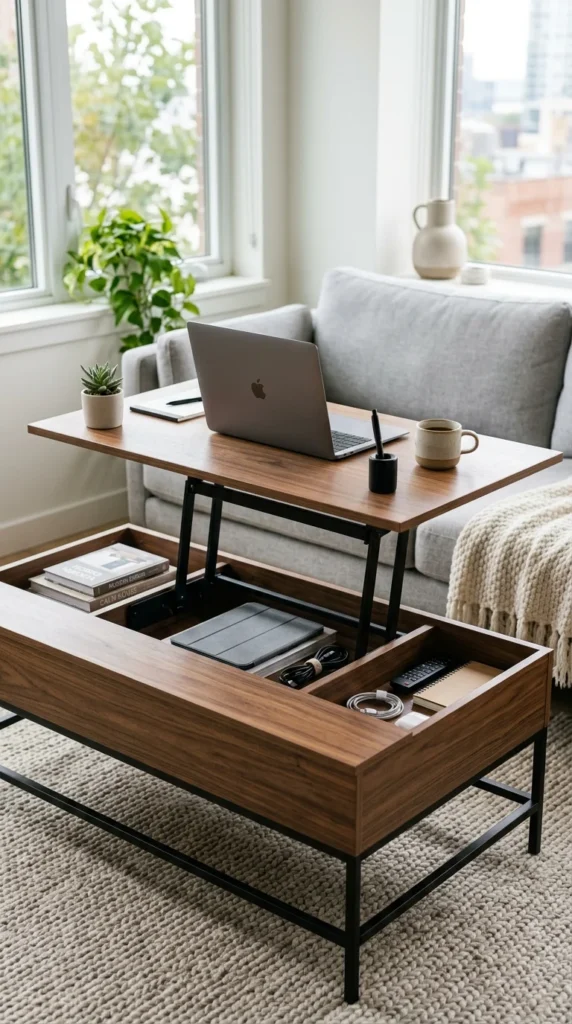
In a studio, every piece of furniture must earn its keep—ideally by performing two or more tasks. Multi-functional furniture eliminates the need for excess pieces that would otherwise clutter the walkway. A classic example is the Murphy bed, which disappears into the wall during the day, but modern innovations have expanded this category significantly.
Look for ottomans that double as storage trunks, sofa beds with high-quality mattresses, or dining tables that can be folded down into slim consoles when not in use. By choosing pieces that adapt to your needs throughout the day, you ensure that your living area doesn’t feel like a bedroom 24/7, and your workspace doesn’t intrude on your relaxation time.
4. Defined Zones
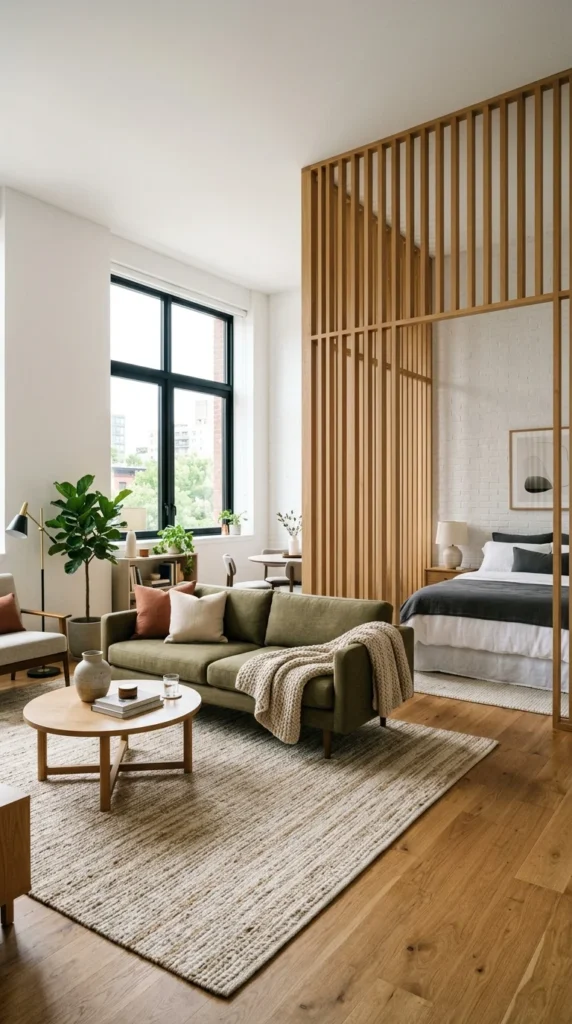
The biggest mistake in studio living is treating the entire apartment as one giant room. This often leads to a chaotic environment where the bed feels like it’s in the kitchen. Creating “zones” provides a psychological sense of order and makes the apartment feel like a multi-room home.
You don’t need permanent walls to achieve this. Use area rugs to “anchor” different sections—a plush rug for the living area and a durable sisal rug for the dining nook. Room dividers, such as open-backed shelving units (like the IKEA Kallax), allow light to pass through while providing a clear boundary between the sleeping and living quarters. Even a simple change in lighting or wall art can signal the transition from one “room” to the next.
5. Color Palette
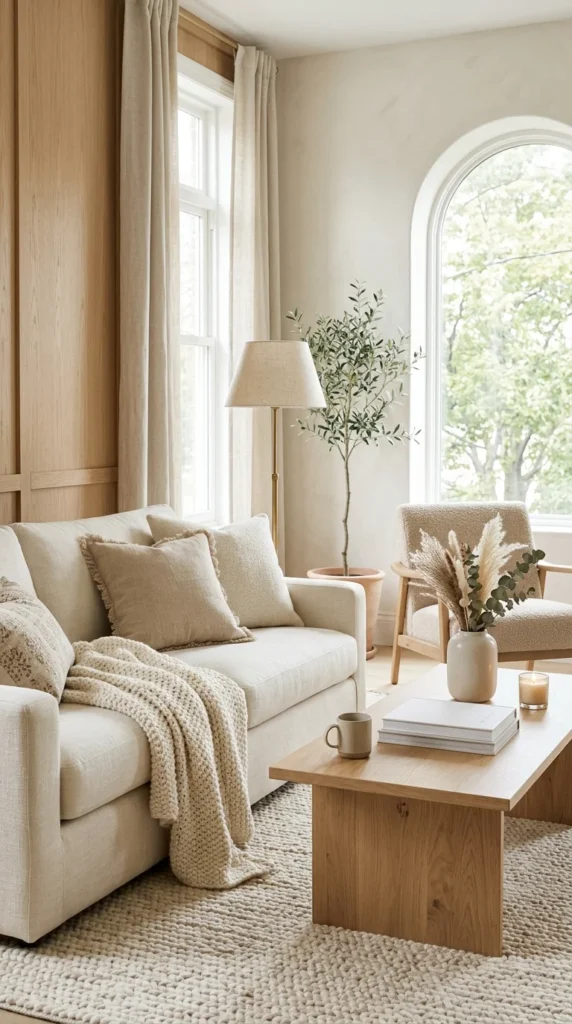
Color has a profound impact on how we perceive space. Dark, saturated colors tend to absorb light and “close in” a room, making it feel cozy but small. To make a studio feel expansive, stick to a light, monochromatic, or neutral color palette. Whites, creams, soft greys, and pastels reflect the most light, creating an airy atmosphere.
To prevent a light-colored room from feeling cold or clinical, lean heavily into texture. Combine linen curtains, wool rugs, wooden accents, and velvet upholstery within the same color family. This adds “visual weight” and interest without the clutter of contrasting colors. If you crave bold hues, save them for small accents like throw pillows, plants, or a single piece of statement art.
6. Transparent Pieces
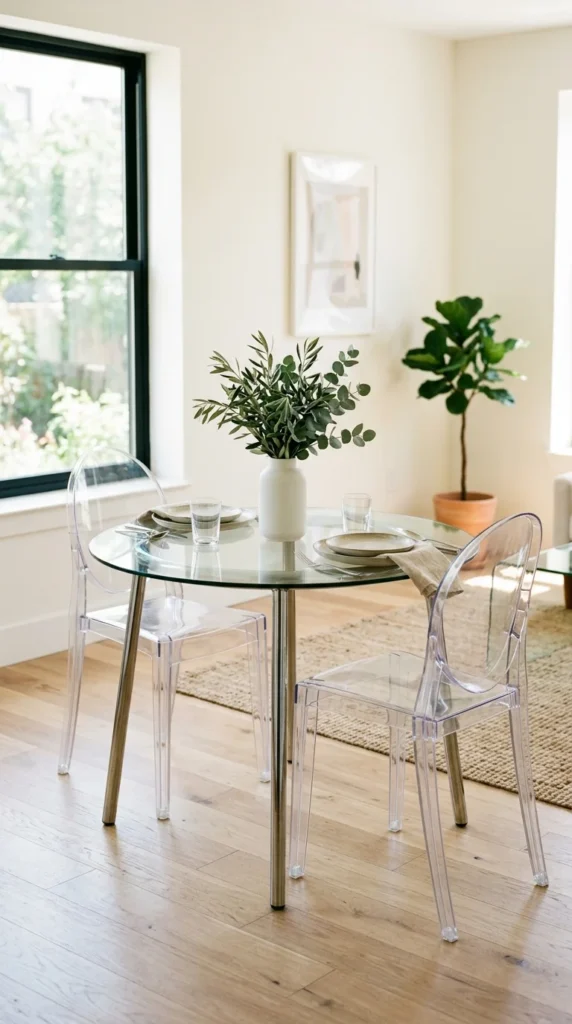
Visual weight refers to how much “space” an object appears to take up. A heavy, dark mahogany desk has a lot of visual weight and can dominate a small room. Conversely, furniture made of glass, acrylic, or Lucite has almost zero visual weight.
Transparent pieces, like the iconic Ghost chair or a glass coffee table, allow the eye to travel right through them to the walls and floor beyond. This trick keeps the floor plan looking “uninterrupted.” When the eye can see more of the floor, the brain perceives the room as being larger. Metal wire chairs or furniture with open frames provide a similar benefit by maintaining a sense of transparency.
7. Layered Lighting
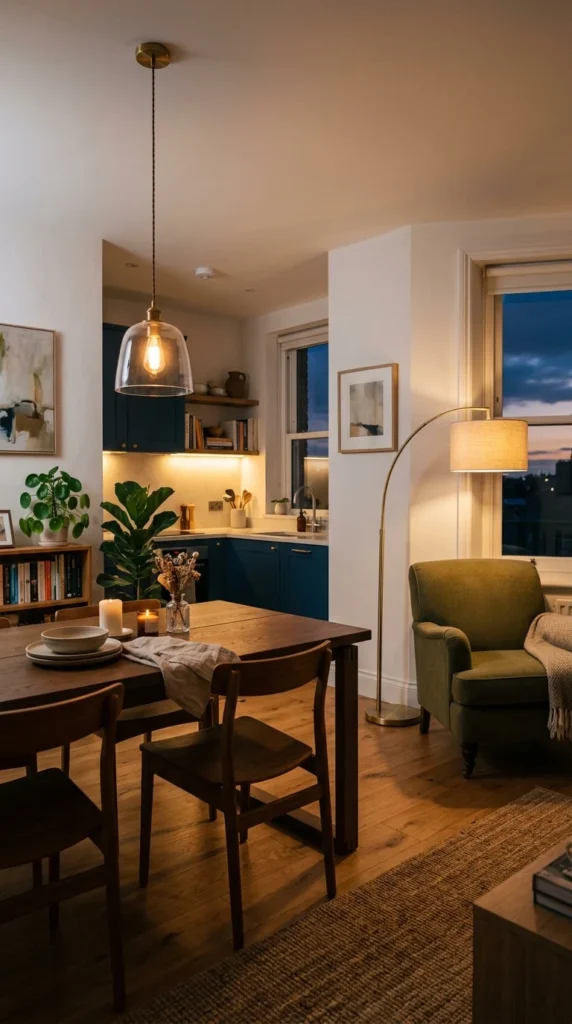
A single overhead light fixture is the enemy of small spaces. It creates harsh shadows and leaves corners in the dark, which effectively “shrinks” the room. To make a studio feel larger and more inviting, you must layer your lighting.
Aim for at least three sources of light in every zone: ambient (overhead), task (reading lamps or under-cabinet lights), and accent (LED strips or small decorative lamps). By illuminating the corners and vary the heights of your light sources, you create depth and dimension. Using warm-toned bulbs can also make the space feel more “expensive” and expansive, mimicking the complexity of a larger, multi-room house.
8. Hidden Storage
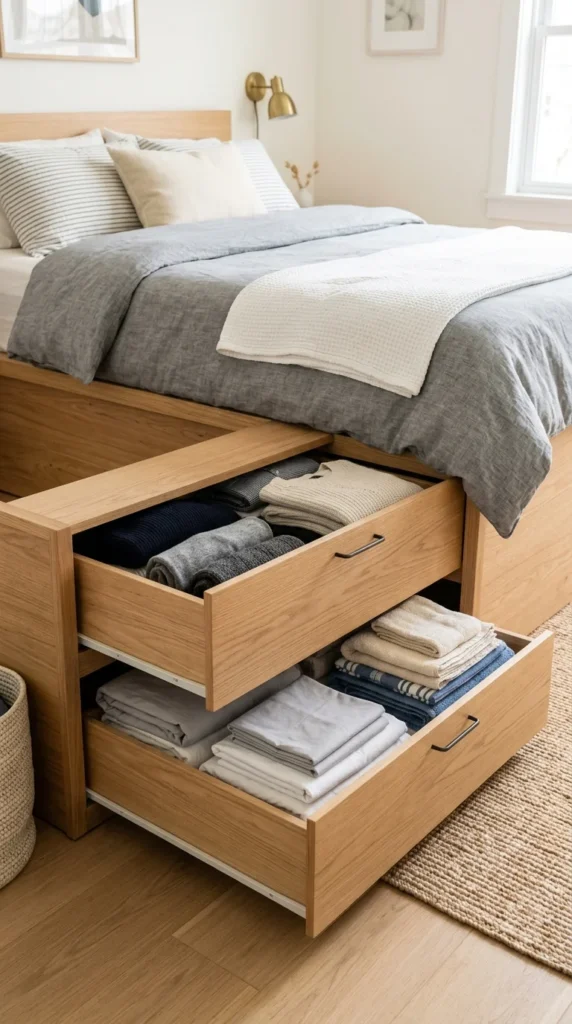
Clutter is the ultimate space-killer. Even the most well-designed studio will feel tiny if surfaces are covered in “stuff.” The key is to find “invisible” storage solutions that keep your belongings out of sight.
Utilize the “dead space” under your bed with rolling bins or buy a hydraulic storage bed that lifts up to reveal a massive compartment. Look for benches with flip-tops for the entryway and kitchen islands with built-in shelving. By keeping your surfaces clear of daily clutter, you maintain the “clean lines” that contribute to a sense of spaciousness.
9. Leggy Furniture
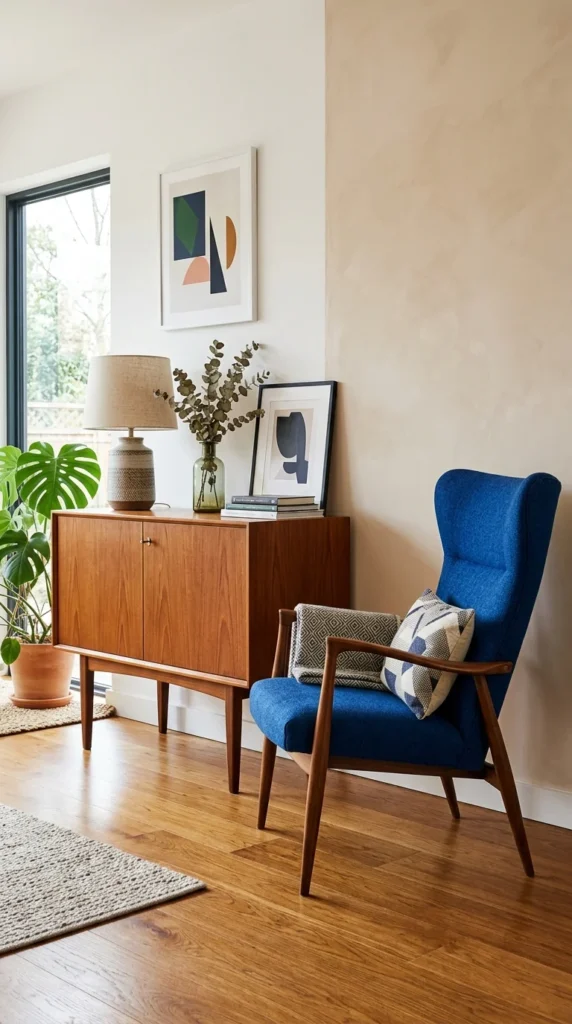
Furniture that sits flush against the floor acts like a roadblock for the eye. It creates a solid wall of material that makes the floor area look smaller. To combat this, choose “leggy” furniture—pieces that are elevated on thin, tapered, or columnar legs.
When you can see the floor extending underneath a sofa, a bed, or a dresser, the room feels much more open. This is why Mid-Century Modern style is so popular for small apartments; its signature aesthetic relies on elevated, slim profiles that allow light and air to circulate around and under the furniture. The more floor you can see, the bigger your studio will feel.