
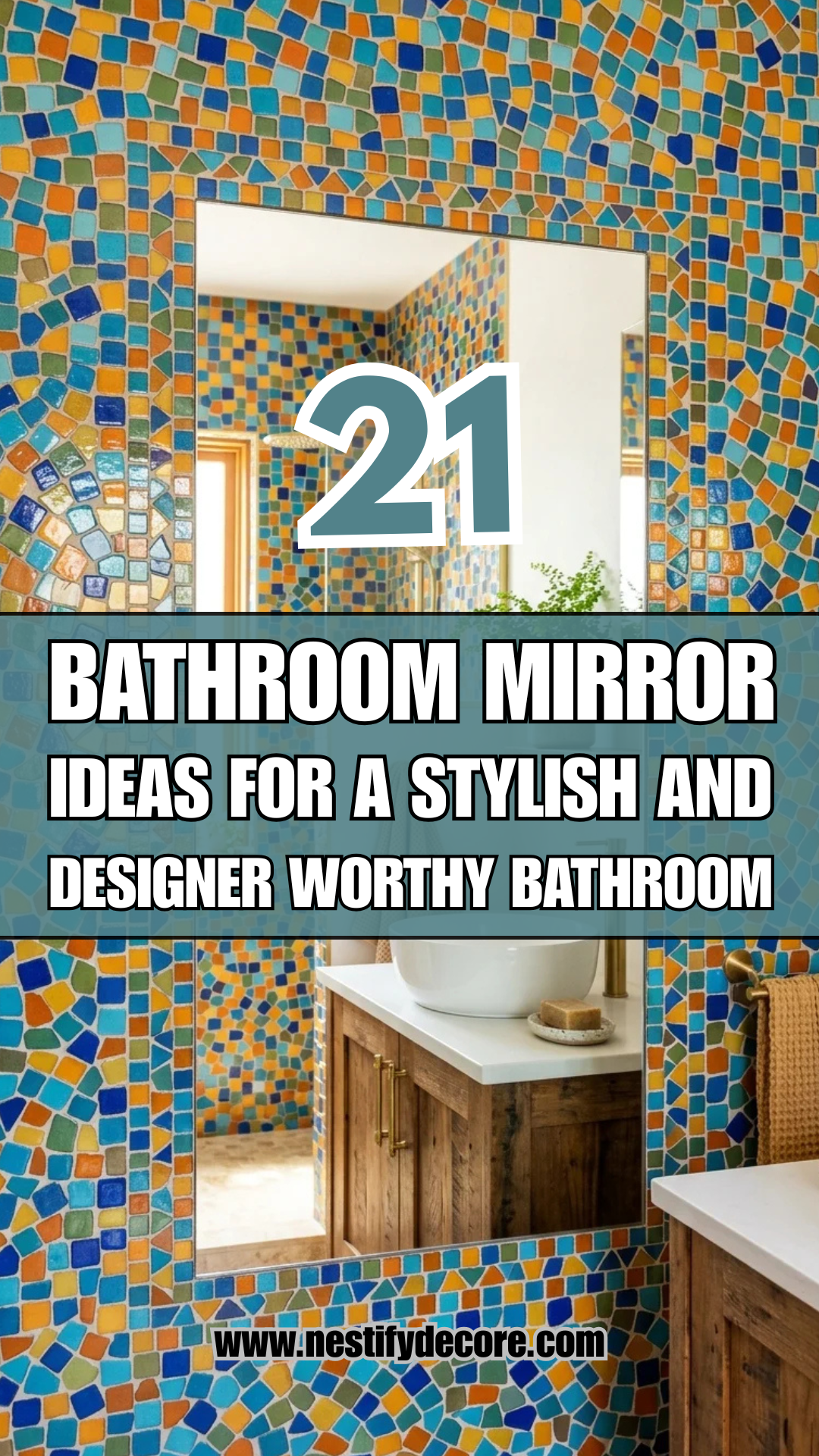
The bathroom mirror is more than just a functional necessity for morning routines; it is the focal point of the entire room. Often referred to as the “artwork” of the bathroom, the right mirror can amplify light, create the illusion of space, and tie together disparate design elements. Whether you are aiming for a sleek modern aesthetic or a cozy vintage vibe, selecting the perfect mirror is the quickest way to elevate your space from basic to designer-worthy.
1. Round Mirrors
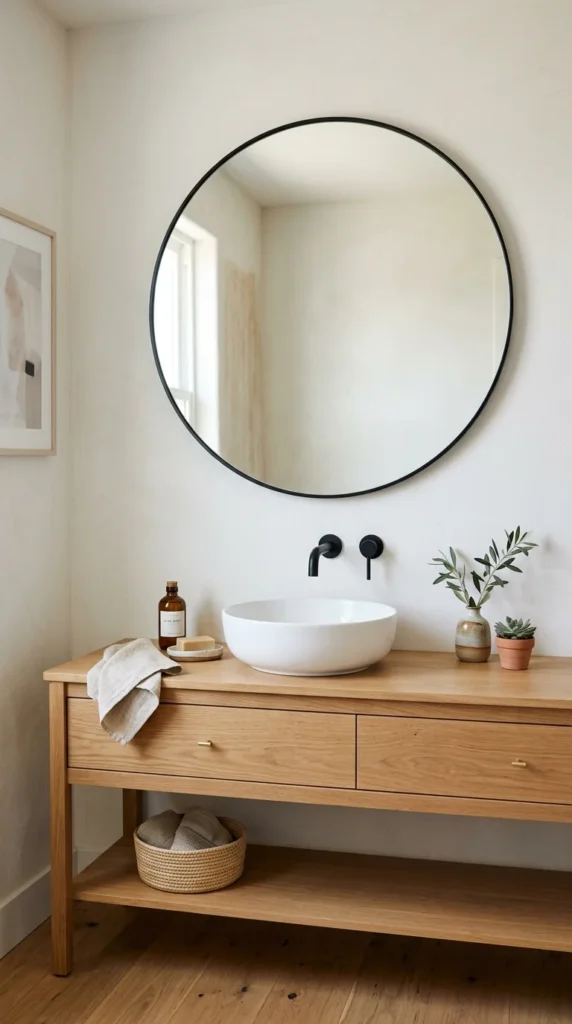
Round mirrors are a favorite among interior designers for their ability to soften the hard lines and sharp angles typically found in bathrooms. Most bathrooms are filled with rectangular tiles, square vanities, and straight-edged countertops. A circular mirror breaks up this geometric monotony, introducing a sense of flow and organic beauty. For a contemporary look, choose a thin “thin-line” frame in black or gold; for a more bohemian feel, look for a round mirror with a thick wooden or rattan border.
2. Backlit LED
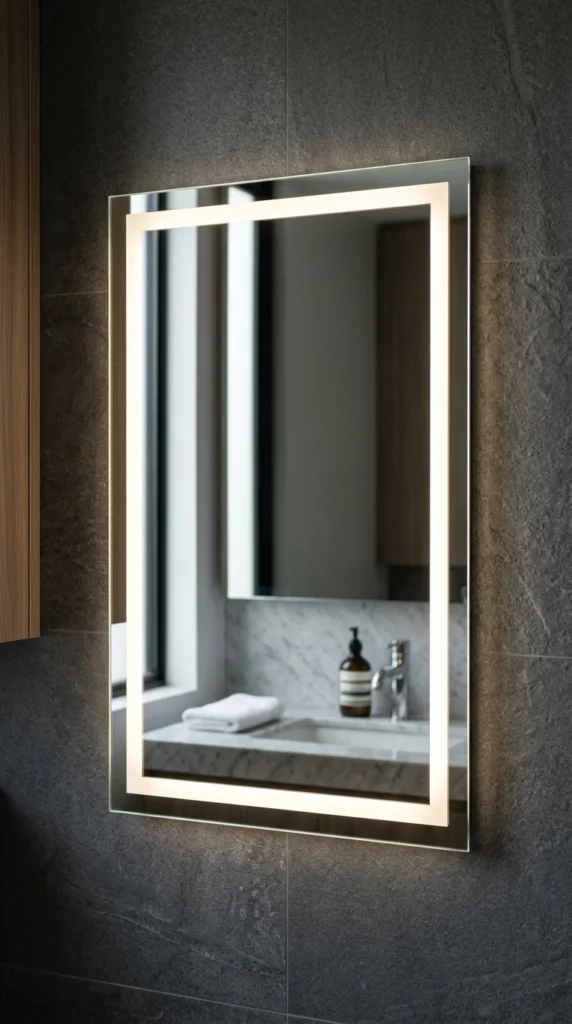
If you want to achieve a high-end, spa-like atmosphere, a backlit LED mirror is the ultimate choice. These mirrors provide a soft, diffused glow that eliminates the harsh shadows often created by overhead lighting—making them perfect for applying makeup or shaving. Beyond functionality, the “floating” effect created by the backlight adds a futuristic and luxurious depth to the wall. Many modern versions come with touch-sensors and anti-fog technology, combining style with high-tech utility.
3. Black Frames
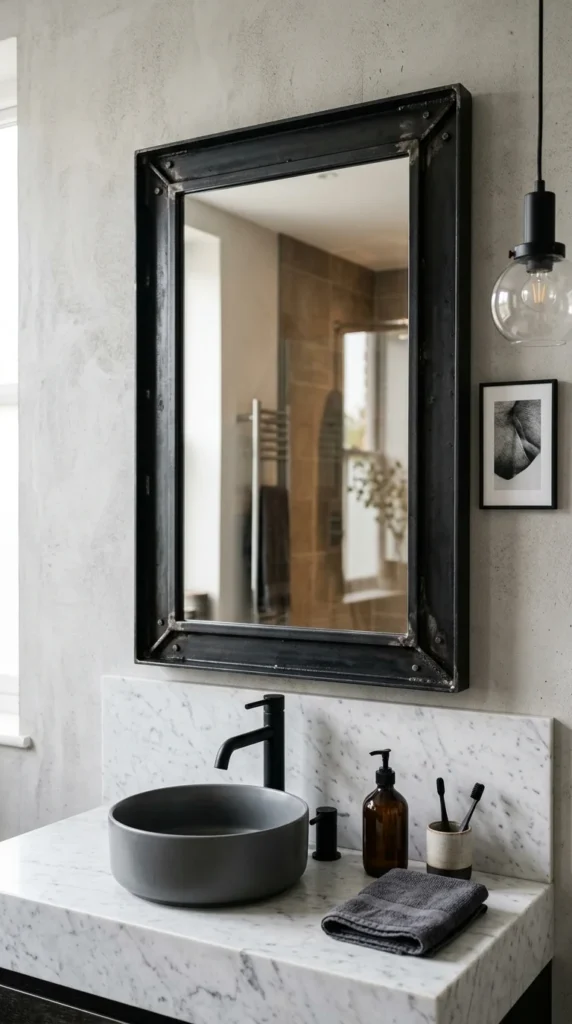
For those who love the industrial or modern farmhouse aesthetic, a mirror with a bold black frame is a must. The black border acts like eyeliner for your bathroom, defining the space and providing a sharp contrast against white subway tiles or light-colored walls. This style works exceptionally well when paired with matte black faucets, drawer pulls, and light fixtures, creating a cohesive and grounded design language throughout the room.
4. Frameless Minimalism
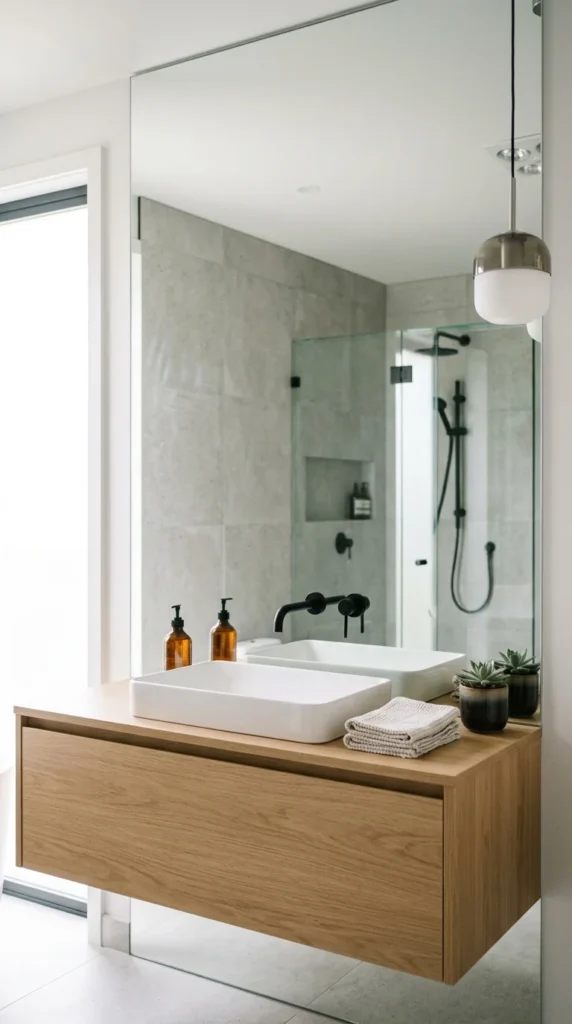
In a small bathroom, a frame can sometimes feel restrictive. Frameless mirrors offer a clean, unobstructed look that allows the surrounding materials—like beautiful marble or intricate tile work—to take center stage. By eliminating the border, the mirror blends into the wall, helping to reflect more light and making the room feel significantly larger than it actually is. This is the go-to choice for ultra-modern, minimalist homes where “less is more.”
5. Antique Ornate
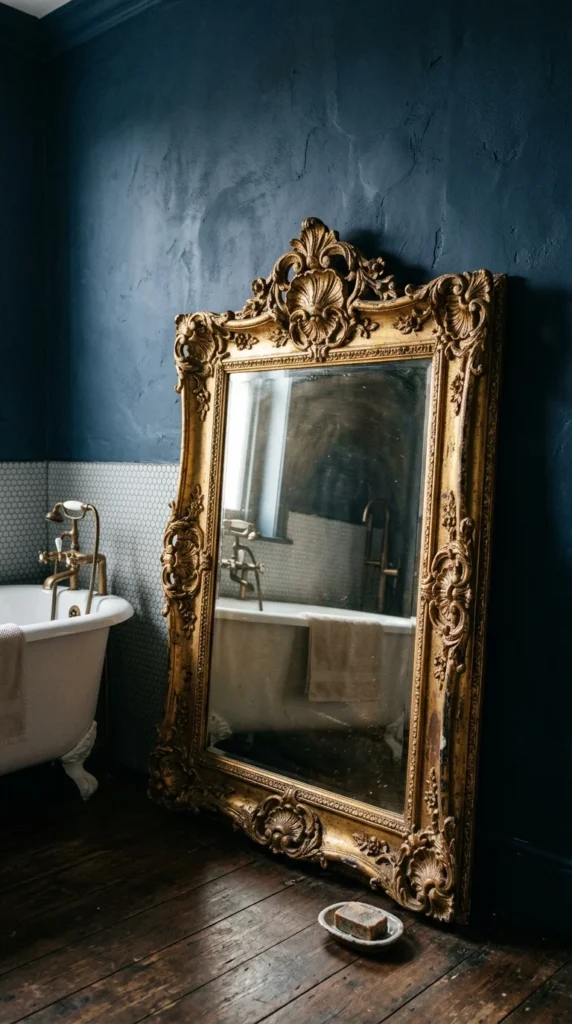
Injecting character into a sterile bathroom can be as simple as adding a vintage or antique-style mirror. Look for ornate gold or silver frames with intricate carvings, scrolls, or “baroque” details. These mirrors act as a stunning juxtaposition in a modern bathroom or as a perfect complement to a traditional pedestal sink. The “shabby chic” or “eclectic” look relies on these storied pieces to provide warmth and a sense of history to the space.
6. Double Mirrors
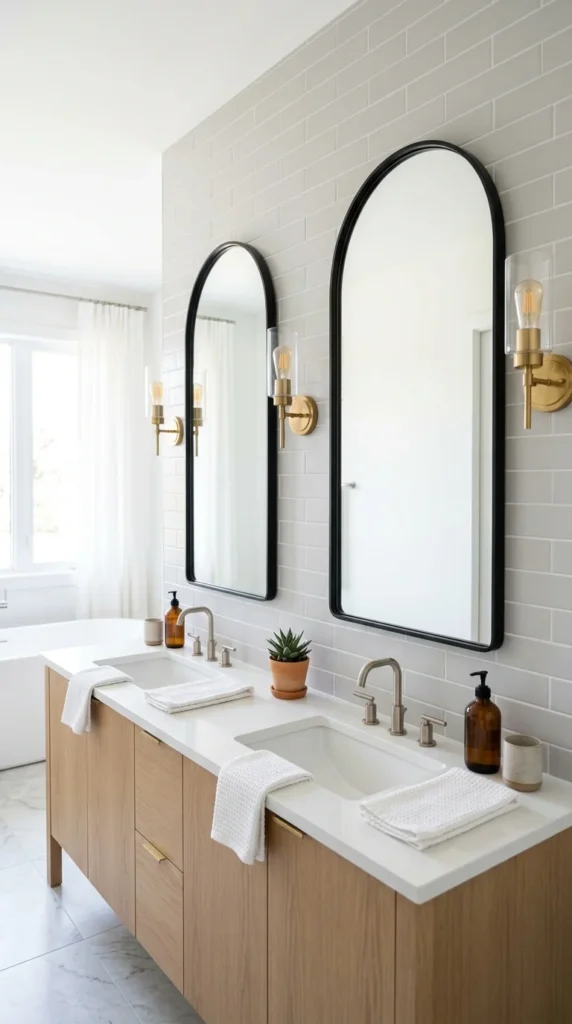
If you have a double vanity, skip the single wide mirror in favor of two separate mirrors. Using twin mirrors creates a sense of symmetry and personal space for each user. This layout also provides an opportunity to place a stylish wall sconce between or on either side of the mirrors, which enhances the lighting quality and adds an extra layer of design. Arched or tall rectangular mirrors are particularly effective in this configuration.
7. Arched Silhouettes
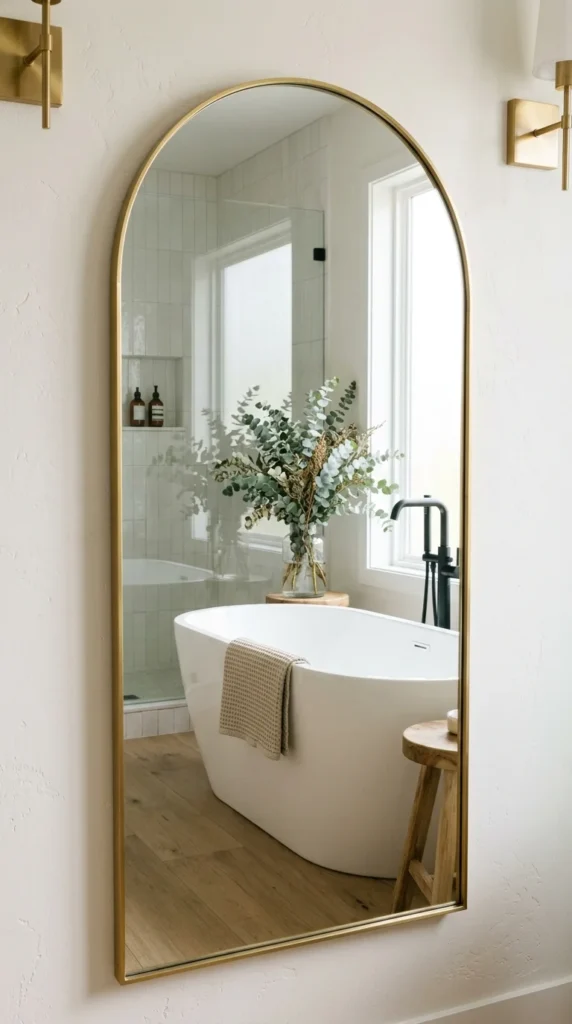
Arched mirrors have surged in popularity because they combine the softness of a round mirror with the height of a rectangular one. The curved top draws the eye upward, making the ceiling feel higher. This architectural shape feels sophisticated and timeless, working equally well in Mediterranean, Scandinavian, and Mid-Century Modern designs. An arched mirror is often the perfect solution when you want something more interesting than a standard rectangle but find a full circle too trendy.
8. Oval Elegance
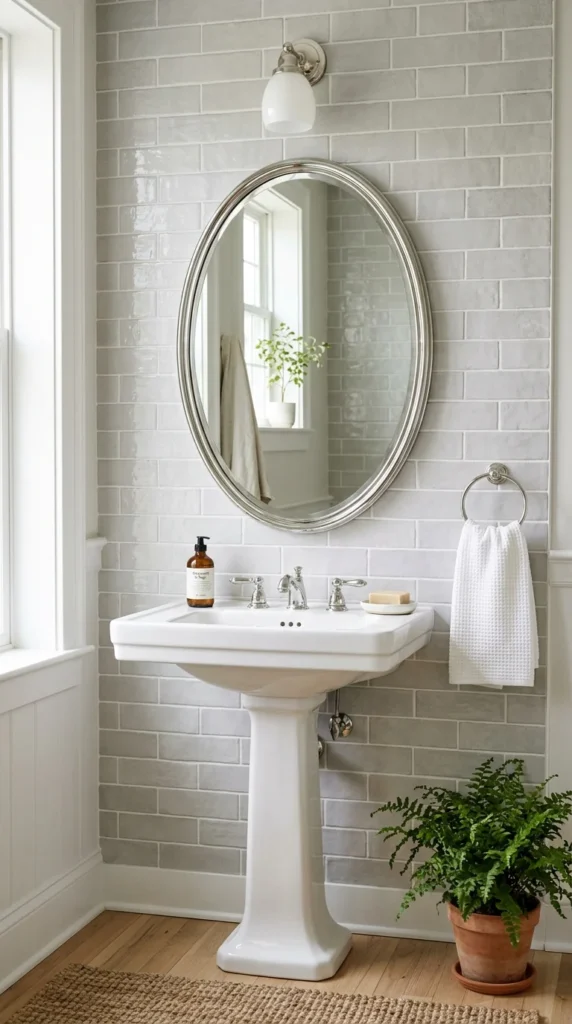
Oval mirrors offer a graceful, elongated look that is perfect for narrow vanities or powder rooms. Because of their vertical orientation, they can help elongate the wall and provide a full view of the upper body without taking up too much horizontal space. They carry a classic, “old-world” elegance that feels softer than a rectangle but more structured than a circle.
9. Wood Frames
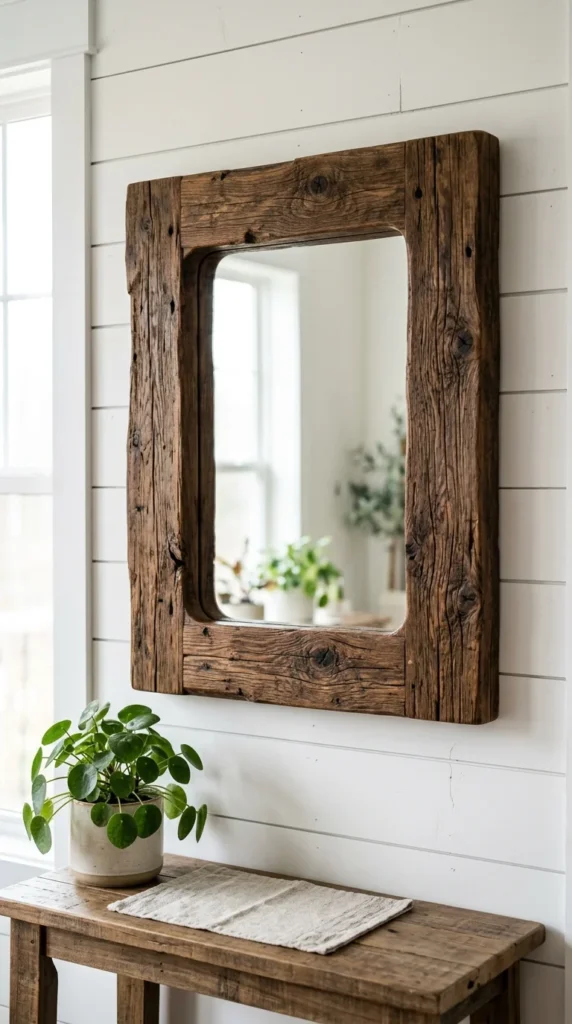
To bring a touch of the outdoors in, opt for a mirror with a natural wood frame. Whether it’s light oak, dark walnut, or reclaimed timber, wood adds organic texture and warmth to the often “cold” surfaces of a bathroom. Wooden frames are essential for achieving the Scandinavian “Hygge” look or a rustic farmhouse vibe. They pair beautifully with indoor plants and woven baskets.
10. Pivot Mirrors
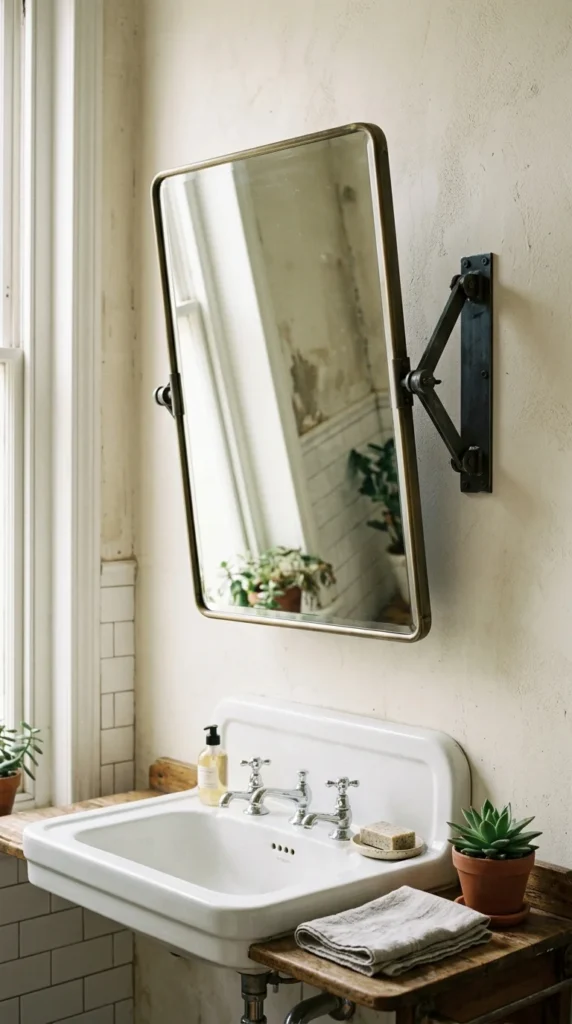
Pivot mirrors are mounted on side brackets that allow the glass to tilt up or down. Historically used in industrial settings, they have become a staple in designer bathrooms for their vintage-utilitarian charm. They are also incredibly practical for households with people of different heights, as the angle can be adjusted for the perfect view. They look best when the hardware matches the rest of the bathroom’s metal finishes.
11. Mirror Walls
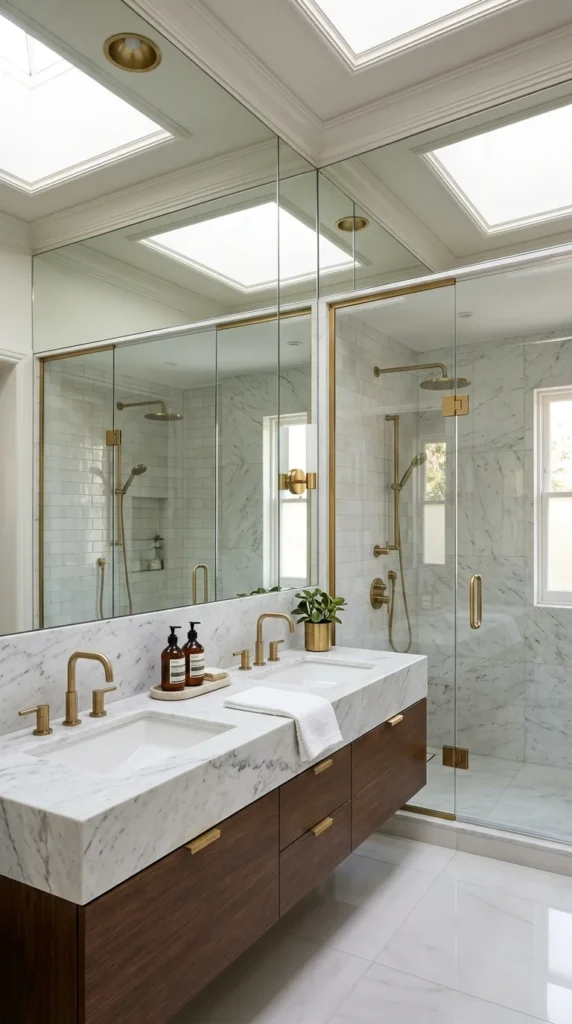
If your goal is to double the visual size of your bathroom, a full-wall mirror is the answer. By extending the mirror from the countertop all the way to the ceiling and from wall to wall, you erase the boundaries of the room. This technique is frequently used in luxury hotels to create a sense of grandeur. It also maximizes the reflection of any windows, brightening even the darkest windowless bathrooms.
12. Brass Accents
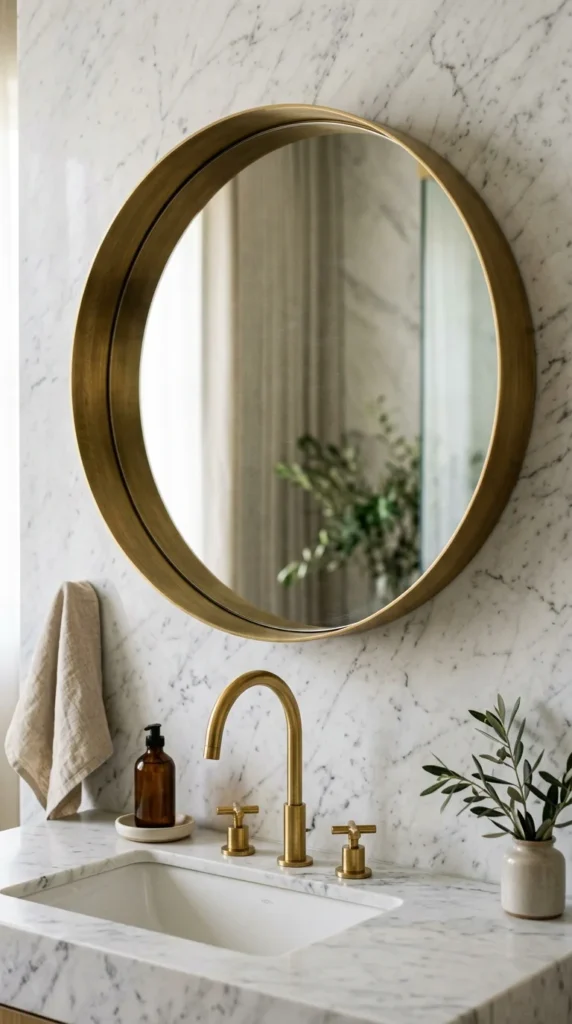
Brass has made a massive comeback in interior design, offering a warmer, more inviting alternative to chrome or stainless steel. A brass-framed mirror adds a touch of “glam” without feeling over-the-top. It works exceptionally well against dark wall colors like navy, forest green, or charcoal, where the gold tones can truly pop.
13. Geometric Shapes
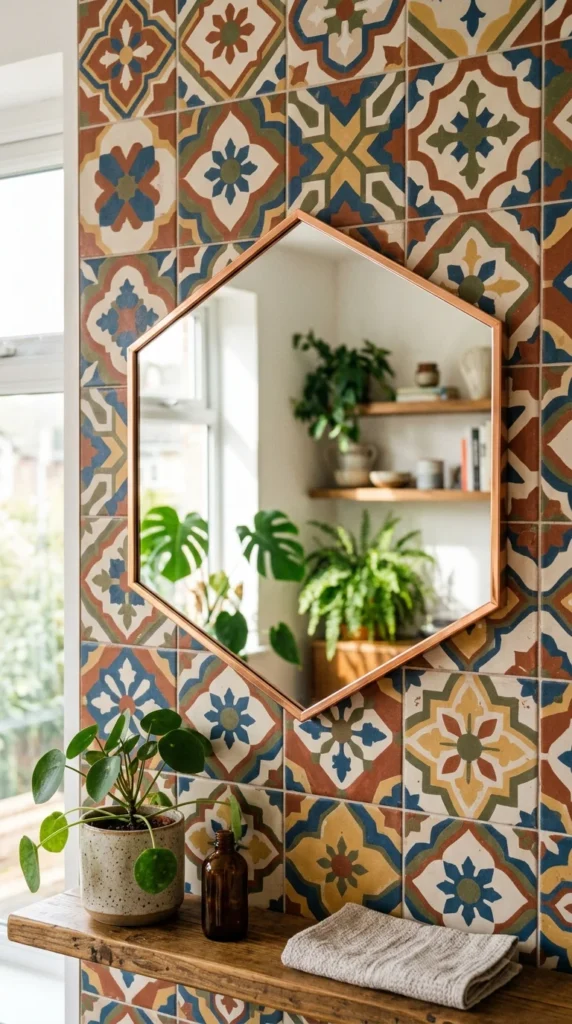
Break away from the traditional with a geometric mirror. Hexagons, octagons, and diamond shapes bring a playful, artistic energy to the bathroom. These mirrors function as a “statement piece” and are particularly effective in powder rooms where you want to make a big impression in a small space. Geometric mirrors often look best in groups or when paired with bold wallpaper.
14. Integrated Storage
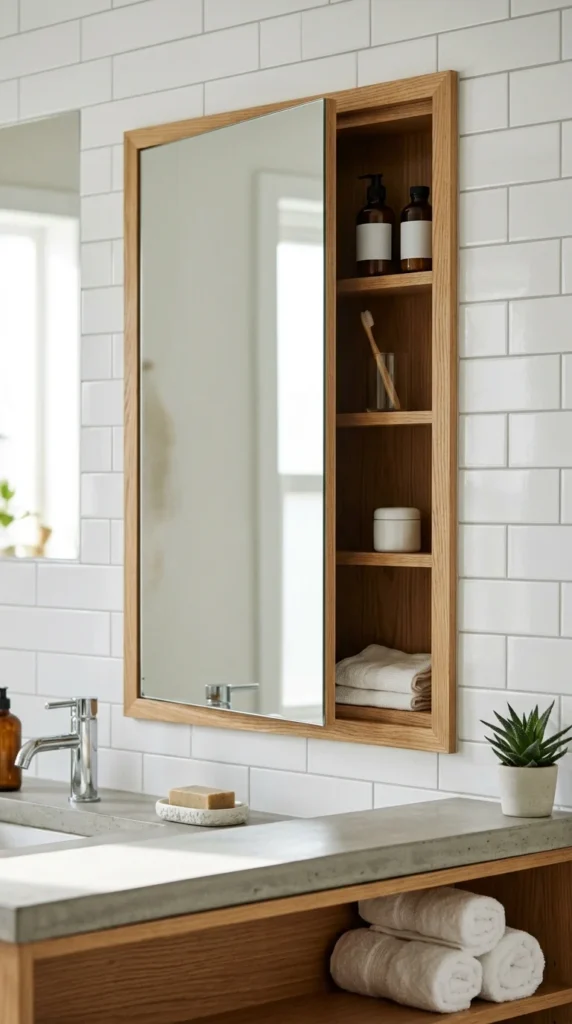
Modern medicine cabinets have come a long way from the clunky plastic boxes of the past. Today’s versions are sleek, often recessed into the wall so they sit flush, appearing like a standard mirror. This is the perfect solution for small bathrooms that lack counter space. You get the designer look of a high-end mirror with the hidden functionality of storage for toiletries and medications.
15. Floor-to-Ceiling
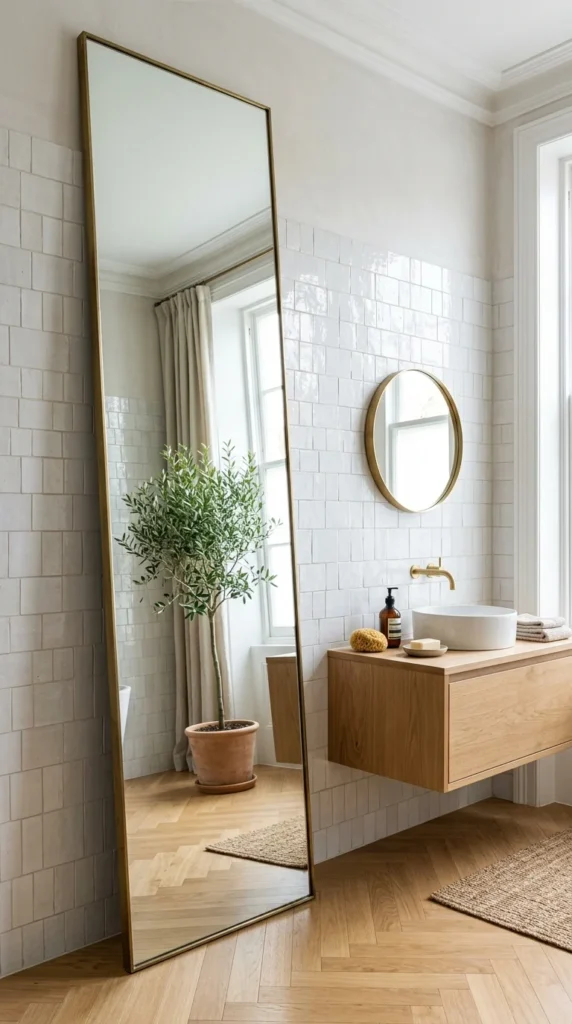
For a truly dramatic effect, a floor-to-ceiling mirror creates a sense of verticality that few other design elements can match. This isn’t just for checking your outfit; it’s about changing the scale of the room. This works best in larger master bathrooms where the mirror can stand alone as a decorative feature next to a freestanding bathtub or a dressing area.
16. Suspended Mirrors
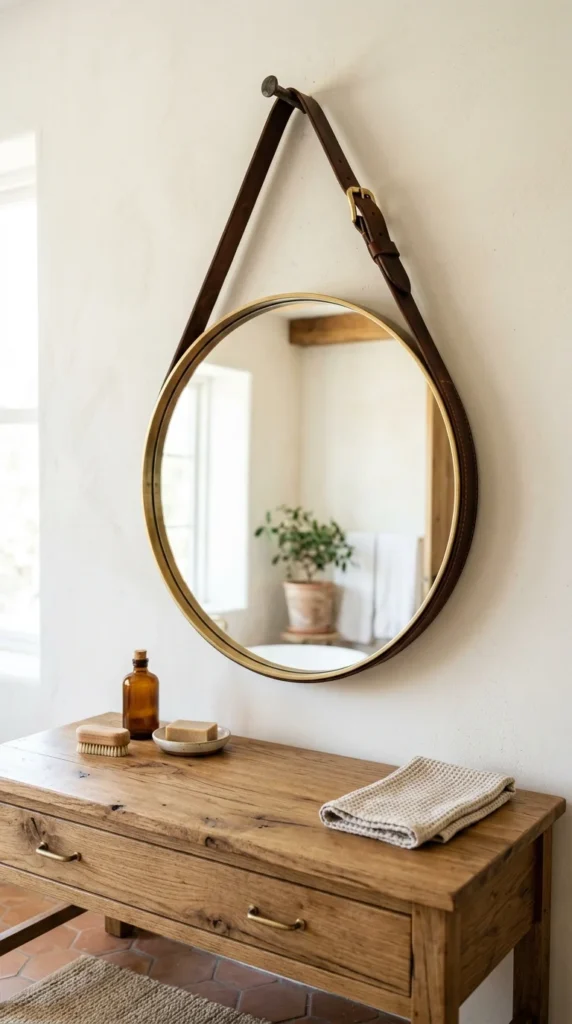
Instead of mounting the mirror directly to the wall, “suspended” mirrors hang from a visible strap, chain, or rope. This adds an extra design element and a bit of “industrial” or “nautical” flair depending on the material used. A leather strap offers a sophisticated, library-like feel, while a heavy iron chain leans into a more rugged, industrial aesthetic.
17. Venetian Style
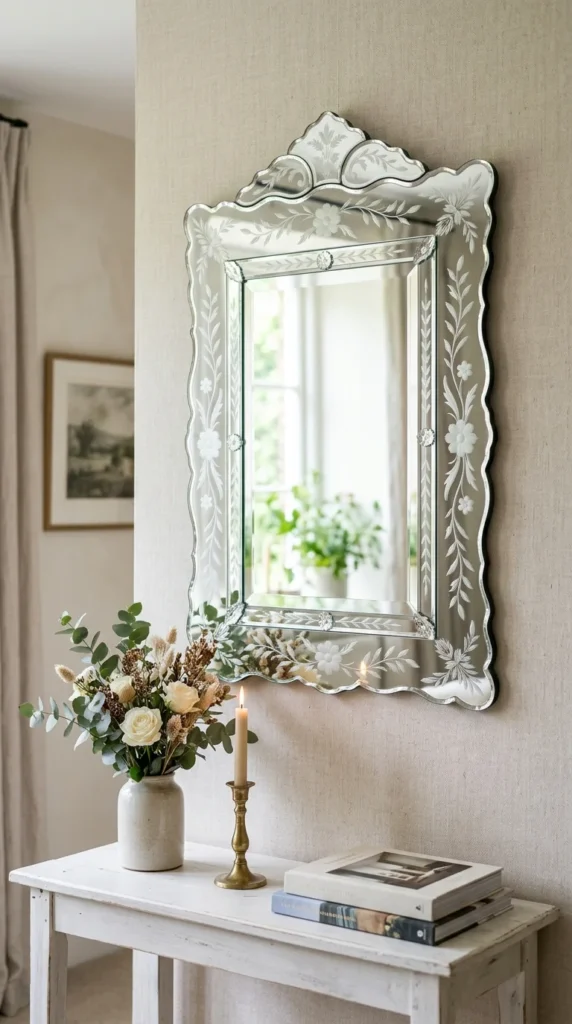
Venetian mirrors are unique because the “frame” is actually part of the mirror glass, often featuring etched designs, beveled edges, and decorative glass screws. These mirrors are the height of elegance and work beautifully in feminine, glamorous, or classic bathrooms. Because they are colorless, they match any color palette while providing a high level of detail and texture.
18. Layered Mirrors
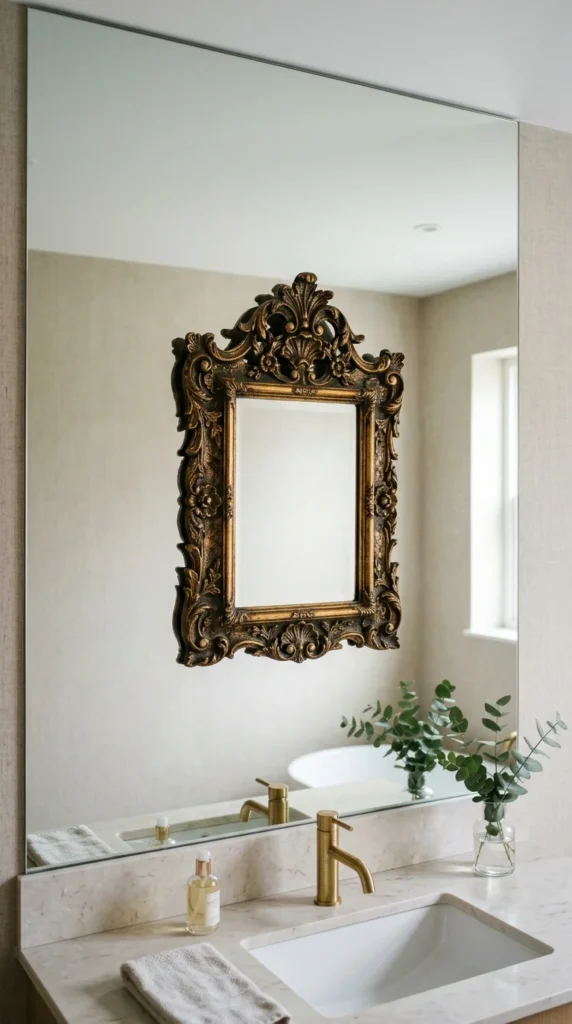
Layering a smaller, framed mirror over a larger, frameless wall mirror is a pro-level designer trick. It provides the space-expanding benefits of a large mirror while adding the stylistic “pop” of a decorative frame. This creates a multidimensional look that feels curated and intentional rather than standard.
19. Tiled Frames
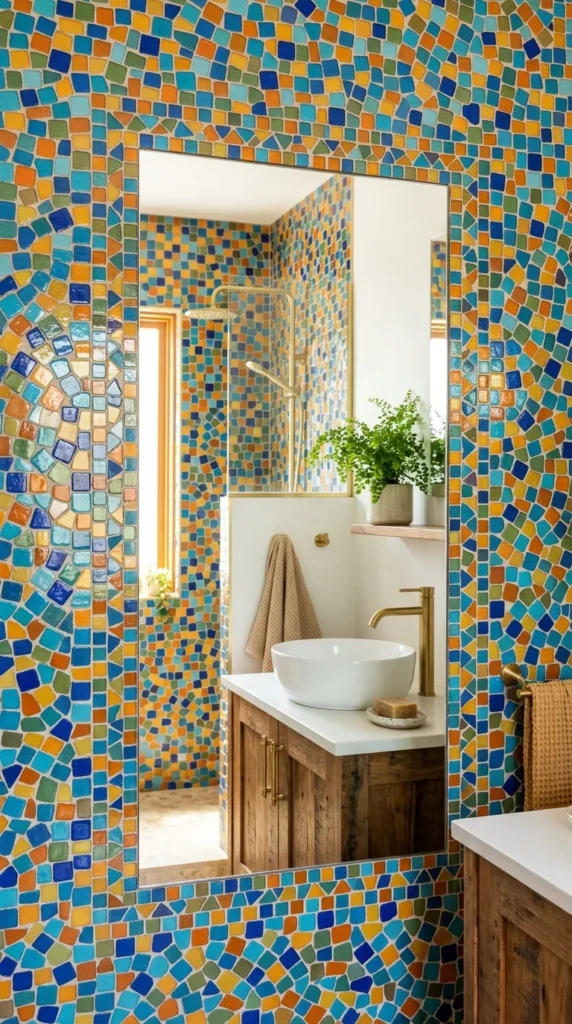
For a custom, “built-in” look, consider framing your mirror with tiles. This could involve using the same tile as your backsplash or a contrasting mosaic tile to create a “picture frame” effect directly on the wall. This is a great DIY-friendly way to make a basic builder-grade mirror look like a custom designer installation.
20. Tinted Glass
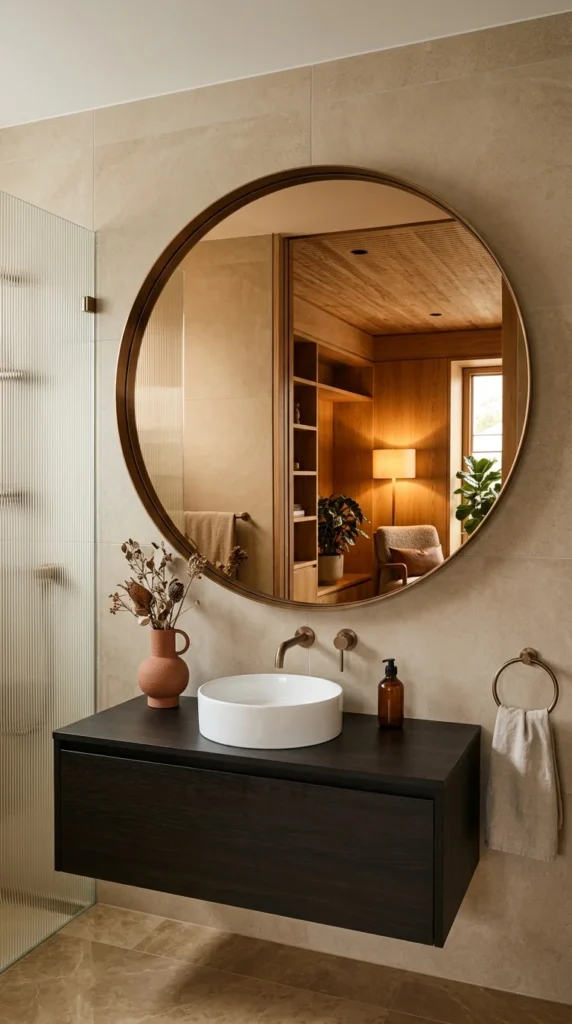
Not all mirrors have to be silver. Tinted mirrors—in shades of bronze, smoke, or rose gold—add a layer of mood and atmosphere to the bathroom. While a standard silver mirror is best for task lighting (like makeup), a tinted mirror is wonderful for secondary walls or as a decorative element that adds warmth and a “vintage-filter” glow to the room.
21. Asymmetrical Shapes
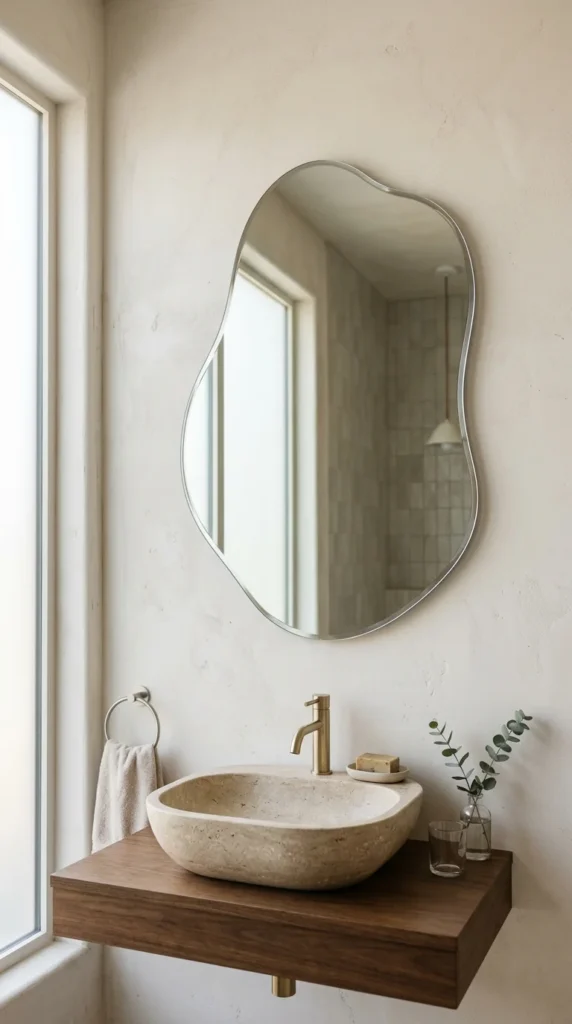
Perfect for the modern art lover, asymmetrical or “organic” shaped mirrors are the latest trend in high-end design. These mirrors often look like puddles or abstract shapes, eschewing perfect symmetry for a more natural, fluid look. They turn the vanity area into a gallery-like space and serve as a brilliant conversation starter.