Sage green has solidified its place as the “new neutral” in high-end interior design. Unlike the starkness of clinical white or the intensity of charcoal grey, sage green offers an organic, calming presence that bridges the gap between traditional elegance and modern sophistication. It evokes the tranquility of nature, bringing a sense of the outdoors inside, which is a hallmark of luxury living.
When executed correctly, sage green cabinets can transform a standard kitchen into a space that feels custom-built and incredibly expensive. The key lies in the pairing—the materials, textures, and finishes that surround the color. Here are nine sophisticated sage green kitchen cabinet ideas to elevate your home’s aesthetic.
1. Gold Hardware
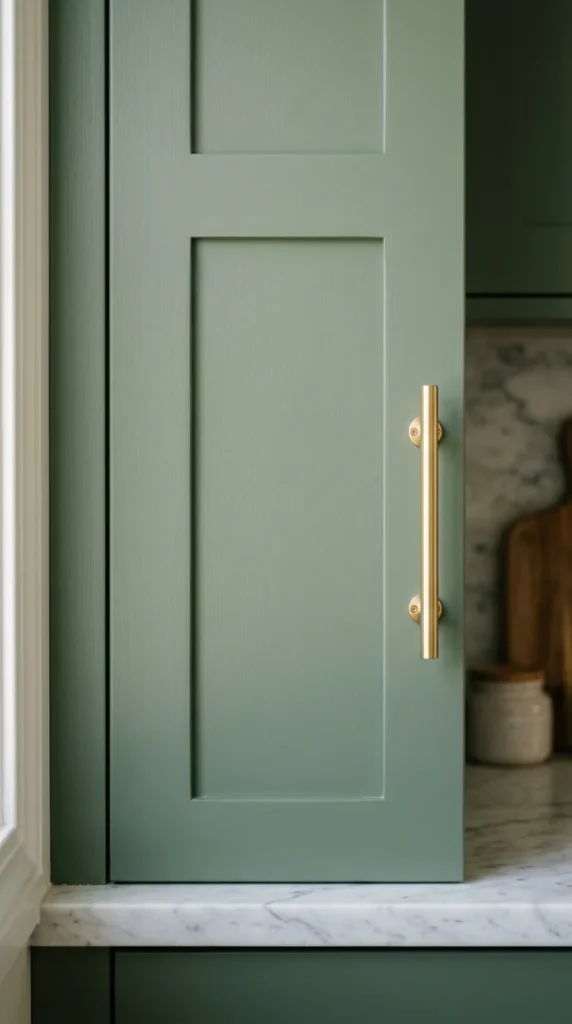
The most immediate way to make sage green cabinets look expensive is by pairing them with warm metallic accents. Gold, brass, and champagne bronze hardware act as “jewelry” for your cabinetry. The warmth of these metals provides a stunning contrast to the cool, earthy undertones of sage.
To achieve a high-end look, opt for brushed or satin finishes rather than high-shine polished gold, which can sometimes look dated. Long, slender pulls or minimalist T-bar handles create a modern silhouette, while heavy, unlacquered brass knobs lend a timeless, “old-money” feel that will patina beautifully over time.
2. Natural Marble
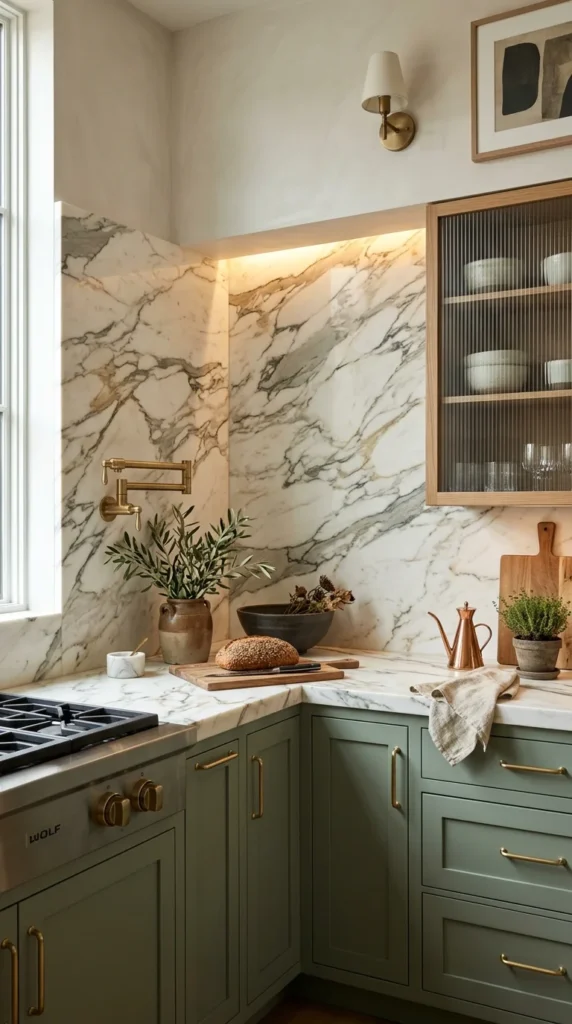
Nothing screams “expensive” quite like natural stone. While quartz is a practical choice, the organic, unpredictable veining of real marble—such as Carrara, Calacatta, or Arabescato—paired with sage green creates an undeniable aura of luxury.
The grey and white tones in marble complement the muted nature of sage, while any hints of gold or beige in the stone’s veining tie back to the warm hardware mentioned earlier. For a truly high-end finish, consider a “waterfall” island where the marble extends down the sides to the floor, or a full-height marble backsplash that eliminates the need for tile grout lines.
3. Floor-to-Ceiling
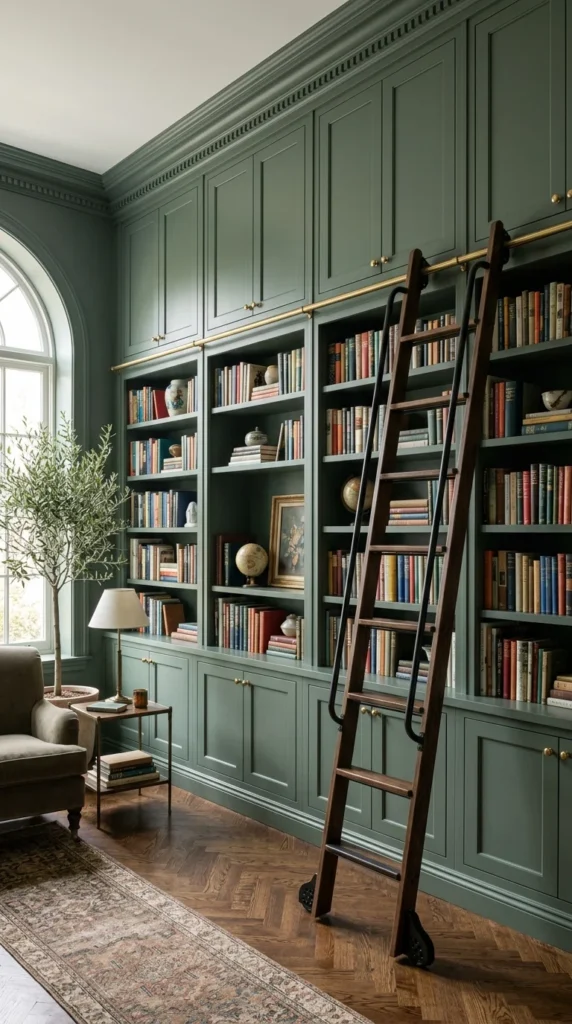
In luxury kitchen design, wasted space is a missed opportunity. Installing floor-to-ceiling cabinetry creates a seamless, architectural look that feels intentional and custom-made. This design choice maximizes storage while drawing the eye upward, making the ceilings feel higher and the room more grand.
When using sage green for such a large surface area, it is important to incorporate crown molding or decorative trim at the top to anchor the cabinets to the ceiling. This “built-in” look mimics the high-end cabinetry found in historic estates and custom modern builds alike.
4. Two-Tone Cabinets
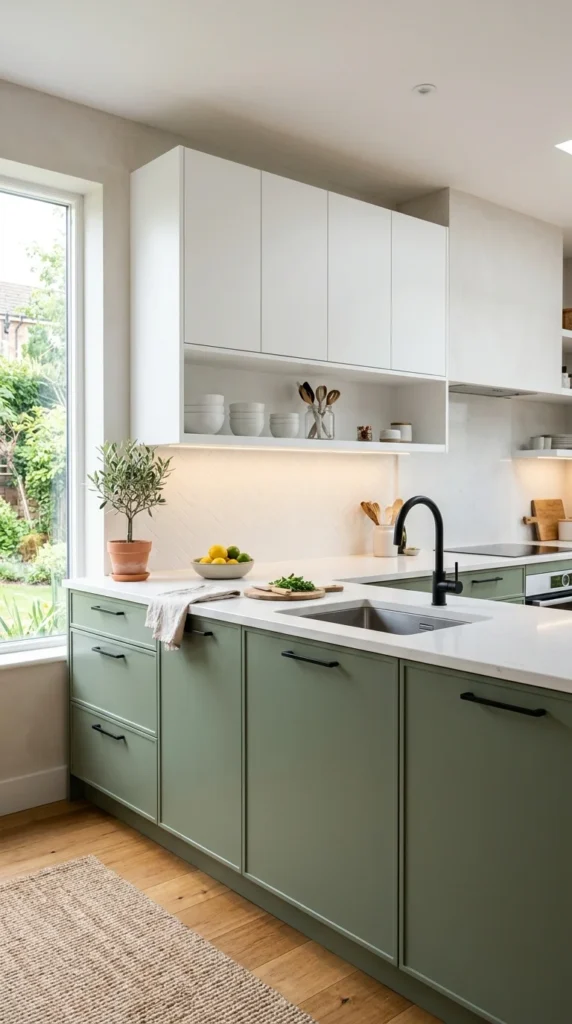
The two-tone kitchen remains a staple in high-end design because it adds visual depth and prevents the space from feeling monochromatic. By using sage green on the lower cabinets or the kitchen island and a lighter shade—like cream, off-white, or light oak—on the upper cabinets, you create a grounded aesthetic.
This approach is particularly effective in smaller kitchens, as the lighter upper cabinets keep the space feeling airy and bright, while the sage green adds the necessary “weight” and character to make the design feel premium.
5. Open Shelving
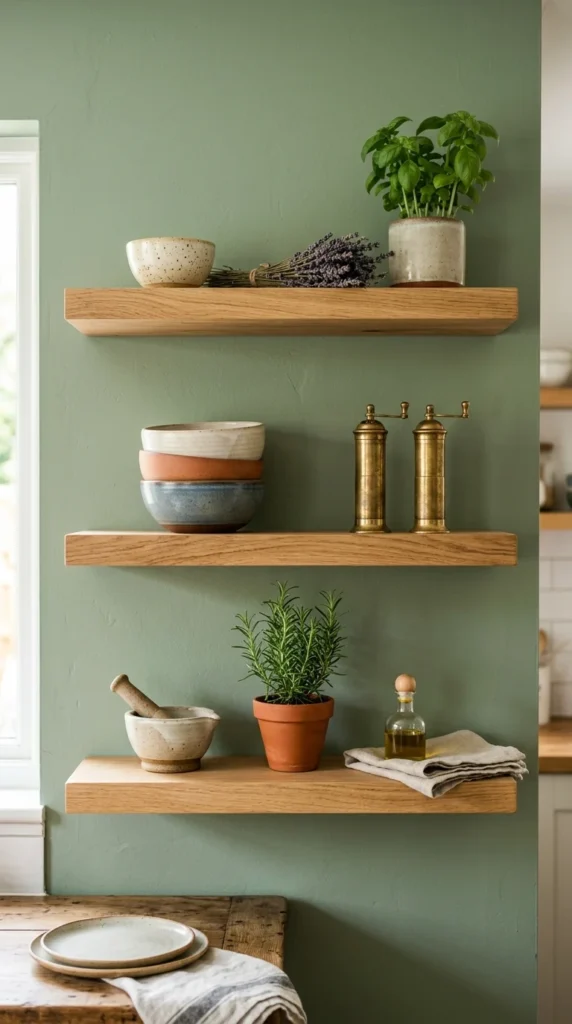
Expensive kitchens often balance utility with display. Replacing a portion of your upper sage green cabinets with thick, natural wood open shelving creates a “curated” look. This move allows you to showcase high-end cookware, artisanal ceramics, and glassware, which contributes to a lived-in yet sophisticated atmosphere.
To keep this looking expensive, the key is minimalism. Overcrowding shelves will make the kitchen look cluttered. Use reclaimed wood or high-quality white oak to add a warm, organic texture that softens the painted surfaces of the cabinetry.
6. Matte Finish
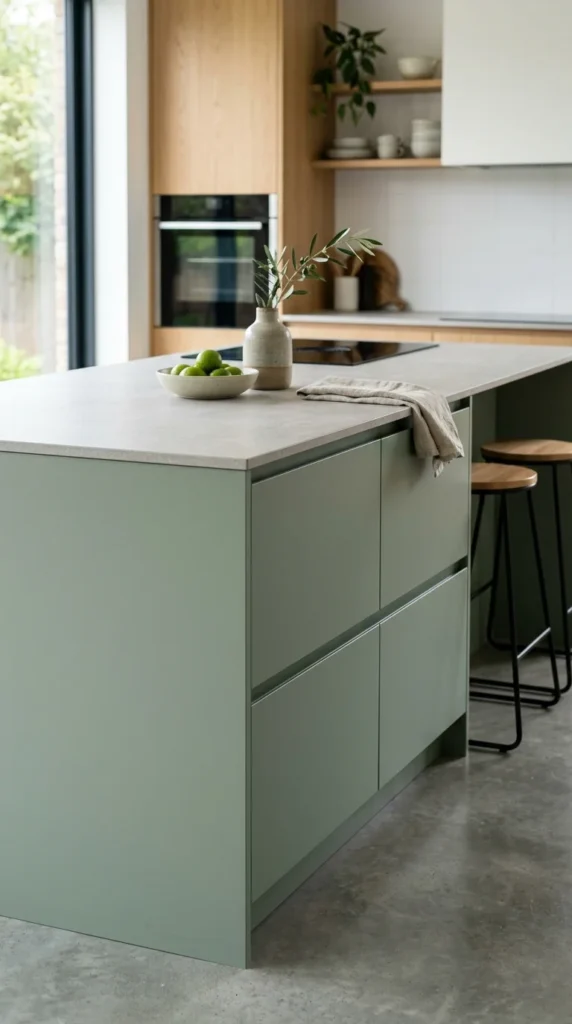
The finish of your paint can drastically alter the perceived value of your kitchen. High-gloss finishes can often look like plastic, whereas a matte or “eggshell” finish offers a velvety, sophisticated texture that absorbs light rather than reflecting it.
A matte sage green cabinet feels modern and understated. It emphasizes the depth of the color and provides a tactile quality that feels more like furniture than utility storage. Furthermore, high-quality matte finishes are now designed to be fingerprint-resistant, ensuring the kitchen looks pristine even with heavy daily use.
7. Integrated Appliances

One of the hallmarks of a high-end designer kitchen is the disappearance of bulky stainless steel appliances. By using “appliance-ready” cabinets, you can cover your refrigerator, freezer, and dishwasher with sage green panels that match the rest of the cabinetry.
This creates a continuous, uninterrupted line of color and texture, making the kitchen feel more like a bespoke living space and less like a workspace. It allows the beauty of the sage green to take center stage without the visual “noise” of large metal surfaces.
8. Reeded Glass
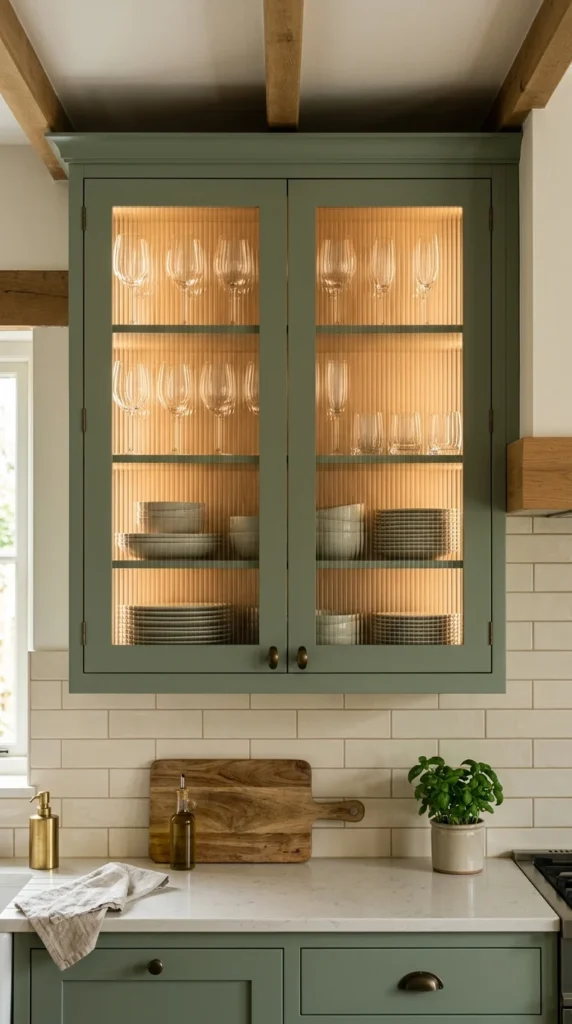
Texture is a secret weapon in luxury design. Reeded or fluted glass inserts in your sage green cabinet doors add a layer of vintage-inspired charm and architectural interest. This type of glass obscures the contents of the cabinets—keeping the look tidy—while still reflecting light and adding a rhythmic pattern to the room.
Reeded glass pairs exceptionally well with sage green because both elements have a “heritage” feel. It’s a subtle detail that signals the kitchen was designed with a high level of craftsmanship and attention to detail.
9. Butcher Block
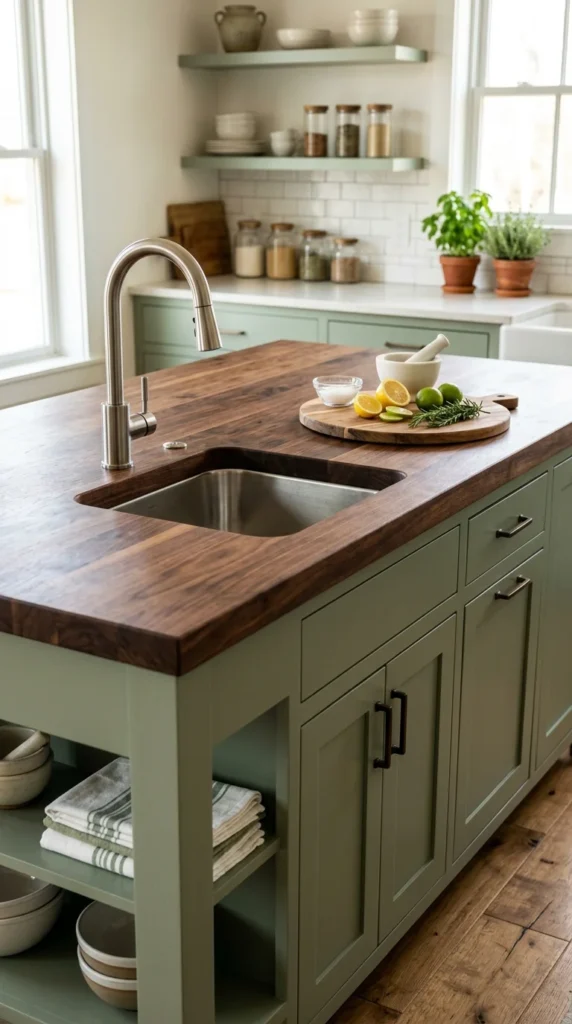
While stone is the go-to for luxury, incorporating high-quality wood—specifically thick butcher block—can make a sage green kitchen feel like a high-end English country estate. The key is the type of wood; avoid cheap, light pine and instead opt for rich walnut, cherry, or white oak.
Using a wood countertop on a sage green island, while using marble on the perimeter counters, creates a multi-textured look that feels “collected over time.” This blend of natural materials is a signature move for designers looking to create a kitchen that is both expensive and incredibly inviting.