
Living in a rental often feels like a constant compromise between your personal aesthetic and a strict lease agreement. Most landlords are hesitant to allow structural changes, painting, or permanent fixtures, leaving tenants with “builder-grade” finishes that can feel cold and generic. However, the “custom look” isn’t exclusive to homeowners. With a strategic approach to temporary modifications, you can elevate your space to look like a high-end, bespoke home without losing your security deposit.
From the tactile quality of hardware to the visual impact of temporary wall coverings, these nine ideas focus on high-impact, low-risk changes that define the character of a home.
1. Removable Wallpaper
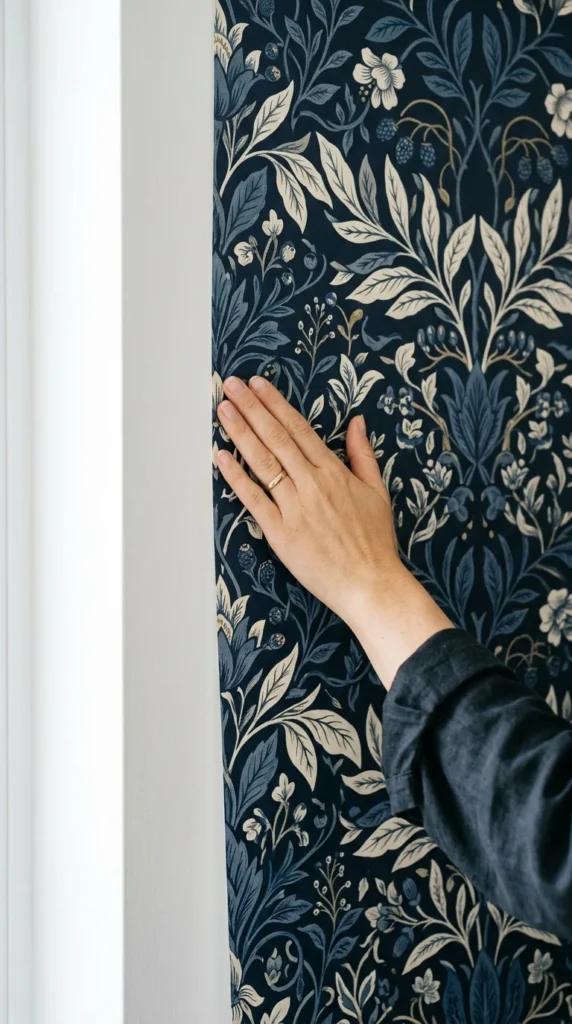
Peel-and-stick wallpaper is perhaps the most transformative tool in a renter’s arsenal. Unlike traditional wallpaper that requires messy paste and professional removal, modern temporary options use a pressure-sensitive adhesive that pulls away cleanly from the wall.
To achieve a custom look, avoid overly busy or “cheap” looking patterns. Instead, opt for textures like faux grasscloth, subtle linen weaves, or bold oversized murals. Using wallpaper on a single accent wall—such as behind the headboard in a bedroom or the far wall of a dining nook—creates a focal point that draws the eye and makes the room feel intentionally designed. For a truly high-end finish, ensure you align the patterns perfectly and use a squeegee to remove every air bubble.
2. Updated Hardware
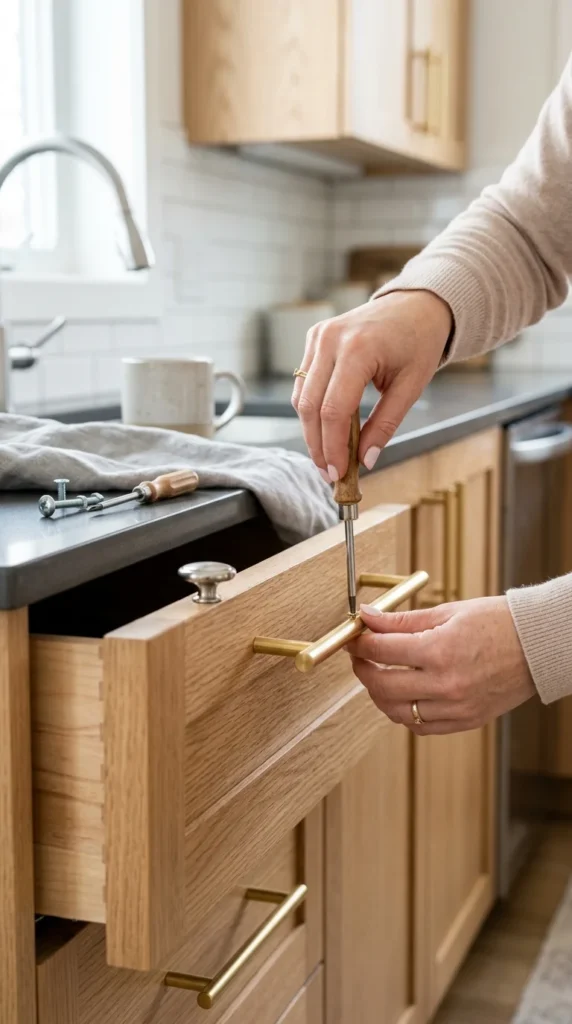
Standard rental apartments usually feature basic, mass-produced cabinet knobs and drawer pulls in finishes like brushed nickel or plastic. Swapping these out for designer hardware is a “micro-renovation” that takes less than an hour but completely changes the vibe of a kitchen or bathroom.
When choosing new hardware, look for materials that feel heavy and substantial, such as solid brass, matte black steel, or even leather pulls. The key is to keep the original hardware in a labeled bag so you can swap it back before you move out. This simple change can make generic cabinets look like custom cabinetry, especially if you choose a unique silhouette that matches your overall decor theme.
3. Plug-in Sconces
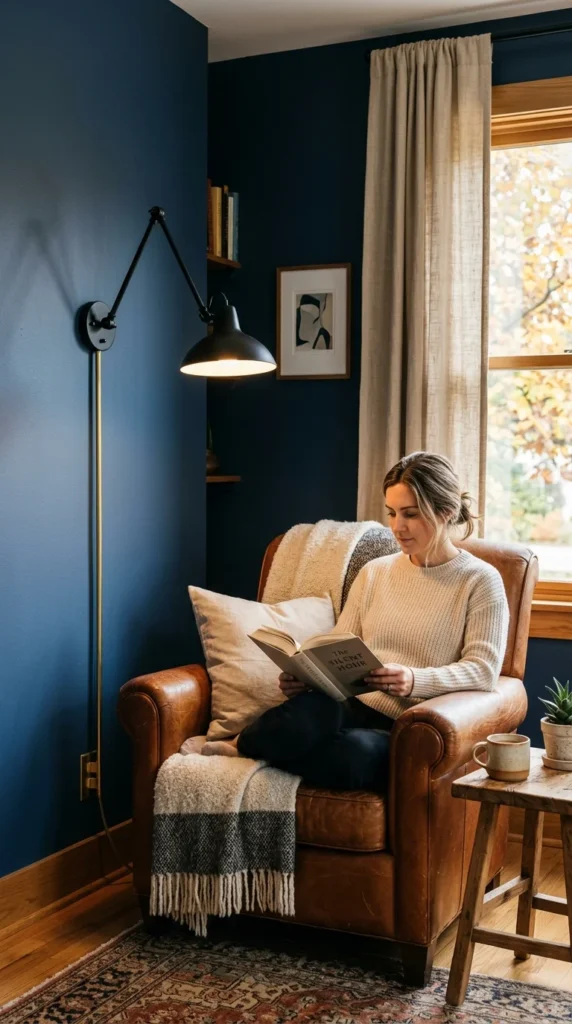
Lighting is the “jewelry” of a room. Most rentals suffer from “boob lights” (flush-mount ceiling fixtures) or harsh overhead lighting. To create a custom, layered lighting scheme without hiring an electrician, turn to plug-in sconces.
Wall-mounted sconces on either side of a bed or above a sofa provide an architectural element that feels permanent. To hide the “renter” giveaway of a dangling cord, use decorative cord covers that match your wall color or choose a sconce where the cord is designed to be a feature, such as a braided fabric cable. Many modern sconces also offer “puck light” hacks, where you can mount the fixture without any wiring at all, using battery-operated LED bulbs instead.
4. Layered Rugs
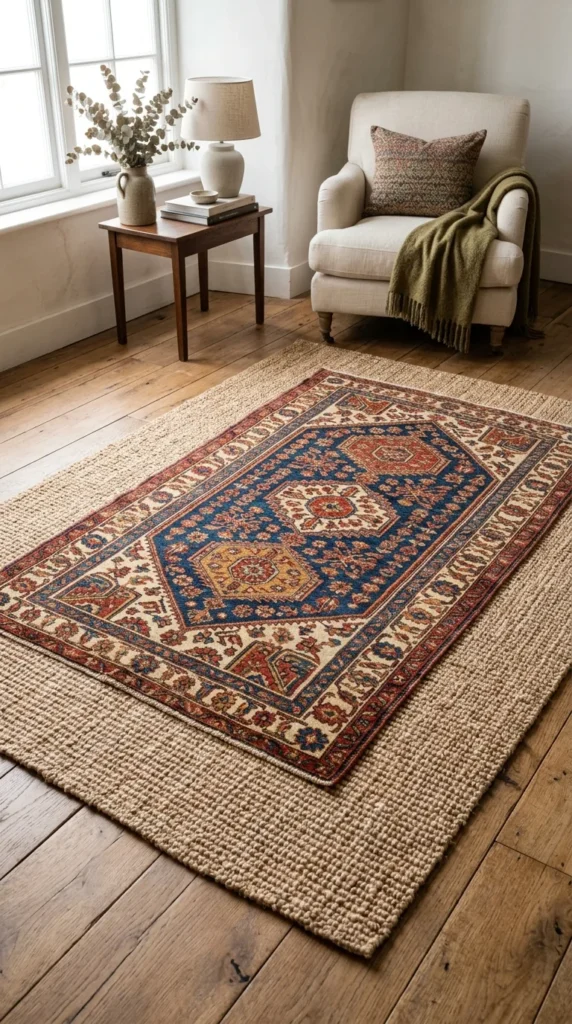
Flooring is often the most disappointing aspect of a rental, whether it’s old linoleum, stained carpet, or generic gray laminate. Since you can’t rip it up, you must distract the eye and add comfort through layering.
The “custom” trick is to use a large, inexpensive natural fiber rug (like jute or sisal) to cover as much of the floor as possible, effectively acting as a new “base” floor. Then, layer a smaller, high-quality rug on top to define the seating area. This adds depth, color, and texture, making the room feel curated rather than just furnished. It also protects the original flooring, ensuring you get your deposit back.
5. Gallery Walls
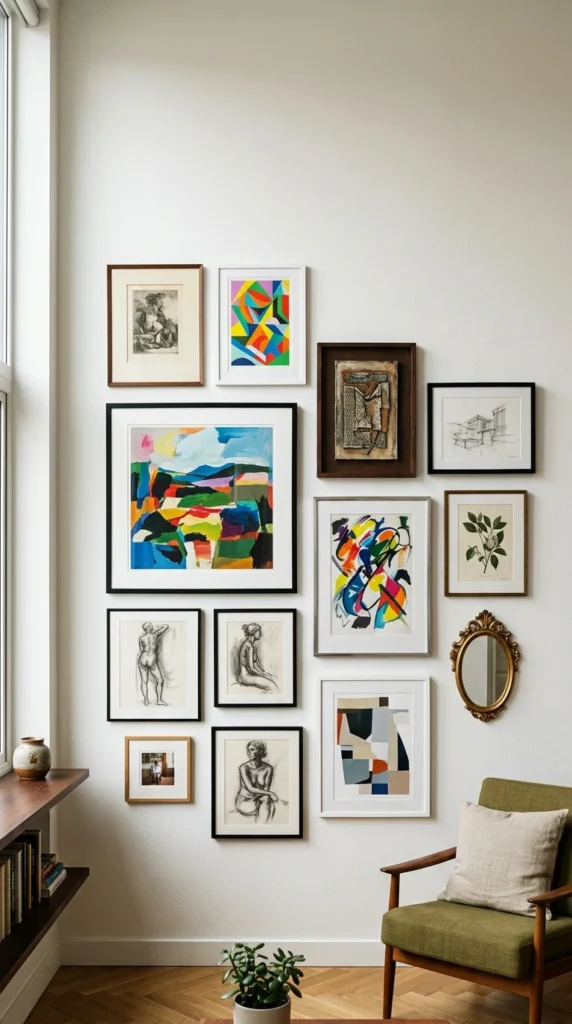
Nothing says “this is a temporary space” like bare white walls. Creating a gallery wall is a classic way to inject personality and make a space feel “lived-in” and custom. The secret to a high-end gallery wall is the framing.
Instead of using mismatched cheap frames, try to find a unifying element—perhaps all the frames are black, or they all feature thick white matting. Use heavy-duty adhesive hooks (like Command strips) to avoid drilling holes into the drywall. For a truly custom look, incorporate three-dimensional objects like a small wall planter, a vintage clock, or a textile wall hanging among your framed prints.
6. Window Treatments
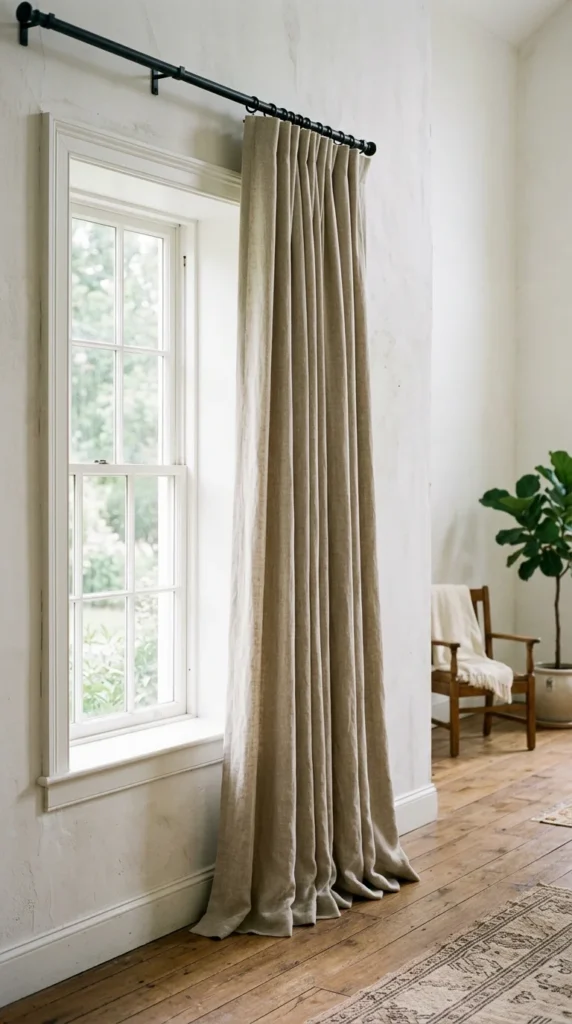
Rental blinds are notoriously flimsy and unattractive. You can significantly upgrade the look of any room by installing your own curtains. The “designer secret” here is to hang the curtain rod “high and wide.”
Mount the rod about 6 to 10 inches above the window frame and let it extend several inches past the sides. This trick makes the windows appear much larger than they are and allows more natural light to enter. Opt for long curtains that just barely “kiss” the floor. Even if you use no-drill curtain rod brackets that hook onto the existing blind headers, the addition of fabric softens the room’s acoustics and adds a layer of luxury that plastic blinds simply cannot provide.
7. Temporary Backsplash
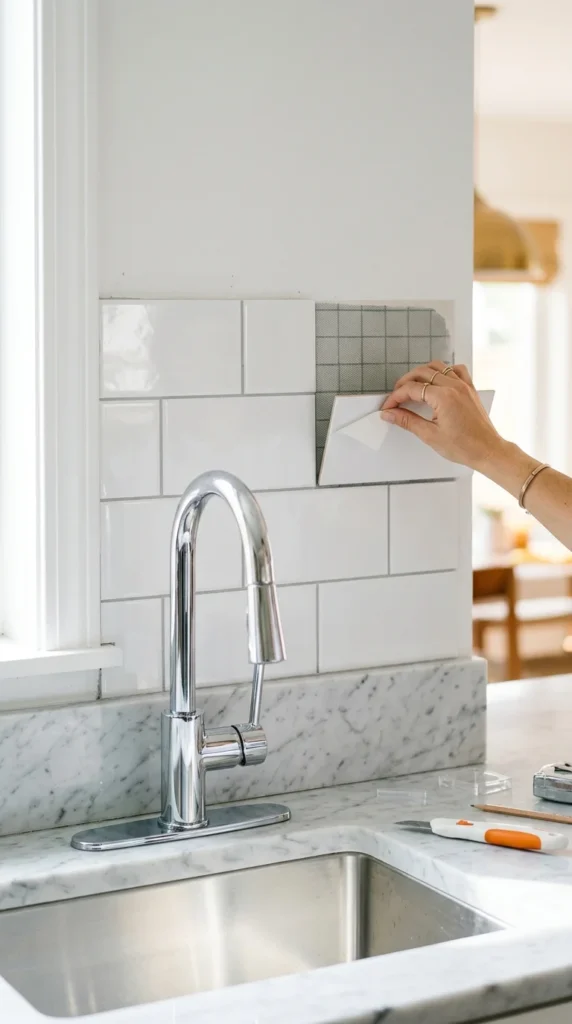
The kitchen is often the most difficult room to personalize in a rental, but a peel-and-stick backsplash can change everything. These are not just stickers; many modern options are made of thick vinyl or even thin layers of real stone and metal that have a realistic texture and sheen.
A faux-marble or classic subway tile backsplash protects the walls from cooking splatters while making the kitchen look like it underwent a high-end remodel. They are heat and moisture resistant, yet they can be peeled off with the help of a hairdryer when your lease ends. This change alone can bridge the gap between “rental kitchen” and “chef’s kitchen.”
8. Floating Shelves
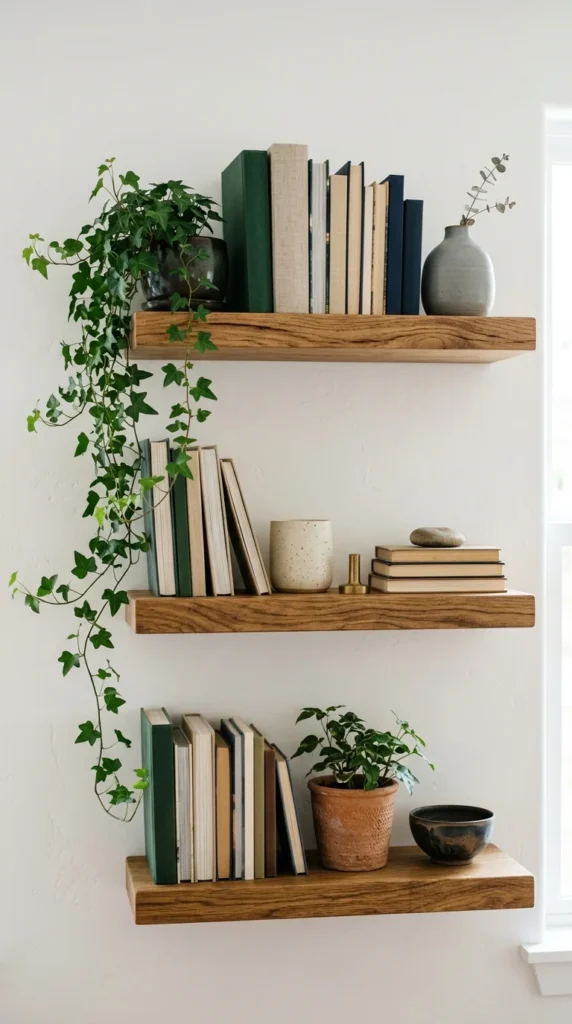
Storage in rentals is often limited to a few closets. Adding floating shelves is a way to gain storage while creating a custom “built-in” look for your decor. While these often require a few small screw holes, they are easily patched with a bit of spackle before you move.
To make them look custom, choose “chunky” shelves that match the wood tones of your furniture. Use them to display a curated selection of books, art, and greenery. If you are strictly forbidden from drilling holes, look for tension-based shelving systems or leaning “ladder” shelves that provide the same vertical visual interest without touching the walls.
9. Statement Mirrors
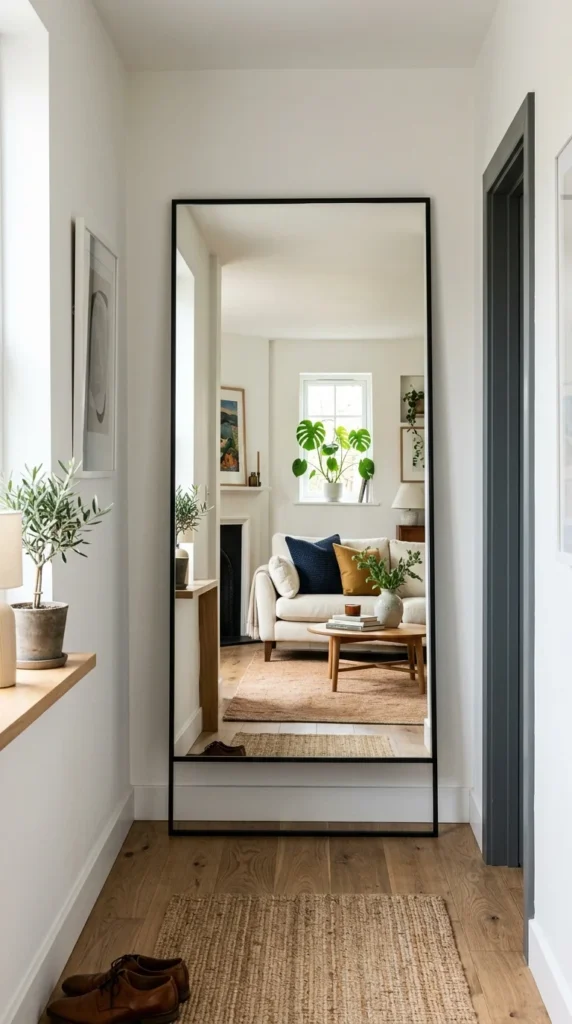
If your rental feels small or dark, mirrors are your best friend. A large, statement mirror functions as a piece of art while serving a functional purpose.
Instead of hanging a small mirror, go for an oversized floor mirror. Leaning it against the wall avoids the need for heavy-duty anchors and creates a relaxed, “Parisian apartment” vibe. The reflection creates an illusion of more square footage and bounces light into darker corners of the apartment. Look for frames that contrast with your wall color—such as a gold frame on a dark wall or a black frame on a light wall—to ensure the mirror stands out as a deliberate design choice.