
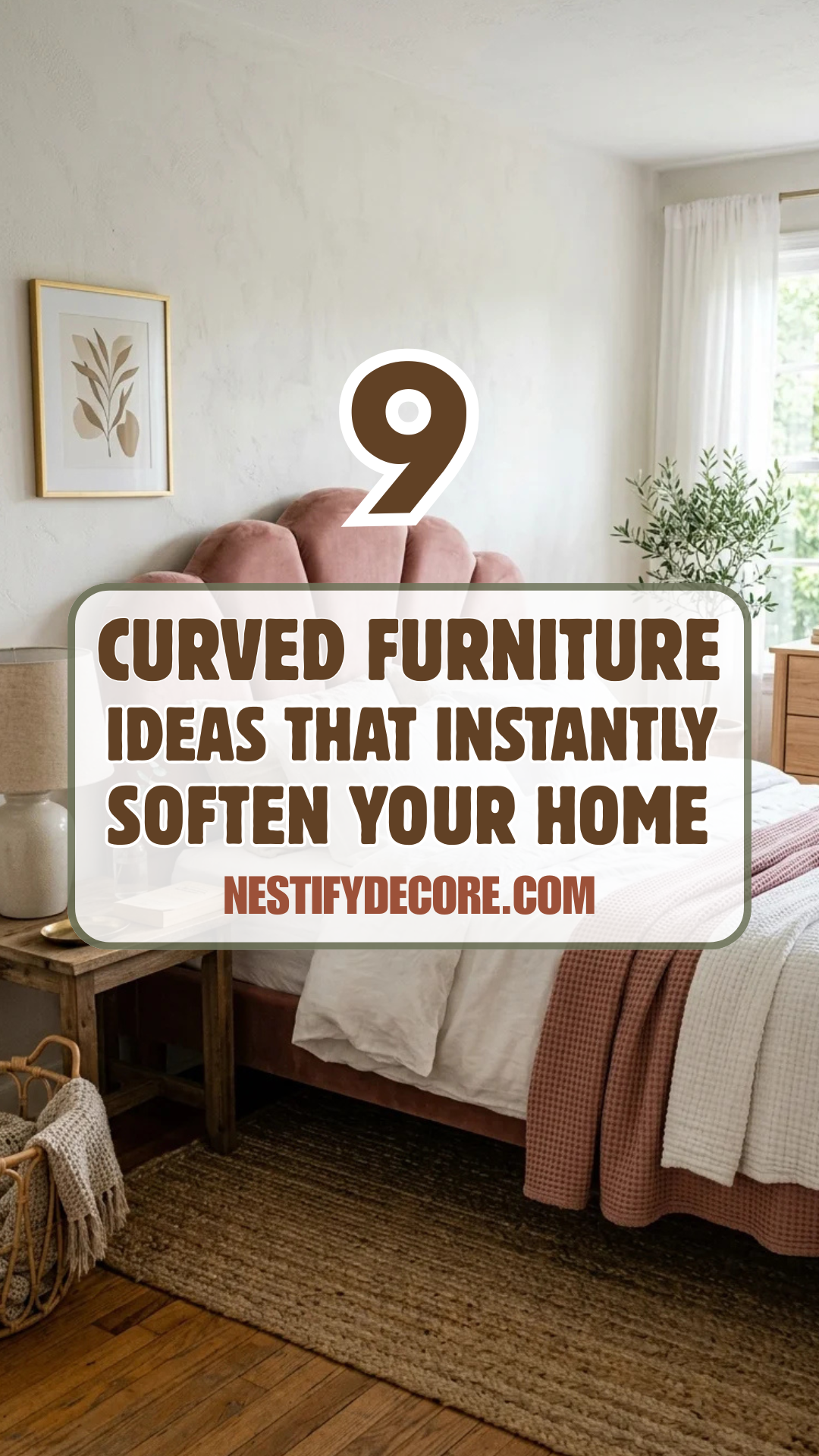
For decades, interior design was dominated by the sharp, clean lines of mid-century modernism and the industrial rigidity of urban lofts. While these styles offered a sense of order and sophistication, they often lacked the warmth and tactile comfort that make a house feel like a home. Enter the “Curved Design” movement—a revival of organic shapes, soft edges, and fluid silhouettes that prioritize comfort and flow.
Incorporate curves into your home is more than just a passing trend; it is rooted in environmental psychology. Human beings are biologically predisposed to feel safer and more relaxed in the presence of rounded objects. Sharp corners signal caution, while curves mimic the natural world, evoking a sense of calm and continuity. Whether you are looking to do a full renovation or simply want to refresh a single room, here are nine curved furniture ideas that will instantly soften your space and elevate your interior aesthetic.
1. Rounded Sofas
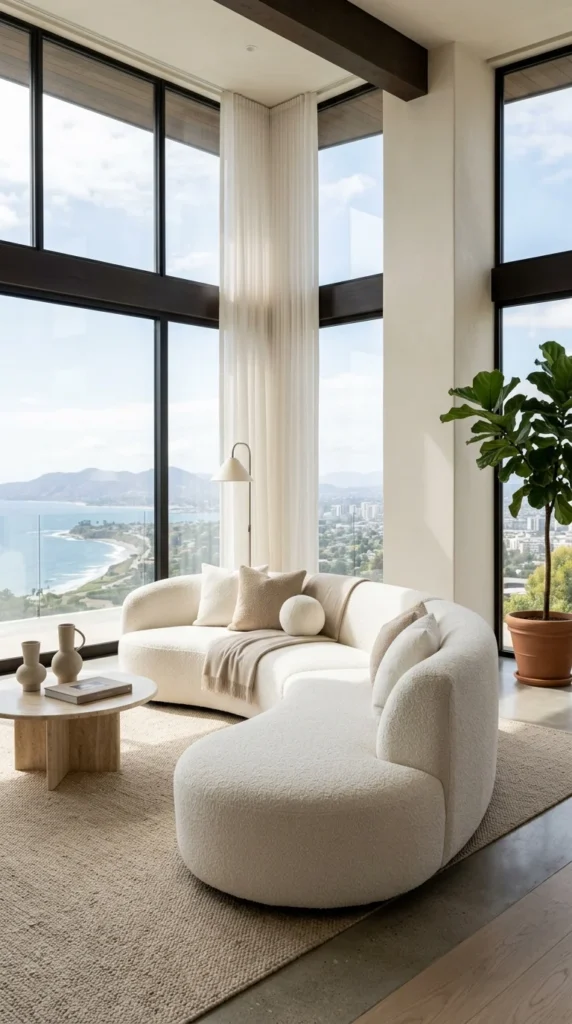
The sofa is the undisputed anchor of the living room, and swapping a traditional rectangular sectional for a rounded version can fundamentally change the energy of the space. Often referred to as “crescent” or “kidney” sofas, these pieces break the “boxy” feel of standard rooms.
- Social Connectivity: The inward curve of a rounded sofa naturally directs people toward one another, making it the perfect piece for hosting conversations. Unlike a straight sofa where people sit side-by-side, a curved sofa creates an intimate “huddle” effect.
- Space Management: Curved sofas are surprisingly versatile in open-plan layouts. Instead of pushing the sofa against a wall, place it in the center of the room to act as a soft sculptural divider.
- Material Pairing: To maximize the softening effect, look for tactile fabrics like bouclé, velvet, or soft linen. These materials catch the light differently on curved surfaces, creating beautiful highlights and shadows.
2. Arched Mirrors
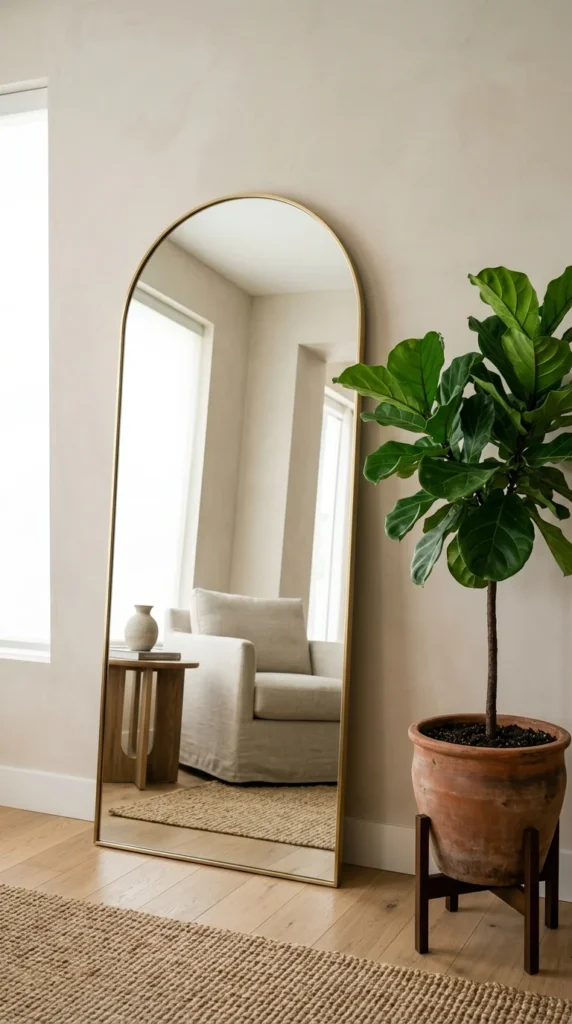
One of the easiest ways to introduce curves without replacing large furniture items is through mirrors. Arched mirrors provide a “window-like” effect, tricking the eye into thinking there is more architectural depth than there actually is.
- Architectural Interest: If your home lacks architectural features like crown molding or arched doorways, an arched floor mirror can provide that missing structural elegance.
- Softening Verticality: Walls are inherently vertical and linear. The rounded top of an arched mirror breaks up the monotony of flat walls and helps “lift” the ceiling height.
- Placement Tip: Place an arched mirror opposite a window. The curve will reflect the natural light and the view of the outdoors, further leaning into the biophilic (nature-inspired) design aesthetic.
3. Circular Tables
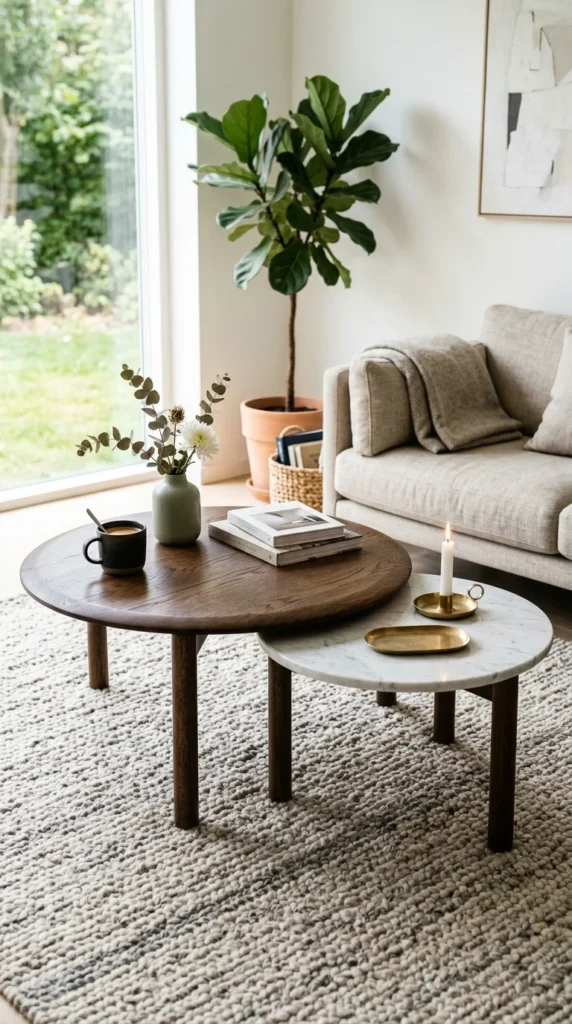
Sharp corners on coffee tables and side tables are often the biggest culprits of a “stiff” room. They can also be a safety hazard in homes with small children or tight walkways. Circular tables solve both problems while adding a layer of sophistication.
- Improved Flow: In a small living room, every inch counts. Circular coffee tables allow for better “circulation paths,” meaning you can walk around them without bumping into sharp edges.
- Nesting Options: For added visual depth, consider nesting tables. The overlapping circles create a rhythmic pattern that feels more dynamic than a single heavy block of wood.
- Contrast: If your rug and sofa are rectangular, a circular table provides the necessary visual contrast to balance the room’s geometry.
4. Scalloped Headboards
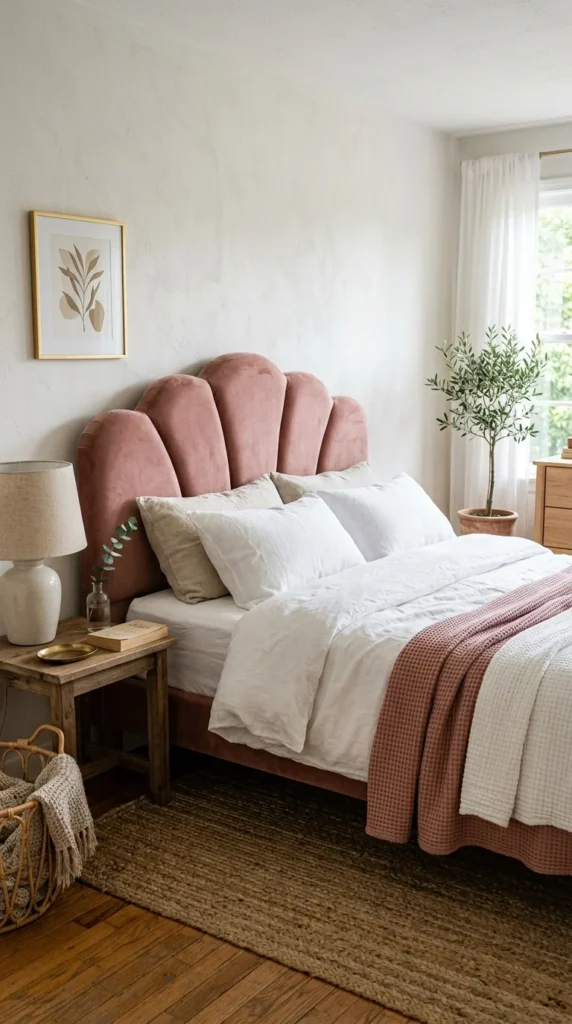
The bedroom is a sanctuary, and nothing says “comfort” like the soft, undulating lines of a scalloped headboard. Moving away from the standard rectangular headboard can transform your bed into a focal point that feels like a warm embrace.
- Visual Rhythm: The repetitive curves of a scallop pattern create a sense of rhythm that is incredibly soothing to the eye.
- Vintage Charm: Scalloped edges often evoke a sense of Art Deco glamour or Parisian chic, giving the bedroom a curated, high-end feel.
- Soft Textures: Since the headboard is often what you lean against while reading, the lack of hard corners makes the entire sleeping area feel more inviting and tactile.
5. Barrel Chairs
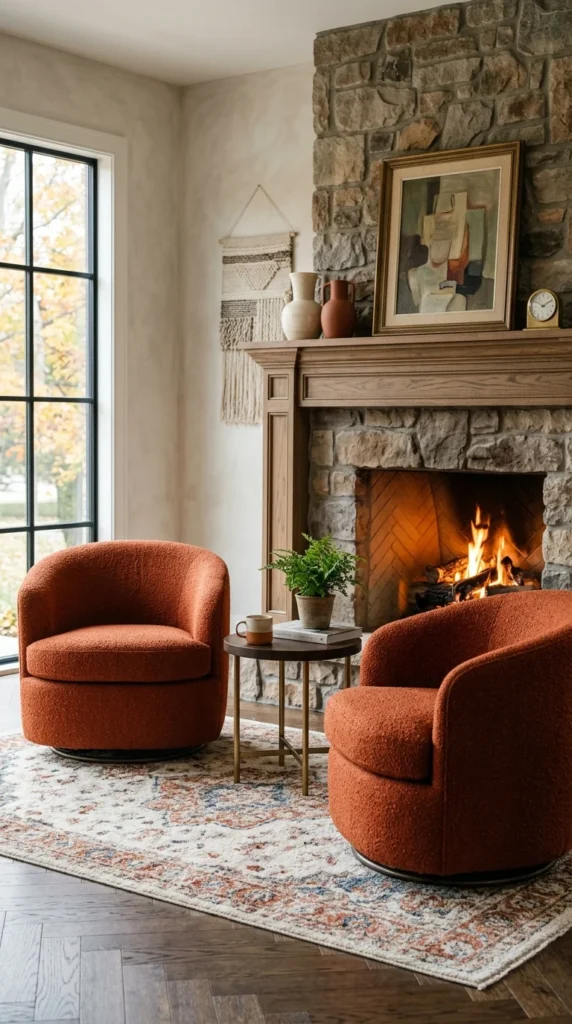
If you aren’t ready to commit to a curved sofa, a barrel chair (or club chair with a rounded back) is the perfect entry point. These chairs are designed to “wrap around” the sitter, providing a sense of enclosure and security.
- Ergonomic Comfort: The human body isn’t made of straight lines. The curved back of a barrel chair mirrors the natural curve of the spine, often making it more comfortable than a flat-back chair.
- Swivel Functionality: Many curved barrel chairs come with a swivel base. This is particularly useful in open-concept homes where you might want to turn to face the television one moment and the kitchen the next.
- The Power of Two: Pairing two barrel chairs together creates a “conversation nook” that feels distinct from the rest of the room.
6. Oval Dining Tables
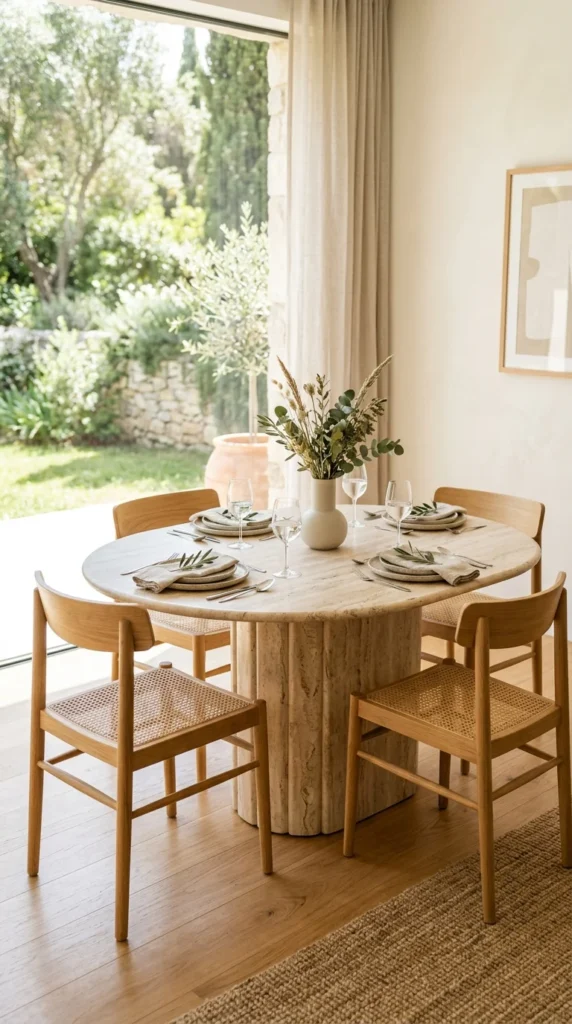
Dining rooms are often the most formal and “stiff” areas of a home. An oval dining table retains the length of a rectangular table but removes the harsh corners, making for a much more fluid dining experience.
- The “Head” of the Table: On an oval table, the hierarchy is softened. Without a distinct “head,” the table feels more communal and democratic, encouraging better flow of conversation.
- Squeezing in Extra Guests: Because there are no corners, it is much easier to pull up an extra chair when you have unexpected guests. No one has to deal with the discomfort of sitting at a leg or a sharp edge.
- Pedestal Bases: Look for oval tables with a central pedestal base. This reinforces the “curved” theme and provides more legroom for everyone seated.
7. Arched Bookcases
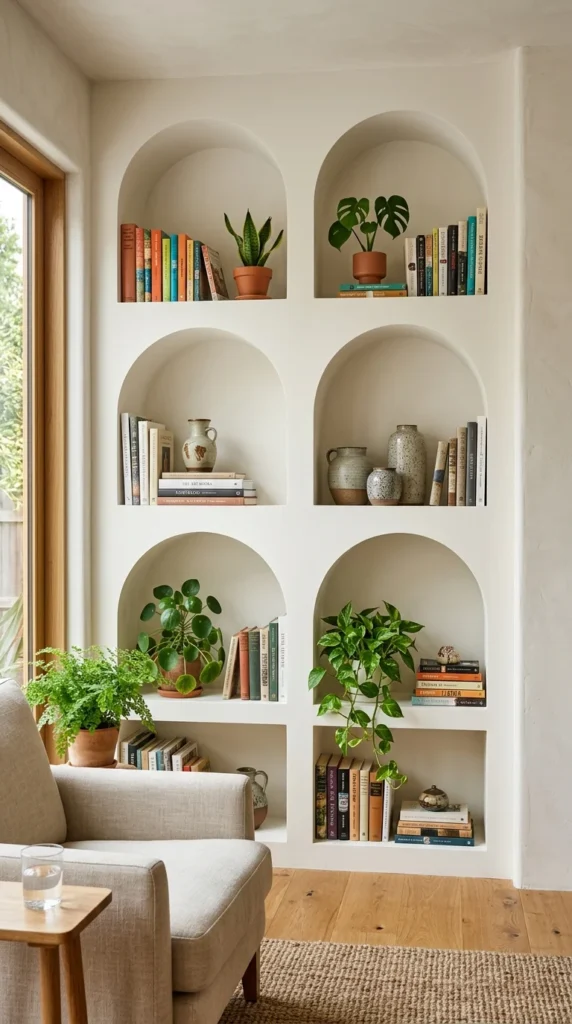
Storage doesn’t have to be boring. While standard bookshelves are effectively just a series of boxes, arched bookcases or cabinets turn storage into a work of art.
- Softening Storage: High-reaching furniture can often feel imposing. The arch at the top of a cabinet “bows” toward the room, making it feel less like a heavy wall and more like an integrated design feature.
- Display Opportunities: The curved frame of an arched shelf acts as a natural “halo” for the items inside. It’s an excellent way to highlight decorative ceramics, vases, or heirloom books.
- DIY Potential: If you have existing rectangular built-ins, you can often add “arch kits” or use drywall techniques to create the arched look without replacing the entire unit.
8. Organic Rugs
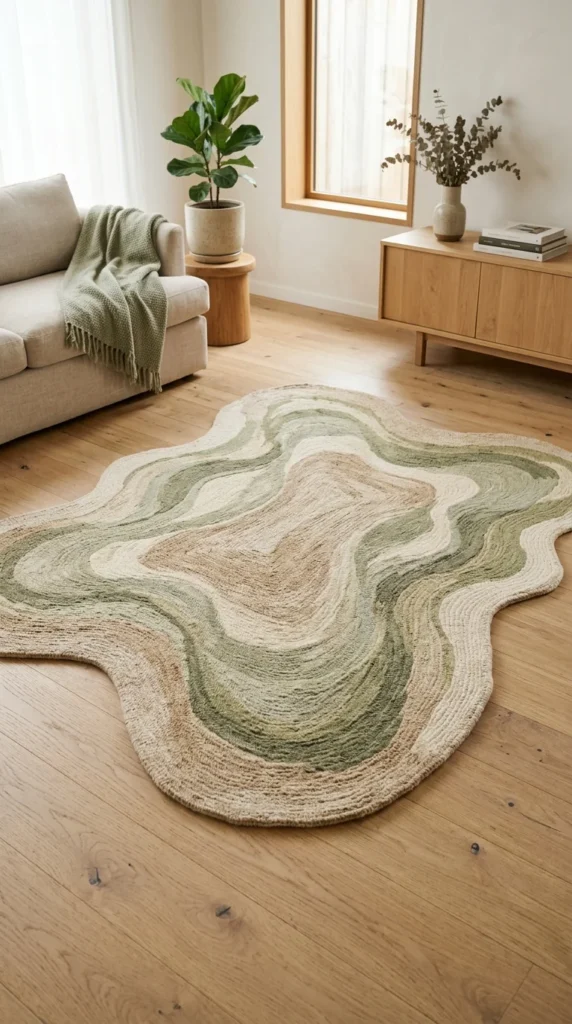
Most people default to rectangular rugs because they follow the lines of the room. However, an organic or wavy-edged rug is a “secret weapon” for interior designers looking to soften a space instantly.
- Breaking the Grid: Most rooms are essentially cubes. A rug with an irregular, organic shape breaks the “grid” of the floor, making the room feel more expansive and less constrained.
- Zoning: In a large room, a curved rug can define a “zone” (like a reading nook or a play area) without the harsh borders that a square rug would create.
- Layering: Try layering a smaller, organic-shaped rug over a larger, neutral jute rectangular rug. This adds texture and visual complexity without overwhelming the space.
9. Fluid Lighting
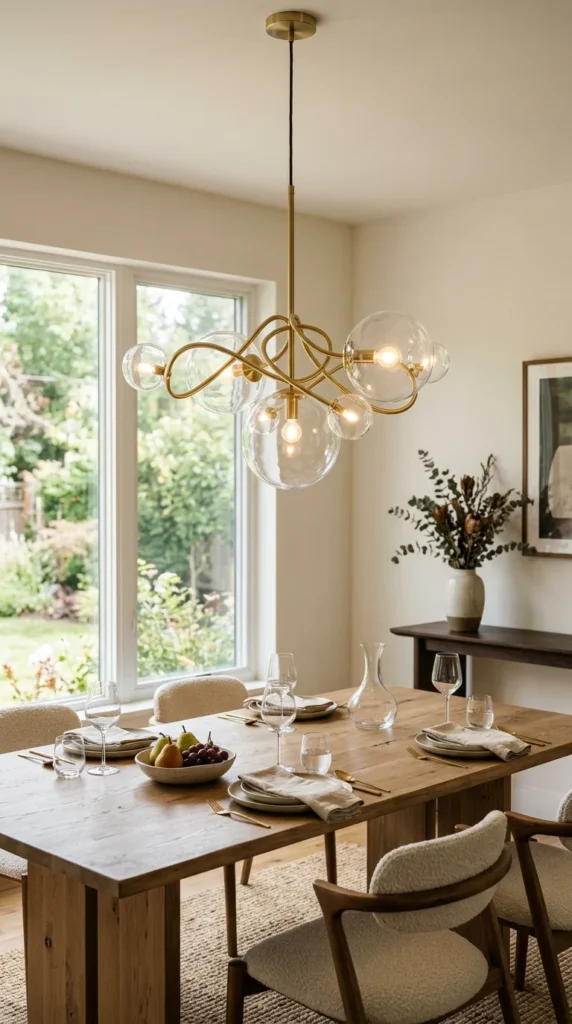
Lighting is the jewelry of the home, and it is the perfect place to experiment with bold, fluid shapes. Linear track lighting or boxy pendants can feel clinical; sculptural, curved fixtures feel intentional and artistic.
- Pendant Clouds: Large, rounded pendant lights (often made of paper, frosted glass, or fabric) mimic the appearance of clouds. This draws the eye upward and creates a soft, diffused glow.
- Curved Floor Lamps: An “arc” lamp is a classic design staple. Its long, sweeping curve allows you to provide overhead light to a coffee table or reading chair without the need for ceiling wiring.
- Softening the Glow: Curves don’t just look softer; they help distribute light more evenly. A rounded shade prevents the harsh “spotlight” effect, creating an ambient glow that fills the room.
Balancing Curves and Lines
While the “curved” look is incredibly inviting, the key to a professionally designed home is balance. A room filled entirely with circles can feel a bit like a playground or a space-age set. To achieve a sophisticated look, follow the “80/20 Rule”: Keep 80% of your structural lines (walls, windows, large cabinets) straight and introduce curves in the remaining 20% of your furniture and decor.
By introducing these organic shapes, you invite a sense of movement and “flow” into your home. The result is a space that feels less like a collection of objects and more like a living, breathing environment designed for relaxation and human connection.