
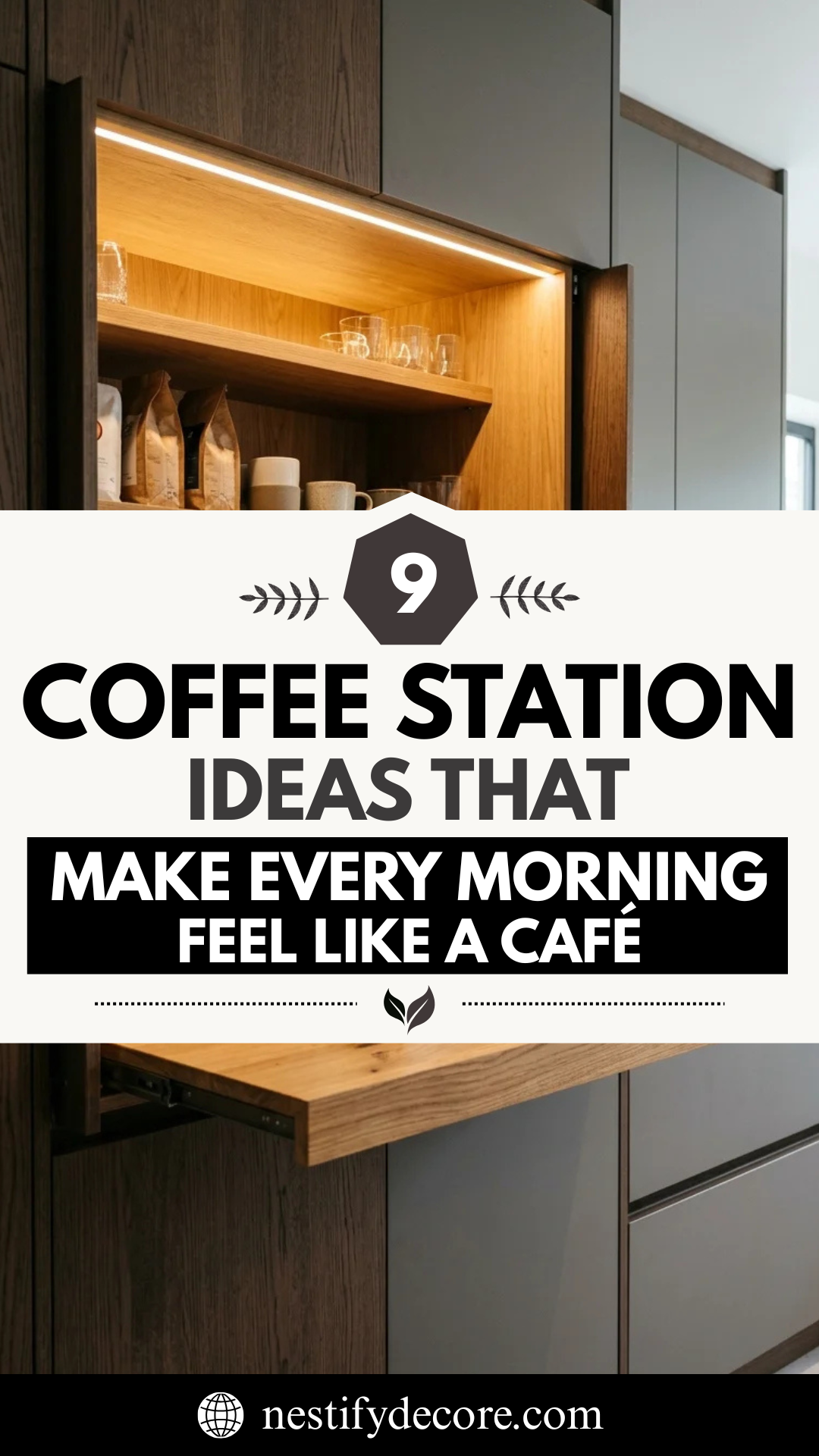
The ritual of brewing coffee is more than just a morning necessity; for many, it is a moment of zen before the day’s chaos begins. Transforming a small corner of your home into a dedicated coffee station can elevate this daily routine into a luxurious café-like experience. Whether you have an expansive kitchen or a compact studio apartment, there are endless ways to organize your beans, brewers, and biscottis.
A well-designed coffee station isn’t just about aesthetics; it’s about workflow. By centralizing your equipment—from the grinder and the scale to the stirrers and syrups—you create a seamless transition from “tired” to “caffeinated.” Here are nine innovative coffee station ideas to help you bring the artisan coffee shop vibe directly into your home.
1. Hidden Nooks
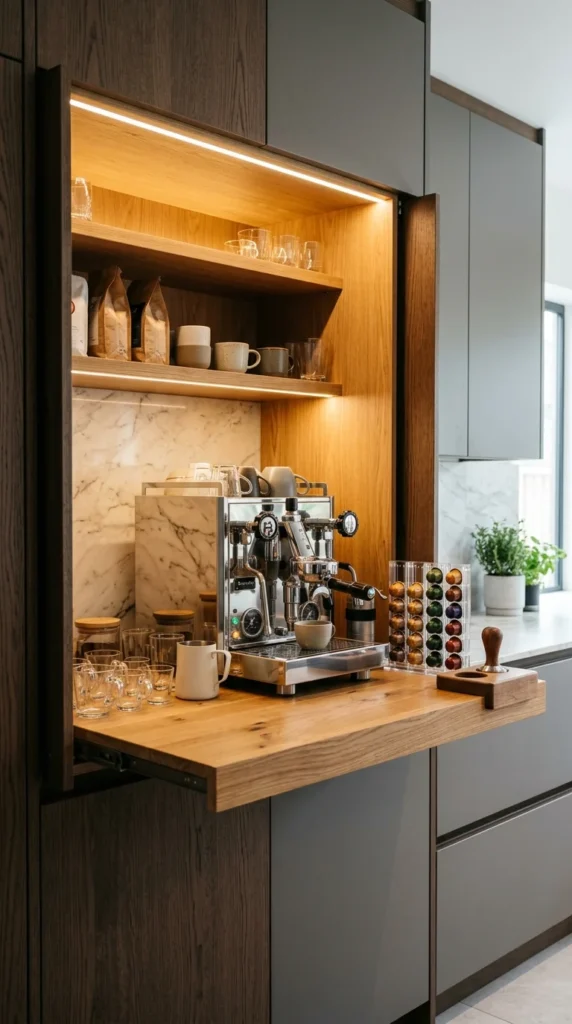
The “appliance garage” or hidden nook is the ultimate solution for those who love a clean, minimalist kitchen. This design involves using a dedicated cabinet—often at counter height—where the coffee machine and all its accessories are tucked away behind folding or sliding doors.
This approach is perfect for preventing “countertop creep,” where various gadgets begin to clutter your workspace. To make this work, ensure there is an electrical outlet installed inside the cabinet. You can even install pull-out drawers for your coffee pods or filters, making every tool accessible the moment the doors are opened. When you’re finished brewing, simply close the doors to restore the kitchen’s visual harmony.
2. Mobile Carts
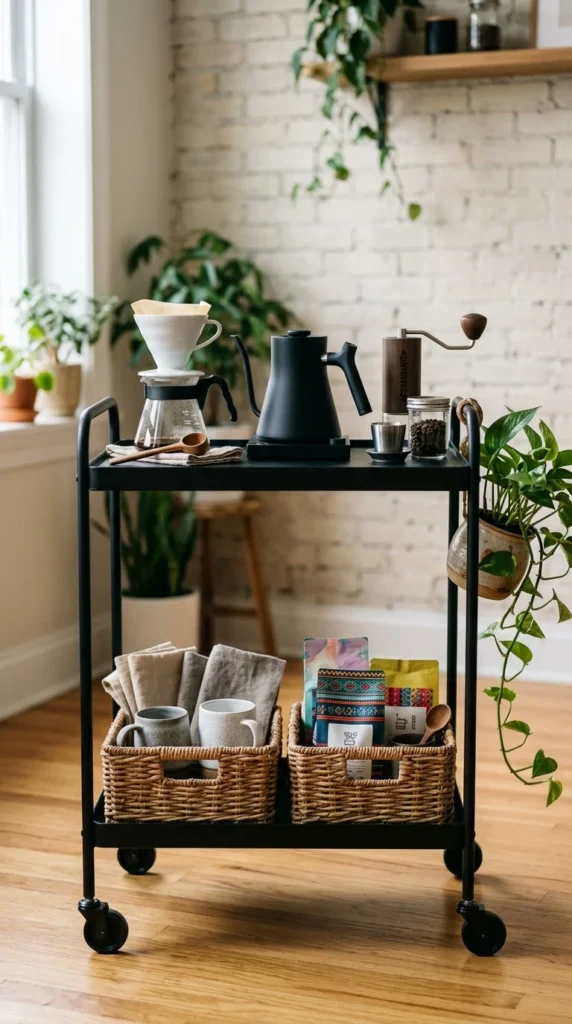
If you are short on permanent counter space, a rolling bar cart is a versatile and stylish alternative. The beauty of a mobile station is its adaptability; you can park it in the kitchen during the week and wheel it into the dining room or living area when hosting guests for brunch.
When styling a coffee cart, think vertically. Use the different tiers to separate your equipment. The top tier should be reserved for the heavy hitters—your brewer and kettle. Use the lower tiers for “inventory,” such as backup beans, seasonal mugs, and cleaning supplies. Opting for a cart with locking wheels ensures stability when you’re tamping your espresso or pouring boiling water.
3. Custom Built-ins
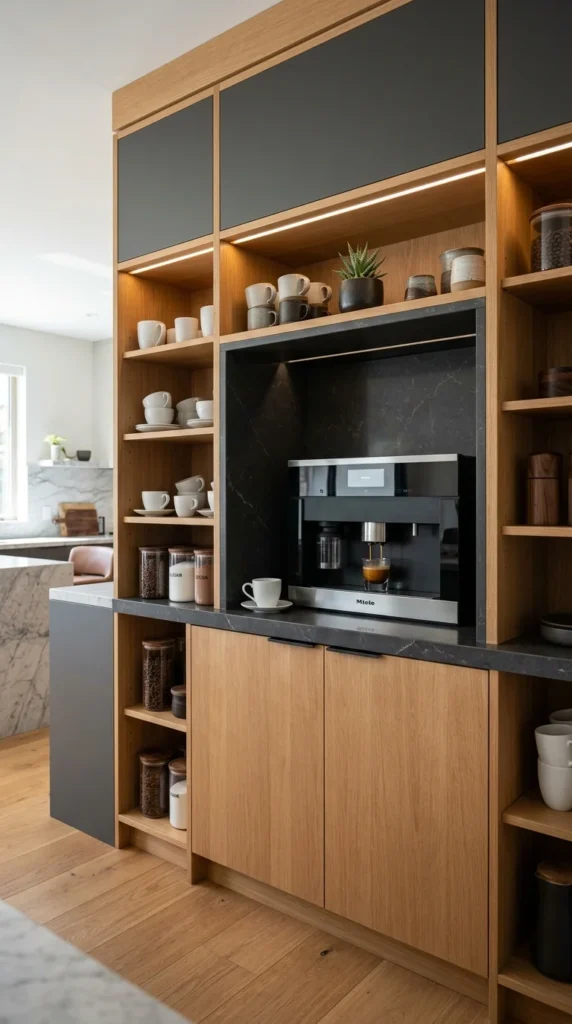
For the true coffee aficionado, a custom-built station is the pinnacle of home design. This involves integrating the coffee setup directly into the architecture of your kitchen. Often located between the pantry and the refrigerator, these stations usually feature custom cabinetry that matches the rest of the kitchen, providing a cohesive and high-end look.
Custom stations often include specialized features like a “pot filler” faucet specifically for filling the water reservoir, or a small integrated sink for quick rinsing. By choosing materials like matching backsplash tile and under-cabinet lighting, the coffee station becomes a focal point of the home rather than just a utility area.
4. Floating Shelves
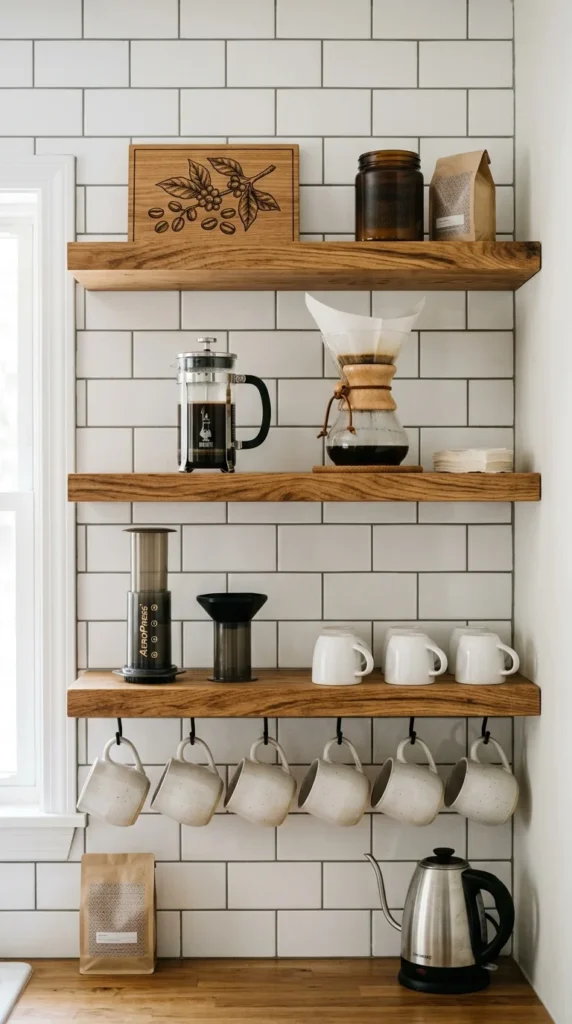
Utilizing vertical space is a classic design trick for smaller homes. Floating shelves allow you to clear the clutter from your countertops while putting your beautiful coffee gear on display. This “open concept” coffee station feels airy and approachable, reminiscent of a trendy Brooklyn espresso bar.
To keep this look organized, use a “rule of threes” for styling. Group items in odd numbers and vary the heights of your objects. For example, place a tall gooseneck kettle next to a medium-sized jar of beans and a small dish for spoons. This creates visual interest and prevents the shelves from looking like a crowded grocery aisle.
5. Corner Solutions
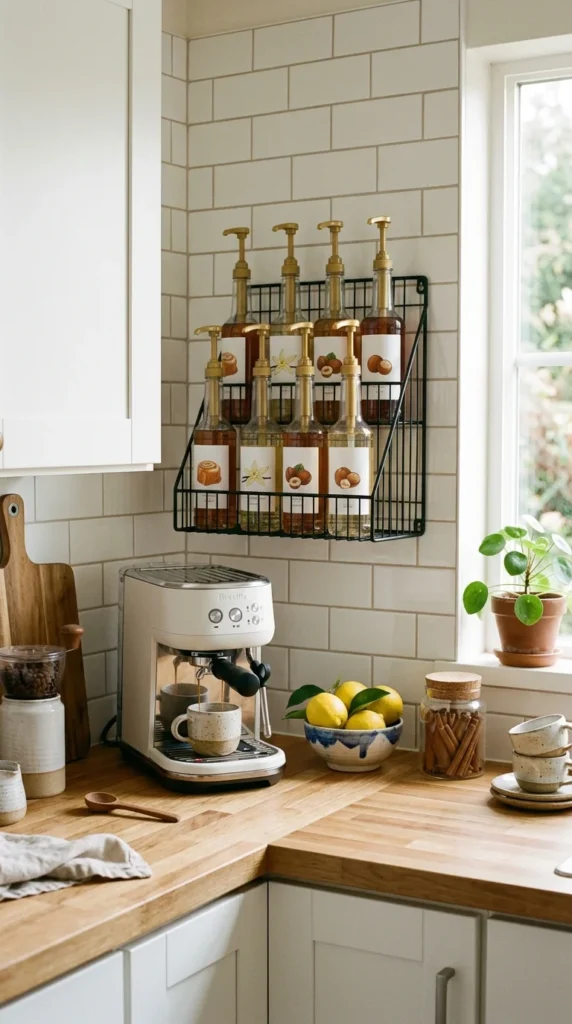
Don’t let awkward kitchen corners go to waste. A corner coffee station makes excellent use of “dead space” that is often too deep for food prep but perfect for a permanent appliance.
To maximize a corner, use tiered organizers or “lazy Susans.” A rotating tray allows you to access different types of tea, coffee pods, or sweeteners without having to reach into the dark recesses of the corner. This setup keeps everything within arm’s reach while keeping the main stretches of your countertop open for cooking.
6. Repurposed Furniture
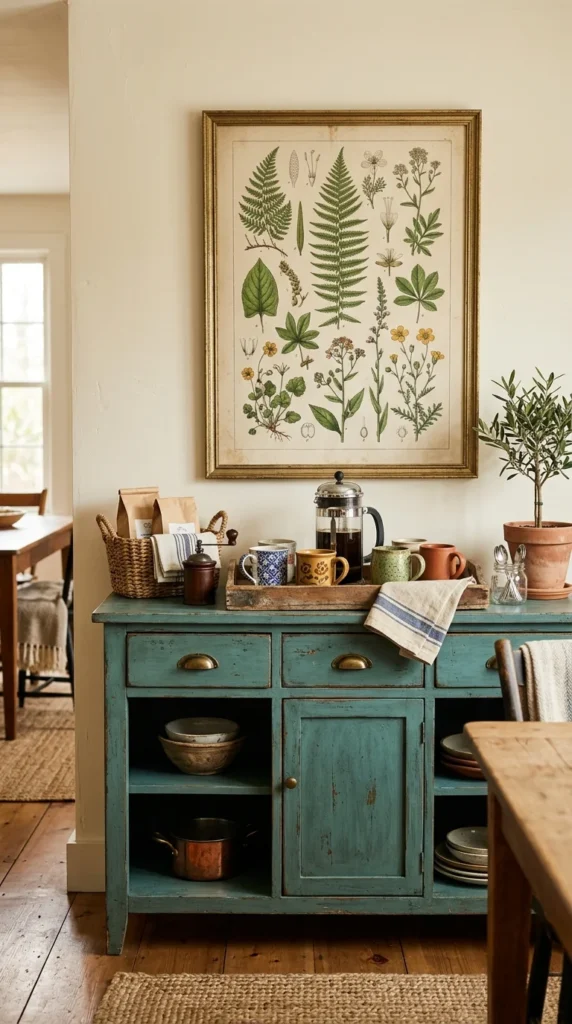
Repurposing an old piece of furniture, such as a vintage dresser, a buffet, or even a sturdy bookshelf, adds character and “soul” to your coffee station. This is an excellent DIY project for those who enjoy a farmhouse or eclectic aesthetic.
When using furniture not originally intended for kitchen use, it’s important to protect the surface. Adding a piece of custom-cut glass or a waterproof tray to the top will prevent water rings and coffee stains from damaging the wood. The drawers of a dresser are perfect for hiding away bulky items like bags of flour (for those who bake to accompany their coffee) or extra filters.
7. Modern Tech
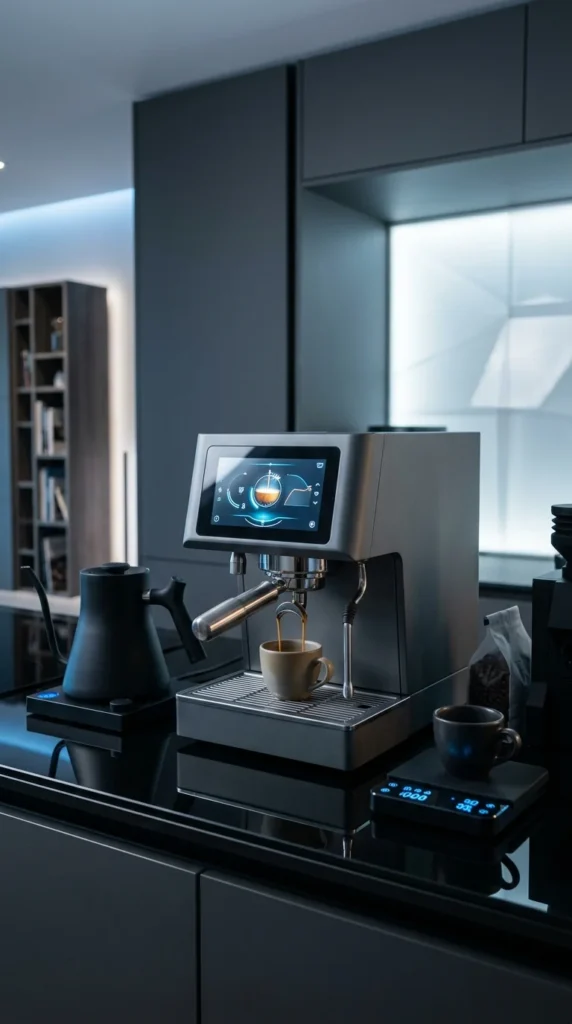
For the person who views coffee as a science, a high-tech hub is the way to go. This station focuses on precision and modern aesthetics. It usually features smart appliances that can be controlled via smartphone, allowing you to start your brew before you even get out of bed.
The key to a tech-forward station is cable management. Use cord organizers or “cable snakes” to hide the various power lines, keeping the look sleek and uncluttered. Incorporate metallic accents like chrome or brushed nickel to complement the digital displays of the machines.
8. Minimalist Countertops

Sometimes, less is more. A minimalist coffee station focuses on a single brewing method and high-quality ingredients. This approach is ideal for those who prefer the slow, meditative process of a pour-over or a French press over the complexity of an espresso machine.
In a minimalist setup, every item must be both functional and beautiful. Choose a kettle with an elegant silhouette and a carafe that doubles as a piece of art. By limiting the number of items on the counter, you create a sense of calm and focus, which is exactly what many people need in the early morning hours.
9. Elegant Sideboards
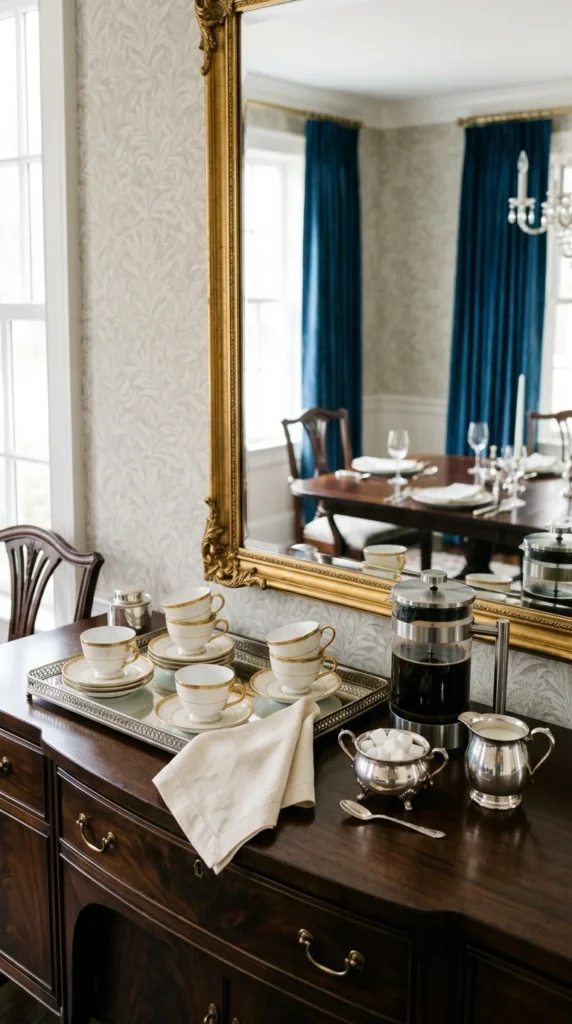
If your kitchen is strictly a “work zone,” consider moving your coffee station to the dining room or a transition hallway. Using a formal sideboard allows the coffee station to double as a piece of decor that fits in with your home’s more formal living spaces.
To make the station feel like part of the room, incorporate non-kitchen elements. A bowl of fresh fruit, a scented candle, or a stack of art books can help the coffee equipment blend in. During dinner parties, this station easily transitions from a morning coffee bar to an evening digestif station where guests can help themselves to coffee or tea after the meal.
Making It Your Own: The Finishing Touches
Once you’ve chosen the layout for your coffee station, the magic is in the details. To truly capture that café feeling, consider these final additions:
- Quality Glassware: Invest in double-walled glass mugs. They not only keep your coffee hot but also allow you to see the beautiful layers of crema and milk in your lattes.
- A Sensory Experience: Keep a small jar of cinnamon or cocoa powder for dusting. The aroma alone can change the mood of your morning.
- Greenery: A small plant, like a pothos or a succulent, adds a “living” element to the station, making it feel fresh and inviting.
- Organization: Use uniform glass jars with minimalist labels for your beans, sugar, and stirrers. Visual consistency is the secret to a professional-looking setup.
By dedicating a specific spot to your morning brew, you aren’t just organizing your kitchen—you’re creating a sanctuary. Whether it’s a hidden nook or a repurposed vintage dresser, your home coffee station will ensure that every morning feels like a slow, intentional start in your favorite local café.