

Sage green has transcended being a mere trend to become a staple of modern interior design. Often referred to as the “new neutral,” this muted, earthy hue strikes a perfect balance between the vibrancy of nature and the understated elegance of a high-end gallery. Its psychological profile is one of tranquility and renewal, making it the ideal choice for a living room intended for relaxation.
When executed correctly, sage green doesn’t just look “pretty”—it looks expensive. It carries an air of heritage and intentionality that brighter colors often lack. To elevate your home from basic to bespoke, here are eight sage green living room ideas that prioritize calm and luxury.
1. Velvet Textures
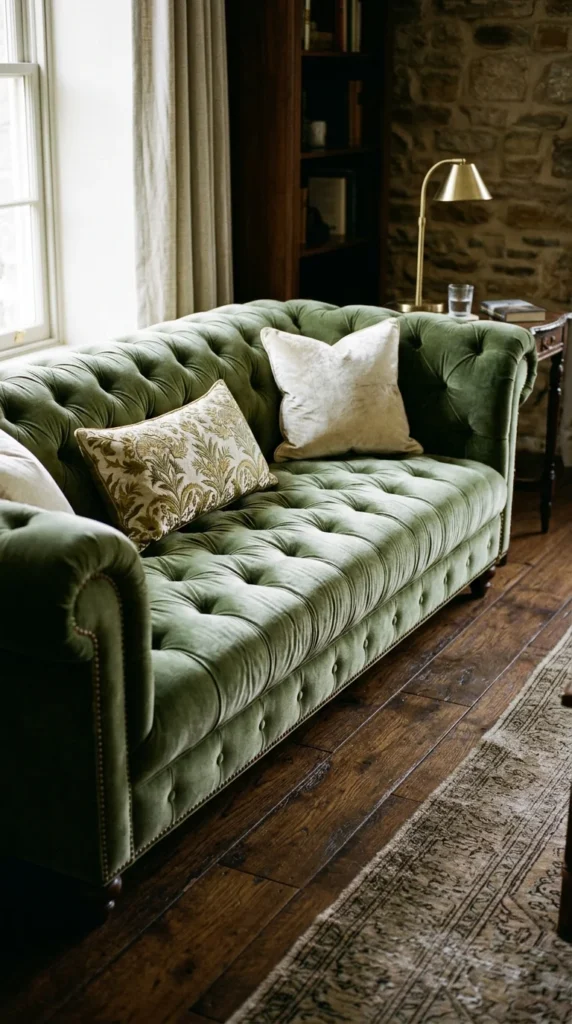
The fastest way to make any color look expensive is to apply it to a high-quality fabric. Velvet is the ultimate luxury textile because of its weight, its “nap” (the way it reflects light), and its deep pigment saturation. A sage green velvet sofa serves as a soft, luminous anchor for the entire room.
Unlike flat cottons or polyesters, velvet adds a three-dimensional quality to sage green. In the daylight, the fabric appears bright and airy; in the evening, under warm artificial light, it takes on a moody, forest-like depth. To maintain an “expensive” feel, pair your velvet pieces with contrasting textures like a smooth marble coffee table or a rough-hewn jute rug to prevent the room from feeling overly staged.
2. Brass Accents
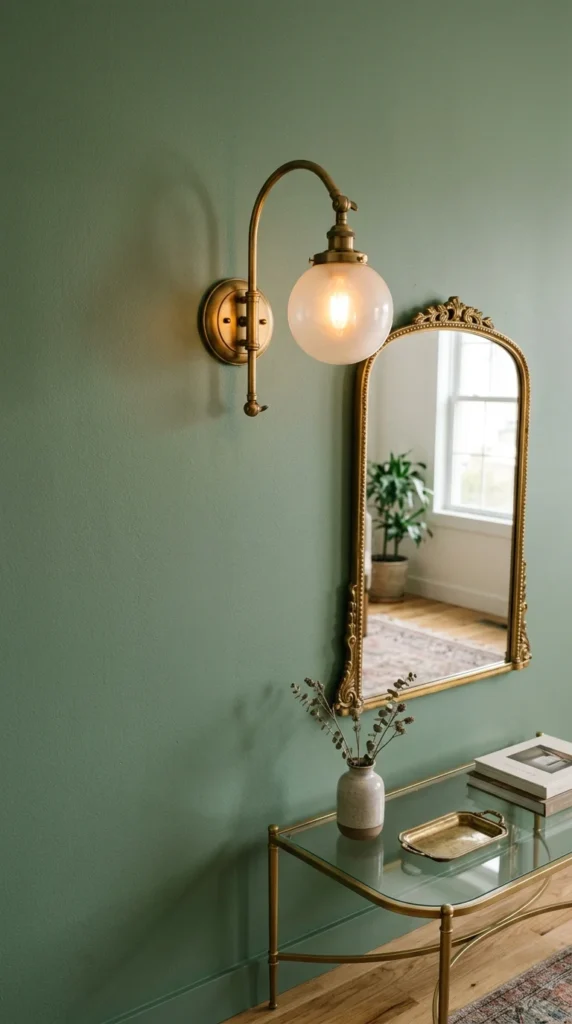
Color theory tells us that sage green is a cool-toned color, containing significant amounts of gray and blue undertones. To prevent the room from feeling clinical or cold, you must introduce warmth. Polished or brushed brass and gold accents provide the perfect metallic counterpoint.
In a luxury living room, the “jewelry” of the space—the lamps, picture frames, and furniture legs—should be consistent. Brass against a sage green backdrop creates a “Regency Modern” aesthetic that feels timeless. The yellow tones in the metal pull out the hidden warmth in the green paint, making the entire space feel glowy and inviting rather than stagnant.
3. Tone-on-Tone
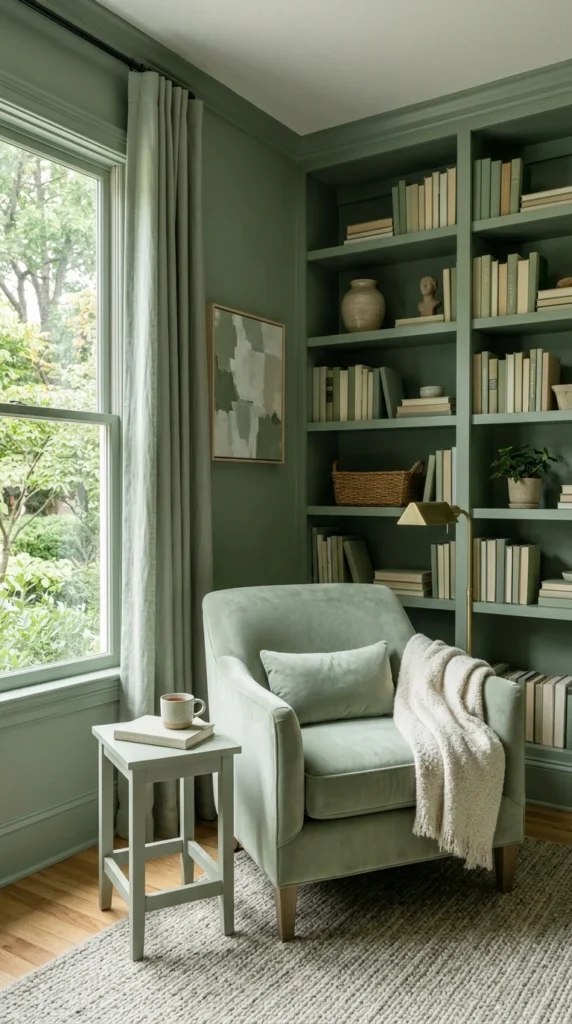
One of the hallmarks of high-end interior design is the “color drench” or tone-on-tone approach. This involves painting the walls, baseboards, crown molding, and even the window frames in the same shade of sage green. This technique eliminates visual “clutter” (the harsh lines created by white trim), making the room feel larger and more cohesive.
To execute this without the room feeling “flat,” you must play with finishes. Use a matte finish for the walls to absorb light and create a soft, velvety look, but use a semi-gloss or satin finish for the woodwork and molding. This subtle shift in sheen adds architectural depth and suggests that the room was professionally designed.
4. Natural Wood
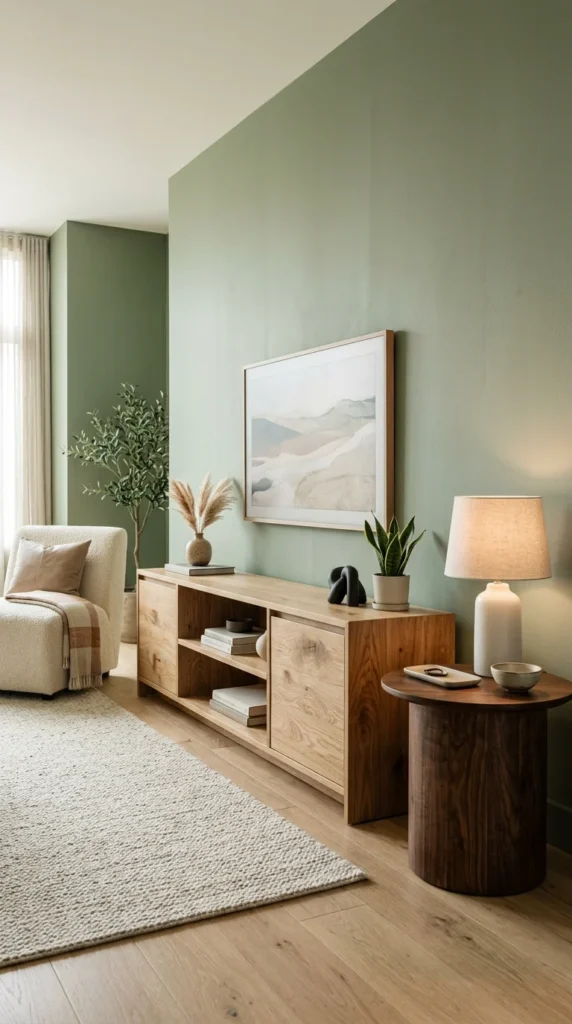
Sage is a color pulled directly from the botanical world, which is why it pairs so effortlessly with natural wood. To achieve a “quiet luxury” or “Scandi-chic” vibe, opt for lighter woods like white oak, ash, or maple. These woods keep the room feeling bright, airy, and contemporary.
If you prefer a more traditional, “old money” aesthetic, pair sage green walls with darker woods like walnut or mahogany. The dark timber provides a heavy, grounded contrast to the lightness of the sage, reminiscent of classic English libraries or country estates. The key is to ensure the wood has a matte or oiled finish; overly shiny, orange-toned varnishes can cheapen the look of the green.
5. Statement Marble
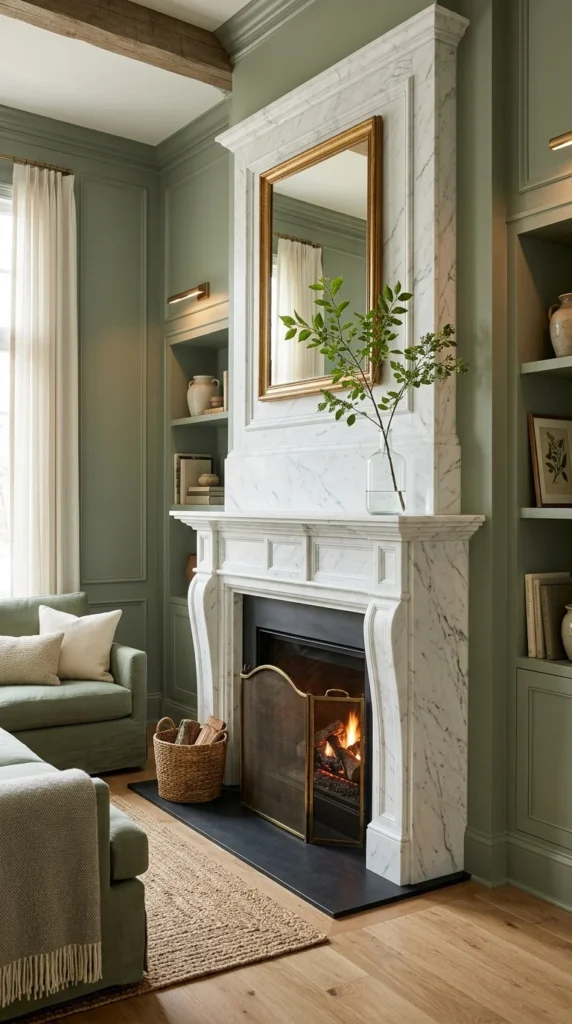
Marble is the universal shorthand for luxury. When you pair the organic, flowing veins of white or grey marble with the earthy serenity of sage green, the result is incredibly sophisticated. The cool tones in the marble (especially in Carrara or Calacatta varieties) mirror the grey undertones in sage green, creating a harmonious palette.
If a marble fireplace isn’t an option, consider a large marble-topped coffee table or even marble coasters and decorative bowls. The “heaviness” of the stone provides a sense of permanence and quality that complements the airy nature of sage green.
6. Oversized Art
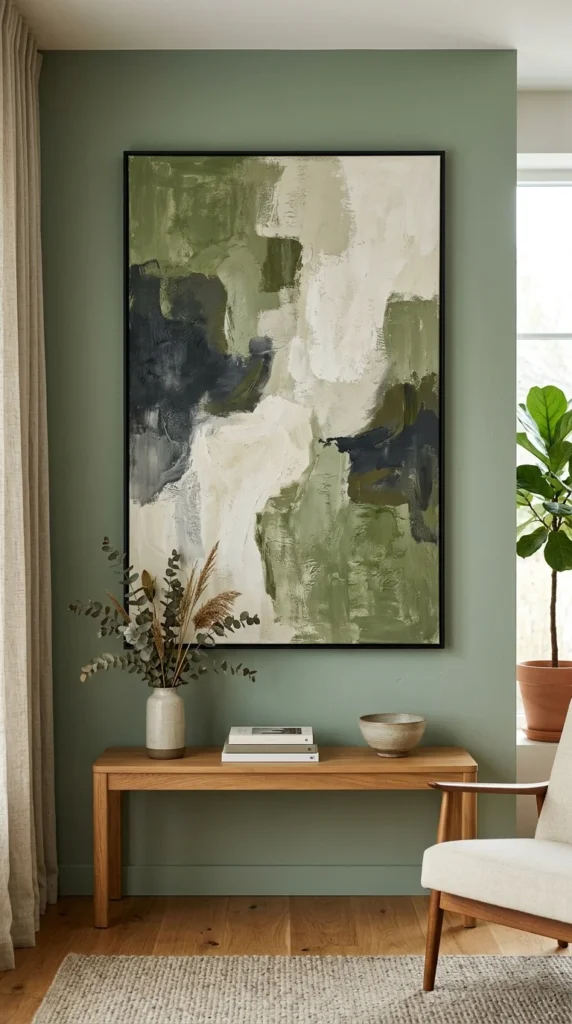
A common mistake in living room design is using art that is too small for the wall. To make a sage green room feel like a high-end gallery, opt for one or two “oversized” pieces of art rather than a cluttered gallery wall.
Look for artwork that incorporates sage green but also introduces “break” colors like charcoal, cream, or burnt orange. A large-scale piece creates a focal point and gives the eye a place to rest. When the art is scaled correctly to the furniture—usually about two-thirds the width of the sofa—it creates a sense of balance and grandeur that is synonymous with expensive homes.
7. Layered Textiles
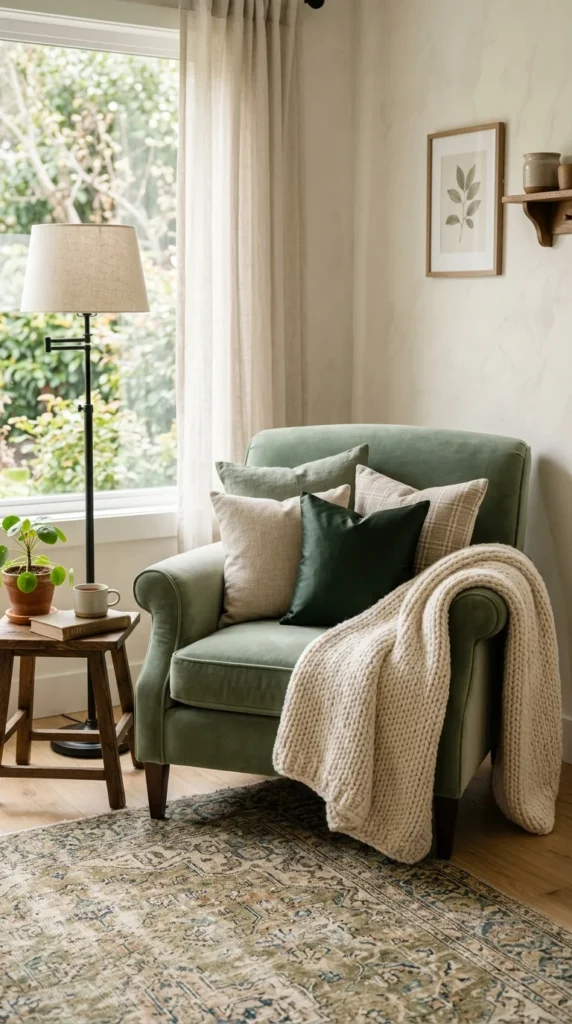
Luxury isn’t just about how a room looks; it’s about how it feels. A “calm and expensive” room relies heavily on tactile layering. Instead of matching all your pillows and throws, mix your materials. Combine heavy wool knits, breezy linens, and smooth silks all within the sage and neutral color family.
Layering a plush, high-pile rug over a larger, flat-weave sisal or jute rug is another designer trick that adds immediate “heft” to a room. This “cradled” feeling of multiple soft surfaces makes the sage green environment feel like a sanctuary, insulating the room against noise and creating a sense of total comfort.
8. Architectural Moulding
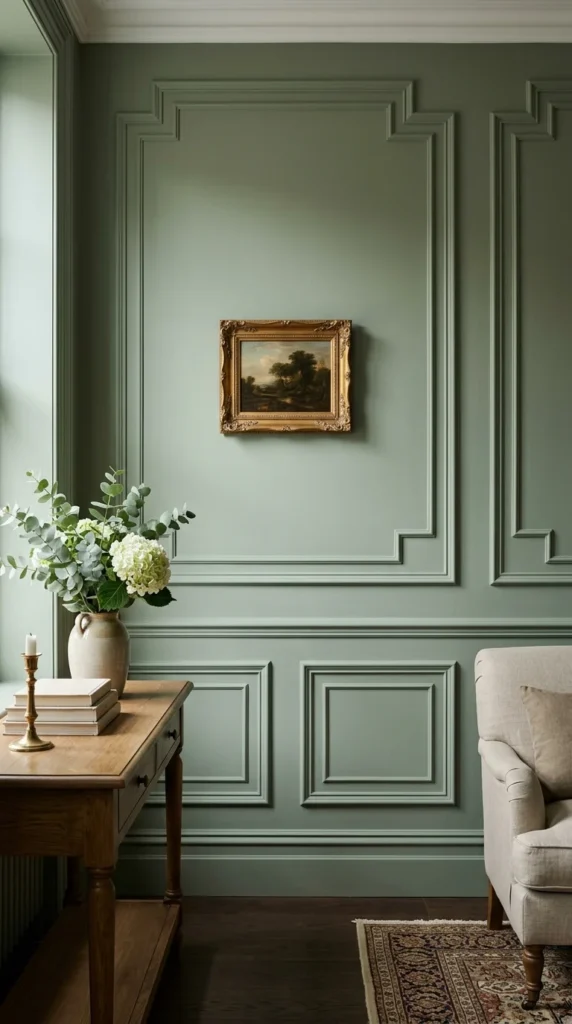
If your living room feels a bit “cookie-cutter,” adding architectural details like picture frame molding, wainscoting, or shiplap—and then painting it all sage green—will instantly elevate the space. These details create shadows and highlights that make the color feel more dynamic throughout the day.
Wall paneling suggests a level of craftsmanship and history, even in a newer build. When the molding is painted the same color as the wall, it feels modern and understated. When it’s painted a slightly different shade (perhaps a darker forest green or a crisp off-white), it feels more traditional and formal. Either way, it provides the “bones” necessary for a room to feel truly expensive.