
The modern home is no longer a collection of isolated boxes. As our living habits have shifted toward social connectivity and fluid movement, the kitchen has evolved from a hidden service room into the architectural centerpiece of the house. An open kitchen design is one of the most effective ways to transform a cramped floor plan into a sprawling, breathable sanctuary. By removing physical barriers and employing strategic design choices, you can create an illusion of infinite space, even in modest square footage.
Here are eight open kitchen design ideas that will make your home feel significantly bigger, brighter, and more inviting.
1. Monochromatic Palettes
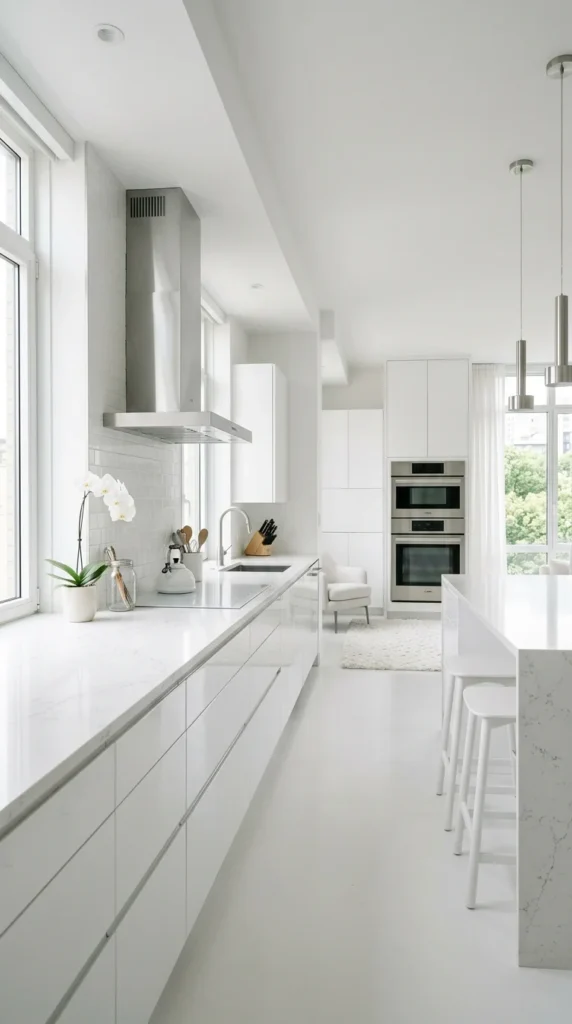
Color is the most powerful tool in a designer’s arsenal for manipulating the perception of space. A monochromatic color palette—particularly one centered around whites, creams, or soft greys—minimizes visual “noise.” When the walls, cabinetry, and countertops all share a similar hue, the boundaries of the room seem to recede.
In an open-plan setting, using a light, consistent color scheme allows the kitchen to blend into the surrounding living and dining areas. This lack of contrast prevents the eye from stopping at the edges of the kitchen, tricking the brain into perceiving the entire floor as one continuous, massive space. To keep a monochromatic kitchen from feeling sterile, incorporate different textures, such as a matte finish on the cabinets paired with a polished stone countertop.
2. Minimalist Cabinetry
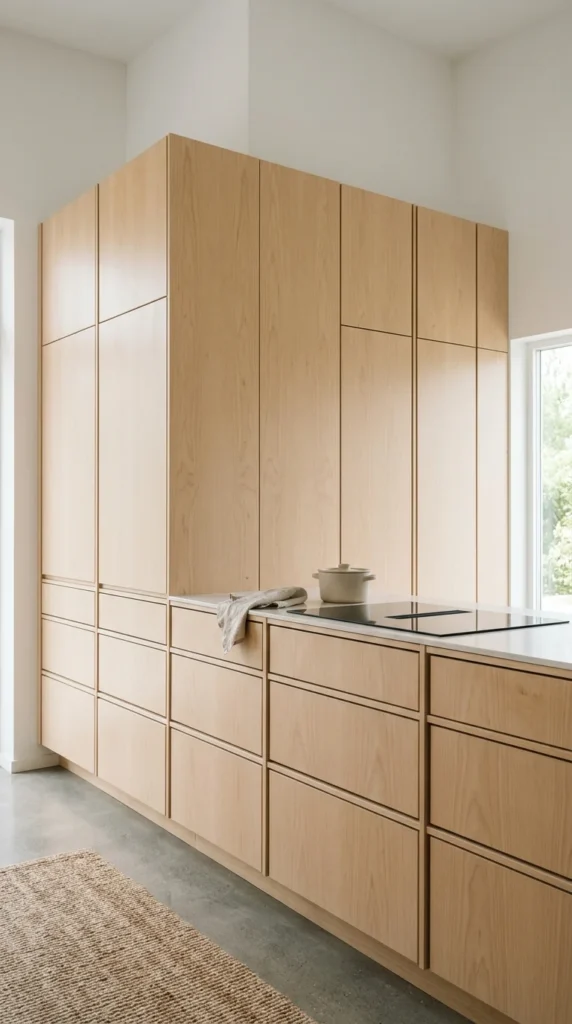
Visual clutter is the enemy of a small home. Traditional kitchen cabinets often feature ornate molding, heavy handles, and intricate detailing that draw the eye and make the room feel busy. For a kitchen that enhances the sense of openness, minimalist, flat-panel cabinetry is essential.
By choosing “push-to-open” mechanisms or recessed finger pulls, you eliminate the protrusion of hardware. This creates a “wall of furniture” effect rather than a “wall of appliances,” which is particularly effective in open-concept homes where the kitchen is always on display. The smoother the surfaces, the faster the eye travels across the room, making the environment feel more streamlined and spacious.
3. Hidden Appliances
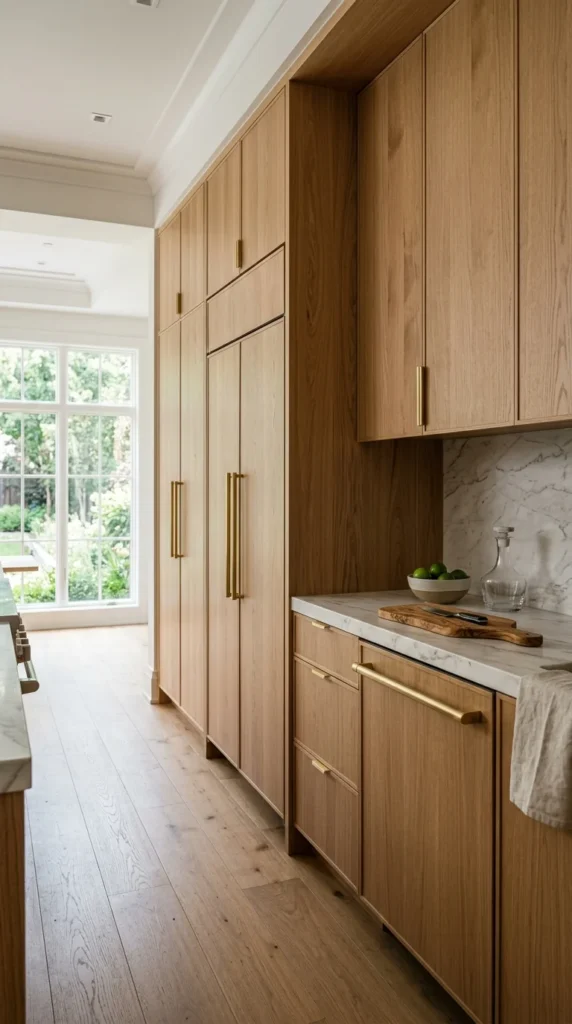
Nothing breaks the visual flow of a room quite like a massive stainless steel refrigerator or a bulky black dishwasher. In an open kitchen, these heavy metallic objects act as visual anchors that can make a space feel “weighted” and smaller.
Integrating your appliances—using custom cabinetry panels to hide the fridge, dishwasher, and even the microwave—creates a cohesive look that mirrors the rest of your home’s furniture. When the kitchen looks less like a laboratory for cooking and more like a refined extension of the living room, the entire floor feels more expansive and integrated. If full integration isn’t an option, consider “counter-depth” appliances that don’t protrude into the walkway, maintaining a straight, clean line of sight.
4. Floating Shelves
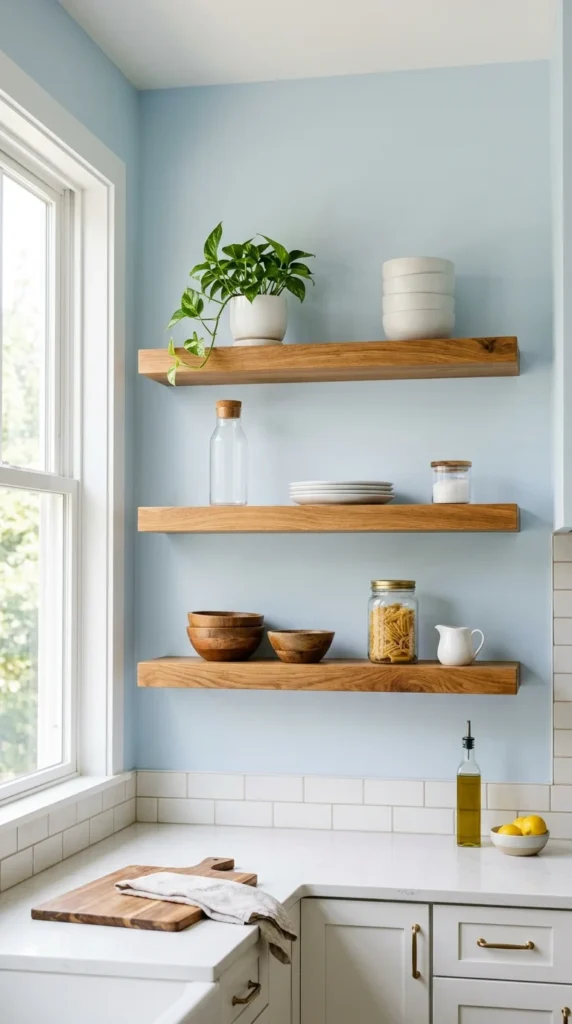
Standard upper cabinets can often feel like they are “closing in” on you, especially in a narrower kitchen layout. They cast shadows on the countertops and block the view across the room. Replacing some or all of your upper cabinets with floating shelves is an instant way to open up the vertical space.
Floating shelves allow the eye to see all the way to the back wall, which immediately adds depth to the room. They provide a platform for “breathable” storage—meaning you shouldn’t pack them tight. By leaving space between items and using glass or light-colored ceramics, you maintain an airy atmosphere that makes the kitchen feel light and unencumbered.
5. Mirrored Backsplashes
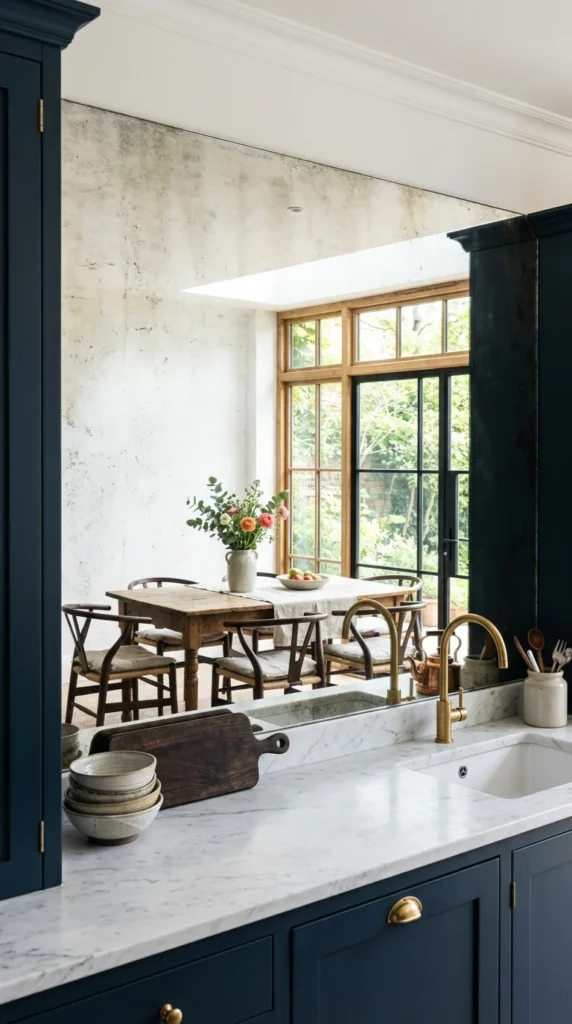
Mirrors have been a staple of small-space design for centuries because they effectively double the visual depth of a room. Bringing this concept into the kitchen via a mirrored backsplash can have a transformative effect.
A mirrored surface reflects the light from windows and light fixtures, brightening the entire work area. More importantly, it reflects the rest of the open-plan living space back at you while you’re prepping food. This eliminates the feeling of being “pushed up against a wall” and instead creates a sense of transparency. If a standard mirror feels too bold, consider tinted glass or metallic leaf tiles that offer a softer, more subtle reflection.
6. Zoned Lighting
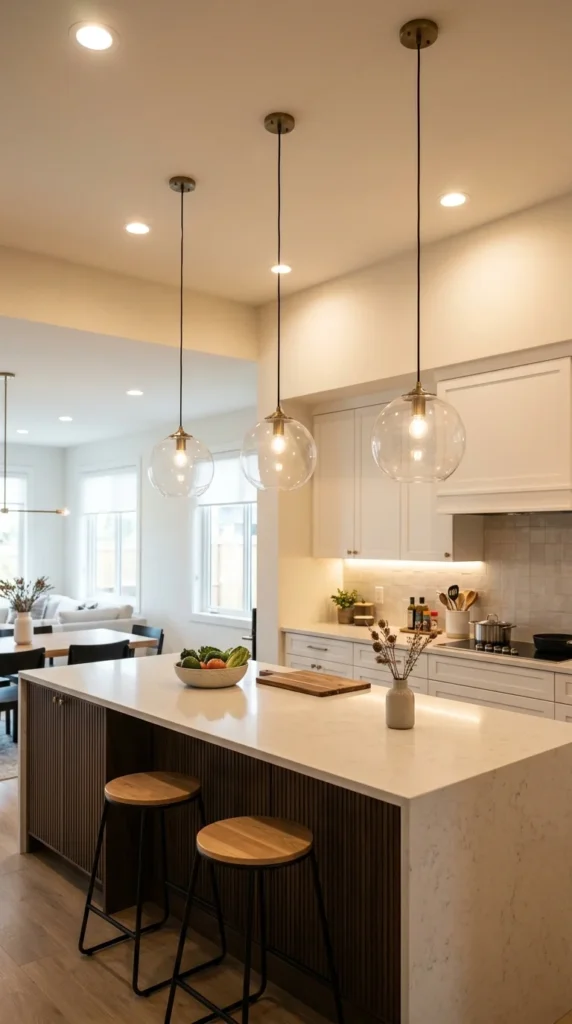
In an open-concept home, the lack of walls means you must use light to define “zones” without physically blocking the view. Effective lighting design can make a kitchen feel larger by eliminating dark corners and creating a sense of height.
Start with “task lighting” under cabinets to ensure every inch of your workspace is bright. Then, add “accent lighting” like pendant lights over an island or breakfast bar. These hanging fixtures serve as a visual marker for the kitchen area while keeping the floor plan open. Finally, ensure there is plenty of “ambient lighting” that washes the ceiling; when the ceiling is well-lit, it appears higher, contributing to an overall sense of grandeur and volume.
7. Seamless Flooring
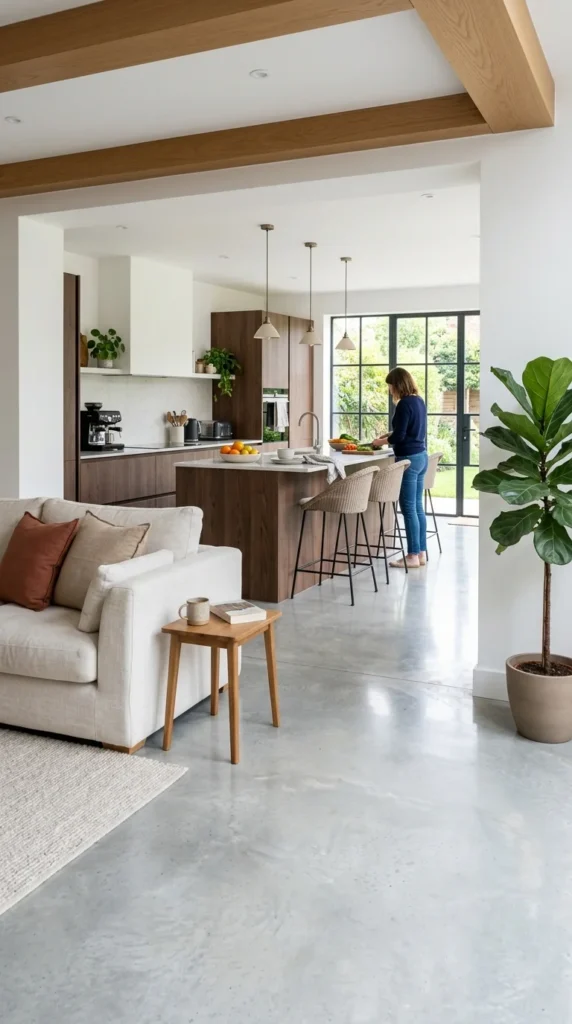
One of the most common mistakes in open-plan design is changing the flooring material at the “border” of the kitchen. Switching from hardwood in the living room to tile in the kitchen creates a visual line that “chops up” the floor, making both rooms appear smaller than they actually are.
To maximize the feel of your home, use the same flooring material throughout the entire open space. Whether it’s engineered hardwood, luxury vinyl plank, or polished concrete, a continuous floor draws the eye from one end of the house to the other without interruption. This lack of boundaries tricks the mind into seeing one massive, unified hall rather than several small, distinct zones.
8. Slimline Islands
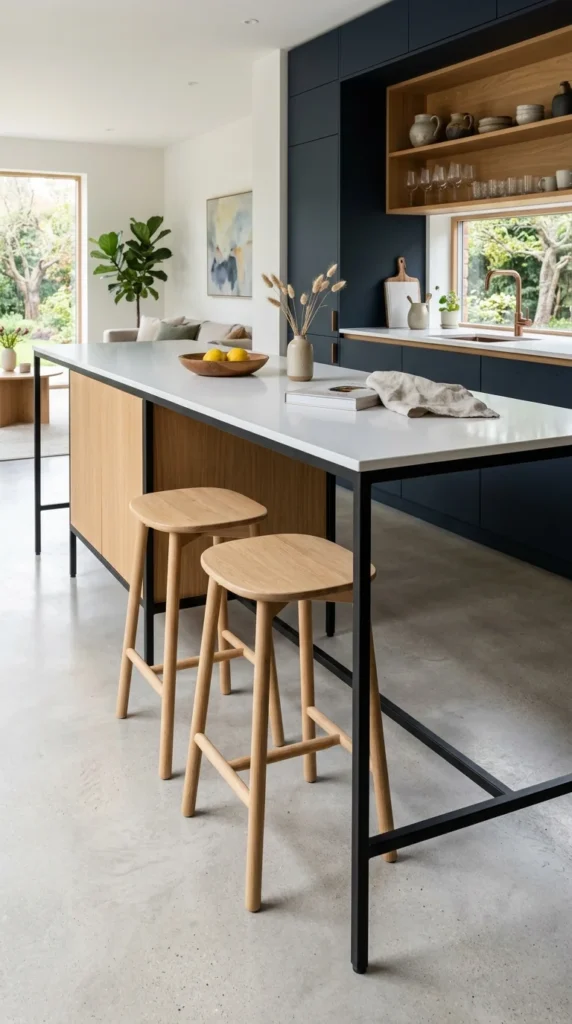
A kitchen island is often the heart of an open design, but a massive, block-like island can act as a barricade, making the room feel congested. To maintain a sense of space, opt for a “slimline” or “legged” island.
An island with an open base or thin profile allows you to see the floor underneath it, which is a key psychological trick for making a room feel bigger. If the floor is visible, the brain perceives the space as being unoccupied. Additionally, choosing an island with a “waterfall” edge—where the countertop material continues down the sides—creates long, clean vertical lines that lead the eye upward and outward, enhancing the architectural flow of the home.