
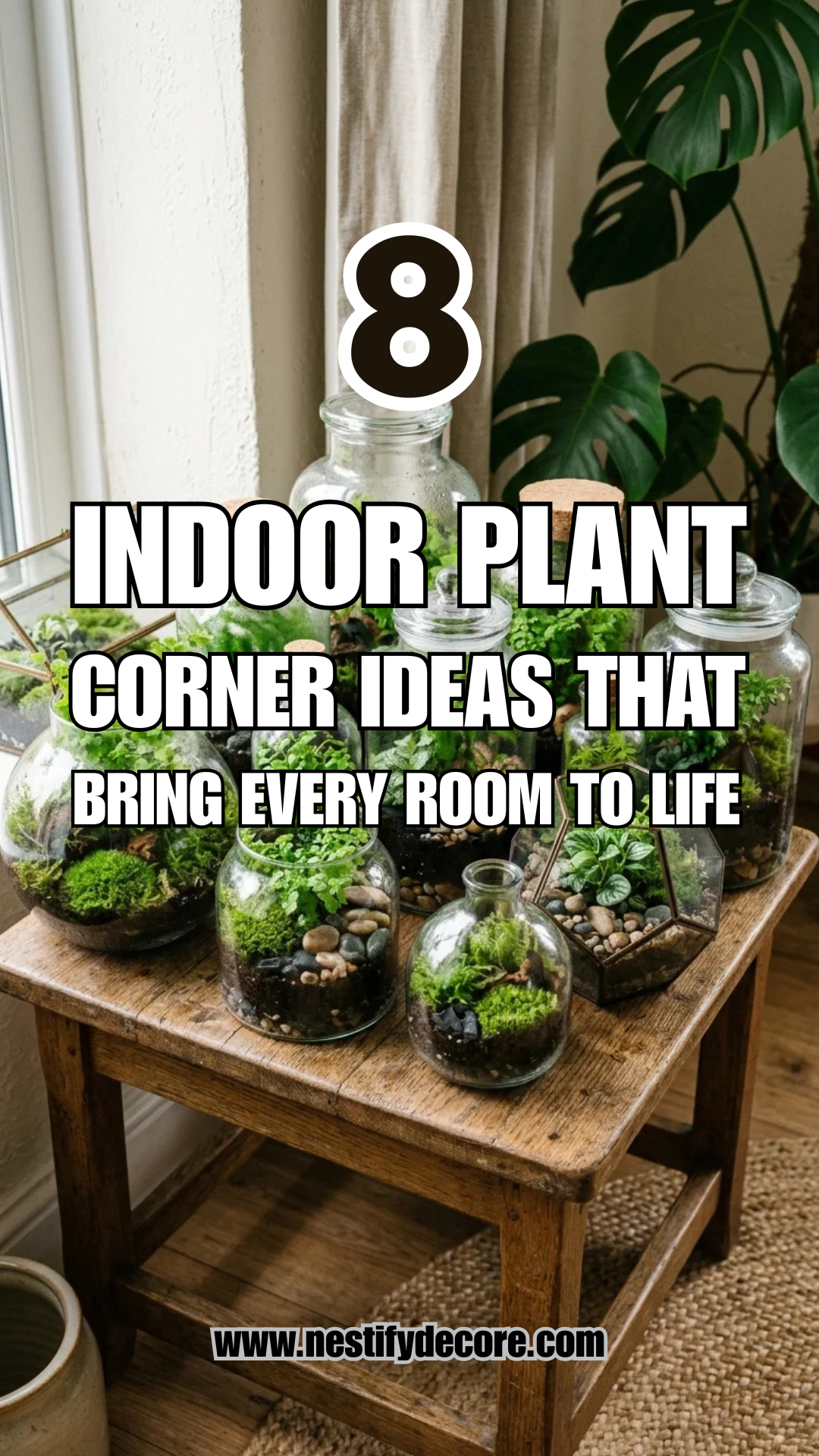
In the world of interior design, few elements possess the transformative power of greenery. Beyond their aesthetic appeal, indoor plants serve as living sculptures that breathe life into static spaces, purify the air, and significantly boost our psychological well-being. This concept, known as biophilic design, emphasizes our innate connection to the natural world and the necessity of bringing it inside our modern dwellings.
Creating a “plant corner” is more than just placing a pot on the floor; it is about curating a micro-ecosystem that reflects your personal style while catering to the biological needs of the plants. Whether you live in a sprawling estate or a compact studio apartment, an empty corner presents a blank canvas for a lush, leafy installation. By playing with height, texture, and container styles, you can turn a neglected nook into the most vibrant focal point of your home.
1. Tiered Stands
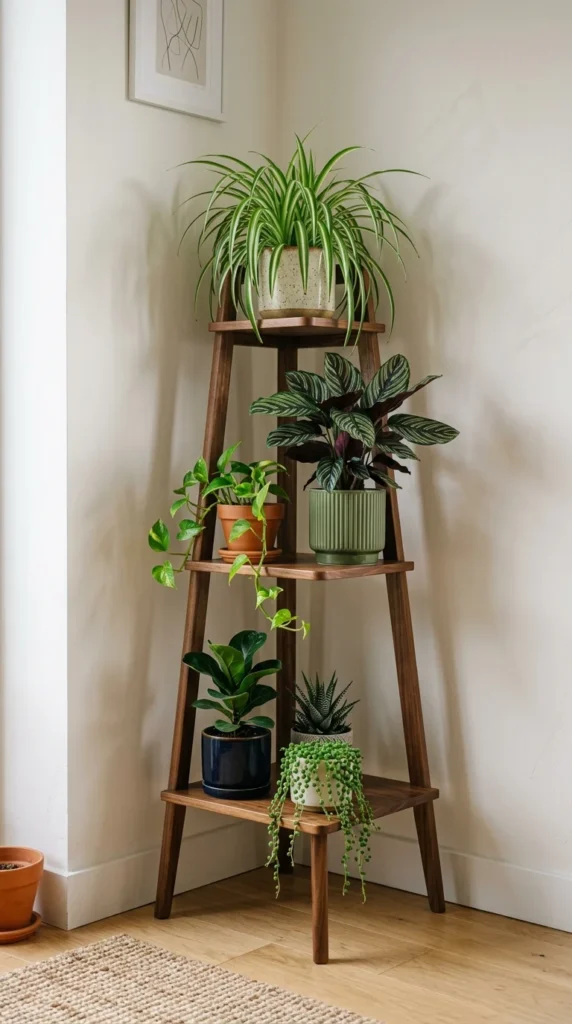
One of the most effective ways to create a lush, “urban jungle” feel in a limited space is by utilizing verticality. Tiered plant stands allow you to stack greenery, ensuring that every leaf gets its moment in the sun without cluttering your floor space.
When using tiered stands, the key is to vary the silhouettes of the plants. Place trailing varieties like the String of Hearts or Pothos on the highest tiers so their vines can cascade down, creating a curtain of green. On the middle tiers, bushy plants like ferns or Marantas provide volume, while the bottom tiers are perfect for sturdier, upright plants like the Sansevieria. This layering technique mimics the natural strata of a forest floor, providing a sense of depth and complexity to the corner.
2. Hanging Gardens
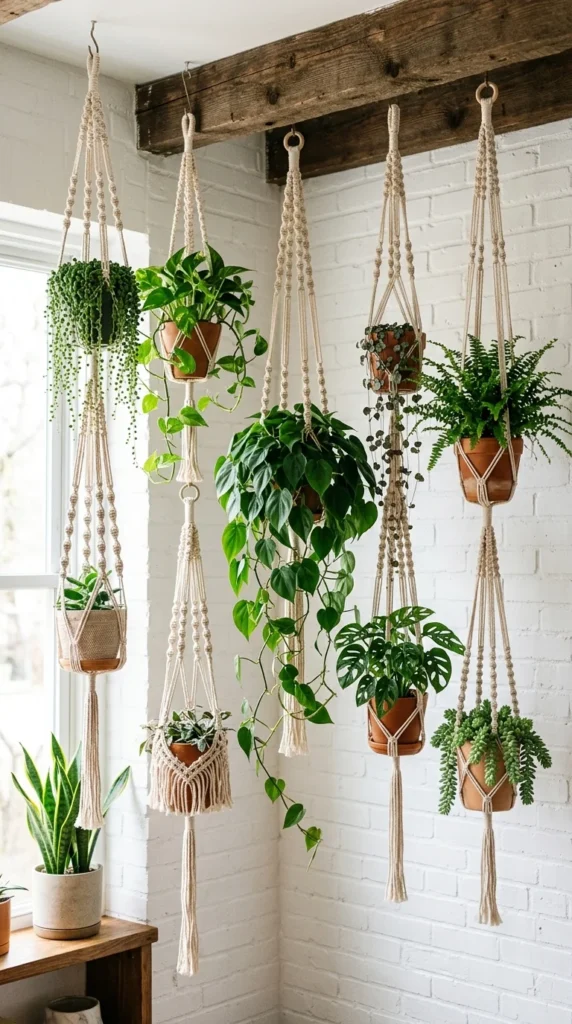
If floor space is at a premium, look to the ceiling. Hanging gardens utilize the often-ignored upper reaches of a room, drawing the eye upward and making a ceiling feel higher. This approach is particularly effective in kitchens and bathrooms, where counter space is essential.
Macrame hangers are a classic choice for a bohemian look, but for a more modern aesthetic, consider minimalist ceramic or metal slings. The secret to a successful hanging display is varying the lengths of the cords. By staggering the heights of the plants, you create a dynamic visual rhythm. Trailing plants are the stars here—look for the English Ivy, Philodendron Brasil, or the Neon Pothos for a pop of vibrant chartreuse. Not only do they look stunning, but hanging them also keeps delicate vines away from curious pets or toddlers.
3. Statement Trees
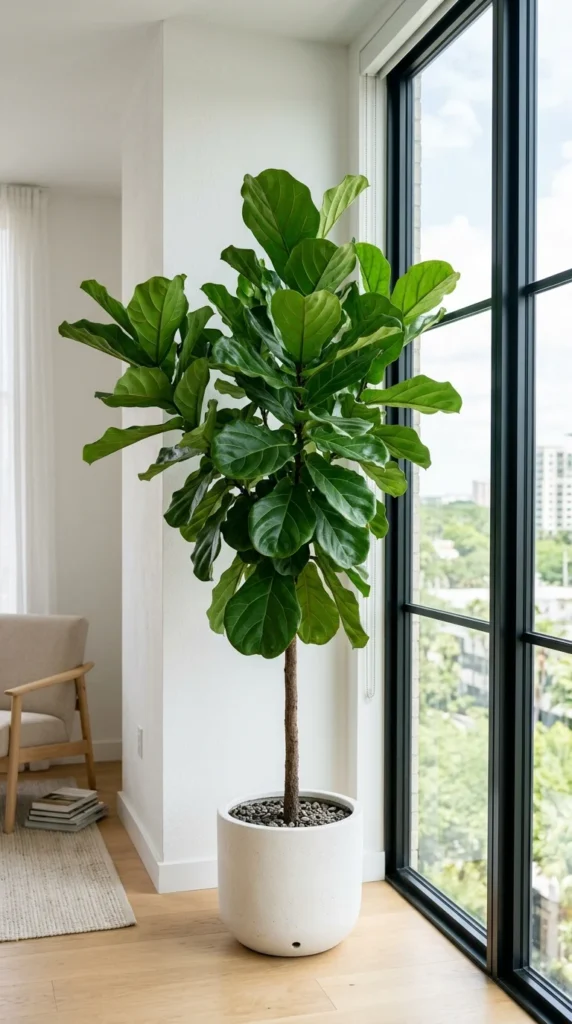
Sometimes, less is more. A single, large statement tree can anchor a room more effectively than a dozen smaller pots. A statement plant acts as a living piece of furniture, providing architectural structure and a sense of permanence to a corner.
The Fiddle Leaf Fig (Ficus lyrata) remains a favorite for its massive, violin-shaped leaves, but other excellent choices include the Bird of Paradise for a tropical vibe or the Rubber Tree (Ficus elastica) for a moodier, darker foliage look. When choosing a statement tree, consider the scale of your furniture. A tall plant helps balance out a high-backed sofa or a large bookshelf. To elevate the look further, choose a pot that complements your decor—a matte black concrete pot for industrial vibes or a hand-woven seagrass basket for a coastal feel.
4. Styled Shelving
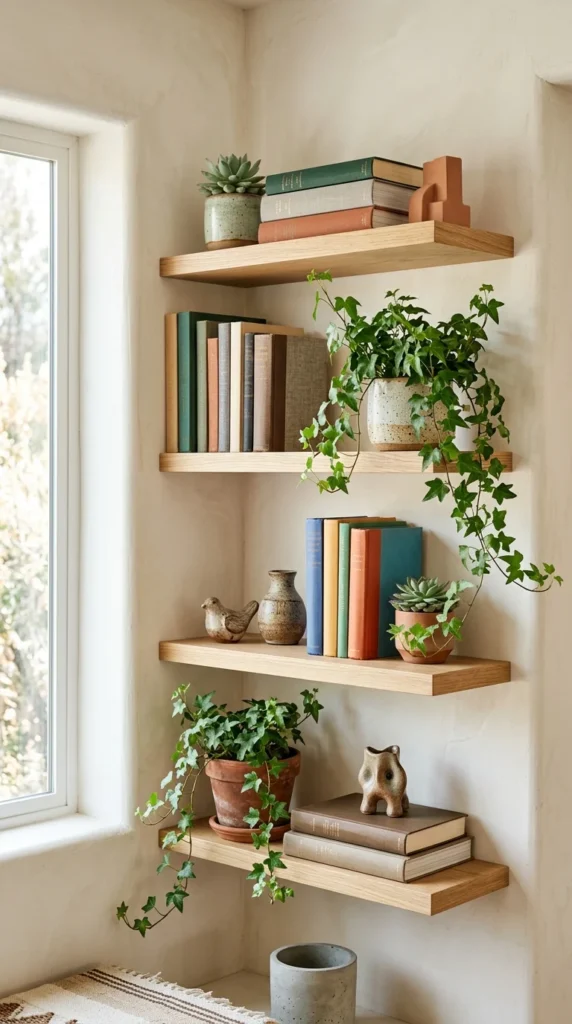
For those who love a curated aesthetic, the “plant shelfie” is the ultimate goal. By integrating plants into your existing shelving units or installing dedicated floating shelves in a corner, you create a gallery-like display that blends nature with art and literature.
The trick to a well-styled plant shelf is balance. Mix the organic shapes of plants with the hard edges of books, candles, and vases. Use small “filler” plants like Echeveria succulents or air plants to plug gaps. Ensure you choose plants with similar light requirements if they are on the same shelf unit. For example, a shelf far from a window should be populated with low-light tolerant species like the ZZ plant or Chinese Evergreen. This method allows you to showcase your favorite ceramic pots and personal mementos alongside your growing botanical collection.
5. Window Nooks
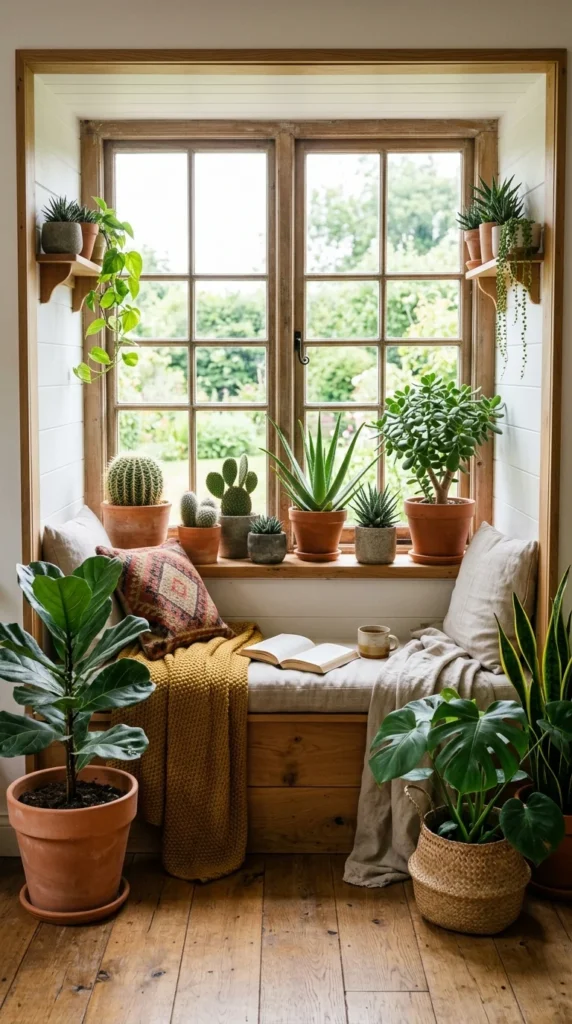
Windows are the prime real estate of the plant world. Turning a window corner into a dedicated plant nook is the best way to ensure your high-light-loving species thrive. This is the ideal spot for “sun-worshippers” that would otherwise struggle in the interior of a room.
Cacti, succulents, and Mediterranean herbs like rosemary and lavender thrive in these bright spots. If you have a wide windowsill, you can create a “mini-desert” landscape using terracotta pots of various sizes. For a more lush look, use the area around the window to house flowering plants like Hibiscus or Orchids, which will reward the extra light with vibrant blooms. To maximize the space, consider installing a tension rod across the window frame to hang lightweight air plants or glass terrariums, creating a “living curtain” that provides privacy while still letting light through.
6. Terrarium Clusters
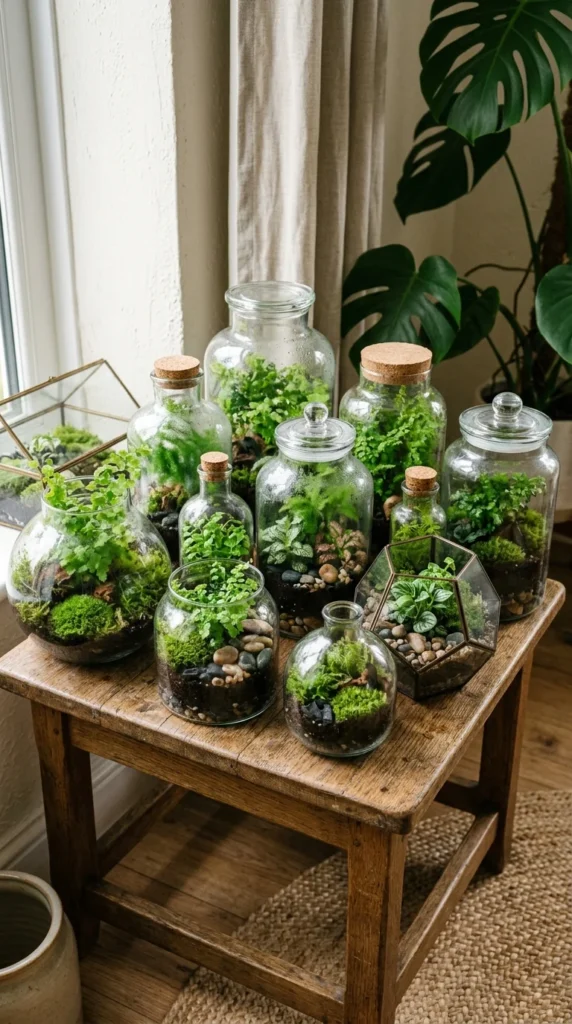
Terrariums are like miniature, self-sustaining worlds. A cluster of these glass vessels in a corner creates a focal point of intricate detail and whimsy. They are particularly well-suited for smaller corners where a large plant might feel overwhelming.
Closed terrariums create a humid microclimate, making them the perfect home for moisture-loving plants like nerve plants (Fittonia), mosses, and miniature ferns. Open terrariums, on the other hand, are better for arid-dwelling succulents. The beauty of a terrarium cluster lies in the variety of the glass containers; mix vintage apothecary jars with modern geometric prisms. These displays require very little maintenance once the ecosystem is balanced, making them an excellent choice for busy individuals who still want a touch of green in their lives.
7. Low-Light Zen
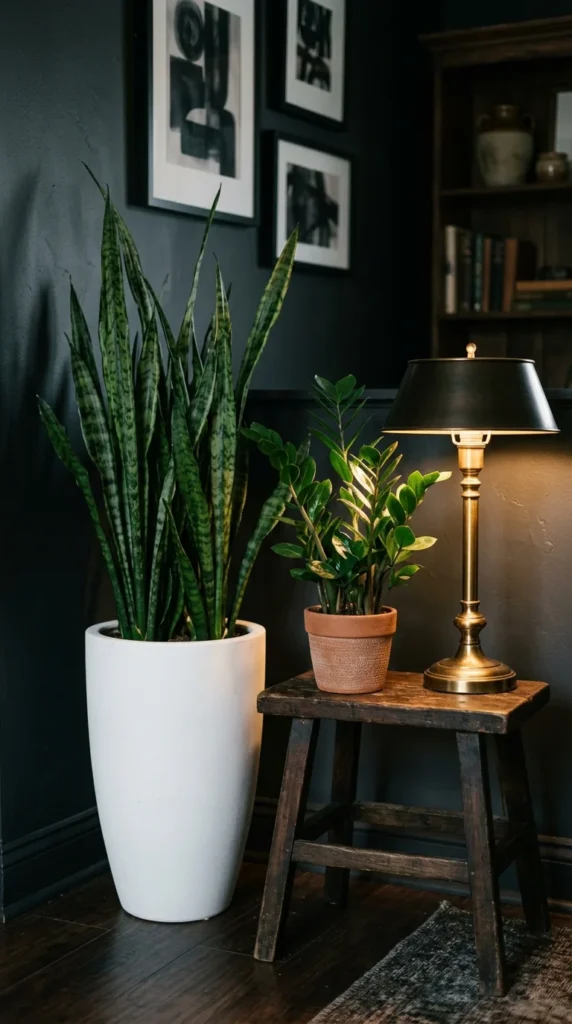
Many people believe they can’t have a plant corner because their home lacks natural light. However, many of the most striking indoor plants actually prefer the shadows. A low-light corner can be transformed into a serene “Zen” zone with the right selection of resilient species.
The Snake Plant (Sansevieria) and the ZZ Plant (Zamioculcas zamiifolia) are the champions of the dark corner. They are incredibly hardy, require infrequent watering, and maintain a sharp, architectural silhouette even in dim conditions. To make a low-light corner feel intentional rather than forgotten, use light-colored pots to reflect what little light is available and add a small, warm-toned lamp. The soft glow of a lamp hitting the architectural leaves of a Snake Plant creates a sophisticated, moody atmosphere perfect for a bedroom or a quiet study.
8. Propagation Hubs
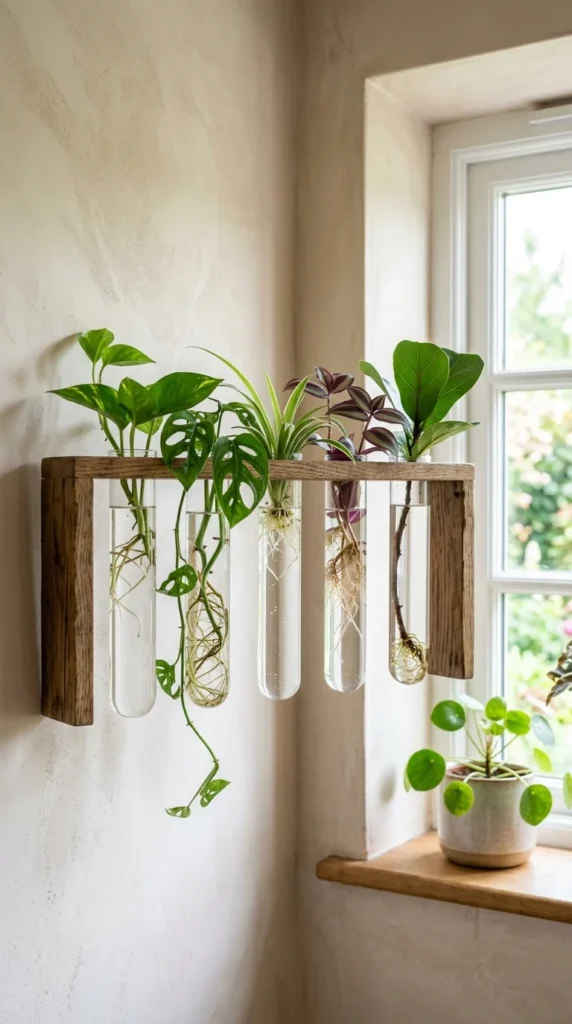
For the true plant enthusiast, a corner isn’t just for display—it’s for growth. A propagation station turns the biological process of growing new plants into a visual art form. Seeing roots develop in clear glass is both fascinating and highly decorative.
You can create a propagation hub by using a dedicated wall rack for test tubes or simply arranging a collection of glass bottles and jars on a corner console table. Pothos, Tradescantia, and Monstera cuttings are particularly easy to propagate in water and look beautiful as they grow. This “laboratory” aesthetic adds a sense of life and movement to a room, as the display is constantly changing and evolving. Once the roots are established, you can pot them up and start a new corner, or give them away as thoughtful, home-grown gifts.
Tips for Maintaining Your Indoor Plant Corner
Creating the corner is only the first step; keeping it vibrant requires a basic understanding of plant care. To ensure your indoor oasis thrives, keep these three pillars in mind:
- Light Mapping: Before choosing your plants, observe the light in your chosen corner throughout the day. “Bright indirect light” means the plant can see the sky but not the sun directly. “Low light” means you could comfortably read a book there, but it’s far from a window. Match your plant to the light, not the other way around.
- The Drainage Rule: Always ensure your pots have drainage holes. If you love a decorative pot that doesn’t have one, keep the plant in its plastic nursery liner and place that inside the decorative “cachepot.” This prevents root rot, the number one killer of indoor plants.
- Rotation and Dusting: Every few weeks, rotate your plants 90 degrees to ensure they grow evenly rather than leaning toward the light. Additionally, wipe the leaves with a damp cloth; dust can block sunlight and hinder the plant’s ability to photosynthesize.
By thoughtfully applying these ideas, you can turn any corner of your home into a sanctuary of growth and tranquility. Whether you opt for a singular, majestic tree or a complex vertical garden, the addition of living greenery will undeniably bring your room to life.