
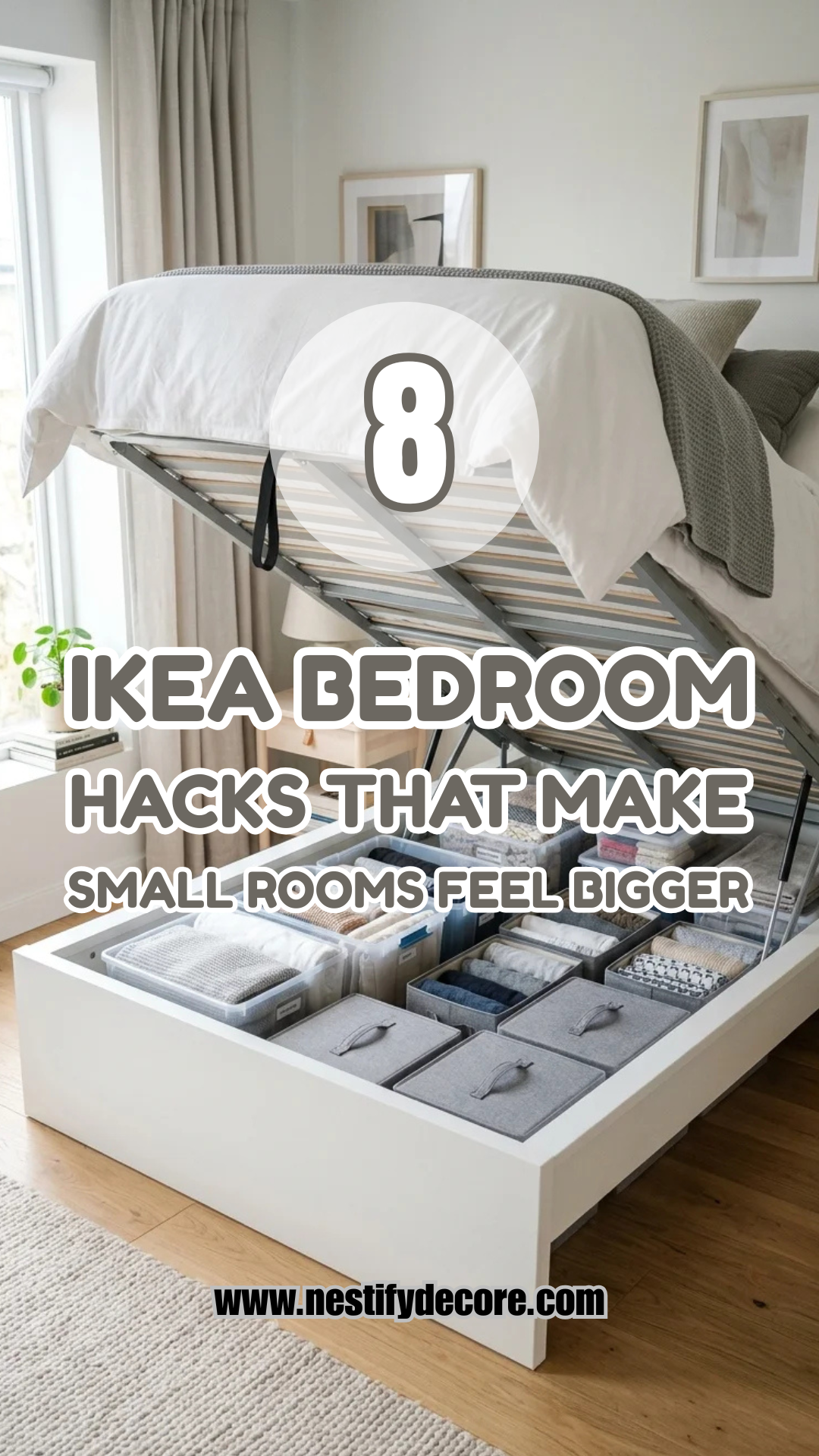
Living in a small space often feels like a constant battle against clutter. When your bedroom serves as a sleeping quarters, home office, and dressing room all at once, the four walls can start to feel like they are closing in. However, square footage is not the only factor that determines how a room feels. With clever design choices and a few strategic “hacks,” you can trick the eye into perceiving more space than actually exists.
IKEA products are the gold standard for small-space living because of their modularity and minimalist aesthetic. By modifying these affordable staples, you can maximize every vertical inch and keep your floor clear, which is the secret to making any room feel twice its size. Here are eight IKEA hacks to transform your cramped bedroom into a spacious sanctuary.
1. Floating Nightstands
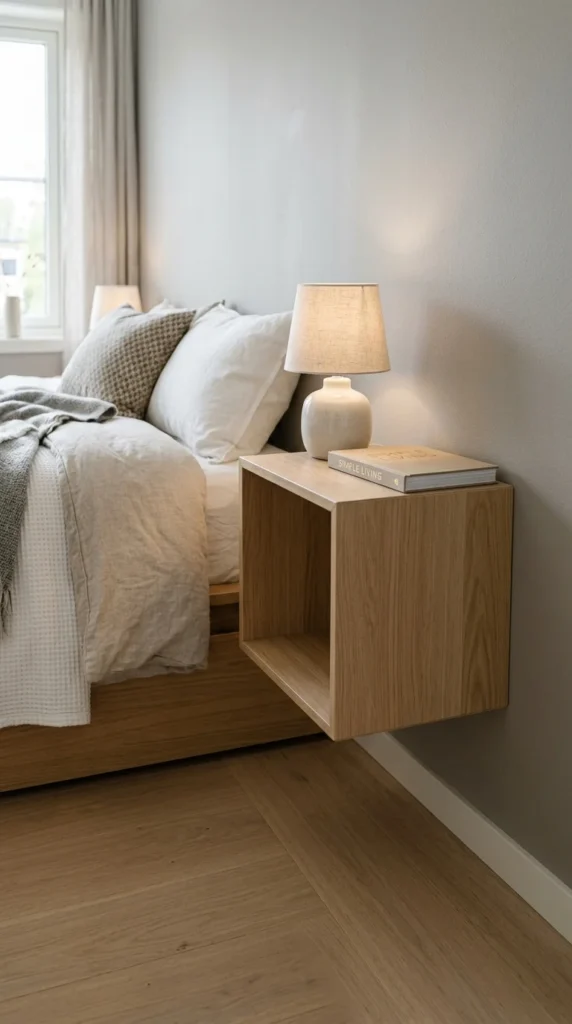
One of the most effective ways to make a room feel larger is to keep as much of the floor visible as possible. Traditional nightstands with bulky legs take up valuable floor real estate and create visual “noise.” By using the IKEA EKET cabinet or even a simple LACK shelf as a floating nightstand, you eliminate that footprint entirely.
When the floor extends all the way to the baseboard under your furniture, the human brain perceives the room as being wider. To execute this hack, simply discard the legs that come with the unit and use the suspension rail to mount it directly to the wall at mattress height. This creates a sleek, modern look while providing a dedicated spot for your phone and water glass without the bulk.
2. Ottoman Beds
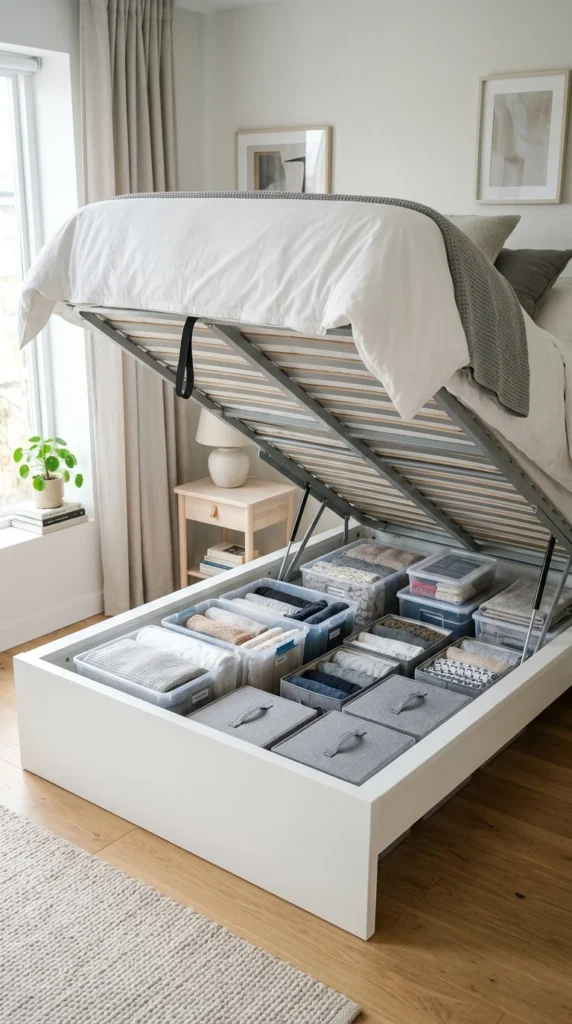
If you have a small room, you cannot afford to let the space under your bed go to waste. While many people use plastic bins under the bed, they are often difficult to access and accumulate dust. The IKEA MALM Ottoman bed is a game-changer for small bedrooms because the entire mattress flips up using a hydraulic lift system.
This hack essentially turns the entire footprint of your bed into a horizontal wardrobe. You can store suitcases, heavy winter coats, and extra bedding out of sight, allowing you to potentially remove a bulky dresser from the room entirely. Eliminating a large piece of furniture like a chest of drawers is the fastest way to open up floor space and improve the “flow” of the bedroom.
3. Mirror Walls
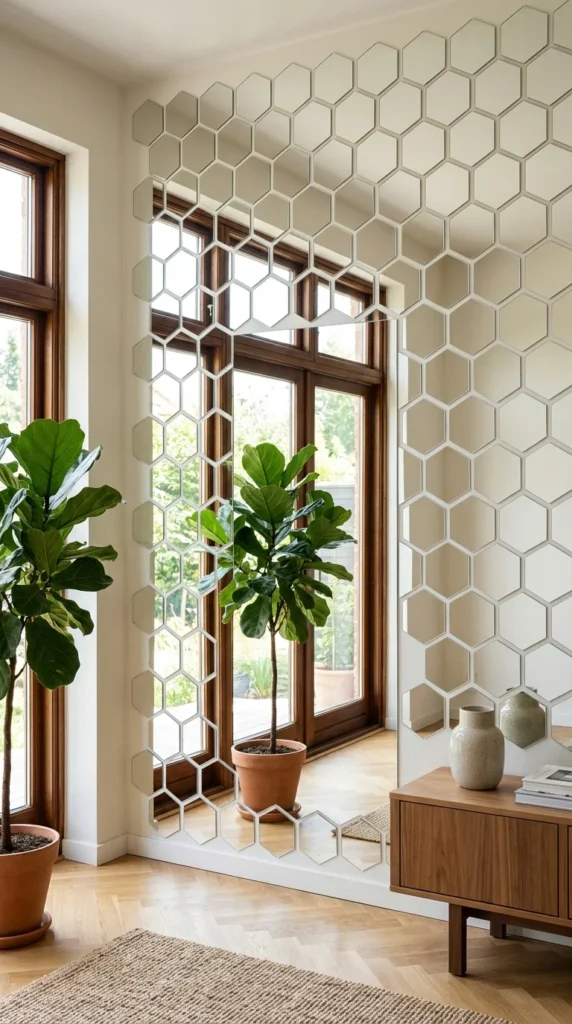
It is the oldest trick in the interior design book for a reason: mirrors work. Mirrors reflect light and views, effectively “doubling” the visual space of a room. Instead of one small hanging mirror, consider a “mirror wall” hack using IKEA HÖNEFOSS or LOTS mirror tiles.
By applying these tiles in a floor-to-ceiling grid or a decorative pattern on the wall opposite your window, you bounce natural light into the darkest corners of the room. This brightness makes walls feel further away. If you have a PAX wardrobe, replacing standard doors with mirrored AULI sliding doors achieves the same effect while serving a dual purpose.
4. Vertical Wardrobes
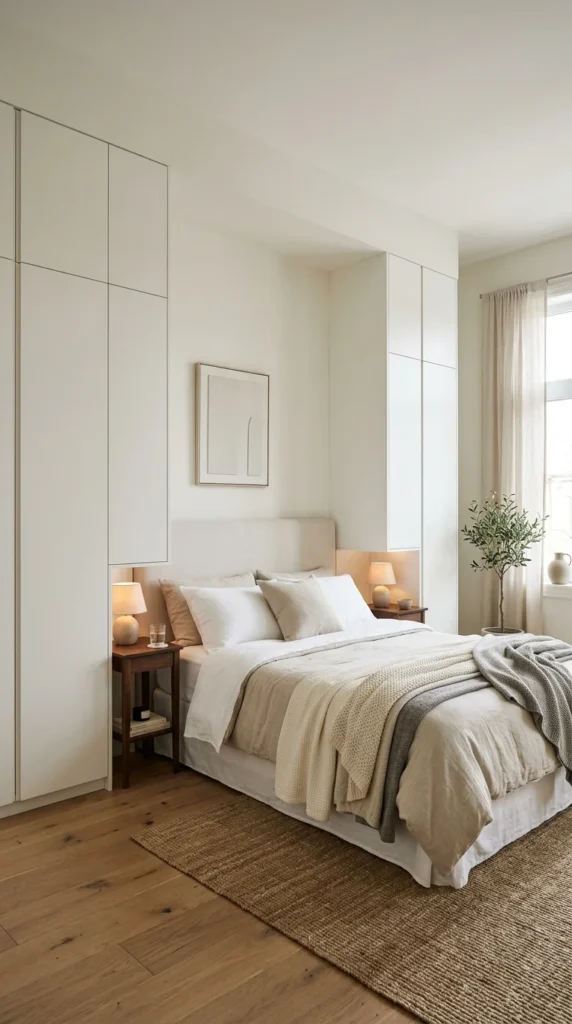
In a small room, you must think vertically. Most people stop their storage at eye level, leaving several feet of wasted space near the ceiling. By using the tallest version of the IKEA PAX wardrobe system (the 92-inch height), you draw the eye upward, which emphasizes the height of the room rather than its narrow width.
To make this feel even bigger, “build in” the wardrobes. Use trim and molding to fill the gap between the top of the wardrobe and the ceiling, then paint the units the exact same color as your walls. This “disappearing” effect prevents the large furniture from feeling imposing, making the room look architectural and intentional rather than cluttered.
5. Slim Shoe Cabinets
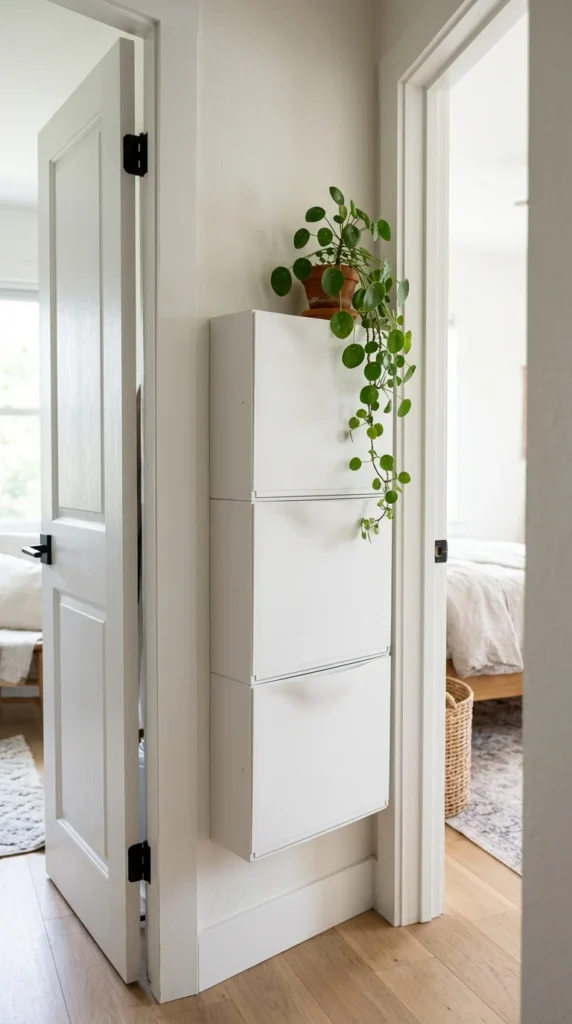
The IKEA TRONES shoe cabinet is perhaps the most underrated tool for small bedroom organization. These cabinets are only about six inches deep, meaning they can fit in hallways or behind doors where traditional furniture would block the path.
In a bedroom, you can hack these as “ultra-slim” storage for things other than shoes. Use them to hold scarves, iPads, magazines, or even a hidden charging station. Because they are wall-mounted and have a flat top, they act as a narrow ledge for decor without protruding into the walking path. Keeping the walkways clear is essential for a room to feel “breathable.”
6. Headboard Storage
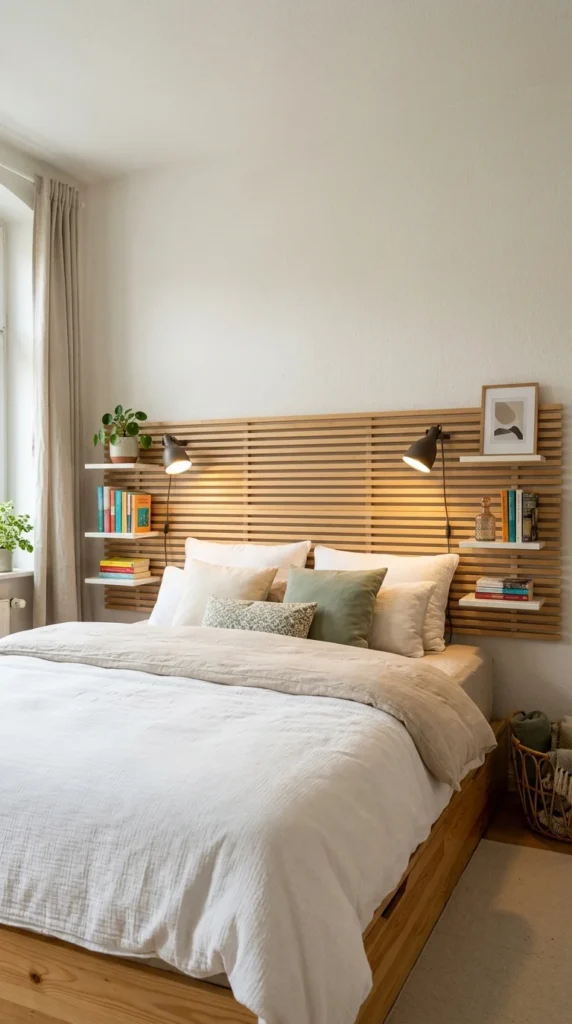
In a very narrow room, you might not have space for anything on either side of the bed. This is where the headboard hack comes in. Using an IKEA BRIMNES headboard or a customized MANDAL headboard allows you to store items behind or above your pillow.
By moving your storage to the headboard, you can push your bed closer to one wall or fit it into a tight nook without sacrificing a place to put your alarm clock. This streamlines the room’s layout, creating a singular “sleep zone” that keeps the rest of the floor area open and uncluttered.
7. Pegboard Organizers
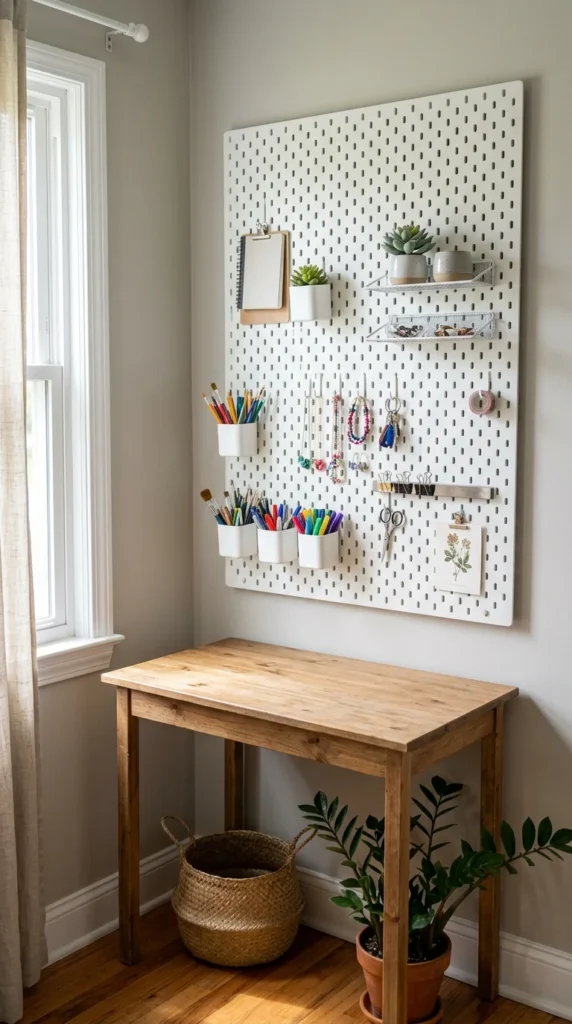
Clutter is the enemy of space. When surfaces like desks or dressers are covered in small items, the room feels chaotic and small. The IKEA SKÅDIS pegboard hack moves all that “micro-clutter” onto the wall.
By utilizing the vertical space above a desk or even on the inside of a closet door, you can organize jewelry, stationery, and electronics. When your surfaces are clear, the room feels calmer and more expansive. The modular nature of the pegboard allows you to change the layout as your needs evolve, ensuring that every item has a specific home off the floor.
8. Uniform Lighting
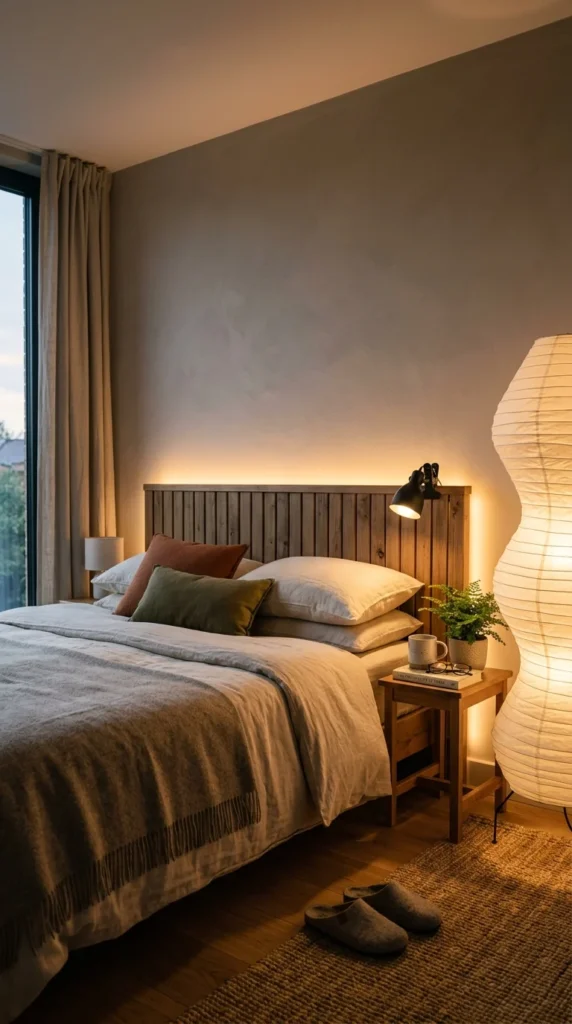
Darkness makes a room feel like a cave. To make a small IKEA-furnished room feel larger, you need to eliminate shadows in the corners. This is achieved through “layering” light using various IKEA lamps like the HOLMÖ floor lamp or the RANARP clip-on lights.
A great hack is to install LED light strips (like the IKEA VATTENSTEN) behind your headboard or along the underside of floating shelves. This “backlighting” creates a sense of depth by pushing the furniture away from the wall visually. When every corner of the room is illuminated, the boundaries of the space are clearly defined, making it feel bright, airy, and significantly larger than its physical dimensions suggest.