
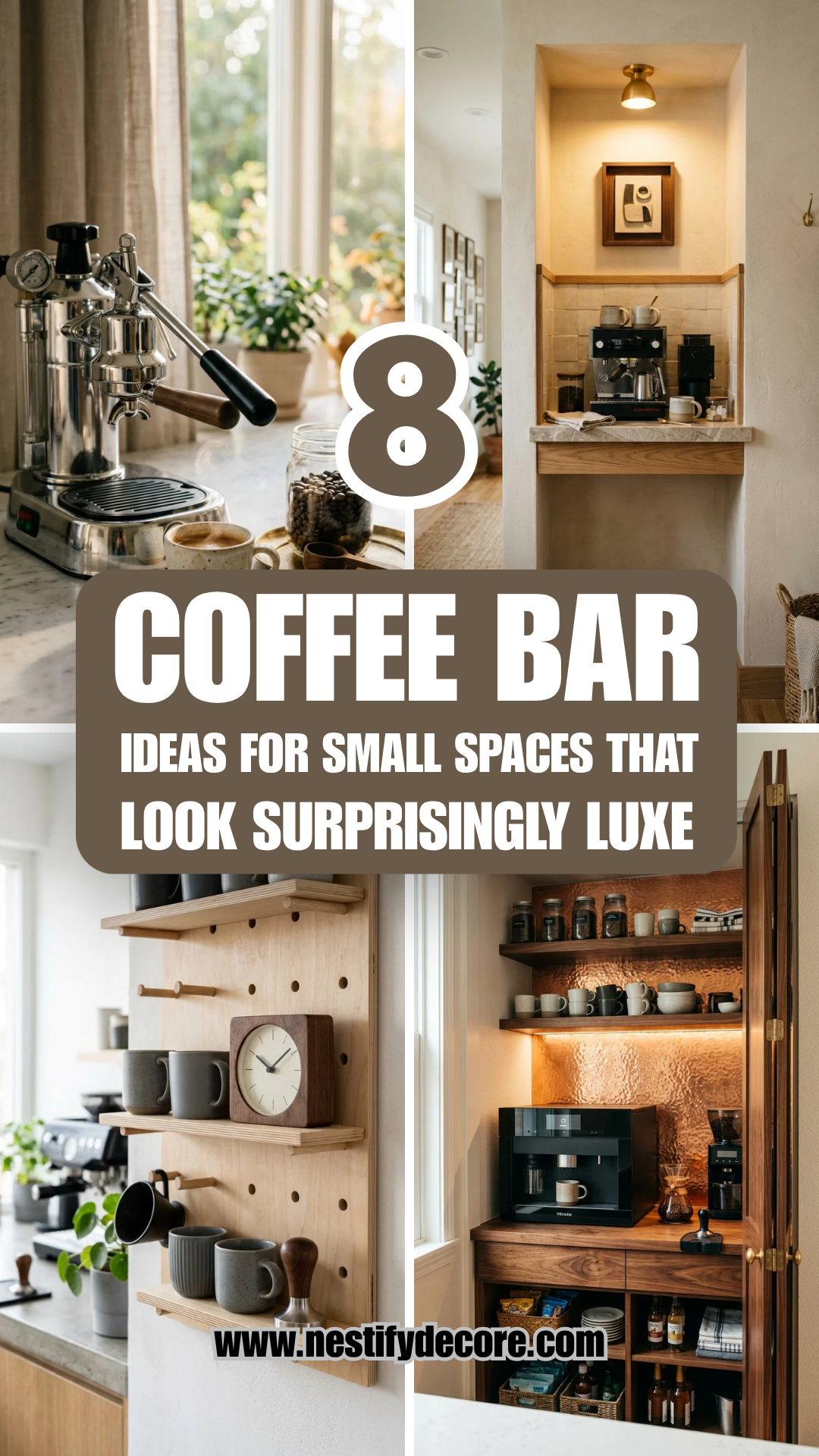
Transforming a cramped corner into a high-end caffeine sanctuary doesn’t require a massive kitchen or a professional contractor. In the world of interior design, “luxe” is often less about square footage and more about intentionality, material choice, and the art of curation. Whether you live in a studio apartment or a home with a challenging layout, these eight coffee bar ideas prove that you can brew in style without sacrificing precious space.
1. Floating Shelves
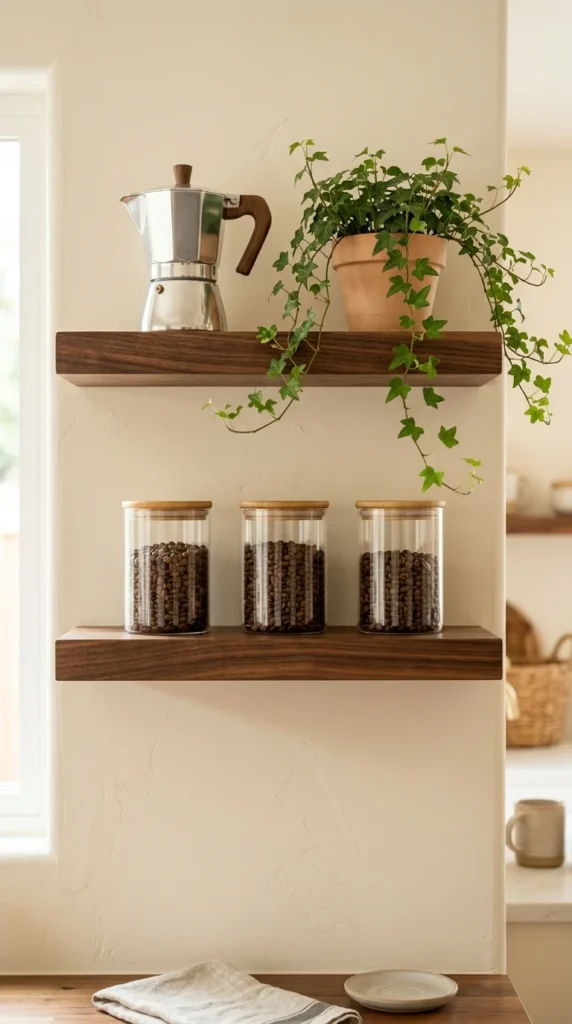
When floor space is at a premium, look to your walls. Floating shelves are the ultimate solution for small-space coffee bars because they maintain a light, airy aesthetic while providing essential storage. To achieve a luxurious look, opt for high-quality materials like reclaimed wood with a live edge or thick marble slabs.
The key to making floating shelves look expensive is “breathability.” Avoid crowding the shelves with every mug you own. Instead, curate a selection of your finest glassware and a signature espresso machine. Use uniform canisters for beans and sugar to eliminate visual clutter. By mounting the shelves at eye level, you create a dedicated “zone” that feels like a boutique cafe rather than an afterthought.
2. Bar Carts
The bar cart is a classic for a reason: it offers mobility and a multi-level footprint. For a coffee bar that feels upscale, look for carts with metallic finishes—think brushed gold, polished chrome, or matte black. A tiered cart allows you to separate your “production” area (the top shelf with the machine and grinder) from your “storage” area (the lower shelves for mugs, linens, and extra beans).
To elevate the bar cart, focus on the details. Add a small lamp with a warm bulb to create ambiance during early mornings or late-night decaf sessions. Use a small tray to group disparate items like stirrers and spoons, which keeps the cart looking organized and deliberate. The best part? You can wheel it into the dining room or living area when hosting guests.
3. Hidden Cabinets
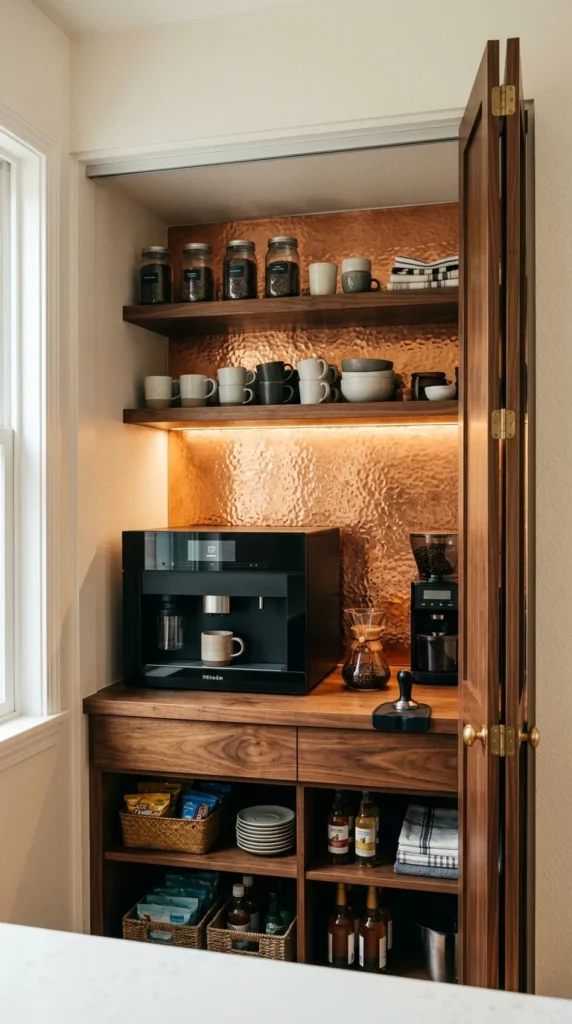
Luxury is often synonymous with minimalism, and nothing says minimalist like a hidden coffee station. If you have a small pantry or an unused “appliance garage” in your kitchen, you can convert it into a secret coffee bar. This keeps the machines and cords out of sight when not in use, maintaining the clean lines of your home.
To make the interior of a hidden cabinet feel luxe, consider adding an accent—such as a mirrored backsplash or a contrasting paint color inside the cabinet. Install motion-sensor LED strip lighting so the space glows the moment you open the doors. This creates a “reveal” moment that feels incredibly sophisticated and prevents the small space from feeling like a dark hole.
4. Bistro Nooks
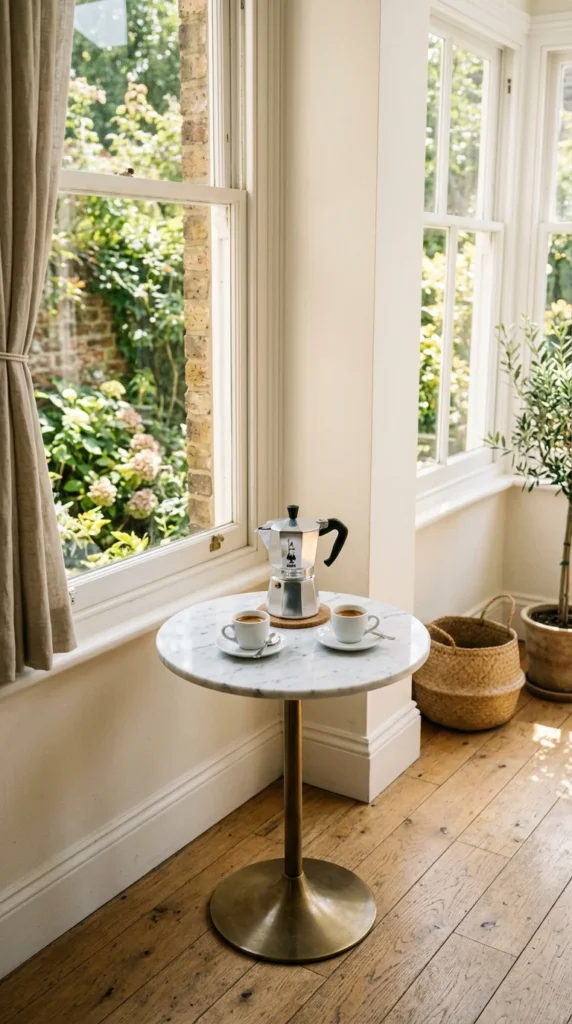
Sometimes the best coffee bar isn’t a “bar” at all, but a dedicated bistro corner. This works exceptionally well in small kitchens or even in the corner of a bedroom. A small, round pedestal table—ideally with a marble or stone top—occupies a tiny footprint but offers enough surface area for a premium coffee setup.
This approach creates a European cafe vibe. Pair the table with a single chic chair or a small stool. Because the setup is so focused, every item counts. Invest in a designer kettle or a sculptural pour-over stand. When the equipment is beautiful enough to be considered art, the entire corner feels like a high-end installation rather than just a place to make a drink.
5. Pegboard Organizers
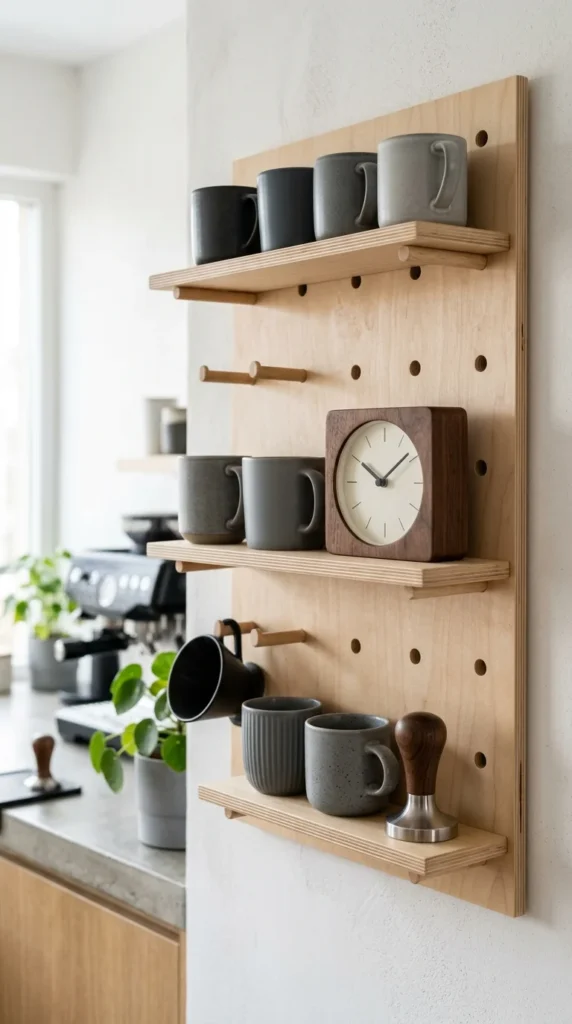
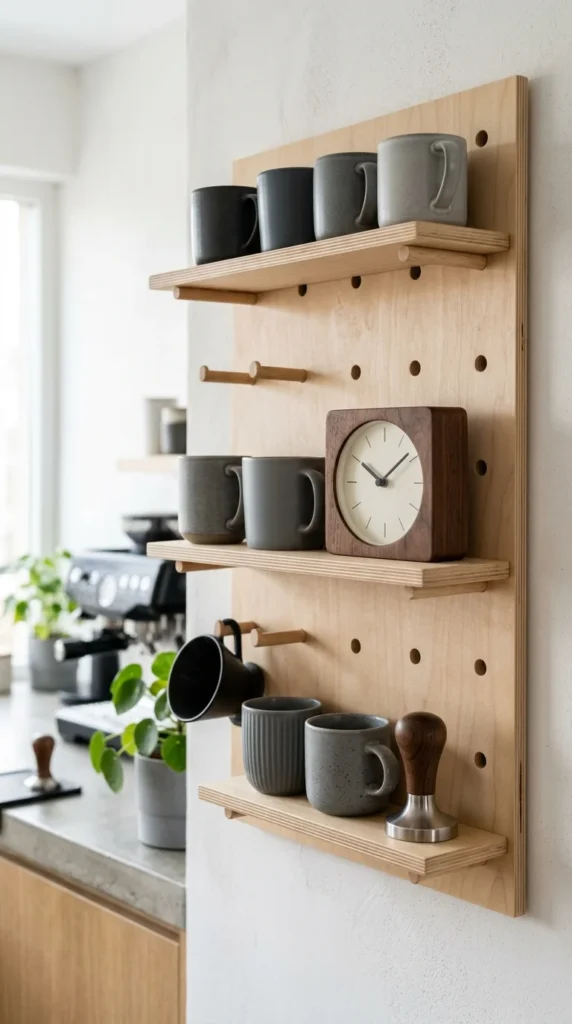
Industrial chic meets high-end functionality with the pegboard coffee station. While traditional pegboards can look a bit “garage-like,” modern versions made from high-quality plywood or powder-coated metal are incredibly stylish. The beauty of a pegboard is its customization; you can move shelves and hooks as your collection grows.
To keep a pegboard looking luxe, stick to a strict color palette. For example, use only white and wood tones, or black and copper. Hang your most beautiful mugs as if they were on display in a gallery. By utilizing the vertical space above a small console or a section of your countertop, you clear the work surface for the actual brewing process, making the small area feel much more professional and organized.
6. Mirrored Accents

Mirroring is an old designer trick to make small spaces feel twice as large. By placing a mirror behind your coffee bar or choosing a mirrored console table, you bounce light around the room and create depth. This instantly adds a “glam” factor to your coffee routine.
A large, framed mirror leaning against the wall behind your espresso machine acts as a sophisticated backdrop. It also highlights the steam and the movement of the pour, making the morning ritual feel more theatrical. Combine this with glass jars and metallic accents (like silver spoons or a chrome frothing pitcher) to maximize the reflective quality and create a sparkling, high-end aesthetic.
7. Architectural Alcoves
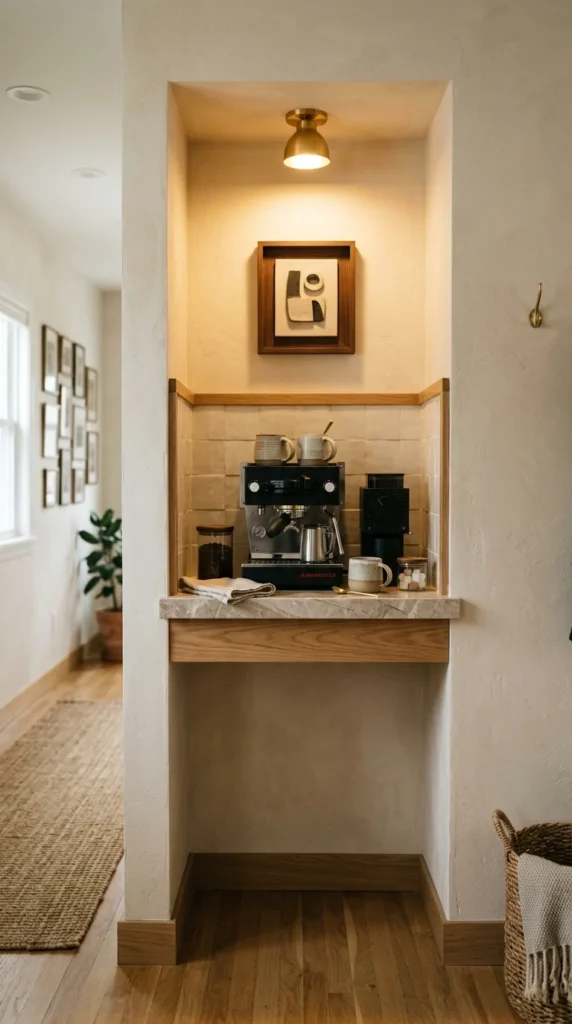
Many small homes have “dead space”—that awkward niche in the hallway, the gap under the stairs, or a shallow alcove between two walls. These are prime locations for a custom-built coffee bar. Because these spaces are recessed, the coffee bar doesn’t protrude into your walking path, preserving the flow of the room.
To make an alcove look luxe, treat it like a built-in piece of furniture. Paint the back wall a deep, moody color like charcoal or navy to create contrast against your equipment. Install a single, thick shelf for the machine and perhaps a smaller one above for cups. This “built-in” look suggests a level of customization that is usually reserved for luxury estates, regardless of how small the actual footprint is.
8. Slim Consoles
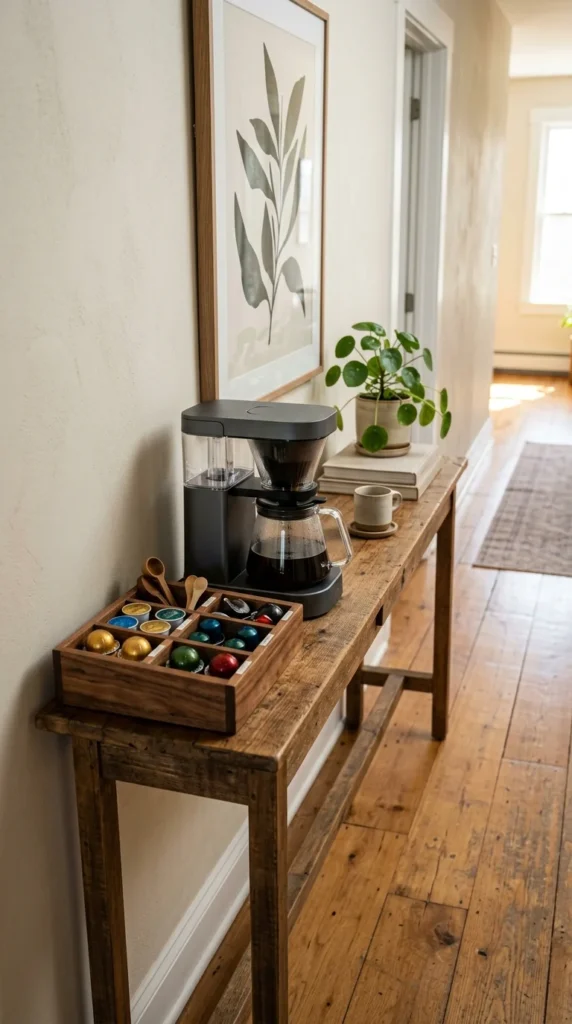
If you lack counter space entirely, a slim console table is your best friend. These tables are designed for narrow hallways and entryways, often measuring only 10 to 12 inches deep. This is just enough space for a modern espresso machine or a sleek drip brewer.
The secret to a luxe console coffee bar is cord management. Use adhesive clips or a cord hider to tuck away wires, ensuring they don’t ruin the sleek profile of the table. Underneath the console, you can place a decorative basket to hold extra supplies or a small footstool. This setup transforms a transitional space (like a hallway) into a functional destination, making your entire home feel more thoughtfully utilized and expensive.