
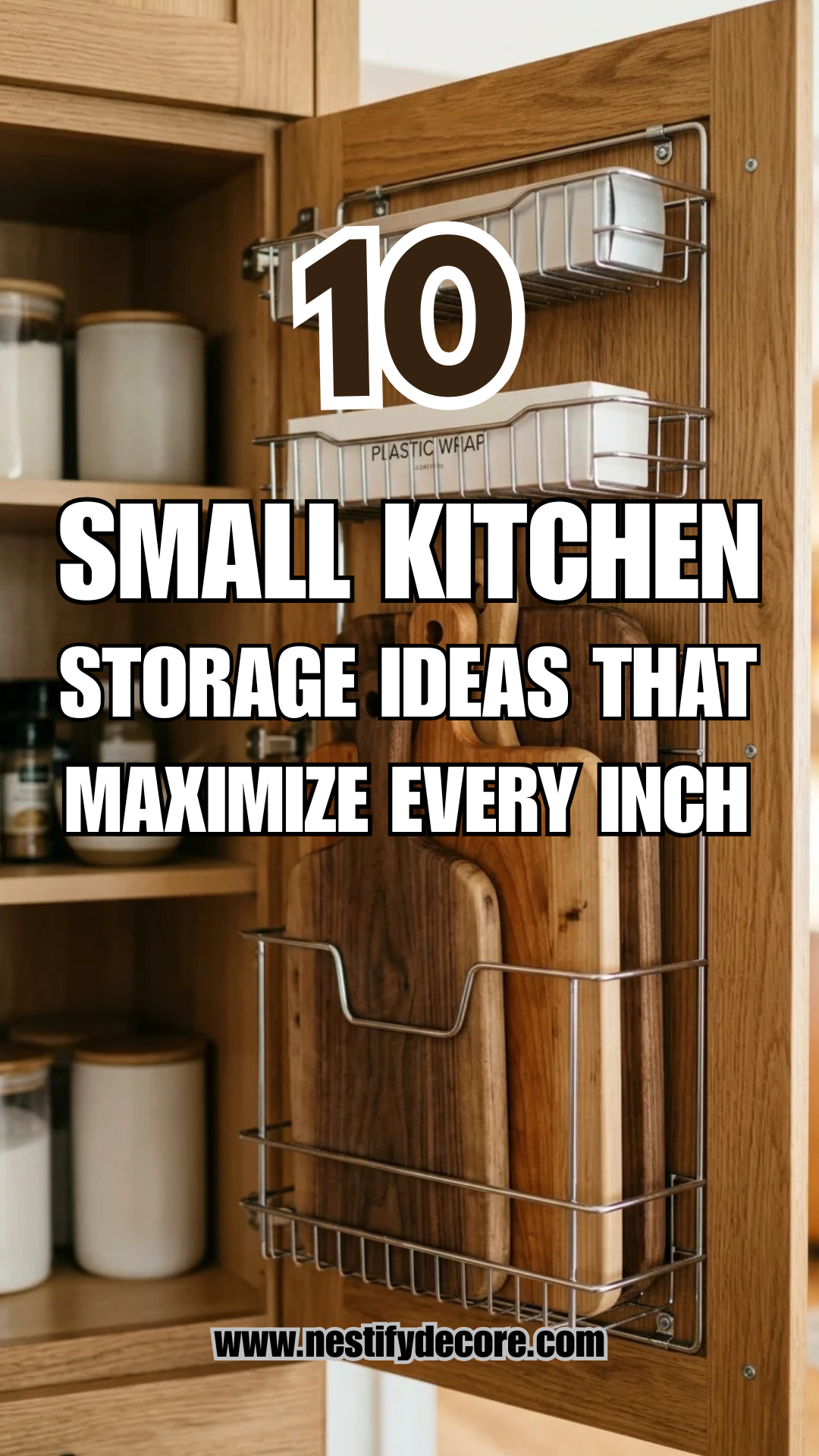
The challenge of a small kitchen is not just about the lack of square footage; it is about the constant battle against clutter. When every inch of counter space is precious, a single misplaced toaster or a sprawling spice collection can make the entire room feel chaotic. However, a small kitchen often forces a level of creativity that large, sprawling kitchens lack. By thinking vertically, utilizing hidden spaces, and choosing multi-functional accessories, you can transform a cramped cooking area into a highly efficient culinary workshop.
Maximizing a small kitchen requires a shift in perspective. Instead of looking at what you lack, look at the “dead zones”—the spaces under shelves, the backs of doors, and the narrow gaps between appliances. The following ten ideas are designed to reclaim those lost inches and ensure that everything from your chef’s knife to your heavy cast-iron skillet has a dedicated, accessible home.
1. Magnetic Strips
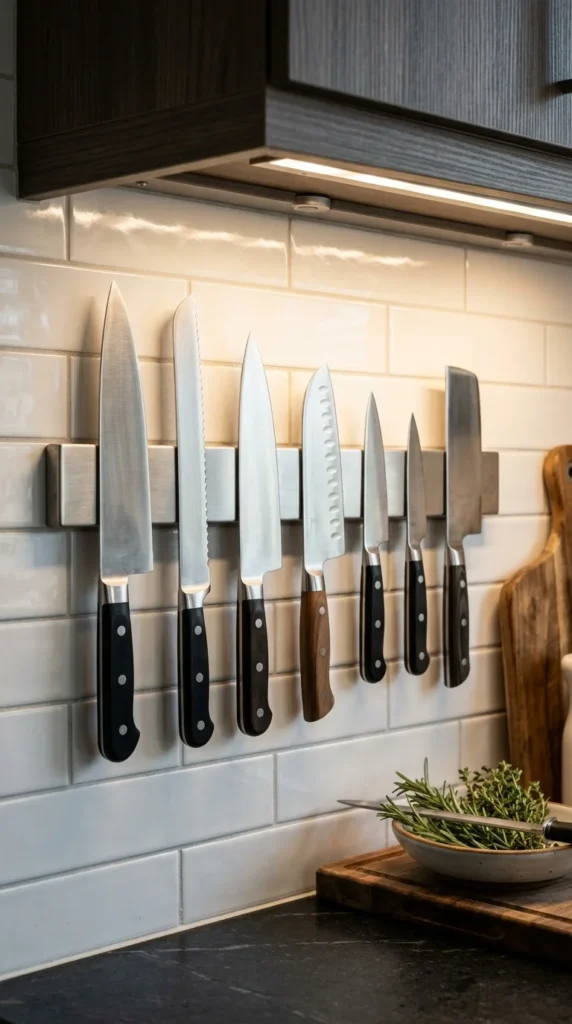
One of the most effective ways to clear counter space is to remove the bulky knife block. A magnetic strip mounted on the backsplash or a side wall keeps your most-used tools within arm’s reach while freeing up several inches of prime real estate. Beyond knives, these strips are incredibly versatile. You can use them to hold metal spice tins, shears, or even small metal lids.
The beauty of the magnetic strip lies in its minimalism. It utilizes the vertical “skin” of the kitchen—the walls—which are often left bare. When installing, choose a high-strength neodymium magnet strip to ensure heavier items stay securely in place. This setup also keeps your knives sharper for longer, as they aren’t being scraped against the wood or plastic slots of a traditional block every time they are put away.
2. Over-Sink Racks
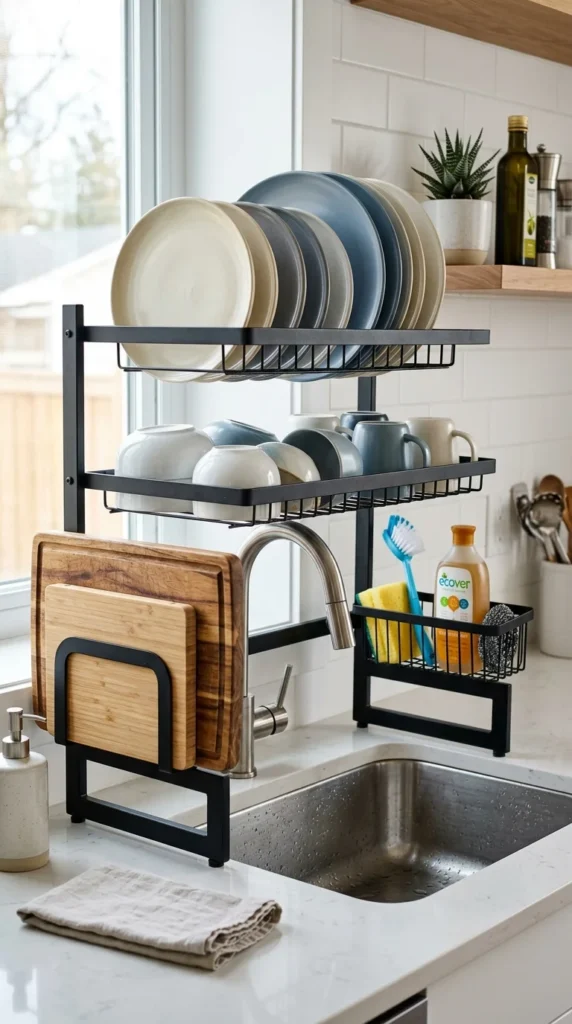
In a small kitchen, a traditional dish drying rack can occupy up to 25% of your available counter space. The over-the-sink drying rack is a game-changer because it utilizes the air space directly above the basin. As dishes drip dry, the water falls straight into the sink, eliminating the need for a drainboard that often collects grime and limescale.
These racks are usually adjustable and modular, allowing you to customize the layout based on your specific dishware. Many models include integrated hooks for utensils and specialized slots for cutting boards. By moving the drying process off the counter and over the sink, you instantly regain a large slab of workspace for meal preparation.
3. Pull-out Pantries
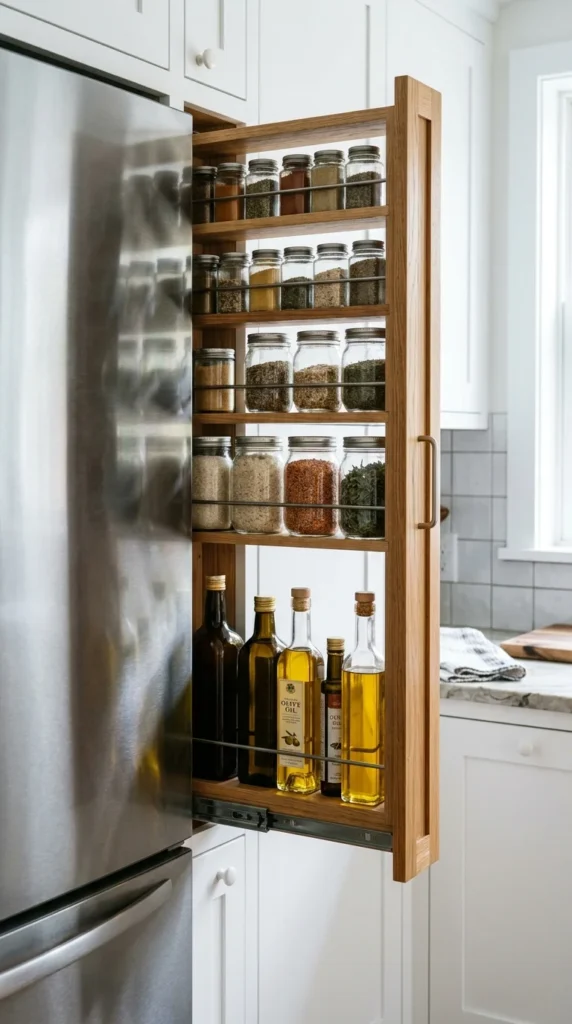
Many kitchens have “dead gaps”—those awkward three to six inches between the refrigerator and the wall or between two cabinets. A slim, rolling pull-out pantry is the ultimate solution for these narrow voids. These units are typically mounted on casters or heavy-duty slides and can hold a surprising amount of canned goods, spices, oils, and dry pasta.
Because the pantry is long and narrow, it allows you to see everything at once when pulled out, preventing items from getting “lost” in the dark recesses of a standard deep cabinet. It turns a useless architectural gap into a high-density storage zone that can house your entire dry-goods collection.
4. Hanging Racks
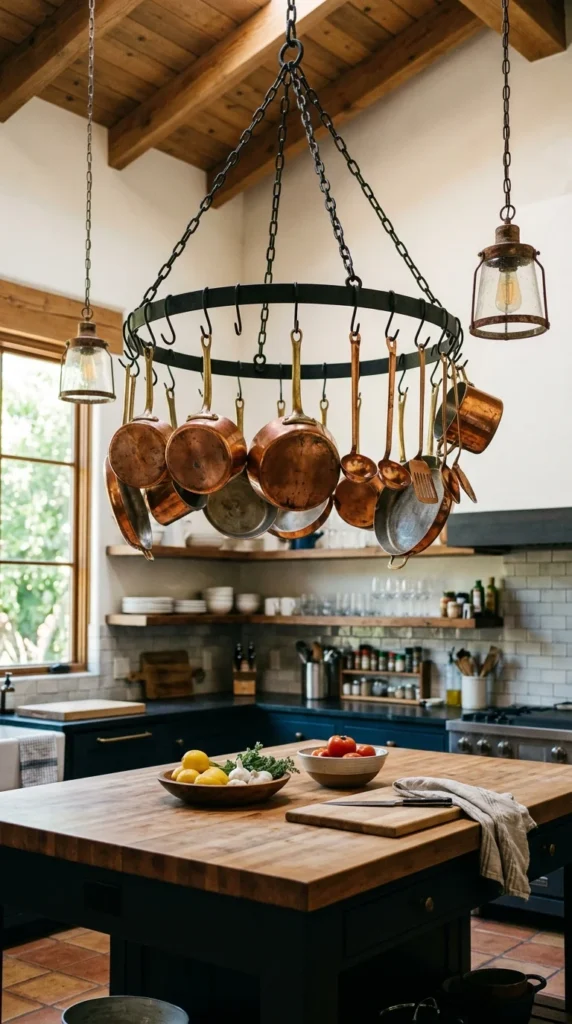
Cabinet space is often consumed by bulky pots and pans that don’t stack well. A ceiling-mounted or wall-mounted hanging rack takes these heavy items out of the cupboards and turns them into a visual feature. By hanging your cookware, you free up deep lower cabinets for appliances like blenders, food processors, or slow cookers that are harder to store elsewhere.
When installing a hanging rack, ensure it is anchored into ceiling joists or wall studs, as the weight of cast iron and stainless steel adds up quickly. Not only does this save space, but it also improves the ergonomics of your kitchen; you no longer have to crouch down and rummage through a dark cabinet to find the right lid.
5. Door Organizers
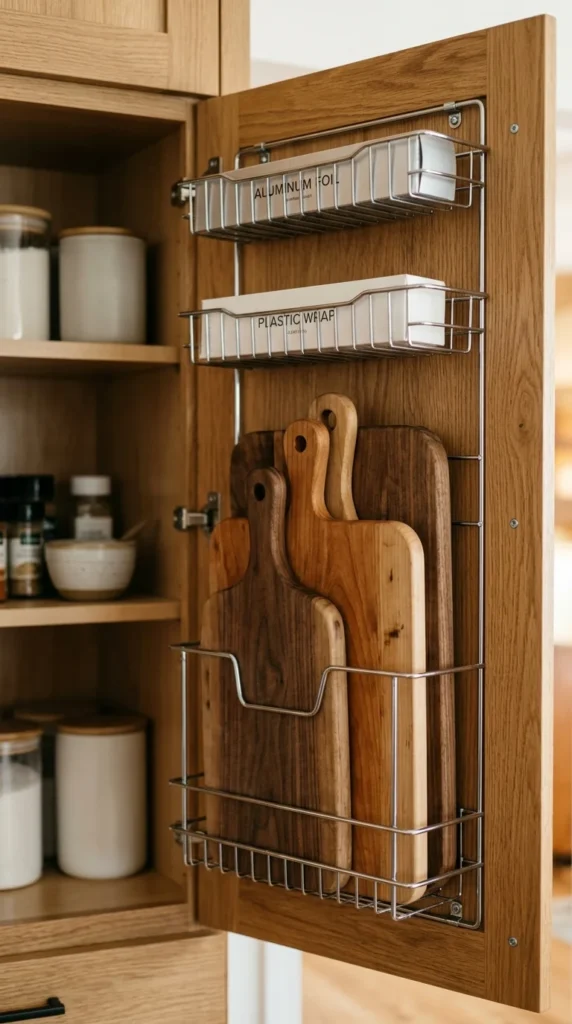
The back of a cabinet or pantry door is one of the most underutilized surfaces in any home. By attaching slim wire baskets or over-the-door racks, you can store items that usually clutter up drawers. This is the perfect spot for “flat” items like cutting boards, baking sheets, or boxes of foil and parchment paper.
In the pantry, a door organizer can hold dozens of spice jars, snacks, or condiment bottles. This strategy keeps these smaller items at eye level and prevents them from being buried behind larger cereal boxes or bags of flour. It is a “hidden” storage solution that maintains the clean lines of your kitchen while significantly increasing its capacity.
6. Lazy Susans
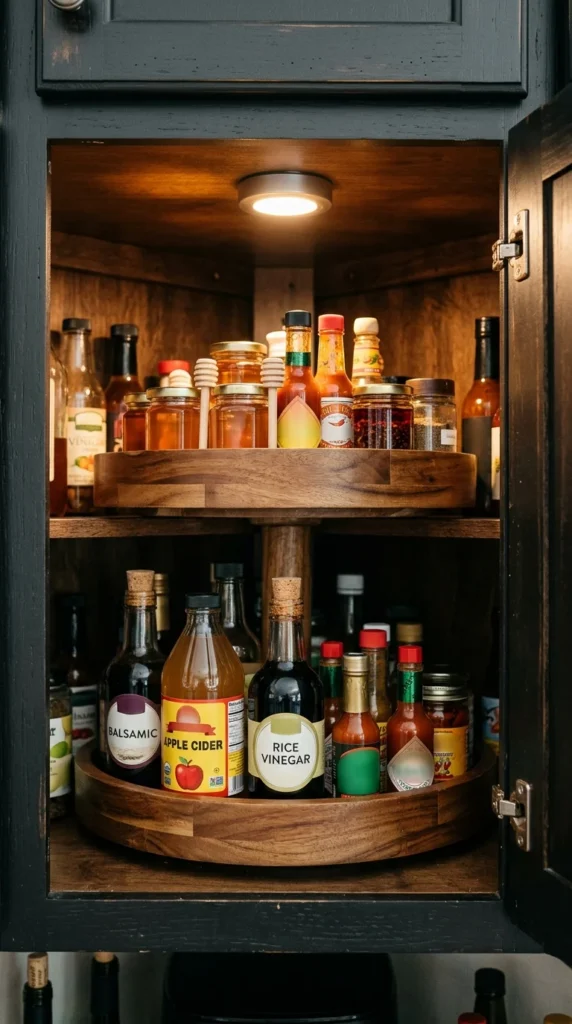
Corner cabinets are notorious “black holes” where Tupperware lids and old cans go to be forgotten. The deep, angled space makes it nearly impossible to reach items in the back without removing everything in the front. A Tiered Lazy Susan solves this by bringing the back of the cabinet to you.
With a simple flick of the finger, you can rotate the shelf to access exactly what you need. These are particularly effective for oils, vinegars, and spices, or even for organizing cleaning supplies under the sink. By utilizing a circular motion, you maximize the usable area of a square or corner cabinet that would otherwise be partially inaccessible.
7. Rolling Carts
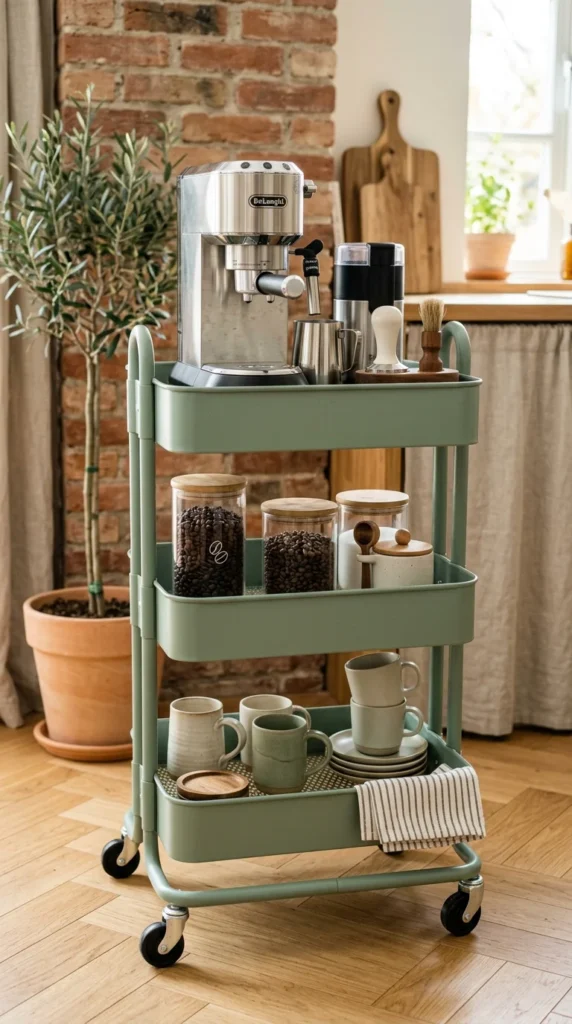
When you lack permanent counter space or cabinetry, a rolling kitchen cart provides a “pop-up” workstation. These carts are incredibly versatile; they can serve as a prep station, a coffee bar, or extra storage for heavy appliances. The best part is their mobility—you can wheel the cart to the center of the kitchen while you work and tuck it into a corner or a closet when guests arrive.
Look for carts with a sturdy top (like butcher block or stainless steel) so it can function as a legitimate cutting surface. Many carts also feature integrated towel racks and side hooks, adding even more utility to their small footprint.
8. Floating Shelves
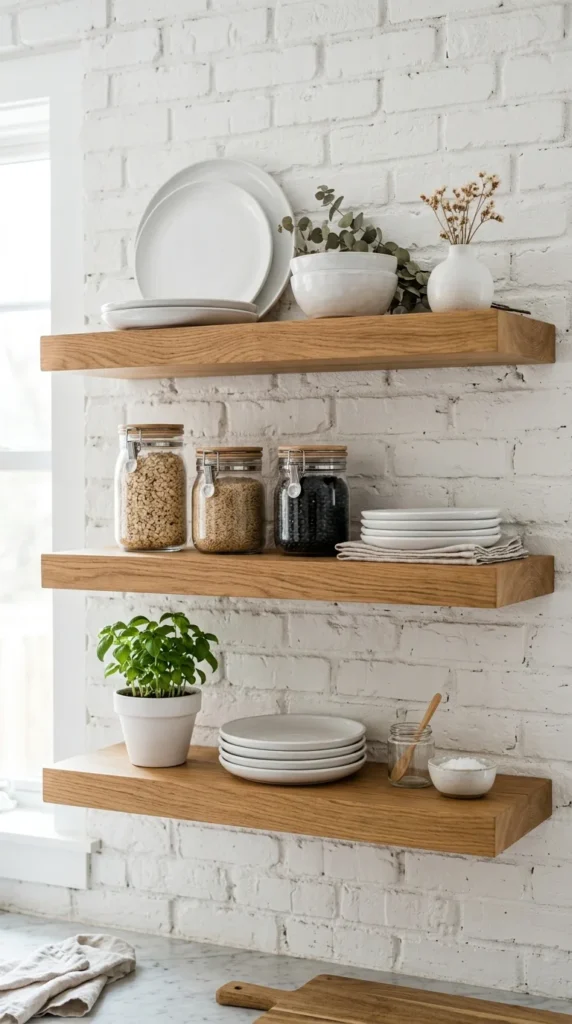
Upper cabinets can sometimes make a small kitchen feel claustrophobic and dark. Replacing one or two cabinets with floating shelves can open up the room visually while still providing ample storage. This is the ideal place to store your “daily drivers”—the plates, bowls, and mugs you use every single day.
Because there are no doors to swing open, floating shelves are a great choice for tight “galley” style kitchens. They encourage organization, as the items are on display, and they allow you to utilize wall space all the way up to the ceiling, which is often left empty above traditional cabinetry.
9. Pegboards
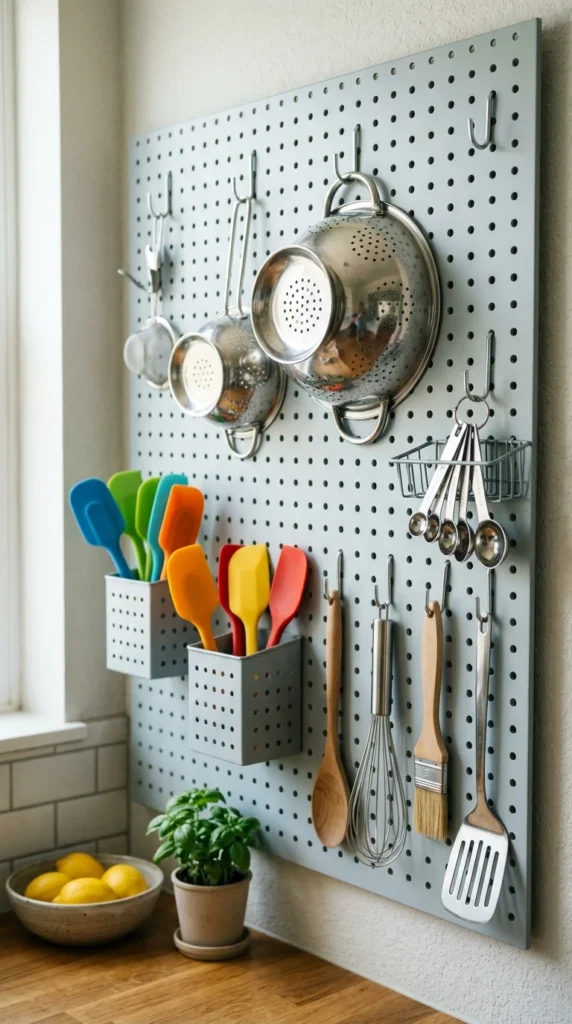
Borrowed from the world of workshops and garages, the pegboard is perhaps the most customizable storage solution available. By installing a pegboard on an empty wall, you create a modular system where hooks, shelves, and baskets can be rearranged as your tool collection grows.
Pegboards are excellent for oddly shaped items that don’t fit well in drawers, such as colanders, whisks, and large ladles. You can even paint the pegboard to match your kitchen decor or use it to add a pop of color. It turns your kitchen tools into a functional piece of wall art, keeping everything visible and within reach.
10. Shelf Risers
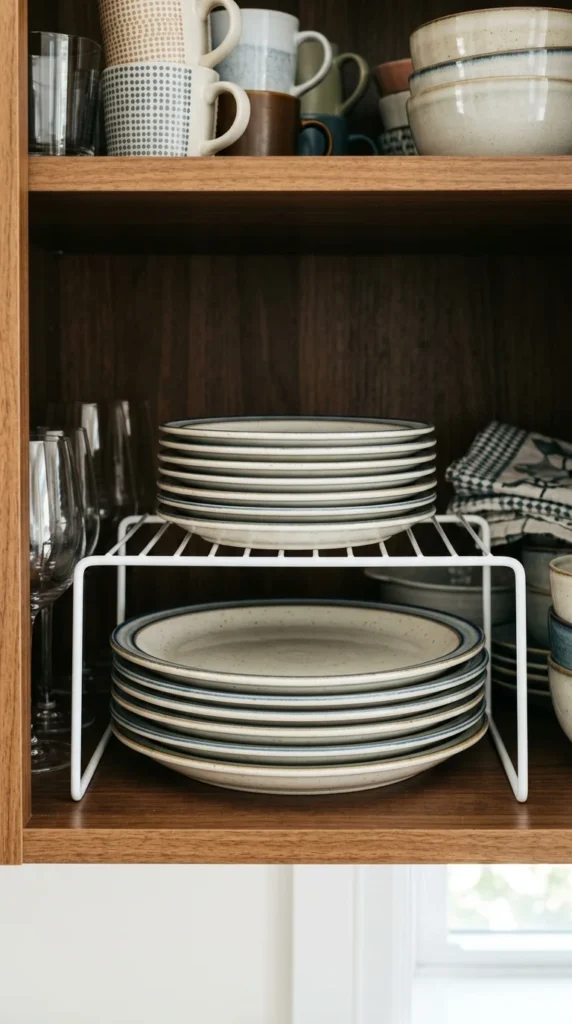
Standard kitchen cabinets are often tall, but we rarely stack plates or bowls to the very top because the stack would become unstable and difficult to manage. This results in a lot of wasted “air space” in the top half of every shelf. Shelf risers (or cabinet steps) effectively double your storage by creating a second level within the same shelf.
By using risers, you can store bowls underneath and plates on top, or organize canned goods so that the labels in the back are higher than those in the front. This simple, inexpensive addition prevents “cabinet stacking fatigue” and ensures that you are utilizing the full vertical height of your existing furniture.