
Living in a small bedroom doesn’t mean you have to sacrifice style or succumb to clutter. The challenge of a compact space lies in its limited square footage, but the solution often lies in looking at the room through a different lens. By prioritizing vertical space, selecting multifunctional furniture, and utilizing often-overlooked nooks, you can transform a cramped sleeping area into a serene, organized sanctuary.
Effective storage in a small bedroom is about more than just finding a place for your things; it’s about creating a system that maintains the flow of the room. When everything has a dedicated home, the visual “noise” of the room decreases, making the space feel larger than it actually is. Here are ten innovative storage ideas to help you maximize every square inch of your small bedroom.
1. Under-Bed Storage
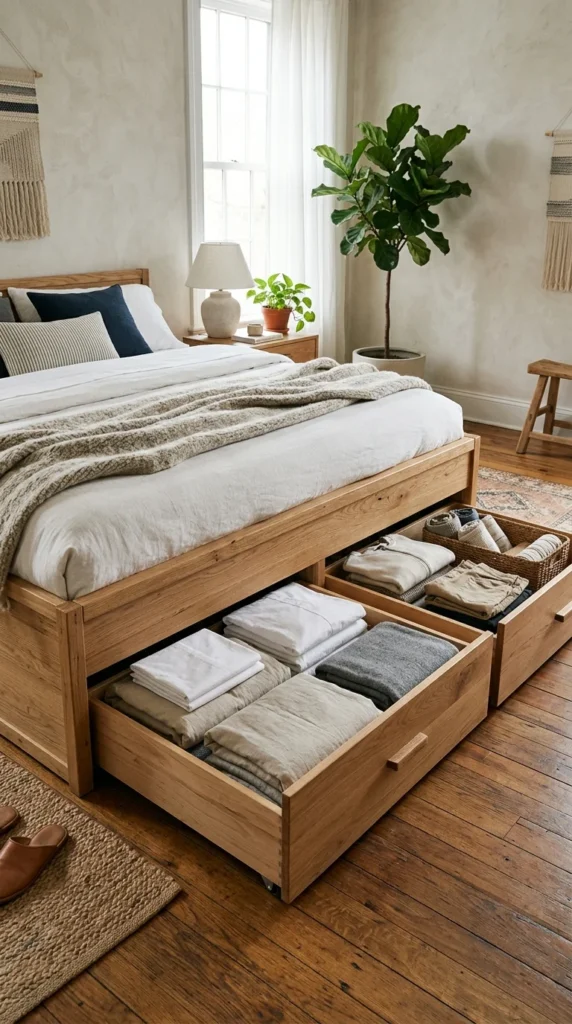
The area beneath your bed is often the largest unused “real estate” in a small bedroom. Instead of letting dust bunnies take over, turn this space into a powerhouse for organization. If your bed frame doesn’t come with built-in drawers, you can easily retrofit it using rolling bins, vacuum-sealed bags, or stylish wicker baskets.
For those with very low bed frames, consider using bed risers to lift the mattress a few extra inches off the floor. This provides enough clearance for plastic storage containers that can hold out-of-season clothing, extra blankets, or bulky shoes. To keep the room looking polished, use a bed skirt to hide the containers from view, or choose high-quality wooden drawers that complement your bed frame for a seamless look.
2. Floating Shelves
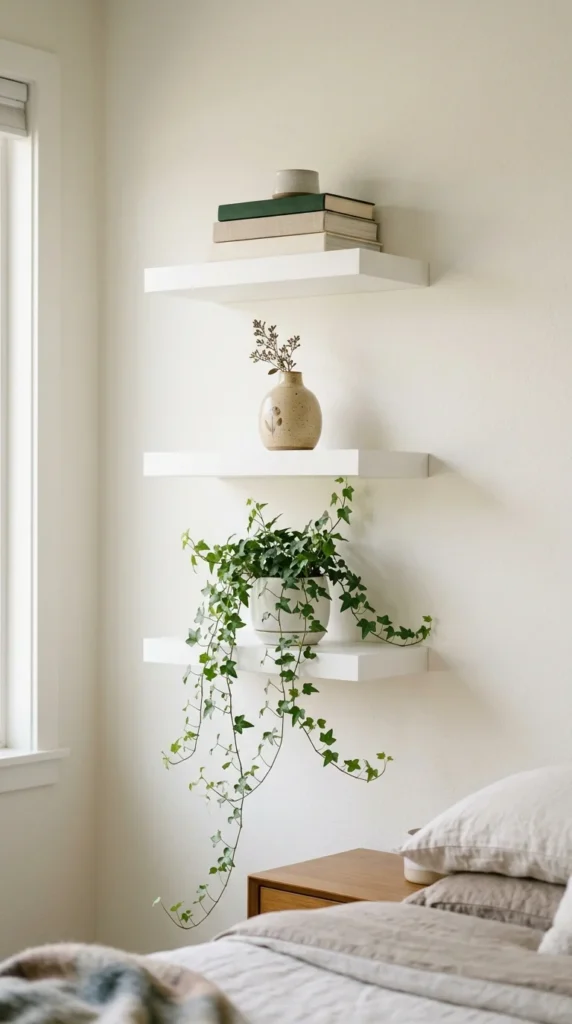
When floor space is at a premium, the walls are your best friend. Floating shelves are an excellent alternative to bulky bookcases or nightstands. Because they don’t have legs, they keep the floor clear, which creates the illusion of more space.
You can install floating shelves high up near the ceiling to store items you don’t use every day, such as a collection of novels or decorative boxes. Alternatively, use a single floating shelf next to the bed as a minimalist nightstand. This provides a surface for a lamp and a phone while leaving the area underneath open for a small wastebasket or a pair of slippers.
3. Vertical Closets
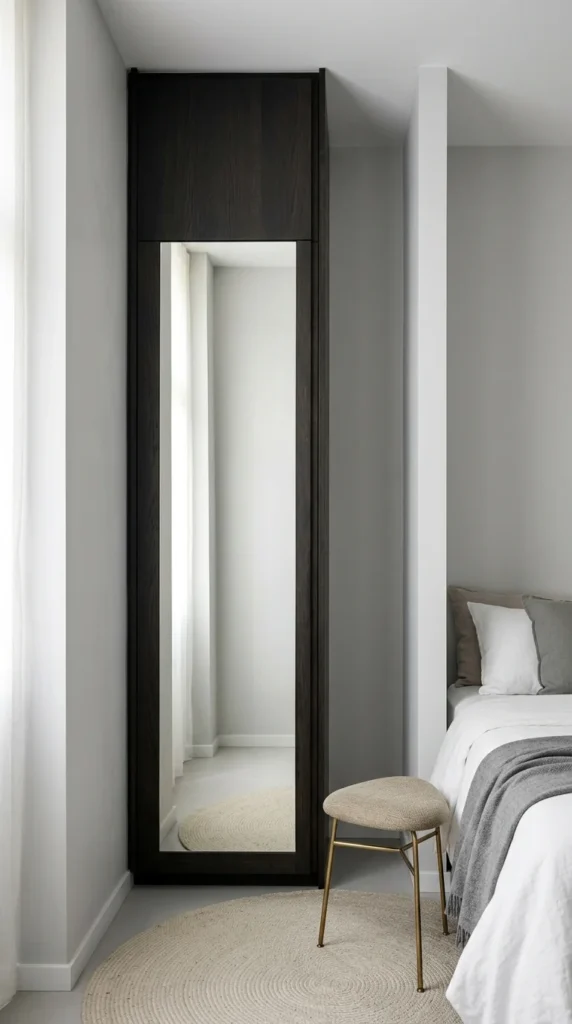
Most standard closets leave a significant amount of space between the top shelf and the ceiling. To truly maximize your storage, you need to think vertically. If you are adding a new wardrobe, look for “extra-tall” models that reach all the way to the ceiling. If you are working with an existing closet, add an extra shelf or use stackable bins to utilize that upper gap.
Vertical storage draws the eye upward, making the ceilings feel higher. Use the highest points for items you only need occasionally, like holiday decorations or travel luggage. For daily use, consider a slim, tall dresser or a “lingerie chest” which offers multiple drawers for organization without taking up much horizontal floor space.
4. Storage Ottomans
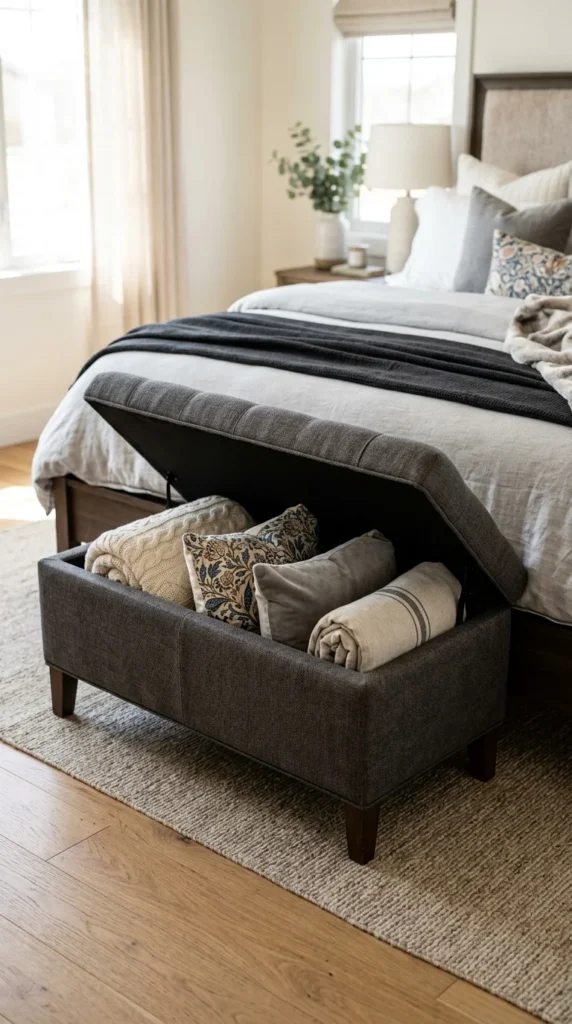
Multifunctional furniture is the gold standard for small-space living. A storage ottoman serves three purposes: a seat, a footrest, and a hidden trunk. Placing an ottoman at the foot of the bed provides a convenient spot to sit while putting on shoes, and the hollow interior is perfect for storing heavy sweaters, extra pillows, or even gym equipment.
Ottomans come in various shapes and sizes, from small circular stools to long rectangular benches. For a small bedroom, a bench-style ottoman is particularly effective because it aligns with the width of the bed, creating a cohesive look while providing a significant amount of internal storage volume.
5. Over-Door Organizers
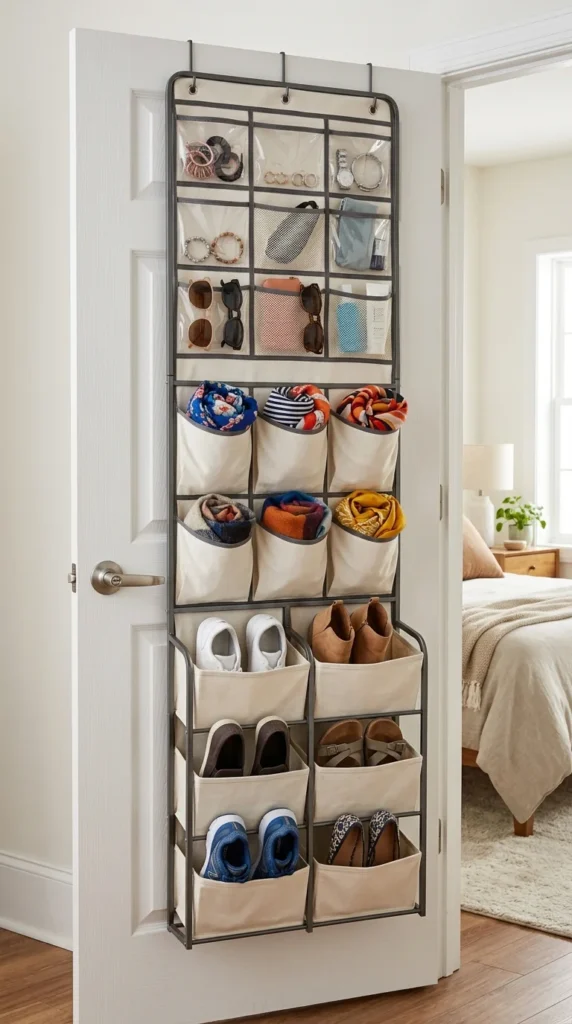
The back of your bedroom or closet door is a prime storage location that is frequently forgotten. Over-the-door organizers are no longer just for shoes; modern versions come with deep canvas pockets, metal baskets, or even integrated mirrors and jewelry cabinets.
These organizers are perfect for “micro-categorizing” smaller items that often get lost in big drawers. You can use them to store belts, scarves, hair tools, or even a collection of charging cables and electronics. By moving these items to the door, you free up drawer space for larger clothing items like jeans or sweaters.
6. Corner Units
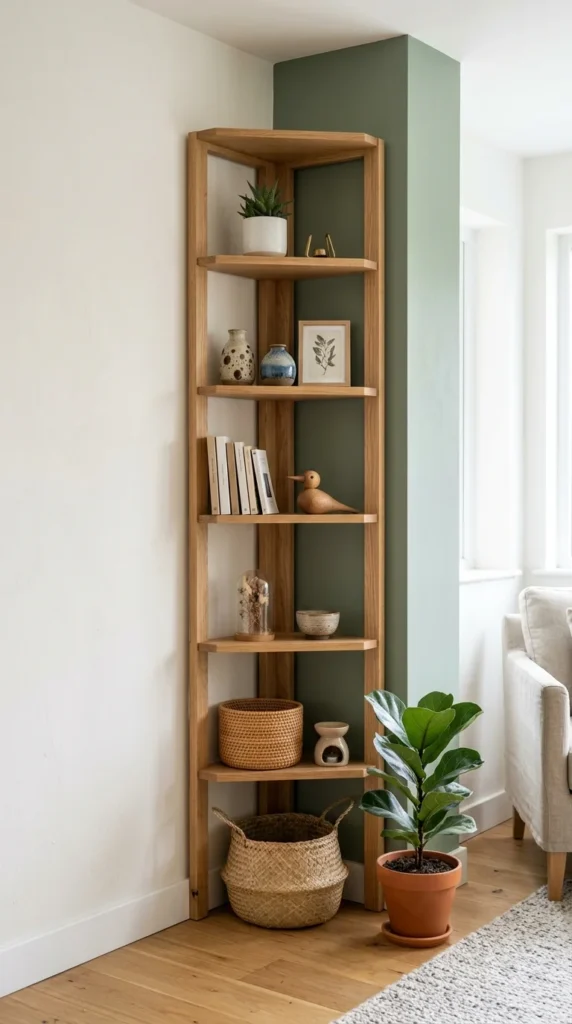
Corners are notoriously difficult to furnish, often ending up as dead space. However, in a small bedroom, every corner counts. Corner shelving units or corner desks are specifically designed to nestle into these awkward angles, providing storage without protruding into the main walking paths of the room.
A corner “zig-zag” shelf is a modern way to display decor or store books without the bulk of a traditional bookshelf. If you have a corner near a window, a small corner vanity can provide a dedicated space for grooming, keeping your bathroom or main dresser clear of clutter.
7. Headboard Storage
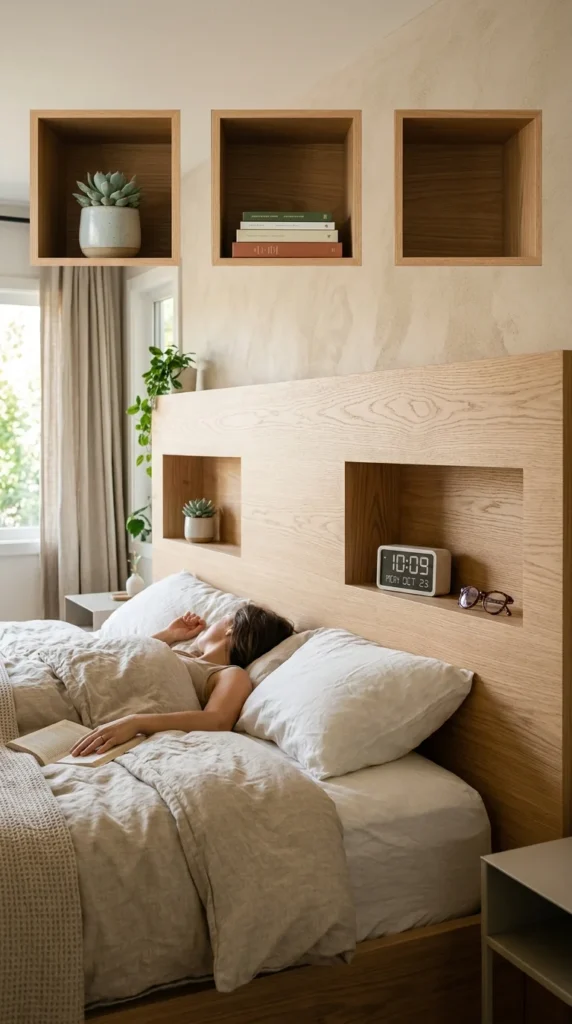
If you don’t have room for a traditional nightstand, a storage headboard is the perfect solution. These headboards feature built-in shelves, cubbies, or even hidden pull-out drawers. This allows you to keep your bedtime essentials—like books, glasses, and water—within arm’s reach without needing additional furniture.
Some storage headboards also feature integrated lighting and power strips, allowing you to charge your devices neatly. This eliminates the “cord clutter” that often plagues small bedrooms. By combining the bed and the storage unit into one piece of furniture, you streamline the layout of the room.
8. Wall-Mounted Desks
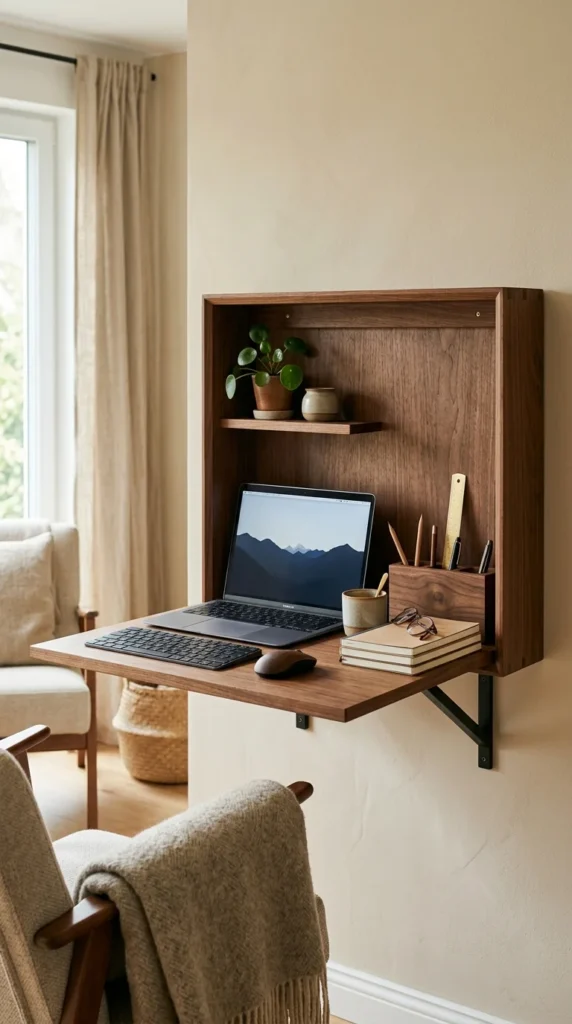
With the rise of remote work, many people need a workspace in their bedroom. However, a full-sized desk can easily overwhelm a small room. A wall-mounted “Murphy” desk or a floating desk is a space-saving alternative. These desks are attached directly to the wall and often feature a fold-down surface.
When you’re finished working, you can fold the desk up against the wall, instantly reclaiming the floor space. Even when open, the lack of legs makes the room feel more open and less crowded. Use the space above the desk for floating shelves to keep your office supplies organized and off the desktop.
9. Hanging Racks
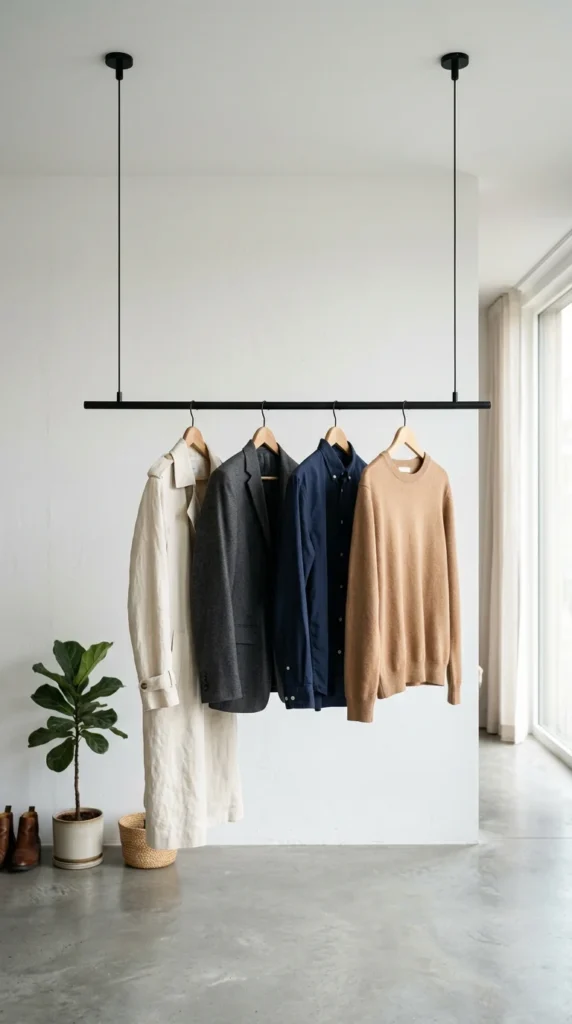
If your closet is overflowing, a stylish hanging rack or a ceiling-mounted clothes rail can provide extra storage while acting as a visual feature. Instead of a bulky, free-standing garment rack that takes up floor space, a ceiling-mounted rail keeps the area underneath clear for shoes or a small dresser.
This approach works best when you curate the items on the rack—such as your favorite jackets or color-coordinated shirts—so it looks like a deliberate design choice rather than an overflow area. It’s an excellent way to utilize the upper half of the room’s volume.
10. Window Benches
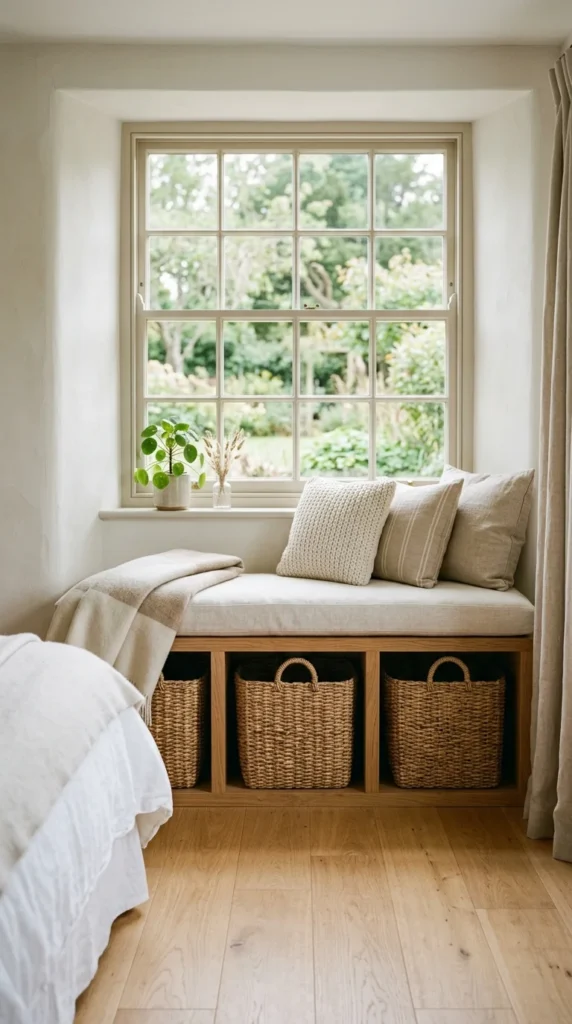
The space beneath a window is often left empty to allow access to the view or the radiator. However, installing a low-profile window bench with built-in storage can create a cozy reading nook and a functional storage zone.
You can use a bench with a flip-top lid or one with open cubbies for baskets. This is an ideal spot for storing shoes, extra linens, or even a collection of magazines. By placing storage under the window, you utilize a part of the room that is typically “off-limits” for tall furniture, effectively turning a passive architectural feature into an active storage solution.
Summary for Success
Maximizing a small bedroom is an exercise in creativity. By combining these ideas—such as using a storage headboard with under-bed bins—you can significantly increase the storage capacity of your room. Remember that the key to a successful small space is not just finding room for your items, but also regularly decluttering to ensure that only the things you truly need and love occupy your precious square footage.