
The kitchen island is more than just a prep station; it is the undisputed heartbeat of the modern home. As the central gathering point for morning coffee, casual homework sessions, and late-night wine with friends, its aesthetic impact cannot be overstated. Styling this space requires a delicate balance between functionality and artistry. Whether you have a massive waterfall marble slab or a cozy wooden butcher block, the right decor can transform a utilitarian surface into a high-end design feature. Here are nine sophisticated ways to elevate your kitchen island.
1. Greenery
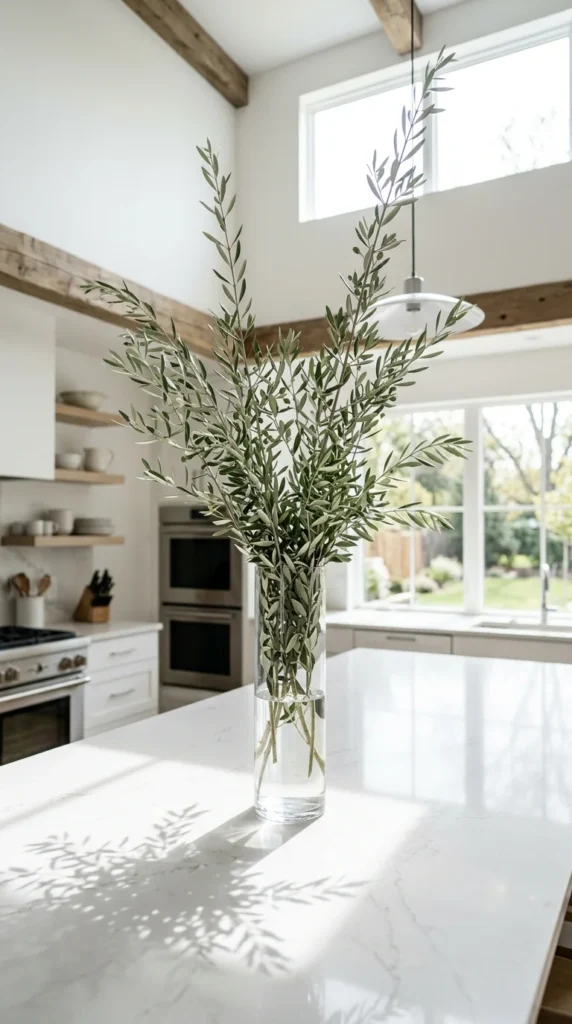
Nothing breathes life into a kitchen like organic textures. Instead of small, cluttered succulents, opt for “statement greenery.” Large-scale branches—such as olive, eucalyptus, or cherry blossoms—add height and drama to the room without taking up too much horizontal real estate. The key is to use a heavy, high-quality vase that provides a grounded focal point.
Using live plants or high-end faux stems introduces a sense of freshness and a connection to the outdoors. If your kitchen is dominated by hard surfaces like stone and stainless steel, the soft, organic lines of foliage provide a necessary visual contrast, making the space feel more lived-in and welcoming.
2. Trays
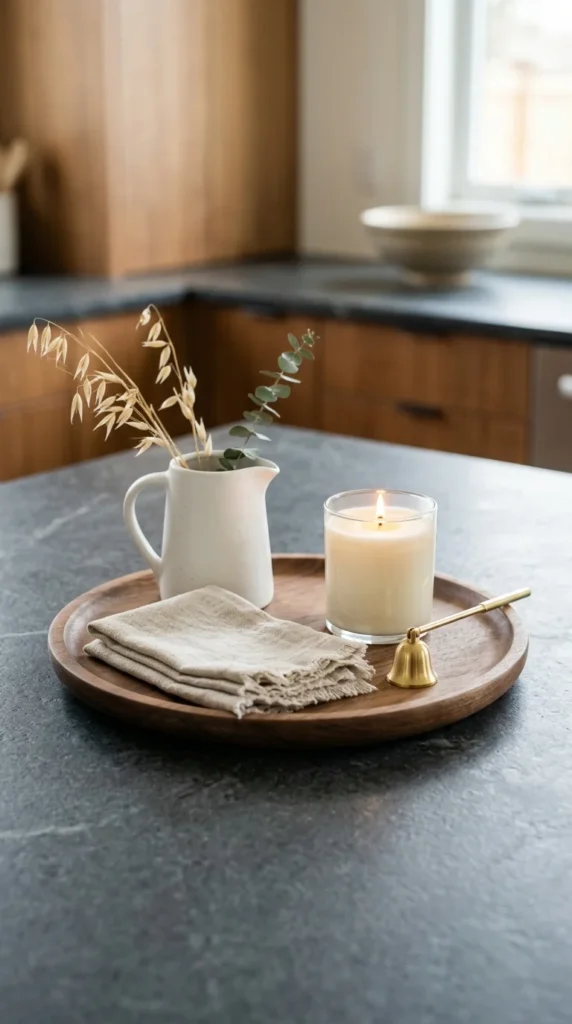
A common mistake in kitchen styling is “scattered decor,” where individual items look messy rather than intentional. To solve this, professional designers use the “tray method.” By grouping smaller items—like salt and pepper grinders, a small candle, and a jar of honey—onto a tray, you create a cohesive “vignette.”
Trays come in various materials, from woven seagrass for a coastal feel to brushed brass for a touch of glam. Beyond the aesthetic benefit, trays are incredibly functional. When you need extra space for meal prep or a large buffet spread, you can simply pick up the tray and move all your decor items at once, keeping your island organized and flexible.
3. Fruit
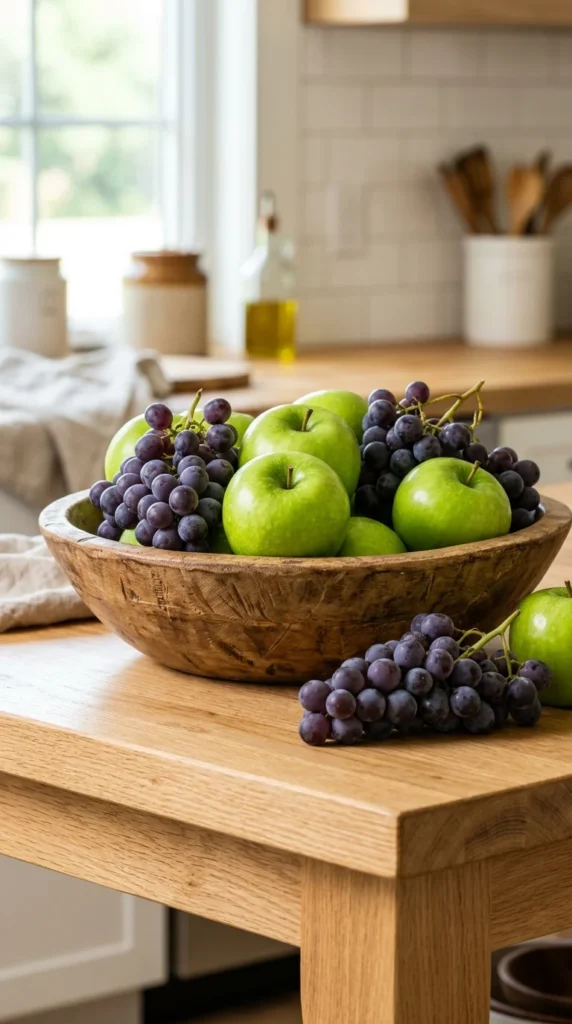
Using food as decor is a classic technique that never goes out of style. A sculptural bowl filled with monochromatic fruit—such as all lemons, all artichokes, or all green apples—adds a powerful pop of color. Avoid the “mixed fruit basket” look, which can feel dated; instead, stick to one or two types of produce to maintain a modern, curated appearance.
The vessel you choose is just as important as the fruit itself. A wide, shallow marble bowl, a rustic wooden dough bowl, or a contemporary matte black wire basket can change the entire mood of the kitchen. This decor choice is also highly practical, encouraging healthy snacking while keeping the island looking vibrant.
4. Wood
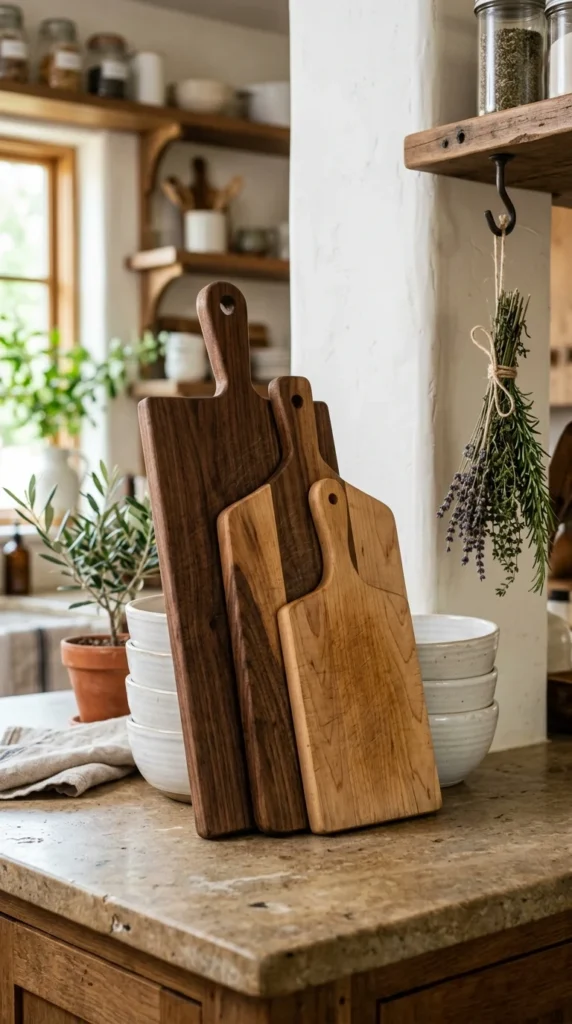
To soften the cold feel of stone countertops, introduce the warmth of natural wood. Layering cutting boards of different shapes and sizes is a favorite trick among interior stylists. Lean a round breadboard against a taller rectangular carving board to create depth and texture.
This approach works particularly well in minimalist or “all-white” kitchens where visual warmth is often lacking. The rich grains of walnut, oak, or teak provide a tactile element that grounds the space. Even if you don’t use these specific boards for daily chopping, their presence suggests a kitchen that is active, functional, and deeply rooted in culinary tradition.
5. Literature
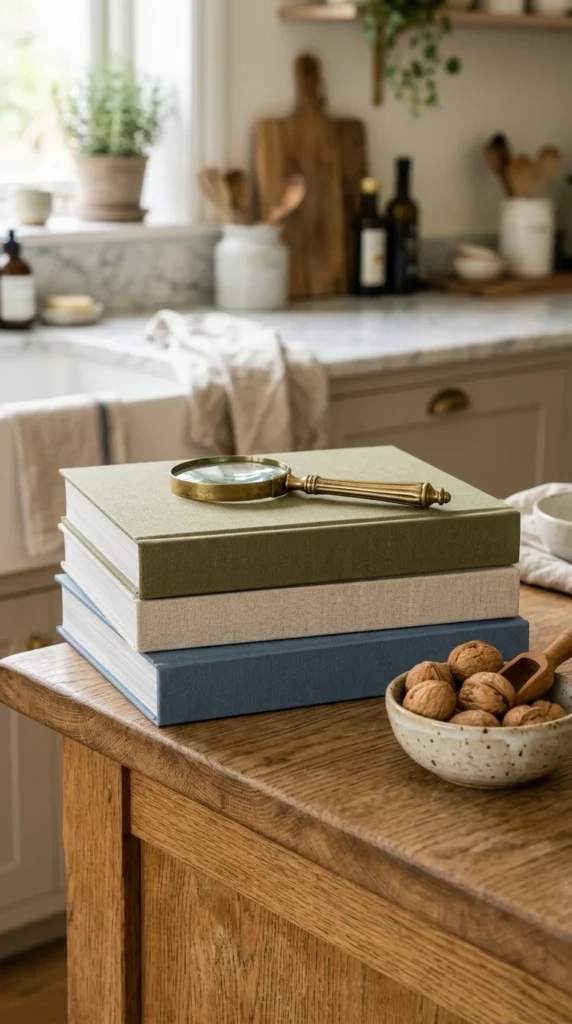
Cookbooks are not just for recipes; they are pieces of art. A stack of coffee-table-style cookbooks can add personality and color to your island. Look for books with beautiful spines or covers that complement your kitchen’s color palette.
You can style them horizontally to create a platform for a small decorative object, or use a sleek metal bookstand to display a favorite page. This not only makes the island feel more personalized but also serves as a conversation starter for guests. It signals that the kitchen is a place of creativity and passion, rather than just a chore zone.
6. Lighting
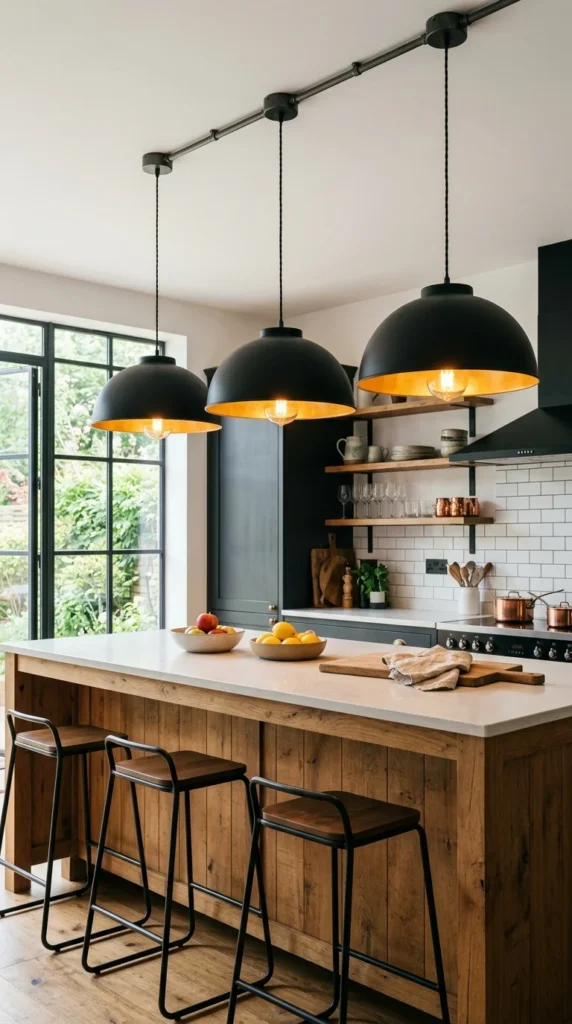
While not technically “on” the island, the lighting above it is the crown jewel of the kitchen. Pendant lights serve as the vertical anchor for the island’s decor. If your island feels “plain,” it might be because the lighting lacks scale. Large, oversized pendants are currently trending because they fill the “airspace” and make the room feel more architectural.
When choosing lighting, consider the “Rule of Three” for longer islands, or a single massive statement piece for smaller ones. The finish of the light—be it clear glass, woven rattan, or polished nickel—will dictate the style of the decor you place underneath it. Soft, warm bulbs are essential to create an inviting glow that highlights your island’s surface.
7. Ceramics
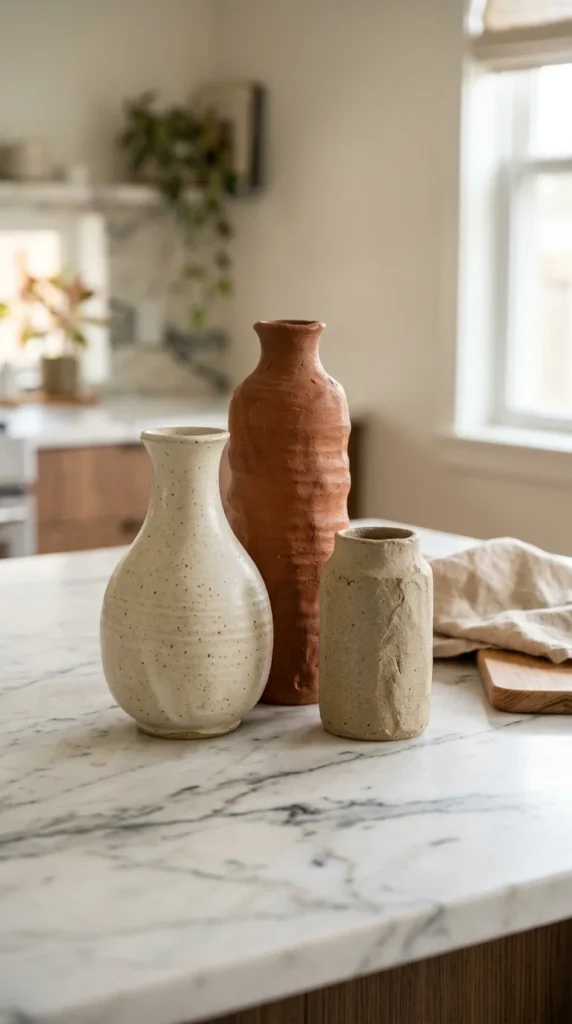
Handmade ceramics bring a sense of “wabi-sabi” or beautiful imperfection to a high-gloss kitchen. A cluster of stoneware vases, a textured pitcher, or a set of artisanal canisters can add a sophisticated, gallery-like feel to the island.
The key to styling ceramics is varying the height. Group items in odd numbers (three is the magic number) and ensure they have different silhouettes. This creates visual movement and prevents the decor from looking stagnant. Neutral-toned ceramics are particularly effective because they add texture without overwhelming the space with too much color.
8. Ambiance
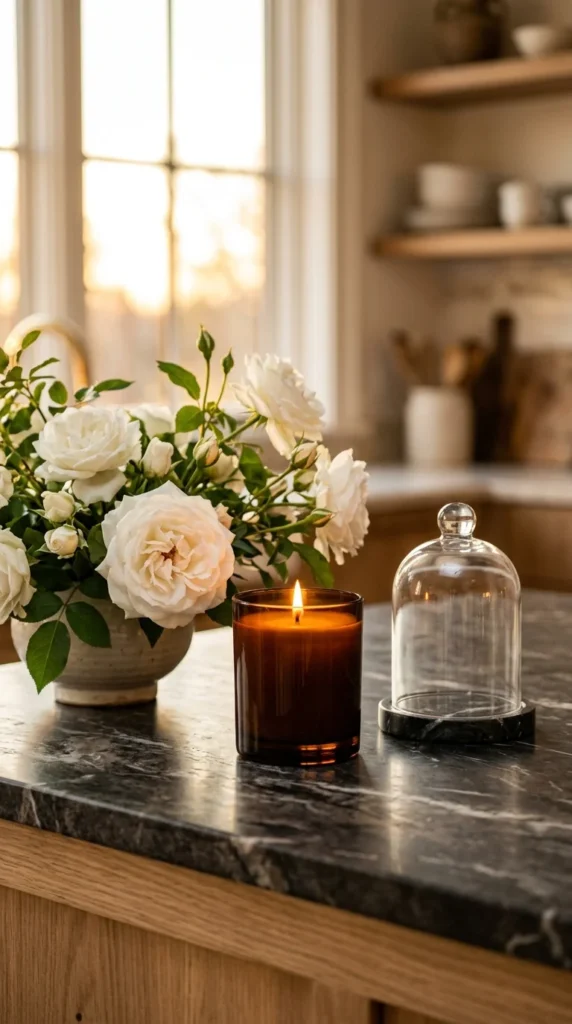
The kitchen is a sensory environment, and scent plays a massive role in how the space feels. A high-end scented candle or a stylish reed diffuser can instantly elevate the mood. Opt for scents that complement a culinary environment—think citrus, basil, rosemary, or vanilla—rather than overly floral or “perfumy” fragrances.
Beyond the scent, the container itself serves as decor. A candle in a beautiful ceramic or heavy glass vessel adds a touch of luxury. During the evening, the soft flicker of a flame on the island’s surface creates an intimate, cozy atmosphere that transforms the kitchen from a workroom into a sanctuary.
9. Seating
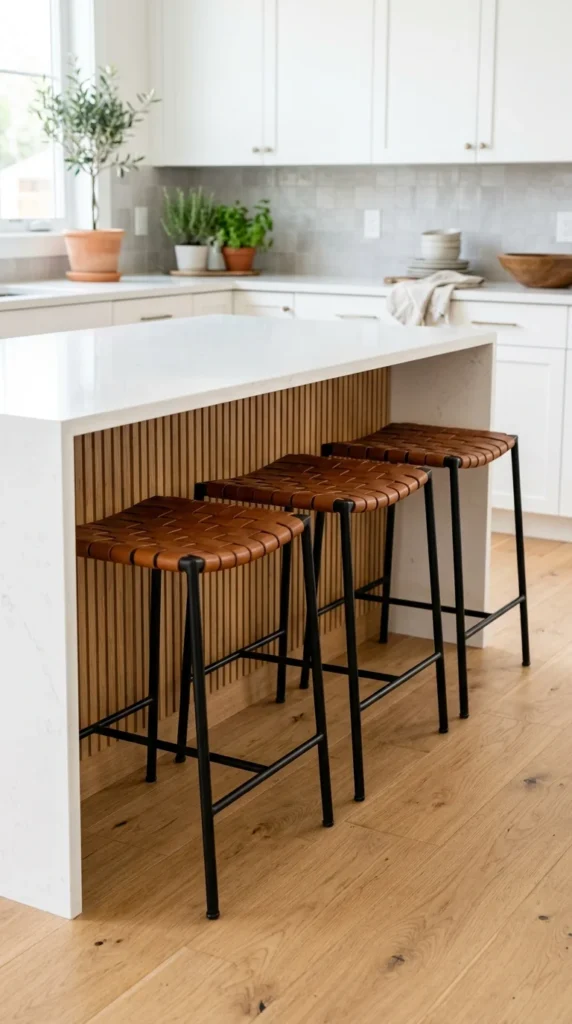
The stools you choose are the final piece of the kitchen island puzzle. They act as the “legs” of the design and can significantly alter the kitchen’s silhouette. For a seamless, modern look, choose low-back or backless stools that tuck completely under the counter. For a more traditional or dramatic look, choose high-back chairs with interesting upholstery or intricate woodwork.
The texture of the seating—whether it’s velvet, leather, or woven rattan—should contrast with the island’s material. If you have a smooth stone island, consider stools with a lot of texture to add visual interest. Well-chosen seating makes the island feel like a completed furniture piece rather than just a built-in cabinet.