
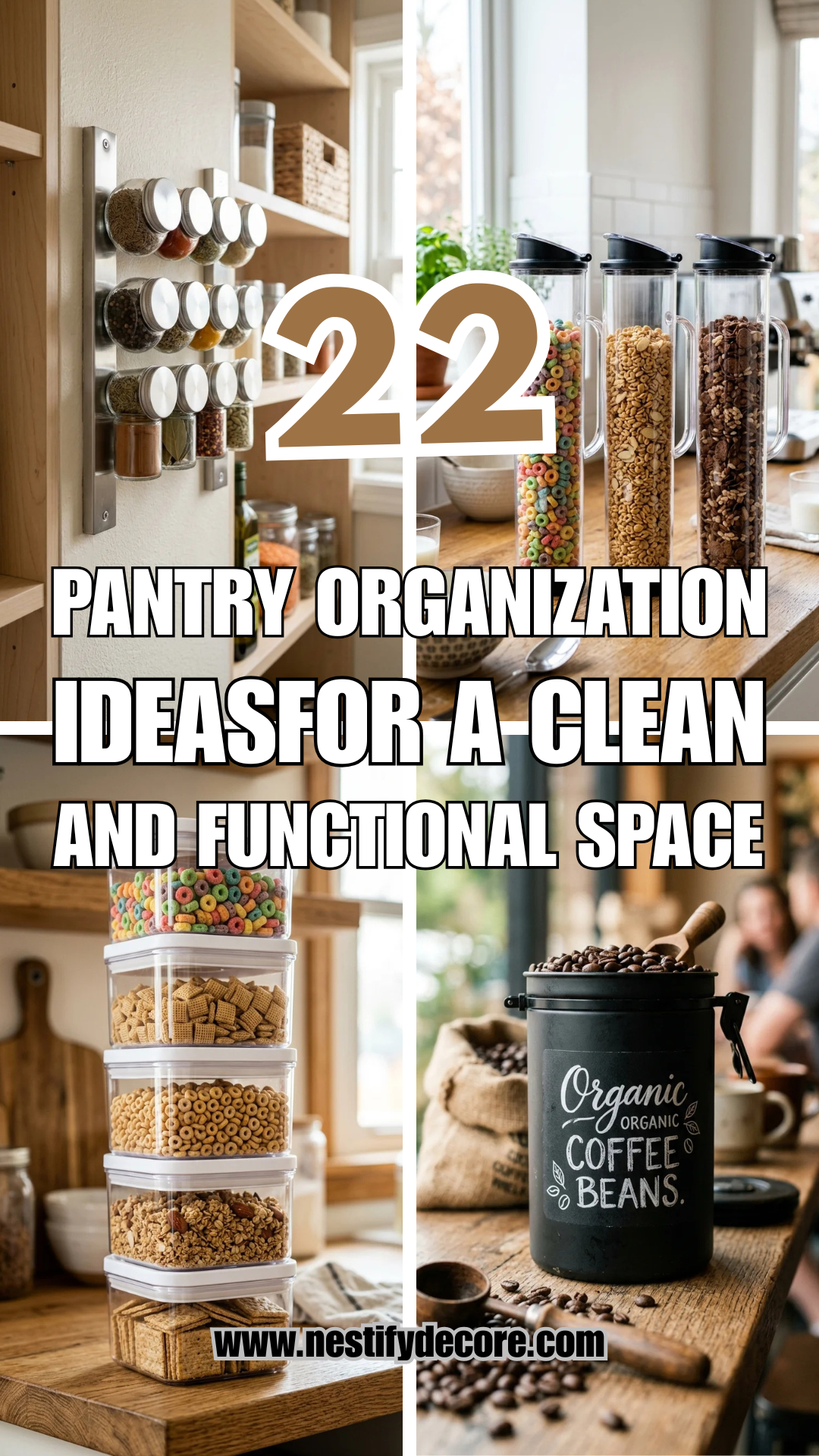
A well-organized pantry is the backbone of an efficient kitchen. It reduces food waste, saves money by preventing duplicate purchases, and turns the daily chore of meal preparation into a seamless experience. Whether you have a spacious walk-in or a tiny reach-in closet, these 22 ideas will help you maximize your storage and maintain a clutter-free environment.
1. Glass Jars
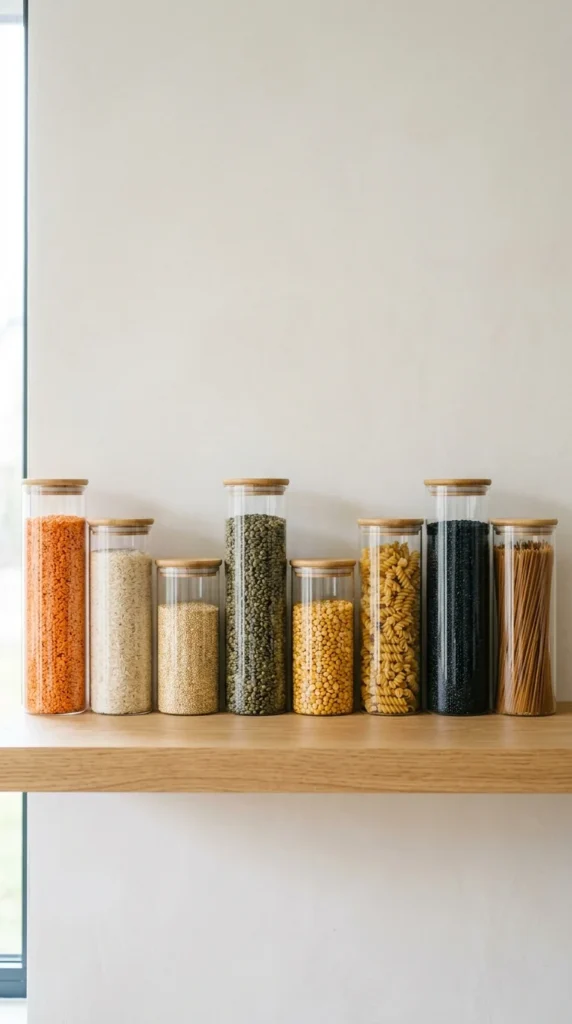
Glass jars are the gold standard for pantry organization. By decanting dry goods like flour, sugar, pasta, and grains into clear containers, you can immediately see when supplies are running low. Glass is also non-porous, meaning it won’t absorb odors or chemicals, keeping your food fresher for longer. Choose jars with airtight silicone seals to prevent moisture and pests from entering.
2. Woven Baskets
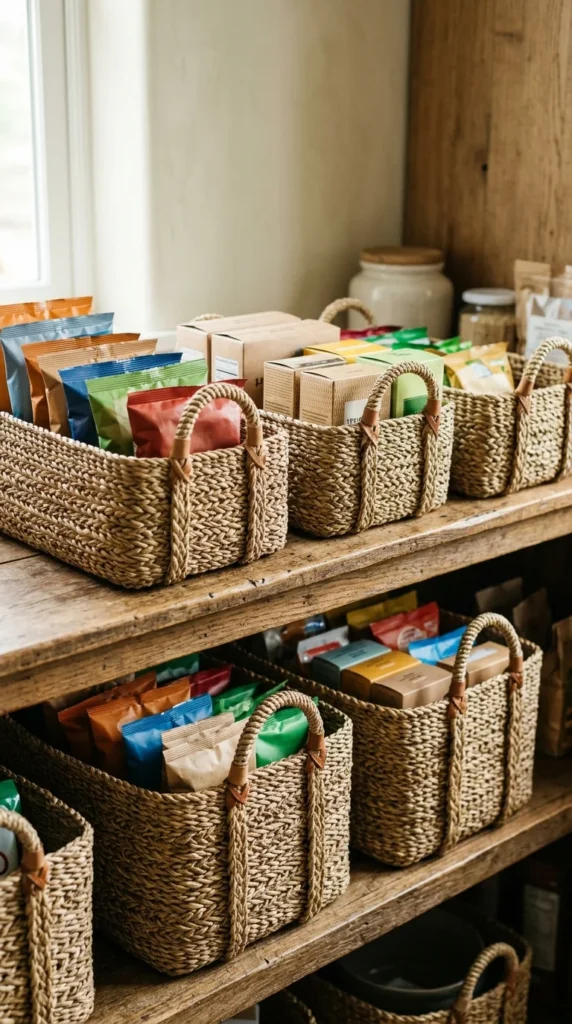
Woven baskets add a touch of warmth and texture to your pantry while serving a highly functional purpose. They are perfect for “hiding” bulky items or mismatched packaging that can make a pantry look cluttered. Use them for grouping categories like “Snacks,” “Baking Supplies,” or “Pet Food.” Their sturdy structure makes them easy to pull off the shelf like a drawer.
3. Lazy Susans
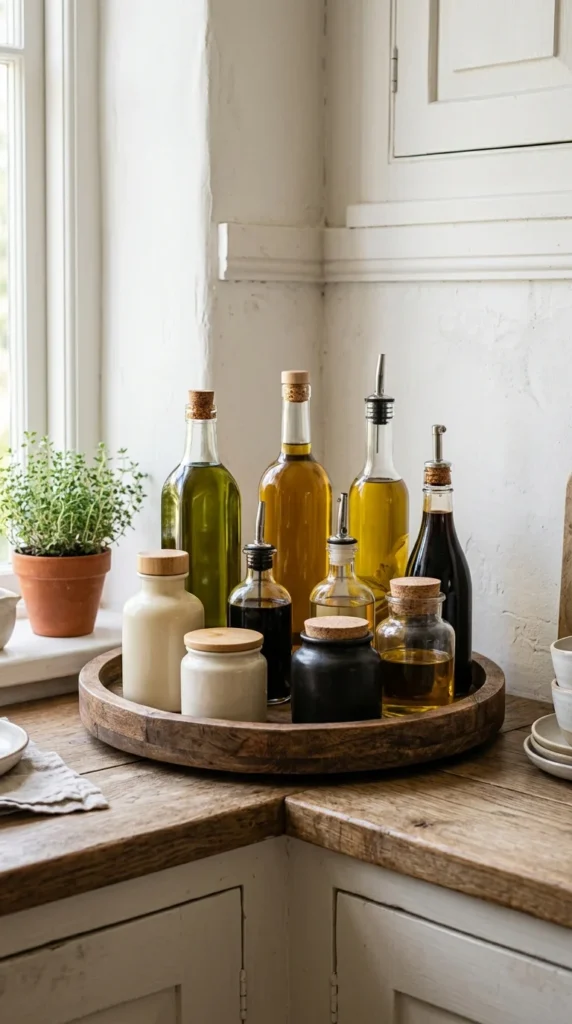
Corners are often where pantry items go to be forgotten. A Lazy Susan, or turntable, eliminates this problem by bringing the back of the shelf to the front with a simple spin. Use them for oils, vinegars, honey, or peanut butter jars. They are particularly effective on high shelves where reaching the back is difficult.
4. Tiered Risers
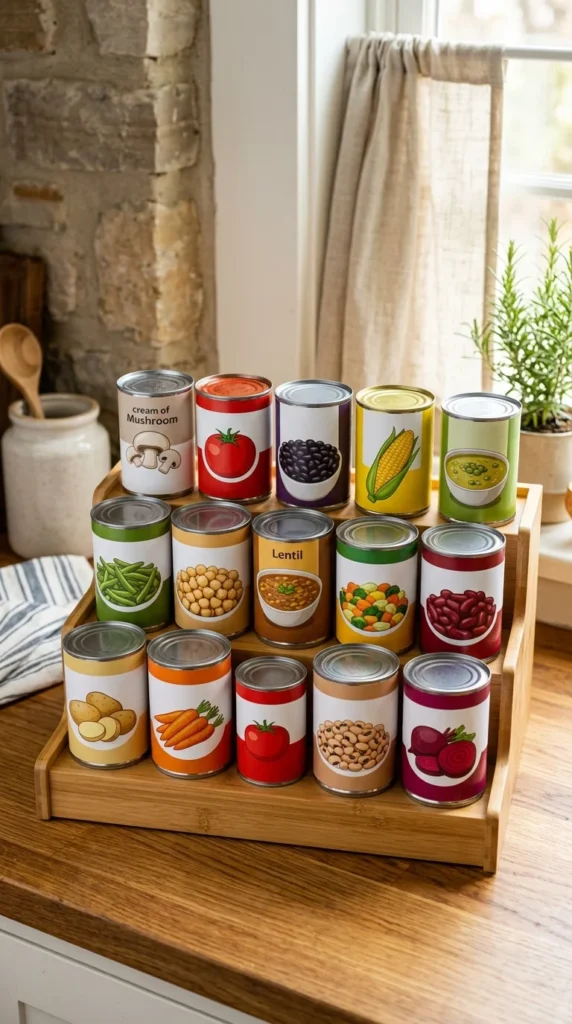
Tiered risers, often called “stadium seating” for your pantry, are essential for canned goods and small jars. Instead of stacking cans on top of each other and losing track of what’s in the back, risers allow you to see every label at once. This prevents you from buying a fourth can of chickpeas when you already have three hidden away.
5. Door Racks
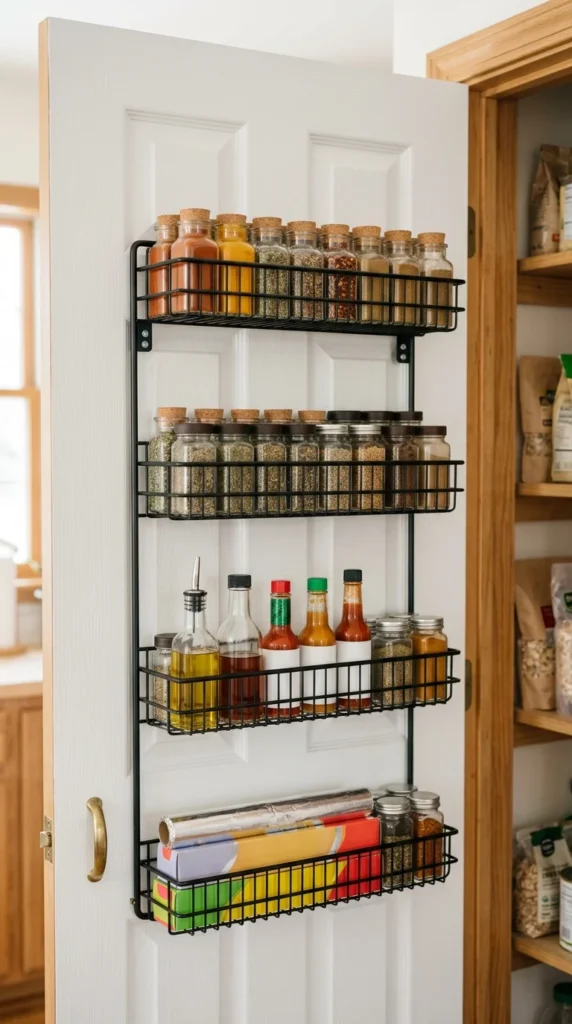
If you have a reach-in pantry, the back of the door is prime real estate. Installing a heavy-duty door rack can double your storage capacity. Use this space for lightweight items like spices, seasoning packets, or frequently used condiments. It keeps small items at eye level and frees up valuable shelf space for larger containers.
6. Chalkboard Labels
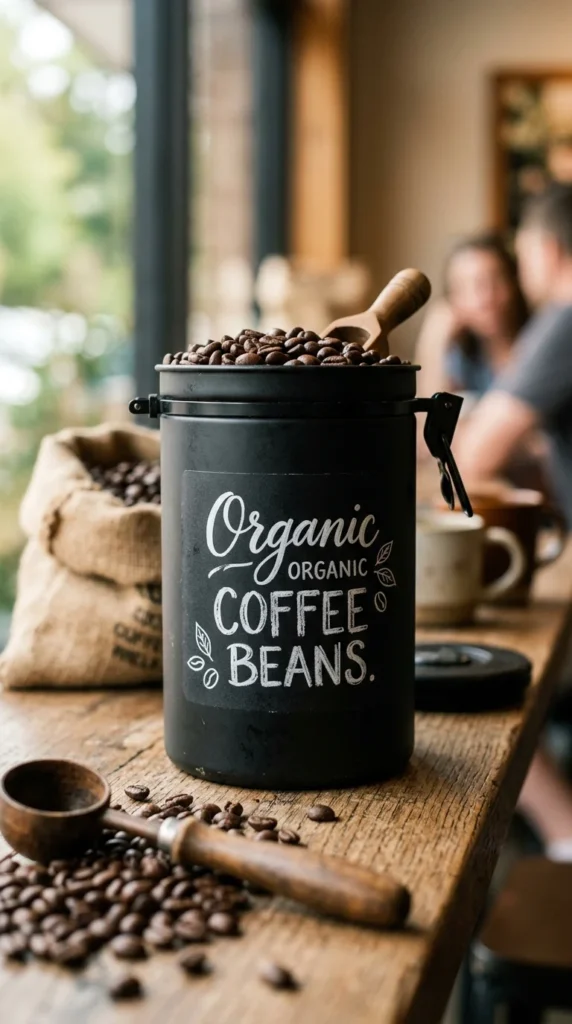
Consistency is key to a functional pantry, and labels are the final touch. Chalkboard labels are particularly useful because they are erasable. If you switch the contents of a jar from quinoa to couscous, you don’t have to peel off a sticky label; just wipe it clean and rewrite. This flexibility encourages long-term organization.
7. Pull-out Drawers
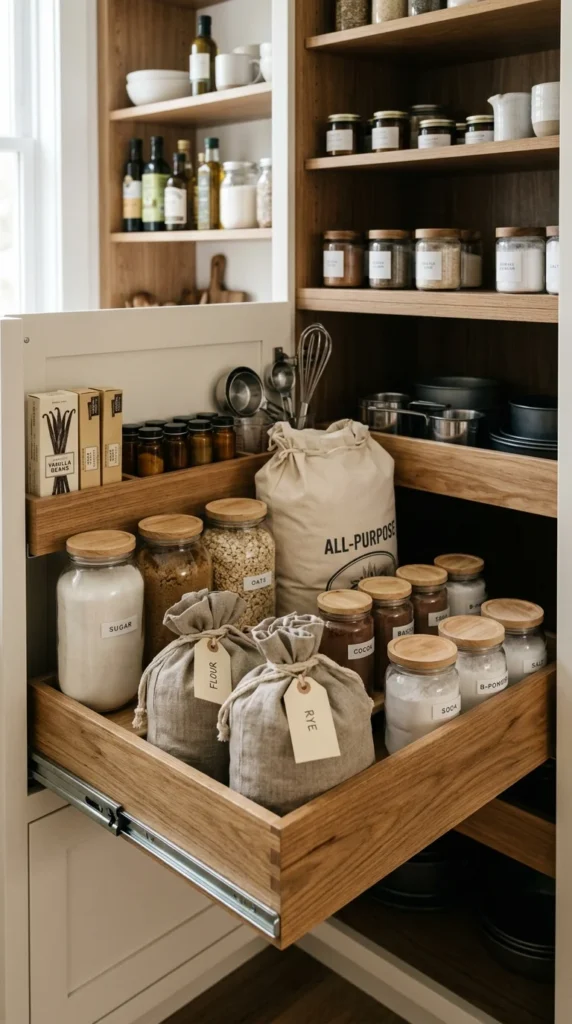
Deep cabinets can be a black hole for groceries. Installing pull-out drawers or “roll-outs” allows you to access the very back of the cabinet without having to get on your hands and knees. This is an excellent solution for heavy items like bags of potatoes, onions, or large kitchen appliances that are stored in the pantry.
8. Clear Bins
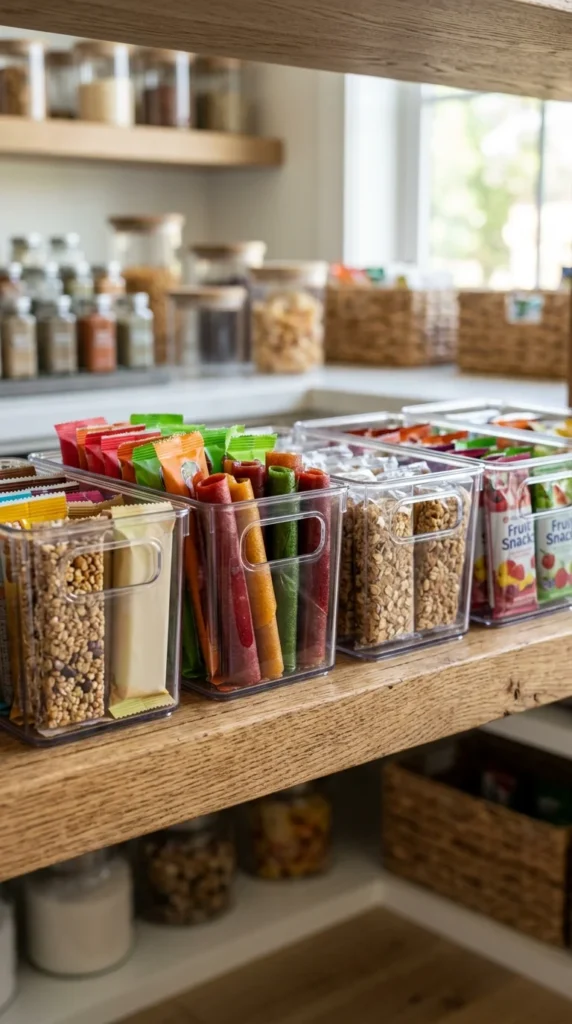
Clear acrylic or plastic bins allow for maximum visibility while keeping items contained. They are excellent for the “kid-friendly” shelf, where you can store pre-portioned snacks. Because they are clear, the pantry feels more open and less “boxed in” compared to opaque containers.
9. Wire Baskets
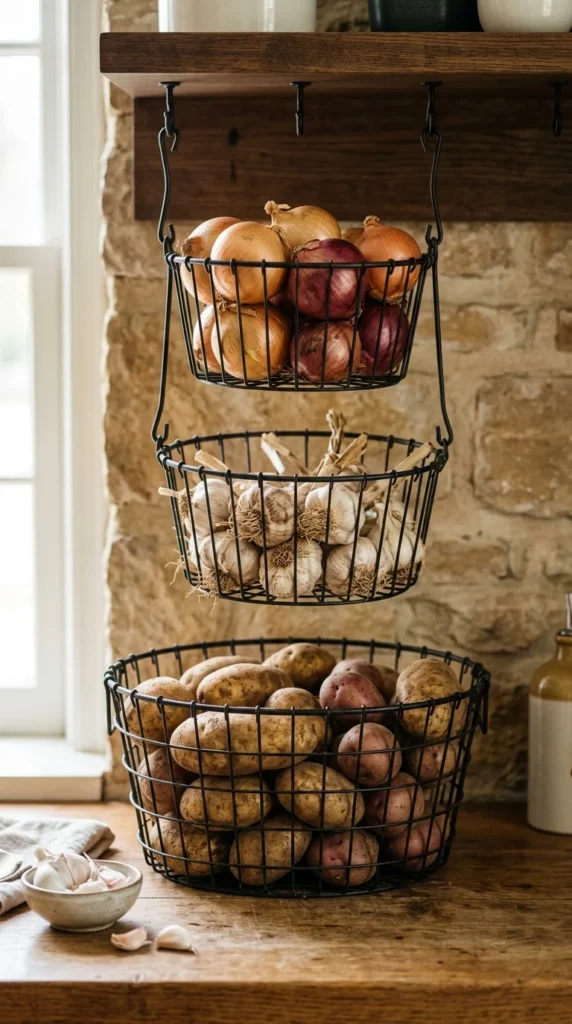
Some pantry items, like onions, potatoes, and garlic, require airflow to stay fresh. Wire baskets provide the necessary ventilation while keeping these earthy items off the shelf surface (which can get messy with shedding skins). Ensure they are stored in a cool, dark part of the pantry to prevent sprouting.
10. Stackable Containers
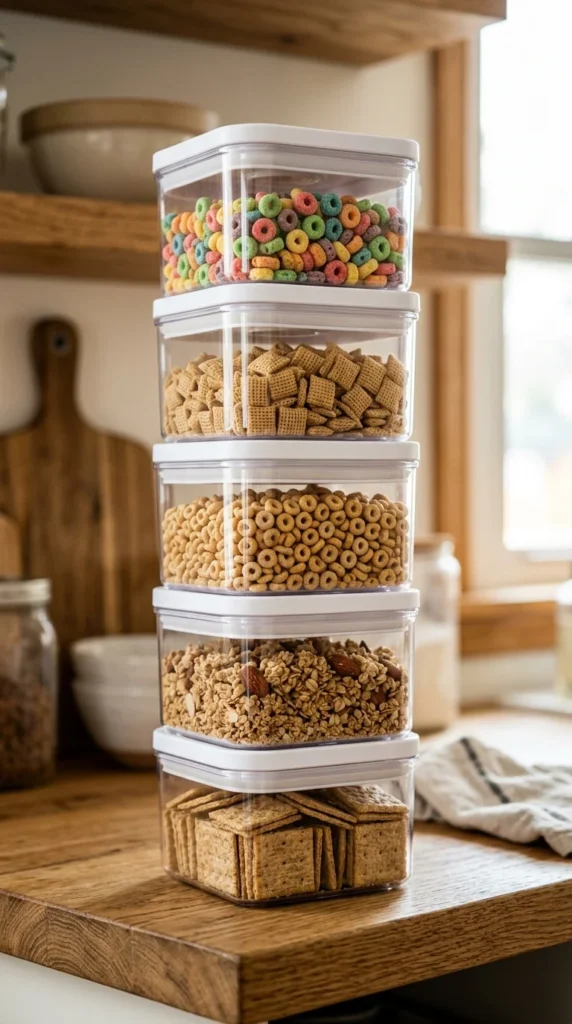
Vertical space is often underutilized. Stackable containers are designed to nestle into one another, allowing you to use the full height of your shelves. Square or rectangular containers are more space-efficient than round ones, as they eliminate the “dead space” between jars.
11. Under-shelf Baskets
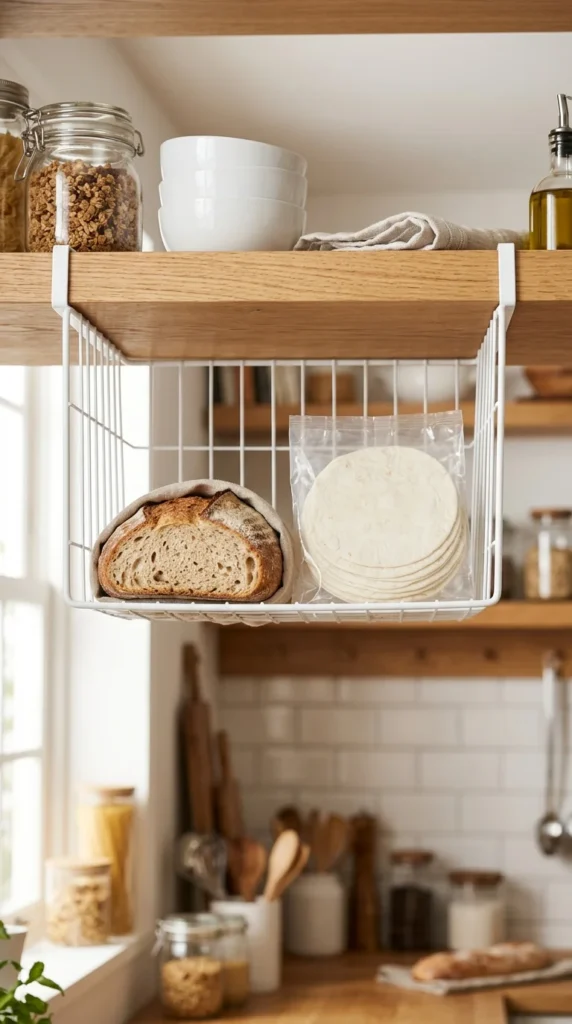
The gap between the top of your items and the shelf above is often wasted space. Under-shelf baskets slide onto existing shelves to create a “suspended” drawer. These are perfect for flat items like bread, wraps, or even boxes of tea and napkins.
12. Cereal Dispensers
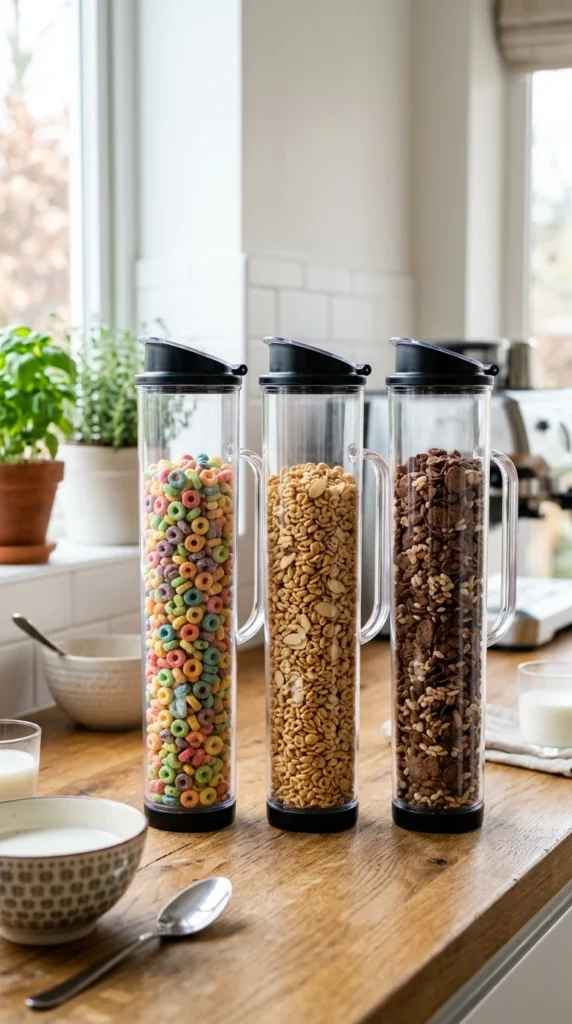
Cardboard cereal boxes are bulky and often fail to keep the contents fresh once opened. Cereal dispensers provide a more airtight solution and make it easy for children to serve themselves without creating a mess. Plus, the uniform look is much more aesthetically pleasing than mismatched boxes.
13. Spice Racks
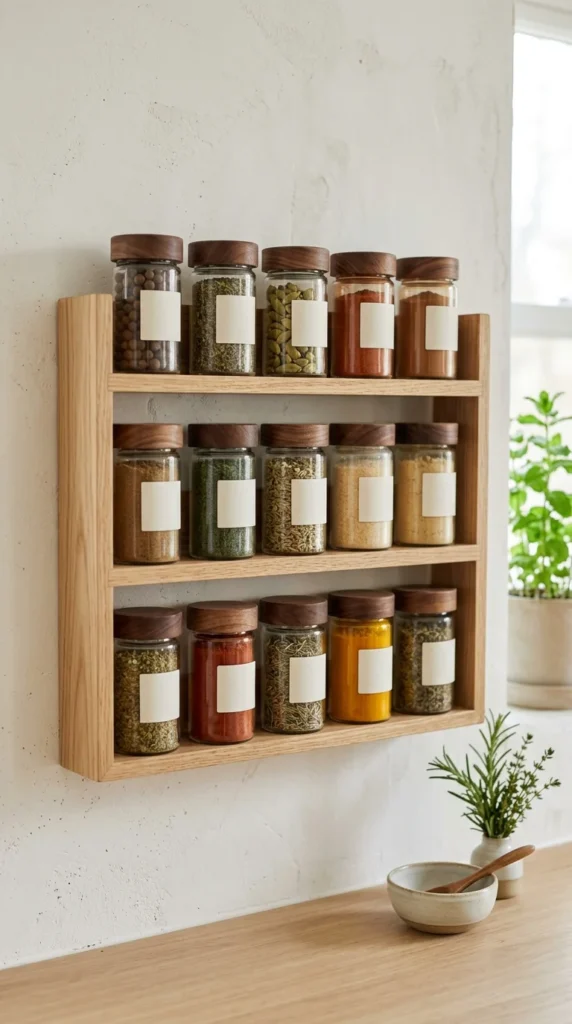
Spices are notorious for creating clutter. Whether you choose a wall-mounted rack, a drawer insert, or a rotating carousel, the secret is uniformity. Moving spices into identical jars with clear labels on top or on the side instantly transforms a chaotic spice collection into a chef-worthy display.
14. Command Hooks
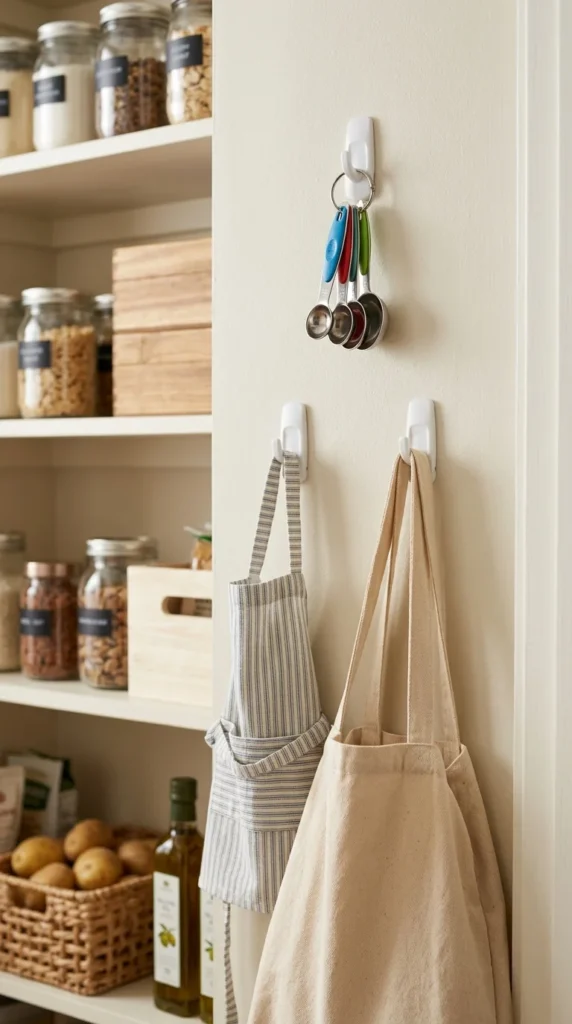
Command hooks are a renter-friendly way to utilize the side walls of your pantry. Use them to hang measuring cups, aprons, oven mitts, or even reusable grocery bags. Keeping these tools in the pantry makes them easily accessible during the meal-prep process.
15. Over-the-Door Organizers
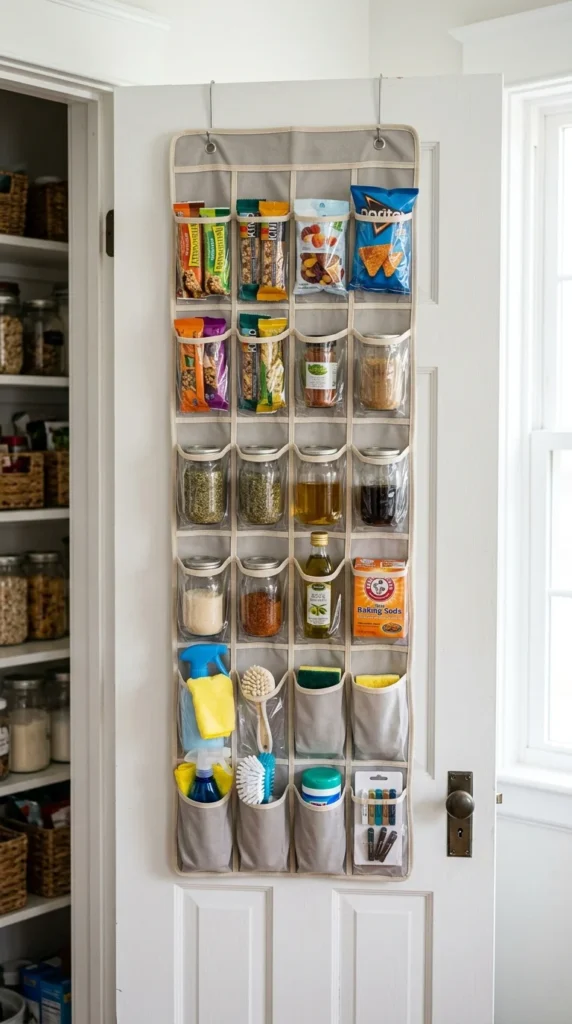
For small kitchens, a pocket-style over-the-door organizer is a lifesaver. While wire racks are great for jars, fabric or mesh pockets are perfect for “miscellaneous” items like individual snack bags, spice packets, or even cleaning rags. It keeps the “small stuff” from getting lost on large shelves.
16. Uniform Labeling
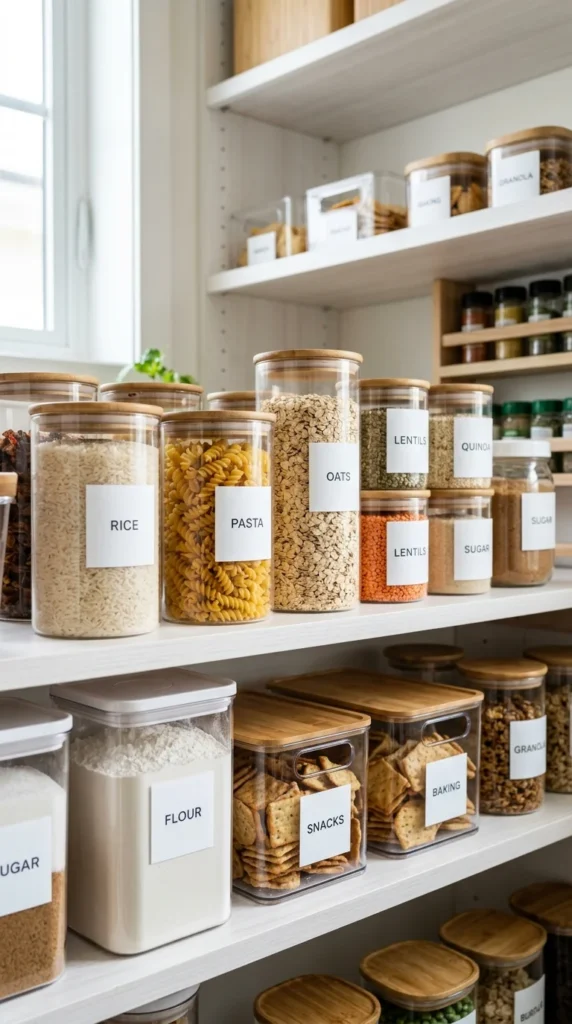
While it may seem purely aesthetic, uniform labeling helps your brain process information faster. When every jar has a label in the same font and position, you can scan the pantry much more quickly. Use waterproof and oil-resistant labels for longevity, especially for items kept near the cooking area.
17. Zone Sorting
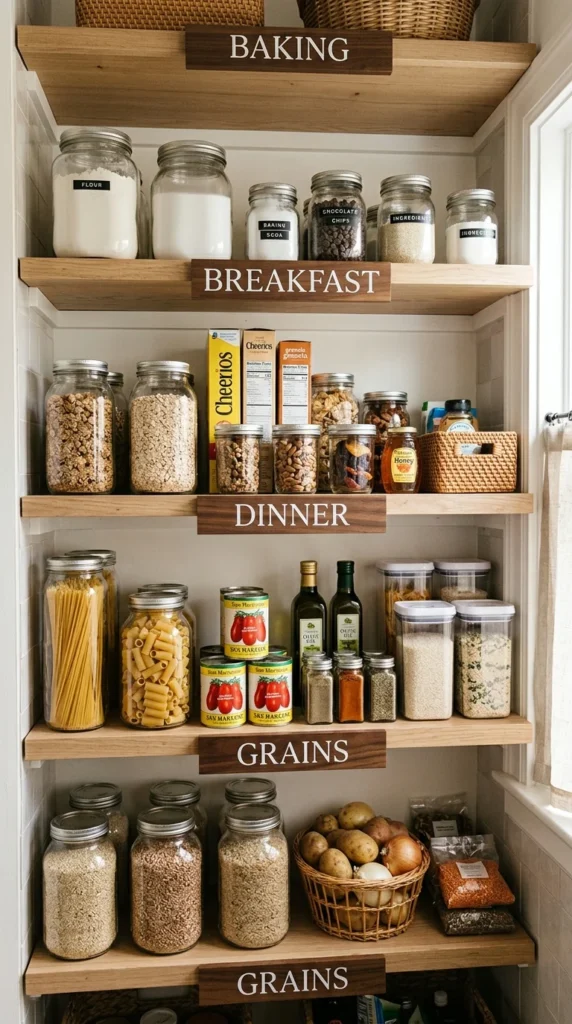
Think of your pantry like a grocery store. Grouping items by “zone” or “category” makes cooking much more intuitive. Keep all your baking supplies (flour, sugar, baking soda) in one area, and your dinner staples (pasta, sauce, canned beans) in another. This system helps you find what you need without searching the entire pantry.
18. Magnetic Strips
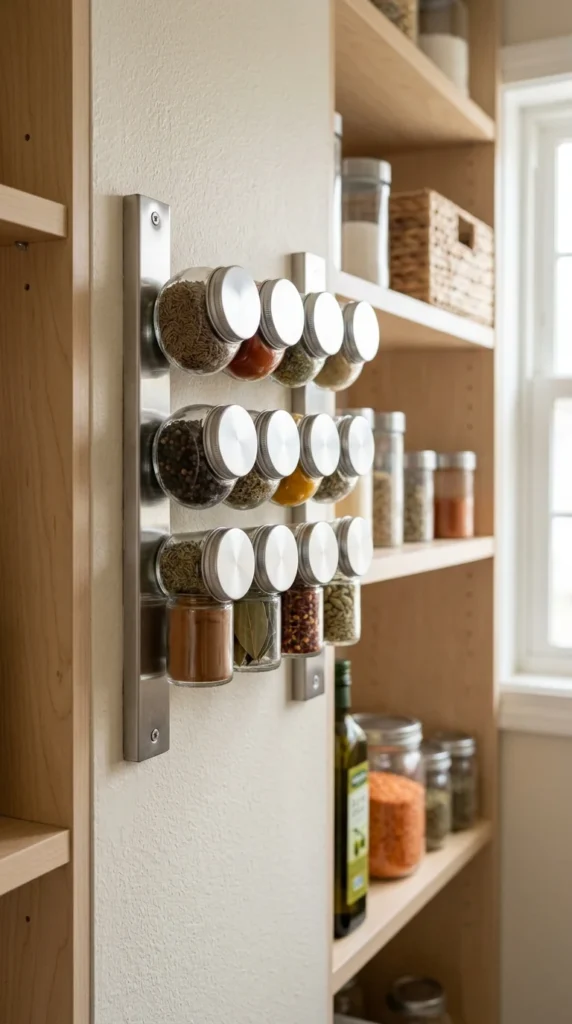
Magnetic strips aren’t just for knives. You can use them to store small metal-lidded jars or tins. This is a great way to use the “dead space” on the underside of a shelf or on a side wall. It’s a creative way to keep small items like toothpicks, seeds, or spices within reach.
19. Bread Boxes
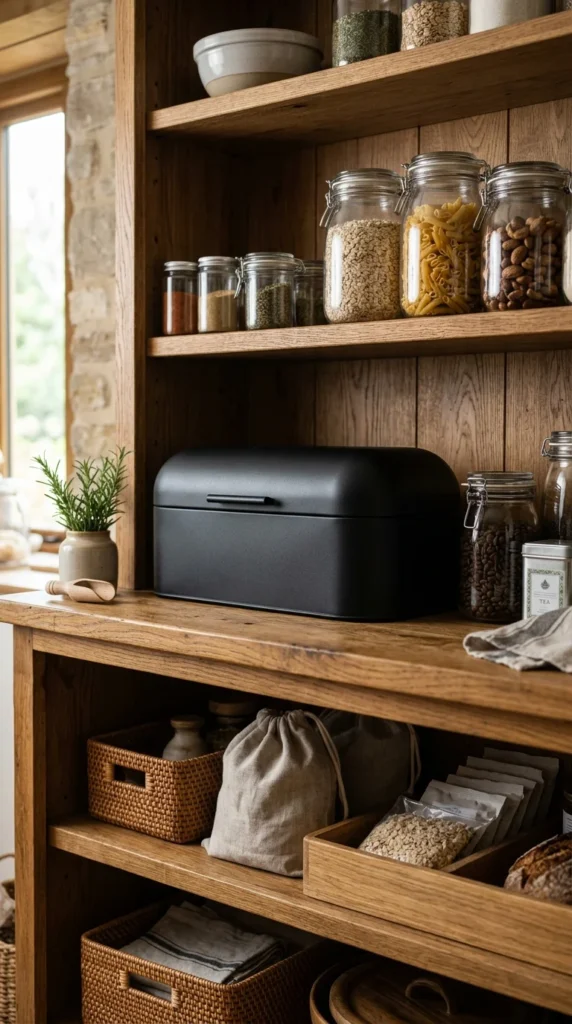
Bread packaging is often floppy and unsightly. A dedicated bread box keeps your loaves fresh and prevents them from getting squashed by heavier items. It also provides a designated “home” for baked goods, preventing them from migrating across various shelves.
20. Rolling Carts
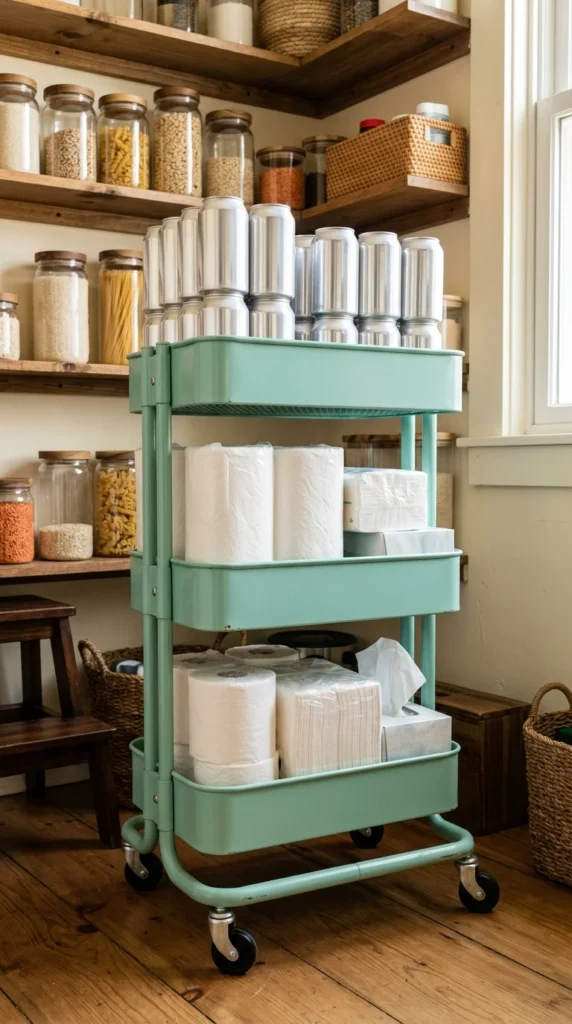
If your pantry is overflowing, a rolling cart can act as a “mobile pantry.” Use it for items you don’t use every day, like heavy mixers or bulk-buy paper towels. You can roll it out when you need it and tuck it away into a corner or a nearby closet when you don’t.
21. Magazine Files
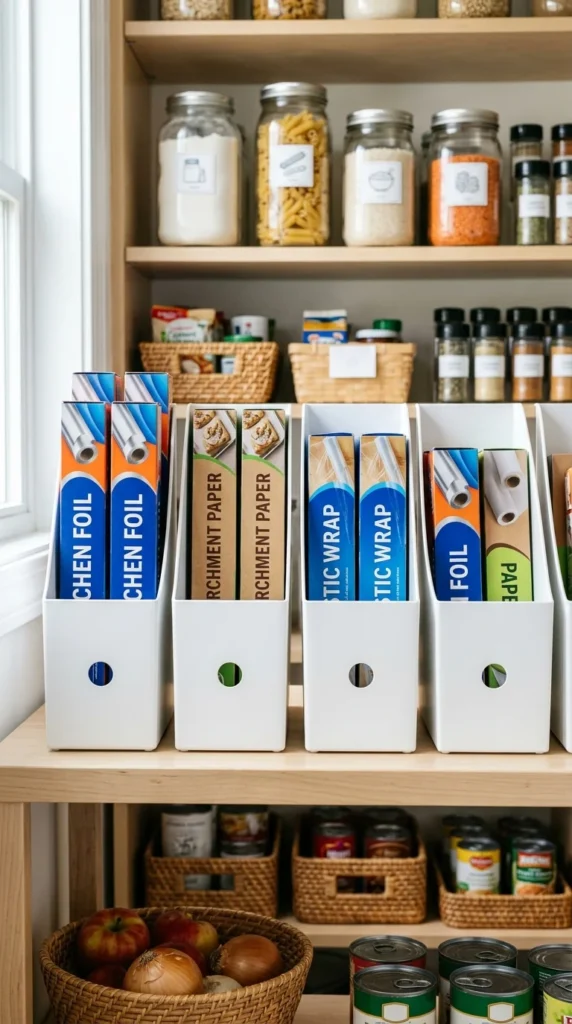
Magazine files are the perfect size for holding boxes of aluminum foil, plastic wrap, and parchment paper. Instead of stacking these boxes horizontally—which usually results in a messy pile—stand them up vertically in a magazine file. This makes it easy to grab the one you need without disturbing the others.
22. Lighting Upgrades
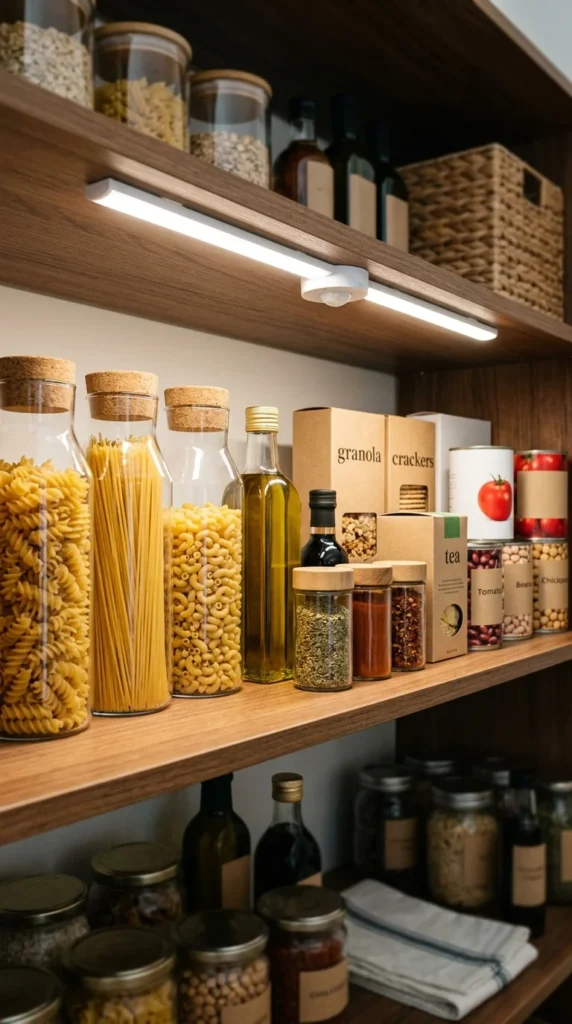
Even the best-organized pantry is hard to use if it’s dark. If your pantry lacks a built-in light, install battery-operated motion-sensor LED strips. They are inexpensive and easy to stick under shelves. Good lighting ensures that no can of soup is left to expire in a dark corner and makes the space feel much more professional and clean.