

A cluttered closet is more than just an eyesore; it is a source of daily friction that slows down your morning routine and makes it difficult to appreciate the clothes you own. Most people believe they need a larger home or a custom-built walk-in to solve their storage woes. However, the secret to a high-capacity closet isn’t necessarily more square footage—it is the strategic optimization of the space you already have.
By utilizing vertical height, implementing modular systems, and choosing the right hardware, you can effectively double your storage capacity. Here are nine transformative closet organization ideas to help you reclaim your space and create a functional, boutique-style environment.
1. Slim Hangers
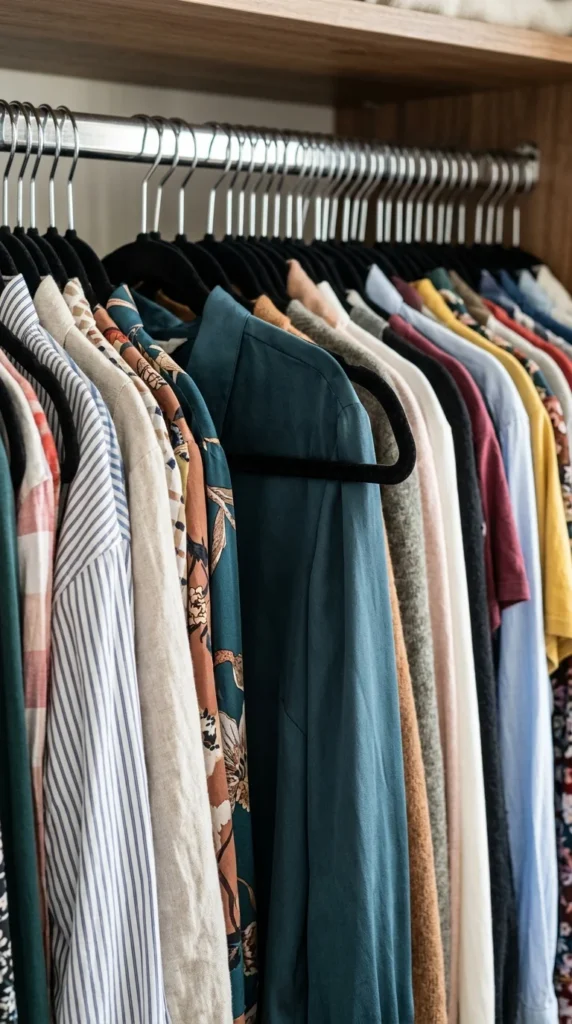
The most immediate way to gain space in a hanging rod is to ditch bulky plastic or wooden hangers. Standard hangers can be up to half an inch thick, which adds up quickly when you have fifty or more items. Velvet or “slim-line” hangers are usually only a fraction of that thickness, allowing you to fit nearly twice as many clothes in the same linear foot of rod space.
Beyond the space-saving benefits, the non-slip surface of velvet hangers prevents delicate fabrics from sliding off and ending up in a heap on the floor. This uniformity also creates a “visual calm,” making the closet look curated rather than chaotic. For heavier items like coats or suits, look for reinforced slim hangers that offer the same thin profile but with extra structural integrity.
2. Vertical Shelves
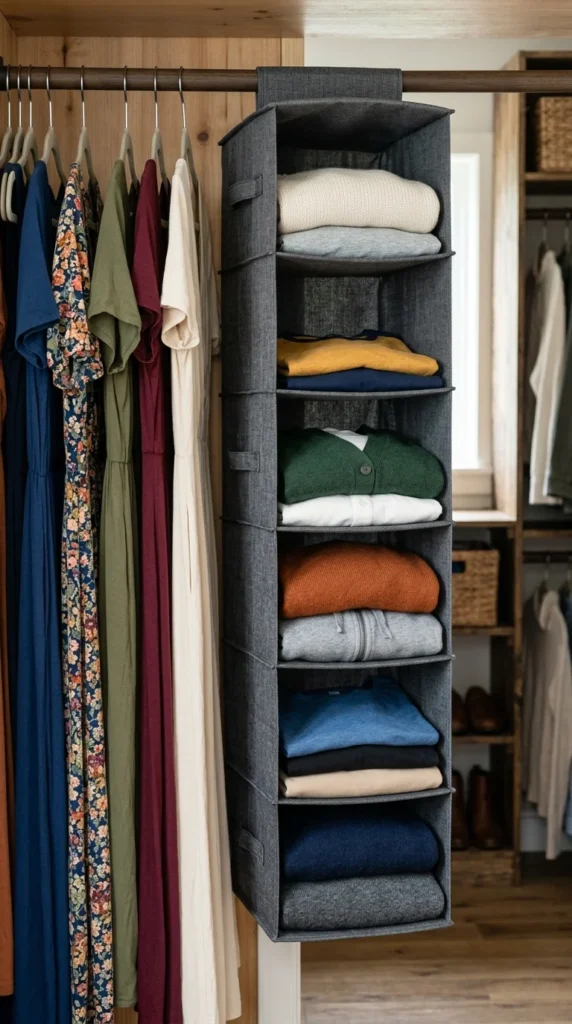
When you run out of rod space, look to the vertical gap between your hanging clothes and the floor. Hanging vertical organizers, often made of durable canvas or mesh, transform unused air into functional “drawers.” These are ideal for items that shouldn’t be hung, such as heavy wool sweaters that might stretch out on a hanger, or athletic gear that is easily folded.
To maximize these cubbies, use the “file folding” method (also known as the KonMari method). Instead of stacking items on top of one another, fold them into small rectangles and stand them upright. This allows you to see every item in the cubby at once, preventing you from digging through a stack and ruining your hard work just to find one specific shirt.
3. Double Rods
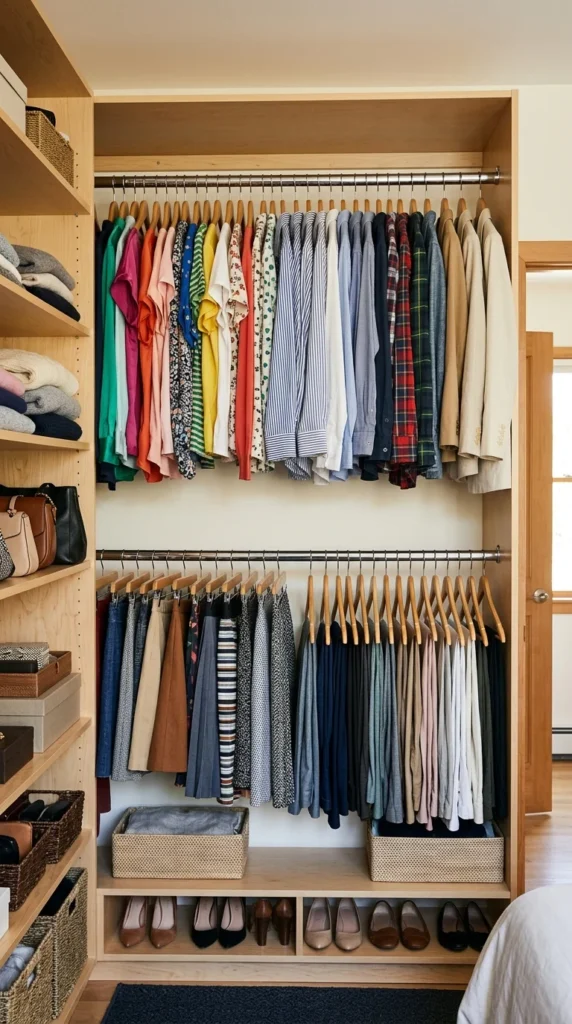
Most standard closets come with a single rod positioned about 60 to 70 inches off the floor. This leaves a massive amount of “dead space” underneath. By installing a second, lower rod, you instantly double your hanging capacity for shorter items. This configuration is perfect for a “tops and bottoms” setup: hang shirts on the top rail and skirts, slacks, or jeans on the bottom rail.
If you are renting and cannot drill into the walls, you can purchase “add-a-rod” extenders that hook onto your existing top rod and hang down to provide a second tier. This simple hardware adjustment is perhaps the most effective way to multiply storage without a full renovation.
4. Shelf Dividers
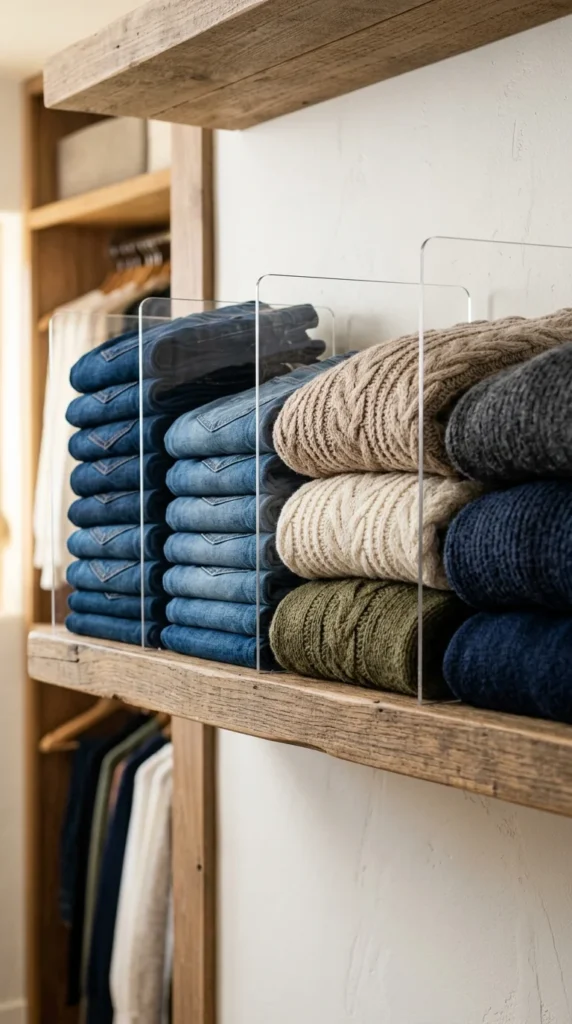
Shelves are great for storage, but without structure, they quickly become a mess of toppled clothing. Shelf dividers act as “bookends” for your wardrobe. By installing clear acrylic or wire dividers every 10 to 12 inches, you create dedicated zones for different categories of clothing.
Dividers allow you to stack items higher than you normally could because the walls of the divider provide lateral support. This is particularly useful for handbags; instead of letting them flop over and lose their shape, you can stand them upright between dividers, keeping them protected and visible.
5. Door Organizers
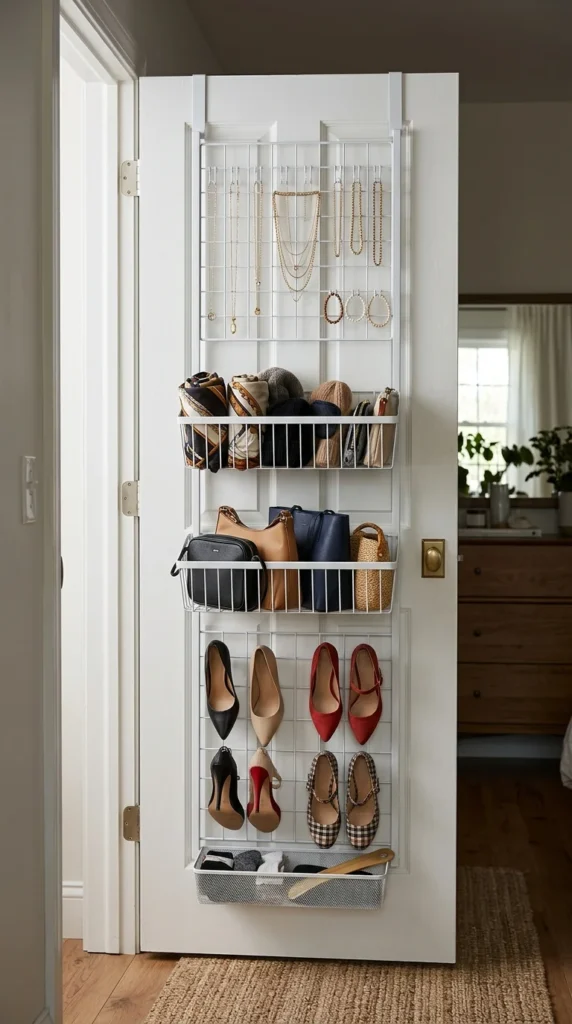
The back of the closet door is often the most underutilized real estate in a bedroom. An over-the-door organizer can house everything from shoes and belts to jewelry and scarves. For a more “built-in” look, avoid the cheap clear plastic pocket organizers and opt for a metal track system that screws directly into the door.
These systems are modular, meaning you can swap out baskets for hooks or shoe racks depending on your needs. By moving these smaller accessories to the door, you free up valuable shelf and drawer space for larger garments.
6. Vacuum Bags
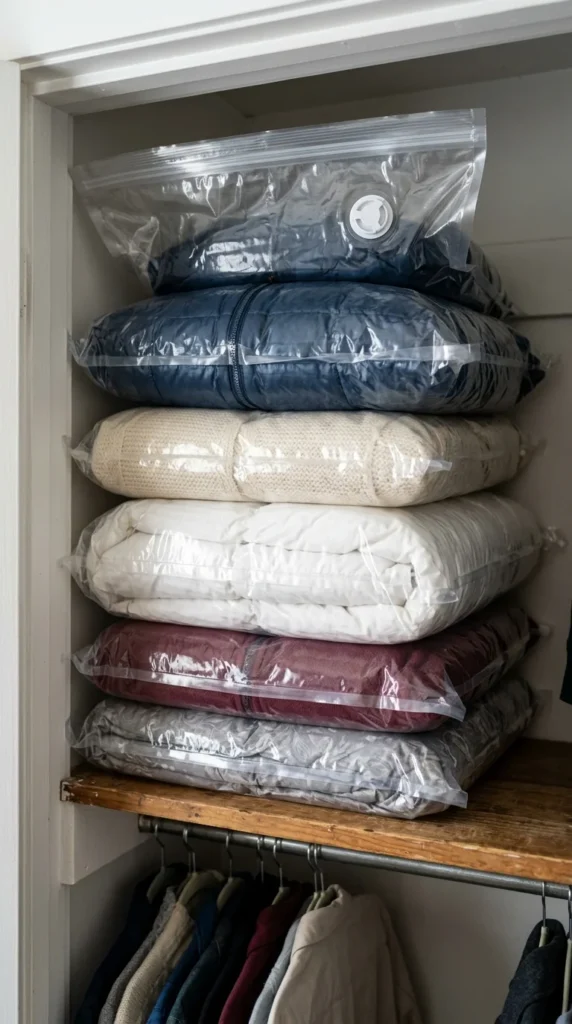
Not everything in your closet needs to be accessible every day. Seasonal items like heavy parkas, ski gear, or extra linens take up an enormous amount of volume. Vacuum-sealed storage bags can reduce the volume of these items by up to 75% by removing the air trapped within the fabric.
Once compressed, these flat bags can be tucked away on the highest shelves, under the bed, or even in the very back of a deep closet. When the seasons change, simply unzip the bag, and the clothes will “fluff” back to their original shape. This rotation ensures that your prime closet real estate is only occupied by clothes you are currently wearing.
7. Clear Bins
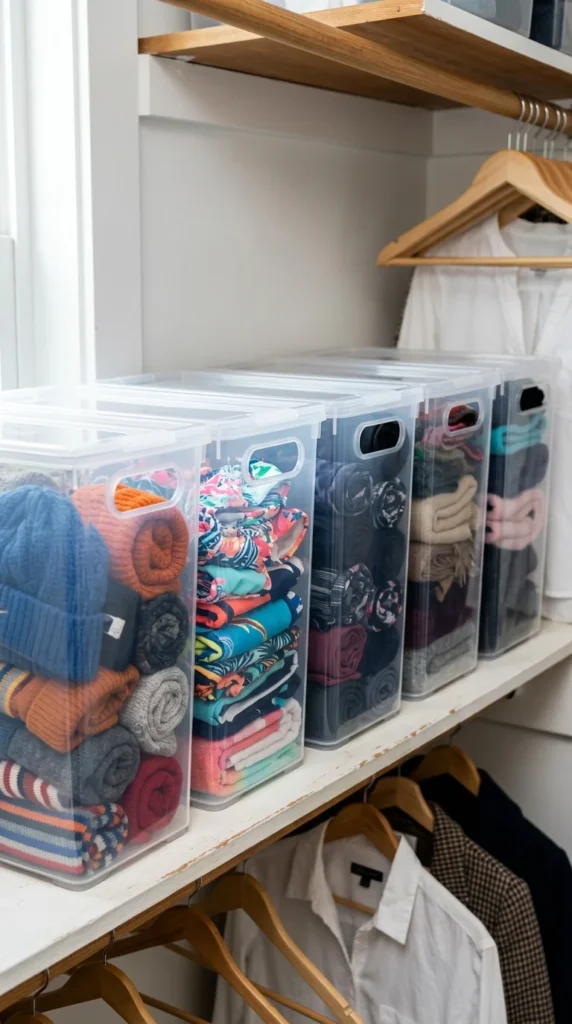
Labeling is helpful, but visibility is king. Clear pull-out bins allow you to see exactly what you have without having to pull the container down from the shelf. They act like drawers for your shelves, allowing you to reach items at the very back of a deep closet without disturbing the items in the front.
To keep things looking tidy, use bins of the same size and style. This creates a cohesive, uniform look that mimics high-end custom closets. For items like socks or undergarments, use smaller drawer dividers inside the bins to maintain order.
8. Wall Hooks
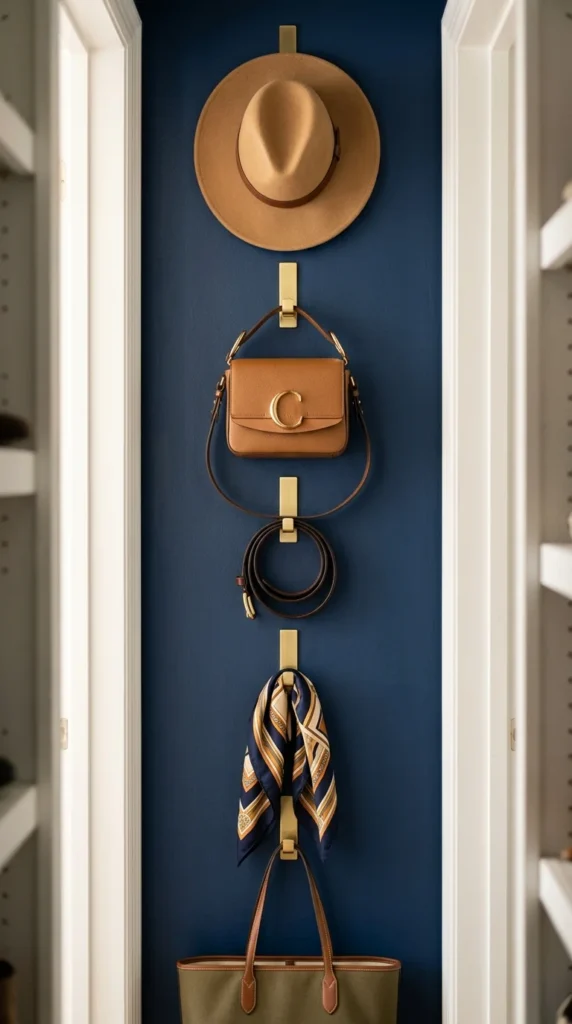
Every closet has small sections of “blank wall” near the corners or between the door frame and the shelving. These spots are perfect for heavy-duty hooks. Hooks are the most effortless form of organization—if it’s easy to hang up, you’re more likely to do it rather than throwing the item on a chair.
Use hooks for items that are used daily, such as your favorite bathrobe, the handbag you carry most often, or the jeans you plan to wear again tomorrow. This keeps “in-between” clothes off the floor and off your furniture, maintaining the overall organization of the room.
9. Cascading Hooks
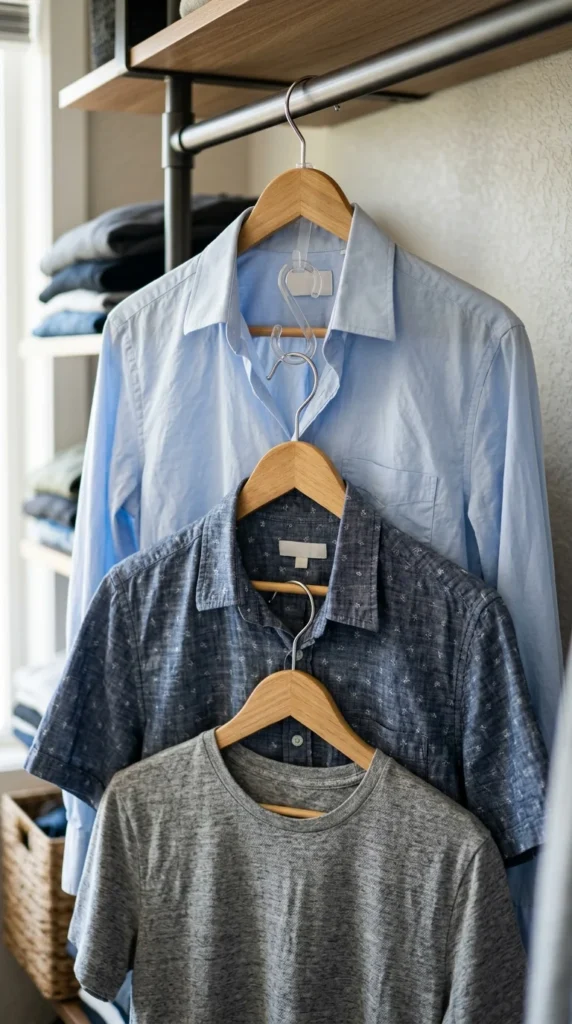
If you have a lot of vertical length but very little horizontal rod space, cascading hooks (or “hanger connectors”) are a game-changer. These small devices allow you to hang one hanger off the neck of another, creating a tiered effect.
This is particularly effective for coordinating outfits. You can hang a blazer, a blouse, and a pair of trousers all on one vertical “chain,” saving horizontal space and making it easier to get dressed in the morning. This technique can effectively triple the capacity of a small reach-in closet by utilizing the full drop-down length of the wardrobe.