
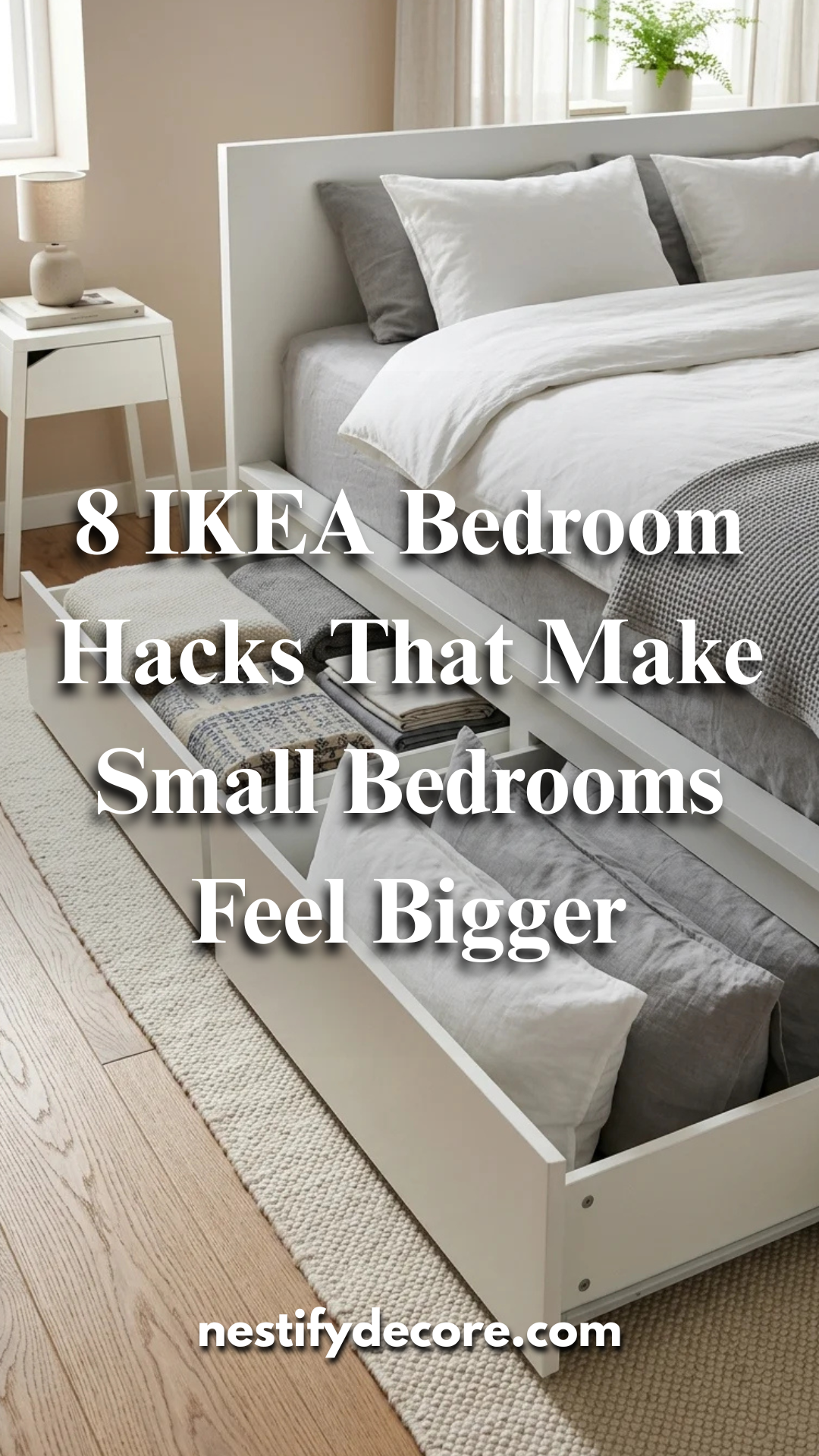
Small bedrooms often present a significant design challenge: how do you fit all your essentials without making the space feel like a cramped storage unit? The secret lies in “visual floor space” and the clever utilization of vertical real estate. IKEA, the Swedish giant of modular design, offers the perfect toolkit for these challenges. By hacking standard pieces, you can trick the eye into seeing more room than actually exists.
In this guide, we explore eight transformative IKEA hacks designed to maximize every square inch, enhance natural light, and create a serene, spacious sanctuary regardless of your actual square footage.
1. Lofted Living
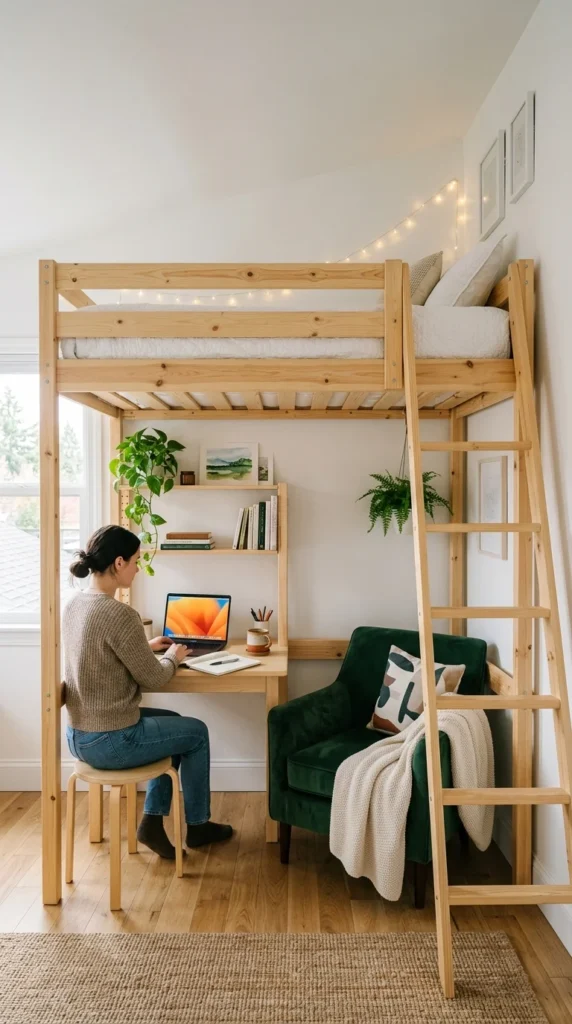
The most effective way to gain space in a tiny bedroom is to stop thinking horizontally and start thinking vertically. By using an IKEA STORA or VITVAL loft bed, you effectively double your usable square footage. When you elevate the sleeping area, the “dead space” typically occupied by a mattress becomes a secondary functional zone.
To make the room feel bigger, paint the loft frame the same color as your walls. This “camouflage” technique prevents the large structure from overwhelming the room visually. Underneath, you can install a slim desk, a chest of drawers, or even a mini-lounge. By keeping the floor clear of a traditional bed frame, the eye perceives more open area, which is the primary psychological trigger for a “large” room feeling.
2. Headboard Nooks
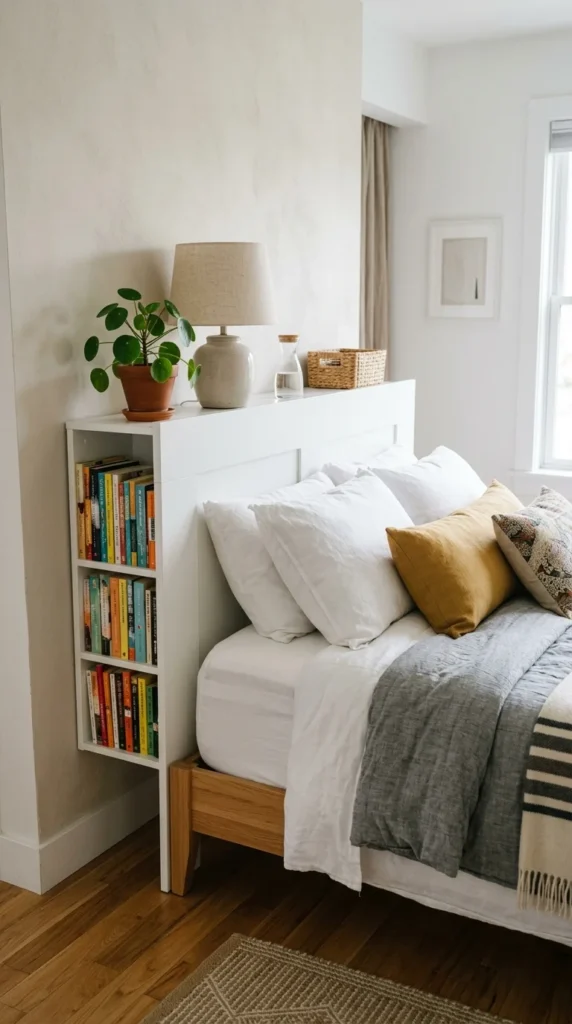
Traditional nightstands are notorious space-wasters in narrow rooms. They require floor space and often create “dead zones” between the bed and the wall. The IKEA BRIMNES headboard hack solves this by moving storage behind and beside the pillow area.
By using a headboard with built-in shelving, you eliminate the need for two separate pieces of furniture. This streamlines the silhouette of the room. For an even more integrated look, some DIYers use the MANDAL headboard—a series of wooden slats—and attach floating shelves at various heights. This keeps the floor completely visible, which is a key trick in small-space design: the more floor you can see, the larger the room feels.
3. Vertical Pax
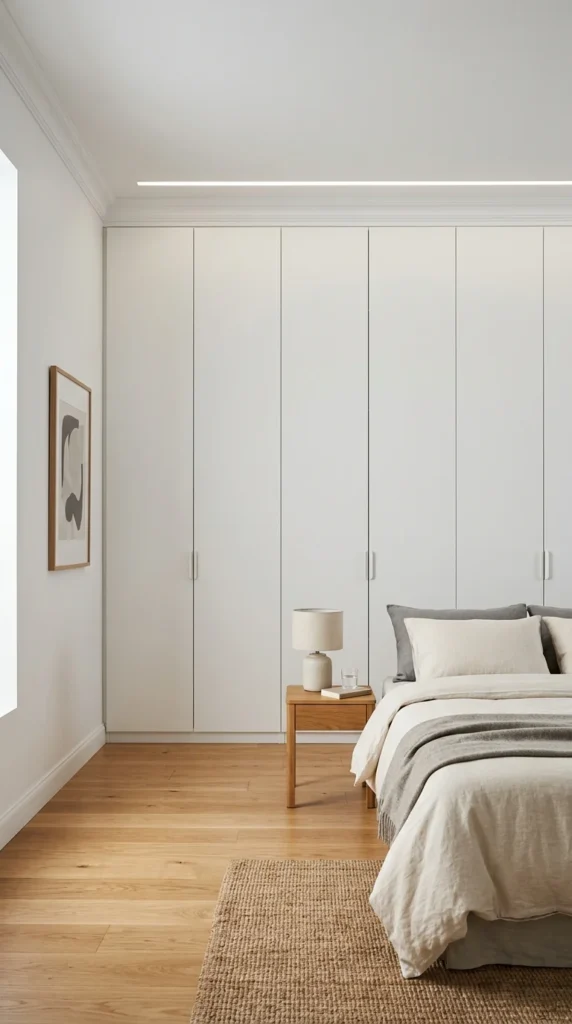
Clutter is the enemy of space. When items are scattered or stored in mismatched bins, the room feels fragmented. The IKEA PAX system is the gold standard for creating a “built-in” look on a budget. To make a small room feel larger, run the PAX units from floor to ceiling and wall to wall.
When a wardrobe looks like a permanent wall rather than a piece of furniture, it “recedes” into the architecture of the room. Choose high-gloss white doors to reflect light, or mirrored doors to double the visual depth of the space. By consolidating all your storage—clothes, linens, and even suitcases—into one seamless wall unit, you free up the rest of the room to remain minimalist and open.
4. Reflective Surfaces
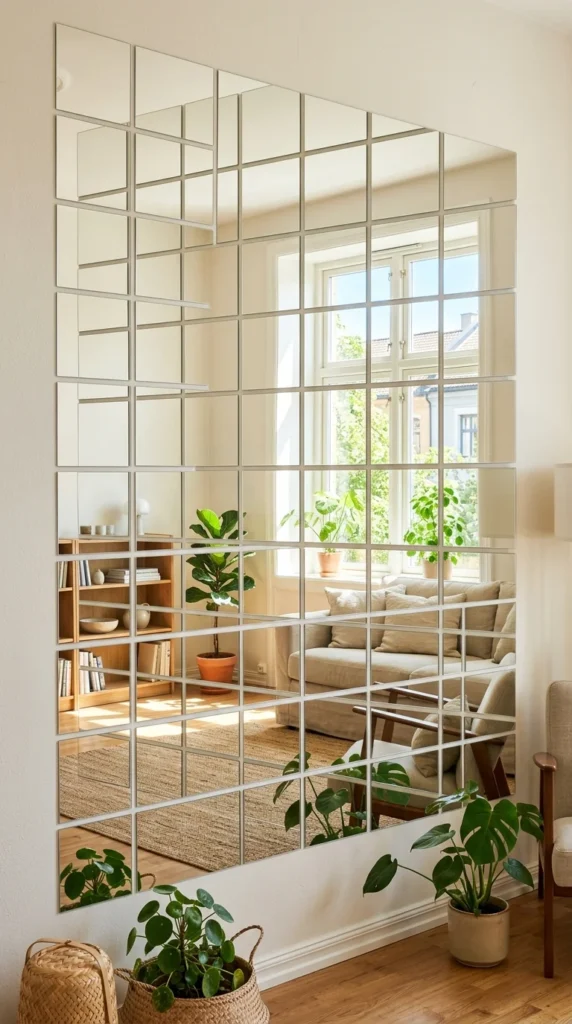
It is the oldest trick in the interior design book because it works: mirrors create the illusion of an extra room. Instead of one small hanging mirror, use the IKEA LOTS or HÖNEFOSS adhesive mirrors to create a full-length “mirror wall” or a large geometric installation.
Positioning mirrors opposite a window is a strategic move. It captures natural light and bounces it into the darker corners of the room, erasing shadows that make a space feel “closet-like.” The reflection provides a focal point that draws the eye “through” the wall, effectively doubling the visual distance. If you prefer a more classic look, the oversized HOVET mirror leaning against a wall can serve as a stunning piece of “functional art” that expands the room’s horizons.
5. Floating Units
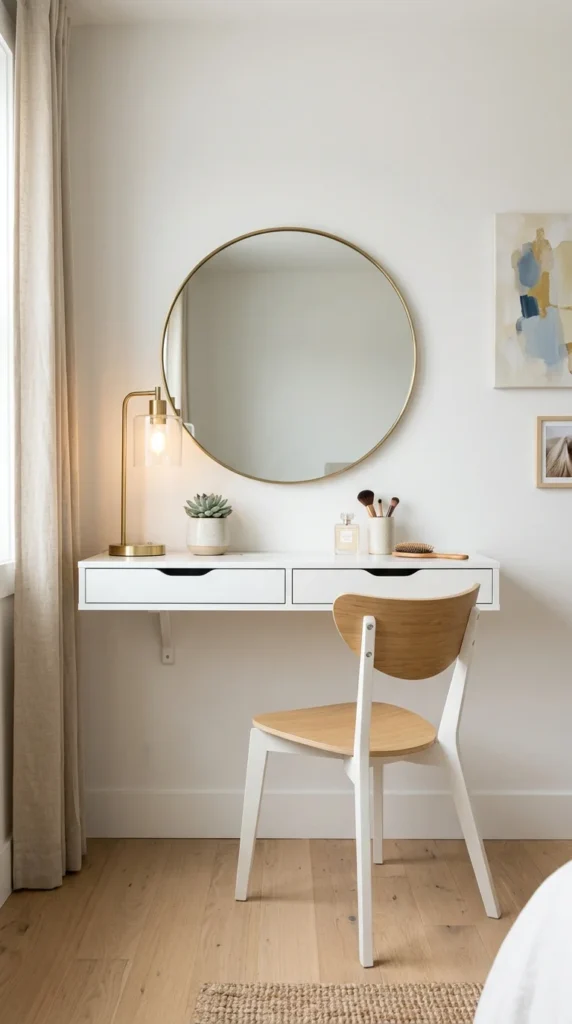
The moment you put legs on furniture, you break up the floor space. To combat this, look toward IKEA’s shelving and kitchen cabinet ranges (like the SEKTION or BESTÅ) and mount them directly to the wall. A floating “floating nightstand” using an EKBY ALEX drawer unit keeps the area underneath open.
When the floor extends all the way to the baseboard without interruption, the brain perceives the room as being wider. Floating units also allow you to utilize “awkward” heights. You can mount a row of shallow BESTÅ cabinets high up near the ceiling for long-term storage, keeping the “eye level” clear of clutter, which helps in maintaining an airy atmosphere.
6. Hidden Drawers
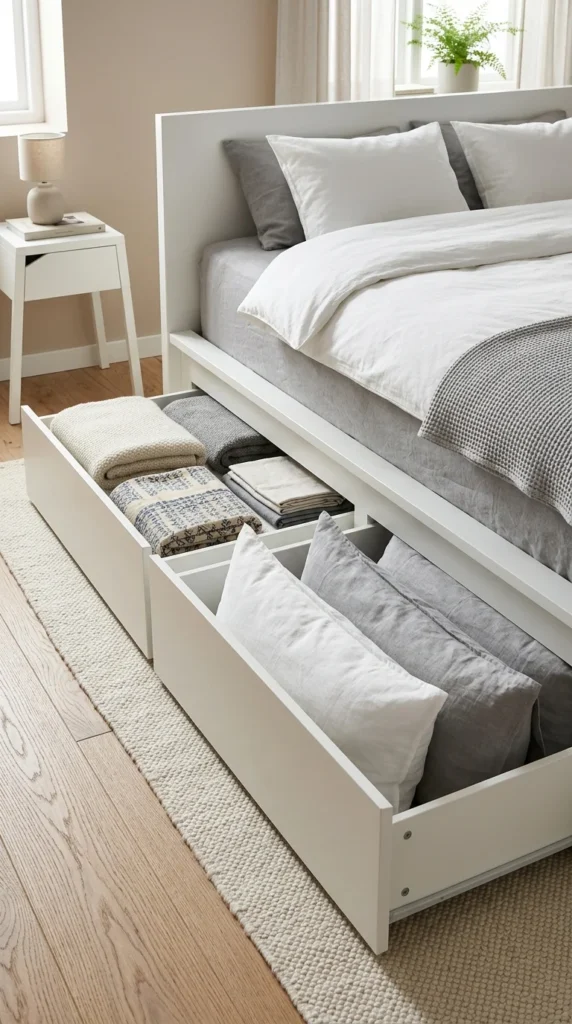
In a small bedroom, the space under the bed is prime real estate. However, shoving plastic bins under a bed often looks messy. The IKEA MALM or NORDLI storage beds are engineered to maximize this footprint with integrated, sleek drawers.
This hack is about “invisible storage.” By housing your bulky items—like winter coats or extra bedding—within the bed frame itself, you remove the need for an extra dresser or chest. Eliminating just one piece of standing furniture can transform a cramped room into a breathable space. For those who already have a bed frame, IKEA’s VARDÖ under-bed boxes offer a low-profile solution that keeps items organized and out of sight.
7. Slim Workspaces
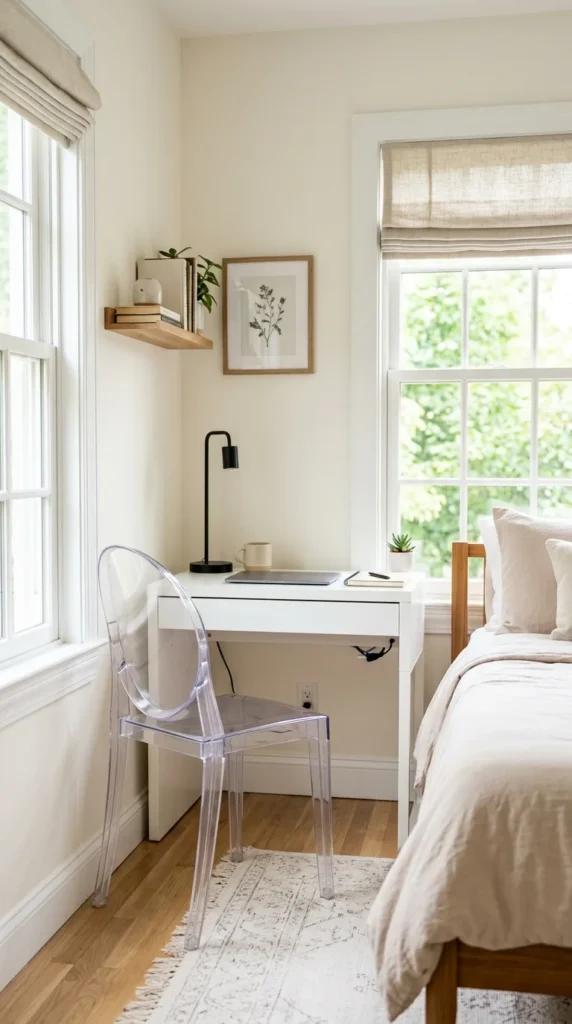
With the rise of home offices, many find themselves needing a desk in an already small bedroom. The key is to choose pieces with a “low visual weight.” The IKEA MICKE desk or the LISABO table are perfect candidates because of their slim profiles and clean lines.
To take this hack further, pair your slim desk with a transparent chair (like the TOBIAS). Because you can see through the chair, it doesn’t “block” the room. Additionally, using a wall-mounted drop-leaf table like the NORBERG allows you to have a workspace when needed and a completely clear wall when you don’t. Flexibility is the cornerstone of making small spaces feel versatile and large.
8. Sconce Lighting
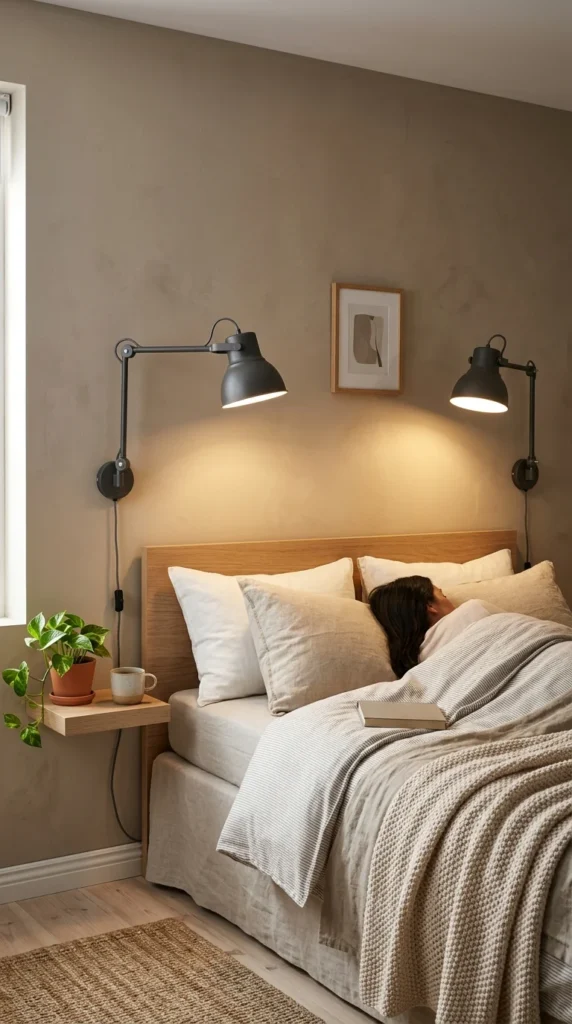
Lighting is often an afterthought, but floor lamps and table lamps take up valuable surface area. By hacking IKEA wall lamps—like the RANARP or HEKTAR—you can clear off your nightstands and corners.
Wall-mounted sconces draw the eye upward, emphasizing the height of the room rather than its narrow width. Furthermore, by using smart bulbs (like the TRÅDFRI line), you can control the warmth and brightness. Layered lighting—where you have multiple light sources at different heights—eliminates dark corners. A well-lit room always feels larger and more inviting than one with a single, harsh overhead light that casts long, space-shrinking shadows.