
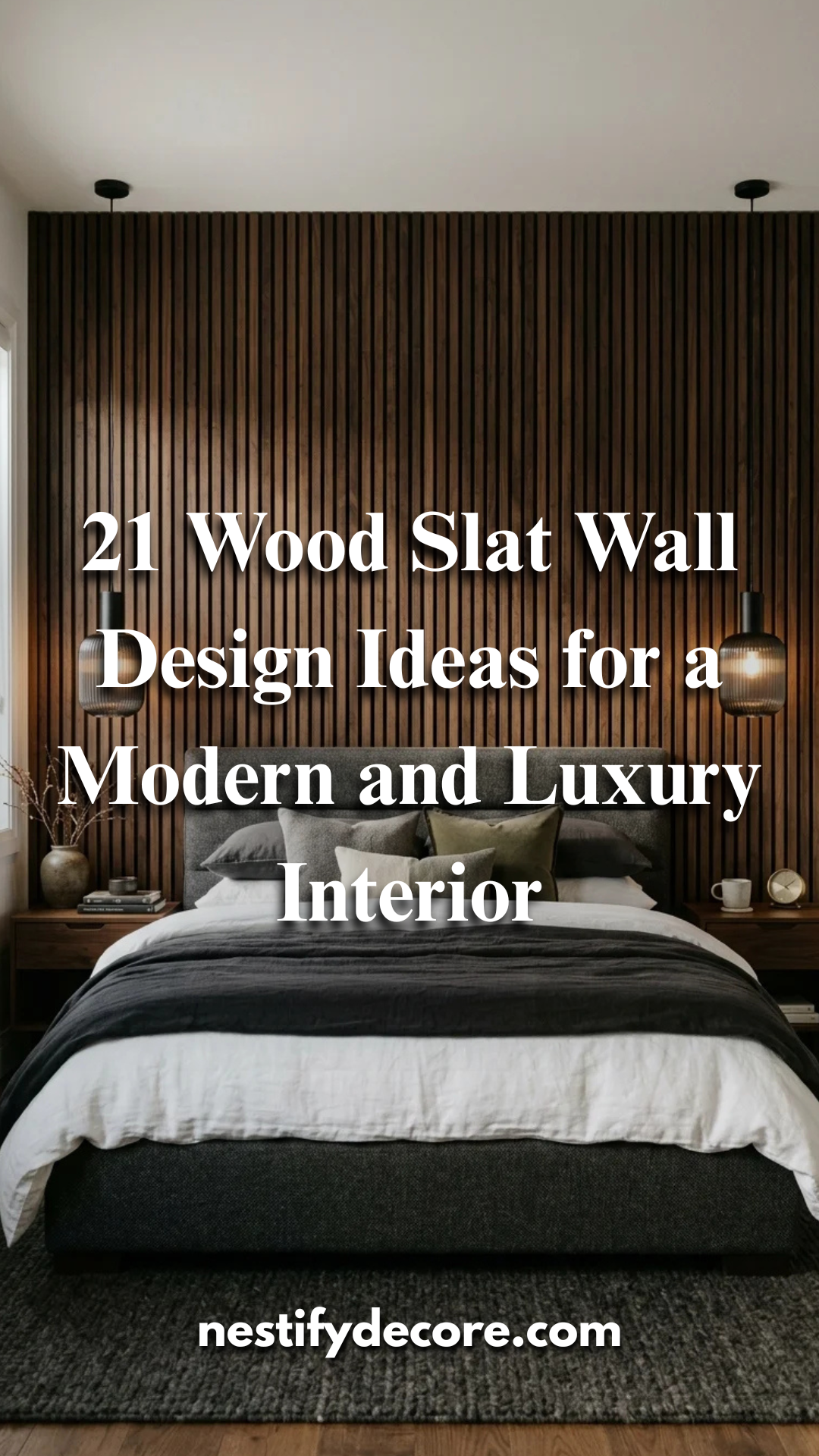
Wood slat walls have transitioned from a niche architectural detail to a cornerstone of modern interior design. Combining the organic warmth of natural timber with the precision of contemporary geometry, these features offer more than just aesthetic appeal; they provide texture, depth, and even acoustic benefits. Whether you are looking to create a cozy sanctuary or a sleek, high-end gallery vibe, wood slats are the ultimate versatile tool for transformation.
1. Feature Wall
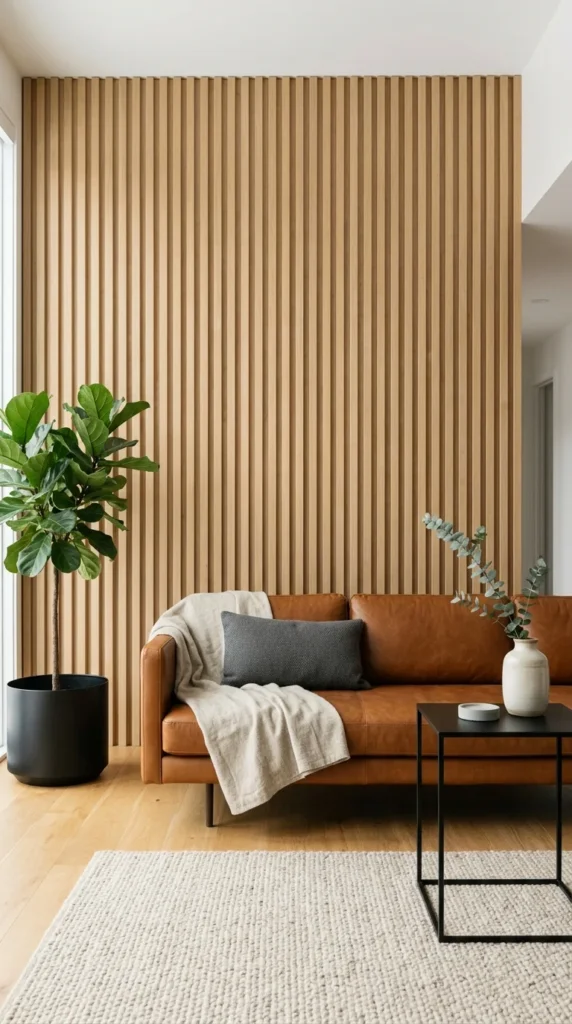
The most classic application of wood slats is the full-height feature wall. By covering an entire surface in vertical timber strips, you draw the eye upward, creating an illusion of height and grandeur. In luxury interiors, light-colored woods like white oak or ash are frequently used to maintain a sense of airiness while adding necessary organic texture to otherwise flat, modern spaces.
2. Bedroom Headboard
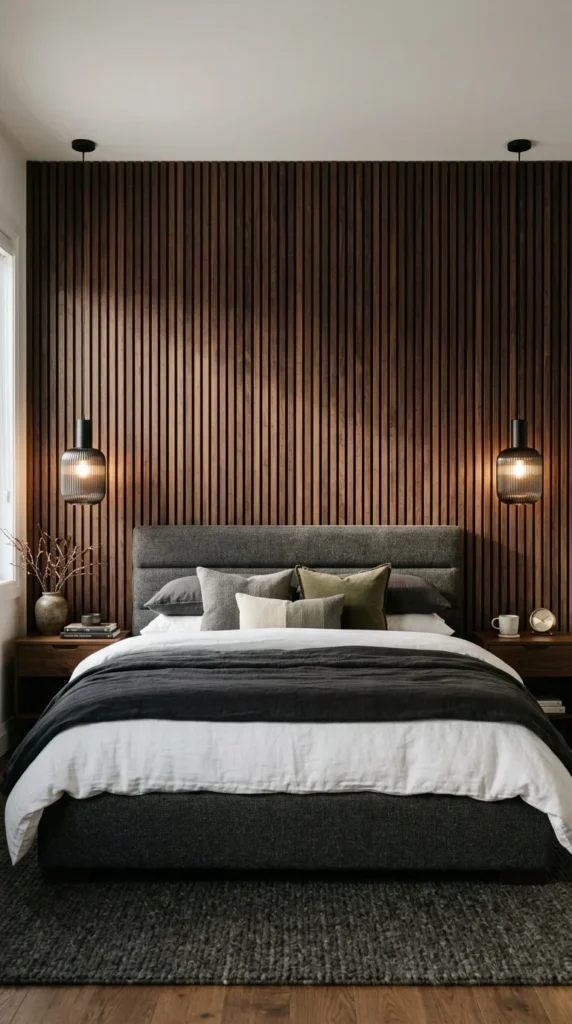
Replacing a traditional furniture headboard with a slat wall creates a seamless, built-in look. Extending the slats across the entire width of the wall provides a sense of enclosure and intimacy. For a high-end feel, consider using darker woods like walnut or stained mahogany, which contrast beautifully against crisp white linens and soft textiles.
3. TV Backdrop
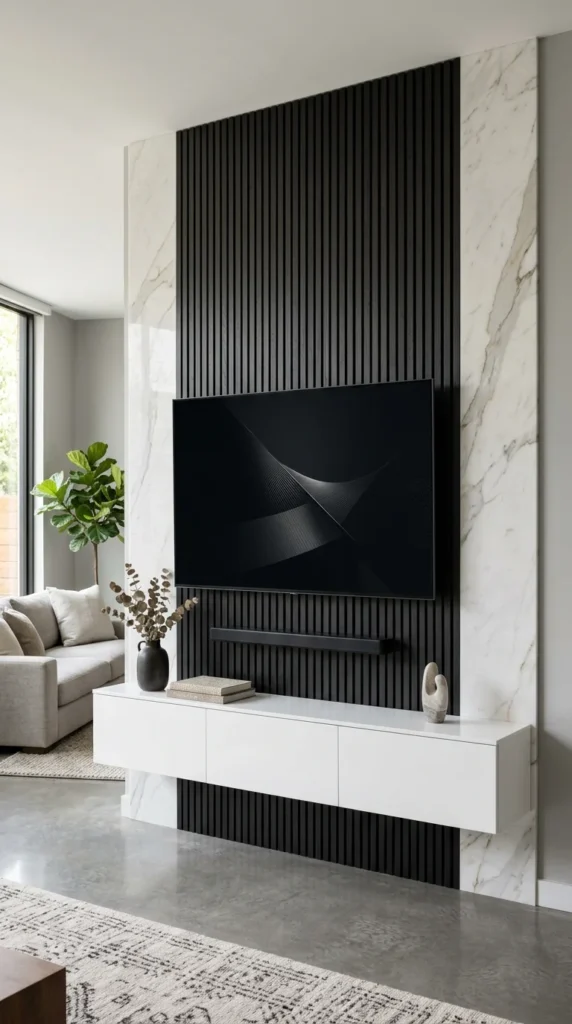
Modern technology often feels cold and clinical. Mounting a television against a wood slat backdrop softens the electronics’ appearance. The vertical lines help camouflage wires and mounting brackets, while the rhythmic pattern of the wood prevents the large black screen from feeling like a “void” on the wall when turned off.
4. Room Divider
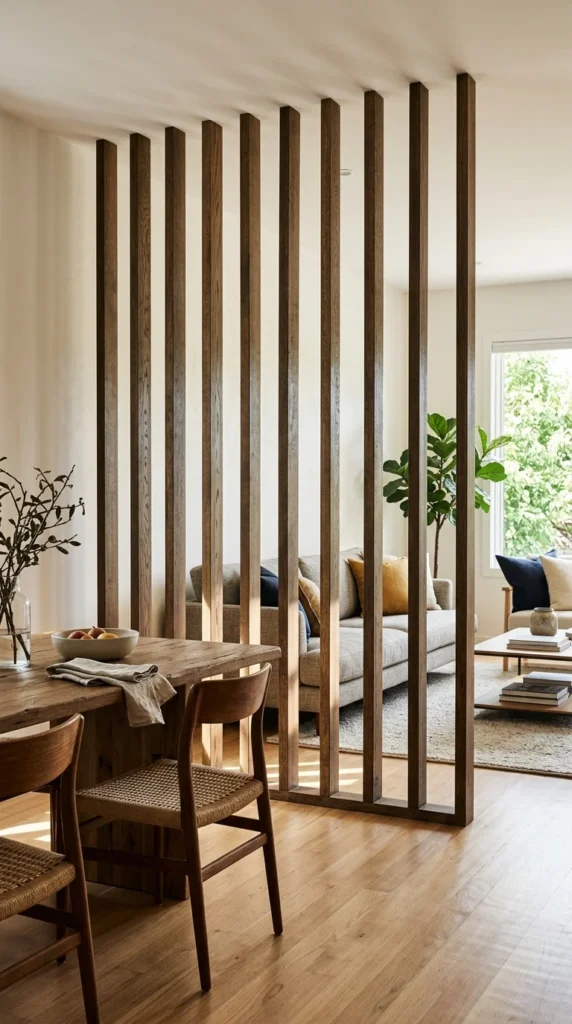
In open-plan homes, defining spaces without closing them off is a common challenge. Freestanding wood slats act as “transparent” walls. They provide a psychological boundary between, for example, a kitchen and a dining room, while still allowing light and air to flow freely. This maintains the home’s spacious feel while providing much-needed structure.
5. Ceiling Accent
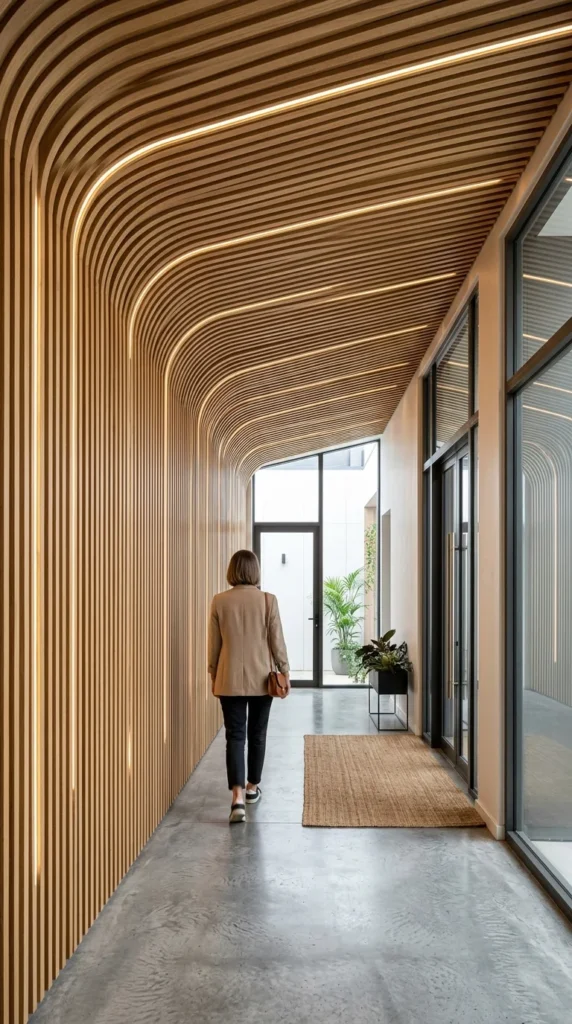
One of the most luxurious ways to use slats is to extend them from the wall onto the ceiling. This “wrap-around” effect creates a cocoon-like environment. It is particularly effective in entryways or home theaters, where the ceiling becomes a major architectural feature rather than an afterthought.
6. Entryway Statement
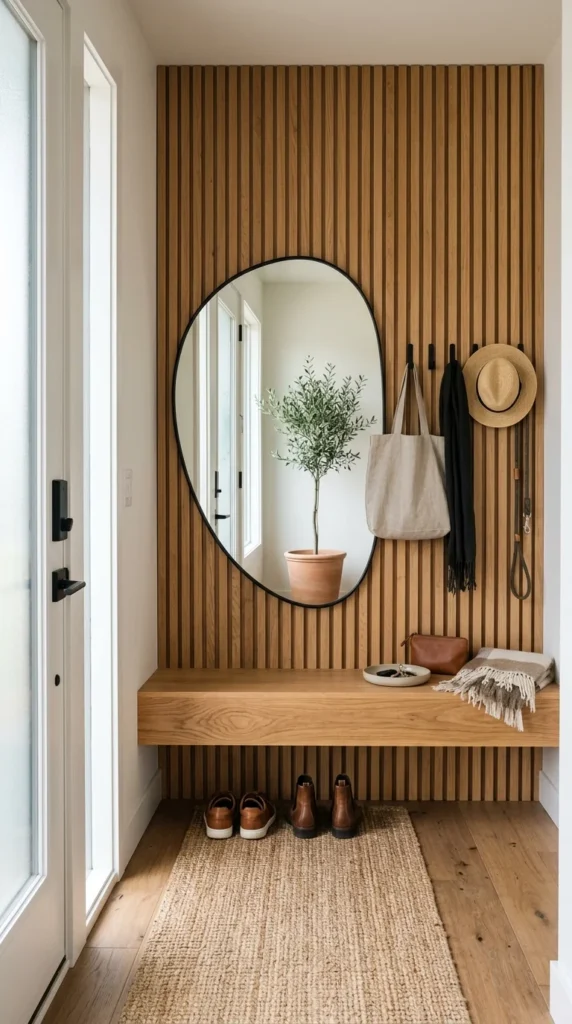
The entryway sets the tone for the entire home. A slat wall here serves both a functional and aesthetic purpose. You can integrate hidden coat hooks, a floating bench, or shelving directly into the slats for a streamlined look that hides the clutter of daily life while impressing guests the moment they step inside.
7. Home Office
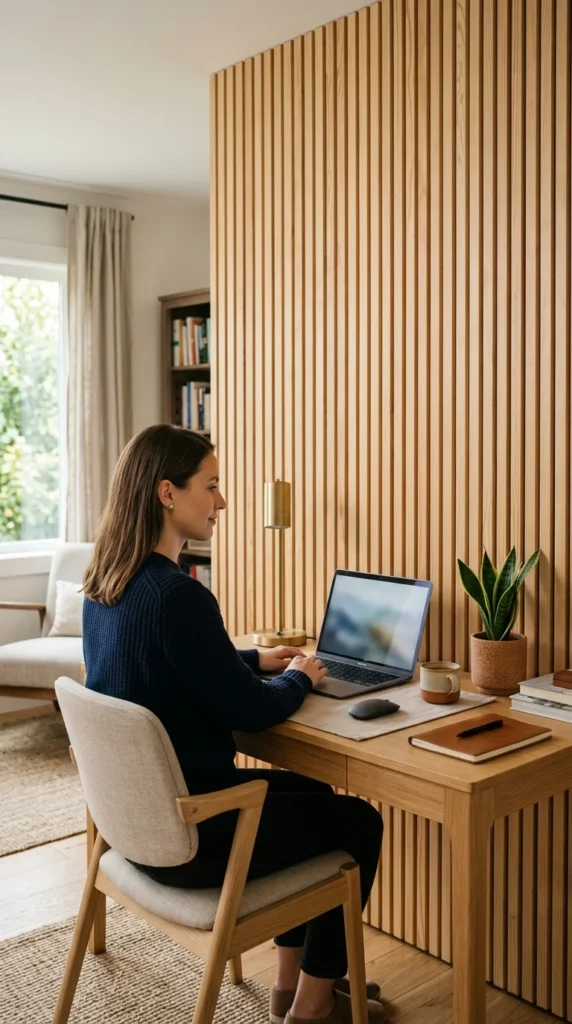
With the rise of remote work, the home office has become a priority for design. Slat walls are excellent for offices because the gaps between the wood strips act as natural sound diffusers. This improves the acoustics for video calls and creates a calm, focused environment away from the distractions of the rest of the house.
8. Hidden Doors
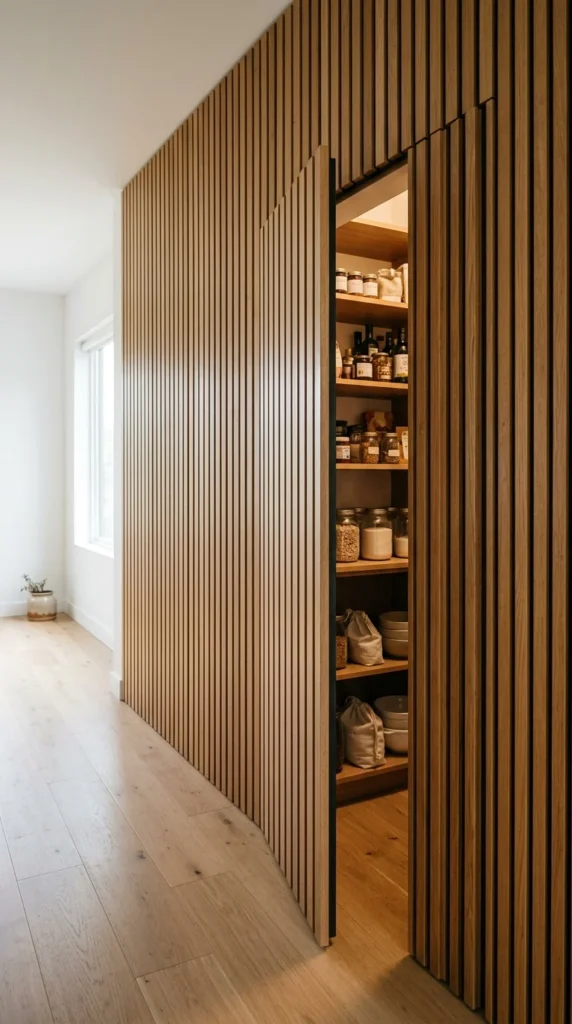
For a truly high-end, “Bond-villain” aesthetic, use wood slats to create “jib doors”—doors that are flush with the wall and covered in the same material. Because the vertical lines of the slats hide the vertical seams of the door frame, the entrance becomes invisible when closed, maintaining a clean, uninterrupted architectural line.
9. Kitchen Island
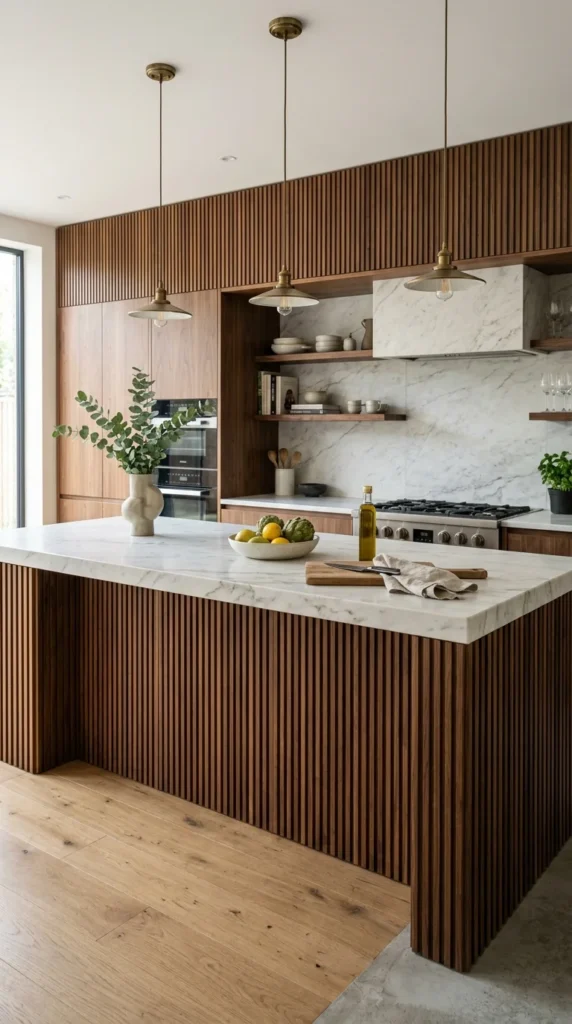
Wood slats aren’t just for walls. Wrapping the base of a kitchen island in timber slats adds a layer of sophistication to the heart of the home. It breaks up the heavy look of stone countertops and cabinetry, adding a tactile element to the space where people often gather.
10. Bathroom Spa
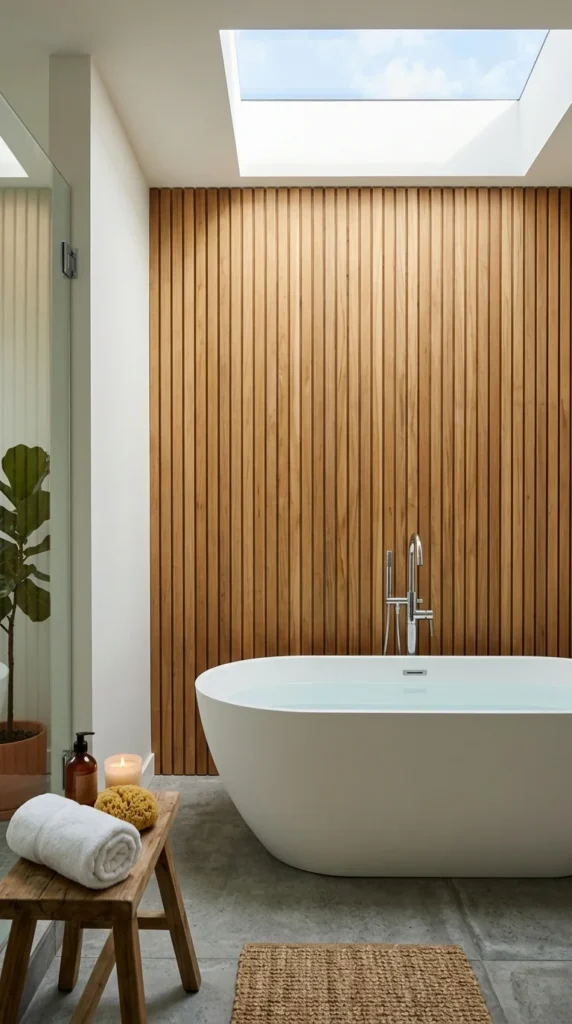
Incorporate a “zen” vibe into your bathroom by using moisture-treated wood slats (like teak or cedar). Placing them behind a bathtub or in a dry area of the bathroom mimics the look of a high-end sauna or spa. The wood provides a warm contrast to the cold surfaces of tile, porcelain, and chrome.
11. Staircase Wrap
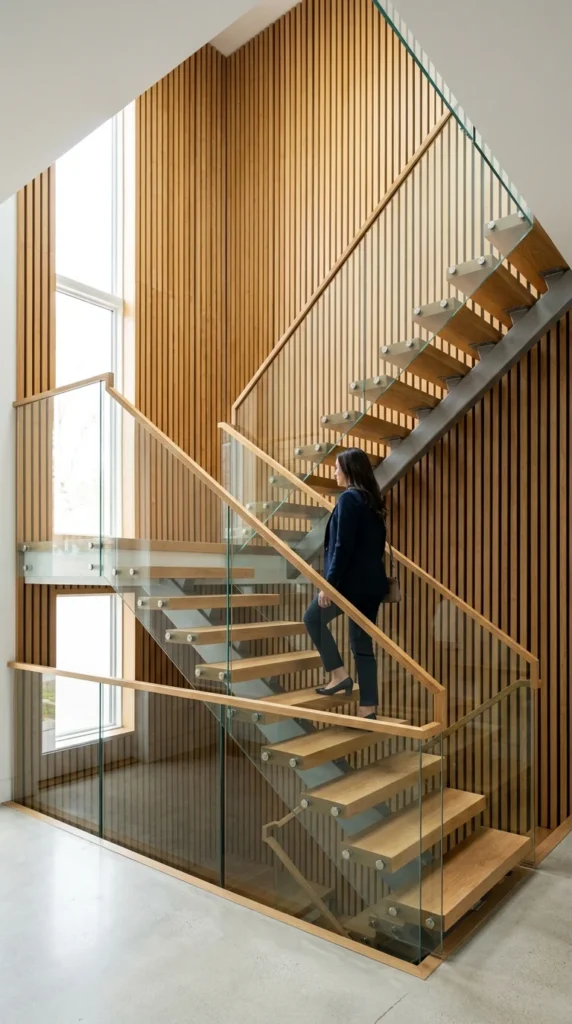
Staircases are often transitional spaces that feel empty. A wood slat wall that follows the incline of the stairs adds visual interest and emphasizes the verticality of the home. It turns a functional thoroughfare into a gallery-like experience.
12. Corner Accents
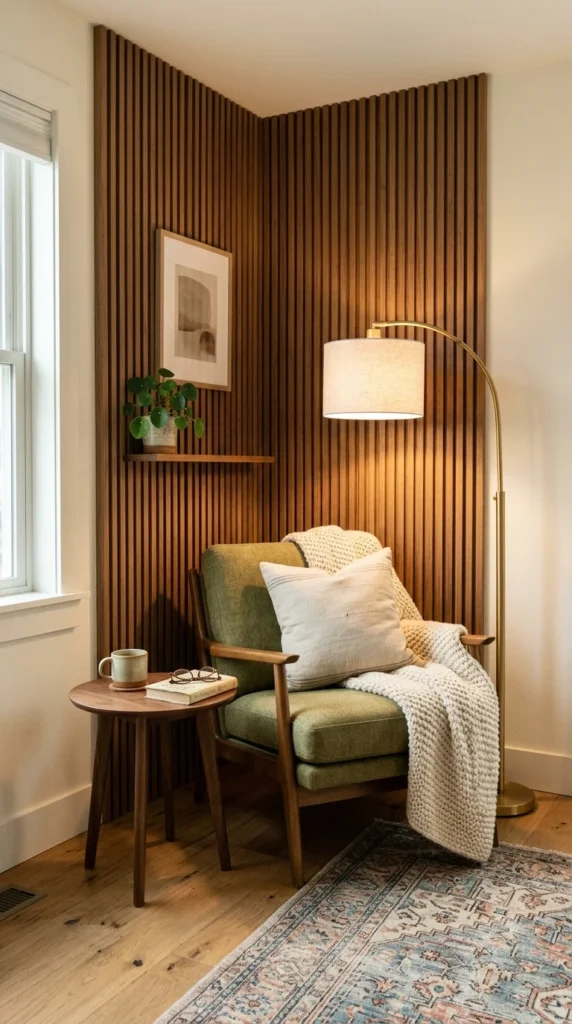
You don’t always need to cover an entire wall. Sometimes, a “partial” slat feature in a corner can define a specific zone, such as a reading nook or a small bar area. This adds a “pop” of texture without overwhelming the room’s design.
13. Lighting Integration
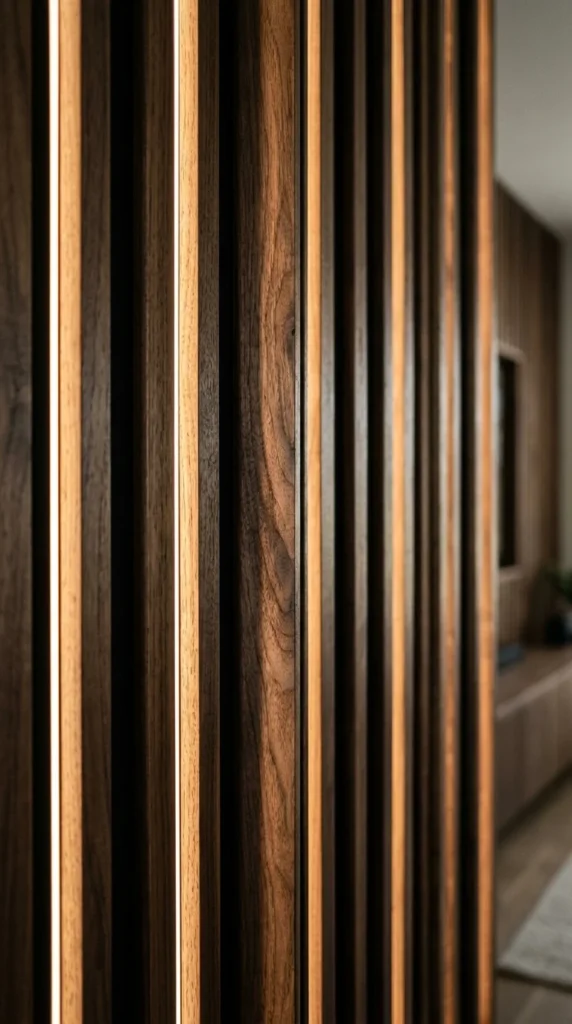
The gaps between slats are perfect for housing hidden LED strips. By placing lighting inside the recesses, you create a glowing “wash” of light that emphasizes the three-dimensional quality of the wall. This is a favorite technique in luxury hotels and high-end modern homes to create mood lighting.
14. Minimalist White
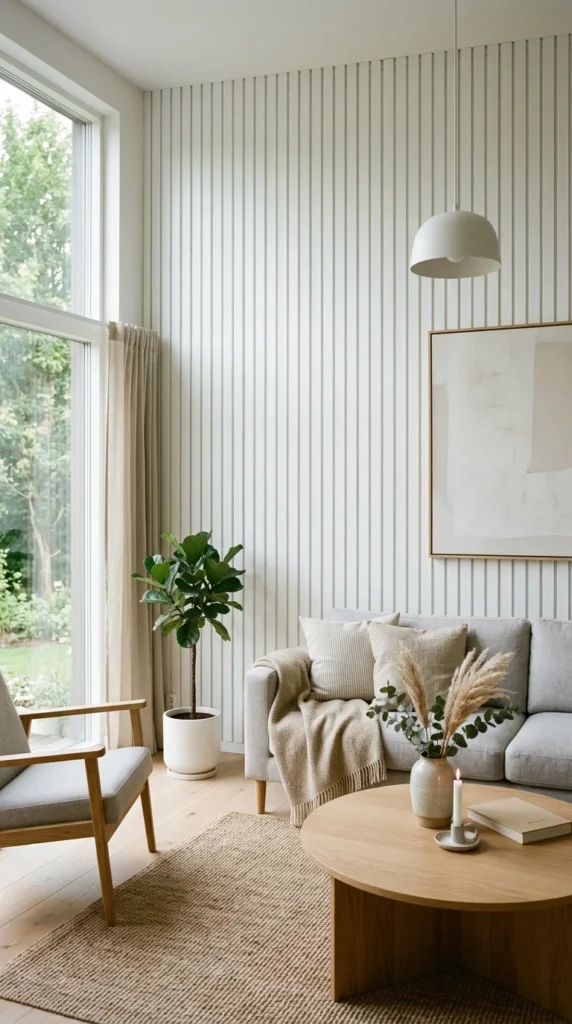
For those who love the minimalist look but find flat walls boring, painted slats are the answer. Painting the slats white or cream retains the architectural texture while keeping the space monochromatic and bright. It’s a sophisticated way to add “quiet” detail to a room.
15. Dark Charcoal
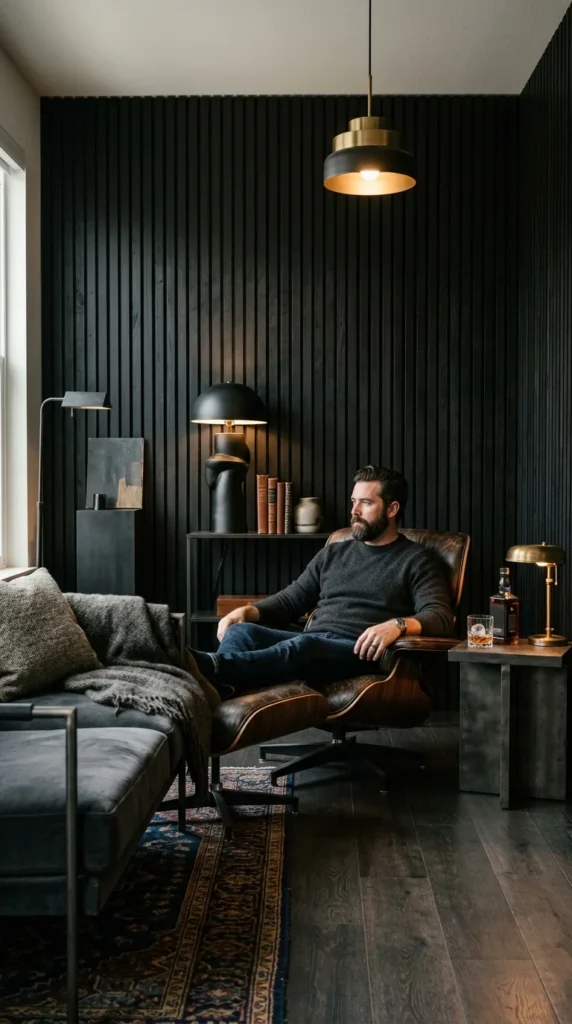
On the opposite end of the spectrum, dark charcoal or black-stained slats offer an incredibly dramatic and moody atmosphere. This works exceptionally well in media rooms, dens, or bedrooms where you want to create a sense of mystery and luxury.
16. Curved Surfaces
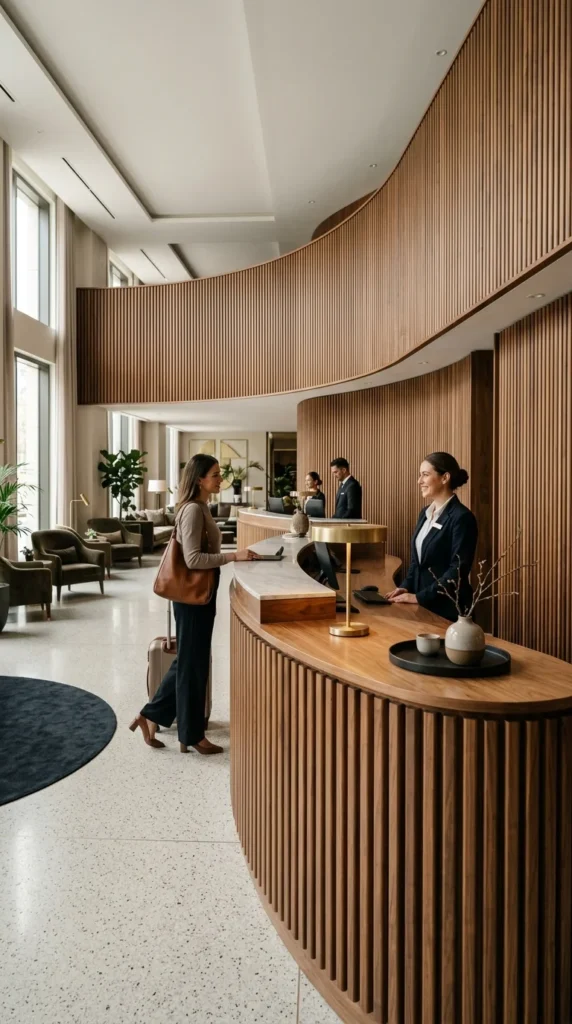
Modern manufacturing allows for flexible slat panels that can be applied to curved walls or rounded pillars. These curves soften the sharp angles of modern architecture and create a more organic, fluid feeling in a room.
17. Floating Shelves
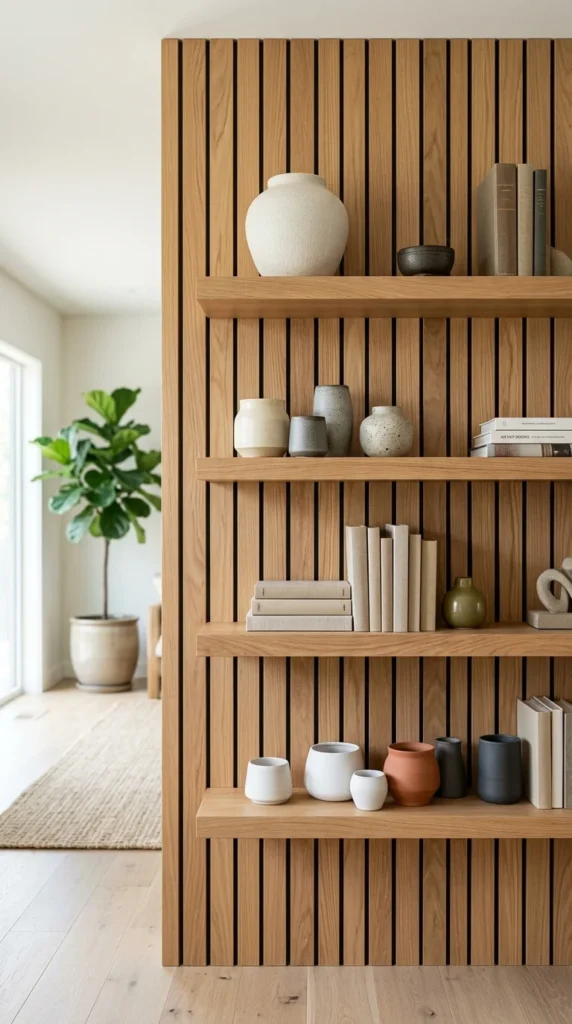
By integrating floating shelves directly into the slat system, you create a cohesive storage solution. The shelves can be made of the same wood as the slats, making them appear as a natural extension of the wall. This is perfect for displaying curated art pieces or a small library.
18. Mixed Materials
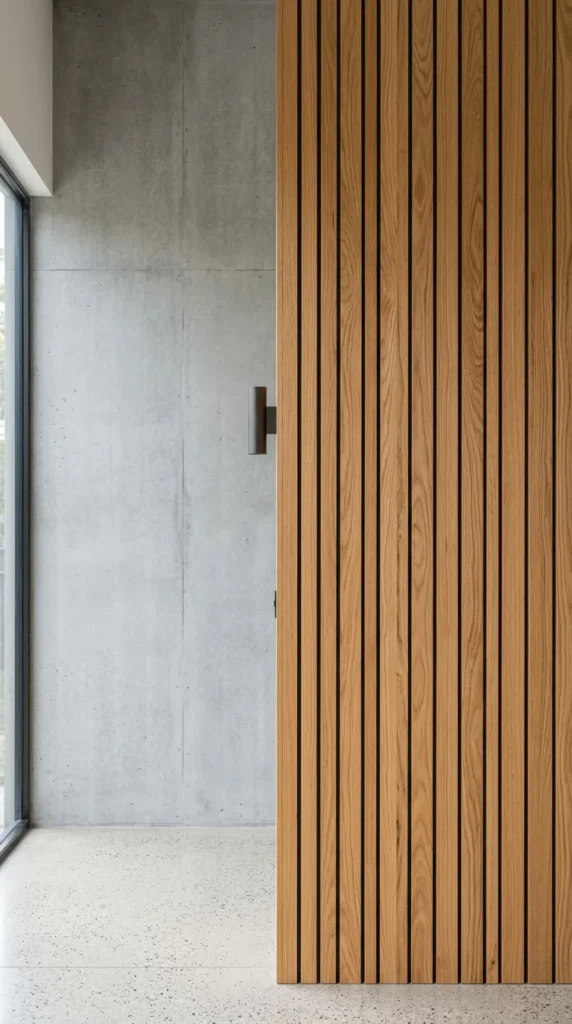
Wood slats pair beautifully with other “raw” materials. Combining timber with concrete, marble, or cold-rolled steel creates a “soft-industrial” look that is quintessential to modern luxury. The contrast between the organic wood and the industrial stone or metal creates a balanced, sophisticated aesthetic.
19. Horizontal Orientation
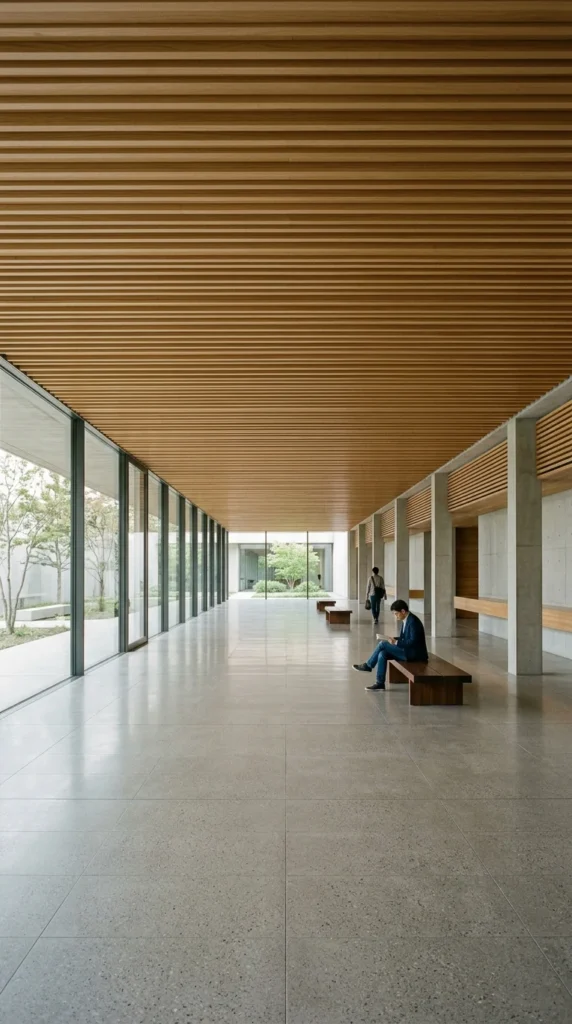
While vertical slats add height, horizontal slats add width. This is a great trick for making a small room feel more expansive. Horizontal slats often lend a more “mid-century modern” or “craftsman” feel to a space, reminiscent of traditional Japanese architecture.
20. Built-in Nook
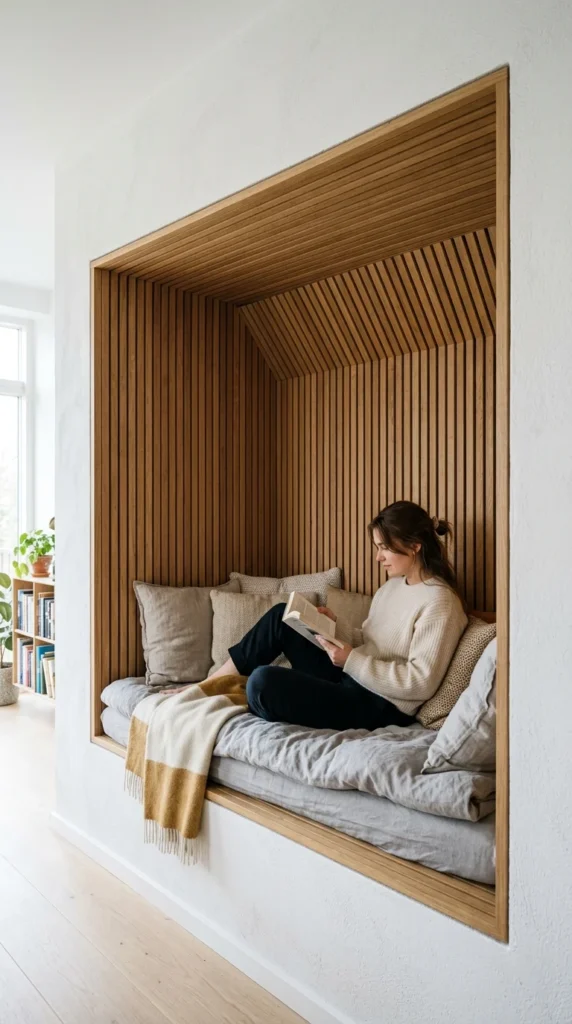
Creating a “room within a room,” a slat-lined nook provides a sense of sanctuary. Whether it’s a built-in dining banquette or a window seat, the slats provide a tactile, cozy environment that feels separate from the rest of the house.
21. Outdoor Transition
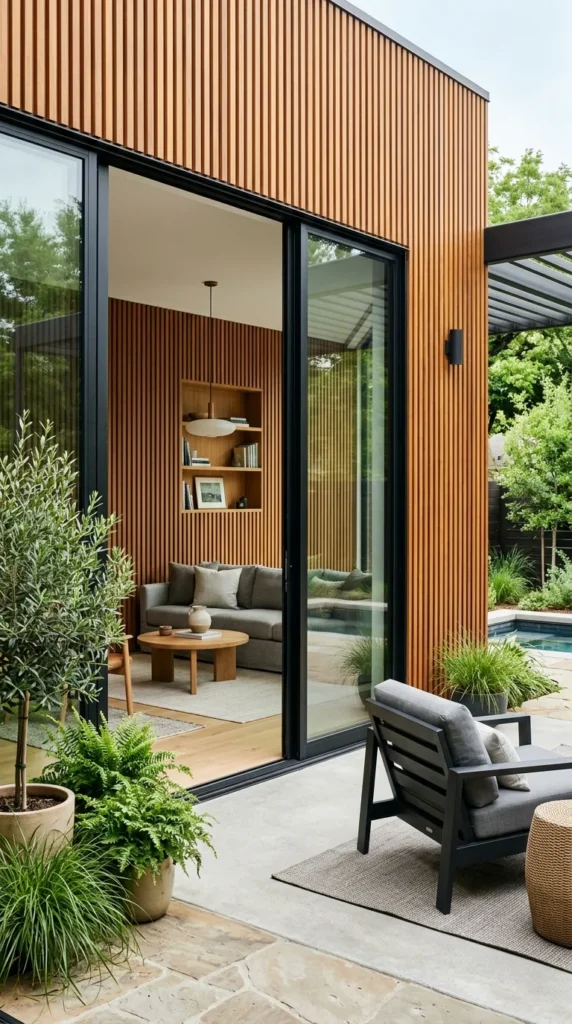
Finally, use wood slats to bridge the gap between indoors and outdoors. Using the same slat design on an interior wall and an adjacent exterior patio wall creates a seamless transition. This “indoor-outdoor” flow is a hallmark of luxury residential architecture, making the living space feel twice as large.