
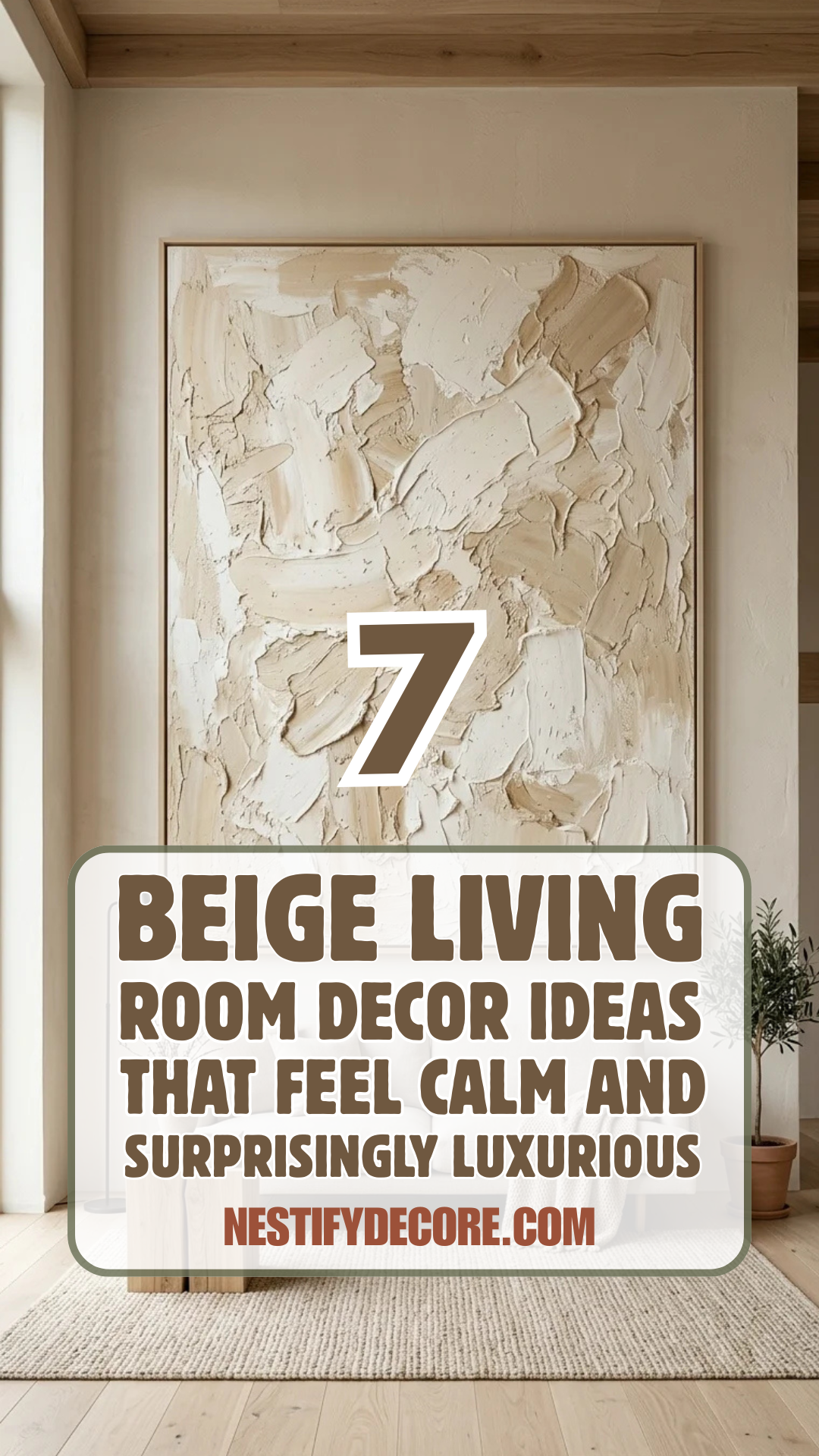
For years, the color beige was unfairly maligned as the “safe” or “boring” choice in interior design. Often associated with uninspired rentals and dated office spaces, it took a backseat to the bold jewel tones of the mid-2010s and the stark greyscale of the modern farmhouse era. However, the design world has undergone a significant shift. Beige is no longer just a neutral backdrop; it is the cornerstone of the “Quiet Luxury” aesthetic.
When executed correctly, a beige living room feels like a high-end sanctuary. It evokes a sense of calm, cleanliness, and understated wealth. The secret lies in moving away from flat, one-dimensional palettes and embracing depth, texture, and architectural interest. Here are seven expert-approved ways to transform a beige living room into a space that feels both tranquil and undeniably luxurious.
1. Layered Textures
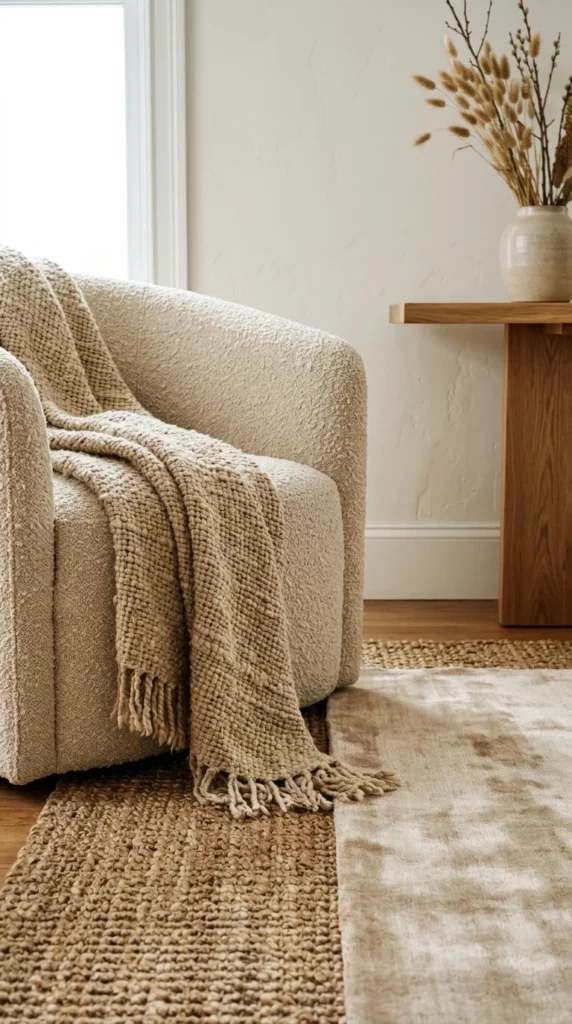
The most common mistake in neutral design is using the same texture throughout the room. Without variation, beige can feel flat and lifeless. To achieve a luxurious feel, you must play with “tactile contrast.” This means mixing materials that feel different to the touch but share a similar color profile.
Think about the juxtaposition of a matte lime-wash wall against a shimmering silk cushion, or a chunky knit wool throw draped over a smooth, top-grain leather ottoman. By layering these different surfaces, you create visual weight and interest. The eye moves across the room, noticing the subtle differences in how light hits the boucle, the linen, and the velvet. This complexity is what separates a designer-grade room from a generic one.
2. Warm Woods
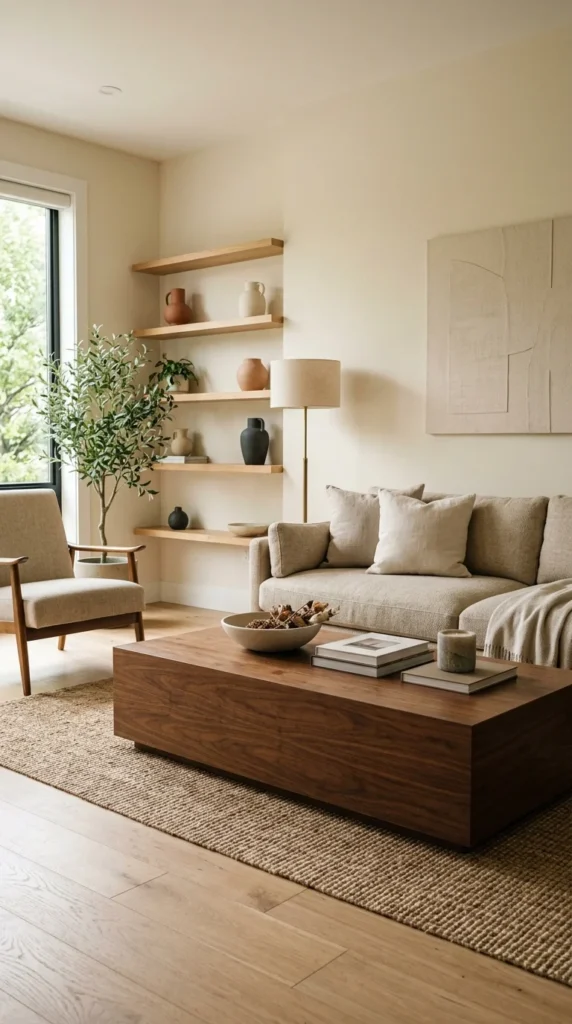
Beige belongs to the warm side of the color spectrum, and nothing complements it better than natural wood. To keep a beige room from feeling cold or clinical, incorporate various wood tones. Light woods like oak, ash, and white pine keep the space feeling airy and Scandi-inspired. Conversely, deeper tones like walnut or teak add a sense of history and “old money” elegance.
The key is to let the wood grain show. The organic patterns found in natural timber act as a “print” in an otherwise solid-colored room. Whether it’s a hand-carved side table, exposed ceiling beams, or a simple wooden tray on the coffee table, these elements ground the beige palette and connect the indoors with the natural world.
3. Metallic Accents
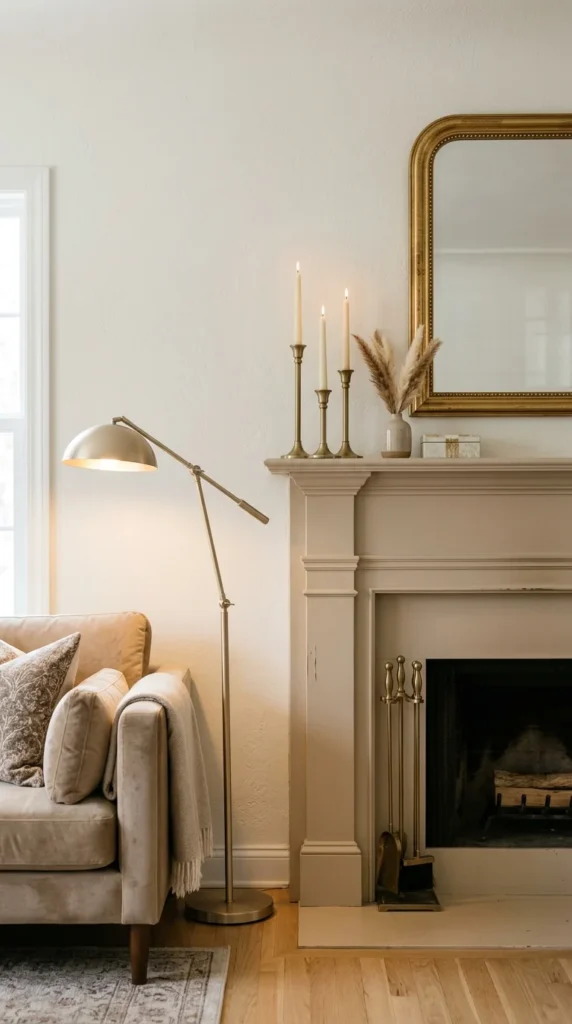
To elevate beige from “casual” to “luxurious,” you need a touch of shimmer. Metallic accents act like jewelry for a room. While silver can sometimes feel too cool against warm beige, metals like brushed brass, champagne gold, and even antique bronze create a harmonious and expensive look.
The trick is moderation. Avoid high-shine chrome, which can look dated. Instead, opt for “living finishes” or brushed textures that feel more artisanal. Use these metals in functional items: a sleek floor lamp, the legs of a coffee table, or the hardware on a sideboard. The reflection of light off these metallic surfaces adds a layer of sophistication that prevents the beige from looking too flat.
4. Statement Lighting
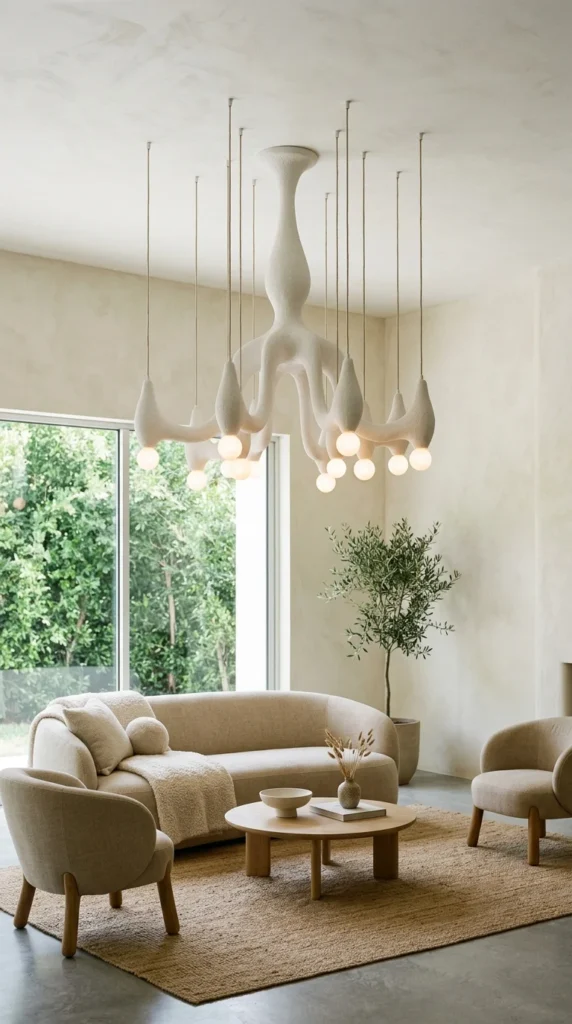
In a room where the color palette is restrained, the silhouette of your furniture and fixtures becomes the star of the show. Statement lighting is perhaps the most effective way to signal luxury in a neutral space. Instead of a standard flush mount, look for oversized, sculptural pieces that command attention.
Plaster chandeliers, oversized paper lanterns, or mid-century modern mobile lights in white or cream tones work beautifully. Because the color of the fixture blends with the ceiling, the focus remains on the shape and the quality of the light it casts. Soft, diffused lighting is essential for maintaining the “calm” aspect of the room—avoid harsh overhead bulbs and instead use a mix of floor lamps, table lamps, and sconces to create a warm, inviting glow.
5. Natural Greenery
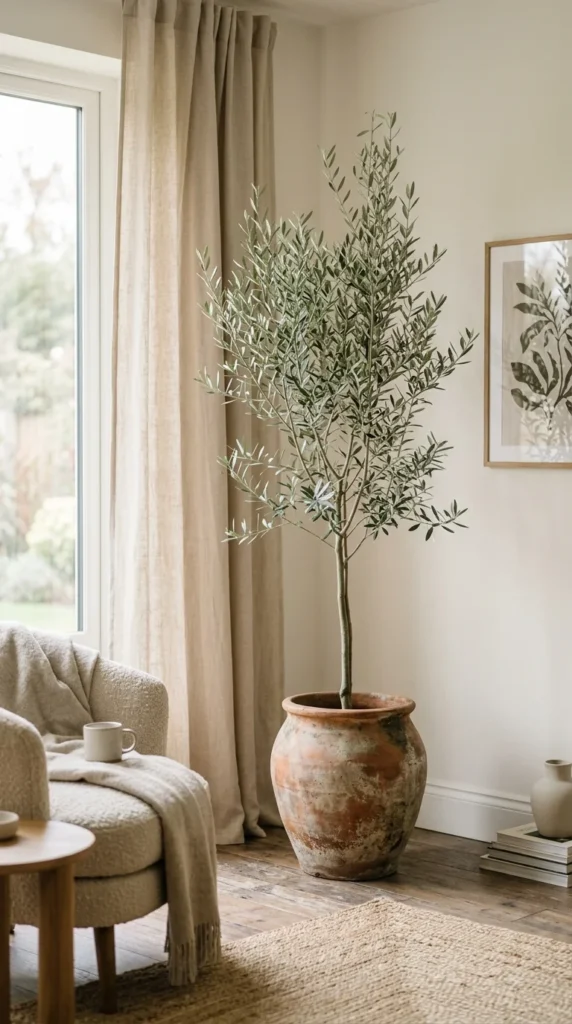
A monochromatic beige room can sometimes feel a bit “still.” To breathe life into the space, introduce organic elements. Large-scale indoor plants or even high-quality dried botanicals can transform the energy of the room. The muted greens of an olive tree or the soft brown of pampas grass complement beige perfectly without breaking the monochromatic spell.
The vessel you choose for your plants is just as important as the plant itself. To maintain the luxurious feel, opt for handcrafted ceramics, stone planters, or aged terracotta. The goal is to make the greenery look like a deliberate piece of art rather than an afterthought. The presence of living things adds a layer of “lived-in” luxury that makes a house feel like a home.
6. Oversized Art
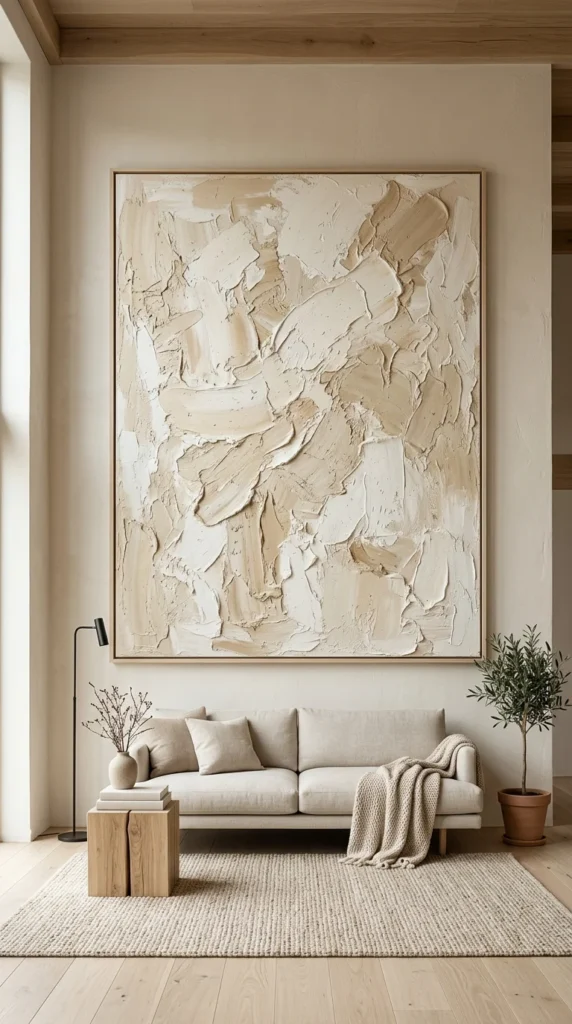
Art is often where people feel the need to “add color,” but in a luxury beige living room, sticking to a neutral palette for your artwork can be even more impactful. Large-scale, abstract pieces that focus on texture and movement rather than color create a sophisticated, gallery-like atmosphere.
Consider a large canvas with heavy texture—think plaster art or thick oil paint in shades of off-white and tan. Alternatively, a series of minimalist line drawings or framed architectural photography can add a sense of intellectual depth. When the art is oversized, it makes the room feel grander and more intentional. It tells the viewer that every element of the room has been curated with care.
7. Tone-on-Tone
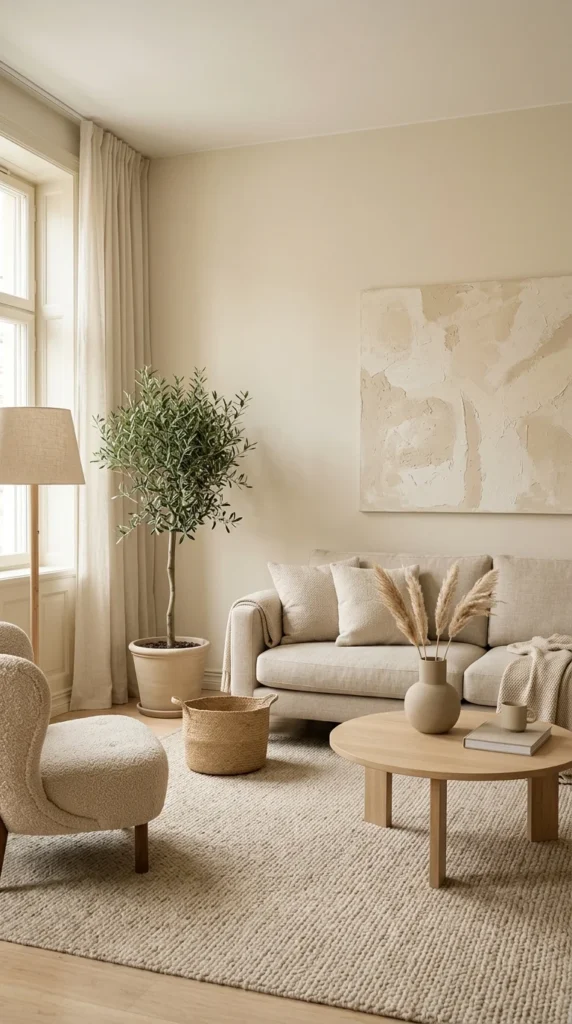
The ultimate expression of beige luxury is the tone-on-tone approach. This involves using a very narrow slice of the color wheel—moving only between cream, oatmeal, sand, and biscuit. When you remove high-contrast colors, the boundaries of the room seem to disappear, making the space feel larger and more serene.
To master this look, you must pay attention to the “undertones” of your beige. Some beiges have pink undertones, while others are more yellow or green. For a cohesive, professional look, stick to one type of undertone throughout the room. When everything from the walls to the curtains to the carpet exists in the same tonal family, the result is a seamless, wrap-around effect that feels incredibly cocoon-like and high-end.
Final Thoughts on the Beige Renaissance
Creating a beige living room that feels luxurious requires a shift in mindset. It is not about a lack of color, but rather the celebration of form, light, and material. By focusing on the quality of your pieces and the richness of your textures, you can create a space that offers a visual and mental respite from the chaos of the outside world. Beige is no longer the “boring” choice—it is the choice of those who appreciate the quiet power of sophisticated design.