
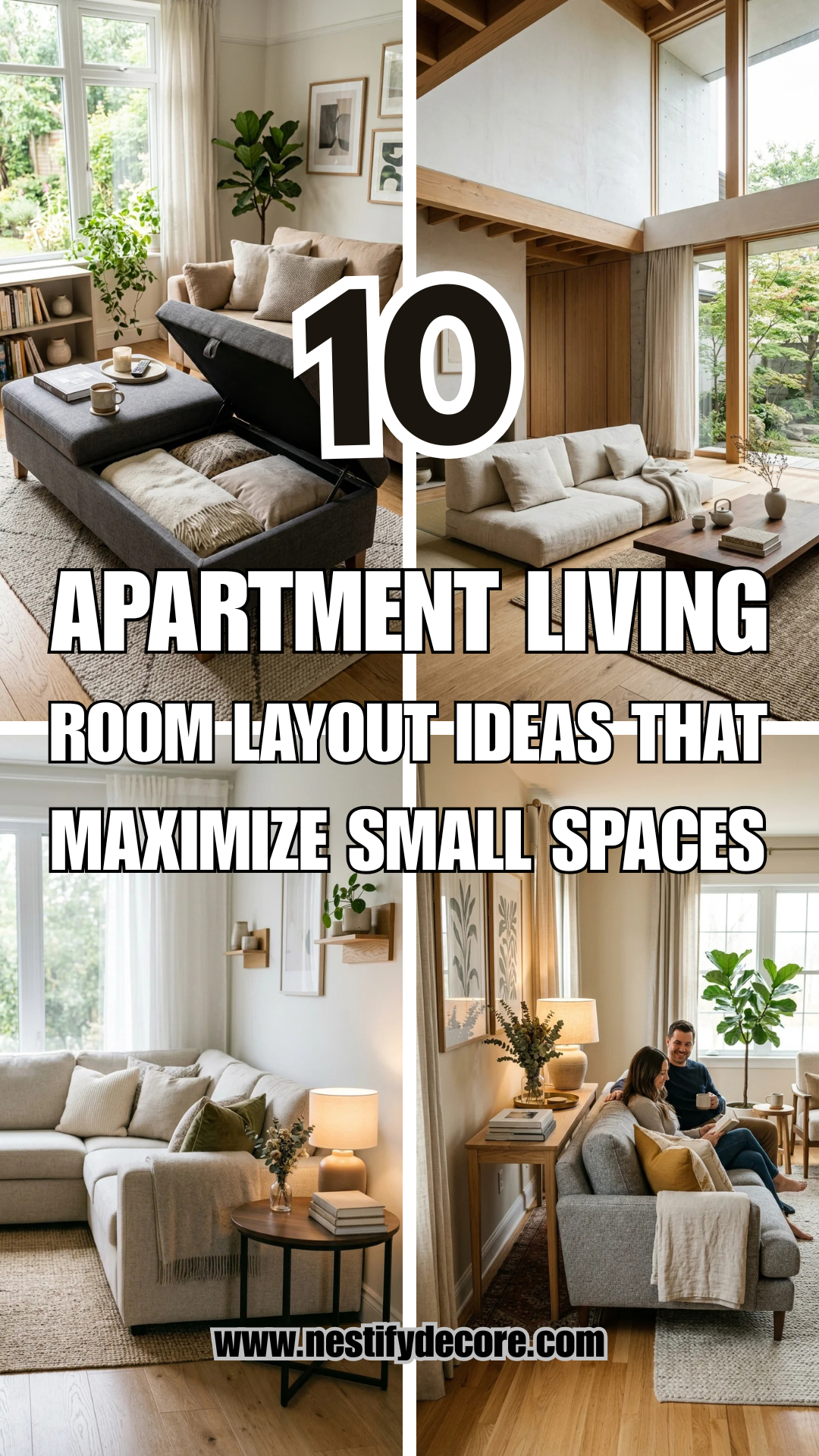
Maximizing a small apartment living room is less about how much furniture you can fit and more about how you manipulate the space you have. When square footage is at a premium, every design choice—from the height of your bookshelves to the shape of your coffee table—must serve a dual purpose of functionality and visual expansion. The goal is to create a “flow” that prevents the room from feeling cramped while ensuring it remains a cozy sanctuary for relaxation and entertainment.
In this guide, we explore ten innovative layout strategies designed to unlock the hidden potential of your small living space. Whether you are dealing with a narrow “shoebox” layout or a tiny open-concept studio, these professional design techniques will help you reclaim your floor plan.
1. Zoned Layout
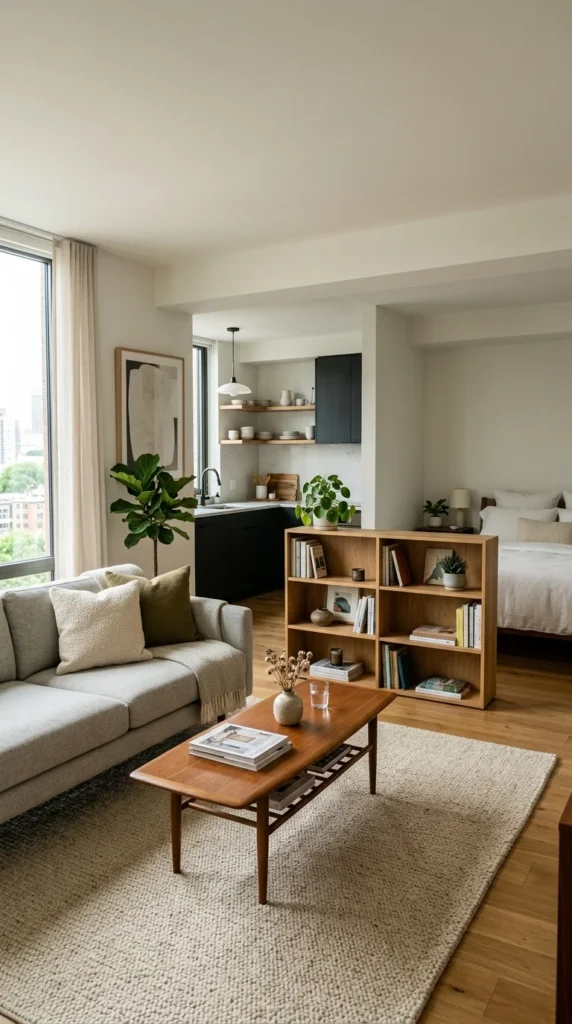
In an open-concept or studio apartment, the biggest challenge is the lack of architectural boundaries. A “Zoned Layout” uses visual cues to create “rooms within a room.” By utilizing a large area rug, you can “anchor” the living room furniture, signaling to the eye where the relaxation zone begins and ends.
To further enhance this, consider using a low-profile open bookshelf as a room divider. Unlike a solid wall, an open shelf allows light to pass through, maintaining a sense of airiness while providing necessary storage and a physical boundary between your lounge area and your bed or dining table.
2. Floating Furniture
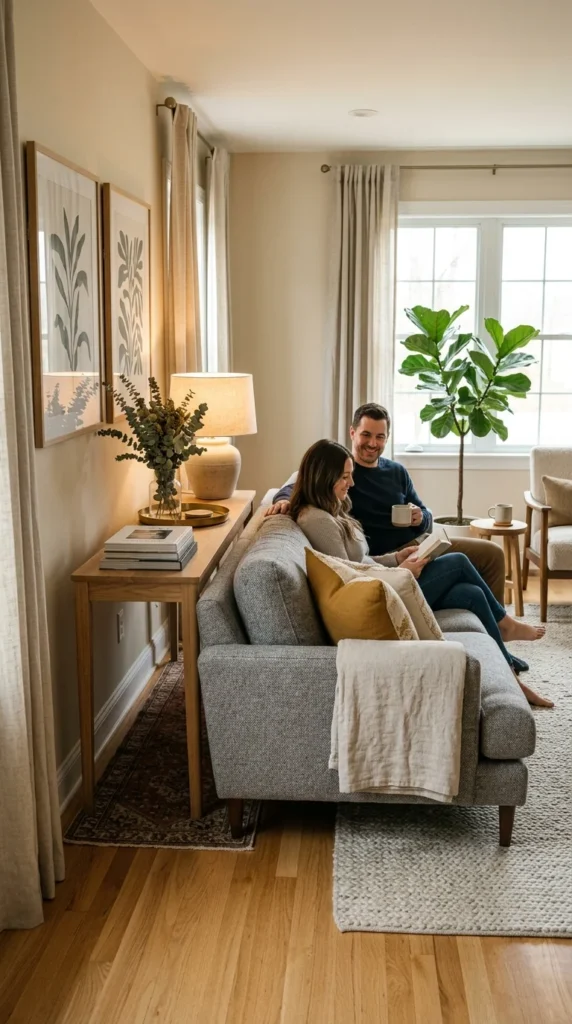
It is a common instinct to push all furniture against the walls to “open up” the center of the room. However, this often results in a “waiting room” aesthetic that feels stagnant. “Floating” your furniture—even just a few inches away from the wall—creates the illusion of more space.
When you leave a gap between the back of the sofa and the wall, it creates shadows and depth, suggesting that the room is larger than it actually is. If space allows, placing a slim console table behind a floating sofa provides a surface for lamps or drinks without requiring bulky side tables that eat up precious floor space near the walkways.
3. Vertical Storage
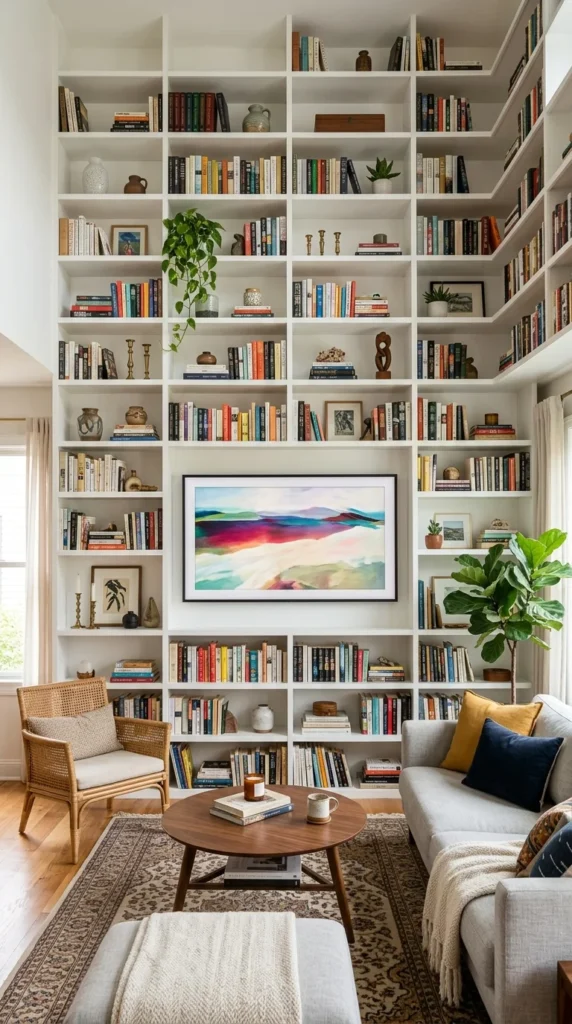
When you run out of floor space, the only way to go is up. A vertical layout focuses on drawing the eye toward the ceiling, which creates a sense of grandeur in a small room. Floor-to-ceiling shelving units or “floating” wall shelves allow you to store your library, electronics, and decor without cluttering the ground.
By mounting your TV on the wall and surrounding it with vertical storage, you eliminate the need for a wide, heavy media console. This keeps the “visual weight” of the room high, making the actual floor area feel wider and more breathable.
4. Work-From-Home Nook
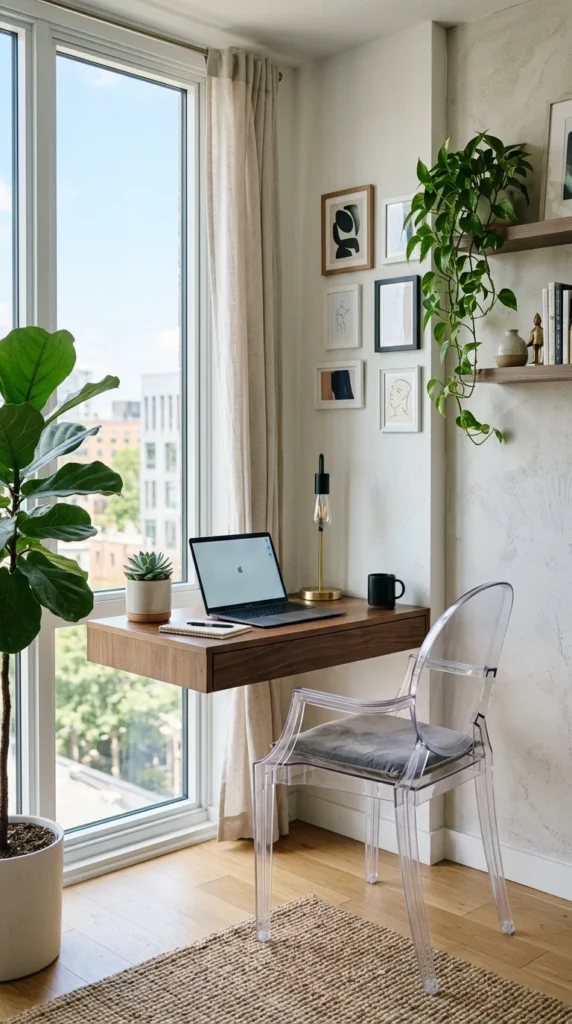
With more people working from home, the living room often doubles as an office. The key to a successful multi-functional layout is integration rather than isolation. Instead of trying to hide your desk, incorporate it into the living room’s flow.
Placing a small, minimalist desk in a corner or alongside a window allows you to utilize “dead space.” Using a “ghost chair” (a transparent acrylic chair) is a professional designer secret; because the chair is clear, it occupies zero visual space, preventing the office nook from making the living room feel cluttered or “busy.”
5. Strategic Mirrors
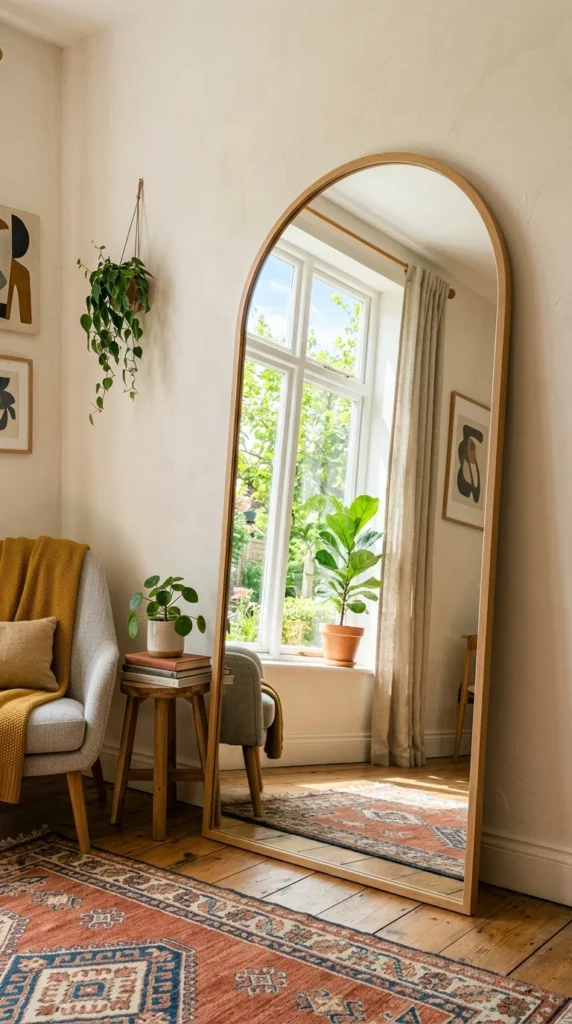
The oldest trick in the interior design book is also the most effective: mirrors. A well-placed mirror acts as an additional window, bouncing light around the room and doubling the visual depth.
For a small apartment living room, place a large mirror directly across from your primary light source (usually a window). This trick tricks the brain into perceiving a second room or a deeper vista. If you cannot hang heavy items on your apartment walls, a large leaning floor mirror provides the same effect while adding a touch of sophisticated, “effortless” style to your layout.
6. Corner Sectional
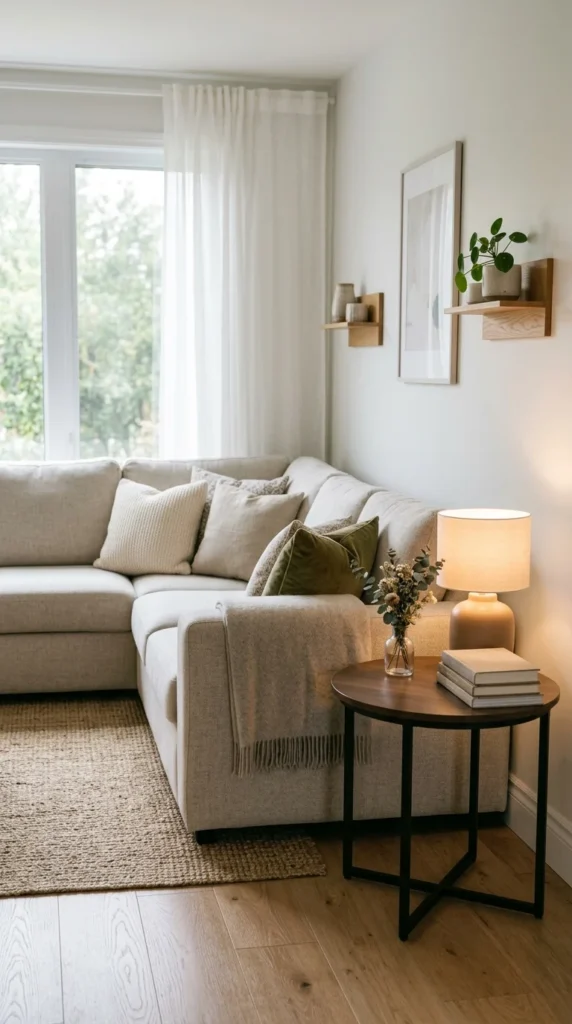
While it might seem counterintuitive to put a large piece of furniture like a sectional in a small room, it can actually save space. Multiple chairs and a standard sofa create a fragmented layout with lots of “gaps” that waste floor area.
A corner sectional utilizes the most underused part of any room: the corner. By hugging the walls, a sectional provides the maximum amount of seating while keeping the center of the room completely open. This creates a cozy, “pit” style atmosphere that is perfect for movie nights without the visual clutter of individual armchairs.
7. Low Profile
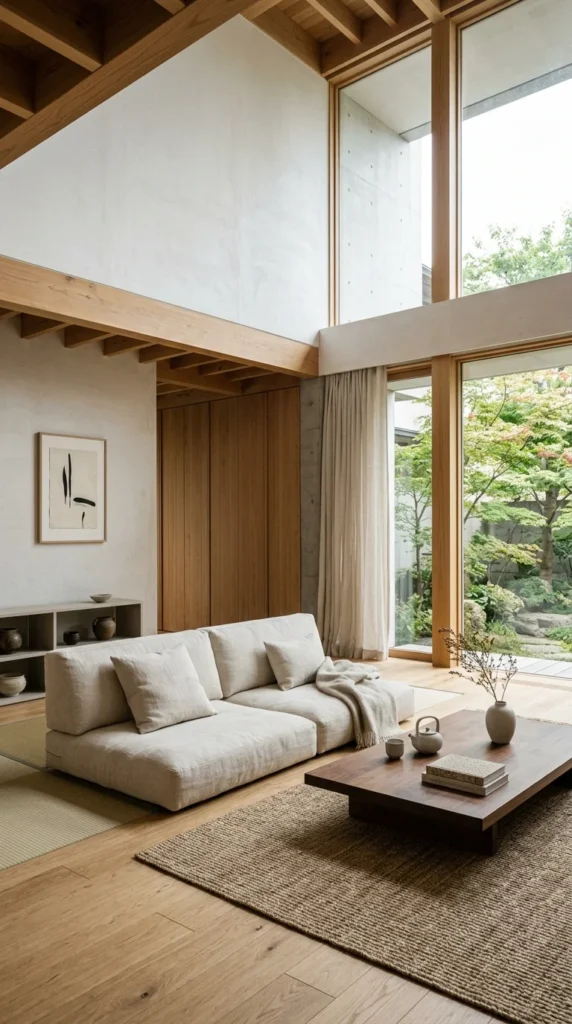
The “Low Profile” layout relies on the psychology of height. When your furniture is low to the ground, the distance between the top of the sofa and the ceiling increases, making the room feel significantly taller.
Look for furniture with “long legs”—pieces that are raised off the ground on thin wooden or metal supports. Being able to see the floor underneath your sofa and chairs prevents the room from feeling “grounded” and heavy. This creates an airy, light-filled aesthetic that is synonymous with modern, high-end apartment living.
8. Circular Elements
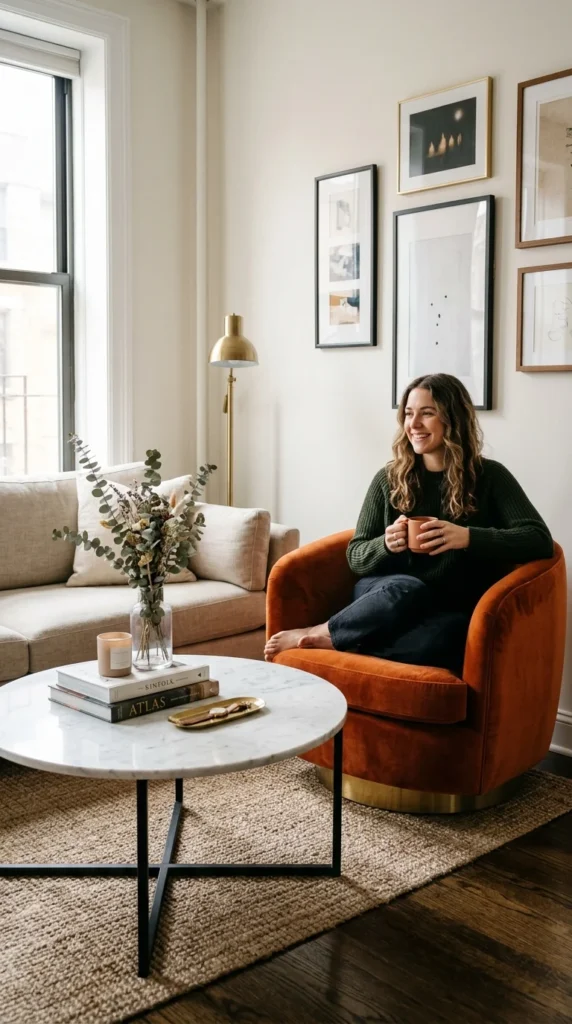
In a small, rectangular apartment, sharp corners are the enemy of “flow.” If you find yourself constantly bumping into the corners of your coffee table, it’s time to go circular.
A circular layout replaces rectangular tables and boxy chairs with rounded edges. Round coffee tables are easier to navigate around in tight quarters, and they soften the harsh lines of a standard apartment box. Pair a round table with a swivel armchair; the ability to turn the chair toward the TV or toward a guest in the kitchen without moving the furniture piece itself adds immense functional flexibility.
9. Window Focus
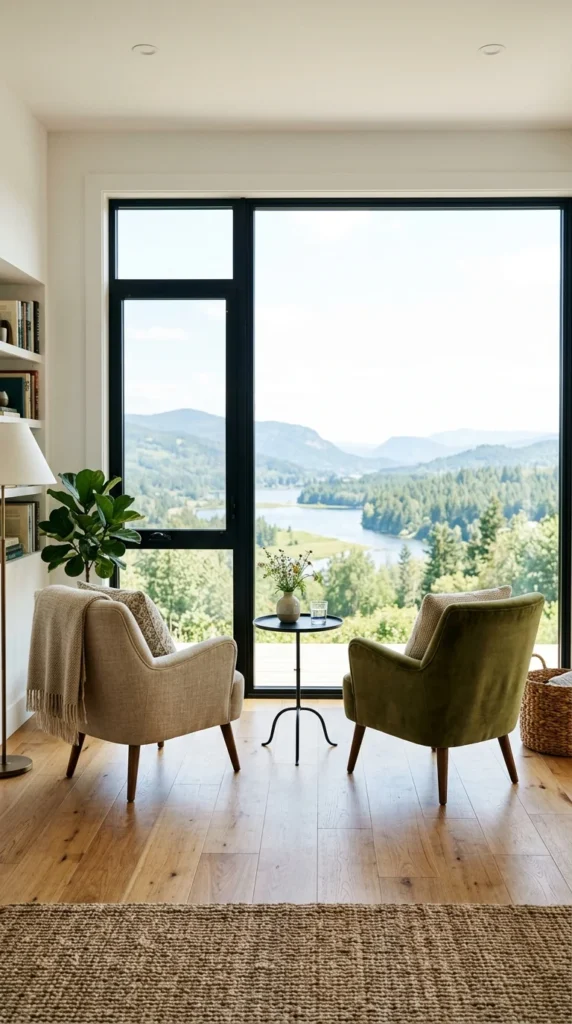
If your apartment has a great view or even just a large window, make it the “hero” of your layout. Instead of pointing all your furniture at a television, arrange your primary seating to face the window or be perpendicular to it.
By centering the layout around a source of natural light, the room feels connected to the outdoors, which naturally expands the boundaries of the space. Using “sheer” curtains instead of heavy drapes will ensure that the light continues to flood the room, maintaining that precious sense of openness throughout the day.
10. Hidden Storage
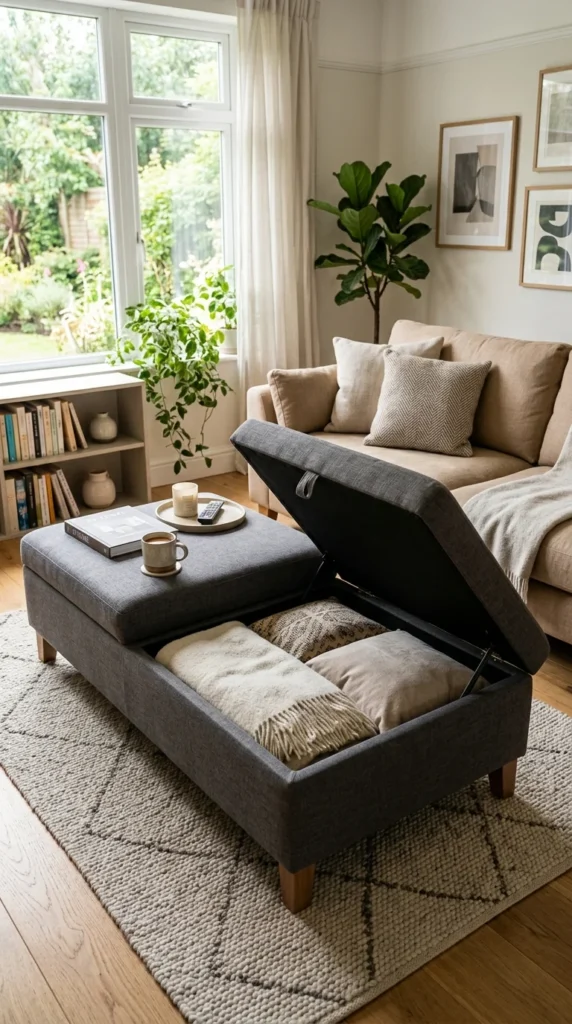
In a small apartment, clutter is the ultimate space-killer. The “Hidden Storage” layout focuses on furniture that works overtime. Every piece in this layout should have a “secret.”
Instead of a traditional coffee table, use a storage ottoman. It provides a place to rest your feet, extra seating for guests, and a massive trunk for storing extra linens, board games, or seasonal decor. By keeping the “mess” tucked away inside your furniture, you keep the visual lines of the room clean, which is the most important factor in making a small space feel like a sprawling home.